
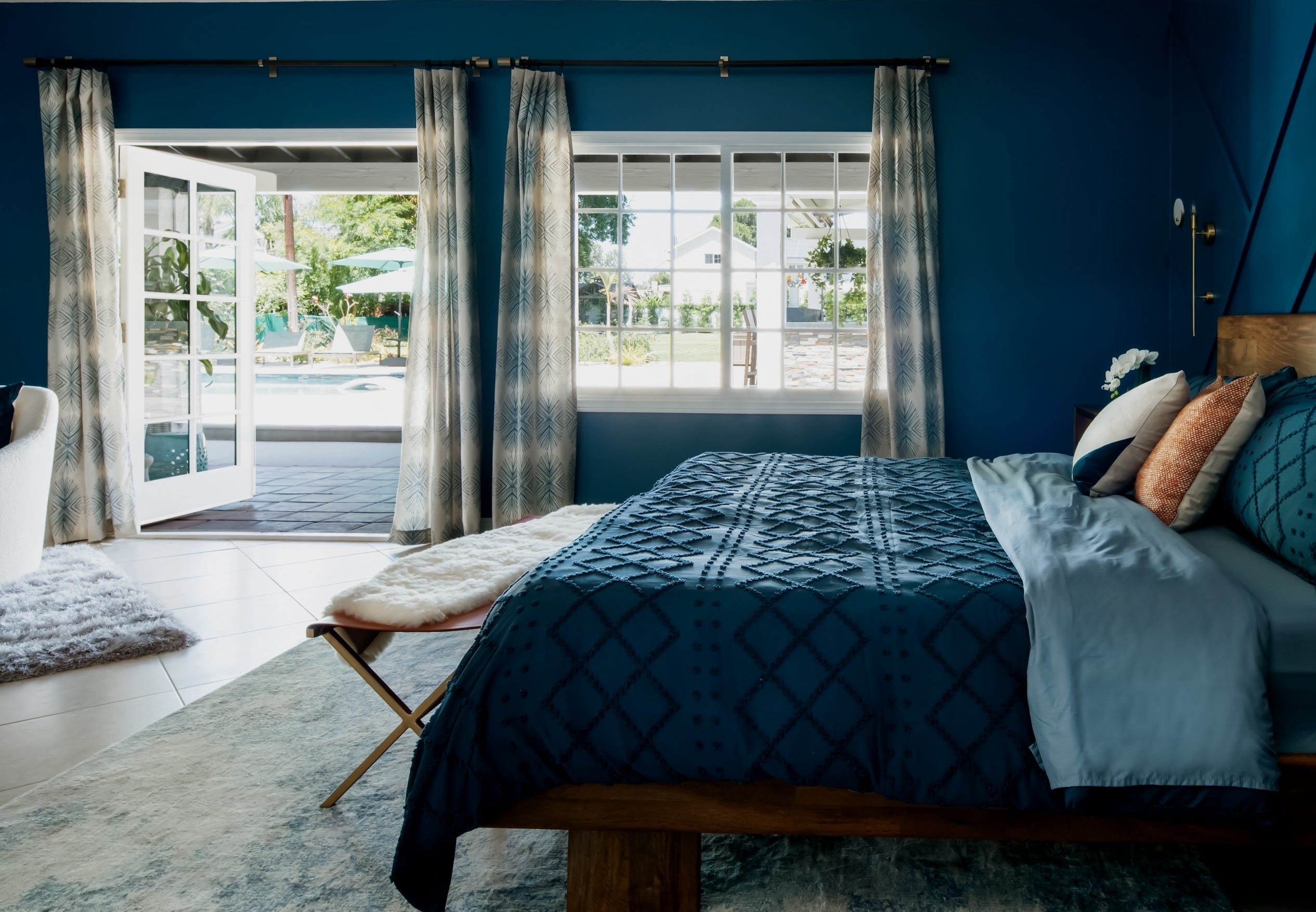
It’s the morning coffee on the terrace. The breeze moving through an open window. Dinner that stretches long after sunset. The landscape isn’t just something you look at, it’s part of everyday life.
Yet surprisingly few homes actually deliver on that promise.
“Indoor-outdoor living” has become one of the most overused phrases in California real estate. Too often it simply means there’s a large door leading to a patio. But a successful connection between a home and its landscape has very little to do with the size of the opening.
It has everything to do with how the architecture, materials, and outdoor spaces work together.
The garden shouldn’t feel like something that’s added after the house is finished.
Architecture and landscape should be developed together, each informing the other. Views are framed rather than simply exposed. Trees provide privacy, shade, and scale. Paths encourage movement through the property. Outdoor rooms feel intentional instead of leftover.
Some of the most memorable homes I’ve visited aren’t defined by what you see from inside. They’re defined by how naturally they invite you to step outside.
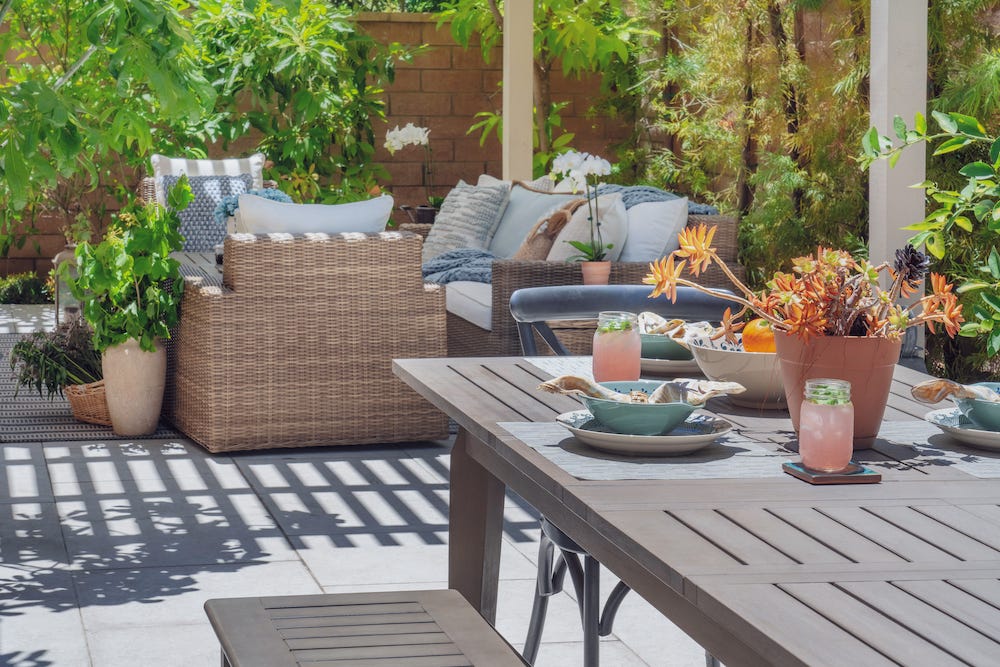
A terrace isn’t complete because it has a dining table.
Just like the rooms inside a home, outdoor spaces need purpose. A quiet corner for morning coffee. A shaded dining area that feels comfortable in the afternoon. A fire pit that naturally becomes the gathering place after sunset.
When each area has a clear function, the landscape becomes part of daily life instead of something that’s admired through the windows.
California has a remarkable climate, and the materials should reflect it.
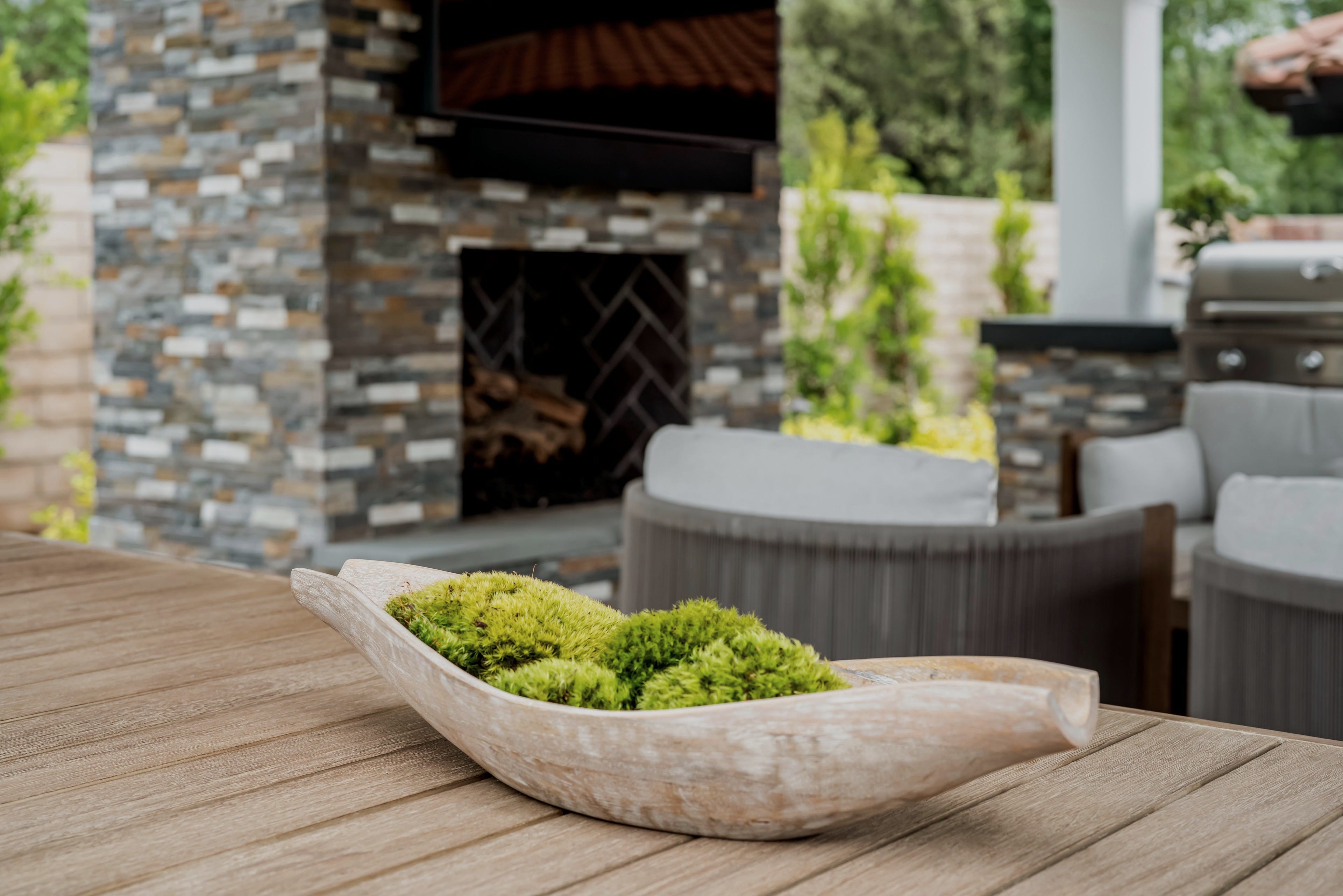
Natural stone, weathered wood, limewash, aged metals, gravel, and textured plaster all feel at home in this landscape because they become more beautiful over time.
I don’t believe the interior and exterior need to match exactly. In fact, a subtle change in material can make stepping outside feel more grounded and intentional. What matters is that the materials speak the same language.
One mistake I see repeatedly is treating outdoor spaces as smaller versions of indoor rooms.
The California hills are expansive. Furniture that feels generous in a showroom can feel surprisingly undersized once it’s placed against mature oaks or a wide canyon view.
Outdoor spaces benefit from larger gestures: substantial dining tables, generous seating groups, oversized planters, and trees that give the landscape structure from day one.
The goal isn’t to compete with the view, it’s to create spaces that feel comfortable within it.
A beautiful outdoor space isn’t defined by a single photograph.
It’s about how it feels on a cool morning, in the heat of the afternoon, and after the sun goes down.
Where does the shade fall?
Where does the breeze move through?
How does the lighting change after dusk?
Where do people naturally gather?
These questions shape a landscape that’s enjoyable year-round rather than beautiful only from a certain angle.
The best homes in the California hills don’t blur the line between indoors and out.
They respect it.
The transition from house to garden becomes part of the experience. You step through a doorway, onto stone, beneath a tree, and into another room, one without walls.
When the architecture and landscape are designed together from the beginning, the house doesn’t disappear into its surroundings.
It simply feels like it belongs there.
No posts
Comments
Nothing yet. Say the first thing.
Sign in to join the conversation.