
You enter, and something either settles immediately or it doesn’t. The light lands correctly. The proportions hold. The space reads as intentional before you have time to analyze why.
That feeling is not accidental. It is the result of a series of decisions that are often treated as fixed conditions, left untouched because they are technically “working.” In practice, they are rarely aligned.
In a whole home remodel, these are the decisions that are reconsidered entirely.
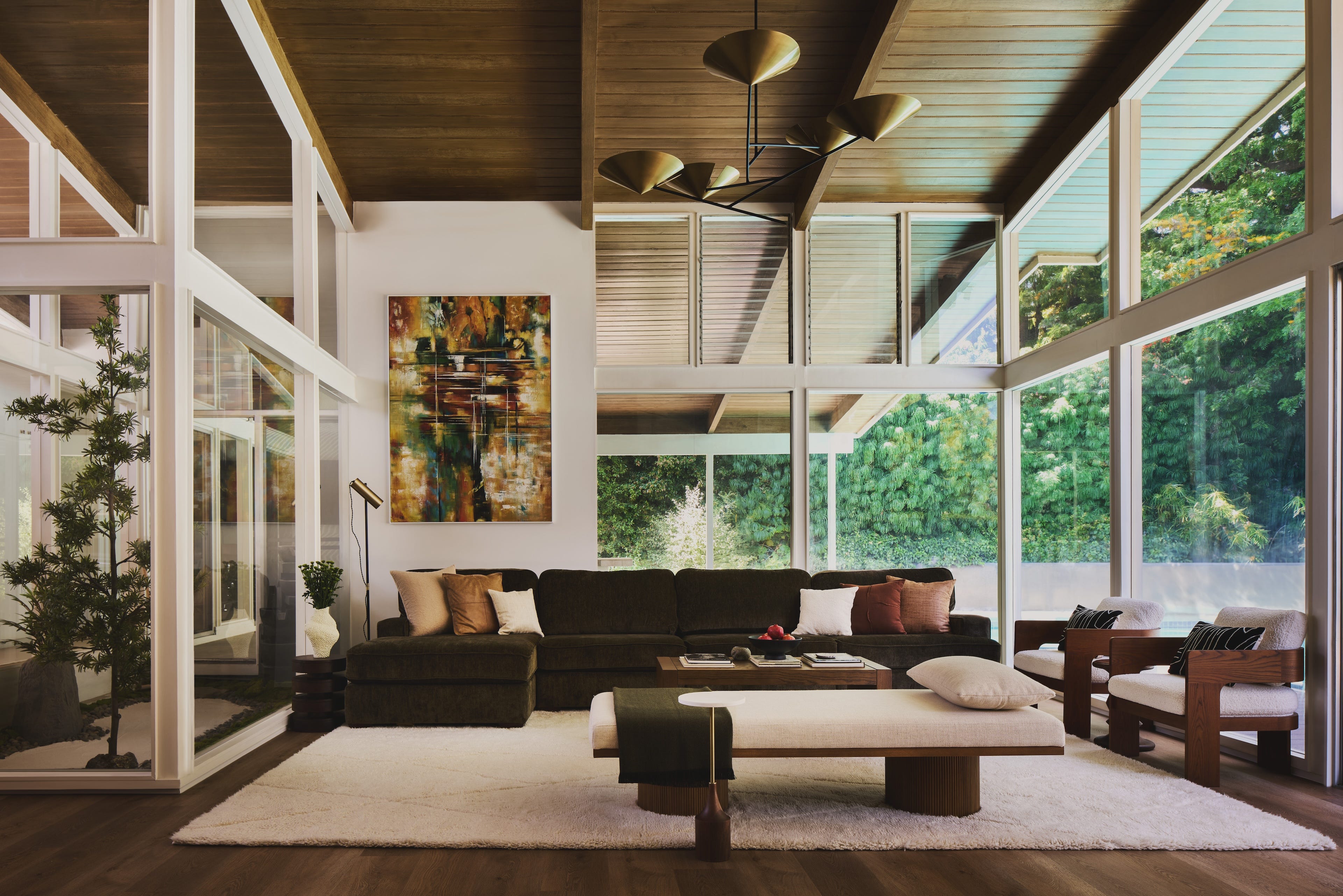
Ceiling Height
Ceiling height is not a static condition. It is a psychological one.
A room can feel expansive or compressed independent of its actual dimensions, depending on how its vertical volume is treated. In many homes, ceiling height is accepted as given, when in reality it is one of the primary drivers of how a space is experienced.
The question is not whether a ceiling is high or low. It is whether it is in proportion to the room and aligned with the intended feeling of the space.
In practice, this often means intervention. Adjusting ceiling planes. Introducing or simplifying architectural detail. Reworking transitions between rooms so that compression and release are intentional rather than incidental.
The ceiling is already shaping the way a room feels. The decision is whether it is doing so in alignment with the rest of the home.
Light After 5 PM
Daylight is inherited. Evening light is designed.
Most homes rely too heavily on overhead fixtures, which flatten surfaces and disconnect the room from how it is meant to be inhabited. The issue is rarely the fixture itself. It is how light is distributed within the architecture.
In a considered home, lighting is layered at multiple levels and positioned in relation to how the space is used. Light meets the eye rather than sitting above it. It moves across surfaces rather than simply illuminating them.
This is not a matter of adding lamps. It is a matter of rethinking the lighting plan entirely. Placement, height, type, intensity, and temperature are all calibrated so that the home transitions naturally from day to evening.
The result is not just better light. It is a different atmosphere.
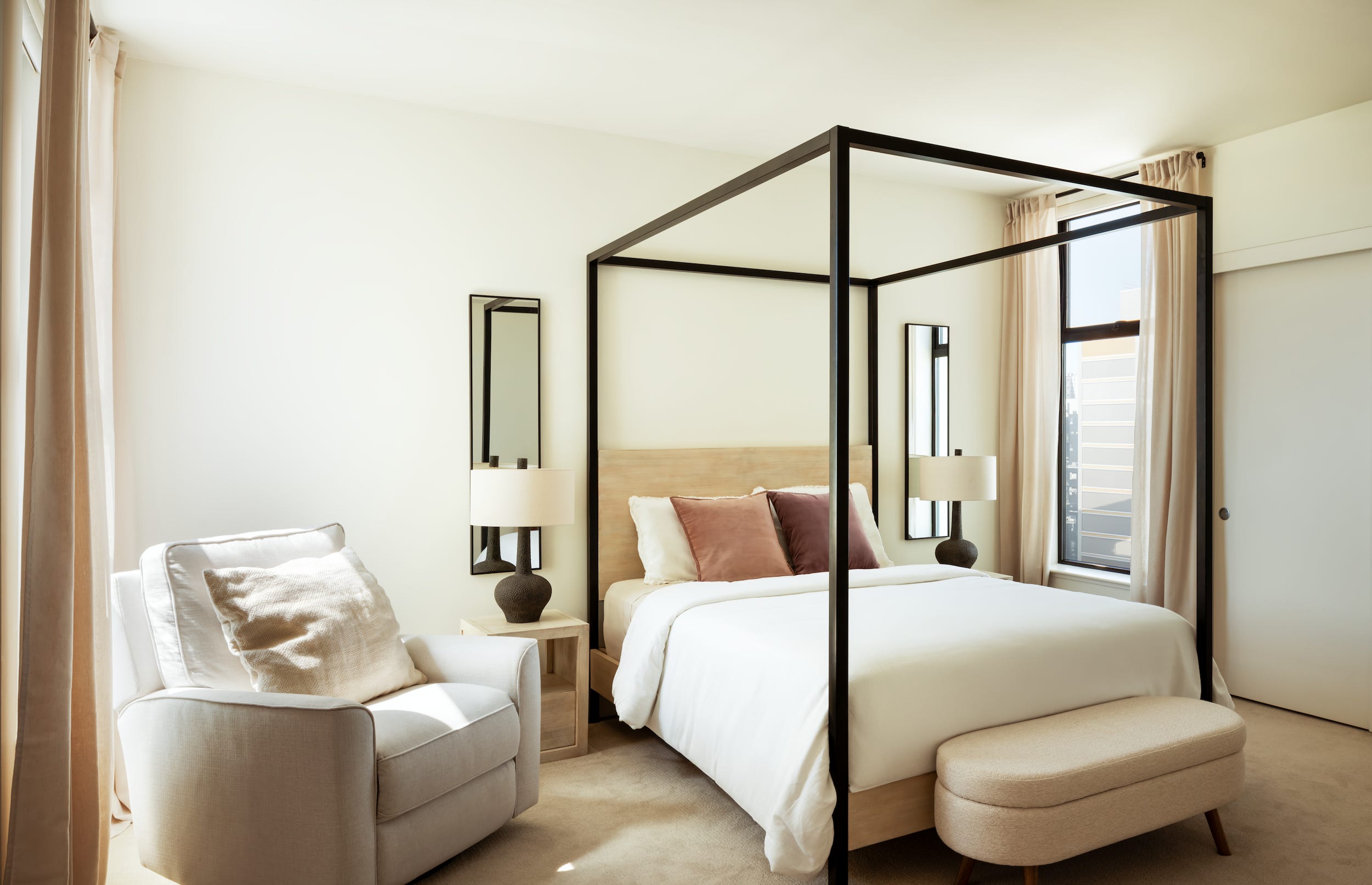
Furniture Placement
Arrangement is often treated as a final step. In reality, it is structural.
A room can be composed of well-chosen pieces and still feel unresolved if their placement does not establish clear relationships. Furniture defines how a space is used, how it is read, and how it holds people within it.
In many cases, the issue is not the furniture itself, but the architecture it is responding to. Openings are misaligned. Circulation paths cut through seating areas. Rooms lack a clear center.
Addressing this at the level of layout often requires more than repositioning. Openings are adjusted. Walls are reconsidered. Sightlines are refined so that the placement of furniture feels inevitable rather than forced.
A well-resolved room does not ask where things should go. It makes it clear.
What You Touch
Visual decisions tend to dominate, but tactile ones define the baseline experience of a home.
The weight of a door. The texture of a surface encountered daily. These moments accumulate into a perception of quality that cannot be replicated visually.
In a fully considered home, these elements are not left to default selections. They are specified with the same level of intention as anything seen at eye level. Hardware is chosen for its weight and finish over time. Materials are selected for how they age and how they register through use.
This is not about layering luxury. It is about consistency.
The home feels coherent because every interaction supports the same standard.
Negative Space
Every composed space understands what it will not fill.
Negative space is not an absence. It is a decision. It allows the architecture and materials to read clearly, and it gives weight to what is present.
In many homes, the issue is not a lack of elements, but an excess of them. Surfaces are activated without hierarchy. Rooms are resolved at the same intensity throughout.
A more considered approach introduces restraint at the architectural level. Built-ins are simplified. Sightlines are cleared. Certain areas are allowed to remain intentionally quiet.
This creates rhythm. It allows the home to breathe.
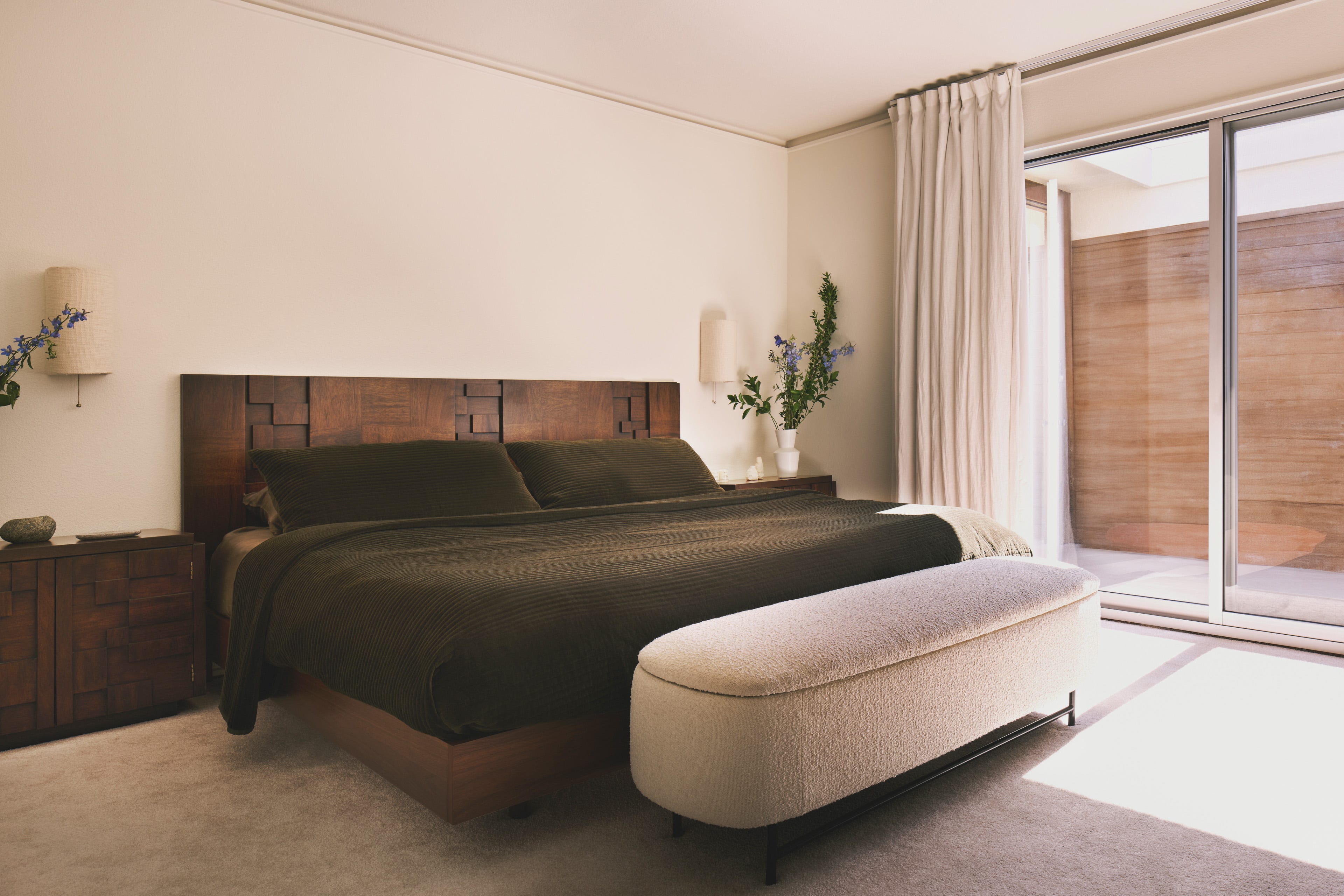
Transitions Between Rooms
How a home moves from one space to the next determines how it is experienced as a whole.
Without clear transitions, even well-designed rooms can feel disconnected. Open plans collapse into a single continuous field rather than a sequence of spaces.
In a cohesive remodel, transitions are deliberate. A shift in ceiling height. A change in material underfoot. A moment of compression before expansion. These are not decorative gestures. They are spatial cues that allow the home to be understood.
They create continuity without uniformity.
On Coherence.
None of these decisions operate independently.
A home begins to feel resolved when its elements are in agreement. When proportion, light, material, and layout are all working toward the same outcome. When nothing is left as a default condition simply because it was already there.
In many cases, achieving that level of coherence requires replacing elements that are technically sound but misaligned. Windows that do not relate to the scale of the elevation. Doors that interrupt the rhythm of a space. Details that pull the home in competing directions.
The goal is not change for its own sake. It is alignment.
The most successful outcomes are the result of decisions that compound. Nothing is incidental. Nothing is working against anything else.
That is what ultimately changes the feeling of a home.
Not a single gesture, but a complete and considered whole.
No posts
Comments
Nothing yet. Say the first thing.
Sign in to join the conversation.