
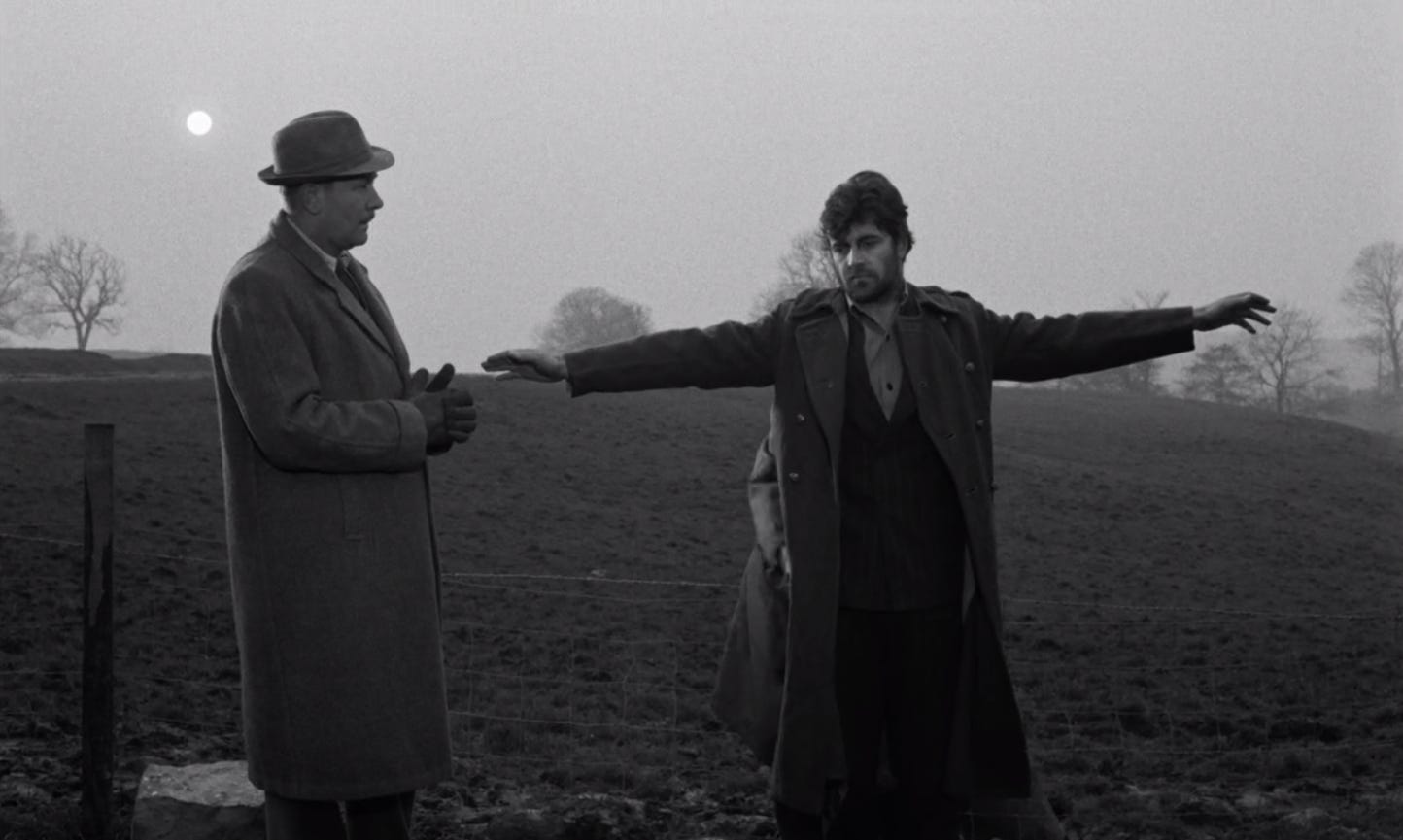
Sunday’s film recommendation (which, as always on a Sunday, is FREE and open to all) is Bryan Forbes’ Whistle Down the Wind (1961). Set in rural Lancashire, fourteen-year-old Hayley Mills comes across Alan Bates — a murderer on the run — in her father’s barn, and, in her childish innocence, thinks that he’s Jesus. It’s an enchanting performance…
I’m a considerable fan of the late Bryan Forbes, director of The L-Shaped Room (1962), Séance on a Wet Afternoon (1964), The Raging Moon (1971), The Stepford Wives (1975), and International Velvet (1978) — and husband of the fragrant Nanette. Forbes was also Head of EMI films from 1969-1971. Under his tenure, the studio produced The Railway Children (1970), The Tales of Beatrix Potter (1971), and The Go-Between (1971) — and for that we must be thankful. In later life, Forbes wrote a regular diary for The Spectator. There was an amusing piece in which he confessed to spending a great deal of his time shouting at the television set. I know exactly how he felt.
Bryan was also rather urbane. There was this rather good black-and-white newsreel following Forbes’ resignation from EMI, with Bryan smoking a cigarette on the terrace of Seven Pines, his Art Deco pile in Surrey, which I would have loved to have shown you, but, alas, the online video seems to have been taken down. Forbes was an avid bibliomaniac and not only owned an art gallery for some time, but a local second-hand bookshop. His collection was sold by the distinguished antiquarian book dealer, Sotheran’s, then in Sackville Street (I have the catalogue upstairs), although he seems to have had a tendency to discard that all-important dust jacket, and rebind rare modern first editions in half crimson morocco, gilt and marbled boards, alongside his personal bookplate featuring a Napoleonic bee. Never a good idea when it comes to value — but then hey, maybe Forbes just didn’t care. And good on him: I admire the cut of his jib.
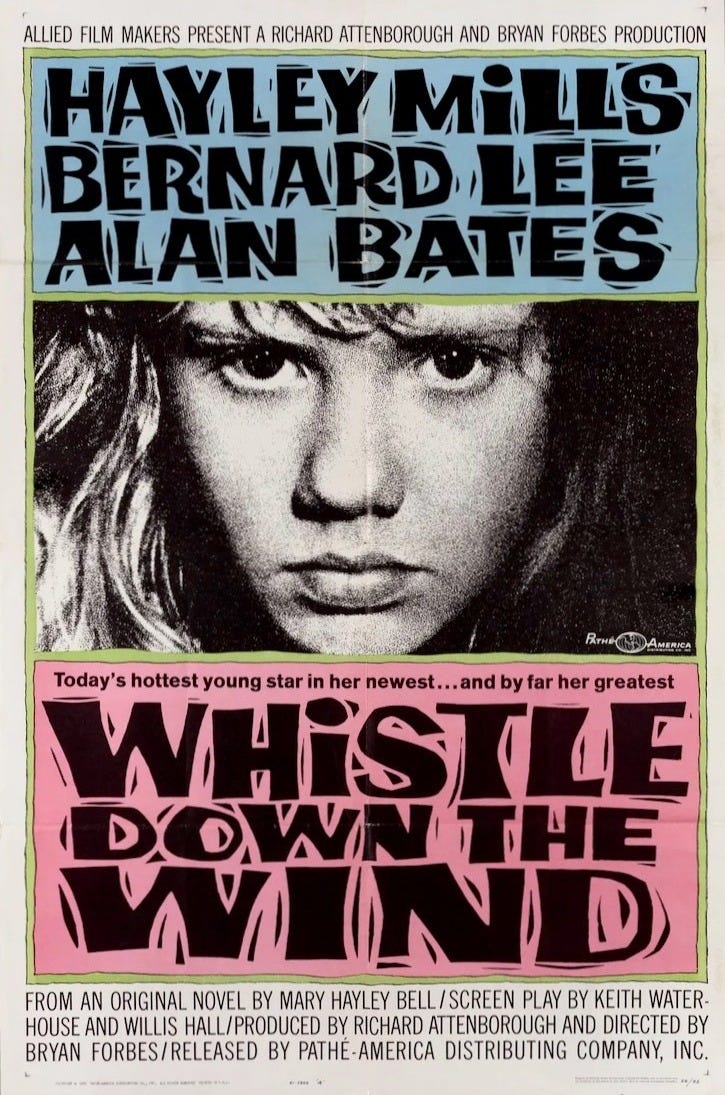
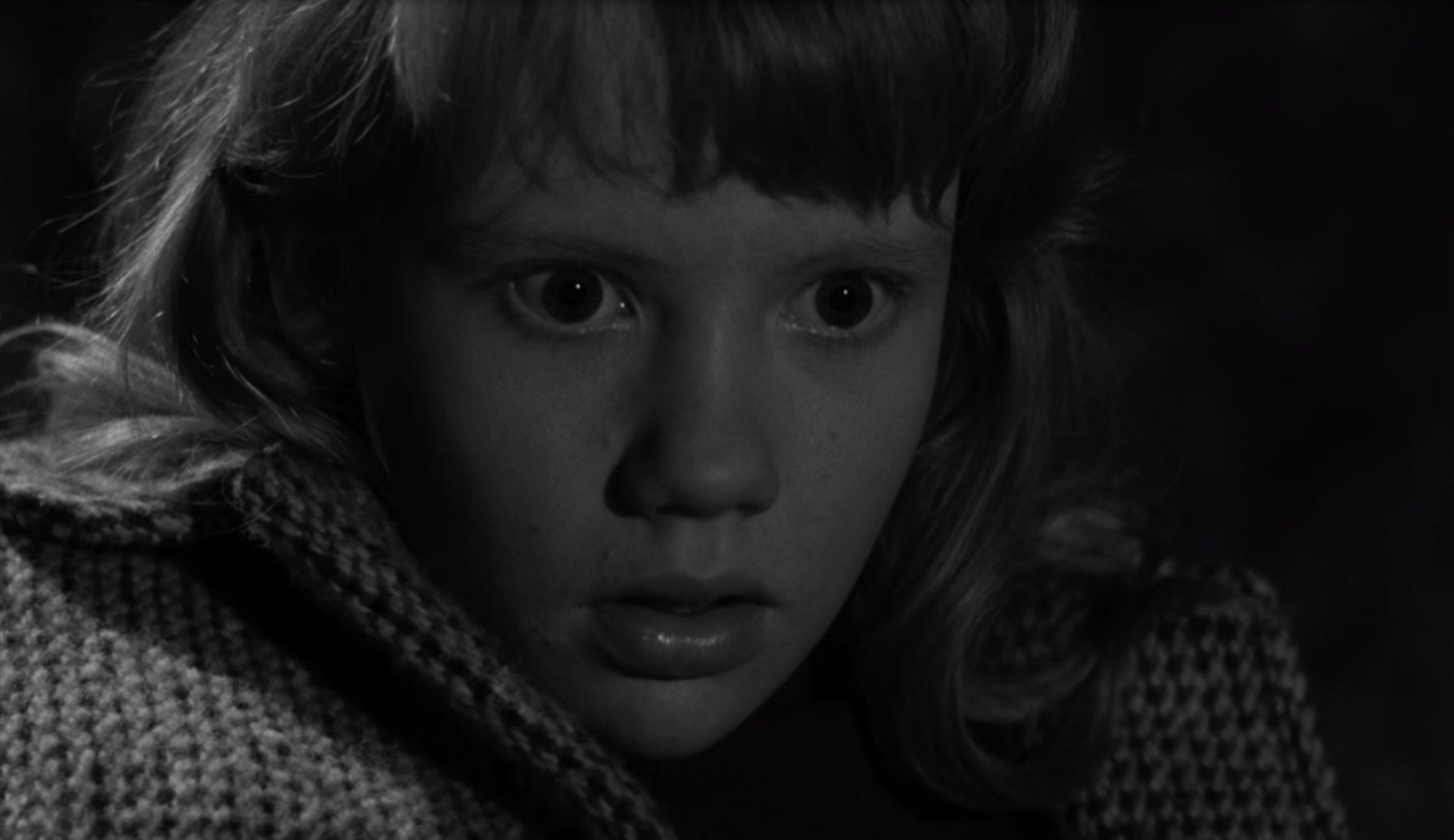
My grandmother adored Whistle Down the Wind (1961), the film, alongside The Stepford Wives (1975), which Forbes, I think, will be remembered for. Certainly, Forbes said that Whistle Down the Wind (1961) was his most popular and profitable film. And along with The Railway Children (1970) and The Belstone Fox (1973), it was a film we were taken to see at the local cinema, over and over again. I probably saw it about three times in the early 1970s. In those days, cinemas used to show films on repeat viewings; so different from today’s instant, ‘three seconds and you’re done’ mentality. The past really is a foreign country. So it was an interesting experiment watching Whistle Down the Wind (1961) again, after all these years. Honestly, I can’t remember the last time I saw it, but it was probably back in the 1980s on television. And this time round I loved it. It’s an enchanting film: a touching, deeply moving exploration of childhood innocence, with an outstanding performance from the young Hayley Mills — a child star at the time, who had just appeared in Disney’s Pollyanna (1960).
Whistle Down The Wind (1961) is based on Mary Hayley Bell’s novel of 1958. What I hadn’t grasped until writing this post was that Mary Hayley Bell was the wife of John Mills, and the three children in her book were based on her own children, so in effect, Hayley Mills (the daughter of John and Mary) is playing herself. Bryan Forbes and Richard Attenborough then bought the rights. Forbes had never directed a film before, although he had a burgeoning career as an actor and writer. John Mills had to be persuaded to allow Bryan to direct, which only came to pass when hired director, Guy Green, pulled out of the project to accept an offer with MGM.
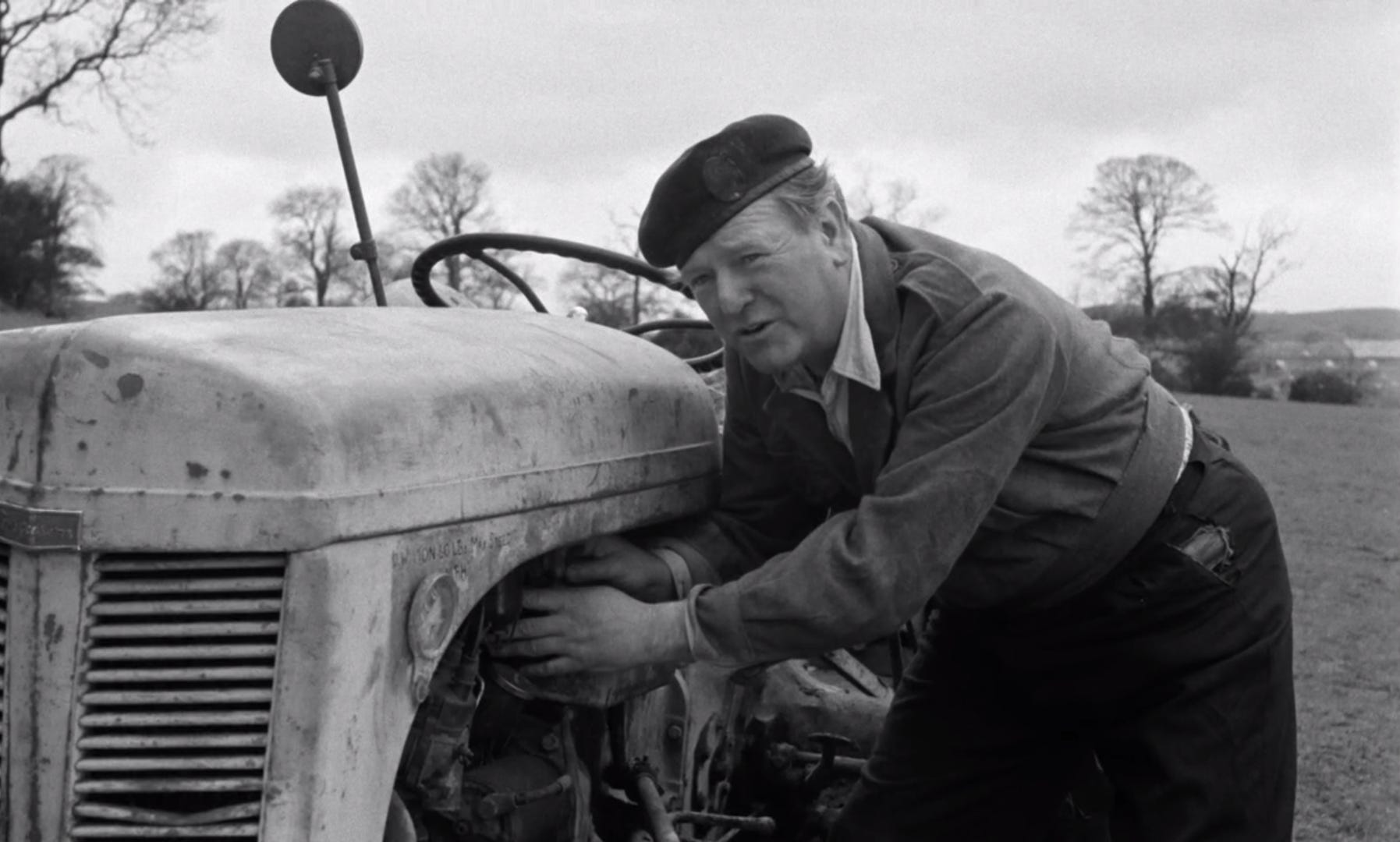
The film’s set in a working-class community in rural Lancashire. It’s a lost world of rusting Ferguson tractors, scrappy farmyards, nettles, ratcatchers and chickens scrapping in the dust; like a farm from the Ladybird books, Picture Puffins or the paintings of S. R. Badmin or the delightful School Prints Series: High Tea at the farmhouse kitchen table; Staffordshire dogs and a ticking clock, a checked table cloth, maltbread with raisins, brown teapots and a glass bowl of sugar.
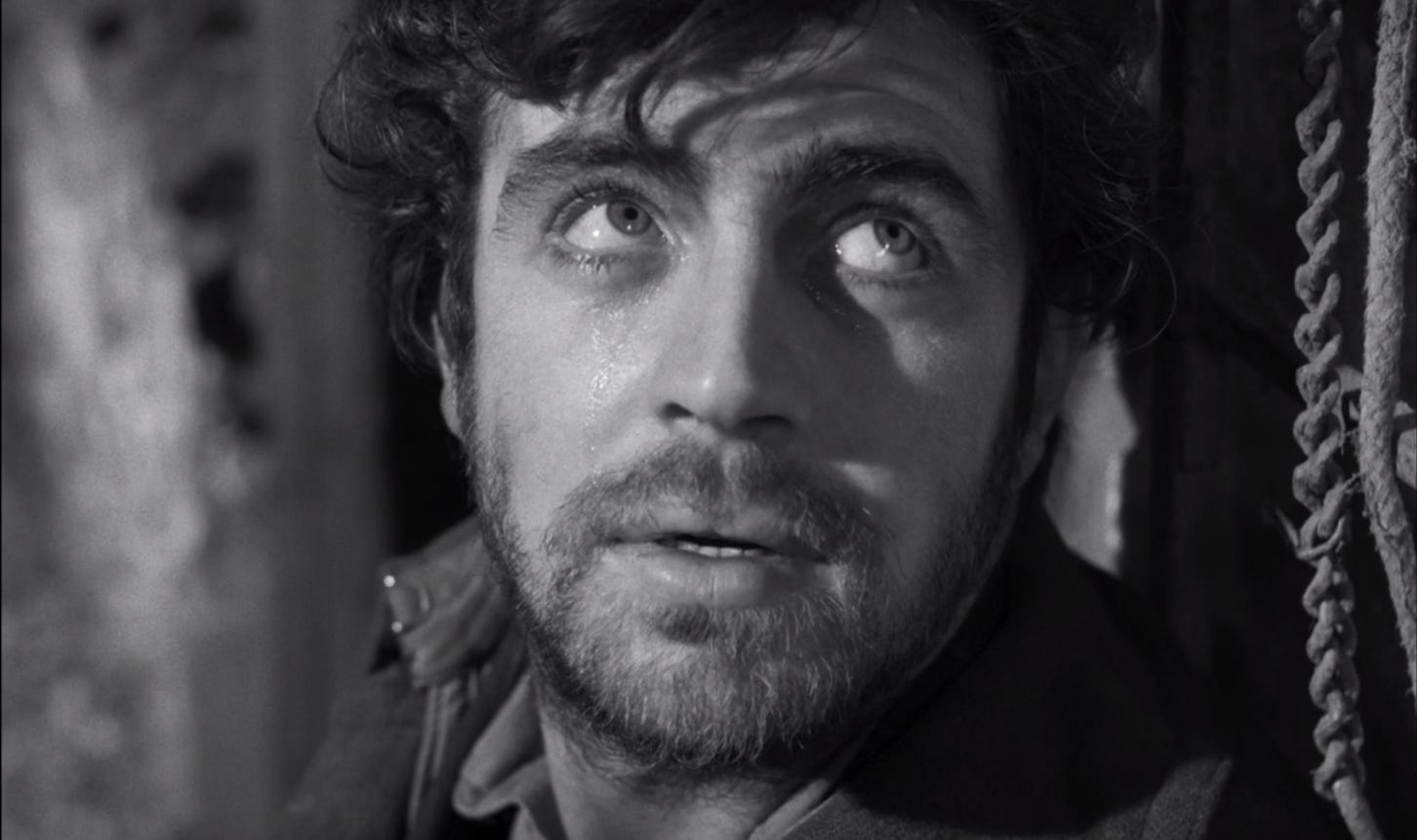
The children come across a strange man in their father’s barn, played brilliantly by Alan Bates in his second cinematic appearance. Bates is an armed murderer on the run, but Kathy Bostock (Hayley Mills) thinks he’s Jesus. It’s not as far-fetched as it sounds:
Kathy (startled): Who is it?
Bates (swearing): Jesus Christ…
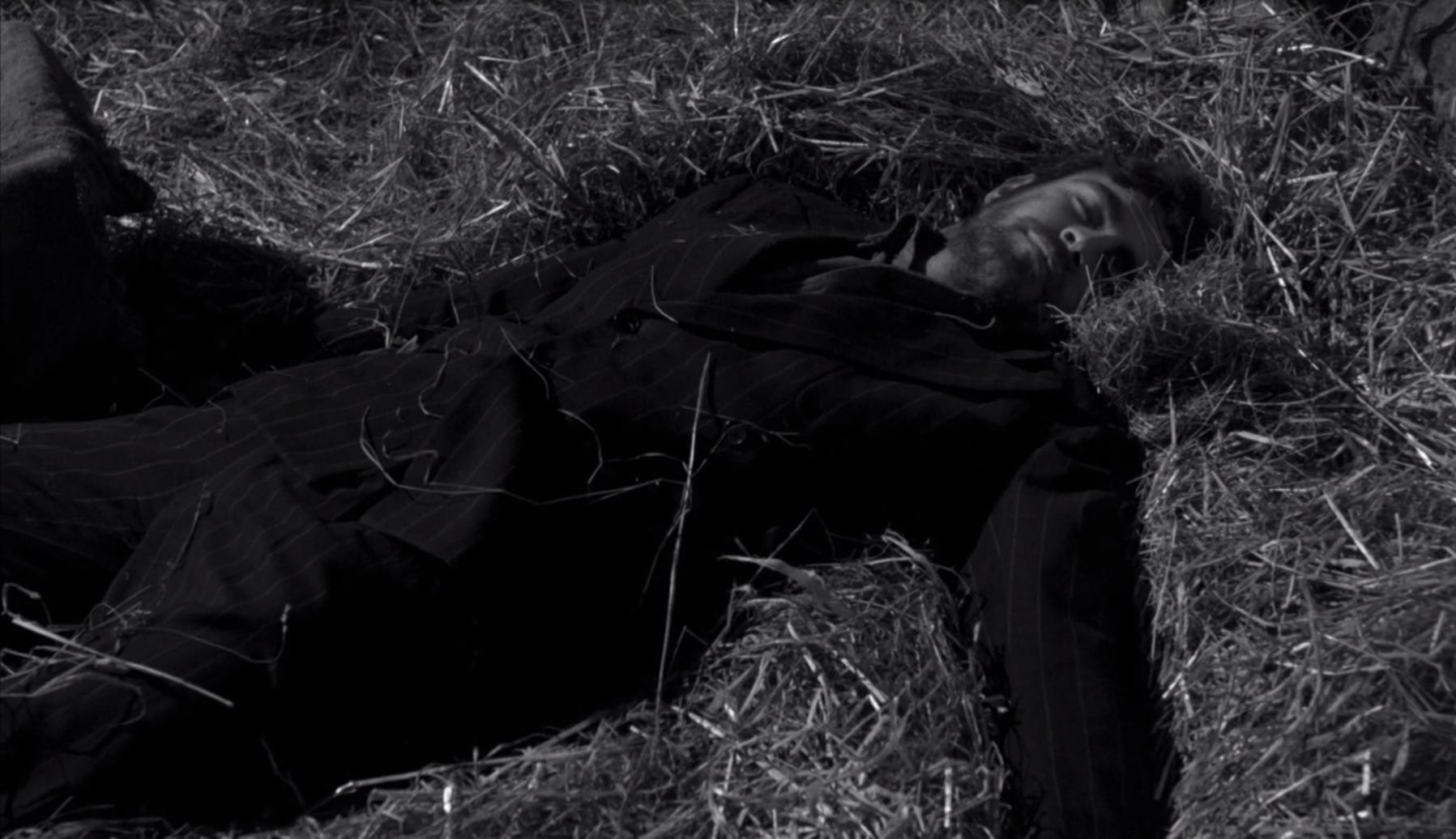
Bates was good at playing ruffians, and Bates/Jesus is suitably coarse and unshaven in an ill-fitting pinstriped coat, gnawing away at a hunk of bread like Henry VIII or swigging port from a bottle filched by the children from the kitchen cupboard. Inevitably, the word gets out on the playground, and the local children — I counted twelve of them, or is it thirteen? — start to bring presents to ‘Jesus’ in his ‘manger’. Gradually, it dawns on Bates that the children think he’s Christ. There’s a delightful scene in which he chastises Kathy for not bringing him a packet of fags:
Kathy: I didn’t know you smoked.
Bates/Jesus: No. Well…Er. I never used to. But I do now sometimes.
Some viewers might find the religious symbolism — and there’s quite a bit of it — rather laboured; although personally, I don’t think it is, as it’s the whole point of the plot; but it suddenly occurred to me, writing this post, that the film is in a similar English tradition to William Blake or Stanley Spencer’s paintings of Cookham in Berkshire, which recreates the events of the New Testament in an English rural setting. Not of course that there’s anything especially admirable about the Bates character; although his interactions with the children certainly bring out a humane side.
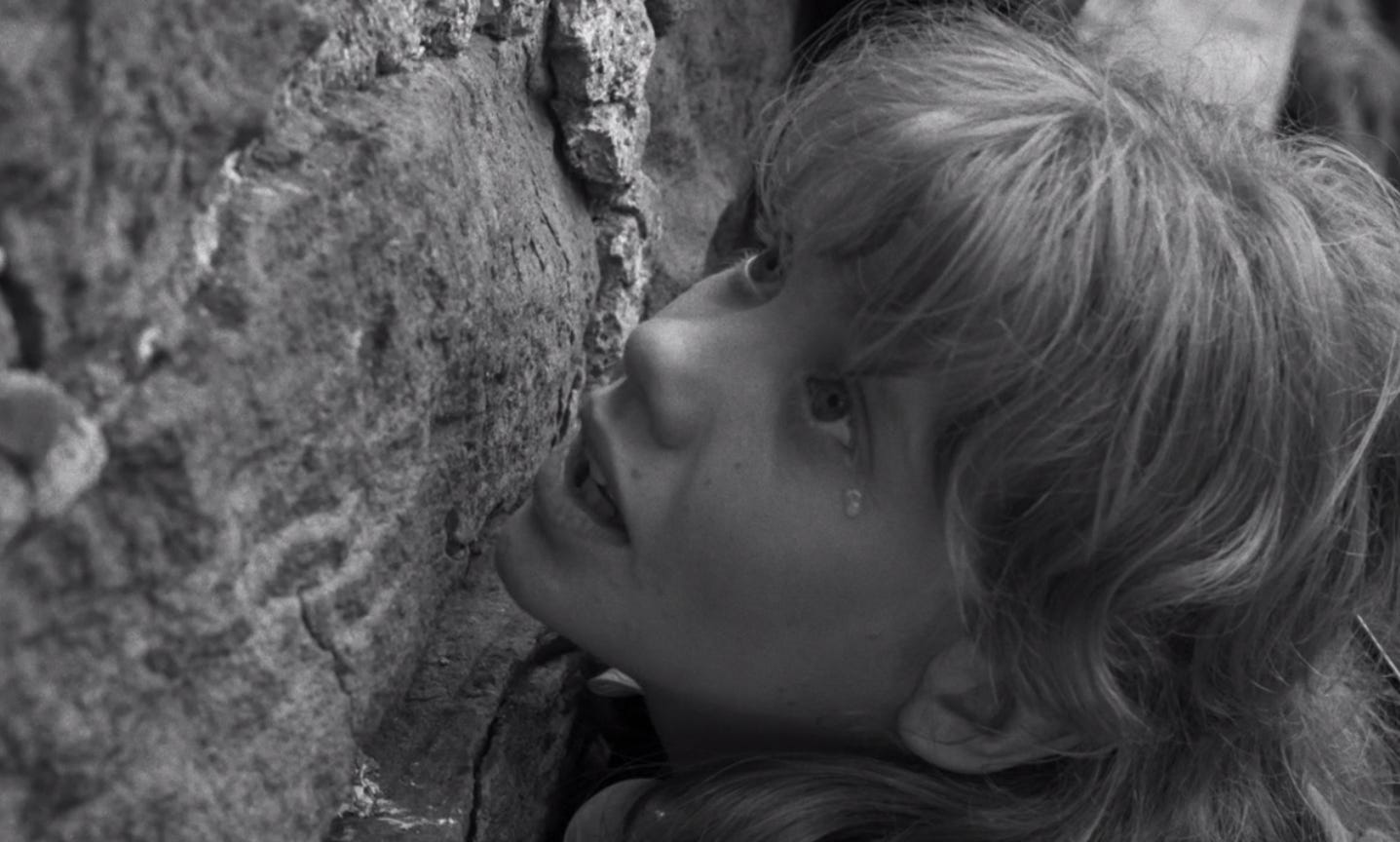
And as a film, Whistle Down the Wind (1961) has got a lot going for it: Bernard Lee’s performance as the blunt but likeable farmer father struggling to make a decent living, Elsie Wagstaff’s scarily prim Aunt Dorothy, Kathy’s younger siblings: Diane Holgate as Nan Bostock, and cheeky little Alan Barnes as Charles; a script co-written by Keith Waterhouse and Willis Hall, and Sir Malcom Arnold’s distinguished soundtrack. And watching it today, in the 21st Century, Whistle Down the Wind is an endearing snapshot of British life in the very early 1960s: when British Railways still ran steam engines; of moth-eaten cardigans, school caps, mackintoshes, black gum boots, and surplus British army overcoats. But ultimately it’s Hayley’s performance which makes the film so desperately moving: the childish innocence; the childish lack of self-consciousness; Kathy’s deep, unshakable faith, entirely natural and unforced — any danger of treacly sentimentality tempered by Arthur Ibbetson’s gritty cinematography: of the bleak, wintry Lancashire landscape. I have to admit, reader, that the denouement brought a manly tear to my eye, big Softie that I am.
Although there were some dissenting critics, Bosley Crowther of The New York Times wrote:
While it deals with sensitive material that might seem blasphemous to some — and, indeed, might well be embarrassing if it weren’t handled with consummate skill and taste — it is beautifully simple, naturalistic and remote from religiosity as it tells, with great humour and compassion, of children and brotherly love. The story is elementary, so simple and inviting, indeed, that one wonders now why it hadn’t been written long before it was recently put into a novel by Mary Hayley Bell. ... Credit for this exceptional picture goes to many ... all merit praise and affection for giving us one of the most enjoyable and heartwarming films we’ve ever seen.
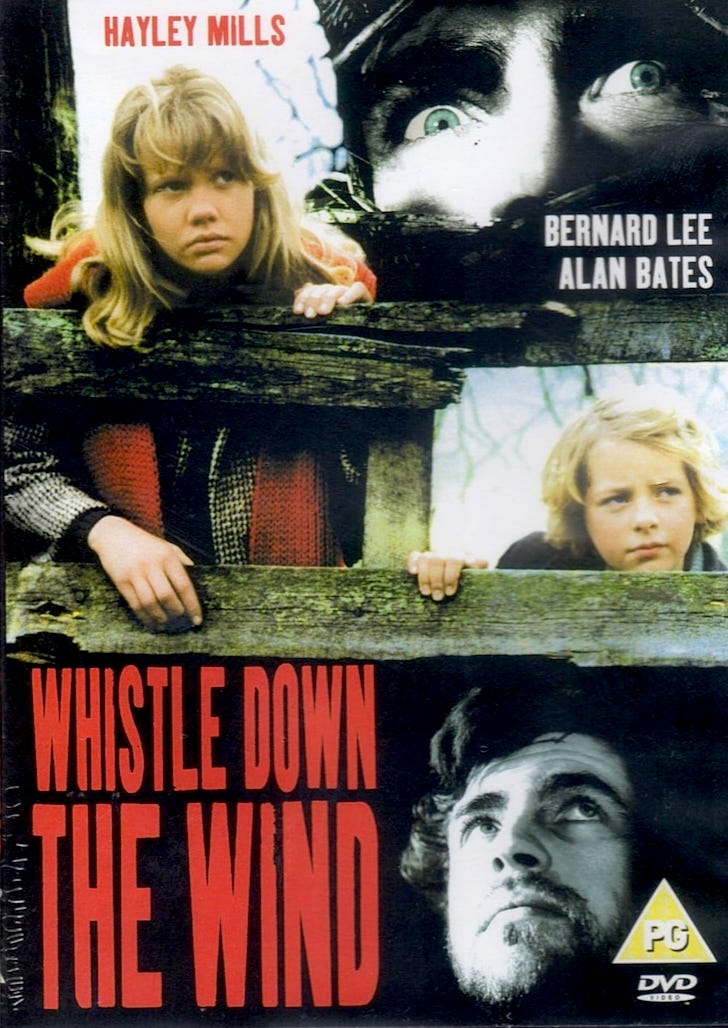
I watched Whistle Down the Wind (1961) on a newly remastered print courtesy of ITVX, where, if you can put up with the increasingly tiresome advertising, it’s free to watch once you’ve signed up for an account. It’s also available on Apple TV and YouTube, where there are several reasonably good, if slightly blurry, quality recordings. Astonishingly, it is not available on Amazon Prime Video. I have no idea why. The film’s also available on DVD, which has, I suspect, a deliberately misleading colour still on the front to push sales: the film is in gritty black and white.
A big thank you to all of you who have subscribed. How are we doing? Time for a recap. I began Luke Honey’s WEEKEND FLICKS. Cinema for Grown Ups, back in December 2023 — inspired by those vintage indents for London Weekend Television. That feel-good feeling on a late Friday afternoon when sensible, worthy old Thames Television handed over to the racier LWT. My bright idea (which, like Archimedes’, occurred to me in the bath) was to recommend two films over the weekend, with the rule that all films should be readily available, either on affordable DVDs or, preferably, as instant downloads. A good move for the impatient and the impecunious.
WEEKEND FLICKS. is very much a personal view. Old films have brought me a great deal of pleasure over many years, and I’m hoping that I can inspire you to watch something you may have forgotten about or might not even have come across. As most of these films are no longer shown on television, the urge becomes more pertinent.
We’ve just hit 1,600 subscribers. It’s bloody hard work (7.00 am sharp, a crawl to the computer, a cup of strong black coffee and calluses on my fingers), but I enjoy it immensely. And there are now well over 200 films in the WEEKEND FLICKS. archive.
So what do you get? Two possibilities on WEEKEND FLICKS.: ‘Paid-for’ subscribers get an extra, exclusive film recommendation every Friday morning, plus full access to the complete archive. It costs £5 a month (or £50 a year) — a bargain, frankly, when you compare it to a few cups of coffee, a packet of semi-legal gaspers or a pint of the fizzy stuff in a pub. ‘Free’ subscribers get access to the Sunday newsletter, plus the ‘free subscriber’ films in the archive. Either option is a good bet.
No posts
Comments
Nothing yet. Say the first thing.
Sign in to join the conversation.