
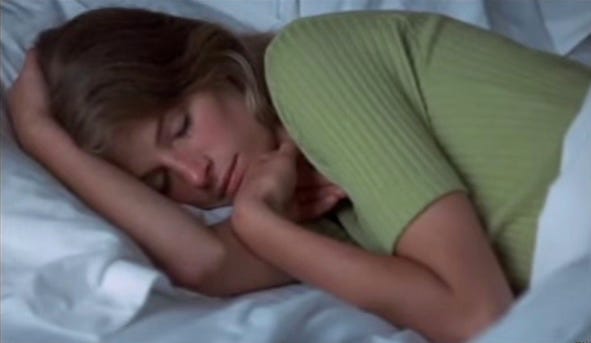
Wednesday’s regular dip into the WEEKEND FLICKS. archive continues with James Salter’s Three (1969), starring Charlotte Rampling, Sam Waterston and the South of France. It’s very much a summer film — and one of my all-time favourite flicks. I hope you enjoy it…
Let’s stick with our ‘France in the Sixties’ theme and turn to Three (1969), directed by James Salter (the American writer), and based on the Irwin Shaw short story, Then We Were Three (1955), and starring a young Charlotte Rampling and Sam Waterston. I watched it last night and loved it, and despite negative criticism online, I think it’s a wonderful film. Detached, visual, elegant and spare.
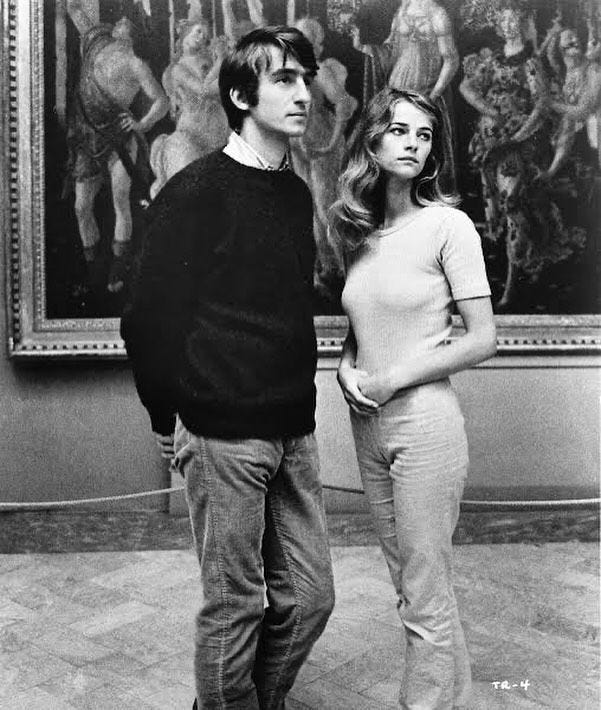
I suppose if you like CGI, thrills, spills and explosions, superquick editing, and deafening surround sound, accompanied by the munch of rancid popcorn, then you’re going to loathe Three (1969), a film set in the languid summer of 1968, in which good-looking people drift around Europe, visit museums, smoke Gauloises, lie on beaches in white bikinis, and don’t say very much to each other. But there’s far more to it than that. It’s marvellously subtle. There are terrific performances from Charlotte Rampling and Sam Waterston; Charlotte, especially, who’s utterly captivating as Marty, this sophisticated, self-possessed and enigmatic English girl. And all of this is set against lovely, unhurried cinematography and fabulous location work, the road trip that says Tuscany, Florence, Rome, the French Riviera, Antibes and Biarritz. And it’s beautifully made.
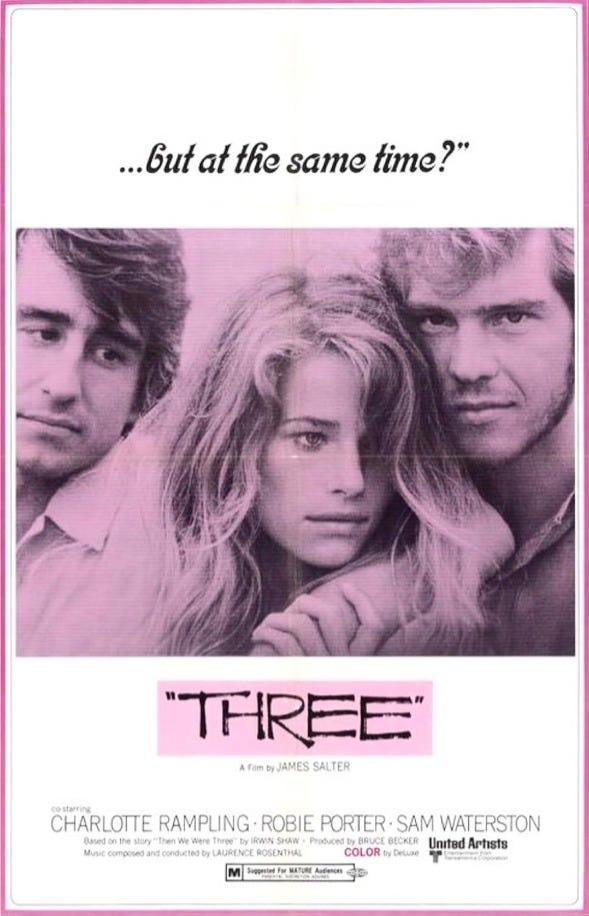
Two American ‘college’ boys (in Brooks Brothers shirts) are on a Grand Tour of France and Italy. Taylor (Sam Waterston) and Bert (Robie Porter). They’re both in their very early twenties, in that in-between bit between University and Law School, or the equivalent. And they’re from well-off, comfortable backgrounds, or at least the more refined Taylor is. Bert’s the more confident one, with the All-American good looks: blond, tanned, growing a beard; wears a pendant. Taylor’s not as good-looking, but he makes up for it with his sensitivity and reserve, which, for the purposes of the film, makes him, apparently, more attractive to women, or at least according to Bert — although in my early 20s, I don’t remember it being this way. It was always the arrogant, super-confident tosser, the boy with the Brideshead quiff, who got the girl. And then (running into one thirty years on) he’d turned into a pudgy, washed-out banker, lawyer — or accountant.
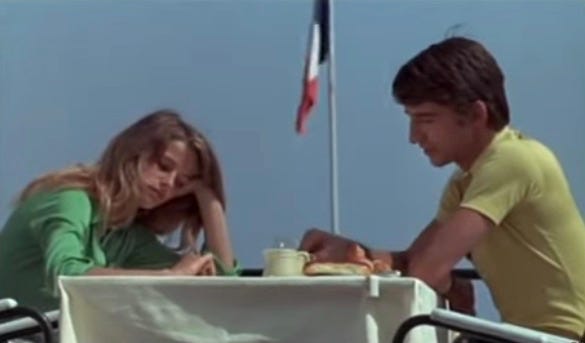
And so the boys hire a decrepit convertible Peugeot 202, the car with the weird headlamps, like a cross-eyed froglet, and head for sunny Tuscany.
Already we’re in The Talented Mr. Ripley territory (but without the murder), Americans and Brits in Europe, Two for the Road (1967), Secret World (1969), And Soon the Darkness (1970), Le Magnifique (1973), The Day of the Jackal (1973), By the Sea (2015); Gerald and Sara Murphy on the Côte d’ Azur; the Lost Generation, Lord Byron and the Shelleys at the Villa Diodati.
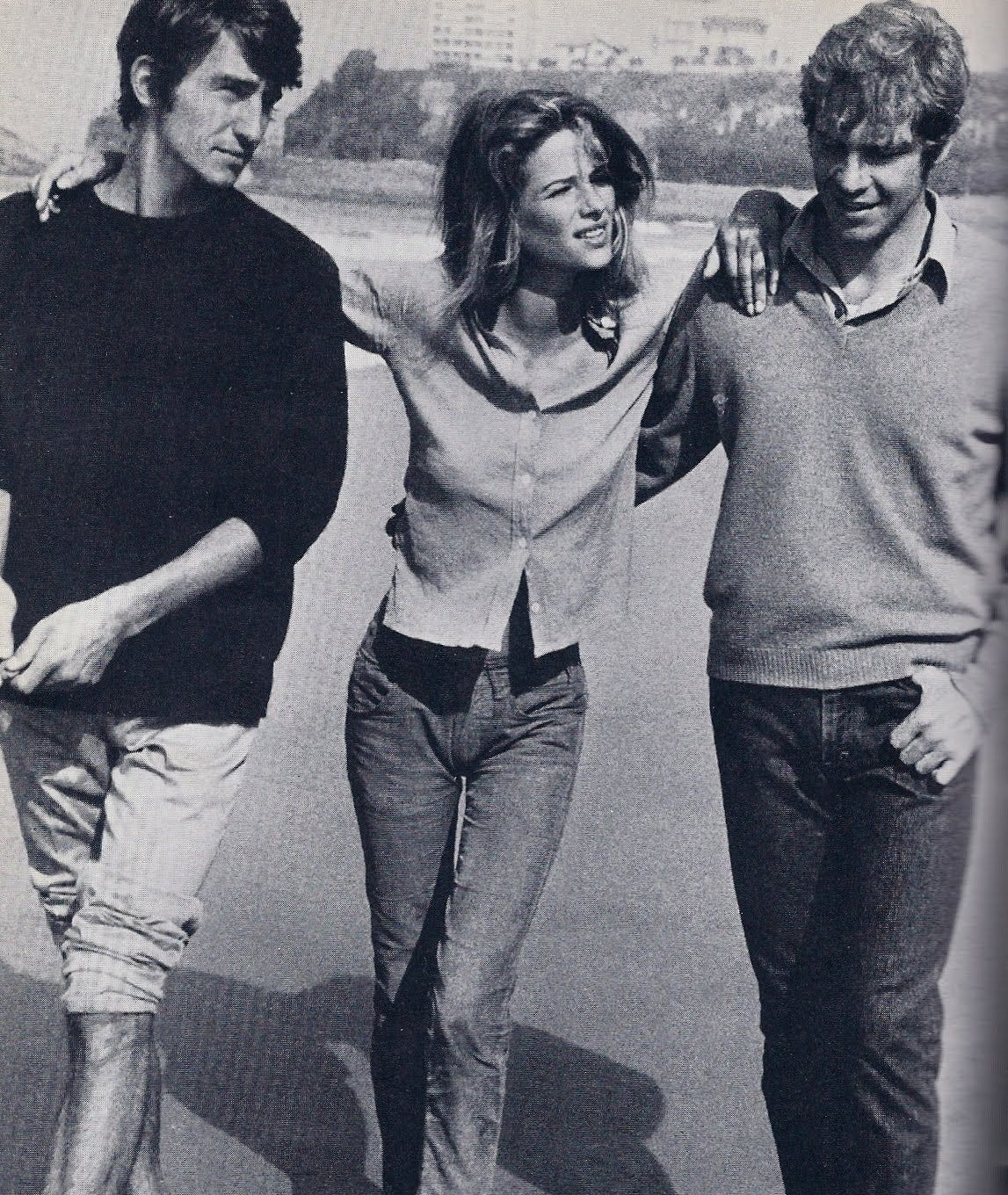
It’s also an opportunity for the boys to meet (and pick up) girls, from Jane Birkin lookalikes outside cafés, to scary aristocratic sophisticates in Roman palazzos, and an older French woman, with an Alice Band and scars on her wrists, and as their tour progresses, the boys’ initial gaucheness begins to wear off. The bored, deadpan conversation piece in the salon of a palazzo reminds me of the final (London) party scene in Blow-Up (1968): “But I am in Paris”; aristocratic beauties in Pucci, a sullen Count who collects antique guns.
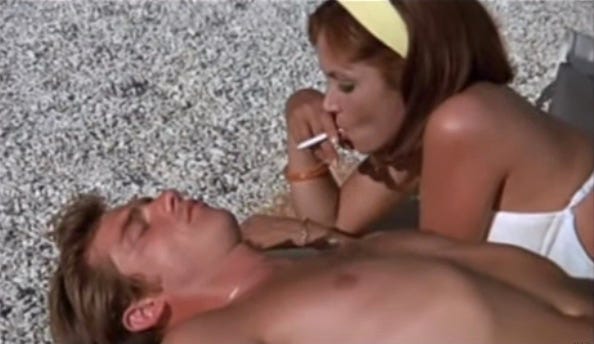
Marty is possibly very slightly older than the boys (Charlotte Rampling was twenty-three). She’s poised, very English, enigmatic, cool, and detached; a free spirit. At home in an elegant casino. In contrast to the preppy, wholesome girls the boys are used to, back in America. I suspect Taylor and Bert have never met anyone like her before. She lives in Paris, “sort of”, although she’s probably from London. Or at least her estranged mother is. And of course she’s seriously beautiful, as thin as a whippet, with luscious long hair, “like a French starlet” as Taylor says to her on the beach at Biarritz, as only a young Charlotte Rampling might be.
I know that if I had been a mere twenty years old, Marty is a girl I might well have fallen for — as indeed the poor, reserved Taylor does. Big Time. There’s this really subtle, touching scene, beautifully acted, beautifully observed, between Waterston and Rampling, which in a way, is the key to the whole picture, about how reserved and introspective people miss opportunities in life, like the well-bred Urban Haute Bourgeoisie of Whit Stillman’s Metropolitan (1990), ‘ultimately doomed to failure’, or Sam Waterston’s Nick Carraway in The Great Gatsby (1974). I don’t want to give too much away: all I will say is that if Marty/Charlotte Rampling had invited me into her bedroom — well, I wouldn’t have exactly held back.
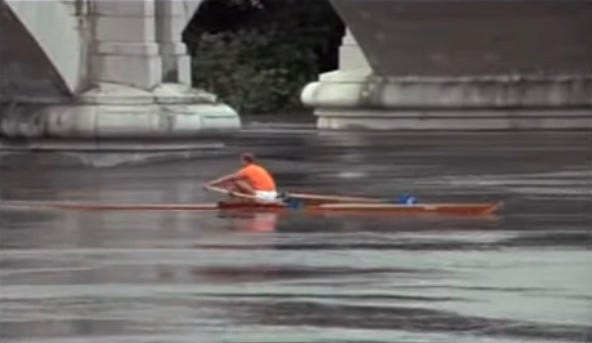
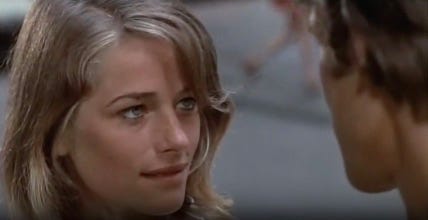
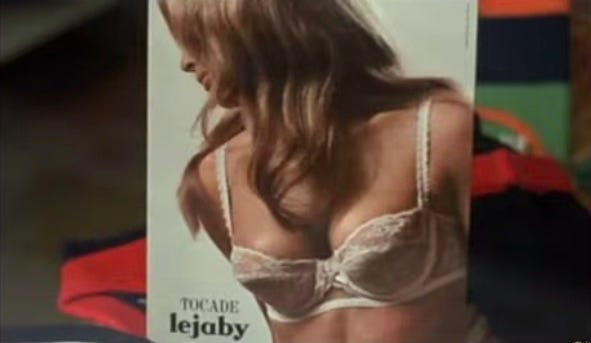
Three (1969) is detached, elegant, spare, and beautifully framed. Salter delights in the little details: a petit café on a wrought iron table, a Pernod-branded ashtray, a brassière advertisement in a boutique window. Stillness, a sense of naturalism. In yet another touching moment, Marty takes Taylor clothes shopping, and by now he’s clearly mad about her, but doesn’t know how to express it, and Charlotte tosses aside a silk orange shirt, the way women do when they shop for clothes. Trust me on this; I’ve been to Zara.
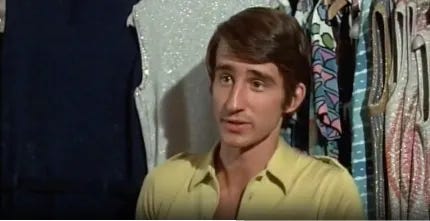
Rampling was the hot ticket for 1968/9, starring in that year in Luchino Visconti’s The Damned. Her presence secured funding for the film. James Salter had a difficult time on set, and according to his biography, Burning the Days (1997), had various issues with his leading lady; dismissing his first film in economical prose as ‘decorous and mildly attractive’, ‘demanding more than I was willing to give.’ For Salter, alas, ‘the ball was over.’ Which is a pity, as one wonders, despite the win for American Literature, what Salter might have done if he had made another film. Oh, what we have missed!
And Salter’s too hard on himself. Robert Phelps, the New York writer and editor, wrote to Salter after the release of Three, “I’ve seen Three,” it read, “and ... loved every moment of the film.... I don’t know which I feel more strongly: envy or respect.” The critics liked it; the public didn’t. Today, there are comments online: ‘three boring people travel across Europe…’ That sort of thing. But then, I mean, just because characters in an Elizabeth Taylor or Elizabeth Jane Howard novel don’t say very much, it doesn’t mean they don’t have any thoughts — the reserved Taylor is thinking away like crazy, actually; he’s overthinking — to his detriment.
Three (1969) is a genuinely rare film, sometimes described as ‘lost’, and, as far as I am aware, there’s no official DVD release. Fortunately for us all, some enlightened soul has posted an old television recording on YouTube, and although it’s a bit fuzzy, it’s still perfectly watchable. The same recording can also be found on our useful, if dubious friend, that Russian social media site, and it has, at least, also been shown on MUBI.
That was Film No. 203 in the WEEKEND FLICKS. archive. For those of you reading this as free subscribers, may I dangle a ‘paid’ subscription button over you, like a metaphorical carrot? A paid subscription gives you full access to both the Friday posts (for the paid subscribers) and the complete archive, which is now running to something like over 250 films (I have lost count). And so I will be back on Friday with a black-and-white cracker from the mid-1960s, set in London, and starring Laurence Olivier in one of his best film performances. Enjoy Three (1969). It’s a terrific film. Noilly Prat (to rhyme with cat) for this one. À bientôt!
No posts
Comments
Nothing yet. Say the first thing.
Sign in to join the conversation.