
If I were to ask you right now whether extreme weather is getting worse because of climate change, I can almost guarantee that your answer would be yes. It feels obvious—of course it’s getting worse, right? But when you actually look at what UN scientists have reported, the data tells a very different story.
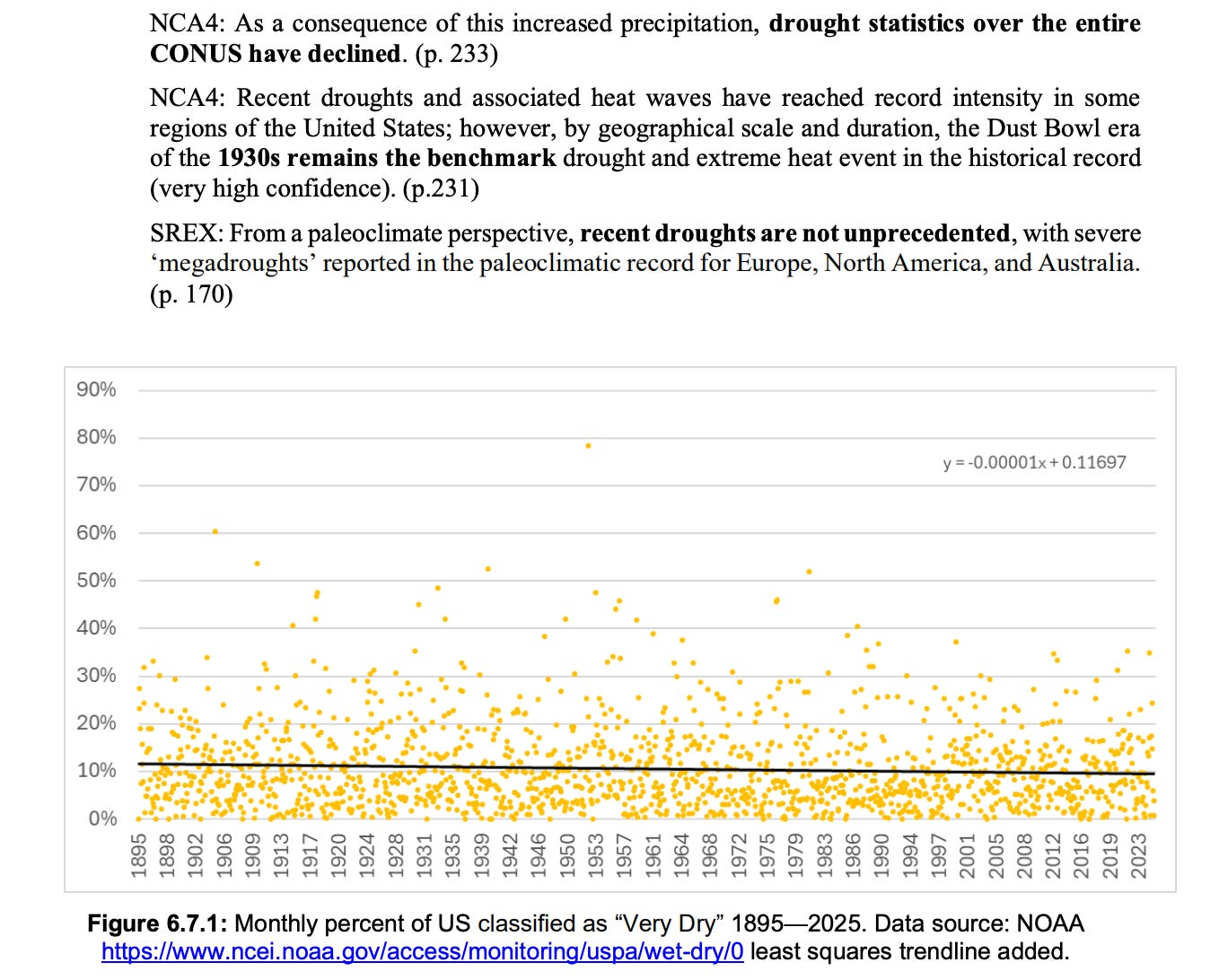
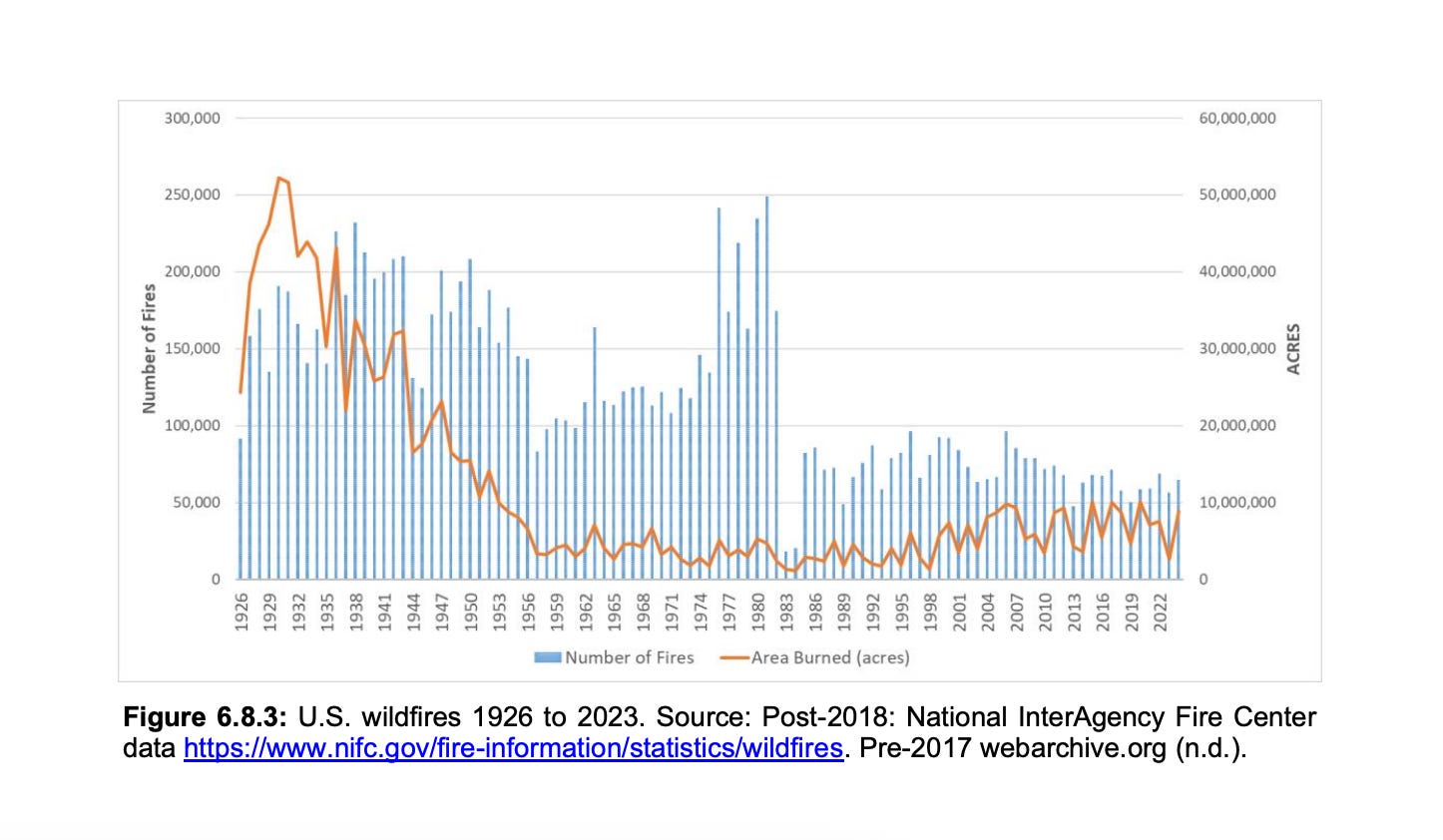
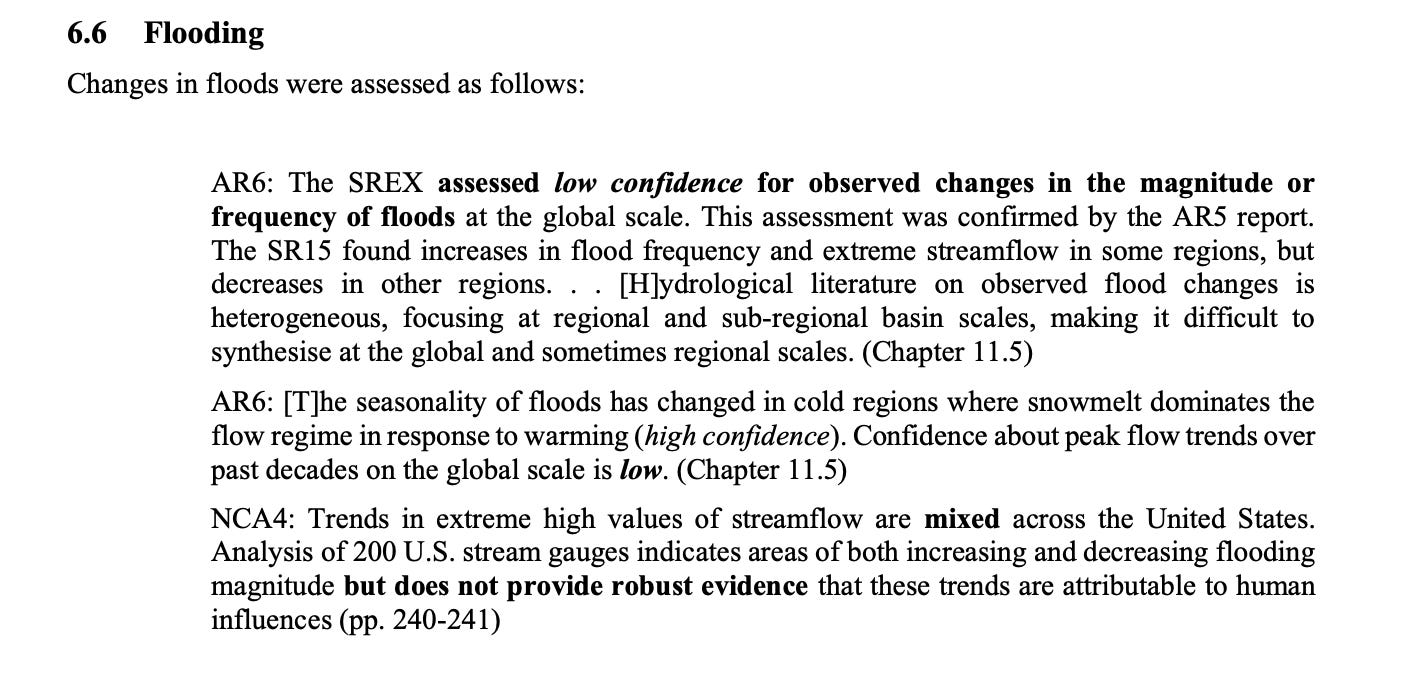
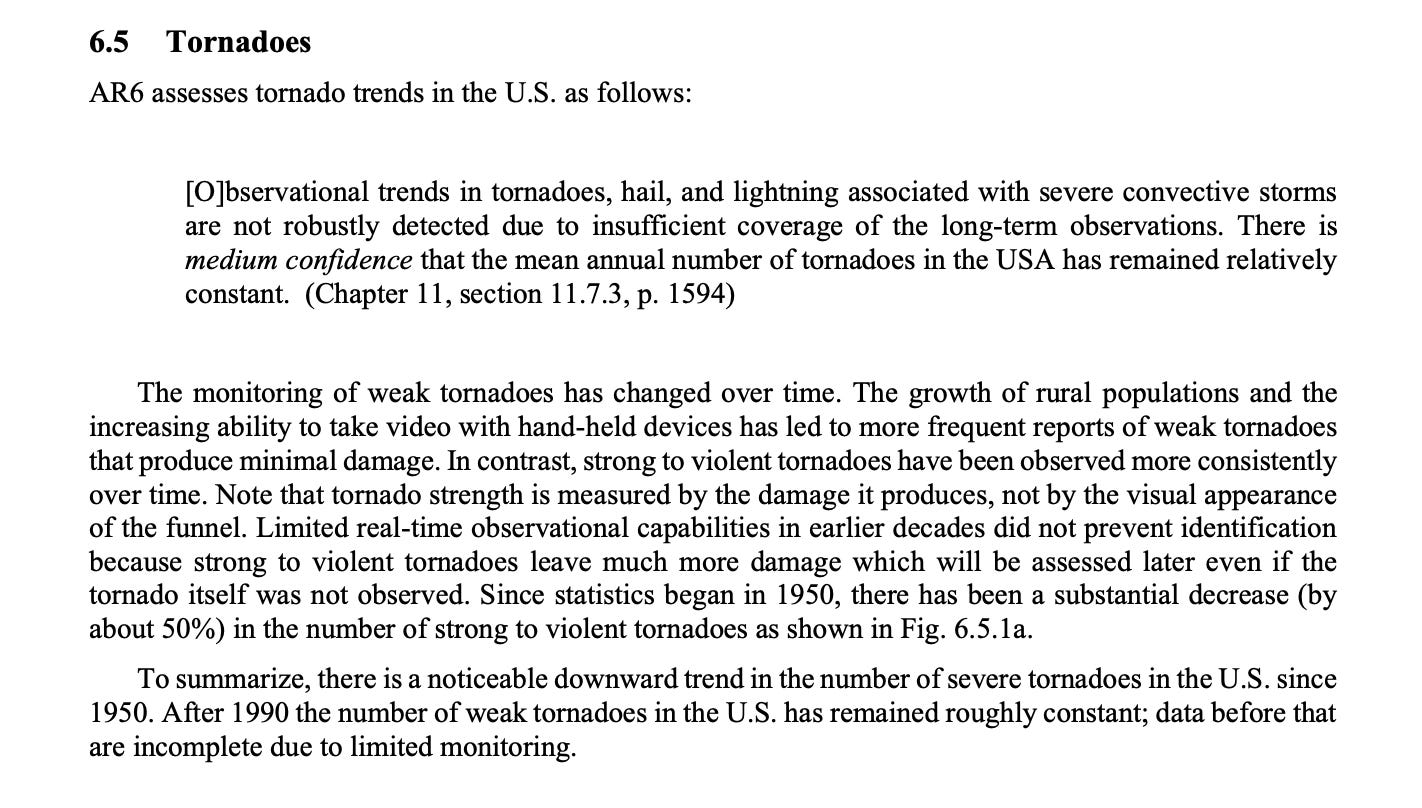
Drought, flooding, hurricanes, wildfires, tornadoes—all of these things are either steady or have declined over time. That’s not my opinion; that’s what the science shows. See charts and screenshots from UN IPCC reports below.
Droughts
Wildfires
Flooding
Tornadoes
Hurricanes
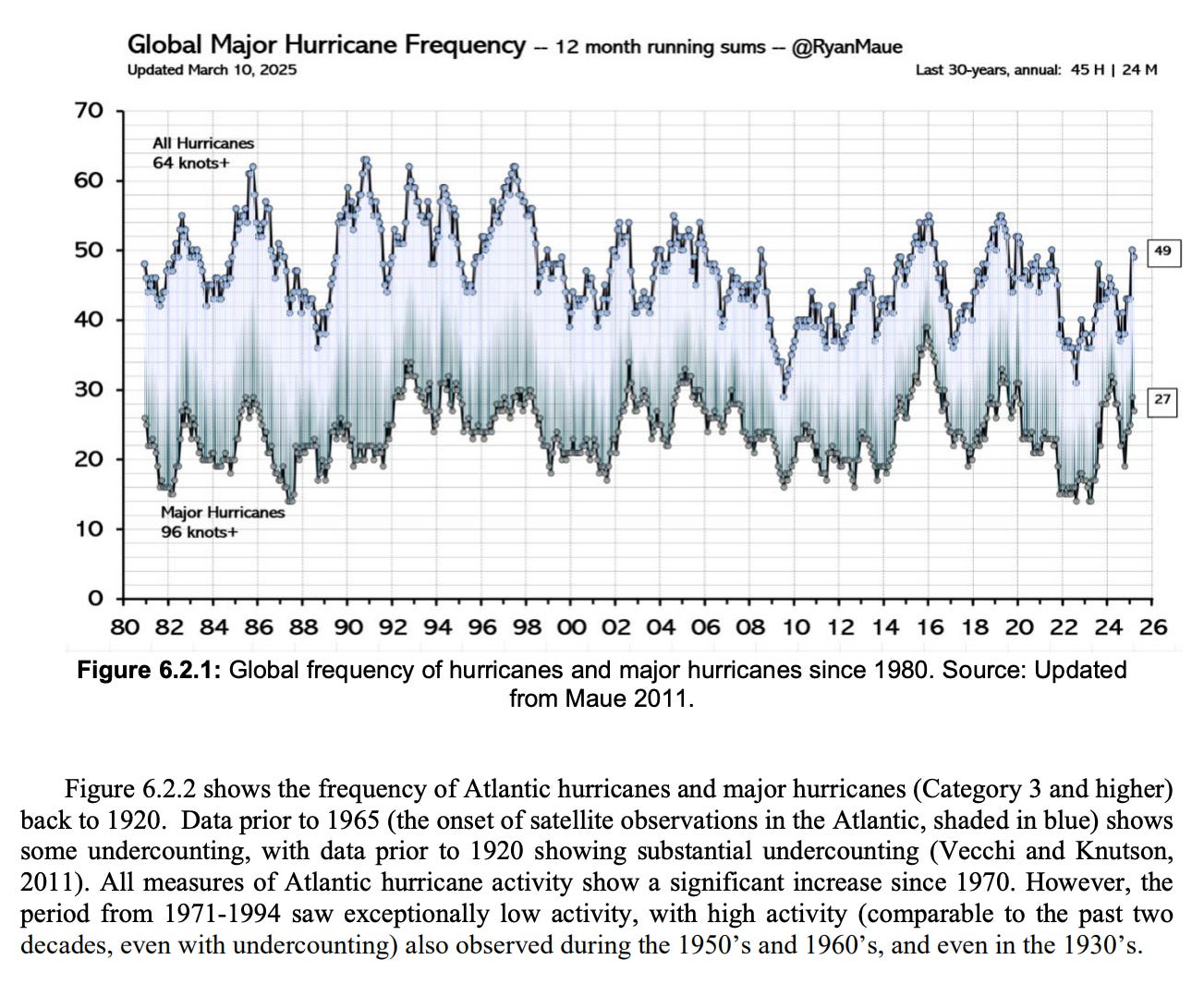
Despite being easy to prove with evidence that the 1.3 degrees of warming we’ve experienced over the past 150 years has not made extreme weather worse, the story of increasingly extreme weather is everywhere. It’s basically an unquestioned assumption at this point. Why?
Writer Bjorn Lomborg says it perfectly in his book False Alarm: “The scientific facts are left behind because the narrative feels true.”
It doesn’t matter that extreme weather arguably is getting better because the story—that human progress comes at a cost—feels morally right.
One reason this story persists is how the news covers every weather event. Every time there’s a wildfire, a hurricane, a drought, or a flood, it’s immediately “because of climate change” or “made worse by climate change.” But if you have any context for how the world actually works, you know that extreme weather has always existed.
To date, the historically worst hurricane (1780), flood (1860), drought (1930–1935), wildfire (1871), and heatwaves (1935) all happened in the U.S. before we would have felt any measurable impact of climate change.
The truth is there have always been devastating weather events. That’s just life on planet Earth! Humans used to understand that. Only in my lifetime has weather become politicized—and something we feel personally responsible for.
Another reason the myth endures is because we’re more insulated from nature’s extremes than ever before. We live in climate-controlled homes, drive sealed cars, and move between buildings that keep us dry, cool, or warm. But that protection has made us forget how wild nature has always been.
There’s also a psychological layer to this—something older and deeper. In Christian theology, it’s called original sin: the idea that humans are born fallen, inherently flawed, and guilty just for existing. The modern climate narrative maps perfectly onto that ancient moral framework. We are the problem. Our comforts are the sin. The storms are the punishment.
Yet look around. We are living longer, healthier lives than any generation before us. We enjoy abundance and convenience beyond imagination. We’ve harnessed cheap, reliable energy in the form of fossil fuels. We’ve tamed nature to our will—built cities, created art, explored the universe. And still, we struggle to celebrate it. Instead of pride, we feel shame. Instead of gratitude, guilt.
We insist that our prosperity must come at a terrible cost—that the very progress that made our lives possible is destroying the planet. We can’t accept our own success without believing we deserve punishment for it.
But the truth is not apocalyptic. The science does not show that extreme weather is getting worse. The data suggests stability—and in many cases, improvement—especially as human societies adapt and become more resilient. For example, deaths from natural disasters have plummeted by 98% since 1920! That’s something we should be celebrating. It’s something our news should be reporting.
In a time when it’s fashionable to predict collapse, it’s radical to share good news. To say that humanity has triumphed over nature’s chaos through ingenuity and cooperation feels subversive. But it shouldn’t.
Recognizing human progress isn’t denial—it’s gratitude. It’s realism. And I think the most rebellious thing we can do in this age of climate guilt is simply to tell the truth: the weather’s fine, and so are we.
No posts
Comments
Nothing yet. Say the first thing.
Sign in to join the conversation.