

In this post, I decided to go deep into the transformative impact of social media on the travel industry from the customer's perspective.
I will provide an overview of the massive adoption of platforms like Instagram and TikTok, the new ways travellers look for inspiration and planning, the rise of "Instagrammable" destinations, and the role of user-generated content in shaping travel experiences.
Finally, I will share insights on how social media continues to influence travel for different generations.
"Instagrammable" was officially added to the Oxford English Dictionary in 2018. This word reflects the significant cultural impact of Instagram on Western cultures, indicating locations or items that are particularly suited for being photographed, recorded and shared on the Social Media Platform owned by Facebook (now Meta) in 2012 for 1 billion USD.
Since its acquisition by Meta in 2012, Instagram's user base has grown significantly, reaching over 2 billion monthly active users by January 2024, making it one of the largest social media platforms globally.
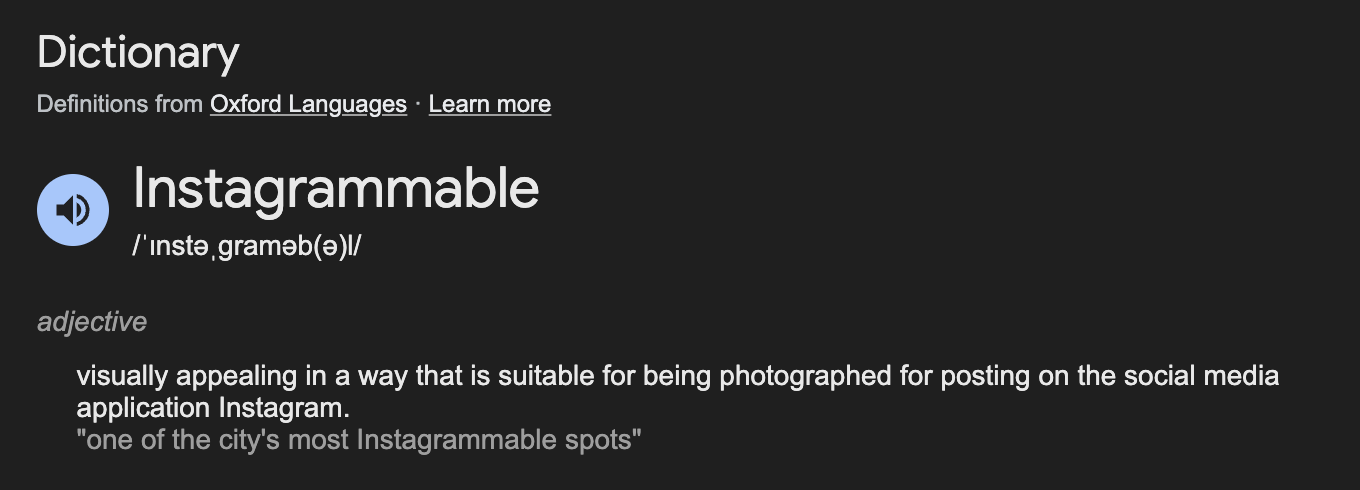
In this post, I will analyse how "Instagrammability" has become a critical factor for travel decision-making processes and not only. Many travellers are choosing their travel destinations nowadays based on how photogenic, potentially viral and sharable they are, aiming to capture and get visually stunning moments on their feeds.
The adoption of Instagram has seen substantial growth from 2018 to 2024, reflecting its increasing popularity and influence in the social media landscape.
Here is a summary of the user adoption evolution:
2018: 1 billion users.
2019: 1.1 billion users.
2020: 1.2 billion users.
2021: 1.4 billion users.
2022: 1.5 billion users.
2023: 1.6 billion users.
January 2024: 2 billion users.
This steady rise in user numbers highlights Instagram's strong appeal, driven by its focus on visually engaging content, photo and video-sharing features, and continuous innovation to keep users engaged.
Instagram's role in travel marketing has grown exponentially, driven by its visual-centric platform and popularity among younger demographics.
Influence on Travel Decisions: Instagram has become a primary source of travel inspiration, particularly for Millennials and Gen Z, who rely on Instagram to discover new destinations, plan their trips, and find activities to do while travelling.
User-Generated Content (UGC): Travel brands often use UGC to create authentic and engaging content. By showcasing real travellers' photos and experiences, companies can build a more relatable and appealing brand image. This approach not only enhances credibility but also encourages more users to share their own travel stories.
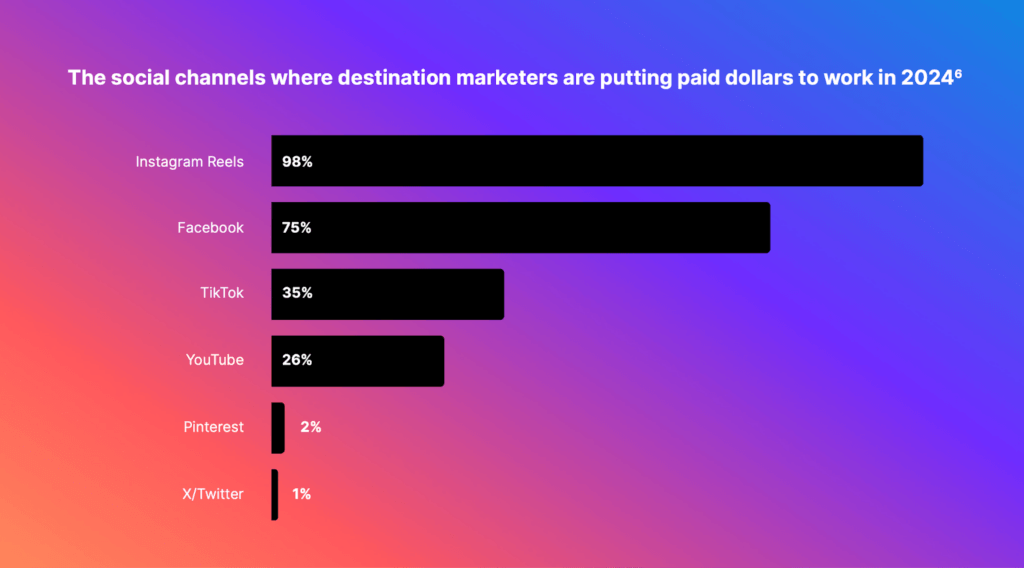
The travel industry continues to be the most engaging industry on Instagram, with an average engagement rate of 1.41%. The engagement rates on X are 0.04%, TikTok 8.74%, and Facebook 0.27%. The spike in TikTok travel industry posts engagement indicates that this social media channel can provide very lucrative opportunities to the travel sector in the future.
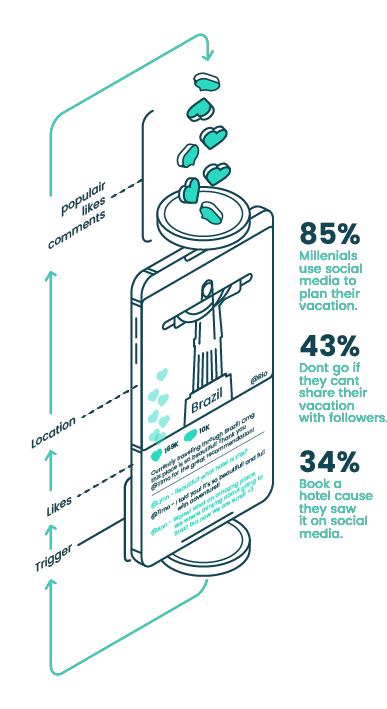
Source: Positive and negative effects of Social Media on the Tourism industry
Instagram has long been a cornerstone for travel inspiration, and its impact continues to grow. The usage of the #tourism hashtag has surged dramatically over the past few years. Starting at 100 million uses in 2019, it grew to 250 million in 2020.
The trend continued with 450 million uses in 2021 and 750 million in 2022. By 2023, hashtag usage reached 1.1 billion, and in 2024, it stands at a remarkable 1.5 billion.
This exponential growth highlights Instagram's role as a key platform for travellers seeking picturesque destinations and authentic experiences.
The hashtag "travel" has more than 74.4 billion views on TikTok, while Instagram features over 624 million posts related to travel. TikTok has transitioned from a mere entertainment platform to a preferred search engine for many users, particularly among younger generations.
Approximately 74% of Gen Z users now use TikTok to search for travel-related content, favouring its visually engaging format over traditional search engines like Google.
As we look back, it's clear that social media has revolutionized the way we travel.
Platforms like Instagram and TikTok have become so much more than just tools for sharing our adventures – they're now the driving force behind our travel decisions. We're no longer just looking for a great destination; we're searching for a place that's going to make our friends “jealous” on Social Media.
For many of us, especially younger generations, the aesthetic appeal of a location is just as important as its cultural or historical significance. We want to visit places that are not only beautiful but also photogenic – and Instagram has become the ultimate guide for finding those spots. The platform's influence is undeniable, with user-generated content playing a huge role in shaping our perceptions of different destinations.
But as TikTok continues to rise in popularity, especially among Gen Z, it's clear that the way we consume travel content is changing. We're no longer just looking at static photos; we want immersive, dynamic experiences that transport us to new and exciting places. This shift is a sign of things to come – a future where travel and social media are even more intertwined.
So, what does this mean for the travel industry?
In short, it means that destinations that can deliver visually stunning and highly shareable experiences will be the ones that thrive. The trend of choosing travel destinations based on their "Instagrammability" is here to stay, and it's a reflection of a deeper shift in consumer behaviour.
As we move forward, one thing is clear: the power of visual storytelling will continue to be central in communication strategies, and the most picturesque destinations will still capture our hearts – and our screens.
No posts
Comments
Nothing yet. Say the first thing.
Sign in to join the conversation.