
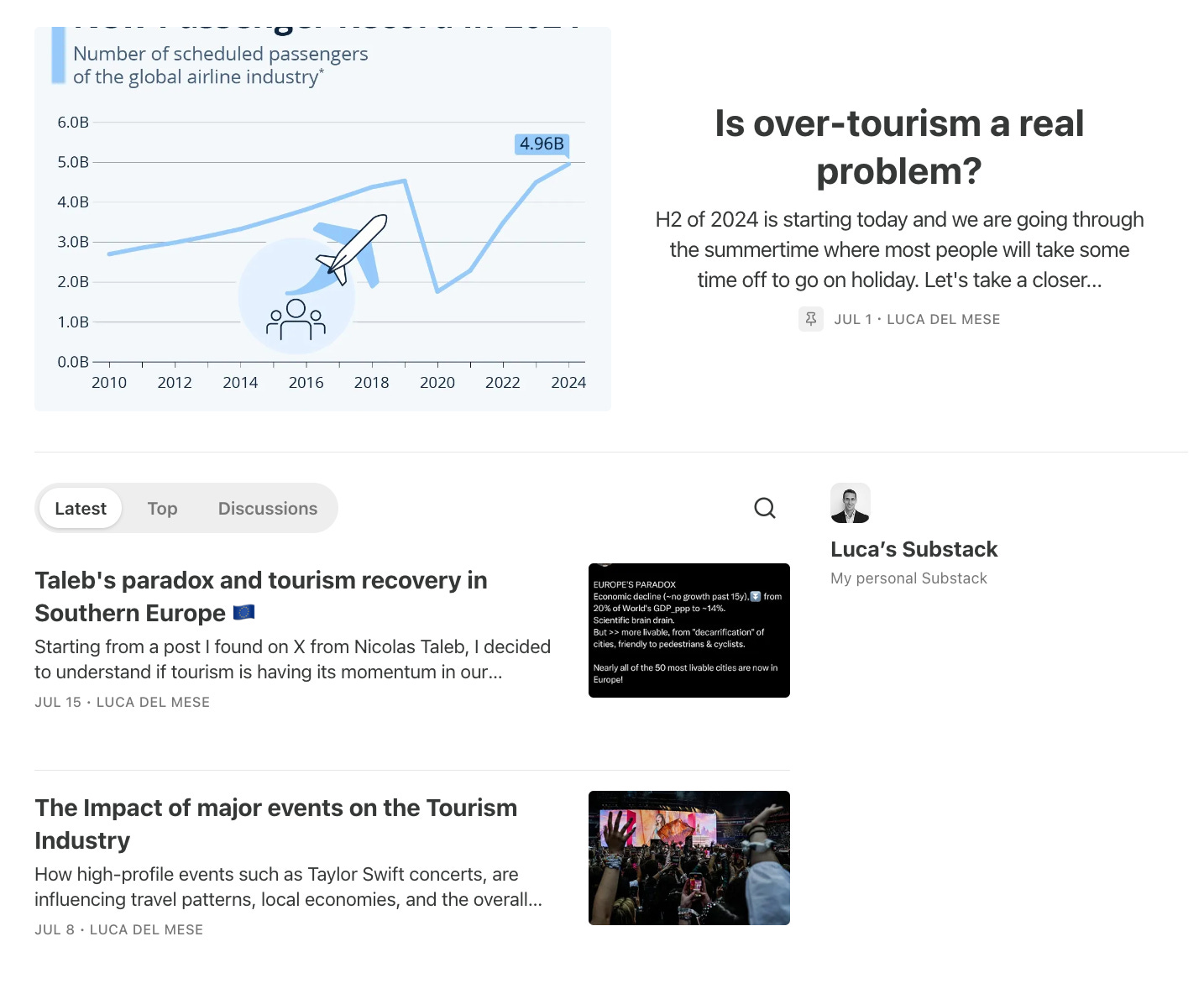
In recent weeks, I have been analysing a number of key topics, including the over-tourism phenomenon, the recovery of the tourism in Southern Europe and the impact of major events on the tourism industry.
This week, I will be focusing on the experiences side of travelling. As most of you are aware, this newsletter scope is to highlight the trends, opportunities and challenges I see in the related industry I work for.
Businesses providing tours and experiences should adopt digital tools to meet the needs of their customers and last but not least increase their revenues, growth and productivity.
I strongly believe that technology is playing a crucial role in our lives and this is going to be the future trend too.
From the customer perspective, technology is an essential tool for navigating the challenges before, during and after a travel experience because it enables the booking of flights and accommodation, the discovery of local cuisines and the pursuit of activities in any selected destination.
As a member of the Millennial generation, I recognise that my peers and the Gen-Z are more technologically inclined.
I have therefore chosen to concentrate on the third most important source of inspiration for travellers when planning their trips, as the McKinsey travel survey reports show, 37% of respondents are choosing online booking platforms.
Younger generations are increasingly favoring experiences over material possessions.
The survey highlighted a significant contrast in spending habits across generations:
52% of Gen Z individuals prioritize spending on experiences, compared to only 29% of baby boomers.
Gen Z travelers are keen on saving money on flights, local transportation, shopping, and food, but they are reluctant to cut back on experiences.
Their travel vocabulary is experience-focused, with the hashtag "Never stop exploring" appearing on nearly 30 million Instagram posts.
The importance of experiences is clearly evident in the stories people share about them. Travel has always thrived on word-of-mouth, with travelers' stories inspiring others to follow in their footsteps.
Social media has become the latest medium for this storytelling tradition, acting as a collective platform for sharing travel experiences. The survey found that 92% of younger travelers were influenced by social media for their last trip.
Interestingly, their main sources of inspiration are not influencers or celebrities (30%), but friends and family (42%). Real-life social networks are filled with highly effective micro-influencers.
Market Size and growth of global tours and activities reservations
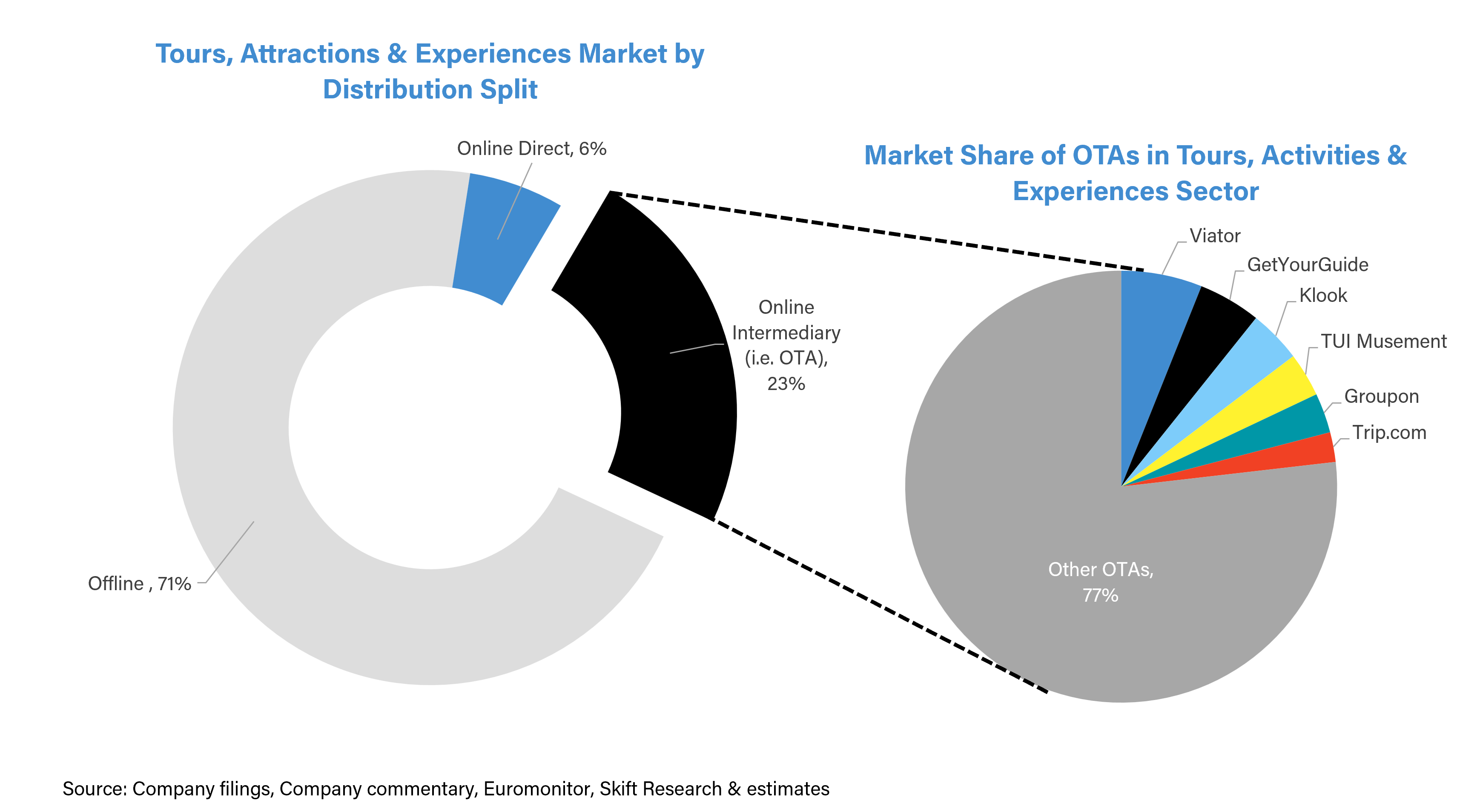
Leading OTAs in the experiences sector
Challenges
Opportunities
Final thoughts
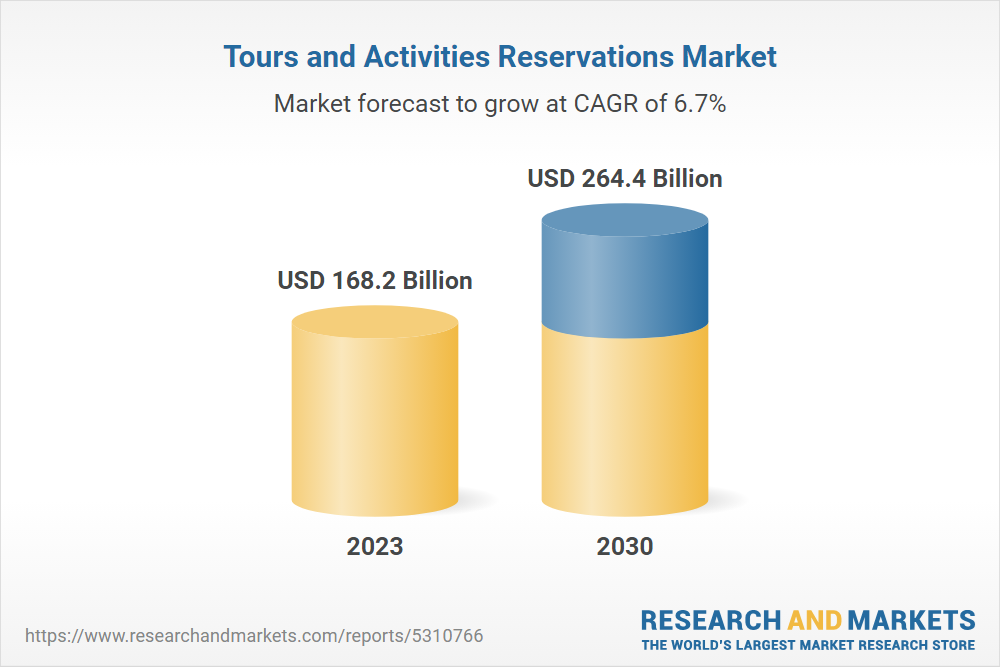
The global tours and activities reservations market is currently experiencing significant growth, with the following key metrics:
Current Market Size: The market was estimated at $168 billion in 2023.
Projected size for 2024: It is expected to reach $183 billion in 2024.
Growth Rate: The market is projected to grow at a compound annual growth rate (CAGR) of 6.7%, reaching approximately $264 billion by 2030.
The travel industry is experiencing a significant increase in consumer demand for distinctive travel experiences, reflecting a broader trend towards experiential travel where individuals seek memorable and authentic activities.
At the same time, there is a major move towards online bookings, driving growth in the digital sector. Technological advancements are vital for industry players looking to enhance user experiences, streamline operations and offer more personalised services.
Travel companies are forming strategic partnerships and collaborations to expand their product ranges and reach a broader customer base. The growing middle class in emerging markets is driving more international travel and higher spending on tourism activities. Furthermore, there is a clear focus on local and authentic experiences, which align perfectly with the desires of modern travellers.
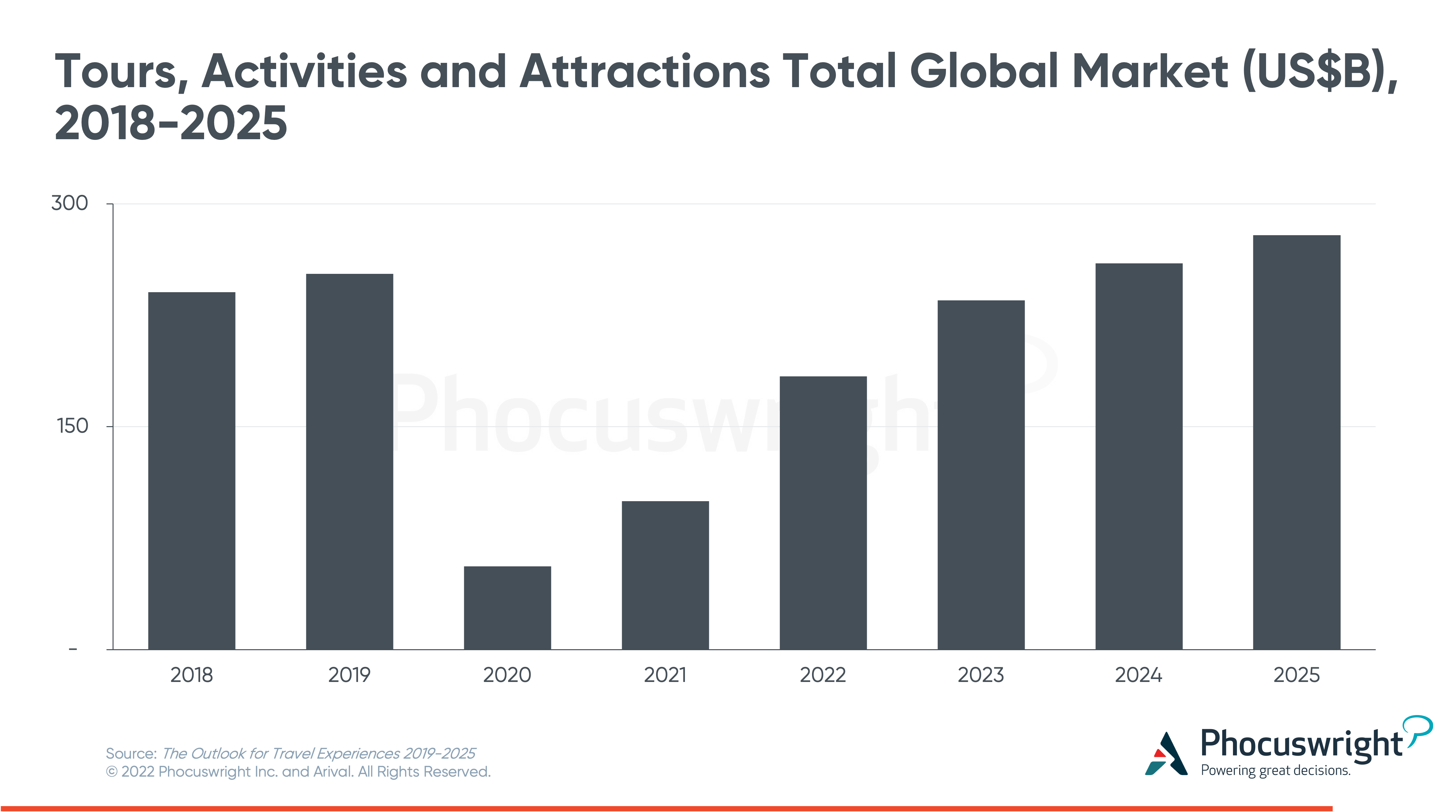
The size of this market underscores the importance and potential of online travel agencies specializing in tours and activities. It reflects the growing trend of travelers seeking unique experiences and the increasing shift towards online bookings for travel-related services.
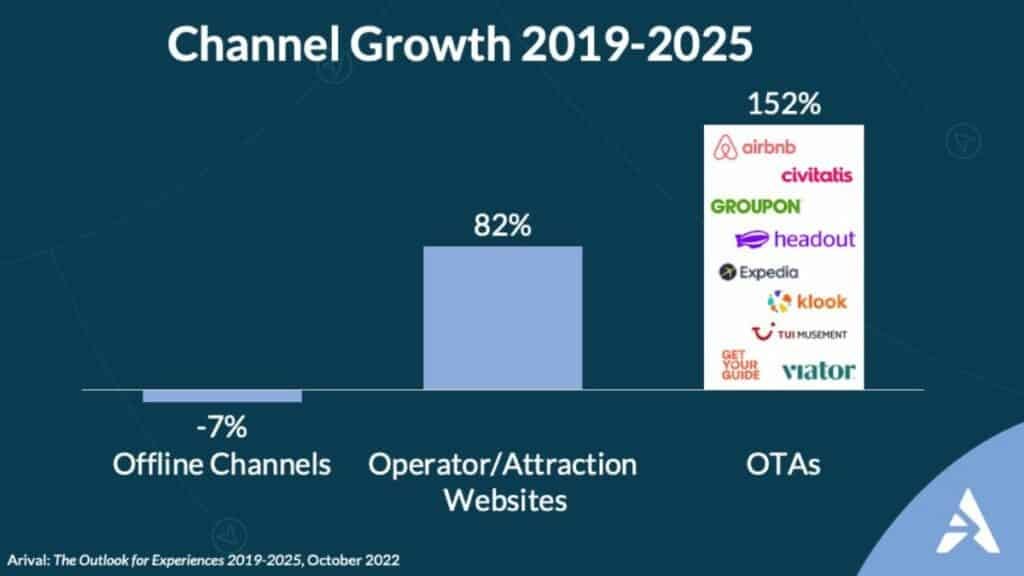
Online travel agencies (OTAs) like Viator, GetYourGuide, and Klook are expanding, making it easier than ever for consumers to book a variety of activities.
The post-Covid recovery has also triggered a surge in demand for travel experiences, driving market growth.
They serve as platforms where various tour operators can list and sell their services, connecting travellers with local experiences across multiple destinations.
Market Position: Viator, a subsidiary of TripAdvisor, is one of the most prominent players in the market. Despite its extensive offerings, Viator estimates it captures only about 1% of the experiences sector.
Strategies:
Brand Awareness: Viator is investing heavily in marketing to boost brand awareness, even at the expense of short-term profitability.
Partnerships: Collaborates with platforms like Google and other OTAs to drive traffic and enhance product visibility.
Product Range: Offers over 300,000 bookable experiences, leveraging its parent company's extensive reach.
Market Position: Headquartered in Berlin, GetYourGuide is a leading booking platform known for its diverse range of travel experiences and strong global presence with offices in 17 countries.
Strategies:
Technology and Data: Utilizes data-driven insights and technology to simplify the booking process and enhance customer experience.
Expansion and Innovation: Continuously expands its offerings and markets, achieving unicorn status in 2019.
Customer Focus: Emphasizes creating meaningful travel experiences and has earned the trust of millions of travelers globally.
Market Position: Klook is a significant player in the Asia-Pacific region and has been expanding globally.
Strategies:
Capital Injection: Secured $210 million in a recent funding round to invest in technology, product development, and market expansion.
Quality and Loyalty: Focuses on providing high-quality experiences and building customer loyalty through a seamless mobile-first platform.
Diversification: Offers a wide range of services beyond tours and activities, including attraction passes and car rentals.
Both platforms allow users to research and book experiences, acting as intermediaries between travellers and local tour operators. They typically charge suppliers a commission ranging from 20% to 30% on bookings, which is a common practice in the OTA industry.
High Competition: the market is highly competitive, with numerous players vying for market share.
Companies like AirBnb quickly shifting their focus from this segment to adjust their strategy giving a clear signal of the difficulties hidden in this sector.
Despite this, Airbnb remains committed to the experiences category, recently launching "Icons," a product highlighting experiences.
Technological Advancements: Continued AI and machine learning advancements present opportunities for OTAs to offer more personalized and efficient services.
Expansion into new markets: Growth potential exists in emerging markets and untapped regions.
The Tours & Activities Reservations Market is witnessing substantial growth globally, with several emerging markets showing significant potential. Here are the key emerging markets:
Growth Rate: China is forecasted to grow at an impressive CAGR of 11.2% from 2022 to 2030.
Market Size: The market in China is projected to reach $64.7 billion by 2030.
Key Drivers: Increasing disposable income, a growing middle class, and a high propensity for international travel are driving this growth.
Tourism Trends: India is showing a rising trend in international tourism expenditure, with Indian residents making 16.4 million trips in 2016.
Market Potential: As the middle class expands and more people gain access to greater wealth, the demand for international travel and associated activities is expected to rise significantly.
Tourism Expenditure: Brazilian residents took 8.2 million trips worldwide in 2016, with a notable portion directed towards Europe.
Growth Factors: Economic improvements and increasing outbound tourism are contributing to the growth of the tours and activities market in Brazil.
Other noteworthy markets
Japan: Forecasted to grow at a CAGR of 2.9% from 2022 to 2030.
Canada: Expected to grow at a CAGR of 6.7% over the same period.
Germany: Forecasted to grow at approximately 3.6% CAGR.
Economic Development: Rising disposable incomes and economic growth in these regions are leading to increased spending on travel and activities.
Digital Adoption: Increased internet penetration and the adoption of online booking systems are making it easier for travellers to book tours and activities.
Cultural Shifts: A growing interest in experiential travel and unique activities is driving demand in these markets.
The research I found on Arival Travel shows that booking system adoption rates are directly correlated to company size.
It is mostly small operators – especially sole proprietors and micro-businesses – that do not use booking systems. Some 7% of large operators — primarily non-profit visitor attractions — do not have ticketing systems. The survey results also revealed significant regional differences.
Booking system adoption is highest in North America, while far more operators in Europe, Asia and LATAM do not use booking systems.
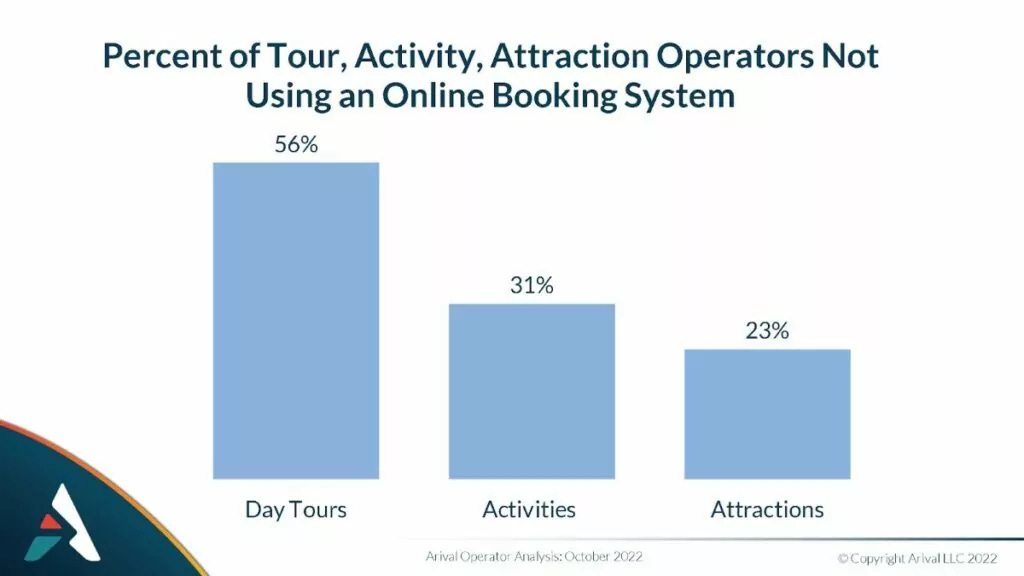
One national tourism organization in Europe said their internal research indicated that less than 15% of operators in their country used a system with online booking capability and modern API (application programming interface) capability to connect to external distribution partners and other systems.
For those operators who do have booking systems, just under half are very or extremely satisfied with their booking software. When asked how satisfied they were with their current booking system, 40% of tour operators and more than half of attractions gave their booking systems the middle option of “somewhat satisfied.”
While there are notably many satisfied operators, the largely ambivalent responses show most operators could clearly be more satisfied with their booking software.
As I conclude this week's exploration of the evolving landscape of travel experiences, I am pleased to announce that the next post will focus on the impact of Social Media on the tourism industry.
My next focus will be on how social media trends are shaping travel behaviour, inspiring destinations and changing tourism companies' marketing strategies.
Stay tuned for insights on how platforms such as Instagram, Facebook and TikTok are redefining the way we plan and experience our trips.
Enjoy your summer and happy travelling!
No posts
Comments
Nothing yet. Say the first thing.
Sign in to join the conversation.