
“How can neighbourhoods become active producers of culture rather than audiences?”
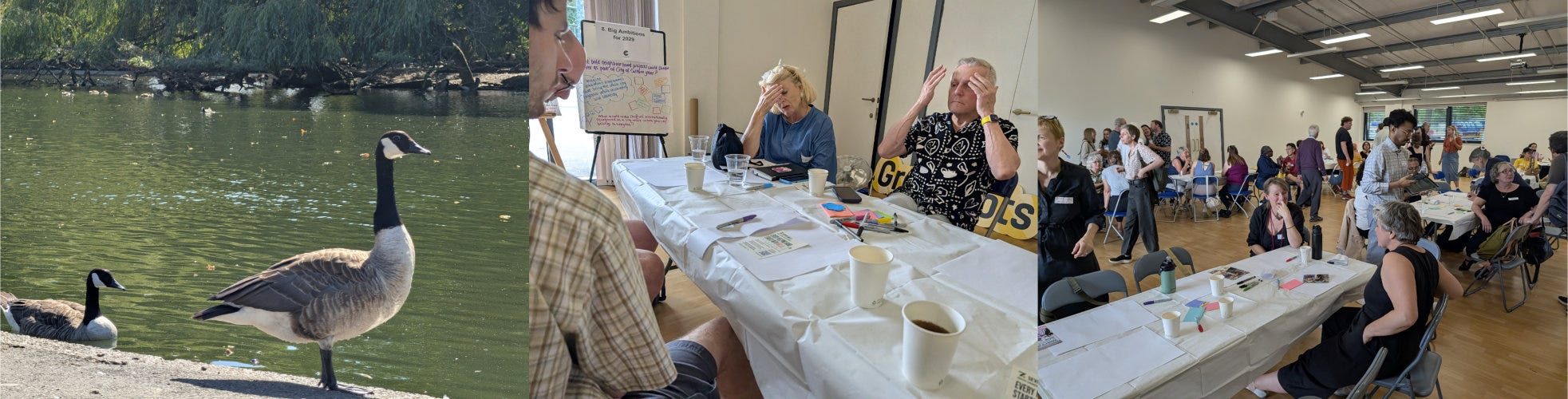
Earlier today, I joined a packed room at Courtside in Hillsborough Park for Sheffield’s City of Neighbourhoods Creative Assembly.
There were artists and residents, people from community organisations, volunteers, council staff and others who have spent years creating things in the places where they live. Once again, I felt grateful for the chance to listen, to understand how other people experience Sheffield, and to connect what I was hearing with the questions that have occupied much of my own life over the last decade.
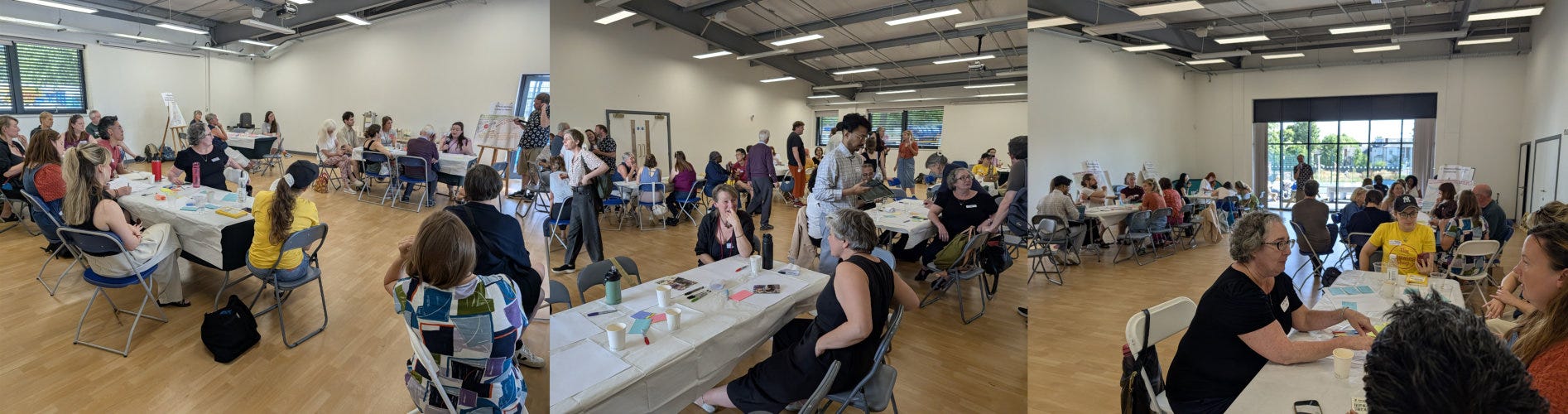
The event was part of Sheffield’s bid to become UK City of Culture in 2029. Eight tables had been set up around the room, each exploring a different question. What makes Sheffield’s neighbourhoods distinctive? How can everyone take part close to home? What partnerships are needed? How can neighbourhoods shape the programme rather than simply receiving it?
These were questions about culture, but they were also questions about power, belonging and who gets to create the future of our city.
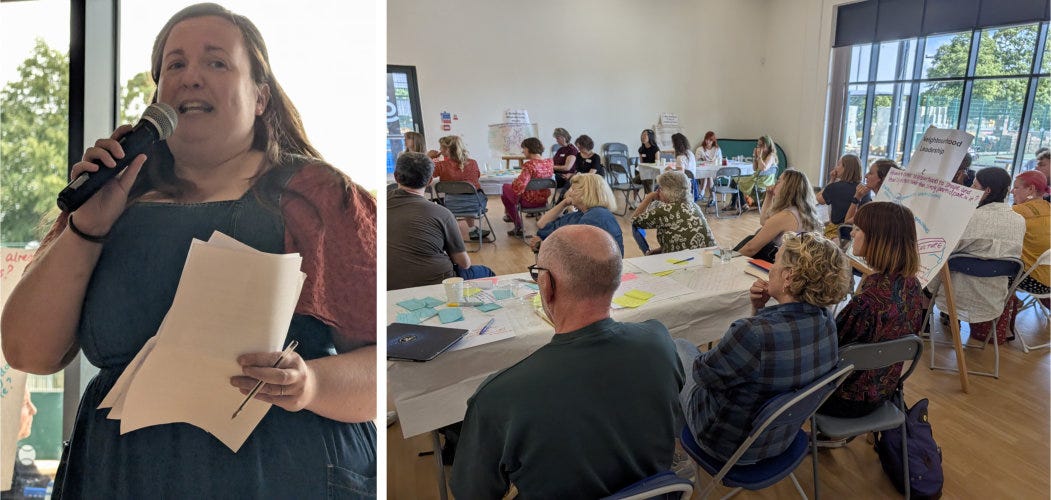
Linda Bloomfield, founder and director of RivelinCo., began by describing the organisation as a “neighbourhood art centre without walls”.
I loved that.
Their work happens in parks, schools, care homes and community spaces. The Wisewood Lantern Parade, for example, brought together artists, residents, local groups, care homes and primary schools. People learned new skills and created something that belonged to the place because it came from the people who lived there.
It wasn’t culture arriving in a van from somewhere else.
It was already there, in the stories, relationships, ideas and creativity of local people. RivelinCo. helped create the conditions for it to become visible.
Linda also made an important point about time. Trust in a neighbourhood is built slowly. It grows through repeated conversations, shared experiences and people doing what they said they would do. It can’t simply be switched on for a major event in 2029.
That means the relationships being formed now may matter just as much as anything eventually placed on a programme. Even if Sheffield doesn’t win the title, those connections could still leave the city stronger than it was before.
I spent most of the discussion at the table exploring what already works in Sheffield’s neighbourhoods.
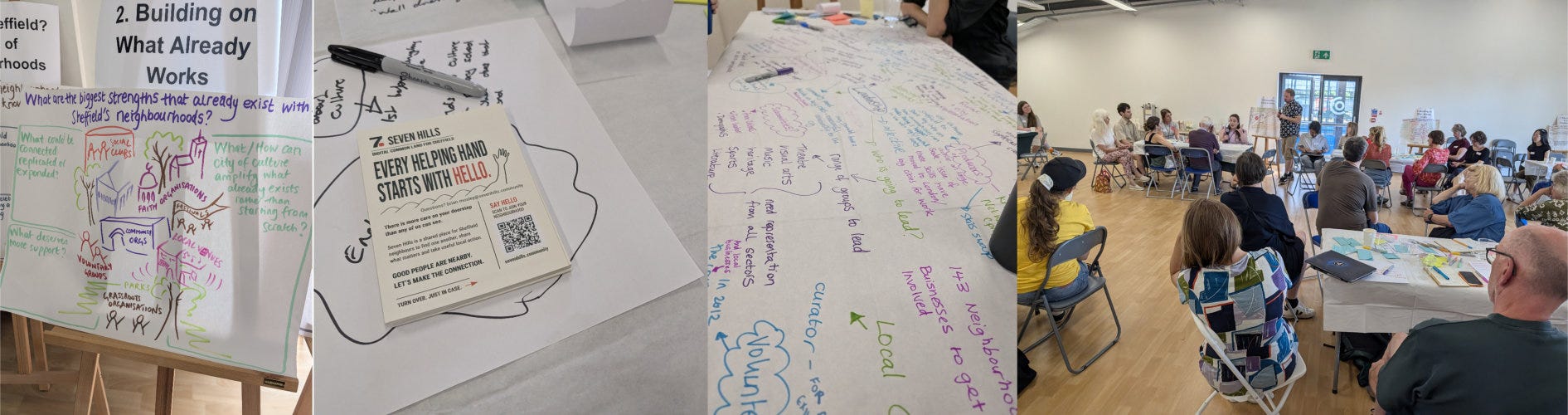
I spoke about the 147 neighbourhood names which have been identified across the city. Most people couldn’t draw the precise boundary of their neighbourhood on a map, but they can usually tell you where they feel they live.
Wadsley. Heeley. Crookes. Burngreave. Woodseats. Darnall.
These names are more than geographic labels. They carry memories, character and a sense of identity. They are a way people recognise where they belong.
But Alice from Heeley Trust introduced an important distinction. A neighbourhood is not automatically a community.
Thousands of people may live within the same few streets while belonging to many different communities. Those might be formed around faith, age, heritage, disability, creativity, work, parenthood, recovery, sport or a shared interest.
Someone may live among 6,000 people and still have to travel across the city to find the handful of people who truly understand them.
That thought stayed with me.
The people they are looking for may already live nearby. They just can’t see one another.
They are invisible to each other.
We often speak about isolation as though people have chosen to withdraw from community. Sometimes they have. But often, I suspect, people would like more connection and simply don’t know where to begin.
They may not know that a welcoming group meets two streets away. They may not recognise that the shop, church, library, pub or social club they pass every day is somewhere they could find people. The information may never reach them, or the language used may quietly suggest that the activity is meant for somebody else.
A local shop can become a community hub simply by recognising that it already brings people together. A school knows families. A sports club reaches young people. A faith group may hold years of trust. A library offers a place where nobody is expected to buy anything before they are allowed to stay.
These places form part of Sheffield’s community infrastructure, although we rarely describe them that way.
Community isn’t only a warm feeling. It has practical value.
It means somebody notices when a familiar face stops appearing. It means knowing who might lend a tool, share some knowledge, make a telephone call or bring people together when something has gone wrong. It also means having somewhere to take an idea when something could go right.
That is how care becomes action. It is how a collection of individuals develops the ability to respond together.
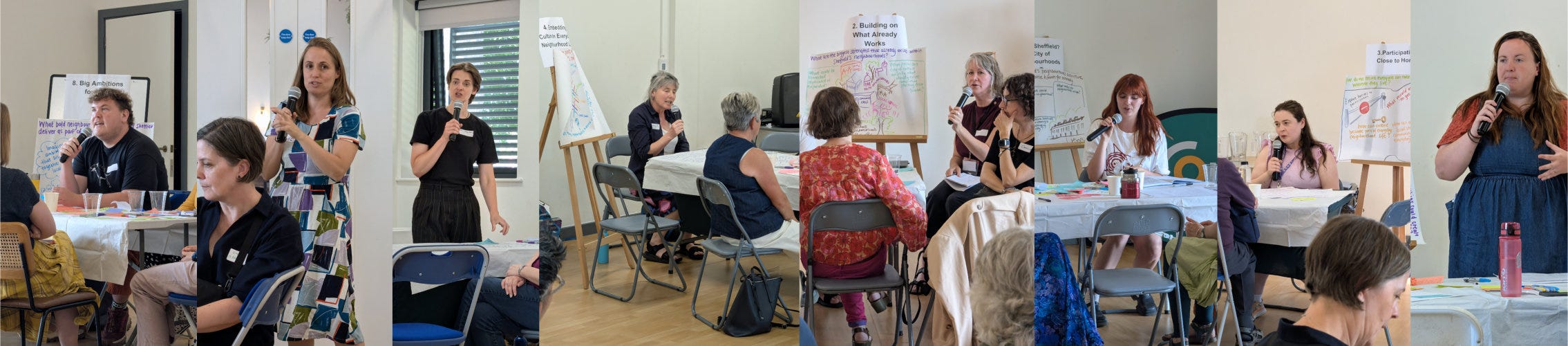
As the tables reported back, I heard ideas for culture in parks, streets, schools, markets and community centres. There were suggestions for neighbourhood storytelling, street parties, travelling stages and cultural trails. People talked about linking artists with sports clubs, health organisations, businesses, libraries, housing associations and local groups.
One board asked how neighbourhoods could become active producers of culture rather than audiences.
For me, that was the most important question in the room.
Being invited to attend something is not the same as shaping it. Being asked for an opinion is not the same as having real influence. Even the language of “getting people involved” can imply that somebody else already owns the activity and is kindly opening the door.
What changes when we begin with the belief that people are not an audience waiting to be engaged?
What changes when we see every neighbourhood as a treasury of skills, relationships, knowledge and creativity?
Institutions, funding and professional expertise all have an important role. But perhaps their role is not to manufacture community. It is to respect what is already there, remove obstacles, share resources and stand alongside local people when support is needed.
As I listened, I kept returning to the work we are doing through Seven Hills.
Seven Hills is not intended to speak for Sheffield’s neighbourhoods, and it isn’t another channel through which people can send their frustrations upwards and wait for somebody to respond.
It is a radical rethinking of the civic ground beneath our feet.
We are building shared digital common land around Sheffield’s actual neighbourhood identities, where neighbours can find one another, discover local places and activity, recognise what they can contribute and begin taking practical steps together.
The technology is not the community. The people are.
Its purpose is to make connection easier, then get out of the way as those connections move into streets, parks, shops, community spaces and people’s lives.
This is the possibility I sensed beneath so many of today’s conversations. Not 147 enclosed communities protecting themselves from everyone else, but a connected community of communities. Each place able to express its own character while remaining open, generous and curious about the rest of Sheffield.
And perhaps the greatest ambition for 2029 isn’t simply that Sheffield presents a remarkable year of culture to the world.
Perhaps it is that we become a city where more people can find their place, discover one another and recognise their own power to contribute.
A city whose culture genuinely belongs to everyone because everyone has the opportunity to help create it.
That would be worth sharing far beyond Sheffield.
Look around your own neighbourhood. Where do people already gather? Who quietly holds people together? What activity is happening that most neighbours never see? Who might be living close by with the same hope, concern or idea as you?
Sheffield does not need to become somebody else’s idea of a cultural city.
It is a city ready to find itself.
With hope and optimism,
Brian Mosley
Founder, Love Sheffield and Project Ignite
Creator of Seven Hills
Author of “Uniting Hearts, Igniting Change“
Comments
Nothing yet. Say the first thing.
Sign in to join the conversation.