
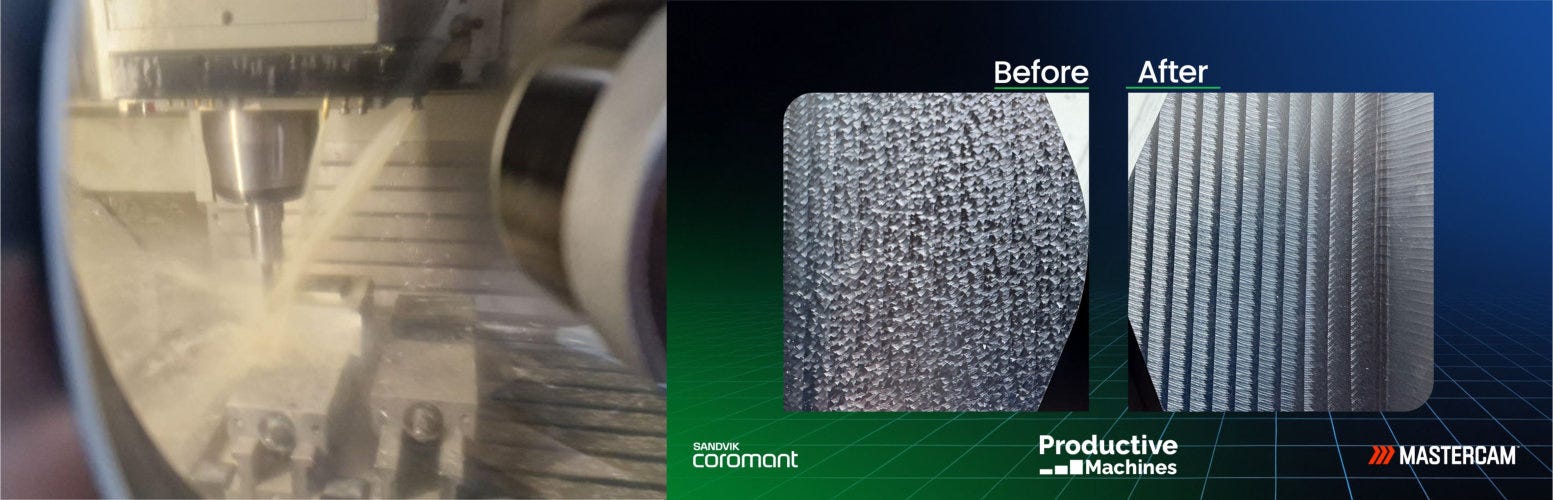
The machine screamed.
Even though we were sitting safely inside Cutlers’ Hall, watching a video, you could feel the reaction in the room. Faces tightened. People who understood machining knew immediately that something was badly wrong.
I am not a machinist, so my mind went somewhere a bit less sophisticated. It reminded me of our washing machine when an uneven load hits the spin cycle and the whole thing begins trying to escape through the kitchen wall.
But then we watched the same cutting operation again.
This time, the machine was calm. The surface of the metal was clean. In some cases, the machine could cut faster because it was operating at the right speed, rather than the speed that instinct might suggest was safest.
That is deeply counter-intuitive.
And, as the afternoon unfolded, I began to realise that the machine was teaching us something about people, organisations and Sheffield itself.
Back in January, I visited Productive Machines at the Advanced Manufacturing Park with the Master Cutler, Professor Keith Jackson.
Dr. Erdem Ozturk and his team welcomed us with Turkish coffee, mandarin oil and Turkish delight flavoured with oil from Bodrum. It was a wonderfully human introduction to some very advanced engineering.
We watched one of Erdem’s engineers tap a machine tool with a small instrumented hammer.
Tap.
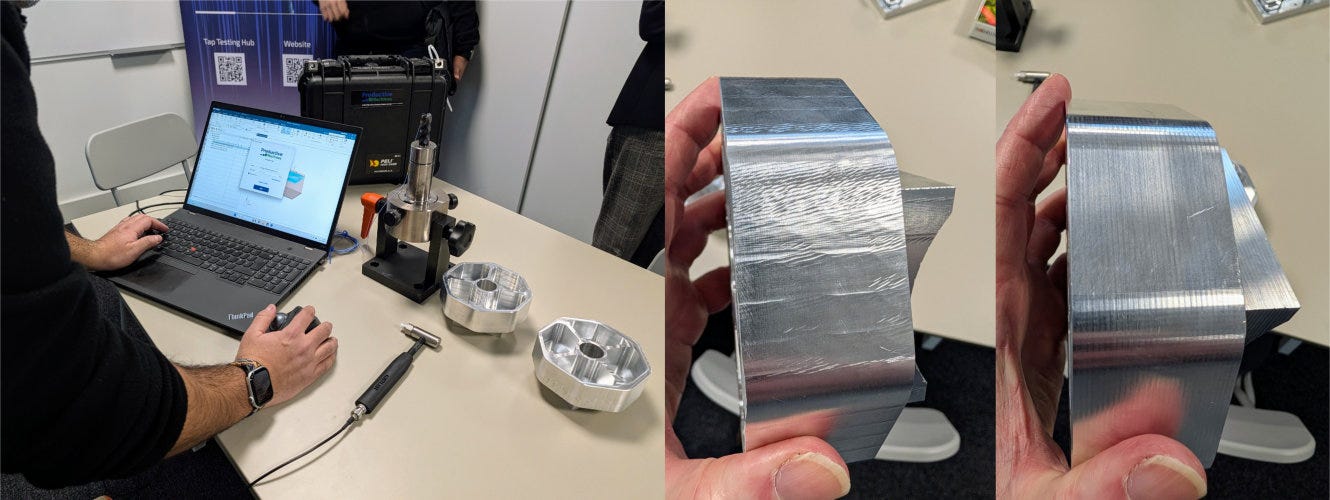
The computer replied with a quiet digital ping.
That tiny exchange allowed the software to understand how that particular machine would behave and where damaging vibrations were likely to occur.
At the end of that visit, Keith and I talked with Erdem about bringing Sheffield’s manufacturing community together. We wanted engineers, business owners, researchers and technology specialists to see the opportunity for themselves and have an honest conversation about what might be holding us back.
Six months later, The Cutlers’ Edge: Smarter CAM, Sharper Machining brought that conversation into Cutlers’ Hall.
This was the gathering we had discussed over coffee.
There was something very special about seeing it become real.
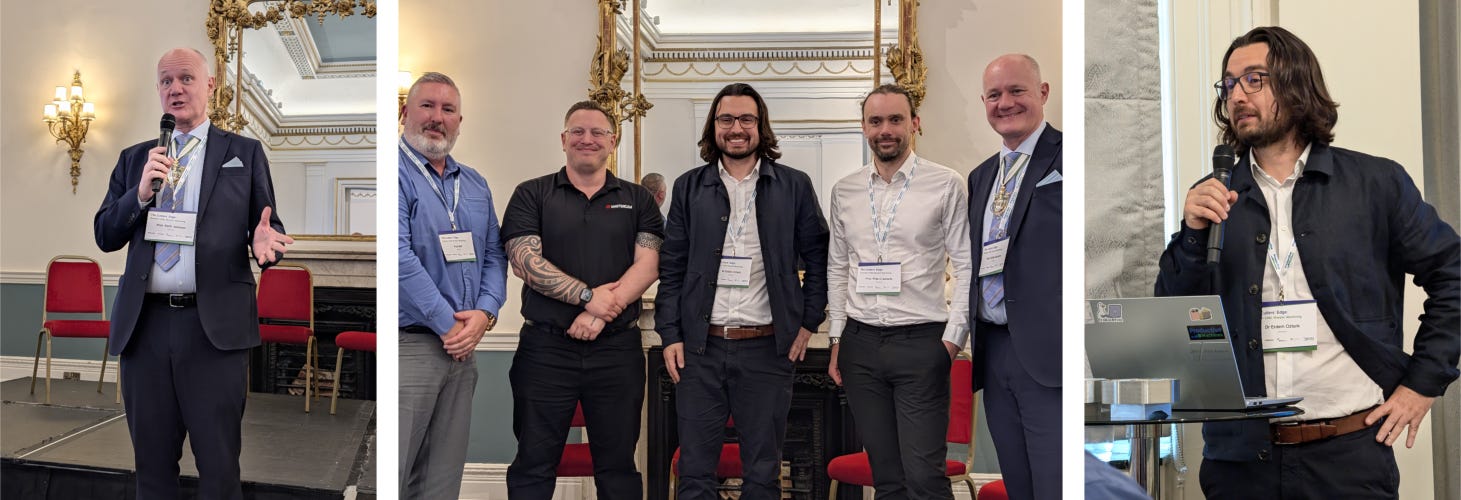
Keith opened the event from the stage, although he came down a couple of steps first because, as he put it, he didn’t want to get vertigo.
That small moment set the tone. This was a serious gathering, but it was also warm, open and human.
The Company of Cutlers in Hallamshire was established by an Act of Parliament in 1624 to oversee and promote the cutlery trade. Four hundred and two years later, it represents manufacturers across the region, including some extraordinarily advanced and increasingly digital businesses.
That history matters.
Sheffield’s manufacturing heritage is not something that belongs behind glass. Every generation has had to learn, experiment and adopt new tools. The methods we now call traditional were once unfamiliar, risky and probably regarded with suspicion by somebody standing beside a machine.
Our tradition isn’t standing still, it’s learning how to make things better.
Erdem began with work carried out with Sandvik Coromant in Rotherham.
When a cutting programme is created, the software understands where the tool needs to move. What it has not traditionally understood is the physics that can make the tool and machine vibrate.
When that vibration appears, an experienced operator listens, adjusts the settings and tries again. It is skilled work, but each attempt uses machine time, energy, tools, material and human attention.
Productive Machines has turned years of research into software that can predict these problems before any metal is cut. It can explore thousands of possible combinations of speed and feed rate in a way that no human being realistically could.
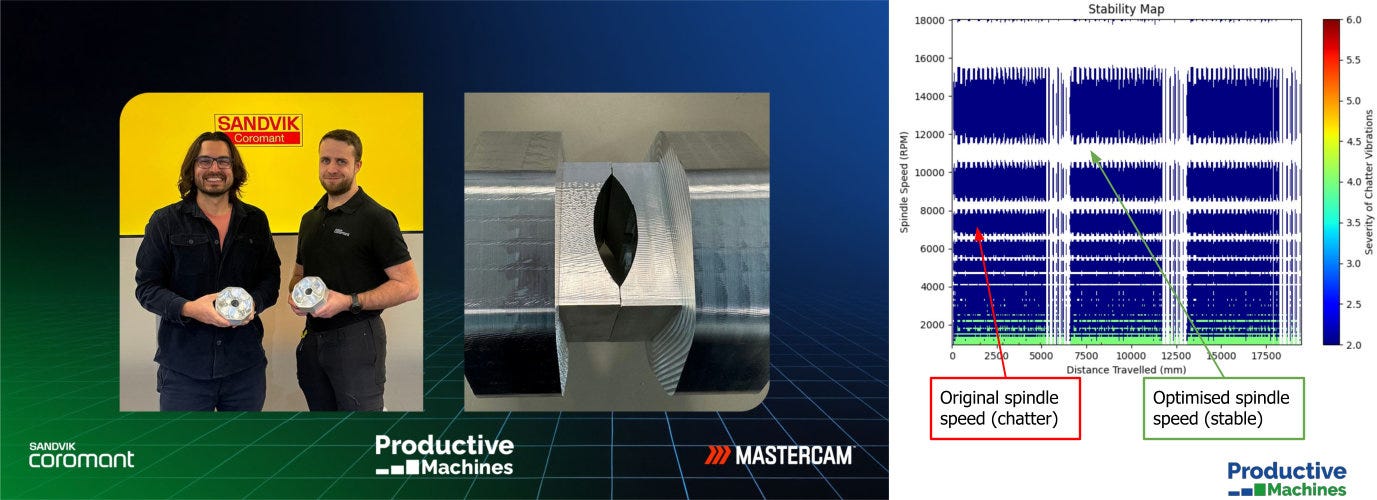
The results shown at Cutlers’ Hall were refreshingly honest.
The Sandvik process did not become faster overall. It became more stable and predictable, with a much better surface finish and less risk to tools and equipment. In other applications, customers had achieved substantial reductions in machining time.
One aerospace manufacturer released 1,000 hours of machine capacity in six months. That is around 42 extra days of production from equipment that may cost hundreds of thousands of pounds.
Closer to home, AML Sheffield reduced the cost of producing an aerospace component by around 20 per cent. That helped make the company competitive enough to bring work back from India and secure a longer-term contract here.
This is where Keith’s observation from our January visit becomes important.
The opportunity is not confined to efficiency. Shorter lead times and greater capacity can help a Sheffield business respond faster, win work and make better use of machines it already owns.
This is business value measured in time, contracts and livelihoods.
The technology was impressive, but the most important part of the afternoon was the conversation about people.
Erdem described what happens when his team first tests an optimised programme on a customer’s machine. Because the settings can contradict years of experience, the operator sometimes stands with a hand hovering above the stop button.
They are ready to protect the machine if the new programme sounds wrong.
That reaction should not be dismissed as resistance to change. It has been shaped by years of experience, responsibility and hard-won judgement. The operator may have spent decades learning what a healthy machine sounds like.
Trust can’t be installed with the software.
It has to be earned beside the machine.
Erdem’s team invites the business to cut a part in its usual way and then cut it using the optimised programme. People can hear the difference, examine the surface and see what happens to the tool.
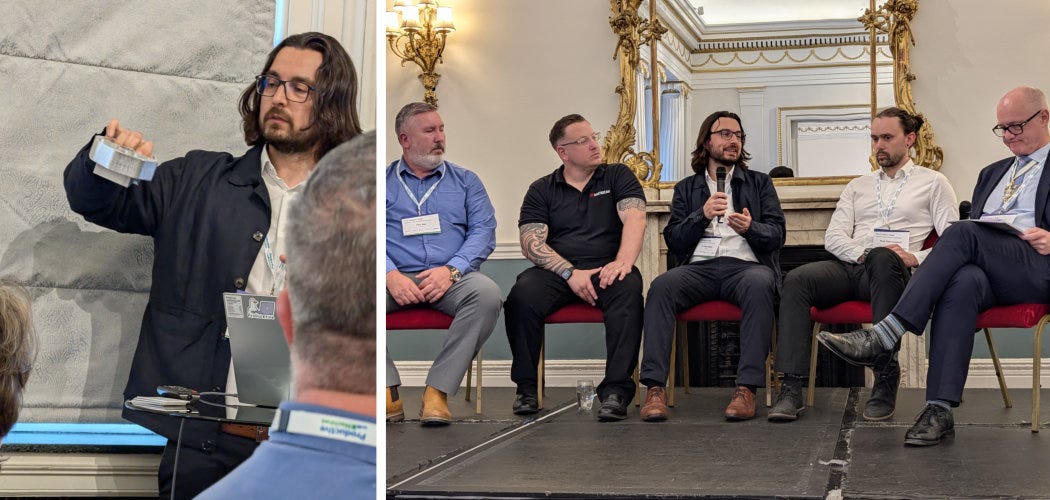
The panel also stressed the importance of explaining why a change is being made and involving the people who will use it every day. If management simply issues an instruction, people will often return to the method they know as soon as the pressure rises.
If they understand the purpose, help test the change and are supported when something goes wrong, they can become its strongest champions.
This was a recurring theme throughout the discussion.
Manufacturers are often too busy producing work to improve how they produce it. A business may need nine days of training but feel able to release someone for only three. The immediate pressure wins, while the longer-term problem remains.
There is also understandable caution. Businesses have been sold expensive technical dreams before. They have seen promised benefits fail to appear. Now they must also think carefully about data quality, commercial knowledge and the careless use of AI.
Scepticism is not always the enemy of progress. Sometimes it is the intelligence that prevents an expensive mistake.
The answer is evidence, small trials, honest results and trusted people willing to stand beside you while you learn.
Earlier that same day, I had attended the Cutlers’ First Tuesday Business Breakfast at Sheffield Hallam University.
The morning explored Made Smarter and Innovation In Action, including how manufacturers can begin with a real problem, meet people with relevant knowledge and test a possible solution without making a huge commitment on a hunch.
What struck me that morning was the intelligence already spread across our city and region.
The afternoon showed what happens when that intelligence begins to connect.
The manufacturer understands the commercial pressure. The operator knows what happens on the shop floor. The academic understands the science. The software specialist can turn that science into a usable tool. The mentor may recognise a pattern that nobody inside the business has been able to see.
No one person holds the complete answer.
But get the right people into the same conversation and something changes.
One member of the audience bravely admitted that she understood the result of Erdem’s presentation but had become lost in some of the technical language. She was new to the Cutlers and to manufacturing, and she represented a college trying to shape its curriculum around the real needs of businesses.
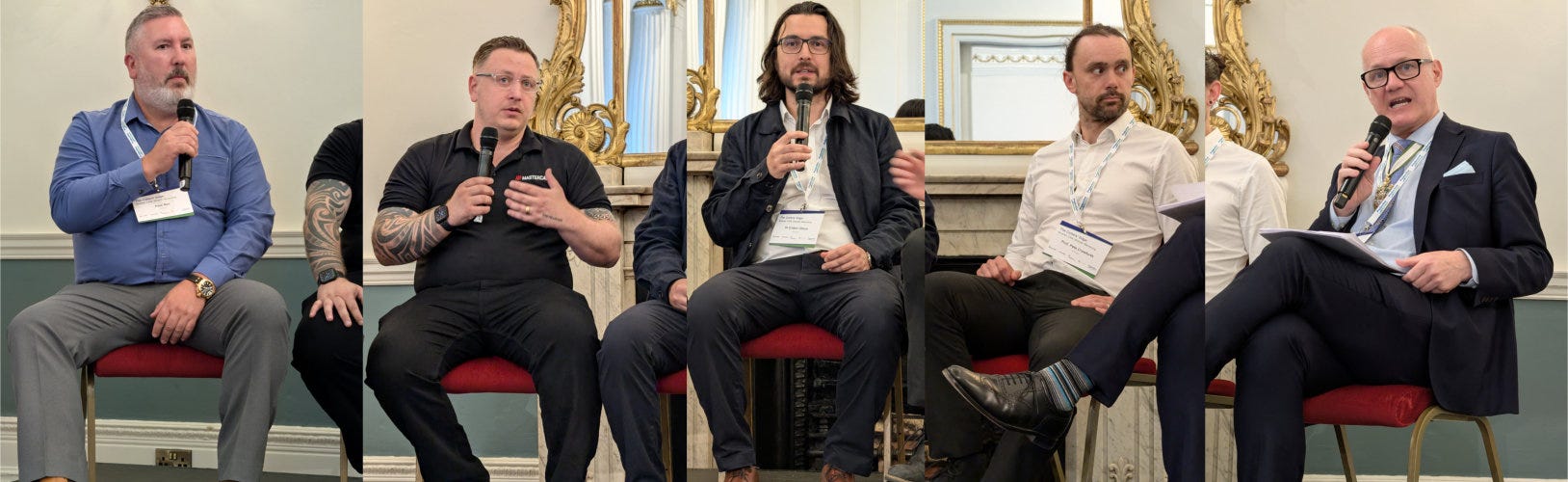
The response from the panel was encouraging. Universities, colleges and the AMRC are not frightening places. They are full of people who want businesses to bring them live problems that students and researchers can help explore.
Start with a conversation. Try a small project. Give a young person something real to work on.
That is how knowledge moves from the shelf into the world.
It was happening informally around the room too. People talked about data, marketing, skills, supply chains and opportunities they had not known were sitting only a few miles away.
At one point, someone told me she had never heard of Productive Machines before that afternoon.
She thought what they were doing was amazing.
There, in two sentences, was both Sheffield’s strength and its challenge.
The capability exists.
Too often, the people who need it do not know it exists.
After the panel, Keith and I continued the conversation.
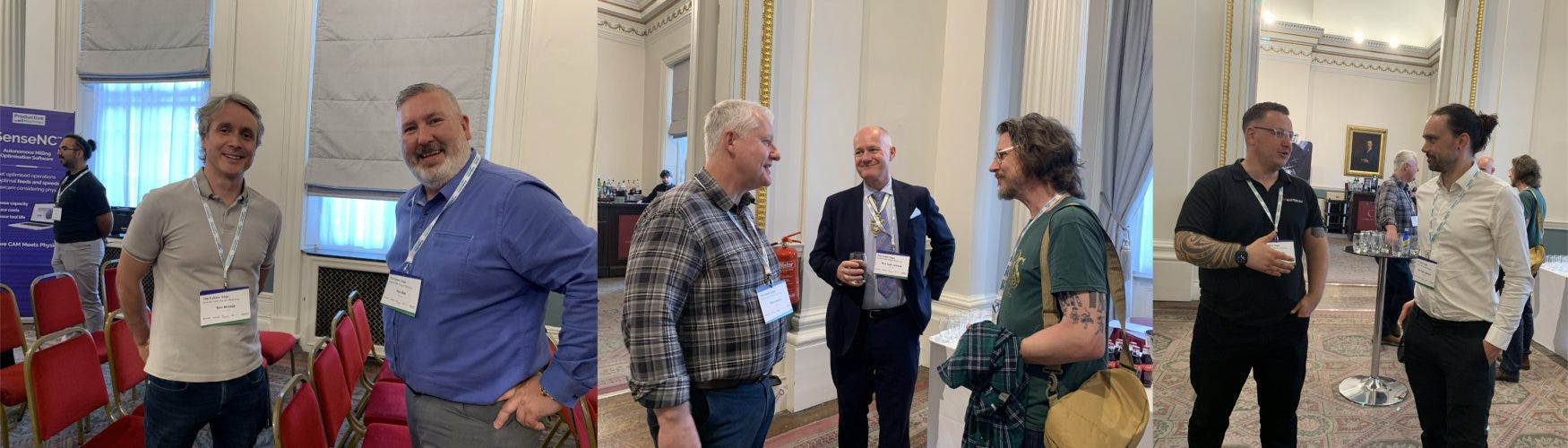
We talked about the culture shift required inside businesses that have grown around methods which have served them well for many years.
“This is how we do it” can feel like the safe answer. But at some point, perhaps ten or twenty years ago, somebody chose to start doing it that way. Today’s established process was once a change.
Sheffield has two leading universities, the AMRC, the Advanced Manufacturing Park and more than four centuries of organised manufacturing history. It also has people with immense experience of engineering, business, international markets and technological change.
Some of that wisdom sits in universities. Some sits in boardrooms and workshops. Some sits with mentors, retired engineers, suppliers and experienced operators who know what happens when a plan meets reality.
We should be one of the most productive manufacturing regions in the world.
Why would we not set ourselves that goal?
Investment is part of the answer, and British industry has suffered from too little of it. But Keith made the important point that capital is only one piece of the jigsaw. Not every improvement requires a new factory or a million-pound machine.
Sometimes, faced with what appears to be a mountain, the right response is simply to take three steps forward.
That might mean testing one difficult component. Calling someone at a university. Bringing in a mentor. Visiting another manufacturer. Or asking the operator who has run the process for twenty years what they can see that the management team cannot.
Early in my own career, I learned that not all the resources you need are inside your organisation. You can draw upon advisers, suppliers, mentors, non-executive directors and people with experience you do not possess.
Collaboration gives us access to far more than any single business can hold alone.
Keith spoke about building bridges rather than walls. That matters internationally, but there are also many bridges still to build here in Sheffield, sometimes between people working only a few miles apart.
If I ran a machine shop, I know what I would have done after this event.
I would have gone in the following morning, sat down with the production manager and asked, “Have we got a suitable part we could try this on?”
Not a sweeping transformation. Not an enormous gamble.
One part. One conversation. One properly supported experiment.
Then learn from what happens.
Advanced manufacturing can sound like a remote world of titanium, aerospace, algorithms and machines most of us will never operate.
But manufacturing is human.
It is apprentices finding their place in the world. It is skilled people taking pride in their work. It is families depending on secure livelihoods. It is small business owners carrying the responsibility for wages, orders and the future of something they may have spent their lives building.
Sheffield’s edge will not come from one piece of software, one university, one institution or one brilliant individual.
It will come from helping our science, craft, experience, courage and care find one another.
If you run a manufacturing business, perhaps there is one stubborn problem you could put in front of somebody new.
If you work in a university or support organisation, ask whether businesses can genuinely find your front door.
If you know two people who should be talking, make the introduction.
And if you are the person standing beside the machine with your hand above the stop button, your knowledge matters. You should be part of the conversation from the beginning.
The machine became calm when the right knowledge met the right problem.
The gathering at Cutlers’ Hall reminded me that Sheffield already has an extraordinary amount of both.
Our opportunity is to help them meet.
Kind regards,
Brian Mosley
Founder of Love Sheffield & Project Ignite
Author of The Connected Enterprise
Creator of Seven Hills
Comments
Nothing yet. Say the first thing.
Sign in to join the conversation.