
Dear Scotland,
A salmon leaping a waterfall is the most Scottish thing you will ever see — stubborn, determined, heading home against every current the river can throw at it, because home is worth fighting for. Stand at a falls on the Tay or the Spey in autumn and watch them. Each leap is an act of faith, and we could all learn something from a Scottish salmon.

NEW! THE LOVE SCOTLAND APP IS HERE!
We’ve just launched the Love Scotland app on the App Store — everything you love about Love Scotland, beautifully built for your iPhone. Browse thousands of stories, places, castles and pubs in a clean, fast, made-for-mobile experience!

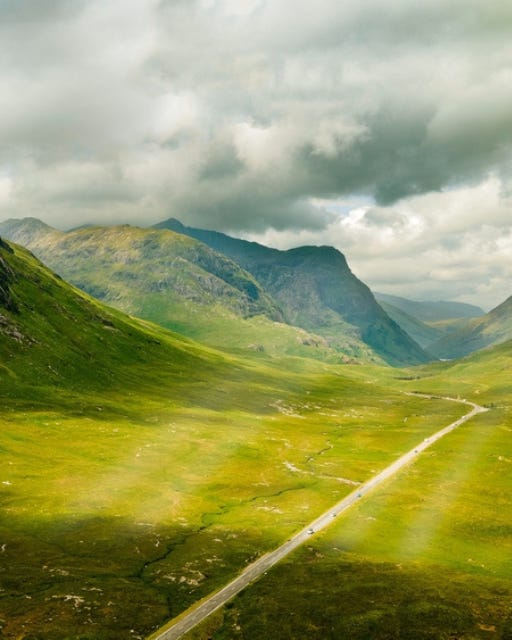
Why Glencoe beats the NC500
Planning your trip: Driving Scotland’s single-track roads
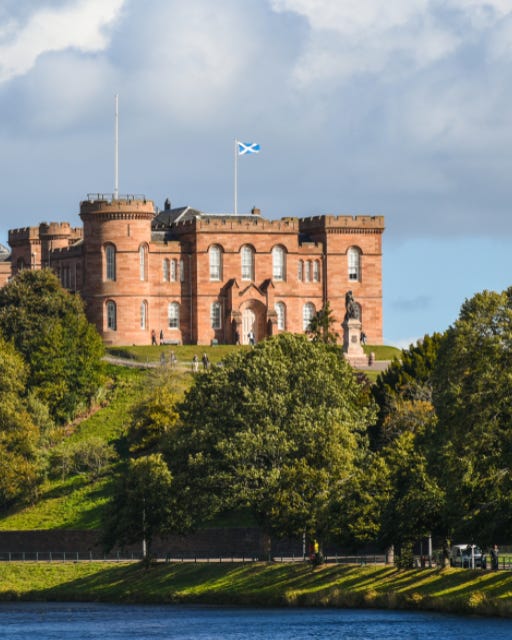
Castles and Heritage: Inverness Castle, gateway to the north
Around the Web: Scotland’s newest National Nature Reserve + A much-loved Highland museum redevelopment plus Five Days in Scotland’s Quiet South-West and more…
Experiences Likely To Sell Out
In Case You Missed It: The Isle of Skye complete guide + Walking the West Highland Way
The Love of Whisky: We raise a glass to Dalwhinnie Distillery
Scottish Food You Will Love: Stornoway black pudding
💙Send a piece of Scotland to someone you love 💙
Your daily dose of #CooWisdom + The Scottish Island So Holy That Kings Were Buried Here for 1,000 Years
Everyone talks about the North Coast 500 — 516 miles of it — but ask a Scot which stretch of tarmac makes their chest tighten, and more often than not they’ll name a single 30-mile ribbon of road: the A82 as it sweeps off Rannoch Moor and drops into Glencoe. There is no gentle warning. One moment you are crossing a bronze wilderness of bog and lochan, and the next the mountains close in on either side — the Three Sisters rising sheer to your left, the Aonach Eagach ridge knife-edged to your right — and the road simply threads the needle between them. It is a place that rewards the slow driver: the lay-bys were made for stopping, the light changes by the minute, and the glen’s beauty and its dark history sit side by side in a way nowhere else in Britain quite manages.
You don’t need a week and a full loop of the Highlands to be changed by a Scottish road. You need this one afternoon, and the good sense not to rush it.
What’s the one Scottish drive you’d turn the car around to do again? Hit reply and tell us.
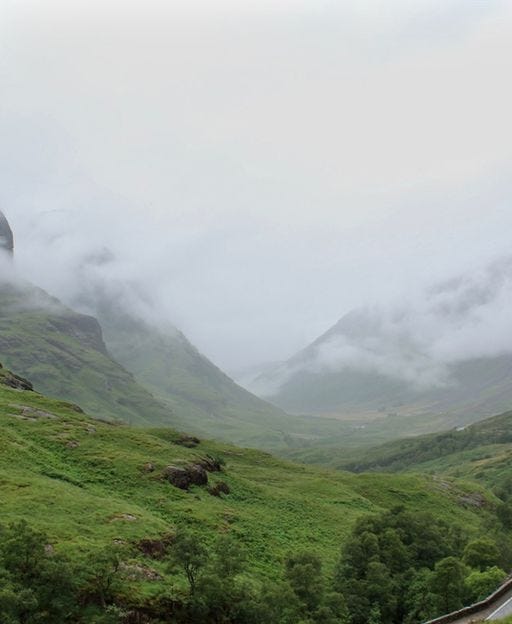
The roads that lead to Scotland’s best scenery — Bealach na Bà to Applecross with its hairpins climbing to 2,054 feet, the quiet run through Glen Affric, the A87 west to Kyle of Lochalsh — are very often single track, and driving them well is a skill worth learning before you set off.
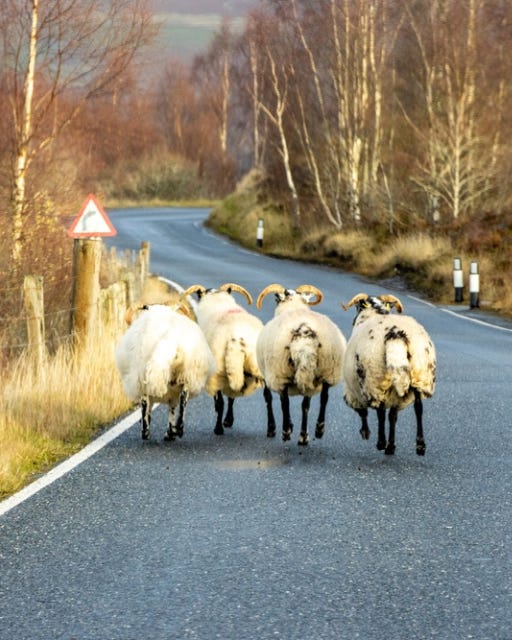
The rules are simple and civilised: passing places are for passing and for letting faster traffic overtake, you never park in one, a raised hand thanks the driver who waited, and when a flock of sheep decides the road is theirs, you switch off the engine and enjoy the moment rather than the horn. For overseas visitors there’s paperwork worth sorting too — what your licence allows, insurance, and the confidence that comes from knowing the etiquette before a local has to teach it to you at a passing place.
Would you be nervous driving on the left down a single-track glen? Tell us honestly.
Most northern road trips — the NC500 chief among them — begin and end in Inverness, and rising in red sandstone above the River Ness sits the castle that has watched over the capital of the Highlands for centuries. There has been a fortress on this rock since the 11th century; the building you see today dates from the 1830s, and after years of transformation it has reopened as a visitor experience telling the story of the Highlands themselves — the perfect first or last chapter for anyone pointing the car north. Stand on the terrace with the river below and the hills stacking away to the west, and you understand immediately why every journey into the Highlands seems to start here.
Would you rather start your Highland adventure in Inverness or Fort William? Let us know.
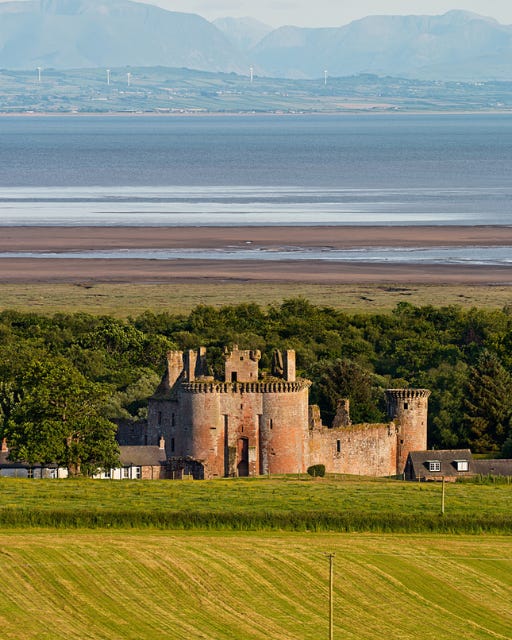
Most people planning a first or second trip to Scotland look north. They think of Skye, the Highlands, and the road to the isles. Dumfries and Galloway sits in the opposite direction — the far south-west corner of the country, along the Solway Firth, closer to the English border than to Inverness. It is one of the least crowded regions in Scotland, and for slow travellers that is exactly the point.
This is a landscape of green hills, quiet estuaries, forgotten abbeys, and small towns where people still know their neighbours. Robert Burns spent his final years here and is buried in Dumfries. The area holds one of the oldest Christian sites in Scotland, a castle shaped like a triangle, and a forest park so free of light pollution that it became the first Dark Sky Park in the United Kingdom. Yet you can visit all of it without the coach tours and long queues you find further north.


VOTE for your Top Places to Visit in Scotland here!
The road to Skye is one of the greatest drives in Scotland — and the island that waits on the other side rewards every mile with fairy pools, ancient ruins, jagged peaks and the kind of sea-light photographers travel a long way to find. Read more: The Best Things to Do on the Isle of Skye
When you finally park the car, Scotland’s most famous long-distance walk runs 96 miles from the edge of Glasgow to Fort William, skirting Loch Lomond and crossing the very moor that leads into Glencoe. Read more: The West Highland Way: Complete Hiking Guide for US Visitors
Today we raise a glass to Dalwhinnie, the highest distillery in Scotland, sitting at 326 metres above sea level in the heart of the Cairngorms. The name means ‘meeting place’ in Gaelic, and the village sits at the junction of old cattle-droving routes through the Highlands. Dalwhinnie’s whisky is gentle and honeyed — a Highland malt that somehow captures the quiet stillness of the snow-dusted Cairngorms. Visit Dalwhinnie Distillery here
Scottish Food you will love
👉 Vote for your favourite food here!
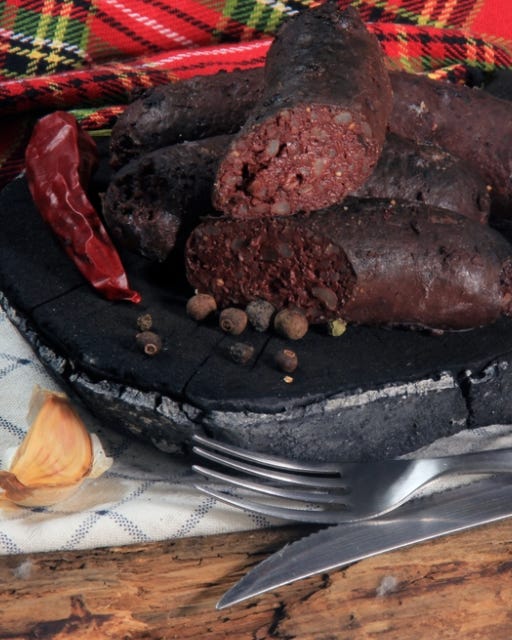
If your road trip ever reaches the Outer Hebrides, one taste belongs on the breakfast plate before you drive another mile: Stornoway black pudding, made on the Isle of Lewis and unlike any other in the world. It earned Protected Geographical Indication status in 2013, meaning that — like Champagne or Melton Mowbray pork pies — it can only legally carry the name if it’s made in and around the town of Stornoway itself. What sets it apart is the balance: rich and deeply savoury, generously spiced, and bound with oatmeal so that it crumbles rather than turns stodgy, with none of the heaviness people expect.
Traditionally it forms one corner of a full Scottish breakfast, sizzled alongside bacon, eggs and tattie scones, though Hebridean cooks will happily crumble it over scallops or into a salad. It’s the kind of humble island food that tells you more about Scotland than any guidebook — and a very good reason to point the car north-west.
Get the recipes here: Why Only One Place on Earth Can Legally Make Scotland’s Most Famous Black Pudding
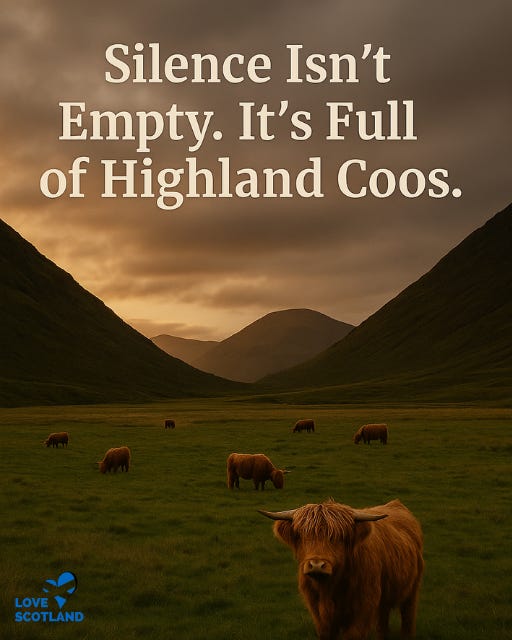
Spare a thought for the Highland coo on a single-track road — because sooner or later on a Scottish drive, one will be standing in the middle of it, chewing without a care in the world, staring you down through that famous fringe. Their long horns and shaggy double coats mean they're perfectly happy grazing the wildest, wettest, windiest corners of the country, from Highland glens to the machair of holy little islands like Iona, where they wander the grazings above white-sand beaches. The lesson, as ever with a coo: there is no hurrying Scotland, so switch off the engine and enjoy the view.
Read more here: The Scottish Island So Holy That Kings Were Buried Here for 1,000 Years
💙Send a piece of Scotland
to someone you love 💙
Beautiful Scottish-themed digital cards for every occasion. Birthdays, blessings, thank-yous, and more — sent with warmth from the Highlands.
Browse the cards here!
This newsletter grows because of you — every time you share it with a friend, a colleague, or that person who keeps saying “I really must go to Scotland one day,” you help build something special: a community of people who genuinely love this wee country. Every subscriber has a unique referral link at the bottom of this email. Share it with your friends.
Comments
Nothing yet. Say the first thing.
Sign in to join the conversation.