
Dear Scotland,
The Kelpie — that shape-shifting horse of Scottish lochs and burns that drowned the unwary — was never just a warning about water. It was a way of saying that Scotland's wild places are not domesticated, that you do not own them by understanding them, that some things remain dangerous no matter how well you think you know them. The Kelpie still haunts the dark water, still teaches caution.

NEW! THE LOVE SCOTLAND APP IS HERE!
We’ve just launched the Love Scotland app on the App Store — everything you love about Love Scotland, beautifully built for your iPhone. Browse thousands of stories, places, castles and pubs in a clean, fast, made-for-mobile experience!

Cullen skink: the soup Scotland's fishermen never let go
Planning your trip: Down Loch Fyne on the best day out from Glasgow
Castles and Heritage: Kilchurn, the ruin at the head of Loch Awe
Around the Web: The Storr’s new visitor centre expands on Skye + Tom Kerridge and the Hebridean Baker join an autumn chef series in Fife plus Five Days in Scotland’s Quiet South-West and more…
Experiences Likely To Sell Out
In Case You Missed It: The castle you reach only by boat + Islay's whisky trail
The Love of Whisky: We raise a glass to Dailuaine Distillery
Scottish Food You Will Love: Who doesn’t love Tatties and Mince
💙Send a piece of Scotland to someone you love 💙
Your daily dose of #CooWisdom + Scotland’s Little Giants: The Extraordinary Story of the Shetland Pony
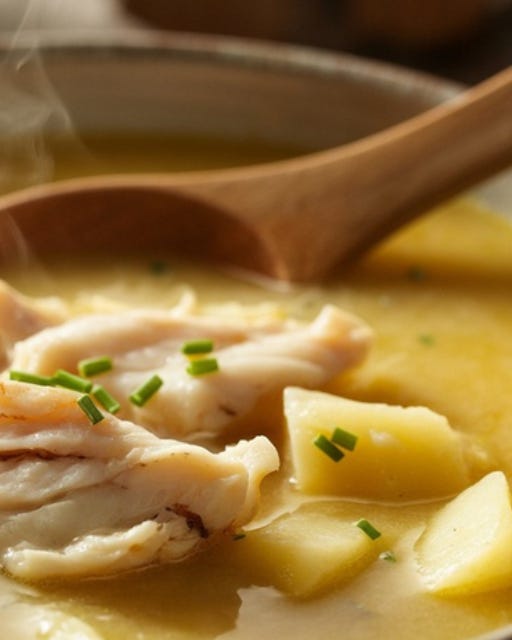
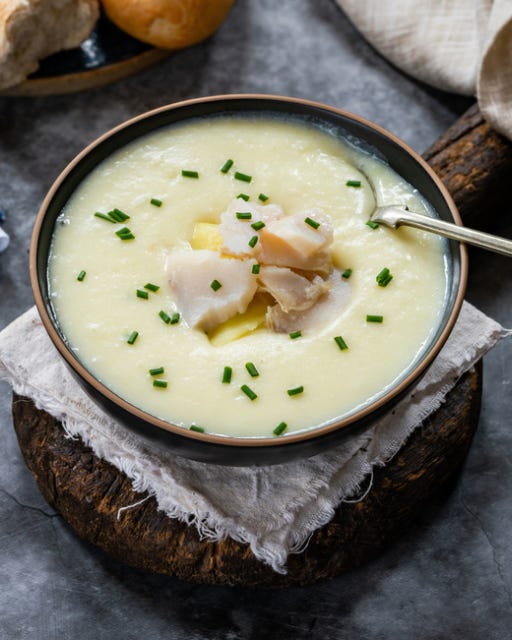
Scotland’s seafood story runs the length of the west coast — from the cold, deep oyster beds of Loch Fyne, where the Argyll shellfish that feed half of Europe are still hauled ashore, to the smoke-blackened kitchens of the north-east fishing towns. Cullen skink belongs to that same salt-and-smoke tradition: a thick, honest broth of smoked haddock, potatoes, onions and milk that began as a way for fishing families to stretch the day’s catch into something that could feed a full table.
Where the langoustine and the Loch Fyne oyster went off to grand restaurants, this was the soup the fishermen kept for themselves — and it turned out to be one of the finest things Scotland ever put in a bowl. Nobody who tastes it properly made, with genuine undyed smoked haddock and its liquor stirred back in, ever quite forgets the flavour of the sea it carries.
Do you have a bowl of soup that tastes of home — and where did you first try it?
Some of Scotland’s greatest scenery sits barely an hour from Glasgow, and the drive down to Loch Fyne is the day trip that proves it. From the city you climb over the Rest and Be Thankful, drop into Argyll and follow the longest sea loch in Scotland all the way to Inveraray — the white-walled little capital of the Campbells, with its castle, its Rob Roy stories and a jail you can still walk through.
Stop at the head of the loch at Cairndow, where the original Loch Fyne Oyster Bar has been shucking its own oysters since 1988, and you have the whole of Argyll on one plate. This is the loveliest of the escapes gathered in our full guide to the best days out from Glasgow.
Which corner of Argyll would you point a first-time visitor towards?
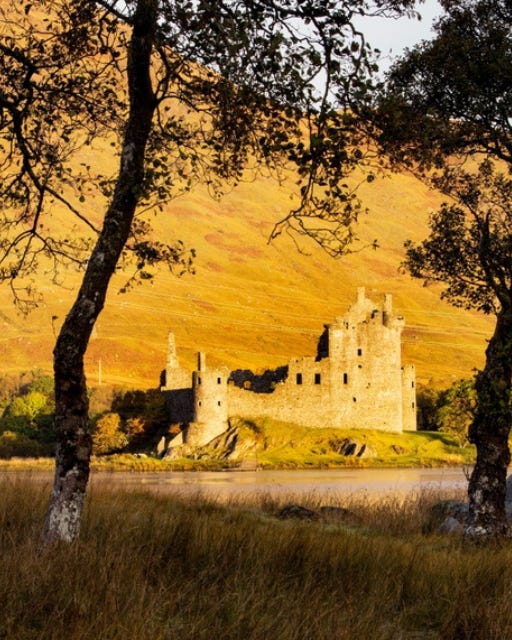
Carry on past Inveraray and you reach one of the most photographed ruins in the Highlands: Kilchurn Castle, standing on a spit of land where Loch Awe narrows beneath the mountains. Built by the Campbells of Glenorchy in the mid-15th century and later turned into a garrison stronghold, it was famously left roofless after being struck by lightning in the 1700s — the story goes that its own fallen turret still lies upturned in the courtyard where it landed.
Ringed by water and reflected on still mornings, it is the kind of place that explains at a glance why people fall for Argyll. Our guide tells the full story of how such a mighty castle came to be abandoned.
Would you rather explore a castle restored, or a romantic ruin left to the elements?
Most people planning a first or second trip to Scotland look north. They think of Skye, the Highlands, and the road to the isles. Dumfries and Galloway sits in the opposite direction — the far south-west corner of the country, along the Solway Firth, closer to the English border than to Inverness. It is one of the least crowded regions in Scotland, and for slow travellers that is exactly the point.
This is a landscape of green hills, quiet estuaries, forgotten abbeys, and small towns where people still know their neighbours. Robert Burns spent his final years here and is buried in Dumfries. The area holds one of the oldest Christian sites in Scotland, a castle shaped like a triangle, and a forest park so free of light pollution that it became the first Dark Sky Park in the United Kingdom. Yet you can visit all of it without the coach tours and long queues you find further north.
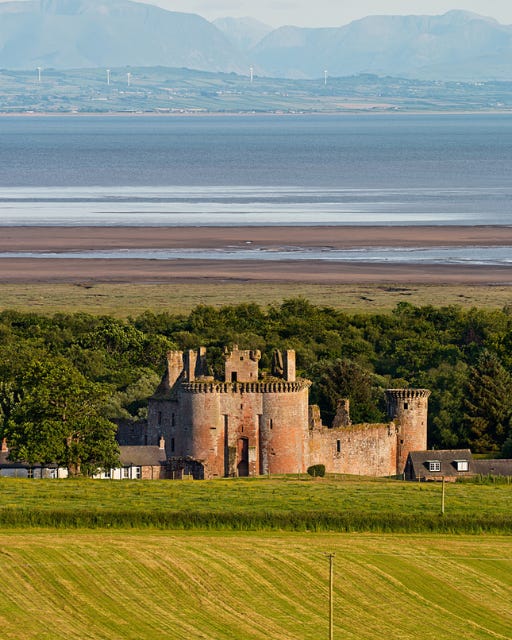


VOTE for your Top Places to Visit in Scotland here!
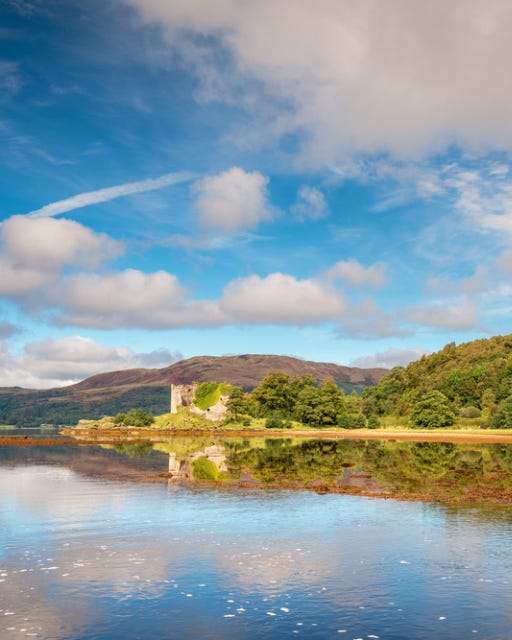
Marooned on its own tidal islet in Argyll, Castle Stalker can only be reached on foot at low tide or by boat — and it doubled as the “Castle Aaargh” in Monty Python and the Holy Grail. Read more: The Scottish Castle With No Road, No Bridge — and One Very Famous Film Scene
This one small Hebridean island is home to a remarkable cluster of working distilleries, making it the greatest single day’s whisky pilgrimage in Scotland. Read more: Islay Whisky Trail: The Complete Guide to Scotland’s Whisky Island
Today we raise a glass to Dailuaine, the large Speyside distillery nestled in a hollow of the Ringorm Burn near Carron — its name means ‘green vale’ in Gaelic. Founded in 1852 and enlarged several times since, Dailuaine is one of Diageo’s most important malt producers, contributing significantly to Johnnie Walker and other blends. Its official Flora & Fauna bottling reveals a rich, fruity, slightly sulphury character that belies its industrial scale. Visit Dailuaine Distillery here!
Scottish Food you will love
👉 Vote for your favourite food here!
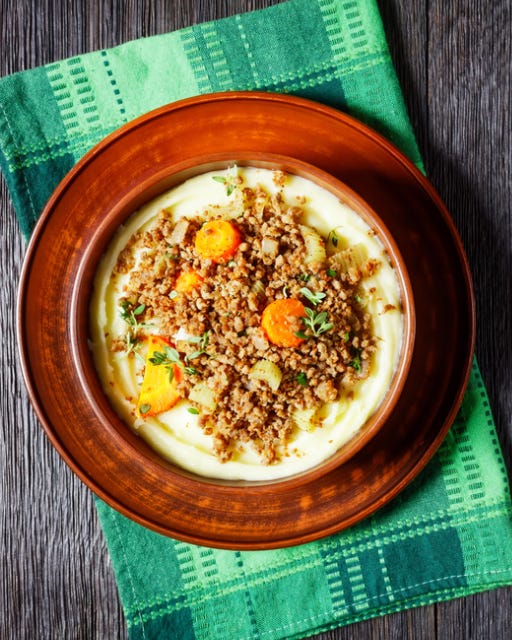
If cullen skink is Scotland’s soup of the sea, tatties and mince is its soup-day cousin from the kitchen table — the everyday supper that generations of Scots grew up on. At heart it is nothing grander than good minced beef slowly stewed with onion and a rich gravy, served over or alongside mashed or boiled potatoes, often with a scattering of doughballs or a spoonful of skirlie on the side.
What makes it distinctly Scottish is its thrifty, no-nonsense honesty: a dish built to warm a family cheaply and well after a cold day, and one that almost every Scottish granny made slightly differently. The taste is deep, savoury and comforting, the very definition of “a plate of home.” It appears on midweek tables the length of the country and remains, quietly, one of the nation’s most-loved meals.
Get the recipes here: How to make Tatties and Mince
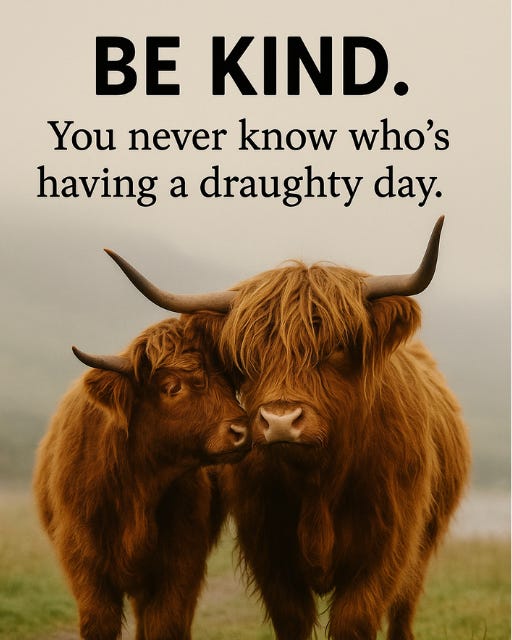
Here's a thought for the day from Scotland's shaggiest residents: a Highland coo's magnificent fringe — its "dossan" — isn't just for show, but a built-in visor that shields those big brown eyes from driving rain, midges and low winter sun. They share their hardy, weatherproof, thoroughly Scottish outlook with another of the nation's beloved beasts, the Shetland pony — small, stubborn and perfectly built for the wild north. If the coos have you charmed by Scotland's characterful animals, our guide to the wee ponies of Shetland is a joy.
Read more here: Scotland’s Little Giants: The Extraordinary Story of the Shetland Pony
💙Send a piece of Scotland
to someone you love 💙
Beautiful Scottish-themed digital cards for every occasion. Birthdays, blessings, thank-yous, and more — sent with warmth from the Highlands.
Browse the cards here!
This newsletter grows because of you — every time you share it with a friend, a colleague, or that person who keeps saying “I really must go to Scotland one day,” you help build something special: a community of people who genuinely love this wee country. Every subscriber has a unique referral link at the bottom of this email. Share it with your friends.
Comments
Nothing yet. Say the first thing.
Sign in to join the conversation.