
Dear Scotland,
The moment a ferry pulls away from the mainland, something shifts. The phone signal fades. The horizon opens. The wind picks up a salt edge that tastes like freedom. You are heading to an island, and on a Scottish island the rules are different — time moves with the tide, not the clock, and every crossing is a small act of leaving the ordinary behind.

NEW! THE LOVE SCOTLAND APP IS HERE!
We’ve just launched the Love Scotland app on the App Store — everything you love about Love Scotland, beautifully built for your iPhone. Browse thousands of stories, places, castles and pubs in a clean, fast, made-for-mobile experience!

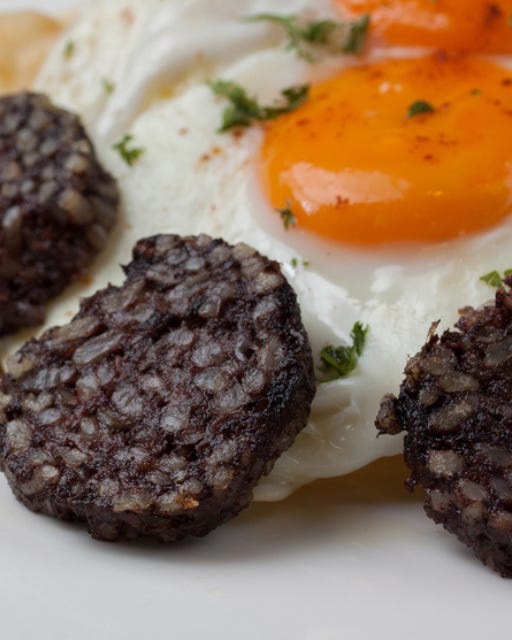
The Hebridean breakfast plate: tattie scones, and the black pudding that made Stornoway famous
Planning your trip: Island-hopping out to the Outer Hebrides
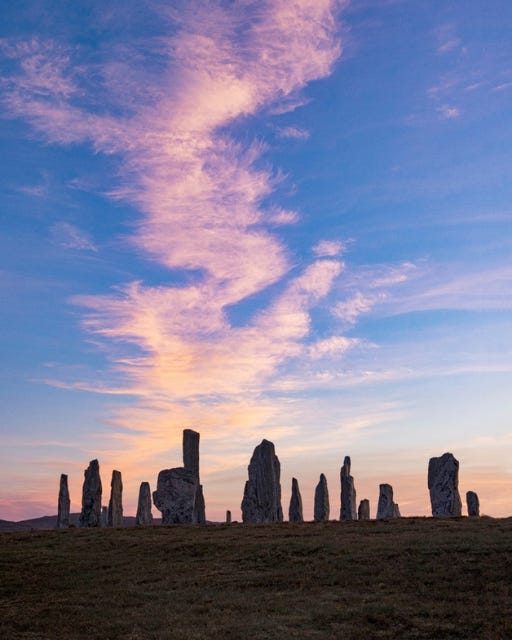
Castles and Heritage: The Callanish Standing Stones, older than the pyramids
Around the Web: A new community-owned distillery rises in the Cabrach + Whisky Week Returns to Scotland’s Cities This Autumn plus A Week Through Speyside’s Whisky Valley and more…
Experiences Likely To Sell Out
In Case You Missed It: The Highland Town That Was Planned in 1788 — and Still Feels Like a Secret + Why Scotland Has Hundreds of Ancient Stone Towers That Exist Nowhere Else on Earth
The Love of Whisky: We raise a glass to Braeval Distillery
Scottish Food You Will Love: Why the Arbroath Smokie Is Protected by Law
💙Send a piece of Scotland to someone you love 💙
Your daily dose of #CooWisdom + Toad in the Hole and the Cows of Scotland
There is a plate you meet only in the Outer Hebrides, and once you have eaten it properly you spend the rest of your life quietly comparing every breakfast to it. At its heart sits a thick slice of Stornoway black pudding — coarse, peppery, generous with oatmeal, cooked in its casing until the edges crisp — a sausage so distinct that in 2013 it was granted Protected Geographical Indication status, meaning it can be made *nowhere on earth* but Stornoway and the surrounding districts of Lewis. Charlie Barley’s — Charles Macleod Butchers, going since the 1940s — ships it across the world, and in a town of 8,000 souls the correct ratio of oatmeal in the mix is debated with the seriousness other places reserve for football.
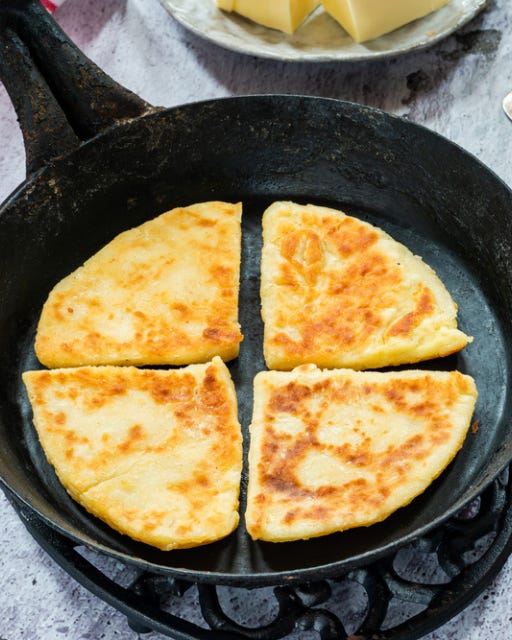
But no plate of it is complete without the soft, folded triangle beside it: the tattie scone, griddled from mashed potato and flour, the humble Scottish breakfast bread that soaks up everything the pudding leaves behind. Making a batch at home is the closest thing to standing in a Stornoway kitchen with the Atlantic wind at the window — and it is far easier than you think. Easy recipe below.
What's the one dish that instantly takes you back to a Scottish morning? Hit reply and tell us.
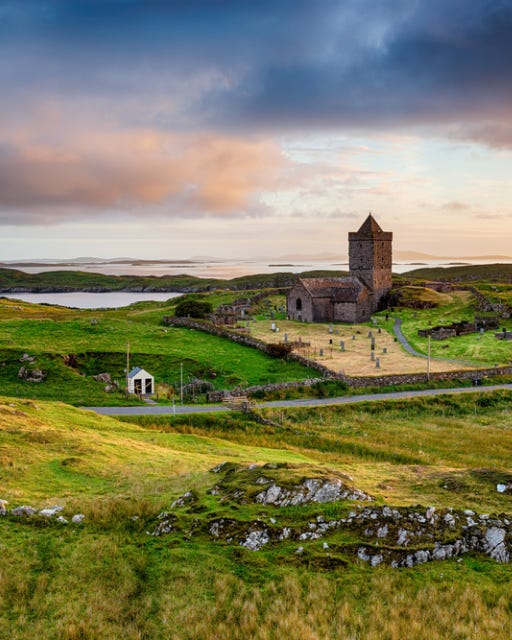
You cannot understand Stornoway black pudding without understanding how far you must travel to reach the place that guards it. The Outer Hebrides are a chain strung along Scotland’s Atlantic edge — Lewis and Harris, the Uists, Barra — linked by causeways, short flights and the slow, salt-sprayed CalMac ferries that are half the adventure. I
sland-hopping here is a masterclass in Scottish slow travel: you plan around tides and timetables, you learn that on much of Lewis the Sabbath is still kept quietly on a Sunday, and you arrive in Stornoway — the largest town in the Western Isles — with the sense of having genuinely gone somewhere. Our guide walks you through the ferry routes, the crossings worth booking early, and how to string the islands together without rushing.
Which Scottish island is still top of your list to reach? Tell us where you'd sail first.
Thirty minutes from the Stornoway harbour, on a low ridge above a sea loch, stand the Callanish Standing Stones — a cross-shaped setting of weathered Lewisian gneiss raised somewhere between 2900 and 2600 BC, older than Stonehenge and older than the pyramids of Giza. They were already ancient when the first butchers of Lewis salted their first sausage.
To stand among them at dusk, with the Gaelic place-names of the island all around you and the Atlantic light doing its long Hebridean fade, is to feel how deep human memory runs in this one small island — the same island that today defends the exact grain composition of its black pudding as a matter of genuine community pride. Heritage on Lewis is not kept behind glass; it is lived, argued over and eaten.
Have you ever stood inside an ancient stone circle? What did it feel like?
Most people who fly to Scotland for whisky do the same thing: they book one day, hire a car, and try to see five distilleries before dinner. They come home with a headache, a blur of tour guides, and no real memory of which dram was which. Speyside was never built for that kind of visit, and this week we want to make the case for doing it properly instead.
Speyside is the single most concentrated whisky region on earth. More than fifty working distilleries sit inside a modest stretch of Moray countryside centred on the River Spey, and that handful of square miles accounts for roughly half of all the working distilleries in Scotland. Nowhere else comes close. You could spend a lifetime here and still not taste everything the valley makes, but you can, in a single unhurried week, taste enough to understand why this small patch of ground became the heart of Scotch.



VOTE for your Top Places to Visit in Scotland here!
Ullapool was laid out street by street as a herring port before a single house was built — and today it’s the gateway from which the ferry sails west to Stornoway and the Outer Hebrides. Read more: The Highland Town That Was Planned in 1788 — and Still Feels Like a Secret
The broch — a double-walled Iron Age tower found only in Scotland, and clustered thickest across the northern isles and the Hebrides — is one of the most sophisticated prehistoric structures in Europe. Read more: Why Scotland Has Hundreds of Ancient Stone Towers That Exist Nowhere Else on Earth
Today we raise a glass to Braeval, the remote Speyside distillery at the very top of the Livet valley, standing at over 350 metres above sea level — one of the highest distilleries in Scotland. Built in 1973 by Seagram to supply malt for Chivas Regal, Braeval (originally Braes of Glenlivet) sits in one of the wildest and most isolated corners of Speyside. Its spirit — light, clean, and floral — is highly regarded by blenders and rarely seen as a single malt, making independent bottlings a genuine discovery. Visit Braeval Distillery here!
Scottish Food you will love
👉 Vote for your favourite food here!
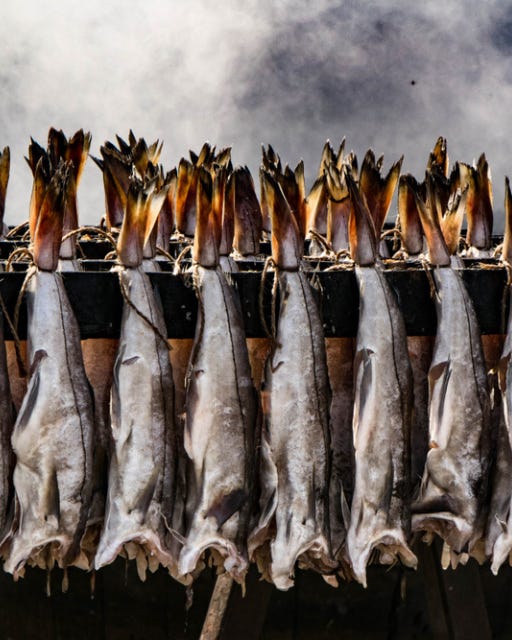
If Stornoway black pudding is the Hebrides’ protected pride, the Arbroath smokie is its east-coast cousin — a haddock hot-smoked over hardwood in the little Angus fishing town of Arbroath, and, like the black pudding, guarded by law so that only fish smoked within a few miles of the town may carry the name. The technique came south with fisherfolk from the village of Auchmithie, who cured their catch in whisky-barrel pits, and the result is unlike any other smoked fish: the flesh stays moist, coppery-gold and deeply savoury, with a warm woodsmoke sweetness rather than the harsh tang of cold-smoked fish.
Scots eat them simply — warmed through with a knob of butter, flaked over a poached egg, or blitzed into a creamy pâté — and they are at their finest eaten within a day of smoking, still faintly warm from the barrel. Traditionally they were a working fisher’s food; today they are a genuine delicacy, and a reminder that Scotland’s greatest dishes are almost always tied to one small, fiercely proud place.
Read full story: Why the Arbroath Smokie Is Protected by Law
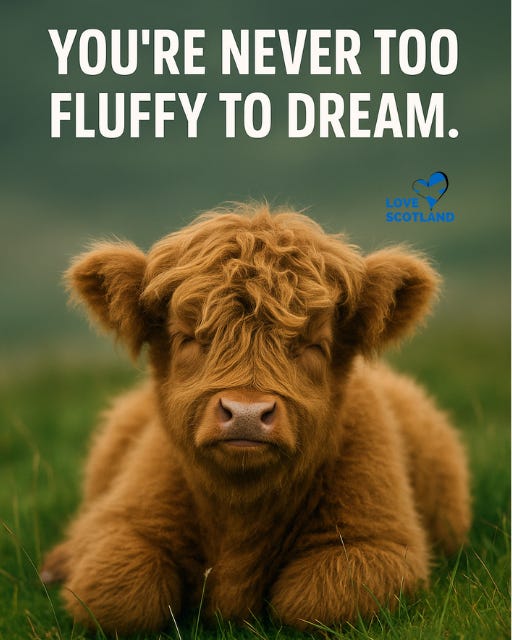
Here's a thought for your morning: those famously shaggy Highland coos share the Hebridean hills with the very sheep whose blood gives Stornoway black pudding its character — and unlike the sheep, the coos take a far more relaxed view of the whole business, ambling across single-track roads with the serene confidence of an animal that knows it will never end up on the breakfast plate. That double coat and long fringe evolved to shrug off Atlantic gales exactly like the ones that batter Lewis, which is why a Heilan coo looks perfectly content standing in weather that would send the rest of us running for a warm kitchen.
Read more here: Toad in the Hole and the Cows of Scotland
💙Send a piece of Scotland
to someone you love 💙
Beautiful Scottish-themed digital cards for every occasion. Birthdays, blessings, thank-yous, and more — sent with warmth from the Highlands.
Browse the cards here!
This newsletter grows because of you — every time you share it with a friend, a colleague, or that person who keeps saying “I really must go to Scotland one day,” you help build something special: a community of people who genuinely love this wee country. Every subscriber has a unique referral link at the bottom of this email. Share it with your friends.
Comments
Nothing yet. Say the first thing.
Sign in to join the conversation.