
Dear Scotland,
Market day in a Scottish town is a thing of particular beauty: the cheese maker is explaining provenance with the seriousness of a professor, the jam woman has opinions about pectin that would fill a thesis, and somewhere a man with a flat cap is selling the most perfect tatties you have ever seen — and he knows it. This is commerce as conversation. Scotland invented it.

NEW! THE LOVE SCOTLAND APP IS HERE!
We’ve just launched the Love Scotland app on the App Store — everything you love about Love Scotland, beautifully built for your iPhone. Browse thousands of stories, places, castles and pubs in a clean, fast, made-for-mobile experience!

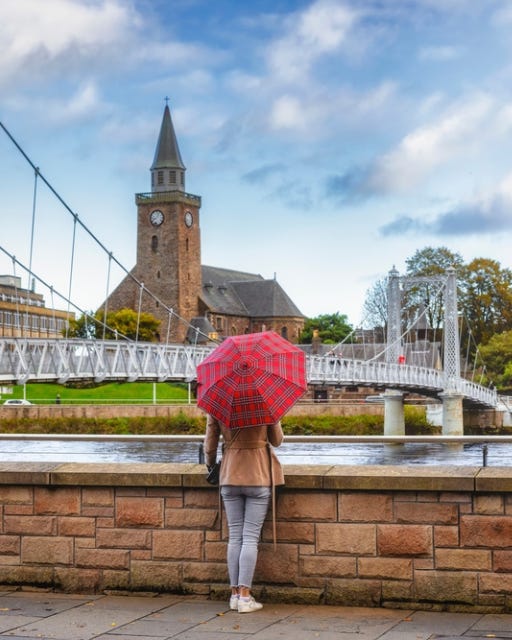
Inverness: the Highland capital where 30 million surnames come home
Planning your trip: How to plan the ancestry journey your surname has been waiting for
Castles and Heritage: Clan Fraser: the surname that carries a whole country with it
Around the Web: Glasgow becomes the world capital of the bagpipe this week + Golden eagles soar to a record summer in southern Scotland plus A Week Through Speyside’s Whisky Valley and more…
Experiences Likely To Sell Out
In Case You Missed It: Scottish Surnames of Clan Keith + Scottish Surnames of Clan Hay
The Love of Whisky: We raise a glass to Balmenach Distillery
Scottish Food You Will Love: How to Make Treacle Pudding
💙Send a piece of Scotland to someone you love 💙
Your daily dose of #CooWisdom + Scotland’s Most Spectacular Road Trip Viewpoints
Your surname is a key — and for most of the 30 million people worldwide who carry a Scottish name, it opens a door somewhere near Inverness. The “capital of the Highlands” sits at the meeting point of Fraser, Mackintosh, Munro and Ross country, the natural base camp for anyone tracing a family line back into the glens. From here the records offices, clan lands and ancestral straths of the north are all within a day’s drive, which is exactly why so many diaspora travellers begin their pilgrimage on the banks of the River Ness.
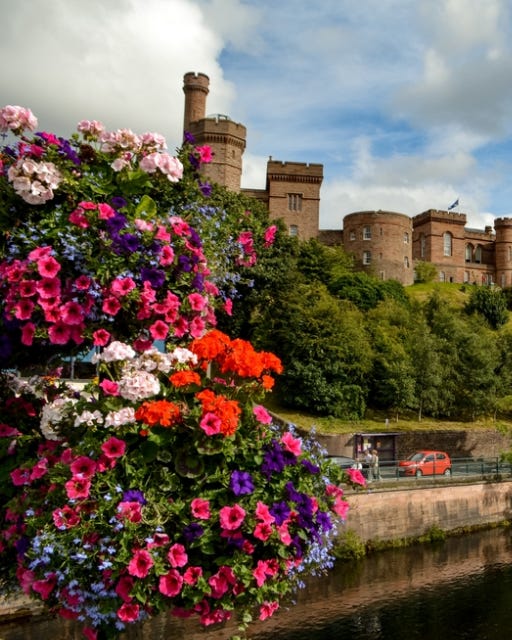
But Inverness rewards you long before you reach a graveyard or a glen: a compact, walkable city of red-sandstone streets, a riverside cathedral, the new castle experience above the water, and Loch Ness on its doorstep. Our complete 2026 guide is the perfect first chapter for anyone whose Scottish story starts, as most do, in the Highlands.
Do you know which Highland glen your family name comes from? Hit reply and tell us your surname…
Here is the truth most people never act on: whether your family tradition says “vaguely from Scotland” or names a precise parish, that is enough to begin. The research pathway is clearer than it looks. Start with family stories and a county, then move to ship manifests and naturalisation records. (free through FamilySearch, alongside ancestry.com and findmypast).
The definitive source is ScotlandsPeople.gov.uk, which holds the Old Parish Registers before 1855, civil registration after it, and the 1841–1871 censuses where almost every emigrant of the clearance era appears; the free Valuation Rolls at ScotlandsPlaces can then pin your family to an exact parish. Once you know the glen, a real trip takes shape — and our complete guide for overseas visitors walks you through every practical step of turning that research into a journey, from timing and transport to how long to spend in the Highlands. Here is some guidance to plan your trip to Scotland…
Are you planning your first heritage trip? Tell us which records you've already found…
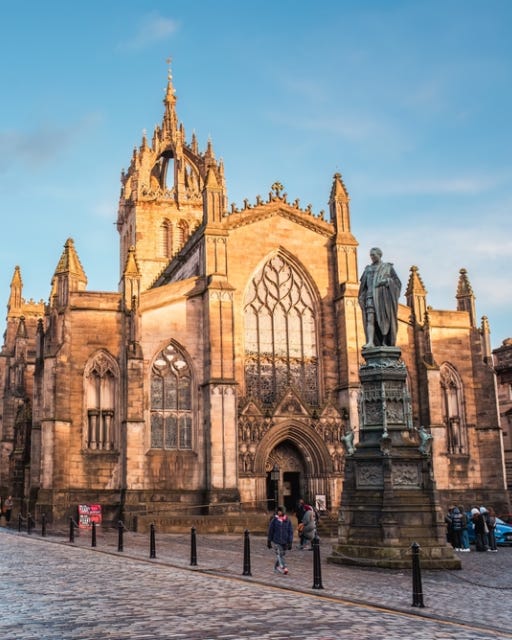
Not every clan name begins with “Mac.” All Frasers — not just “MacFrasers” — took the chief’s name outright, one of the great quiet lessons of Scottish ancestry: a surname is really a piece of geography. Fraser is Clan Fraser of Lovat country, the lands around Beauly and Inverness-shire, and to carry it is to belong to one of the most storied families in the Highlands, with a living chief and a clan society that welcomes descendants across the world.
It is a perfect example of how the surnames scattered across North America, Australia and New Zealand — McDonald and MacLeod from the isles, Campbell from Argyll, Gordon from Aberdeenshire, Munro and Ross from Easter Ross — each map straight back to a specific glen, strath or island. Our Clan Fraser guide unpacks the origins, tartans and territory behind the name.
Which clan does your surname belong to — and have you found its home region yet? Hit reply.
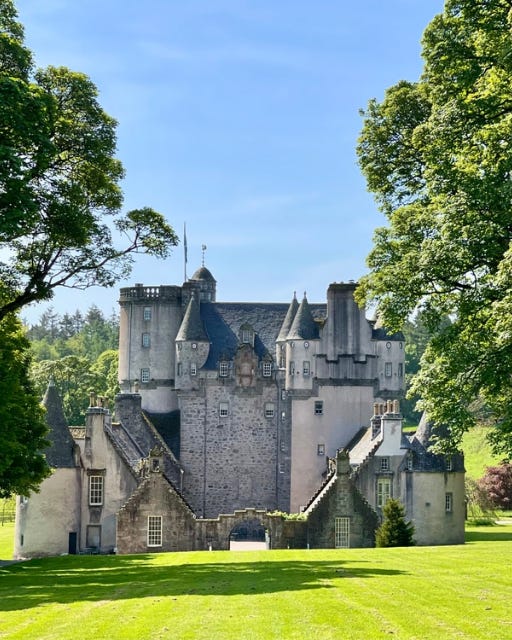
Most people who fly to Scotland for whisky do the same thing: they book one day, hire a car, and try to see five distilleries before dinner. They come home with a headache, a blur of tour guides, and no real memory of which dram was which. Speyside was never built for that kind of visit, and this week we want to make the case for doing it properly instead.
Speyside is the single most concentrated whisky region on earth. More than fifty working distilleries sit inside a modest stretch of Moray countryside centred on the River Spey, and that handful of square miles accounts for roughly half of all the working distilleries in Scotland. Nowhere else comes close. You could spend a lifetime here and still not taste everything the valley makes, but you can, in a single unhurried week, taste enough to understand why this small patch of ground became the heart of Scotch.


VOTE for your Top Places to Visit in Scotland here!
The Keiths rose to become Earls Marischal of Scotland, holding the ceremonial keys to the kingdom while their name spread from the north-east across the world. Read more: Scottish Surnames of Clan Keith: Origins, Tartans and Clan History
Clan Hay’s legend begins with a ploughman and his two sons who turned back a fleeing army with nothing but an ox-yoke — and won the lands of Errol for their name. Read more: Scottish Surnames of Clan Hay
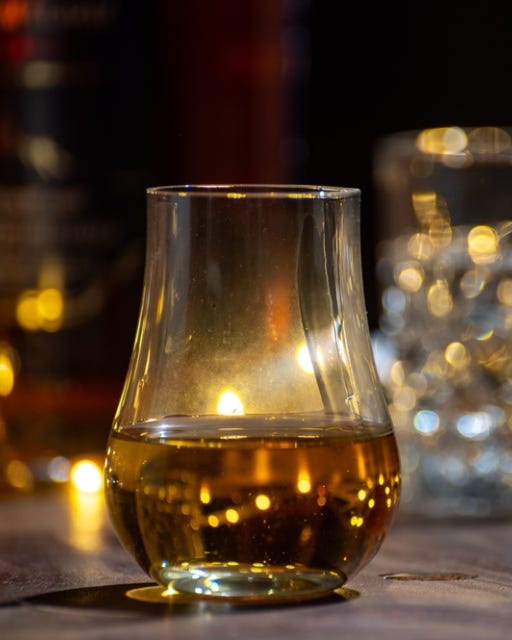
Today we raise a glass to Balmenach, one of Speyside’s oldest distilleries, established in 1824 near Cromdale in the Cairngorm National Park. Licensed by one of the original legal distillers under the 1823 Excise Act, Balmenach produces a full-bodied, rich Speyside malt long prized by blenders. It is most famous as the principal malt in Drambuie — the celebrated honey-and-herb whisky liqueur that has been made to a secret recipe for centuries. Visit Balmenach Distillery here!
Scottish Food you will love
👉 Vote for your favourite food here!
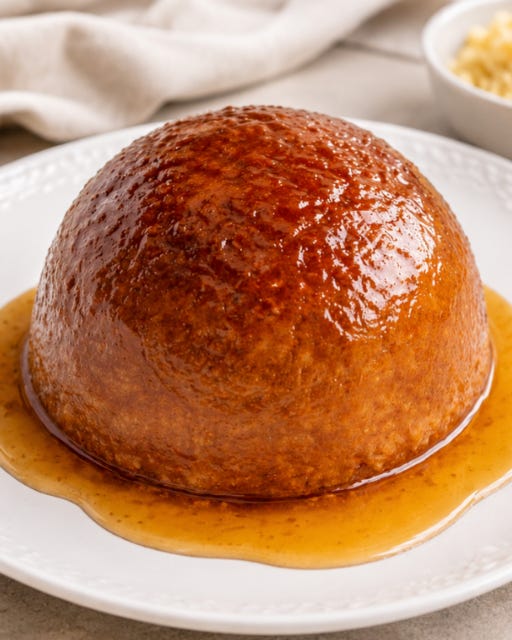
Few puddings say "Scottish winter" quite like this one. Long before sticky toffee pudding claimed the spotlight, Scottish households were steaming treacle sponge in a basin over the fire — dense, dark, and deliberately rich enough to see a family through a cold night.
Treacle pudding belongs to a wider British and Irish steaming tradition, but Scotland has a genuine claim on one of its key ingredients.
Golden syrup — the pale, sticky syrup most treacle puddings actually use rather than true black treacle — was invented in 1881 by Abram Lyle, a sugar refiner born in Greenock on the Clyde. Lyle’s syrup, developed as a by-product of refining, became a Victorian kitchen staple almost overnight, and it’s the reason treacle pudding tastes the way it does: warm and caramelised rather than bitter. Older versions, going back to the 18th and 19th centuries, used black treacle instead — heavier, more molasses-like, and closer to the “true” treacle the pudding is named for.
Get the recipe here: How to make Treacle Pudding
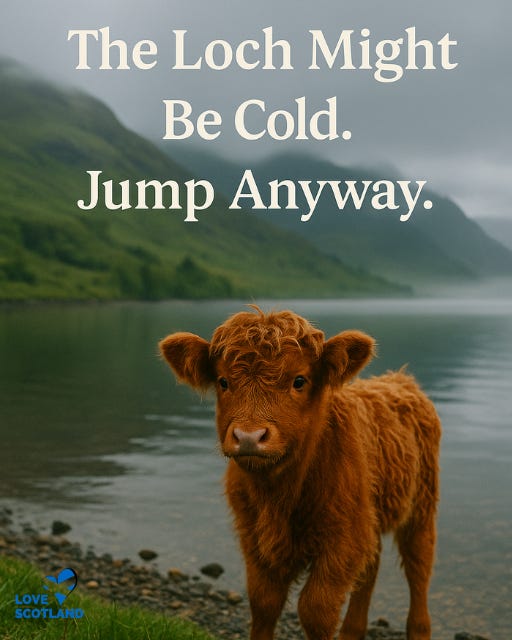
Here’s a thought for anyone tracing their roots: the Highland coo you’ll meet along a glen road today is the very same shaggy, patient breed your ancestors would have driven between the summer shielings and the winter townships. These beasts were once wealth on four legs — a clan’s cattle were its living bank account, and many a Highland feud began over a stolen herd. Spot them grazing beneath the peaks on any good Scottish road trip and you’re looking at a thread of continuity older than most family trees.
Read more here: Scotland's Most Spectacular Road Trip Viewpoints
💙Send a piece of Scotland
to someone you love 💙
Beautiful Scottish-themed digital cards for every occasion. Birthdays, blessings, thank-yous, and more — sent with warmth from the Highlands.
Browse the cards here!
This newsletter grows because of you — every time you share it with a friend, a colleague, or that person who keeps saying “I really must go to Scotland one day,” you help build something special: a community of people who genuinely love this wee country. Every subscriber has a unique referral link at the bottom of this email. Share it with your friends.
Comments
Nothing yet. Say the first thing.
Sign in to join the conversation.