
Procrastination is something that a lot of people encounter at some point in their lives. It may be that a task seems overwhelming or boring, or maybe there’s something that needs to be learnt or overcome in order to complete something… putting it off sometimes seems like the easy option but it’s never easy in the long term. It doesn’t just impact your productivity if you procrastinate, it can also have negative psychological consequences if you get into a habit of putting things off.
The biggest and most impactful thing I ever procrastinated about was going sober. I would be all for it one minute and then after a few days of abstaining from alcohol, I’d feel the need to delay this life changing decision until another day. It seems madness really, if you know you need to do something why on earth would you put it off?

The first thing to understand is that when you first decide to delay that task you’d rather not be doing you will get a flood of relief (which in itself can be addictive). I know that when I would decide that going sober was a ‘tomorrow problem’ I felt immense relief. This came from two areas… the first was from knowing that I’d get my glass of wine that evening and my ‘fix’ and the second was getting a buzz from the relief of not having to do the hard thing. The longer term consequences of this delay can be feelings of stress, guilt or low self-esteem as you kick yourself for yet again not following through on your promises to yourself or to others. This can affect your self worth and your emotional wellbeing and have some negative psychological consequences to boot.
Whether you’re procrastinating about something like sobriety or whether they’re work tasks or exercise goals, they all tend to stem from a similar place of self doubt, maybe some fears thrown in and some potential psychological barriers.
✨ Denial
So I’ll begin by talking about procrastination when it comes to sobriety but then widen the topic to any subject. So the first and biggest reason that most people will procrastinate about sobriety is denial that things are that bad. This is why I often recommend that if someone is sober curious and not ready to commit, that they log the drinks they are drinking on an app (there are loads to choose from) and to keep an honest journal of how they’re feeling. This is so that they are facing the facts of their relationship with alcohol and to remove this barrier. It’s a form of avoidance and curiosity is the key.
✨ Coping mechanism
There is an additional factor with sobriety and that is a fear of losing your coping mechanism. This is why a lot of people will attempt to put off sobriety until they feel life will have a bit of a lull… no parties, holidays or challenging times. Anyone who’s been sober for a while will know that it’s actually in adversity that your sober muscles are strengthened.
✨ Fear of change
The third that’s relevant to sobriety is a fear of change or a fear of the unknown. Not knowing what life will look like can be a barrier for a lot of change. Change in and of itself can feel quite intimidating and so even positive changes can be met with resistance. It can feel frightening and so acknowledging that you feel scared of whatever it is you’re facing can help you to accept that it’s a big deal. Don’t gaslight yourself, change is a big deal.
✨ Self efficacy
The final area that may cause you to procrastinate is a lack of self-efficacy or feelings of hopelessness. Do you believe you can do it? If you’ve tried in the past to do it and failed then this may lead to a knock in your confidence. Again, being honest with yourself helps but also building yourself up in the process and rather than saying I haven’t done it in the past, say that “I haven’t done it yet, that doesn’t mean I can’t.”
Procrastination has a bit of a bad reputation in that people think that those who delay tasks in this way have an element of laziness or are unmotivated but it isn’t that at all. Maybe it’s you who’ve found yourself putting something off, then berating yourself for it. Bringing some understanding to why procrastination happens from a psychological perspective can help.
The definition of procrastination is the voluntary delay of an intended action, despite knowing that this delay could result in negative consequences. It often results in increased stresses and pressures so ends up being a paradox in and of itself. From a psychological perspective it is not just a matter of poor self control. It’s often a coping mechanism for self doubt, low self esteem or self worth and anxious feelings. It is also often fuelled by two things… a fear of failing and perfectionism.
✨ Fear of Failure
The fear of failure is one of the most significant psychological drivers behind procrastination. This fear is not simply about the possibility of failing at a task, but it’s also about any potential consequences that any failure might have. Especially if someone has low self esteem or confidence issues, it can feel like a confirmation that they are not good enough if they don’t succeed at that task.
If you suffer with a fear of failure that you may find yourself delaying or avoiding tasks that you really want to do just in case you fail. So the first thing to do in order to overcome this is to ask yourself ‘what is it I’m afraid of?’.
The other thing to do is to reframe failure as a learning experience. It isn’t a reflection of your worth or even of your abilities, it’s an opportunity for learning and growth. Even in sobriety, those previous attempts will have taught you something about your triggers and that way you’re better positioned to overcome them and not fall for them again. Another aspect of a fear of failure is the potential fear of judgment from others. Many people can procrastinate because they are concerned with how others will perceive them if they fail. It’s really important to remember that every failure is a chance for you to adapt, to change and most of all to improve.
✨ Perfectionism: The Desire for Flawless Outcomes
This brings us to perfectionism. Wanting to be perfect at everything can be paralysing in and of itself. It’s attaching your self worth to the outcome and not trusting in your own ability. Be mindful of not setting unrealistically high standards for yourself - the way to tell is the language that you use about something. Using words like ‘I must have this go well’ or ‘I have to get a distinction on this exam’ will give you a clue as to if your standards are inflexible or even unrealistic. It’s about setting realistic expectations to release yourself from that pressure. What’s the worst that can happen if it doesn’t go the way you want it to? You learn, you course correct and you try again. If you think about it this way - which person do you admire most… the person who keeps trying and learning along the way or the person who never tries at all?
To explain the relationship between fear, perfectionism, and procrastination we can use various psychological theories, but as I use CBT in my clinic the best one I feel that fits is the cognitive behavioural theory. This theory posits that our thoughts and our beliefs will shape and influence our emotions, and our emotions in turn impact our actions. I use the think-feel-act cycle to explain how this works in my clinic.
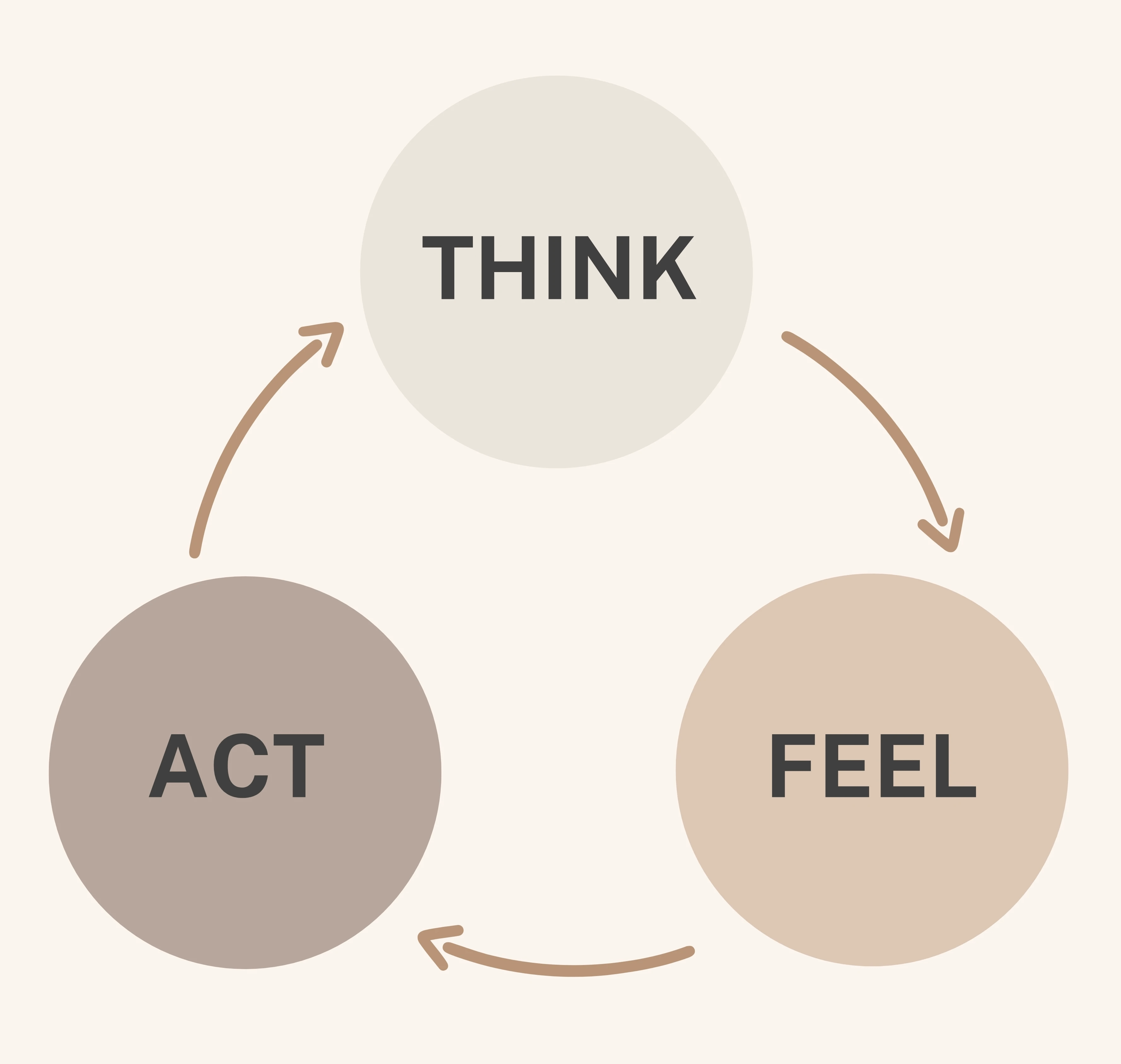
So if you have a strong fear of failure you may have thoughts like:
“I must succeed” or “If I fail it makes me a failure” or even “failure means I’m not good enough”.
What then happens is that these thoughts don’t make you feel good, they may make you feel anxious and then the behaviour or actions that come from that are avoidance. Cue a flood or relief but then more additional thoughts of not being good enough because you haven’t even tried.
I talk a lot about cognitive distortions which are thoughts that aren’t helpful to us and fall into a few different categories. We all tend to have a pattern of using one or two (or maybe three) cognitive distortion patterns. These are ways of thinking that don’t serve you and that lead to negative emotions or actions.
Common cognitive distortions associated with perfectionism include:
All-or-Nothing Thinking: Anything less than perfection is failing.
Catastrophising: If I don’t succeed it will be absolutely unbearable.
Overgeneralisation: If I fail it makes me a failure.
These ways of thinking create a mindset where anything less than a perfect outcome is an absolute disaster and creates so much pressure that inaction seems like the only choice.
In order to overcome this type of procrastination you need to address the underlying thoughts and emotions attached. :
Reframe it: The first thing to do is to change the way you perceive failure. Instead of viewing it as something to avoid at all costs, try to see it as an opportunity for growth and learning. If you can embrace the idea that failure is a natural part of the process and that making mistakes does not define your worth then you’re half way there.
Challenge Perfectionist Thoughts: Identify and challenge perfectionistic thoughts by questioning how true they are. Just because you’re having a thought doesn’t make it a fact. Ask yourself "What would happen if I didn’t achieve perfection?" If you are honest with yourself you will tend to find that the consequences of not being perfect are absolutely fine and not as catastrophic as you’ve led yourself to believe.
Make goals achievable: Setting realistic, achievable targets will help reduce feelings of overwhelm and make it easier to start working. Focus on progress, not perfection.
Practice Self-Compassion: Be kind to yourself when things don’t go as planned. Self-compassion involves treating yourself with the same understanding and kindness that you would offer to a friend.
Develop a Growth Mindset: Cultivate a mindset that embraces challenges and sees failure as an opportunity for learning and improvement. People with a growth mindset tend to procrastinate less because they view mistakes as a natural part of the learning process, not as an indication of personal inadequacy.
You can get out of the procrastination cycle by being honest with yourself, spotting any thinking errors or cognitive distortions holding you back and showing yourself kindness in the process. If you spot perfectionist thoughts you can say to yourself “I don’t think like that anymore…” and then soften the goals off slightly.
Overcoming procrastination requires patience, self-compassion, and a willingness to face the discomfort of failure and imperfection. By reframing failure, challenging perfectionistic thoughts, and focusing on progress rather than perfection, you will be able to gradually reduce procrastination and unlock your full potential. If you’re struggling with overthinking, ruminating or procrastinating then get in touch and we can have a session to teach you some coping strategies to challenge unhelpful thoughts.
Oh and if you are procrastinating about sobriety… go for it. It’s not something you’ll ever regret but not doing it is something you might.
If you’d like a session 1:1 with me to talk about sobriety or any other challenges you’re facing that you’d like support with, head to my website and send me an email or message me on here.
Louisa Evans is a UK-based practitioner specialising in behaviour change and helping people change their relationship with alcohol. With a background in Cognitive Behavioural Hypnotherapy and a Master’s degree in Psychology, she combines psychological understanding with practical, compassionate support to help people build self-trust, develop healthier habits and create lasting change.
Her work is informed by psychology, cognitive behavioural approaches and hypnotherapy, with a focus on making complex ideas accessible and practical. Alongside her one-to-one work, Louisa is the creator of online courses, a podcast and educational resources designed to help people understand themselves better and make meaningful, sustainable changes in their lives.
She is a Graduate Member of the British Psychological Society (BPS), a Senior Member and Registered Supervisor with the ACCPH, and a registered member of the General Hypnotherapy Register (GHR). Through her clinical work, writing and teaching, she has supported thousands of people to build confidence, strengthen resilience and create lasting change.

No posts
Comments
Nothing yet. Say the first thing.
Sign in to join the conversation.