
Welcome to my catch-up for the month of June. I hope you enjoy this little insight to what I have seen and sketched during the month.
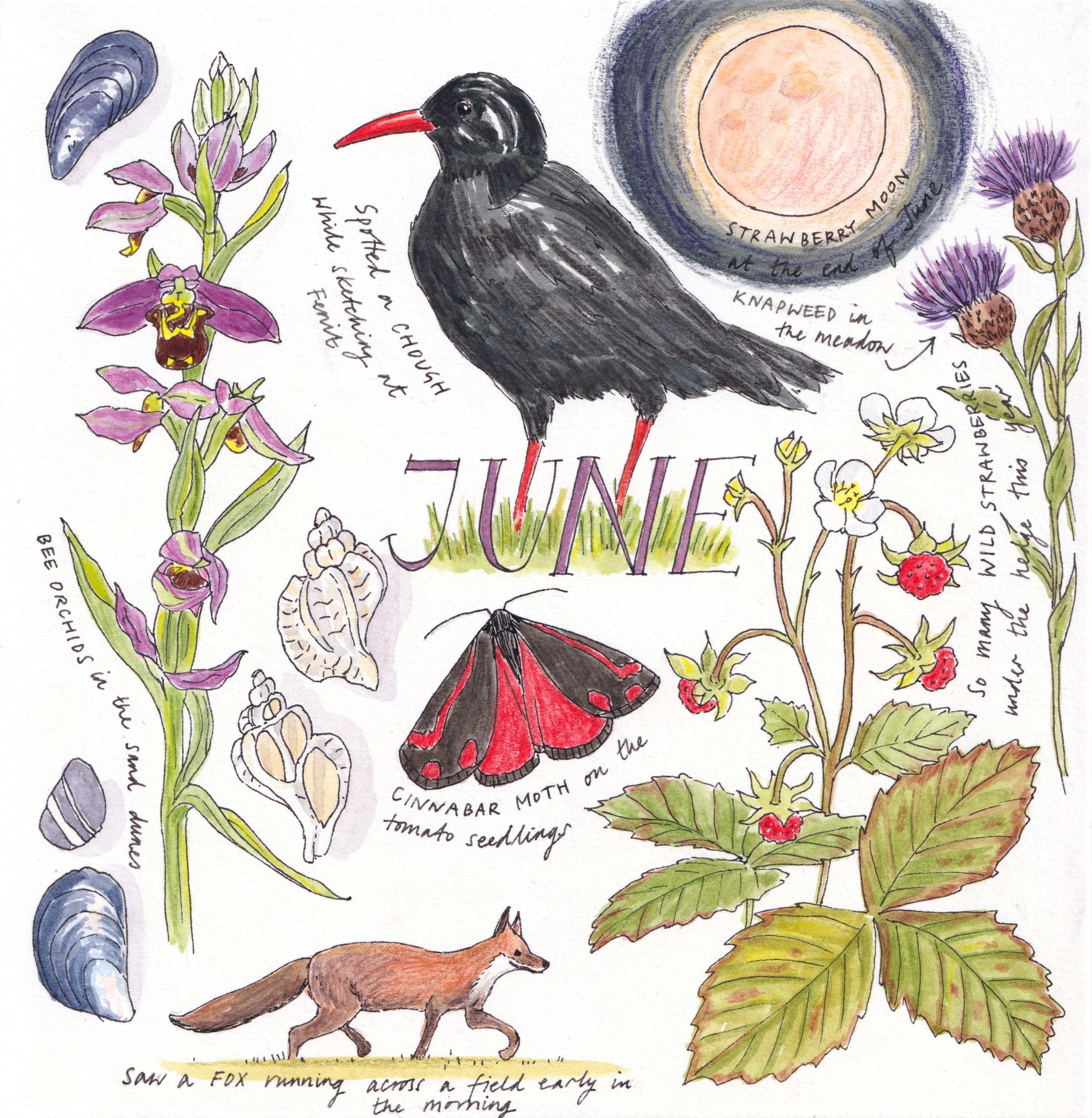
June has been a month of two halves for me, with the first two weeks being quite cool and wet at home in Ireland, and then the second half spent in Tuscany, in bright sun and high temperatures1. Reflecting this my catch-up for the month will be in two posts… the first is the Irish part.
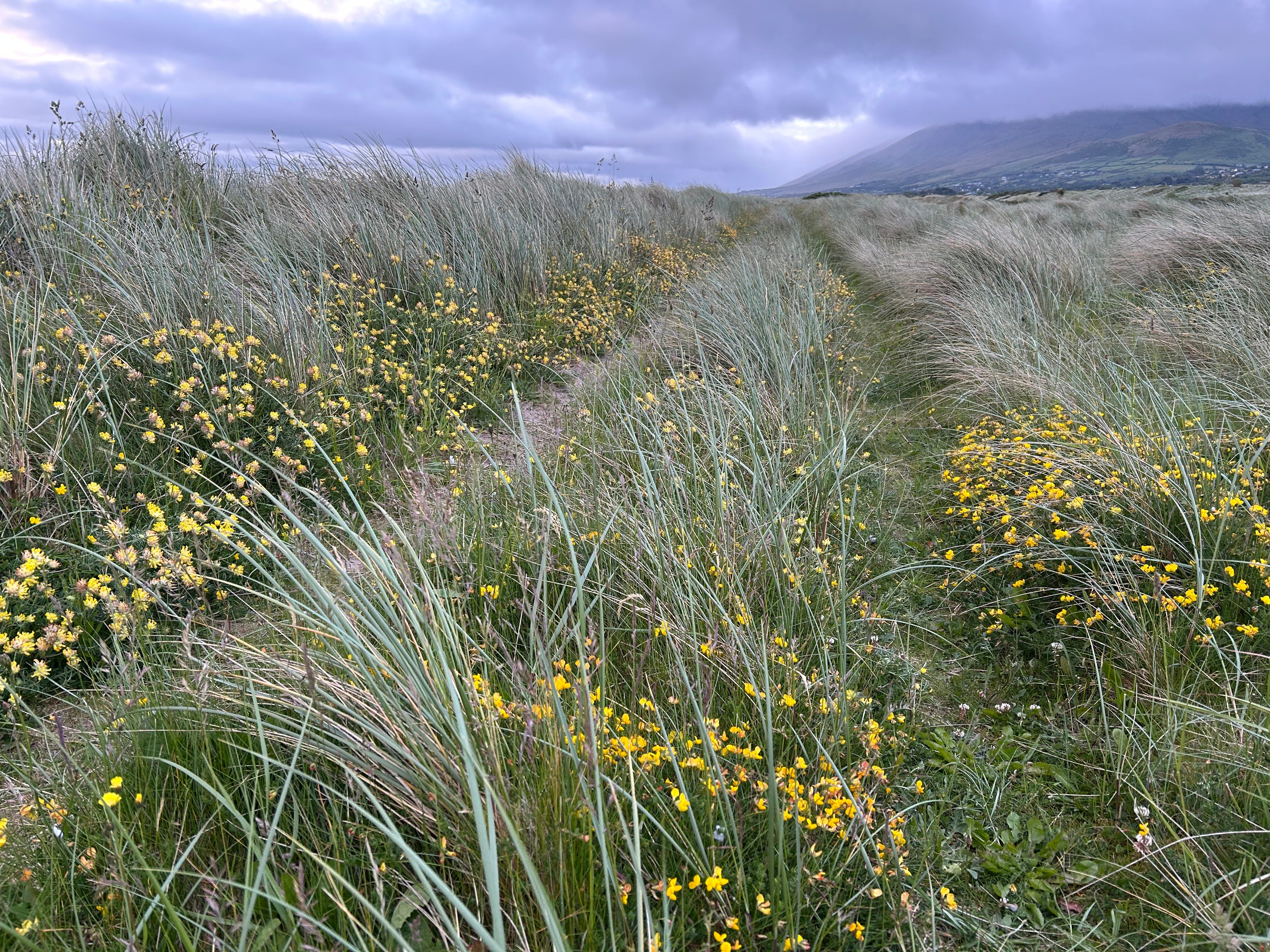
The disappointing weather at the beginning of the month meant that if there was any small, dry window, I tried to get out and make the most of it. After a day of rain, often the evening would brighten up a little, and we would take a quick walk on the beach. Despite the low temperates the seasonal wild flowers were still doing their thing, and a detour along a path at the back of the dunes was rewarded with a beautiful tapestry of colour. There was a huge amount of cheery yellow kidney vetch lining the sandy track, and here and there large patches of yellow rattle (Rhinanthus minor). This annual plant is semi-parasitic to grasses, taking nutrients from the grass roots, which eventually weakens the growth of the grasses in the area. For this reason it is sometimes called the ‘meadow maker’ as it helps suppress grass, allowing other plants and wild flowers to thrive. The ‘rattle’ part of the name comes from the sound of the seeds rattling once they are ripe.
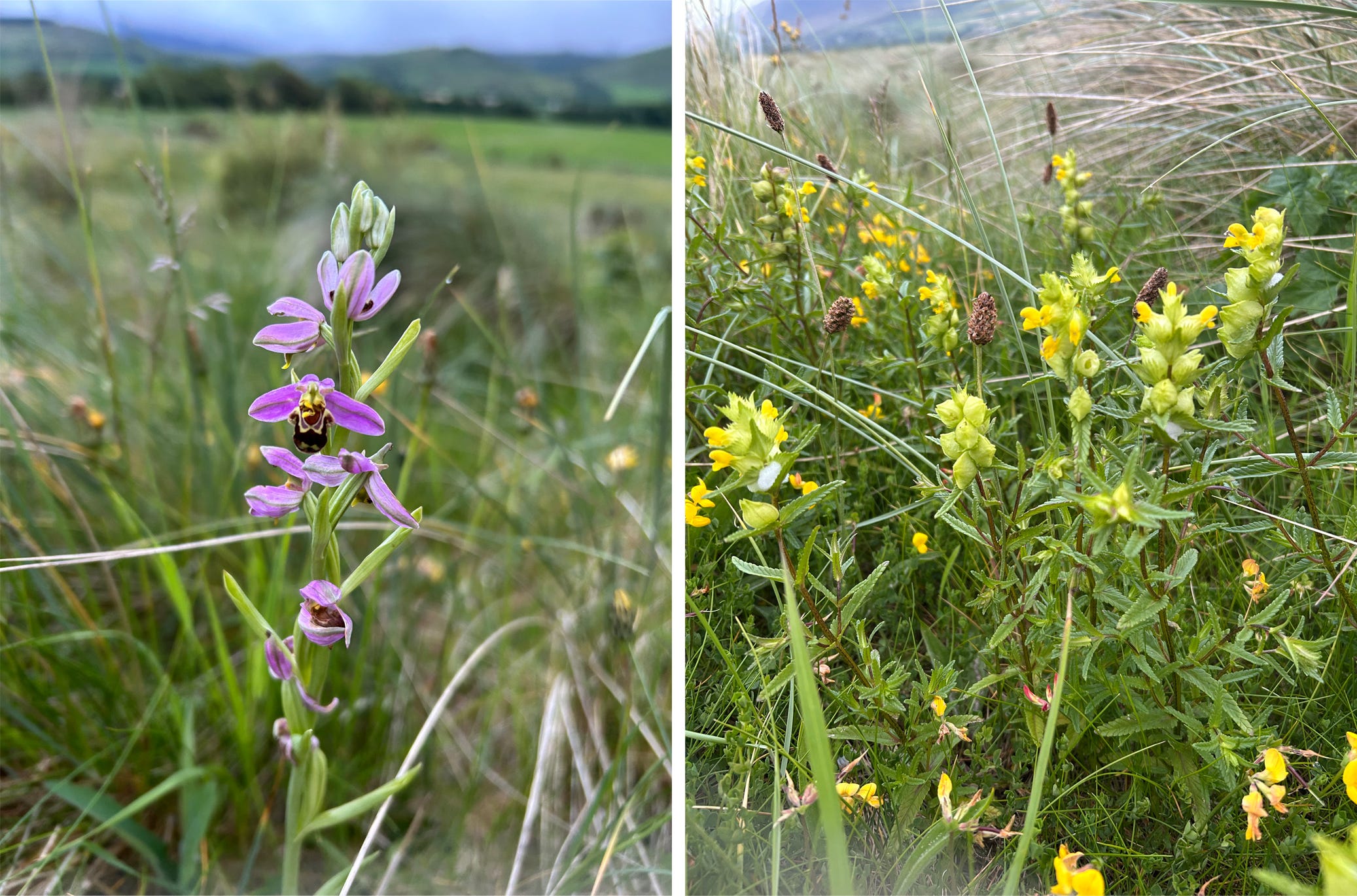
Along the same path I found a large number of bee orchids, with their beautiful and intricate flowers, that do resemble bees resting on a thick stork of grass. This is no coincidence as the orchid has evolved to be pollinated by the solitary bee Eucera longicornis; the male is attracted to the orchid’s scent (mimicking that of the female bee) and in an attempt to male with ‘her’ collects and transfers the pollen. However this bee isn’t found in Ireland, or in the northern extremes of the bee orchid’s range, so instead the orchid can reproduce by self-pollination, with a little help from the wind2.
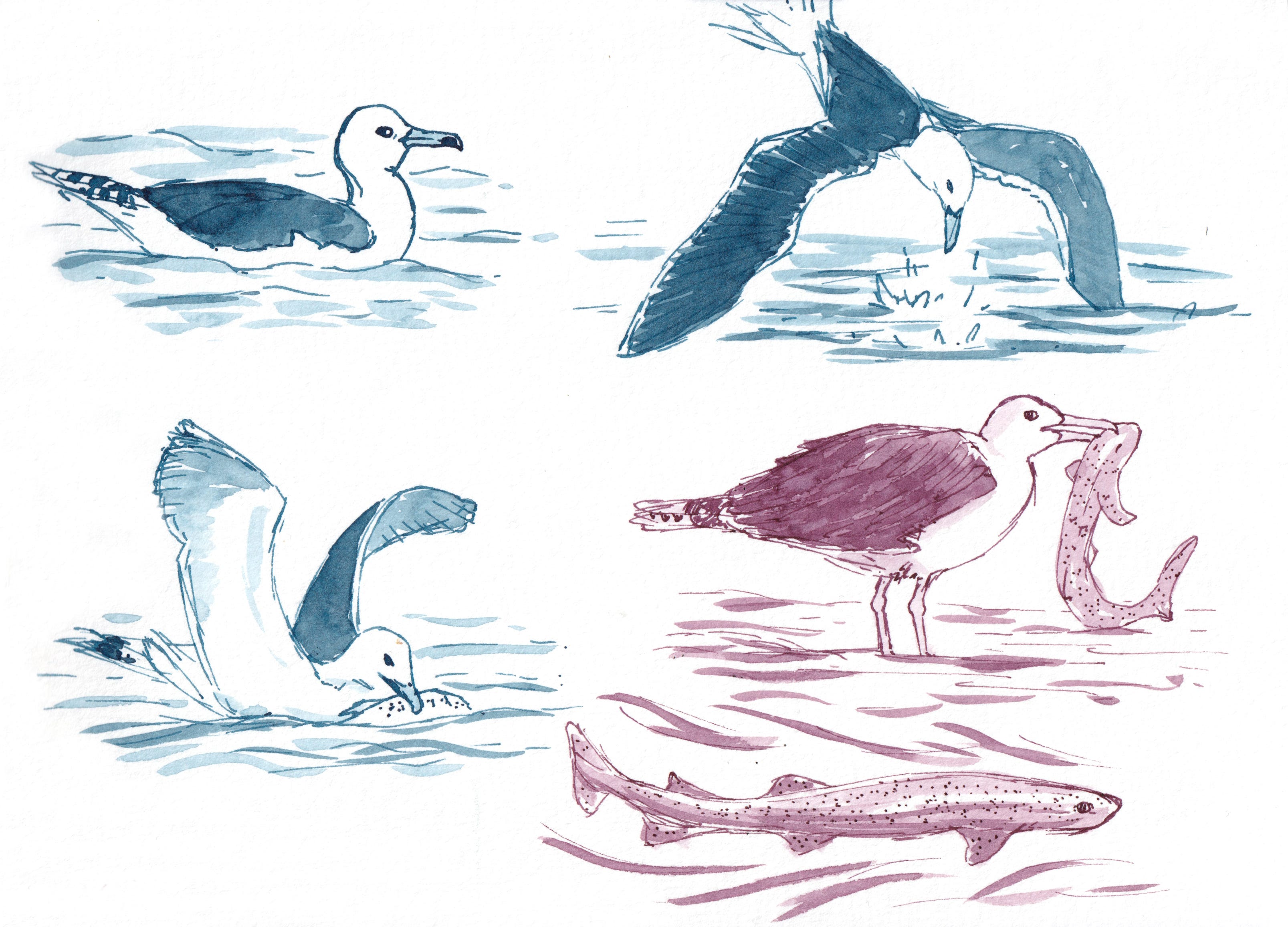
On another blustery walk, I watched a great black-backed gull3 bob about on the breaking waves, and then occasional dive down, as though trying to catch a fish. Great black-backed gulls are the world’s largest gull, with a wingspan of up to 1.6m (over 5 feet), and are opportunistic hunters, going for anything smaller than themselves, including; fish, crustaceans, other birds and even rabbits. So I shouldn’t have been surprised (except I was!) when this gull pulled a fish as long as itself out of the water. At first glance I thought it was an eel, but they quickly realised it was a lesser-spotted dogfish (also confusingly called a small spotted catshark4). These are one of the most common small shark species found in Irish waters, and we often find their egg cases, a ‘mermaid’s purse’, washed up on the beach. This was a first for me, and just shows that even on the most unpromising of days, nature can reveal something fascinating.
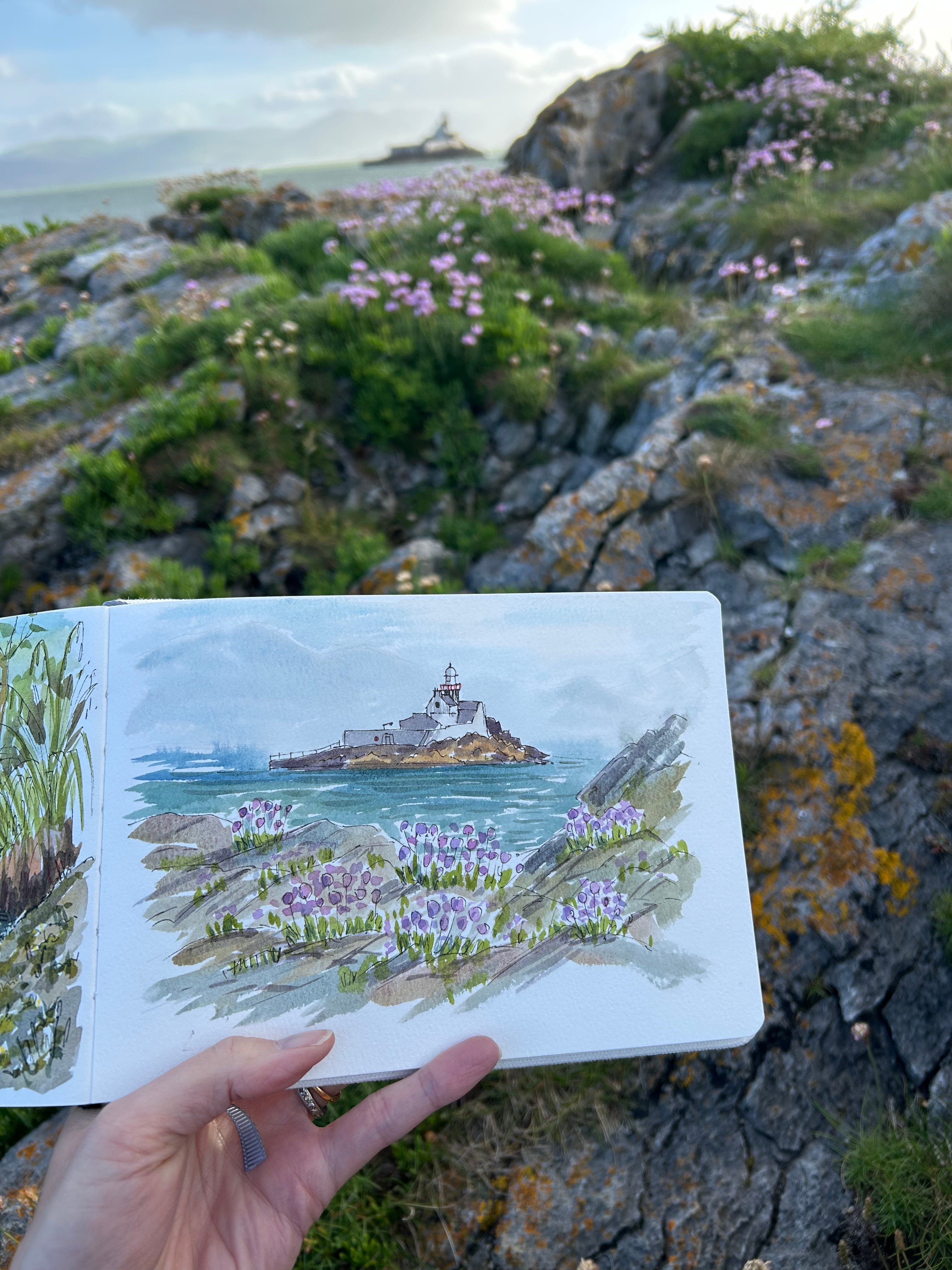
Inclement weather on our stretch on the Atlantic coast is often accompanied by a lot of wind, making sketching outside a little tricky. So one calm afternoon, with some time to spare, I decided to head over to the village of Fenit, with the intention of strolling along the coast path and sketching the lighthouse. When I arrived I was met with a fierce wind, creating choppy waves in the normally calm bay. The exposed path along the beach offered no real shelter, but as I’d made the effort to come, I was too stubborn to turn around. Bracing myself against the wind I walked on until I could see the diminutive lighthouse, sitting squat on Little Samphire Island5, just off the coast. Here the limestone bedrock juts out into the beach and I climbed down looking for a spot that was out of the wind, but the also gave me a view of the lighthouse. After a bit of manoeuvring, I wedged myself between the rocks and was pleased to find the most beautiful view, framed by dancing sea thrift (if you turn up the video you’ll hear the wind!):
After about an hour of sketching, my hands were freezing and my bum was uncomfortably numb, but I was really happy I’d persevered and found this pretty viewpoint.
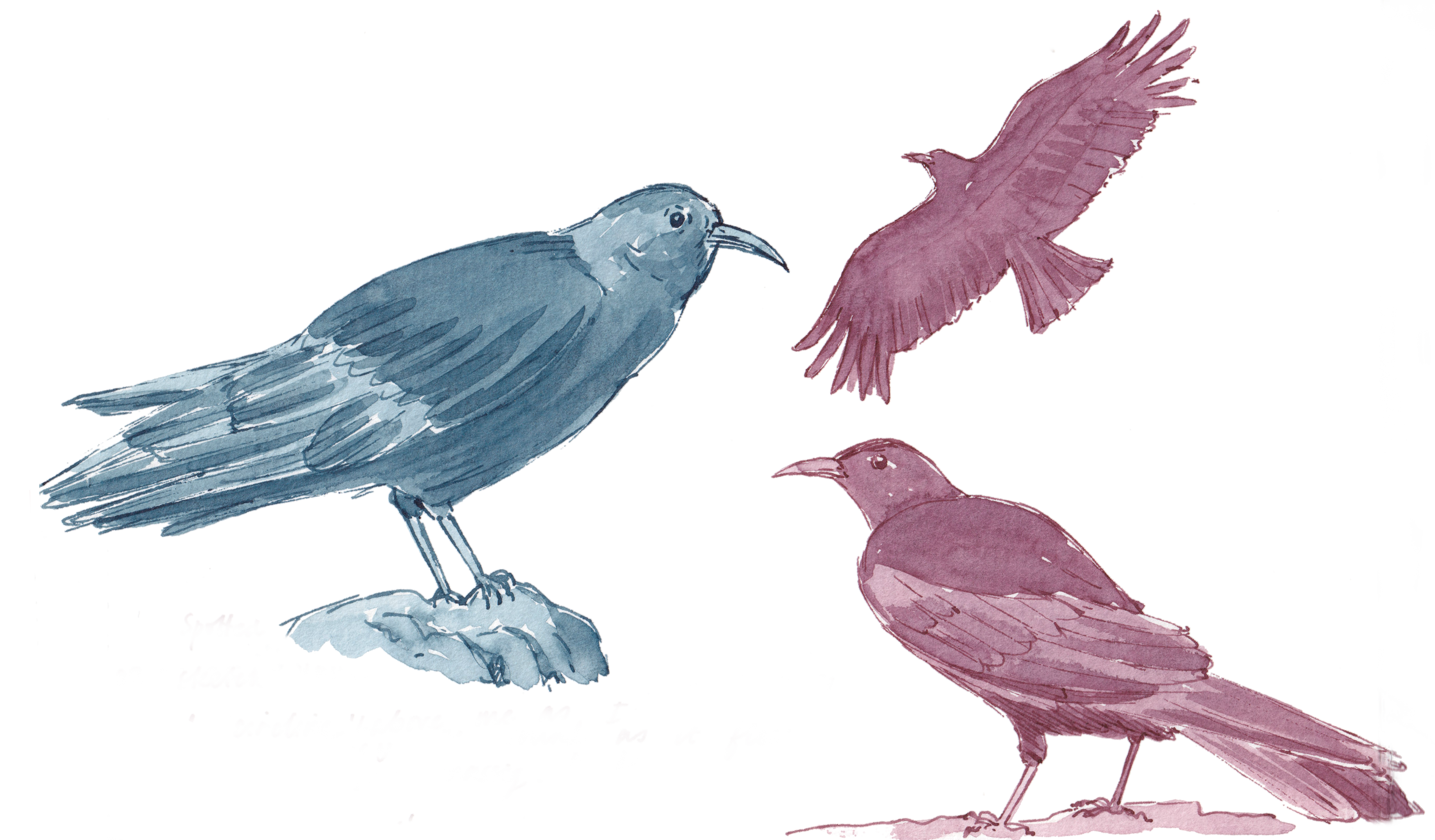
After I had finished and was walking back to the car, I noticed a few black coloured birds feeding on the short grass in one of the fields. A closer look and I saw they had curved red bills and red legs; they were choughs6. They are a member of the corvid family and use their curved bill for probing in the short grass for invertebrates. In Ireland and the British Isles they are coastal birds, usually on cliff tops, and found only along the western side of both nations. However in the rest of their range, they are more associated with mountains, and are found throughout southern Europe, North Africa and Asia. The only other time I have seen them, is soaring above the rocky cliffs of Glanteenassig forest park, which is much further inland, but also near me on the Dingle Peninsula.
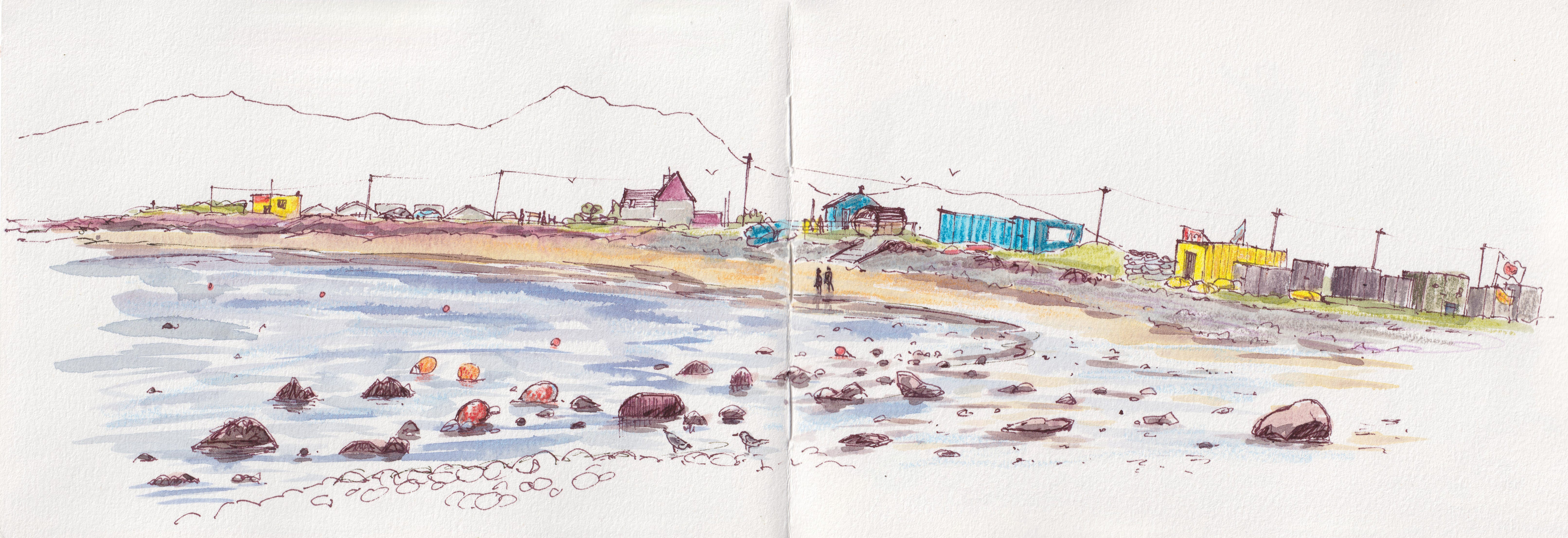
The weather wasn’t all bad, and one sunny morning I took a short drive out to the Maharees, a sandy tombolo that runs north off the Dingle Peninsula. This always feels like coming to a completely different world, despite being so close to the hills and green fields around my home. A tombolo is a sandy spit connecting the mainland to what was once an island (something you my remember from geography class), and now high sand dunes form an extensive part of the Maharees, looking like miniature mountains. I spent a few hours between the dunes, walking the cattle paths, spotting wildflowers, butterflies and listening to the sky larks sing above me. It was blue sky out here, but looking back at the Slieve Mish Mountains of the Dingle Peninsula, I could see the rain clouds forming. It was a quiet day when I came, before the summer tourists start arriving, but the water sports huts were gearing up for the start of the season, which hopefully is on its way along with some better weather.
I wrote about the unique sand dune habitats of the Maharees in this post, if you missed it and want to see more.
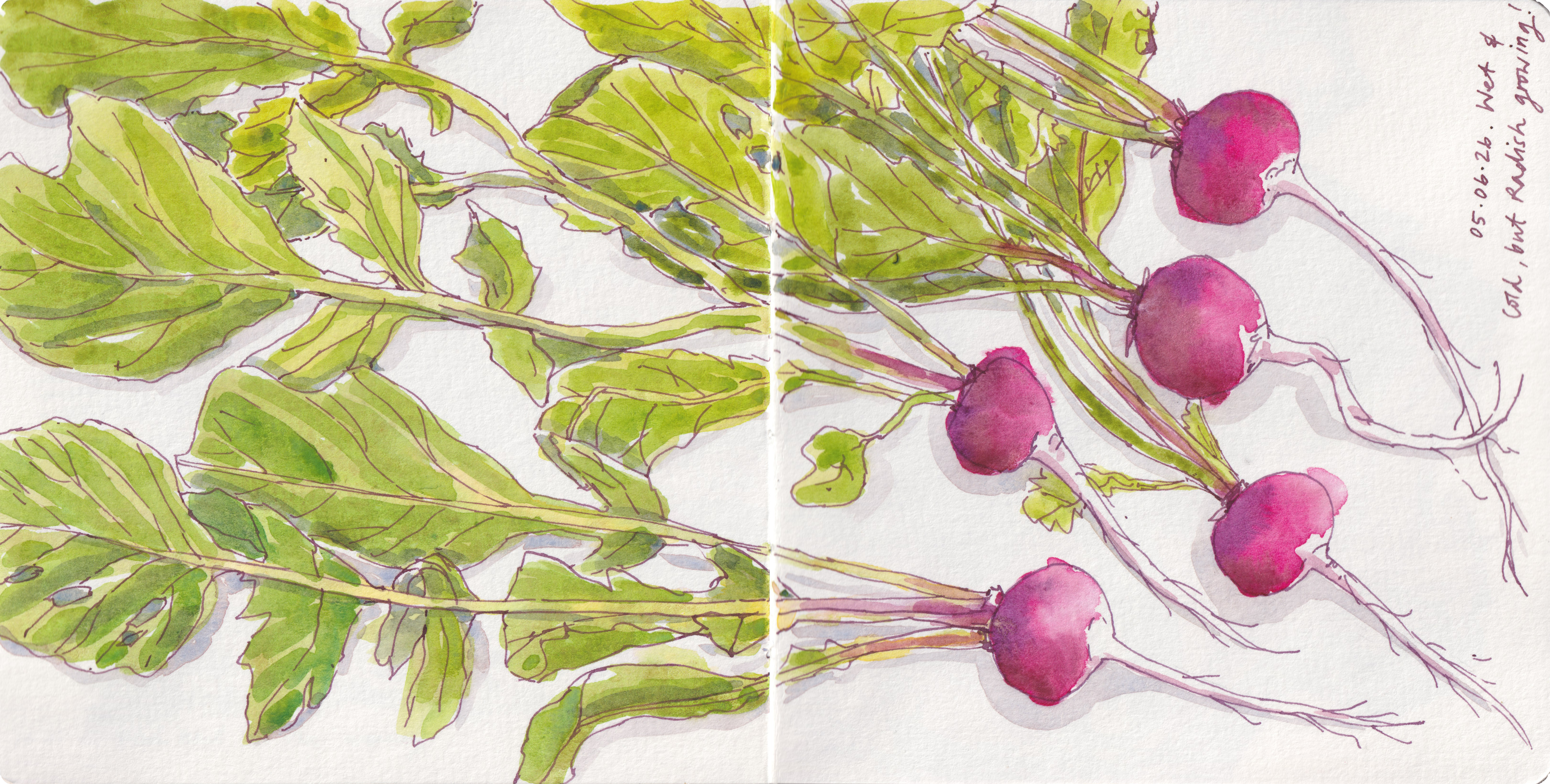
All the wet weather in the first two weeks certainly helped the garden grow, and the radishes and strawberries particularly did very well. After I pulled some radishes for a salad, I couldn’t resist sketching them, and dug out a tube of Daniel Smith Quinacridone Rose for their vibrant pink colour.
I hope you have enjoyed reading about my first two weeks of June? In part 2, I’ll share my Tuscan holiday and the wildlife I saw there. It was a very relaxed family holiday, so there was plenty of time slowing observing and sketching what I saw around me.
How did June start for you? Leave me a comment, as I always love to hear!
There was also very warm weather in Ireland whilst we were away on holiday, which always seems to be the case!
Built in 1854 and manned by lighthouse-keepers a hundred years, until the light was automated and serviced from the mainland in 1954.
No posts
Comments
Nothing yet. Say the first thing.
Sign in to join the conversation.