
This is the second half of my June update, where we spent the end of the month on a family holiday in the beautiful Casentino area of Tuscany. You can read Part 1 here.
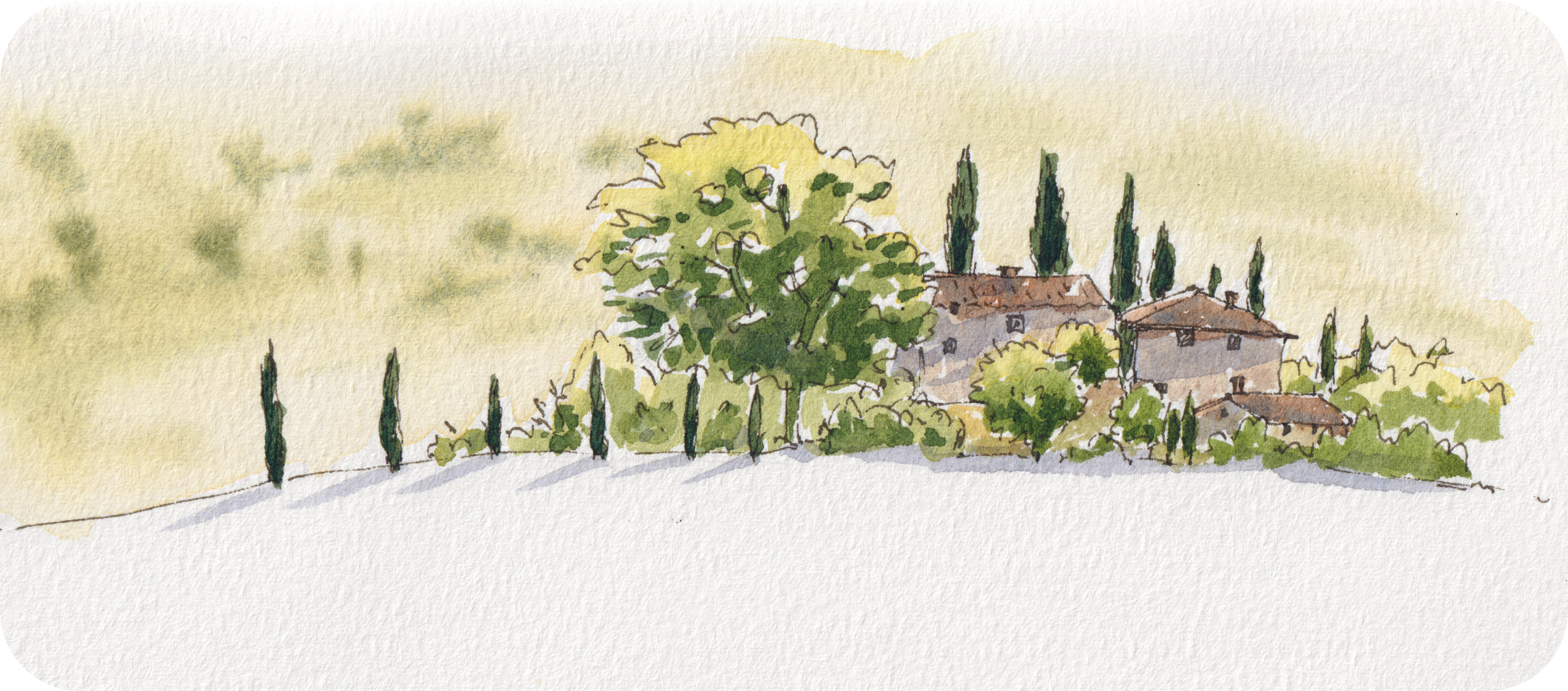
Leaving behind the cool weather in Ireland, in mid-June we headed off for our family summer holiday in Italy. My dad is second generation Italian, so there has been a long tradition of taking our holidays here, travelling by car from the UK and staying with family in northern Italy. Now my parents have a house in the Casentino valley in Tuscany, and we have been coming here every summer (bar the Covid years) for almost two decades.
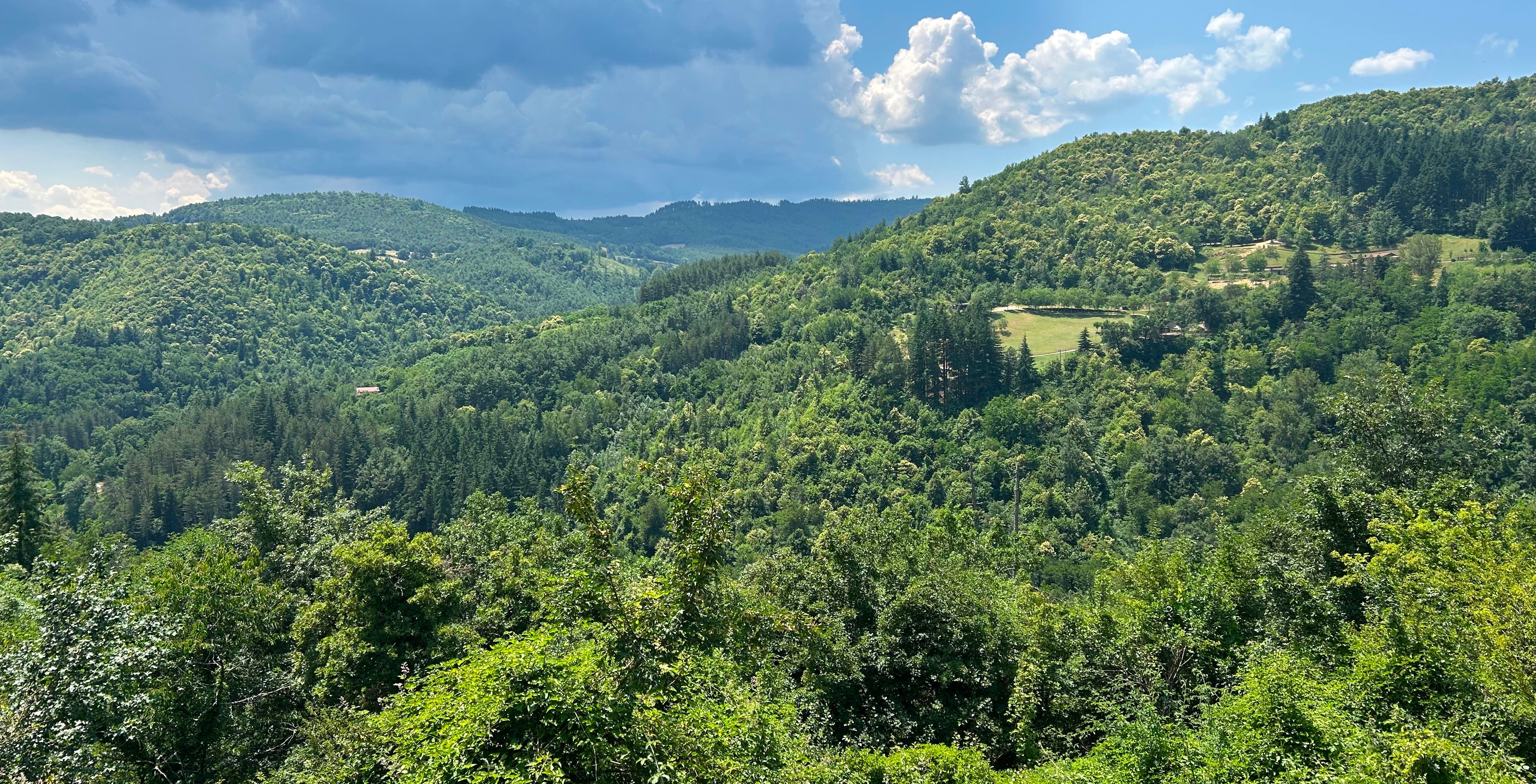
Every time we come I am struck by the amount of trees. The valley, stretching north from Arezzo, has been carved out by the Arno River, which rises near the summit of Monte Falterona at over 1,600m (5,250ft). The slopes of all the hills and mountains that surround the valley are covered in beech, chestnut and oak trees, some of which are centuries old. Not far from my parents’ house on the east side of the valley, the Parco delle Foreste Casentinesi extends for over 360 square kilometres straddling the Apennines and into Romagna. But even outside this protected area when I look out across the valley most of what you can see is forest. And with it a huge amount of biodiversity, from tiny insects up to apex predators like wolves and golden eagles.
This is a stark contrast to what I see around me in Ireland, where there is only about 12% of the land covered in trees (and only about 1% is ancient native woodland), compared to about 33% in Italy. Of course there are many different reasons for this (which people more knowledgeable than me have written extensively about), but having visited this area for so long, and seeing some of changes in that time around my parents’ house, it got me thinking more about this vast woodland.
Looking out across the valley full of trees and it is easy to assume that it has always been this way; swathes of oak, beech and chestnut for hundreds of years or more. But actually even only a century ago the valley would have looked very different, with more mixed farming across the lower slopes (although still with large areas of forest). Taking a walk up a track and around the hill from the little ‘borgo’1 where we are staying, a neighbour has been busy over the last few years clearing some of his land to plant vegetables and keep chickens. I remember walking this track about fifteen years ago and it was mostly over grown, shaded by chestnut and oak trees that spilled down the hillside towards the village. Now, with some of the trees cleared, I could see old stone retaining walls, and looking up into the woodland, there were more of them, tumbling down and overgrown.
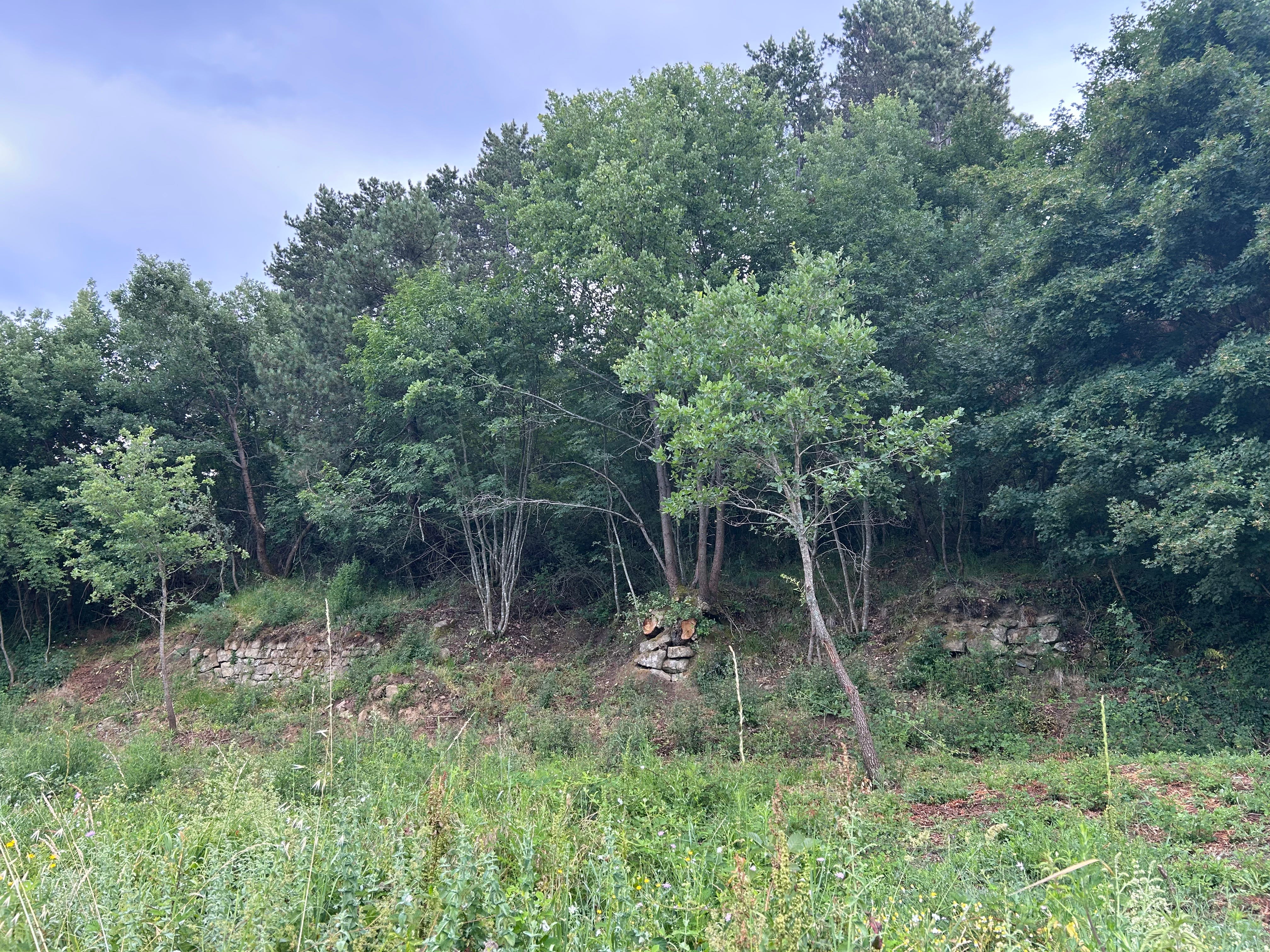
Another neighbour, who’s family has lived here for generations (they are now in their eighties) remembers in her father’s time, that this whole hillside was terraced, and planted with olives, vines and vegetables. Sheep grazed in the pastures in between, and the woodland was in much smaller pockets. Could this have only grown up in a generation? Actually on a closer look I realised that the trees here really don’t look that old, only a few have very broad trucks, although they are definitely tall enough to create a high, shady canopy.
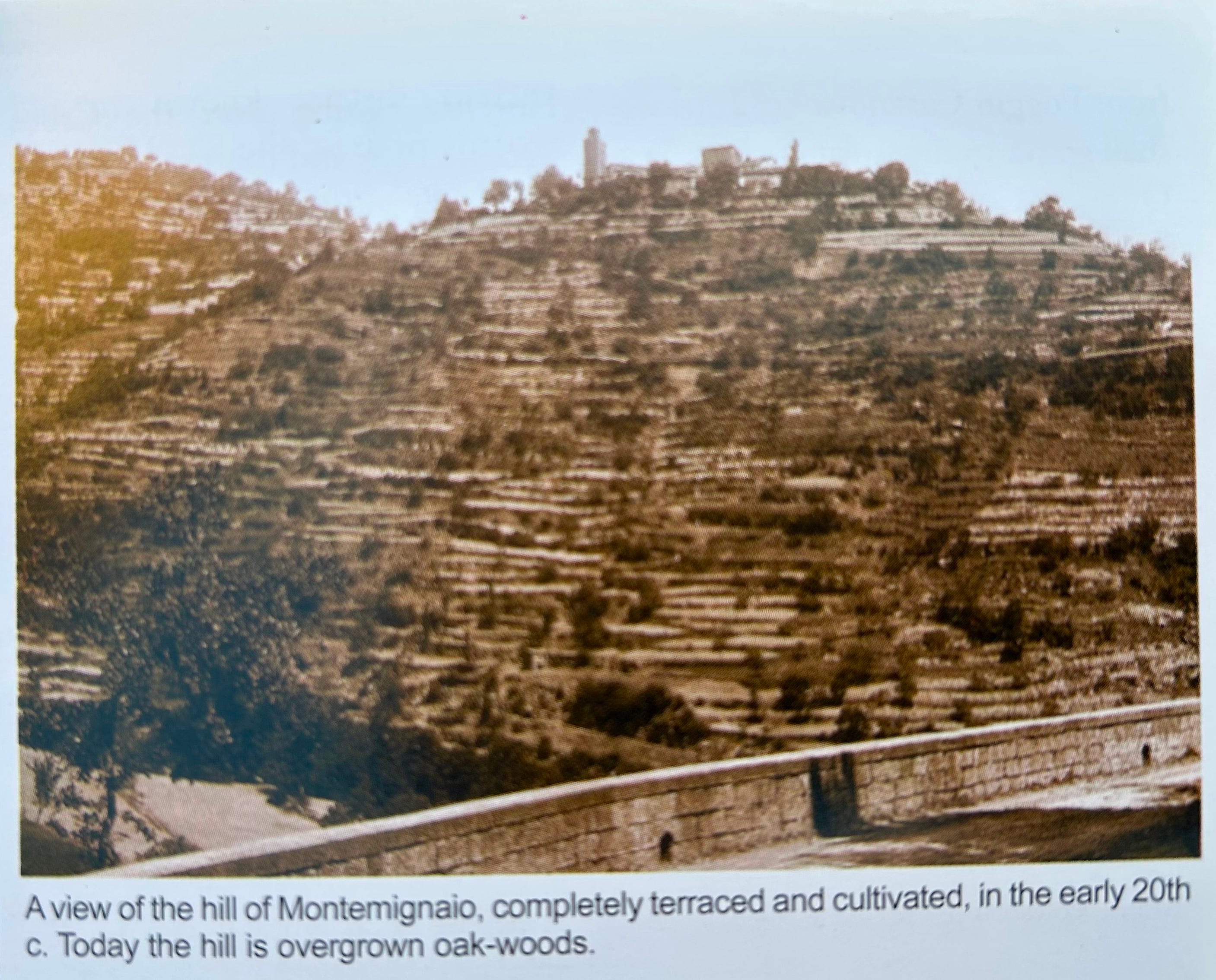
Looking through a local history book by Giovanni Caselli2, I found this photo of the nearby village of Montemignaio, taken at the turn of the 20th century, showing all the olive terraces covering the slopes. Now this hillside is covered in forest.
In County Kerry the newly created Páirc Náisiúnta na Mara3 covers a large area of mountain uplands, including Mount Brandon and the Conor Pass, but at the moment the park area is still grazed by sheep, munching down almost everything to a short green carpet. I wonder if the grazing pressures were lifted within the park, what this would look like in another generation?
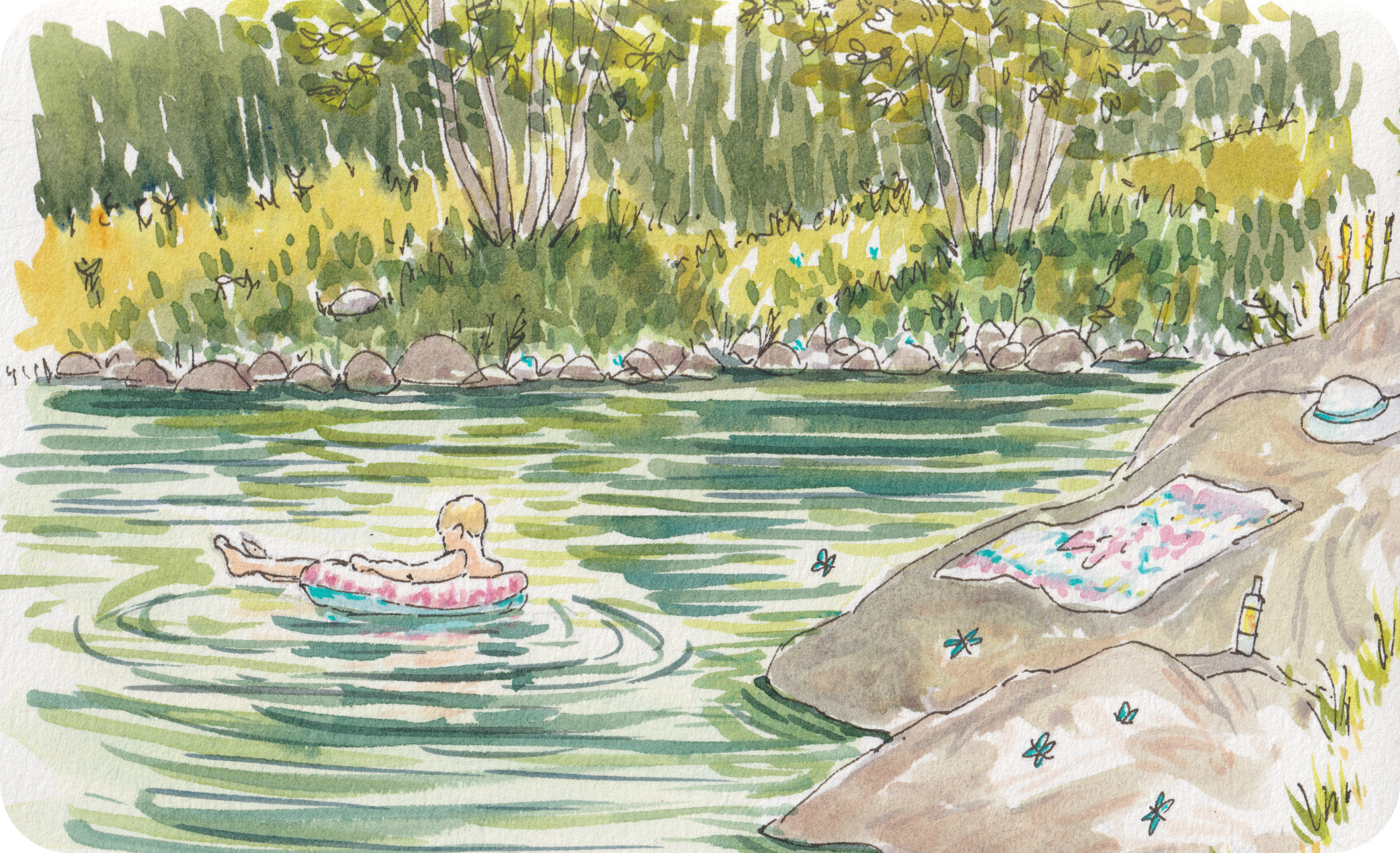
On this holiday we didn’t venture into the Casentino National Park, with the heat keeping us local, and the children being happiest splashing about in the River Arno (conveniently damned each summer to form a nice swimming area). However we were lucky enough to see plenty of wildlife within the area of the house and down by the river.
Sitting on the terrace the first evening and enjoying the sun slip behind the hills, there was the background hum of the grasshoppers and crickets. As the light faded (much earlier here than in Ireland) we suddenly started seeing little flashing lights at the end of the garden; lucciole (fireflies)! At first just one or two, but as it got darker more and more appeared, which was magical to watch. The next evening my son noticed an even brighter light on the ground, which turned out to be a glow-worm. Despite the name the European glow-worm (Lampyris noctiluca) is actually a type of beetle, with the flightless female producing a bioluminescent glow from her abdomen to attract a mate. We only saw one other on our visit, so this was quite lovely to see.
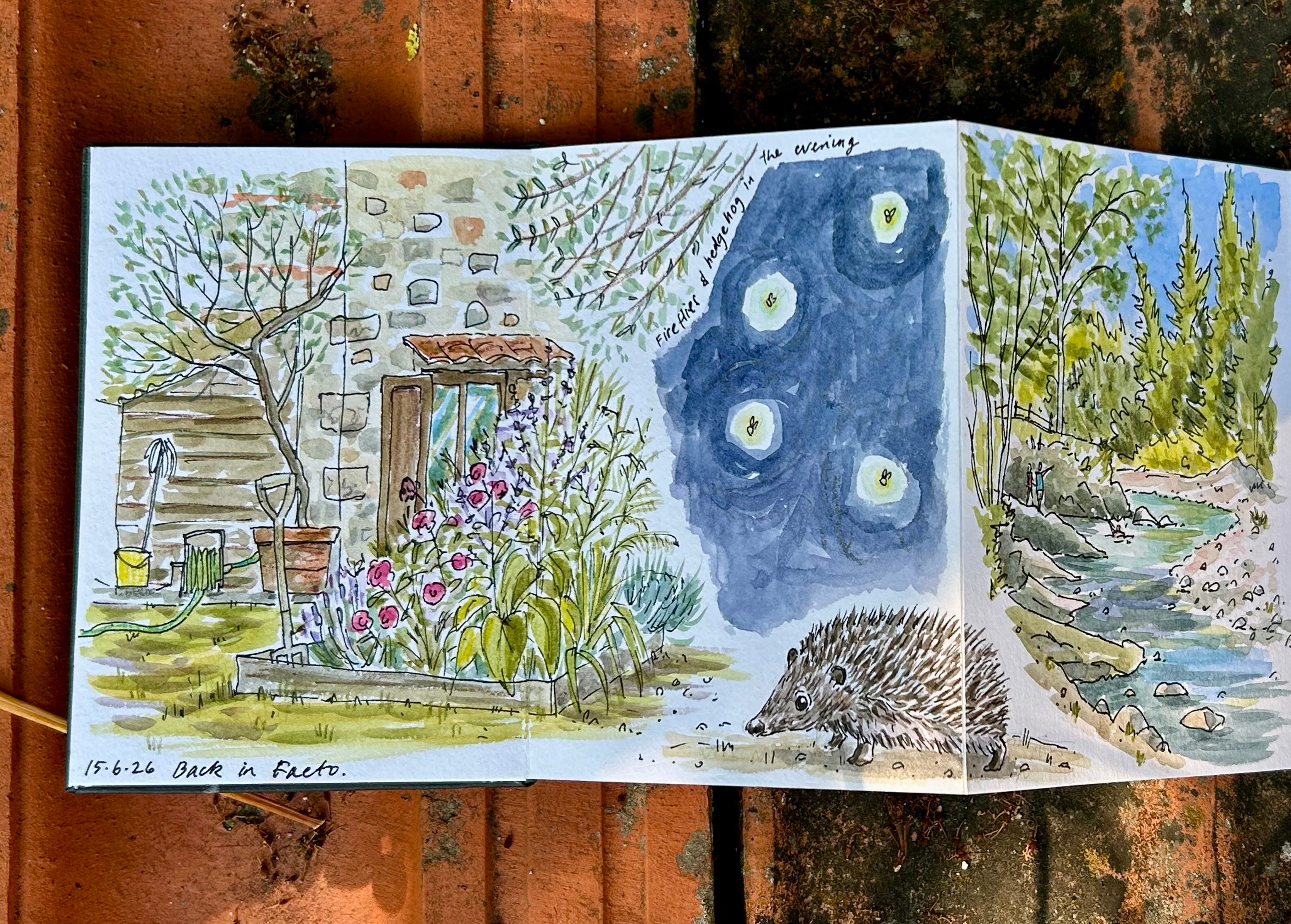
Also on the first evening I heard rustling in the leaves at the base of an old walnut tree, and out scurried a hedgehog, along the terrace and into a wood pile! It was only a few metres from where I sat. Over the next few evenings, and sometimes in the mornings too, we realised that there was in fact a little family of a mother and four young hoglets. They were oblivious to our presence, rooting around in the leaf litter and in the flower beds. Given their activity away from the nest they were probably about 6 weeks old, and getting ready to make their own way in the world. At about 6-8 weeks old they become fully independent and will go off to live a solitary life, until they are ready to find a mate.
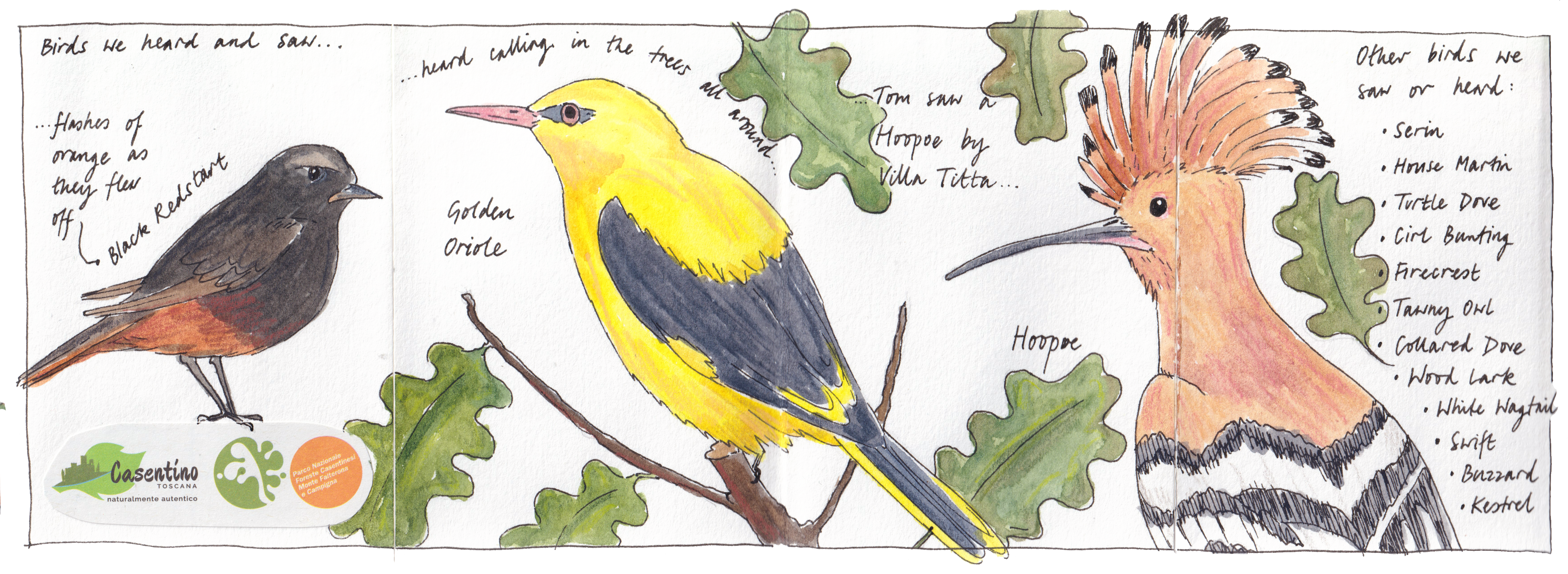
The bird life in the Casentino was very vocal, but quite hard to spot. Every time I heard the distinctive call of a golden oriole, I was scanning the trees, but I never saw one, even though they are true to their name and bright yellow. We were lucky enough to briefly see a hoopoe, which always seem very exotic compared to birds I see in Ireland. On our visit last year I was sketching a local old church, set on the edge of a grassy field, when a hoopoe flew down and landed right in front of me.
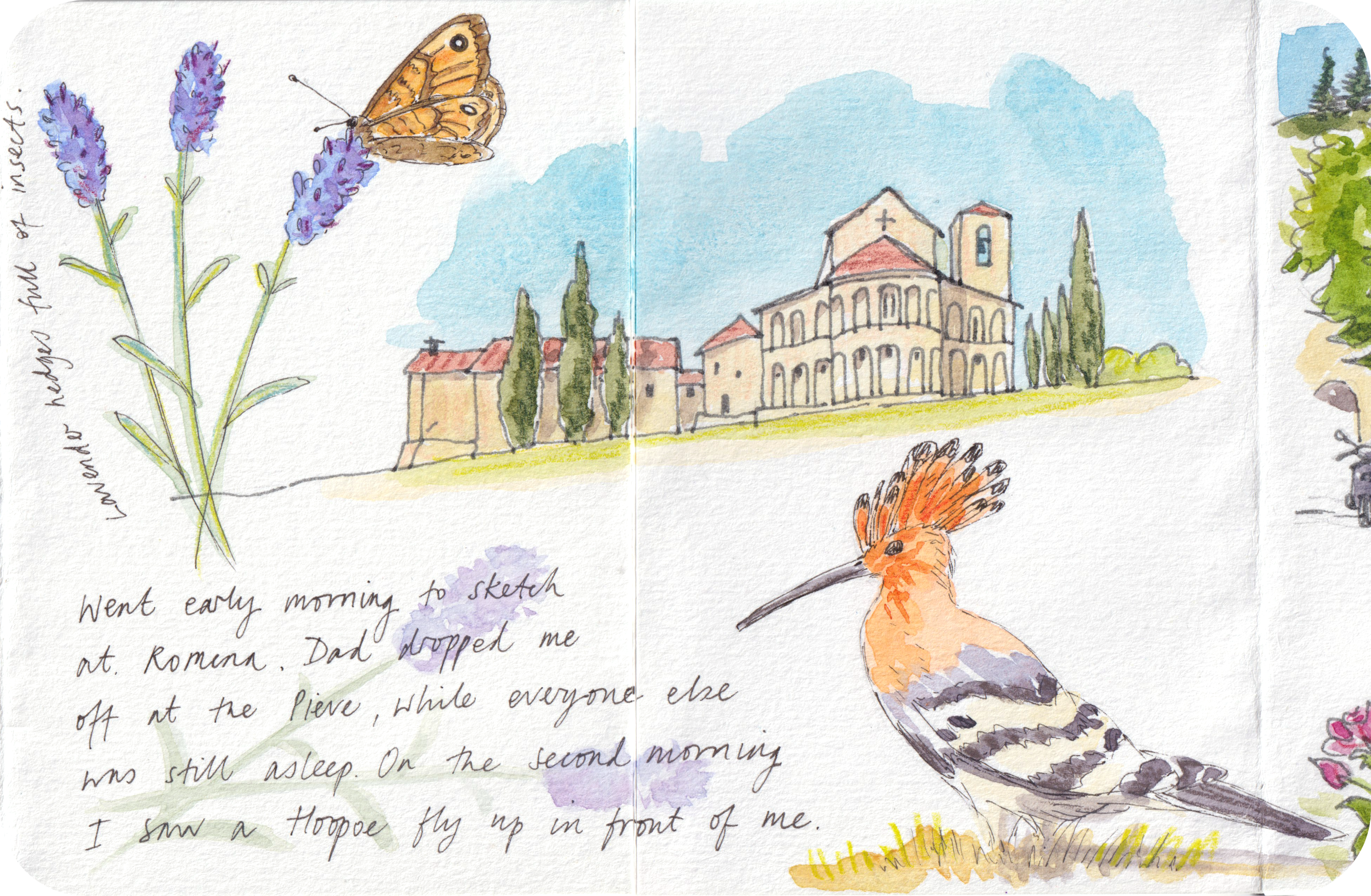
But most of the birds seem a lot more timid than at home, even typical ‘garden birds’ like robins and blackbirds are shy, flying off as soon as they sense a person nearby. They have good reason to be extra flighty, with an estimated 5 million songbirds illegally hunted a year in Italy, stemming from the long tradition of eating these small birds4. As a child visiting my grandfather in the north of Italy, there was sadly a complete absence of bird song. I’m pleased to say that I did hear plenty of singing on this holiday, with an almost constant refrain of blackcap, wrens, blackbirds, serin, cirl bunting and turtle doves. The jays were also very noisy and had discovered the fig tree in my parents’ garden; often there was more than one, chattering and bickering with each other while they fought over the figs.
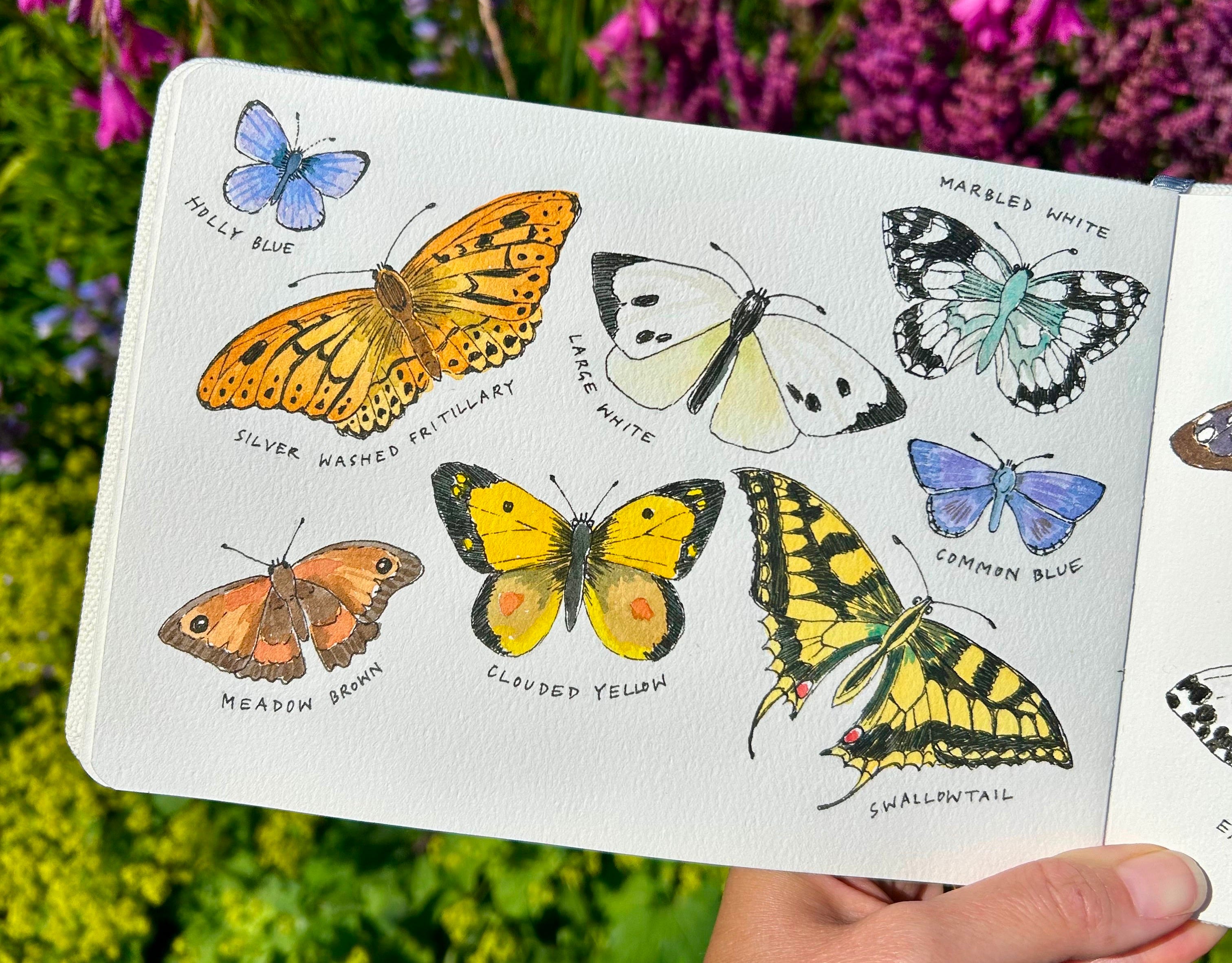
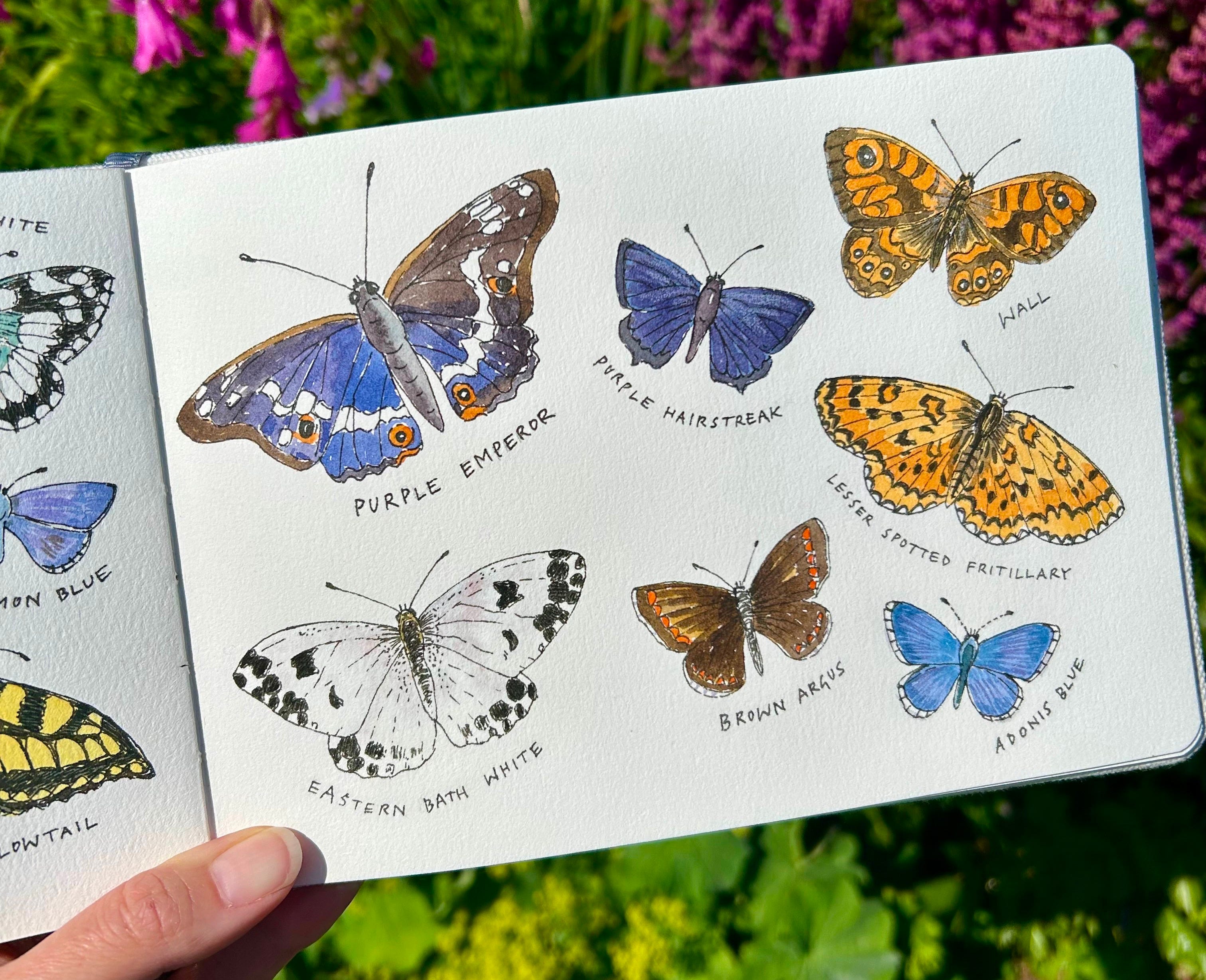
Most mornings I went for a little walk around the hill along the neighbour’s farm track, before the sun got too hot, keeping an eye out for butterflies amongst the wildflowers. Italy has an excellent climate for butterflies, and boasts about 270 different species across the country, compared to only 35 in Ireland (where the cooler, wetter climate isn’t so favourable). Being so many, I had a hard time to identify them, and it was only if I managed to snap a good photo that I could work out what they were. Although the best butterfly moment of the holiday came when we were swimming down at the river and a purple emperor butterfly landed on my son’s head! After carefully removing it to some vegetation, it promptly flew back and landed on him again. My son named ‘him’ Butty, and was delighted with his new friend.
My last memorable wildlife encounter to mention was on another morning out looking for butterflies; I was just trying to photograph some marbled whites, when I heard rustling in the bushes. Suddenly a deer leap out and darted across the small cleared field. Then more rustling and a fawn sprung out, following by a female. Both bounced their way up the track and into the woods. From the markings of the fawn, I think they were fallow deer. It was wonderful to see them so close.
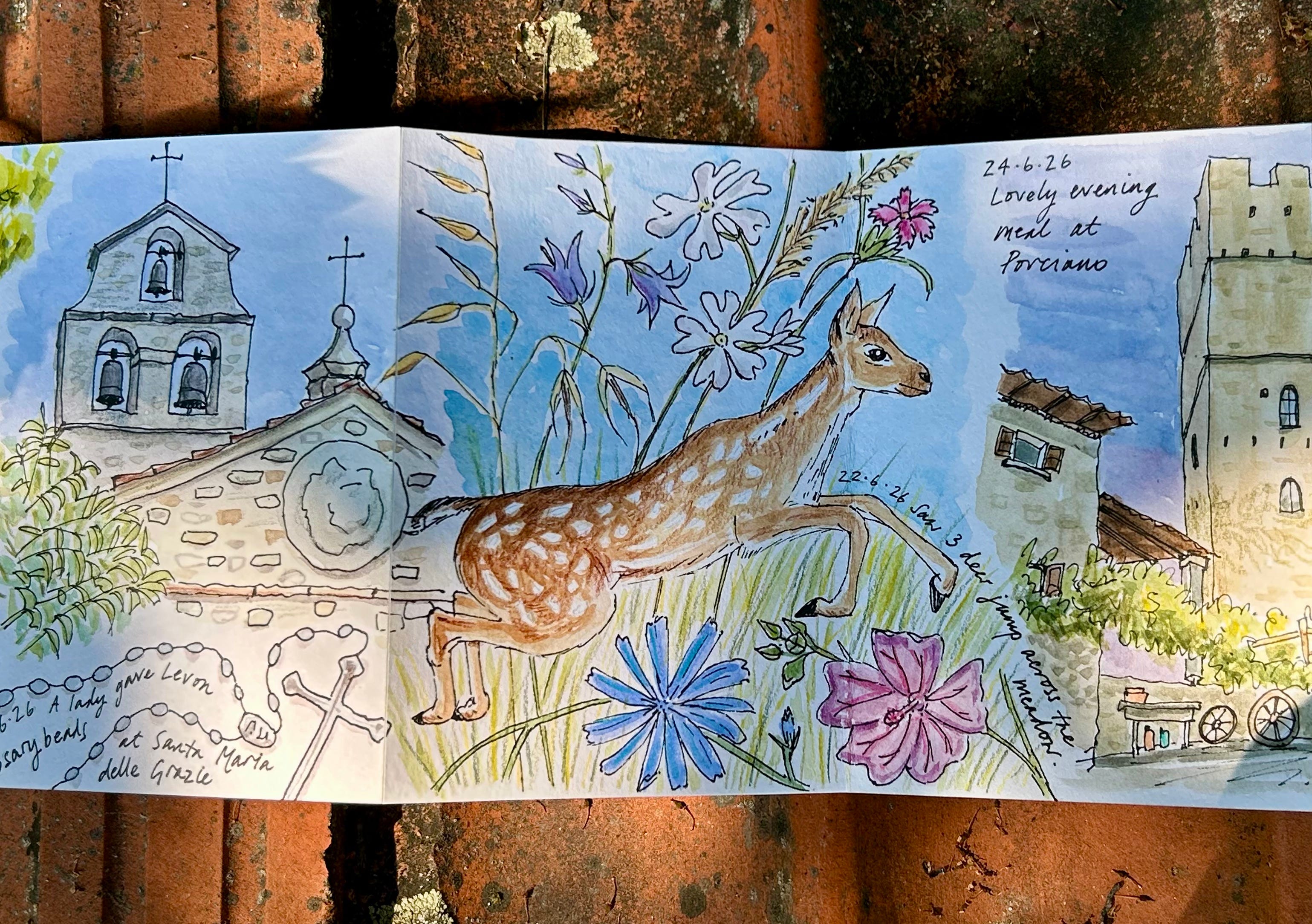
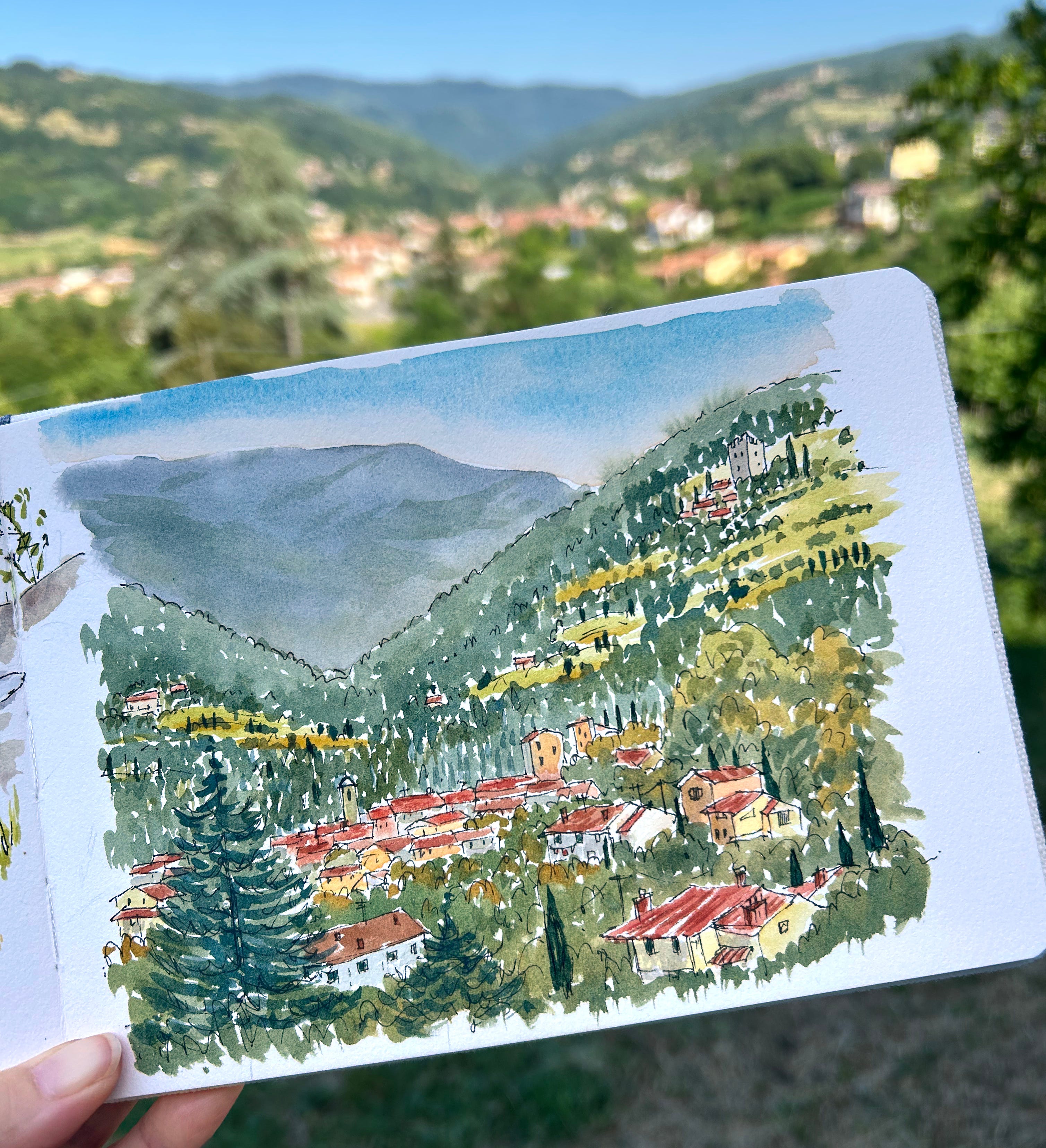
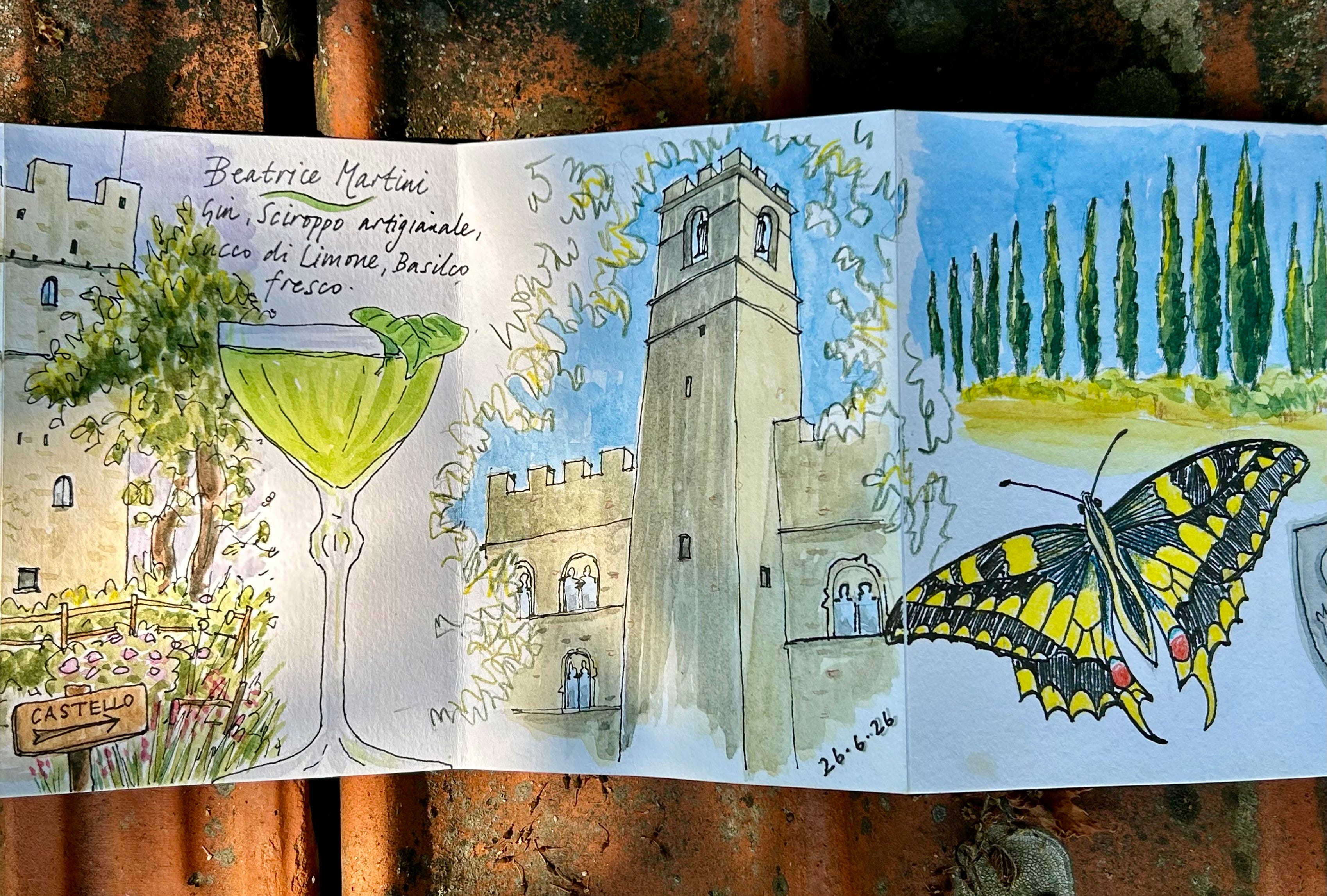
For this holiday I had taken a small Sea White of Brighton concertina sketchbook with me, which I filled in one or two panels each day. I find these little books to be a perfect for travel sketching, and by the end of the trip there is a beautiful record of what you have seen and done. You can see the whole of this sketchbook in this Note.
I also took an Etchr sketchbook, my watercolour tin, water soluble pencils, and a few ink pens. I’ll be writing more about what I take out with me when I sketch on location in my mid-month post in August…
I hope you enjoyed reading about my holiday. How about you, have you been away or are you planning a trip? And will you be sketching while you are there? Leave me a comment, as I’d love to know!
Casentino. Its History and Environment in 50 walks.
No posts
Comments
Nothing yet. Say the first thing.
Sign in to join the conversation.