
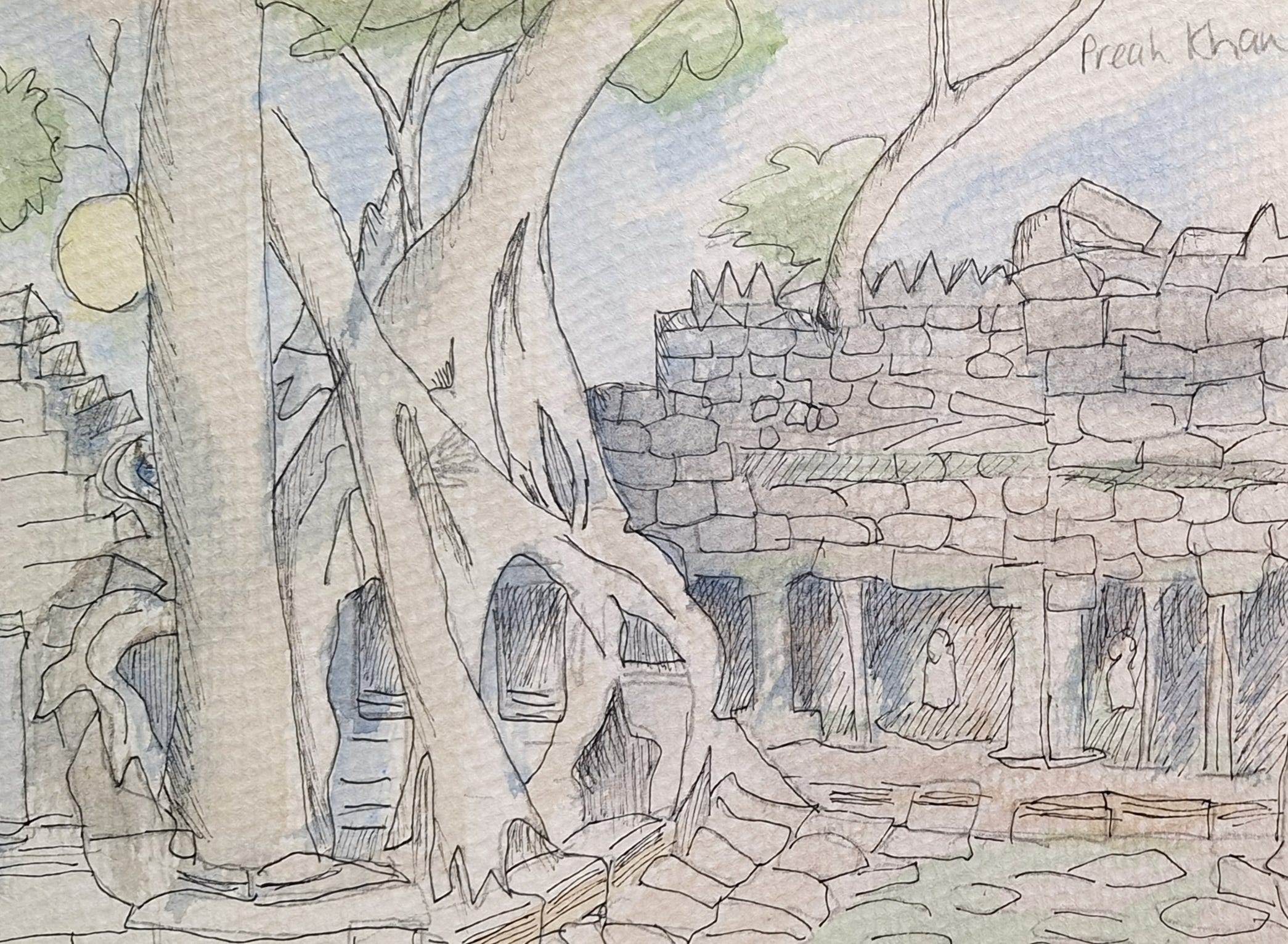
This is The Metamorphosis Map, where I explore change in life and at work, through the lenses of my passions: travel, sketching, culture, nature and learning.
If you enjoy this newsletter, please like, comment, send a one-off tip or consider becoming a paid subscriber and get a 1-1 creative change planning session.
You don’t have to be a certain age, single or retired to be a free spirit. It is possible to travel with a family.
Read the first article in this series about what essential skills you will need here.
In this post, I want to focus on the first of 3 priorities.
Moving abroad is a major transition. During times of change, we need increased resources even just to keep things running reasonably smoothly. And we need more - time, energy, contacts and research - to create lasting change through growth. The reality is that we cannot do everything we’d like. The key is to prioritise - and accept that some losses are inevitable.
For many families, the most important areas will be:
Health
Education
Relationships
In the context of traveling and living in different countries, I’d argue these aspects take on greater significance, and entail higher potential risks and rewards.
In this article, I’ll focus on the first and most important.
Good health is a priority for any family. Babies and children can be vulnerable as well as resilient. One minute they are fine, the next declining fast, the next bouncing back again.
Prevention is better than cure, so good hygiene, nutrition, sleep and exercise are vital. But sometimes you are unlucky and your children are unwell, have an accident or develop a condition and need professional help.
So wherever you roam, make sure you have adequate health cover and register with local public and/or private health services immediately.
In Cambodia we relied on private healthcare, due to the limitations of facilities and practitioners at that time. We were lucky to have a choice.
But initially, we spent too much on comprehensive insurance. You should only cover what you can’t afford to pay yourself, not everything. Eventually, through trial and error, we ended up with a smaller premium and paying out of pocket for routine visits to the doctor.
We took a lot of precautions with hygiene and didn’t travel outside the main cities much to reduce health risks. The children probably wouldn’t remember the gorgeous scenery, but they would have suffered symptoms for life if they’d caught malaria. Luckily, the children never needed a hospital stay in Cambodia or an emergency air lift anywhere.
I gave birth the first time in Singapore at a public/private hospital. For my second child I went home to the UK and the National Health Service. Comparing the two experiences is a story in itself. Both were high quality, but the private option represented excellent value. Not just for the medical care, but also the maternity culture and food.
My son had a brush with hospital when he got a chest infection in Singapore at 3 months. One doctor wanted to admit him for observation, give only rehydration salts and run a battery of expensive tests.
But my instinct told me this was too much. The baby had a cough but was otherwise bright, alert and playful. I chose to keep him under close supervision as an outpatient. I was able to continue feeding him and he recovered quickly.
Private healthcare can be a privilege but it also carries the risk of medicalisation, and the temptation of intervention for the sake of making money.
In Serbia, we had little need for doctors, and paid to go private only for minor ailments. We also appreciated regular check-ups included in the children’s sports club memberships.
There was one fiddly case of a tick wedged in a tummy button. But nothing serious. Except when my daughter broke her arm rollerskating. Then, the public hospital and doctors came up trumps. The service was smooth, friendly and professional. And my daughter and I learned a lot of new vocabulary.
In Slovenia, we have access to the public health service. Taxes are high and the service is under pressure. Non-urgent treatment can entail a long wait but is essentially of high quality.
Both children had braces on their teeth for a couple of years, but only one was eligible for public healthcare. So one went private. Perhaps surprisingly, the public one turned out better quality and value, and was more professional.
In every country, including your homeland, effective communication is paramount in both public or private healthcare. But in a different language and culture, things can get complicated quickly.
Gatekeepers are more difficult to get past, a telephone conversation trickier to navigate and recorded messages with key pad choices even more confusing. Differences in medication names and availability can also throw you.
I’ve found learning key vocabulary for doctors and dentists invaluable. Never underestimate the power of manners and a smile. I also recommend visiting in person to ask for information or make an appointment. And waiting patiently without complaint, unless it’s urgent.
Healthwise, things can get scary quickly.
I had my own health crisis on holiday in France at the age of 10, when I developed appendicitis. My dad said we’d go to hospital for an operation as soon as we got home. But the local doctor was adamant: “Non, non, monsieur, maintenant!” Luckily, my parents had the old E111 European medical insurance card. As I result, I enjoyed the best care, lovely food and a week’s stay at no extra cost.
For a more ominous, gripping account of appendicitis abroad, read Scott Monaco ’s story here.
If you’re travelling with a family, expect some routine trips to the doctor and dentist, plus a few emergencies and a couple of long-term treatments as they grow. Hope that no one will need a hospital stay, but be prepared for the worst.
Include calculations of insurance premiums, out of pocket expenses or tax and social contributions in your budget. Research which medicines are available locally. And have contact details on hand.
Doctors tend to speak English, but other healthcare workers may not. And everyone appreciates an effort. Learning at least some of the local language will help with communication and building rapport.
Trust your instincts. And if someone feels ill and the usual methods don’t work, seek professional help immediately.
Whatever you do, and wherever you go, don’t leave it to chance.
Life is a journey, and everyone’s map looks different. 🗺️
Comments
Nothing yet. Say the first thing.
Sign in to join the conversation.