
* Note à mes lecteur·ices francophones : je vais écrire ici en anglais car c’est dans cette langue que nous avons lu certains de ces ouvrages, qui d’ailleurs n’ont pas encore tous été traduits en Français, et de manière à pouvoir toucher une audience plus large sur ce thème qui me tient à coeur. La Maison est par ailleurs bilingue, ce n’est que justice que cela se retrouve dans mes écrits également. Pas de panique, certains articles resteront en Français, et pour les autres, n’hésitez pas à utiliser la fonction traduction de votre navigateur, elle fonctionne plutôt bien (clic droit sur une sélection de texte, traduction, et hop, le tour est joué).
To honour the end of the “official” Pride Month—and because pride and tolerance should never be confined to a calendar, I’ve set a small list of books that allows to open the discussion about the subject with kids, from early readers to teenagers.
Pride Month is meant for joyful celebrations, political work of remembrance, and colourful visibility. That you’re part of a Queer family yourself, or simply trying to cultivate empathy by showing your child diverse identities and families, books are always a great start. They allow us to introduce questions and dialogue softly, colourfully, with tenderness and generosity.
When I was Esther’s age, there was no books from my childhood that allowed me to question the meaning of gender identity or to see other types of love stories than straight ones. Not because my family was closed-minded, but because these kinds of stories simply weren’t easy to come across. But visibility matters. Stories matter. They’re the foundation on which we build our inner home—the first coat of paint on what will become our identity, and the lens through which we’ll learn to accept ourselves and others, no matter how different. Empathy is built on self-love. And I do want my daughter to love herself, no matter the shape her identity will take.
Our home has always been a queer, feminist one—just as it's always been overflowing with books of all kinds. It was therefore very important for me to have some books that could lead Esther to ask the questions she could have about gender, love and diversity. You don’t need a full library dedicated to the subject for that, the small selection I’ll present bellow covers quite a bit already. Though I’m always open to reading/buying more books, so if you have recommendations, please share them in the comments, I’ll be delighted to add some to our small selection.
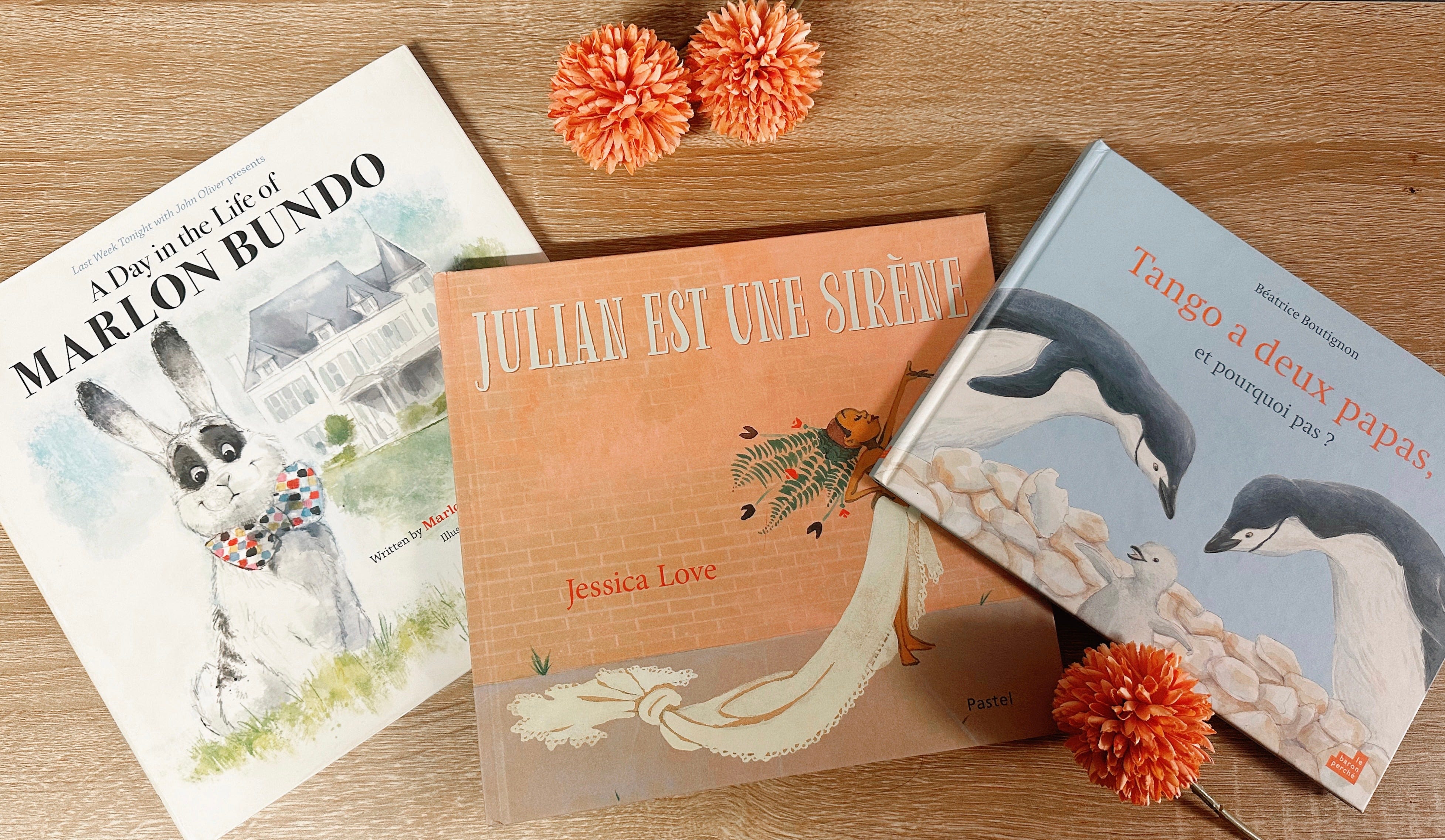
While riding the subway home with his Abuela, Julián notices three women spectacularly dressed up. Their hair shines in shiny hues, their dresses end in fishtails, and their laughter fills the train car. When Julián gets home, all he can think about is dressing up just like them in his own fabulous mermaid costume. But what will Abuela think about the mess he makes - and even more importantly, what will she think about how Julián sees himself?
Published in 2018, this picture book can be read starting around age 3. It addresses questions of (gender) identity, acceptance, and self-love with tenderness and poetry. On top of the visibility it offers to questions around gender expression and gender identity, it also offers the nice touch of taking place into the latino community in the US.
At the penguin house at the Central Park Zoo, a little boy notices two penguins named Roy and Silo that are a little bit different from the others. But their desire for a family was the same. And with the help of a kind zookeeper, Roy and Silo might just be able to have their dream come true.
Based on a true story, this book published in 2005 is said to be for kids from 4 and up. Though you can introduce it earlier if your child already showed an interest for longer stories, it is easy enough to understand and not that long. The story is very sweet and heart warming and presents in all simplicity and very naturally a different shape of family than the “traditional” one, because why not? It also gently introduces complex themes like infertility (and/or the impossibility to have children) and adoption, with great sensitivity.
Marlon Bundo lives in the white house, and his days are always the same until he meets another boy bunny that he falls in love with. But the Stink Bug that governs the animals of the white house doesn’t like that boys love boys or girls love girls. Will love triumph? (spoiler alert, of course it will!)
Marlon Bundo is the famous rabbit pet of Mike Pence’s (former vice president under Trump’s first mandate) daughter whom she and her mother wrote a series of child’s book about. (Marlon Bundo’s Day …). This album is a sweet and humouristic take on those pence’s books that was launched by Jon Oliver’s team to counteract the regressive views promoted by the Pence Family.
Sweet, soft, funny, and beautifully illustrated, the story spreads a message of tolerance and advocacy, and allow to explore questions around same sex mariage and the principle of democracy.
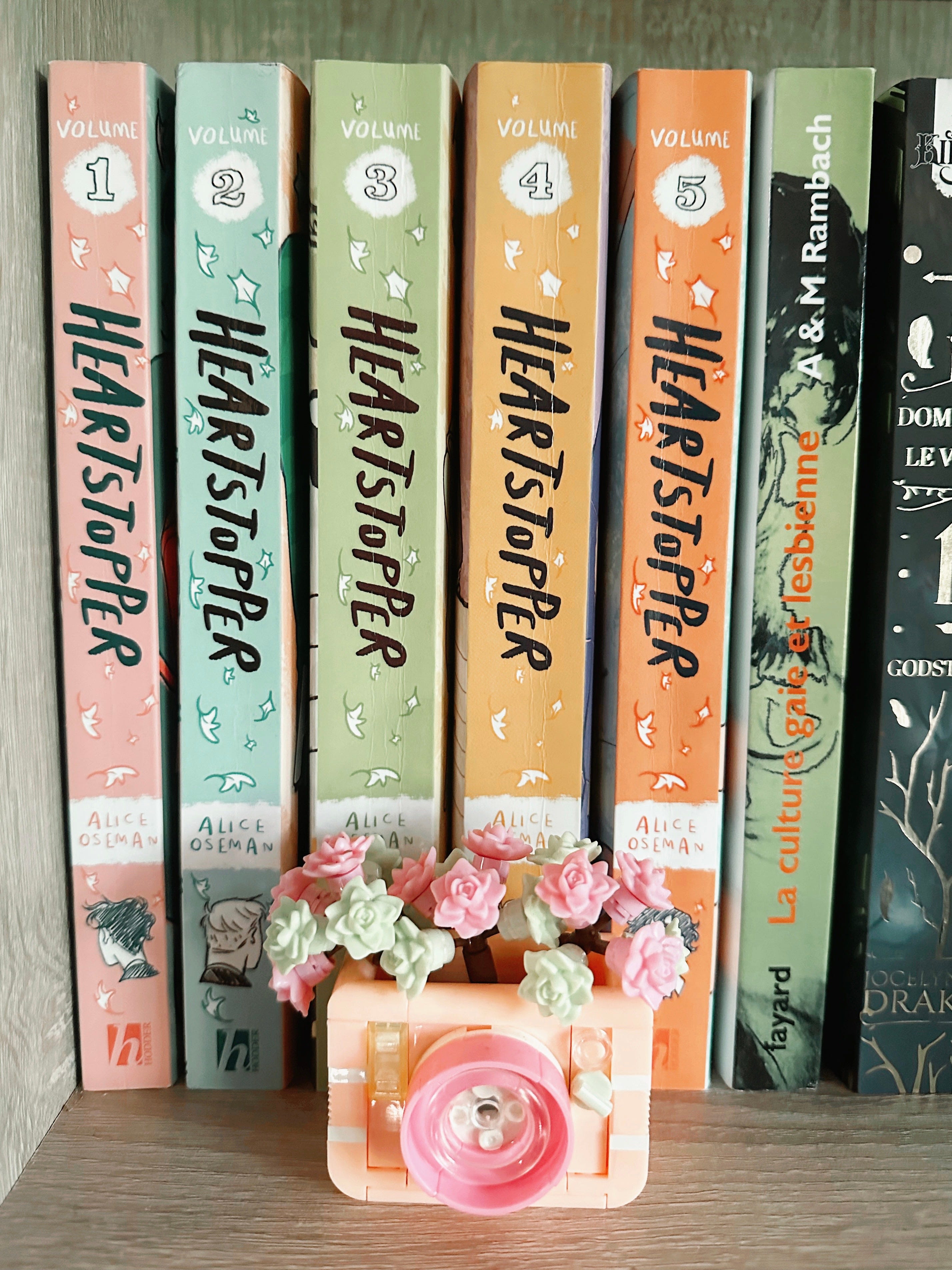
Heartstopper is the story of Charlie, an openly gay (because he has been outed the year prior, and bullied for months following that force outing) over-thinker, and Nick, a sweet and fairly popular rugby player, and how their path crosses in their British all-boys school. Their friendship blooms quickly, but just as quickly the question arrises, could there be something more between the two?
In this young adult graphic novel, Alice Oseman presents a tender love story and a cast of colourful, diverse characters. The series touch on the discovery of love, no matter its shape, acceptance, bullying and its consequences, homophobia (including internalised) and mental health. It’s soft, tender and respectful and absolutely readable early as there’s nothing graphic (at all) happening in the books. Consent, respect and tolerance are the values that transpire all along the series which makes it, as far as I’m concerned, a must read for teenagers, no matter their gender or sexual orientation.
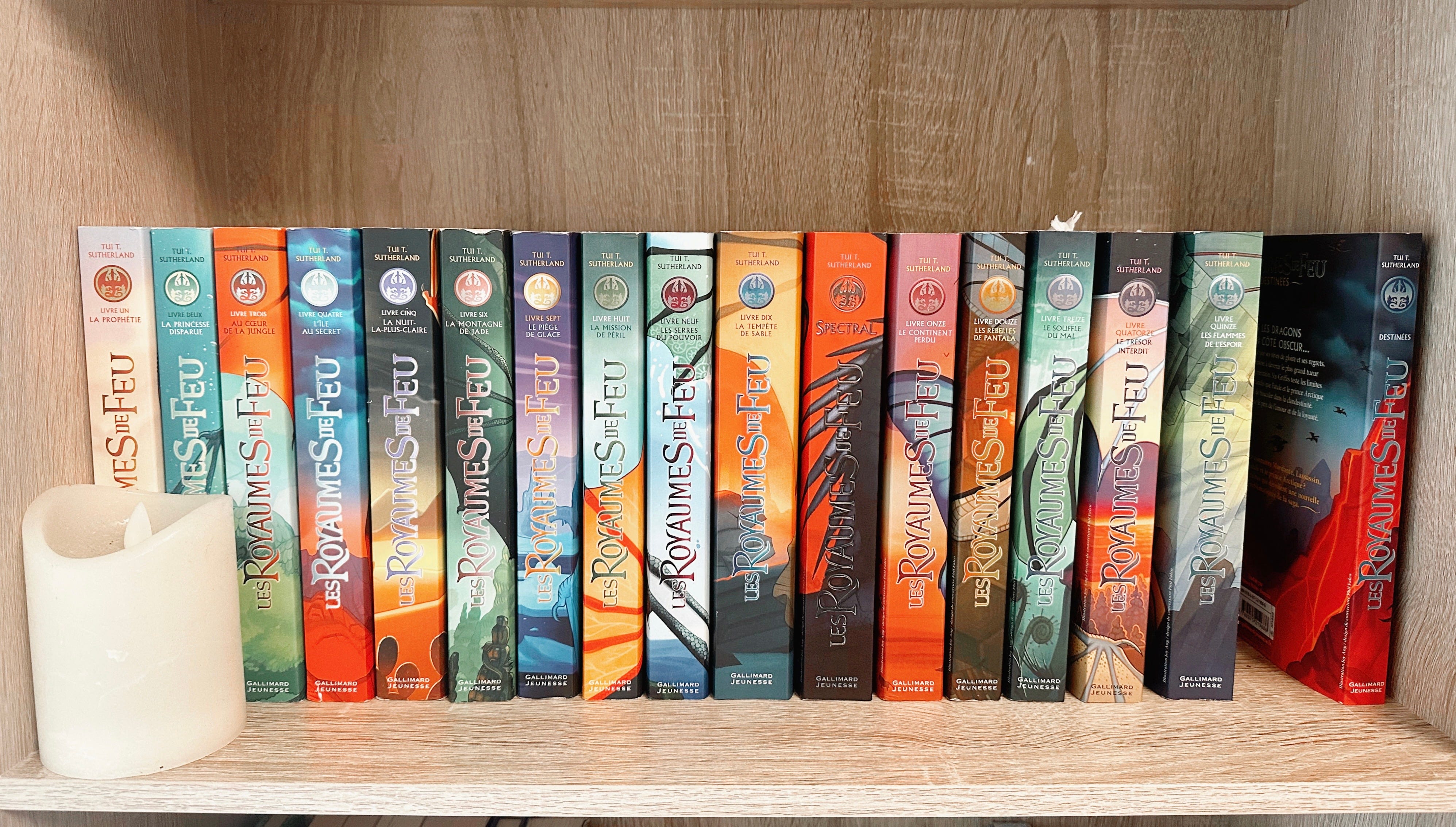
The Wings of Fire series of books is a middle-grade fantasy series where the main characters are dragons. When the series starts, the seven dragon tribes have been at war for years, locked in an endless battle over a lost treasure and a succession war. Five dragonets have been collected to fulfil the prophecy that should stop the war, but not every dragonet wants that destiny. And when they escape their captors to look for their original homes and families, what has been unleashed on the dragon world may be far more revolutionary than what was originally intended.
All along the series, the author uses her narration to touch on various and important subjects from general politics to interpersonal relations which allows the discussion to open on ethics, diversity, acceptance, governments, abusive behaviour, manipulation, xenophobia, etc…
The series is, so far, separated in 3 cycles, and starting with the second cycle, but particularly in the third one, the author introduced queer characters (from same sex couples to non binary characters both human and dragon). Their identity or relationships are never questioned and are presented in the most natural way. Even if the fact that it could lead to some people being unhappy about it is not eluded either.
If the series is not a queer series per se, that last cycle introduced plenty of new characters written in a very interesting and natural way to introduce diversity in the universe, with the backbone of the stories being, as always in each book, that honesty, tolerance, love and togetherness are the way to a more just world.
This selection is a reflection of the world I wish Esther could grow up into. The world as it could be or, at the very least, become thanks to stories like the ones shared here : kinder, braver and more free for everyone.
Thanks for reading House Of Esther! This post is public so feel free to share it.
Comments
Nothing yet. Say the first thing.
Sign in to join the conversation.