
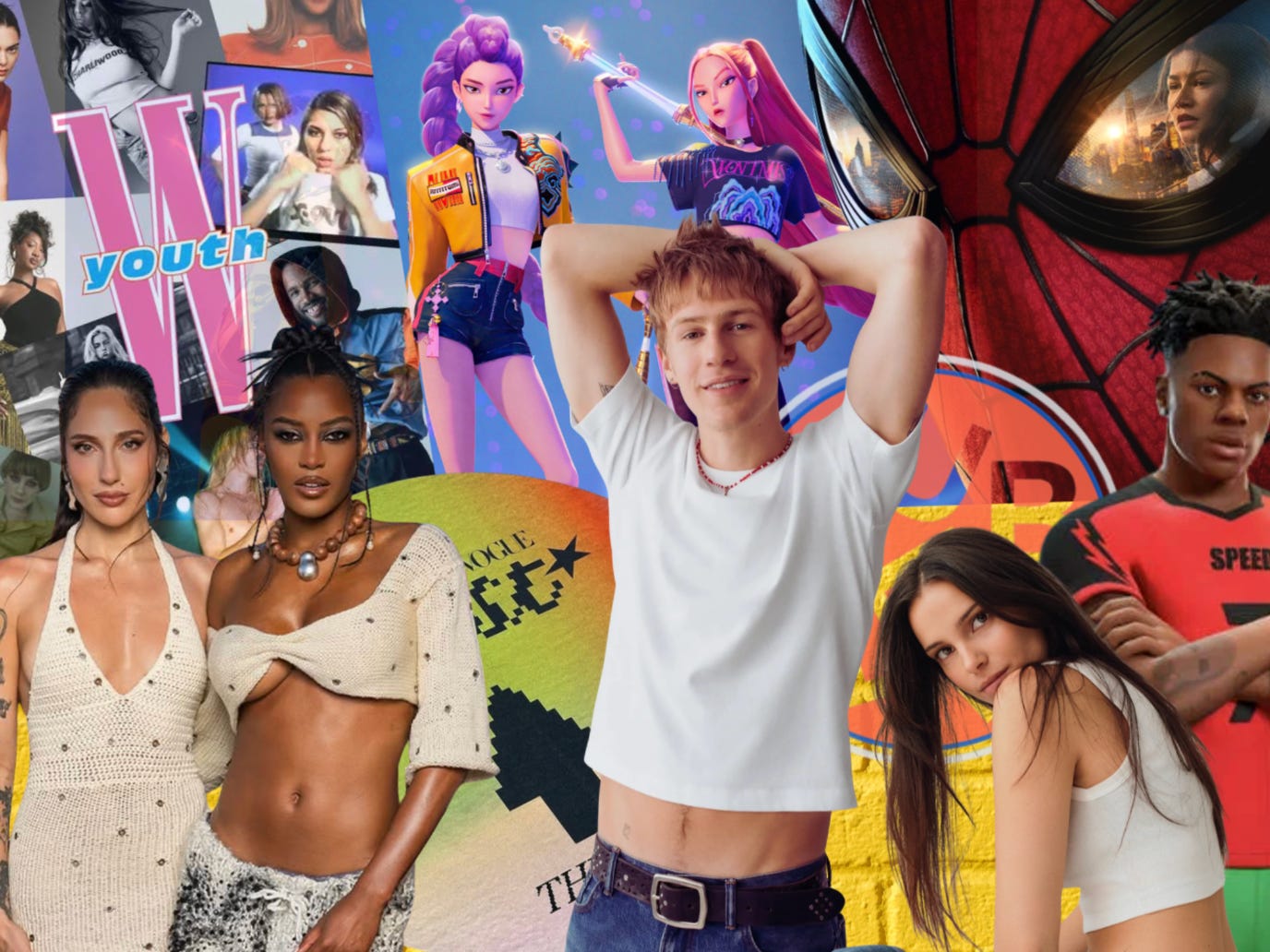
This week’s newsletter is a special deep dive into tween and teen culture — co-written with Kaley Mullin, cultural insights expert, sociologist, and the co-founder of the cultural relevance consultancy Cool Shiny Insights. PS. I designed the image above but it was very much inspired by Cool Shiny’s weekly graphics, which I love!
And thanks to reader Kate Saenko who clocked my goal with ICYMI — describing this newsletter as: It “follows the creator economy, influencer marketing, and platform shifts without treating every new feature as a revolution.” Trust me, when I’m actually excited about something, you’ll know!
The Instagram For Business account said you shouldn’t post everyday
LinkedIn said over 1M people have flagged content as AI slop
LinkedIn rolled out an AI clipping tool to surface short-form highlights of Live events
YouTube is changing what counts as a view to the moment a video starts playing
TikTok may be testing a peer-to-peer money transfer service
Special Report: Examining Gen Z and Gen Alpha’s attitudes toward AI, cell phone bans in school, “maxximalist” aesthetics and more
Insights from YPulse, LTK, NexTideMedia, Dayna’s House, MonoType, The Harris Poll and Pew Research Center
Interviews with eight students and parents about their back-to-school mindset
BTS by the numbers
You can now connect Meta AI (via desktop or mobile) to your Facebook and Instagram accounts, Google Workspace, and even Meta ads, for AI-driven insights that help you understand how you’re performing and get tailored advice for improvements based on what’s working.
The Instagram For Business account told its followers that 3 to 5 posts per week is the sweet spot — and posting everyday is unnecessary. There’s no actual data mentioned in regards to this advice but I’m not sure that matters to social folks who are scrambling to post daily.
The Instagram Creator account published tips for writing effective captions.
Edits announced several updates, including the use of Folders rolling out more widely. And US-based users will also be able to turn photos into moving clips with AI.
Meta published research on the growth opportunities around women’s sports, revealing 61% of fans are more drawn to individual athletes than to team loyalty or rivalries.
Instagram Head of Product Design explains the thinking behind that new logo
Meta’s $1 trillion lawsuit could change Instagram and Facebook forever
YouTube is changing what counts as a view to be consistent across the platform. A view will now be counted from the moment a video begins to play. Long-form views used to require 30-seconds of watch time, now it starts from the very first frame. This standard will now apply globally across all formats.
YouTube announced it was expanding the option to turn Playlists into Shows for over 3M more creators in the YouTube Partner Program. According to the release notes: “Once created, shows are displayed as beautifully designed featured series with dedicated immersive show pages and organized seasons.”
YouTube announced updates to the YouTube experience on your TV screen, including: Previous and Next buttons rolling out across all videos, letting viewers easily jump to the next episode in a collection.
YouTube announced it’s testing its Ask YouTube chatbot on mobile devices. The conversational search experience will be available for signed-in viewers who are 13 years or older, in English on desktop, mobile, and TV devices in the US.
Google lowered the eligibility requirements for creator’s Google Search profiles that centralize your online presence into one place. The criteria is 35K YouTube subscribers, 35K Instagram followers or 100K TikTok followers, (which is an interesting key to evaluating what a subscriber or follower is worth on each platform.
Spotted: TikTok is exploring a feature that would allow users to send money to each other in direct messages, according to Bloomberg.
ByteDance and the Motion Picture Association announced an IP protection agreement to prevent people from generating copyrighted characters and celebrity likenesses in AI videos.
TikTok Live launched a Substack newsletter called The Creator’s Cut, written by creators who livestream.
LinkedIn’s chief product officer says over a million people have flagged posts with ‘Seems like AI slop,’ since the feature launched two weeks ago. Letting you know how your content is perceived is the next step, according to Hari Srinivasan: “If a post receives enough community feedback, you may see a message in your Post Analytics to help you understand how your content is being received.”
LinkedIn is launching an AI-driven clipping tool for its Live events. Recommend Clips will let you see video highlights you can easily share. Chapters organizes your full recording into sections so it's easier to navigate and find key moments. (This is a BFD if you regularly stream live on the platform.)
75% of LinkedIn citations originate from individual member profiles, and 25% come from company pages
Reddit previously announced they’d be turning posts into videos. The first example might be this eight-year-old post that’s now voiced by AI, as flagged by The Verge.
ChatGPT All but Stopped Citing Reddit on August 14; But don’t panic says this marketer
Patreon CEO Jack Conte announced nearly 30 new features coming to the platform, including a shareable clipping tool, dedicated topic-based communities, fan profiles and more.
Twitch announced it was expanding sponsorship access to affiliates, giving streamers more opportunities to work with brands directly on the platform.
Rush Tok may be dominating your feeds, but they’re not the only ones heading back to school.
This week’s newsletter is a deep dive into tween and teen culture — co-authored as a special collab between me and ICYMI’s youth expert-in-residence for Q3, Kaley Mullin, co-founder of the cultural relevance consultancy Cool Shiny Insights.
We did the research so you don’t have to — looking at young Gen Z and Gen Alpha’s attitudes toward AI, cell phone bans in school, creator influence on BTS shopping, how they spend their spare time, and “maxximalist” aesthetics.
The North Star in unpacking these insights: How can brands interpret this information and show up for teens in ways that actually make sense — without getting labeled as cringe.
I spoke with leaders from LTK, Pew Research Center, YPulse, and more to get data and insights on these hot-button topics.
Kaley interviewed eights students and parents, who gave us a peek into their back-to-school mindsets — including how they’re approaching the annual school-supply run.
Because if you want to understand what’s next, sometimes you need to ask the people who are actually living it.
Everyone’s social experience has become so personalized that I’m reluctant to call anything a “trend” without some corroborating data suggesting a meaningful chunk of the population is actually on board.
But data is only one piece of the story. For this Gen Z + Alpha edition, I spoke with founders, strategists, and researchers to get their take on what these shifts actually mean for brands — and how they’ll shape the way marketers connect with tweens and teens - Lia Haberman
Here’s what they said:
ICYMI: How does Gen Z feel about AI?
So Gen Z’s POV on AI is...complicated. YPulse’s data shows that Gen Z is using AI chatbots extensively, in their personal lives and in school. The majority of middle/high school students (68%) are using it for homework help. They’re also less likely than other groups to disapprove of AI use by others to create content.
But at the same time, we’ve seen some shifts in how Gen Z feels about AI, and there are absolutely fears and questions around it. Nearly half of young consumers worry AI gives harmful advice and 4 in 10 worry AI manipulates people.
If you’re a brand, be transparent about your AI use. Over half of the Gen Z we surveyed said they dislike content made by AI instead of people, and most say brands should not advertise in chatbots. Disclosure earns you the benefit of the doubt.
ICYMI: How are creators influencing Gen Z’s back to school shopping habits?
“Creators are ingrained in how Gen Z discovers what’s relevant. They’re where Gen Z looks for what’s trending, what to buy and how to make a trend their own, so it makes sense that they’ve become such a big part of back-to-school.
You see it with cultural moments like RushTok, dorm move-ins and first-day looks. On LTK, dorm-related creator activity is up 116% this year and college shopping is up 53%.
We’re also seeing trends move across categories more than ever. A trend doesn’t just influence what Gen Z wears; it can shape how they decorate their dorm, the school supplies they buy and the accessories they carry.”
ICYMI: How can brands take advantage of gaming and esports since they’re some of the most influential channels for reaching Gen Z consumers?
“The best streamers have built communities that show up day after day, spending hours together because they genuinely enjoy being there. That’s not something you manufacture with a sponsorship, and it’s why Gen Z trusts them.
We’re entering an era where attention matters more than reach. A million followers doesn’t tell me much. A streamer with 800 people who show up every night because they want to be there? That’s incredibly valuable.
Brands spend a lot of time asking, “How many followers do they have?” I think the better question is, ‘How many people would actually notice if they didn’t go live tonight?’”
ICYMI: How would a social media ban affect how brands reach younger audiences, and what will brands have to do to adapt?
“Gen Z is going through a really interesting period trying to figure out who they are. The twist is you’re getting offline but you only get offline if you can tell your friends you’re getting offline. So you’re back online telling your friends you’re going offline. So it’s this endless loop of trying to figure themselves out.
W Magazine has their new teen magazine coming out. Teen Vogue is having a huge festival at the Navy Yard [in NYC]. Claire’s is also going through a rebranding, trying to get girls back into real life spaces to talk about jewelry and piercings.
You have to show up in those IRL spaces. Brands will just have to try harder to reach them and create ways for them to engage and entertain that isn’t just a rinse and repeat of what you’re seeing online.”
ICYMI: How can brands tap into Gen Z’s maxximalist style — a clear departure from the millennial aesthetic — without being performative or inauthentic?
“I wrote about three forces converging: The return of the serif, the maximalist ‘everythingallofthetime’ mood, and a wave of 90s nostalgia. Put them together and you get the glitchy, gloppy look all over our feeds.
This is where it gets interesting for bigger brands. The companies pulling this off are a much smaller, more niche crowd than people assume. A messy, handmade look that feels right for a microbrewery can read as clout-chasing when a Fortune 500 tries it on, and Gen Z clocks it instantly.
If you’re a social or content lead: Don’t rebrand on a meme cycle. Pressure-test whether this look fits your brand or whether you just like it on someone else’s. And if you go maximalist, resource it like design, not like a template, because the audience can see the difference.”
ICYMI: How is Gen Z spending their free time and where do brands fit in?
“We found that 62% of Gen Z avoid making weekend plans altogether just to sidestep financial regret afterward. We call it the spending hangover, and it’s replaced FOMO as the defining emotion of young adulthood. Gen Z are not antisocial. They are fiscally paralyzed. They’re so squeezed by this moment that they won’t risk a spending hangover for a night out, so they stay in. But staying in isn’t the preference.
Eighty-five percent have already found workarounds to spend time with others at a lower cost. They’re hosting at home, tagging along to events through friends, using free fitness trials as social outings, turning credit card perks into experiences. They are rebuilding a social life from scratch around what they can actually afford.
That’s the playbook. If you’re a brand with physical space, you have something Gen Z desperately needs and can’t easily afford: four walls and a reason to show up. Host. Bring people in. Throw events, workshops, tastings. Stop thinking of your square footage as purely transactional and start thinking of it as social infrastructure.”
ICYMI: How do Americans feel about a cell phone ban in schools?
“This is a top question at the heart of this policy debate. For the first time, more Americans now support (48%) than oppose (43%) a ban on students using cellphones during the entire school day. Though support for in-class and all-day cellphone bans is lower among the youngest adults.
Teens will often admit that they are on their phones and social media too much. And some have tried to cut back on their screentime. We also know that teens see both positive and negative sides of time on their screens. While increasing shares of teens say social media negatively impacts people their age, majorities say it helps friendship and creativity.”
I’m a multimodal researcher with an especially soft spot for qualitative interviews. I’m also childfree, so when it comes to back-to-school, I go straight to the source: other people and their kids.
I interviewed eight students and parents about their back-to-school mindset, where they’re shopping, and two hot button issues: AI and phone usage in class - Kaley Mullin
Here’s what they reported:
I recently asked my honorary niece Emma if she was nervous about performing a solo in her school’s choir and she said she was “anxcited,” an equal mix of anxious and excited. That pretty much sums up how the parents I spoke to feel about sending their kids back to school.
“I’m anxious about the school year. The girls have to be ready at a certain time, homework done, out the door. It just takes so much coordination. During the school year we have stuff every single day. I don’t know how to not do that. I enroll them in things they like, but the more years you invest, the more time it requires each year. This generation of kids do a lot. But I don’t want them to get to thirty and say ‘Ugh. Why didn’t my mom let me take this art class?!” - Michelle, 4th and 2nd grade parent
“I’m excited he’s going to full days. Before it was half days and it was awful. I’m nervous about potentially having homework and figuring that out and if he likes his new teacher.” - Liz, 1st grade parent
Across all of our research inputs into back-to-school, Target is THEE dominant back-to-school brand. This was especially true among the Midwestern parents I interviewed, but many end up shopping elsewhere due to limited stock. Parents are sensitive to price and sustainability and plan to reuse what they can from last year.
“We need new clothes and a haircut and to get school supplies before they’re picked over at Target. You can also order supplies through the PTA and they deliver it, which is convenient.” - Liz, 1st Grade parent
“I’ve developed a very clear system. I go to Office Depot and they always have everything. I like that it’s not the main place people go. They’re never out of anything like they are at Target. It might be more expensive, but it’s there. Then we go to Old Navy and I buy them whatever they want. Then they don’t fight about what they’re wearing for the first few weeks and they’re good.” - Michelle, 4th and 2nd grade parent
“I’m planning to check out WasteShed [a Chicago-based nonprofit store for sustainable gently-used art, craft, & school supplies]. When I was teaching, I always thought I should bulk buy supplies at the end of September for the next year when everything’s on clearance, but never did. But really, nothing needs to be brand new.” - Sarah, 1st grade parent
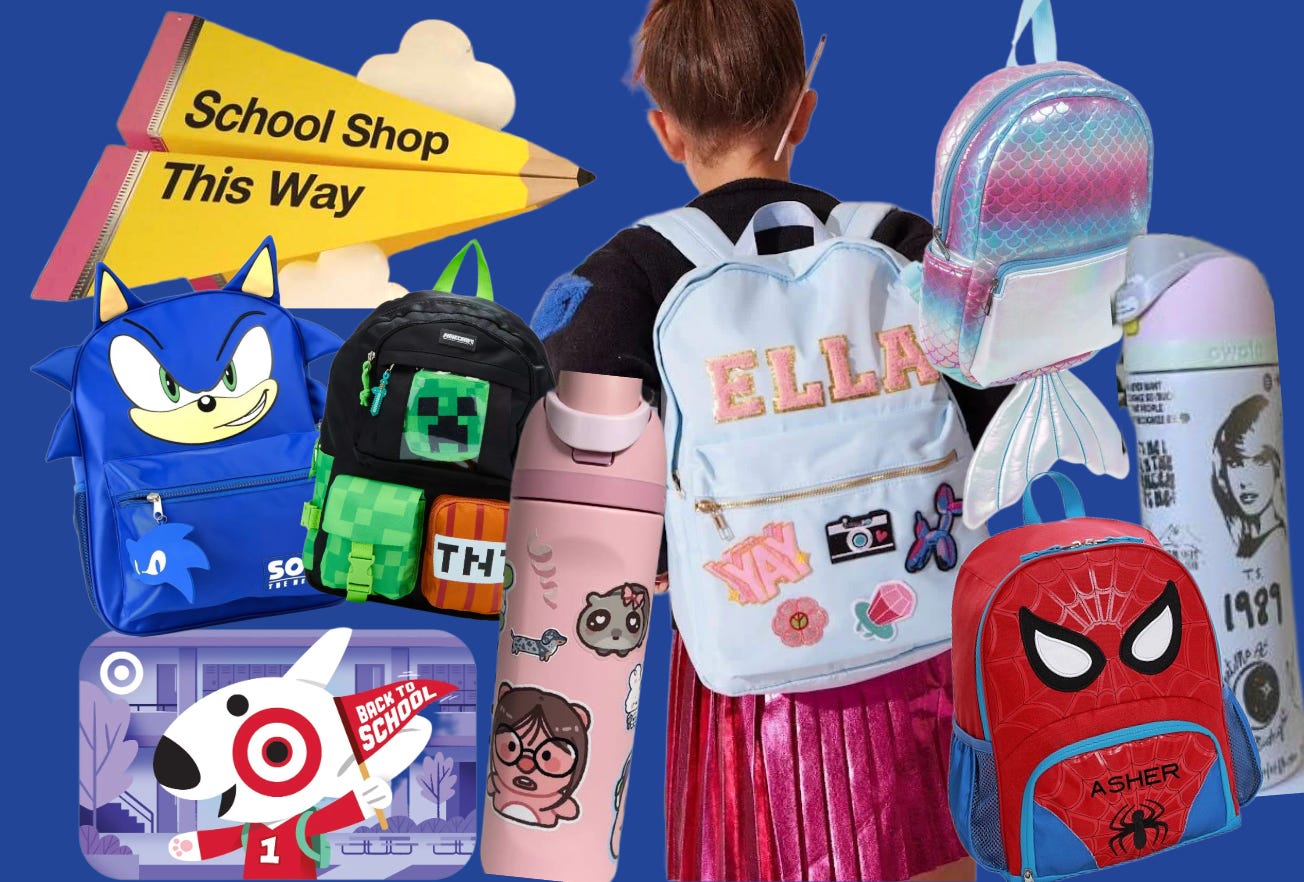
The Gen Alpha parents I interviewed had backpacks top of mind, with most planning to reuse the IP-based backpacks their kids purchased for last school year. Their kids are planning to bring their Owalas, loaded up with stickers for self-expression.
“[My 1st grader] is reusing his Kindergarten backpack. It has Sonic on it and he still likes it.” - Liz, 1st grade parent
“[My 2nd grader] always wants to buy a new backpack but her old ones are perfectly fine. Maybe I’ll let her buy some patches to make her feel like it’s new.” - Michelle, 4th and 2nd grade parent
“My kids are all keeping their backpacks from last year. [2nd grader]’s backpack is Minecraft, [Kindergartener]’s is mermaids, and [preschooler]’s is Spider-Man.” - Kassie, 2nd grade, kindergartener, preschooler parent
“[My 4th grader’s] main water bottle is a purple Owala with a bunch of stickers, mostly about loving to read and Taylor swift.” - Michelle, 4th and 2nd grade parent
Schools are cracking down hard on AI, taking an absolute stance without a lot of wiggle room. Meanwhile, they’re making room to store students’ phones in phone hotels during class.
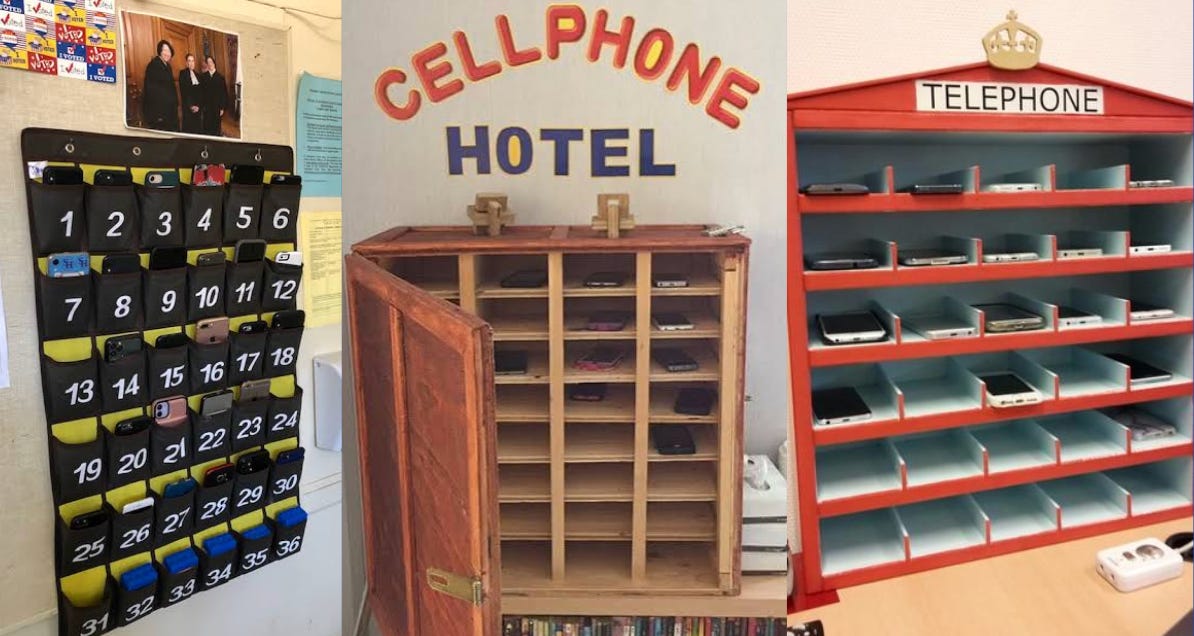
“There are lots of bans and consequences for AI right now because of the amount of cheating being done. A couple of my teachers use it though to make assignments, so that’s kind of weird. They tell us that it’s bad and then proceed to go teach us with it.” - Brayden, 16
“My freshman and sophomore year teachers didn’t really care if we had our phone out or not. As long as we were paying attention, we were allowed to have our phones. My junior year they started cutting out phones for the important classes and we would have to put them in a phone hotel. My senior year we had to put our phones in phone hotels every single period except for lunch.” - Kate, 18
And finally, I’ll leave you with this relatable sentiment from my niece in response to the question, “How are you feeling about going back to school?”
“Sad. Mad. I hate school. I think people just pretend to like it to get stars from our teacher. I wish summer was forever.” - Brynn, 7 (Zara Larsson agrees!)
For more back to school trends, check out Cool Shiny Culture.
YouTube’s BTS Playbook: In the past year, people have racked up 800 million views on YouTube content titled with college or back-to-school hauls
2026 BadCredit.org study: 74% of U.S. parents said it was important that their child have what other children have on the first day, even when it did not fit the family budget
RTB House 2026 US consumer study: 50% of Gen Z said they actually thought about what’s in their cart for over two days sometimes before making a purchase
The Pollack Group Brand Visibility Index: Target and IKEA dominate AI visibility for dorm-room shopping, each appearing in roughly 30% of analyzed answers and significantly outperforming the other retailers
Yahoo/YouGov Poll: Only 5% of Gen Z respondents said they wanted to be digital creators or influencers. More popular picks were tech entrepreneur (18%), professor (17%) or doctor (14%)
Are Savannah Banana games the next PR stop? - MTDeco
The State of AI in Social Media - Metricool Report
The creator economy’s hottest debate: Can influencers post AI ads without alienating their fans? - Business Insider
AI was supposed to win people over by now — it hasn’t - TechCrunch
OpenAI launches a safer ChatGPT for teens — years after teens started using it - TechCrunch
If you liked this post, please repost, give it a ❤️︎ or leave a comment below! It helps and it costs $0.00.
Comments
Nothing yet. Say the first thing.
Sign in to join the conversation.