
For Juneteenth, Field Notes invited ominira onija to reflect on the meaning of freedom in a year when the United States prepares to mark 250 years of its own founding. ominira is a griot, writer, artistic propagandist, Land steward, and budding soil biologist whose work is rooted in Nu Afrikan geographies, Black Belt lineage research, climate survival, and reconnecting Nu Afrikan people to an animistic relationship with Land.
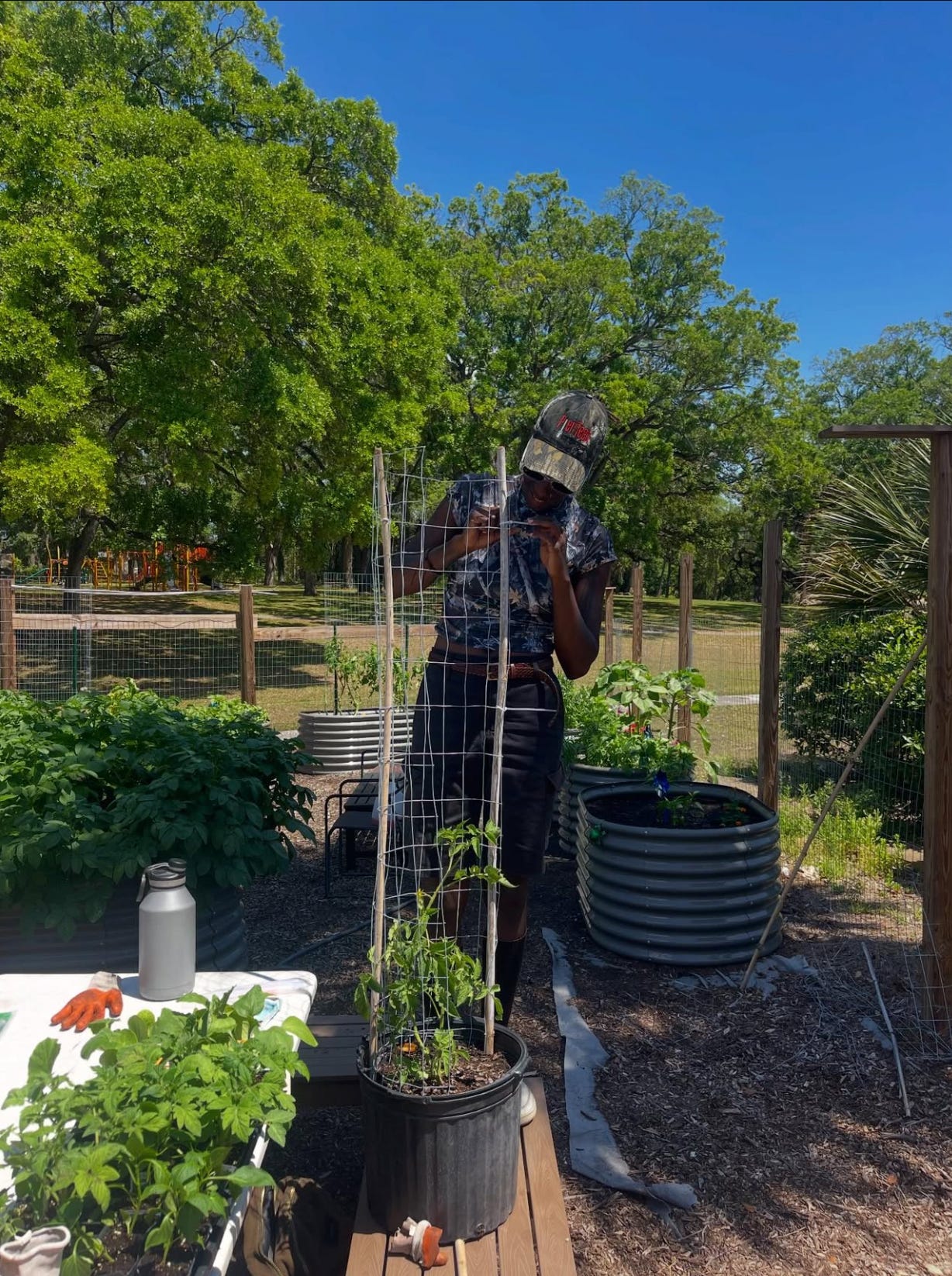
This reflection is written from the political tradition of the New Afrikan Independence Movement (NAIM), a movement that understands descendants of captive Africans in the United States as a people whose freedom from chattel slavery did not resolve the deeper questions of land, sovereignty, self-determination, and national oppression. From their perspective, the answer is not fuller inclusion into the United States, but organized struggle for self-determination and independence, including control over land, food systems, institutions, and political life. To the NAIM, freedom requires the power to build and defend autonomous forms of collective life beyond the terms set by the settler state.
This reflection came to us as a challenge to remember what emancipation left unfinished. For those of us committed to food and land sovereignty, that challenge remains urgent. As always, we invite you to read in community and consider the following:
What have you been taught to understand Juneteenth as celebrating, and what might that framing leave unresolved?
What is the difference between being granted freedom by a state and having the power to determine your people’s future?
How might land, food, and community defense change the way we understand the unfinished work of emancipation?
This weekend, millions of Nu Afrikans will celebrate Juneteenth as a holiday rooted in freedom. But 161 years after June 19, 1865, and in the same year “america” prepares to celebrate 250 years of its own founding, Juneteenth demands more from Us than celebration.
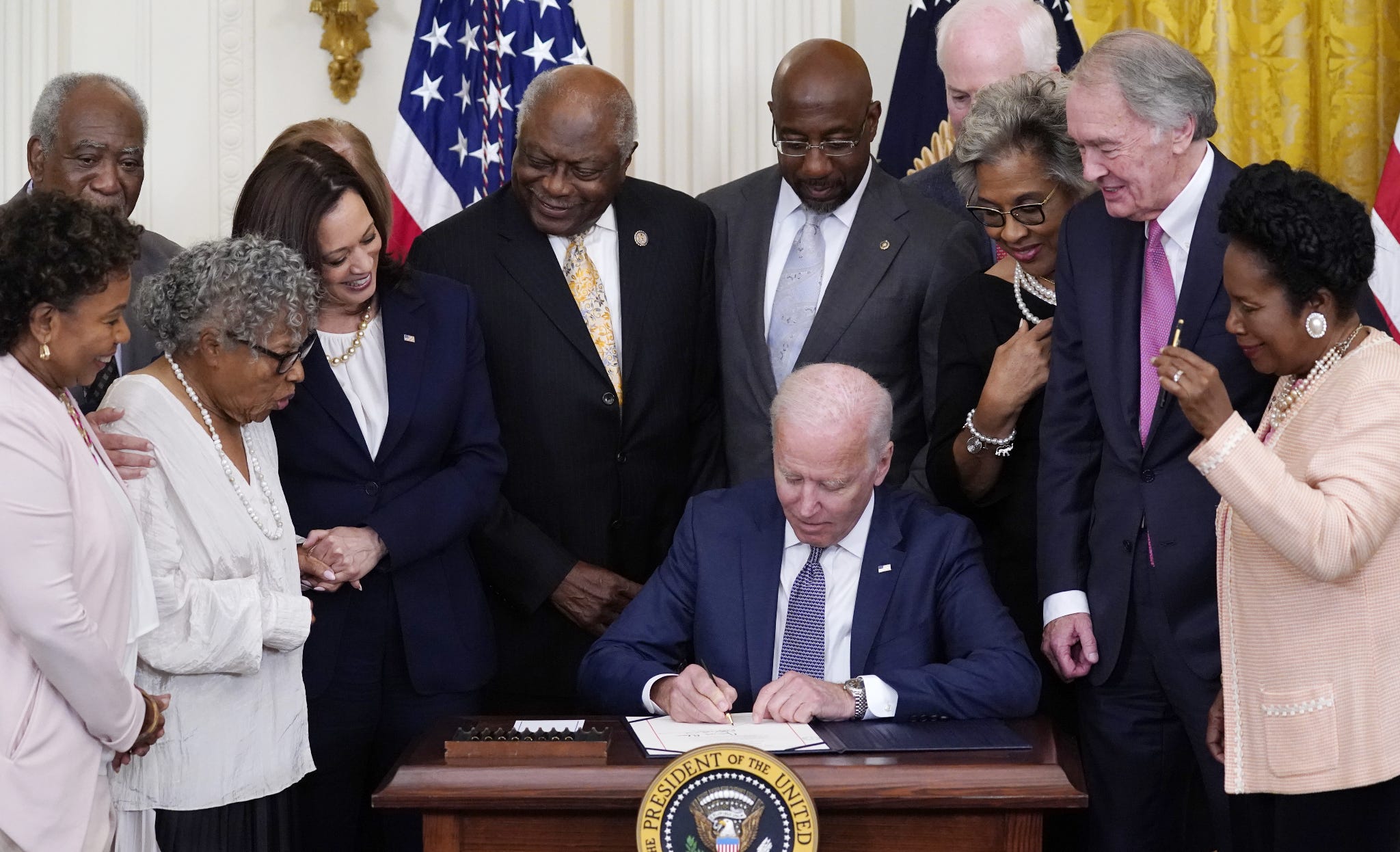
The federal recognition of Juneteenth in 2021 did not resolve these contradictions. If anything, it exposed them. The state’s recognition of Juneteenth as a national Independence Day for descendants of captive Afrikans inadvertently affirms what New Afrikan Political Science1 has long argued: We are a captive nation within a nation, a people whose freedom from chattel slavery did not become full independence from Amerika’s political, economic, and territorial control.
It’s important to distinguish between the political realities of freedom and independence. We gained freedom from chattel slavery post emancipation. But, as evidenced by Our continuous cries for political and economic autonomy from the controlling and coercive influence of the U.S government, We still struggle for independence in Our communities. And history shows that every time We’ve built a critical mass to support this independence, We’ve been met with extreme repression and sabotage.
In Our protracted fight for Land Sovereignty, it’s important that We consistently challenge and undermine revisionist historical narratives that distort Our relationship to monumental political and social events of the past. This is important because these monumental events of the past continue to impact and define Our relationship to this Land called “Amerika” and Our relationship to resisting its authoritative rule. Sankofa means “go back and get it”, so We have to go back and get it. “It”, as in the accurate rendition of Our stories, so that we’re able to fully understand what it will take to complete a mission left incomplete.
So, where can We locate Our efforts for and progress toward self-determination, food justice, and Land sovereignty during the making of Amerika in 1776 and the “freeing” of Our ancestors as property in 1865? And how does the framework put forth by the New Afrikan Independence Movement (NAIM), which views Us as a captive domestic colony, inform the fact that this work has been left unsettled?
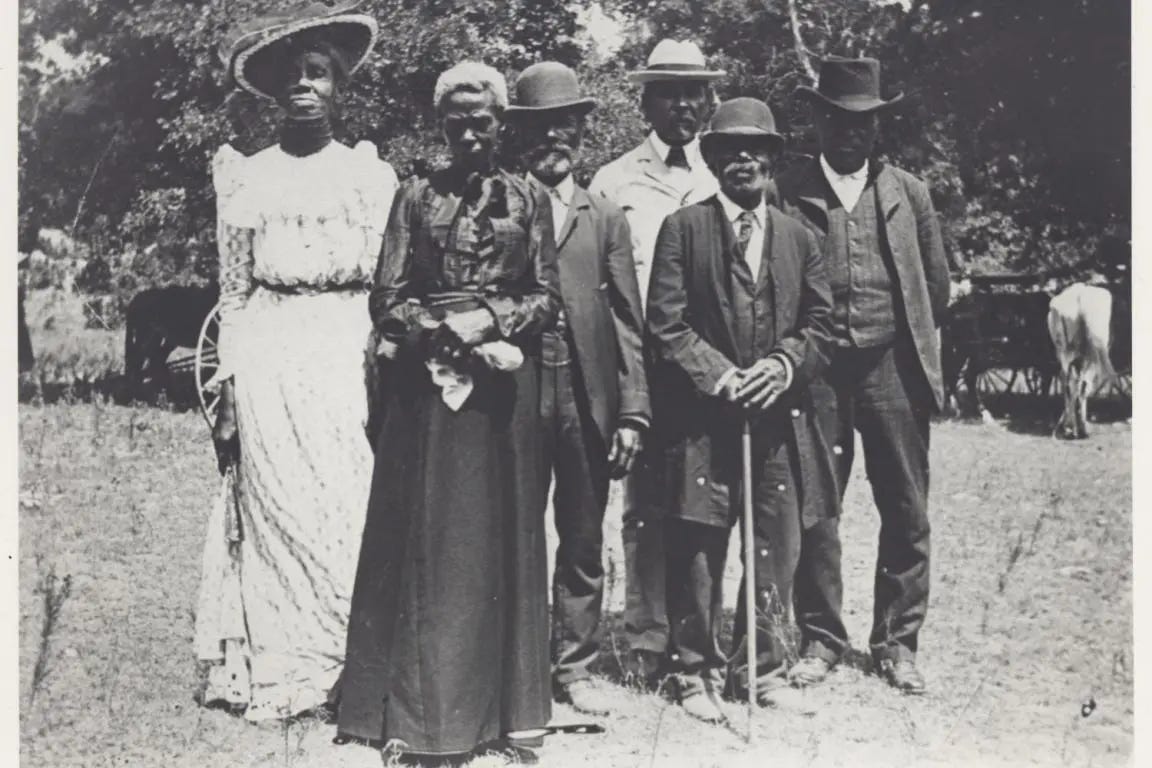
161 years ago, freedom was materialized for hundreds and thousands of Afrikans held captive under the laws of chattel slavery in antebellum Texas. On June 19th 1865, only three generations, from the making of Amerika in 1776, We arrive at Galveston Bay, Texas, alongside General Gordon Granger and his estimated 2,000 union rangers to announce the “freedom” of all captive Afrikans in the territory. About 250,000 captives were freed. At the time, Texas had become the primary place of political and geographical refuge for the resettlement of slave owners escaping the consequences of abolitionist struggles and victories in Dixie Land.
But why Texas?
Between 1836-1845, Texas had become an independent and sovereign territory after anglo-”american” slave owning aristocrats successfully seceded from Mexico. This secession happened shortly after president of Afrikan descent, Vincente Guerrero, abolished slavery in the Mexican state of Coahuila y Tejas, which would become known as Texas.
During the era of Texas’s independence, confederate states in the southeast began collapsing under the pressure of growing abolitionist sentiments. Many slave owners escaped with their human property to Texas in hopes of finding refuge, and many did. Texas was a prosperous territory. The slave market was very much alive and thriving during its agricultural and economic reign. According to historian Gerald Horne, slave ships from the “Lone Star State” could be found along the coast of Angola and Cuba during its brief reign.
But soon in the territory and its surrounding regions, captive Afrikans would become relentless in their desire for escape and began organizing revolts. One notable revolt was the revolt of 1842. About ten years before the Emancipation Proclamation was signed, captive Afrikans who slaved away in Cherokee territory rose up against colonized Native aristocrats in Oklahoma and fled south, growing their band of fugitives as they passed through Choctaw and Creek territory on the way to Mexico. Decades later when “freedom” was declared, captive Afrikans gained yet another opportunity at radical place-making when the federal government forced colonized Native nations to share their wealth in the form of mineral rich Land and monetary resources with their freed slaves.
This wealth gave rise to the evolution of many affluent Nu Afrikan communities in the region pre & post-Reconstruction and gave once captive Nu Afrikan communities a chance to practice and organize for Statehood, thus giving them a chance to practice food and Land sovereignty. This was done by creating a coalition of freedmen towns that sought to provide sanctuary to Nu Afrikan people escaping post civil-war hostilities during reconstruction and racial apartheid during the Jim Crow era. In these freedmen towns, family operated farms were encouraged and became the norm for farmers seeking to escape the burden of sharecropping and tenant farming.
However these settlements were sabotaged by the local and federal military state during a period of extreme racial apartheid. According to Akinyele O. Umoja, “The decades following the end of Reconstruction were labeled by historians as the nadir2 of the Black experience in the United States.”
By the time Jim Crow policies had sunk their teeth into the skin of Nu Afrikan resilience and food and Land sovereignty following the Emancipation Proclamation, Juneteenth had come to merely symbolize a transition of Our status from captive to captive in a new way. We were reminded again, that Our ability to exercise total and complete liberation over the Lands We stewarded would always be a limiting act of revolutionary place making so long as We existed under the jurisdiction of Amerika as an internally controlled colony. So long as Amerika existed as a nation.
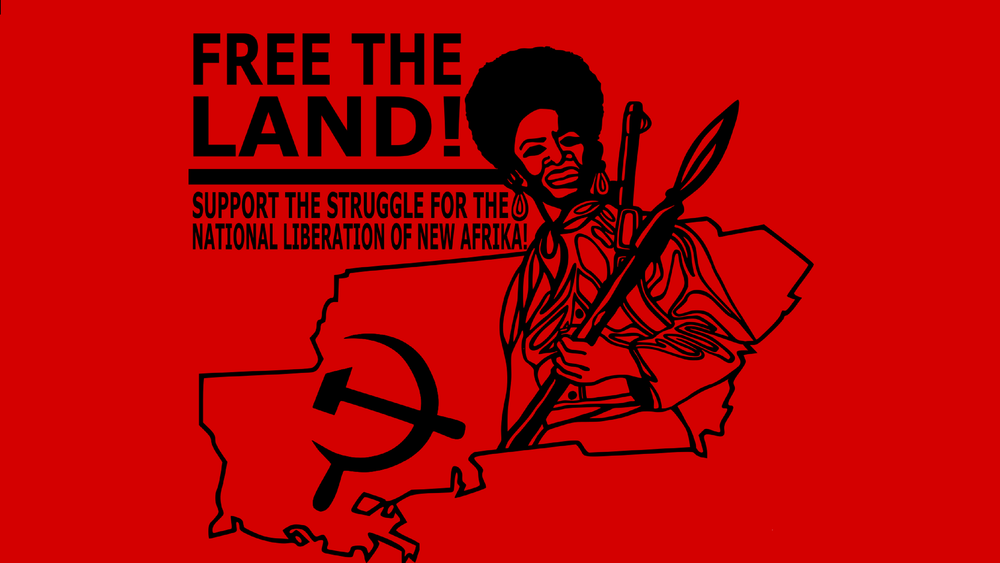
So then, how does the framework put forth by the New Afrikan Independence Movement, which views Us as a captive domestic colony, inform Our endless quest for Food and Land justice in so called Amerika?
In an archive written and published by the New Afrikan Prisoners Organization (NAPO) on the 31st of August in 1977 titled: “The Thirteenth Amendment: Instrument of Legalized Slavery and the Re-Subjugation of New Afrika” authors contend with what they describe as the “national oppression” New Afrikans. They make the claim that the Emancipation Proclamation was only enacted as an internal war measure to prevent further escalation, modifying slave codes and oppression only in name.
This particular document was published by “Spear & Shield Publications” (SSP). SSP is responsible for publishing “Notes from a New Afrikan Prisoner of War (POW)”: a journal dedicated to the New Afrikan communist struggle. This archive provides an alternate historical perspective to the 13th, 14th, and 15th amendment as it relates to the intelligently designed legal and social re-subjugation of the Nu Afrikan folks. It opens up with a background on the prison struggle taking place during its time and cites a U.S.prisoners petition to the United Nations; it then explains how a nation of people was created by “colonial laws years before the declaration of independence.”.
The prisoners speak to the altering of the social and legal contracts at the end of the Civil War that would hold Nu Afrikans hostage as oppressed citizens of a settler-nation under a more cunning design. This is an important intervention in understanding Our relationality to Land. Nu Afrikan folks’ relationship to the state is one that is not only legally maintained through repressive measures by the state but by merely being forced into citizenship with the state with no regard of Our “legal” right to be able to historically define Our relationship to the state on Our own terms.
During the years prior to the “american revolution”, there was no way the food economy of the colonies could prosper without the institution of slavery functioning as its economic and cultural foundation. Yet, the daily reality of many of Our ancestors’ relationship to food on the plantation was defined by food apartheid through social systems such as rationing, where food was provided on weekly or monthly bases, or whenever slave owners felt like it. Some slave owners used rationing as a form of punishment for rebels and revolts. Rationing is an economic and social practice that still exists for Nu Afrikans today in the form of supermarket-redlining, food industry price-gouging, geographically designed “food desserts” and food “swamps”, and food inequality in prisons.
Practices of food sovereignty however can be located in life on the plantation. Depending on the “benevolence” of the head of the plantation, some captive Afrikans were allowed to garden in plots separate from the Land that was being forcefully cultivated. Many practiced subsistence agriculture by gardening in the small plots around their living quarters. This act of resilience was able to feed families and communities of captives, but not without an immense amount of labor (of love).
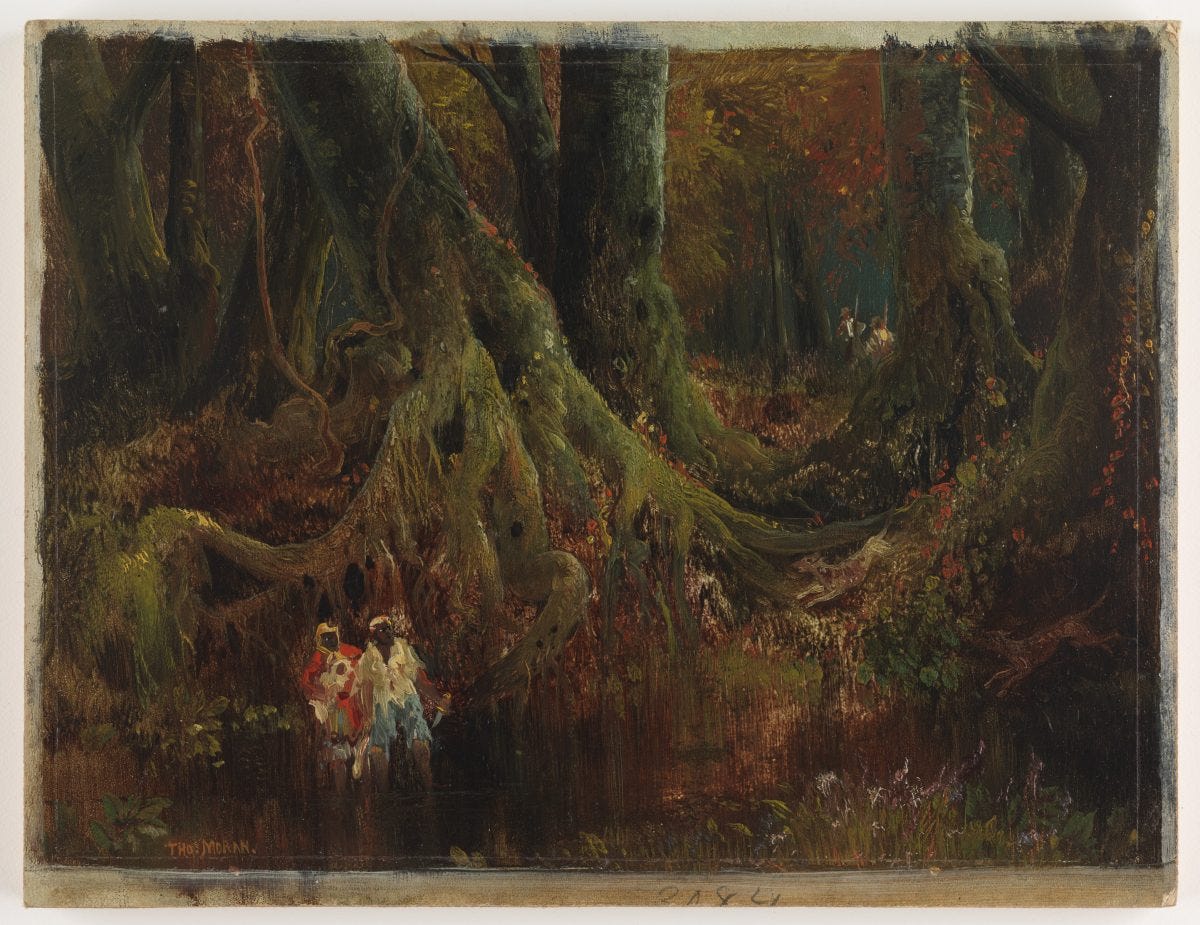
Historians estimate that up to fifty maroon communities were active from 1672-1864. Captured Africans actualized their desire for liberation outside of formal political channels by organizing around self-activity and/or joining clandestine geographical spaces where the Land would become their ally. In this act of revolutionary place making, maroons were not only freeing themselves, but the Land in the colonies as well. Land became Kin.
Larger known maroon settlements such as Fort Mose (pronounced Moh-Say), the Dismal Swamp, and the Seminole Reserve are significant political and social sites that co-existed alongside the making of Amerika. They provide Us with the opportunity to ground the present day relevance of Our fight and Our vision for food and Land sovereignty in a way that challenges dominant historical narratives of what is and isn’t possible. Thus, creating historical resilience. This in turn stimulates Our collective ability to imagine what sovereignty and independence will look like.
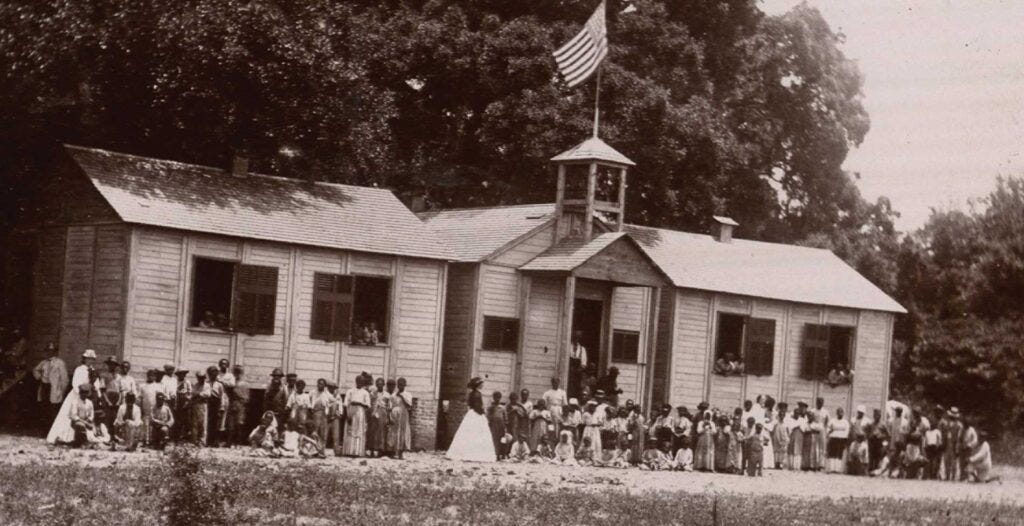
In Our transition away from slave labor during the reconstruction era, the settler-state was very reluctant to the idea of implementing Land settlement programs. One primary reason stated in the USDA’s RBS Research Report 194 is that Land reform for freedmen would have become a direct competition to the plantation economy. Choosing to leave the plantation intact was a deliberate decision to support settler-economic interests by creating a demand for farm-operating labor, thus beginning the oppressive sharecropping and tenant farming era.
Many farmers looked to The Freedmen’s Bureau to facilitate their desires for Land settlements, however, the Freedmen’s Bureau became a crutch to Land sovereignty and independence by choosing to focus their programming on transitioning former Nu Afrikan captives toward farm operation and labor relationships with former enslavers. The Bureau mediated agricultural contracts that left individual farmers isolated in their pursuit for independent farming.
Under international law, had freed captives been given the right to define their relationship to the settler-state of Amerika post-emancipation, Land sovereignty and independence would have reflected what was once already materialized when maroons came together to practice autonomy. It would have reflected what was unanimously voted upon by leaders of Nu Afrikan communities during the implementation of General William Tecumseh Sherman’s Special Field order #15, which redistributed 400,000 acres of confiscated coastal land in South Carolina, Georgia, and Florida to newly freed Nu Afrikan families. It would have reflected the natural inclination toward statehood that began when an alliance of leaders from Nu Afrikan settlements realized that political independence was the most just path forward and thus, began organizing on behalf of it on March 31, 1968. What was left unfinished post-emancipation is really what became strategically undone time and time again by this advanced settler-colony.
We must situate Our current collective desires and demands for food justice and Land sovereignty in the folds of historical events like Juneteenth and be able to speak back to their present day importance by demonstrating and providing examples of their contemporary resonance in Our day to day lives and struggles. This is especially important for those of Us who organize on behalf of food justice and Land sovereignty. And for those of Us who live in areas that suffer from food apartheid, Land theft, and who serve communities which do.
Situating the relevance of Our fight and Our vision for food justice and Land sovereignty within significant political and social events of the past creates historical resilience which in turn promotes cultural, social, and political resilience. This intentional practice of historicity also provides Us with the ability to contextually map Our struggle through both space and time, making Us more equipped at telling stories for Our cause that matter to the people We serve. This act of narrative shifting also makes it impossible for the various factions of the state apparatus to delegitimize, distort, and/or demonize Our demands as “extreme”.
There remains no settlement of the question regarding total sovereignty in the form of statehood, or other avenues for descendents of freedmen. Land theft, constant attacks on state backed food infrastructure, and a stark rise of ecocide by the domestic military state to train for the expansion of Nu Afrikan captivity are material proof that there remains a persistent and growing tension for food and Land sovereignty beyond appearance and name. Building agricultural resilience and autonomous food economies requires an understanding of Our relationship to the various histories and tactics of sabotage on Nu Afrikan Independence/Nation building and its impact on Our present day access to food and Land.
We don’t need complete ideological alignment, but We do need a shared understanding of Our identity as descendants of a (still) captive nation. It is the most materially accurate description of Our ongoing struggle for sovereignty on all fronts. Agricultural education initiatives must include an investment in popular education programs rooted in the accurate history of Our evolving relationship to this Land from slaves to (neo)colonial subjects. We must also consistently attest reactionary national identities such as African Descendent of Slaves (ADOS) and Foundational Black American (FBA) in Our fight and understand these identities as neocolonial.
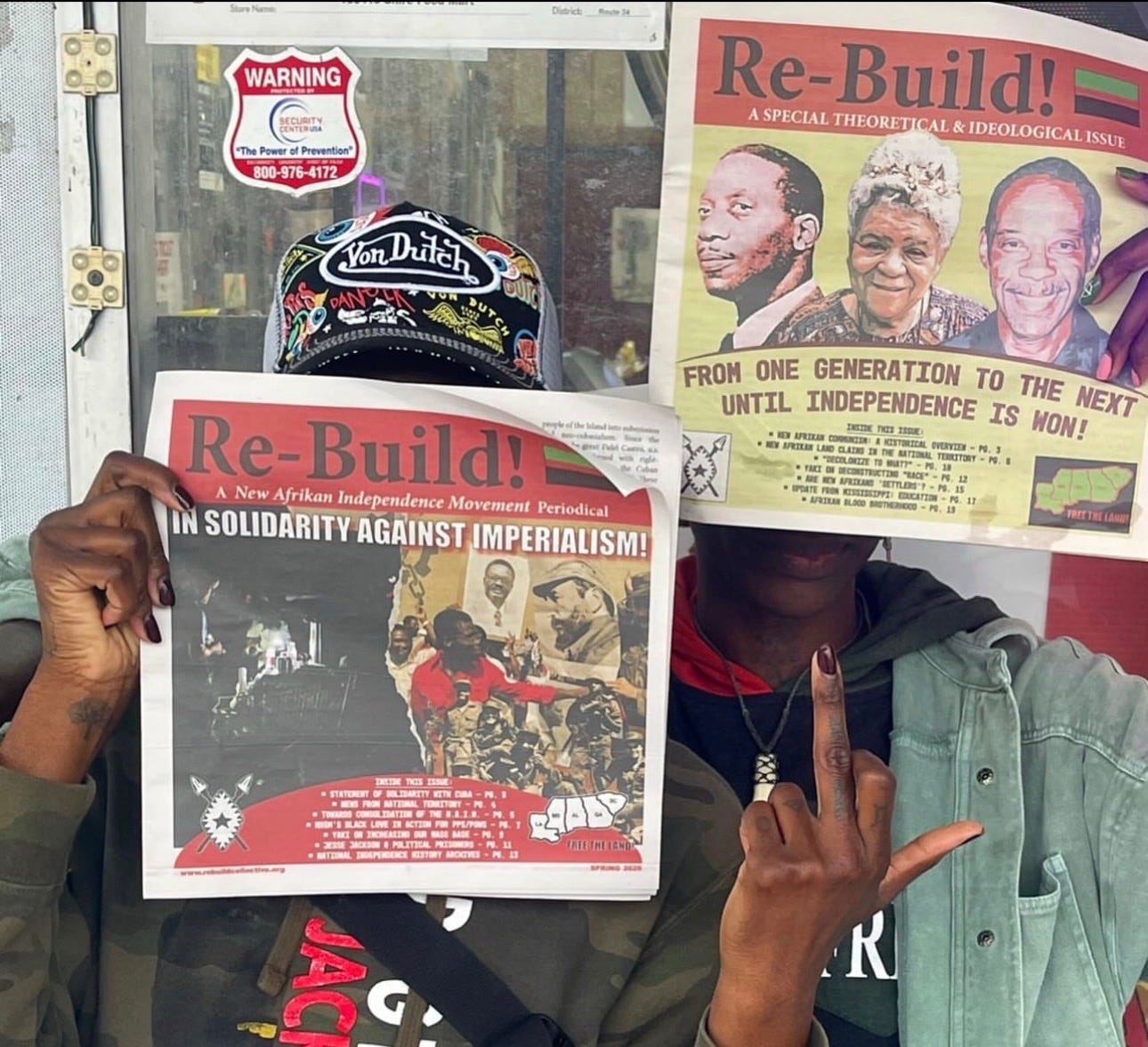
This will help in building a critical mass around Our efforts that reject neocolonial logics and reflect non-reactionary demands; a critical mass that understands the nature of Our national oppression and its impact on Our progress toward self-determination and food and Land sovereignty. As Land Stewards and healers, it is time for Us all to connect and struggle alongside the ongoing revival of the Nu Afrikan Independence Movement in a very real way and collectively shift how We relate to national identity. Land has always been the foundational desire of Our collective quest for freedom as descendants of captive Afrikans in this settler-colony.
Free The Land
By Any Means Necessary.
ominira onija is griot, writer, artistic propagandist, Land steward, and budding soil biologist born in the Lower Chattahoochee Valley and currently residing in the Low Country. She grew up as a little girl with a grandmother who taught her the importance of reverence for the Land and the importance of community resilience and survival in the face of poverty and powerlessness. She enjoys roller skating, gardening, mobility, foraging, poetry, and sun-bathing. ominira is passionate about Nu Afrikan Geographies and lineage research in the Black Belt south, climate survival, trauma-informed care, and re-connecting Nu Afrikan people back to an animistic relationship to Land. She graduated from the University of San Francisco with an M.A. in International & Multicultural Education and enjoys informal teaching/workshopping and education.
For more of ominira’s writing, check out her Patreon (it’s fire!)
A framework within New Afrikan political thought that studies the conditions, history, and strategy of New Afrikan struggle for self-determination and independence.
No posts
Comments
Nothing yet. Say the first thing.
Sign in to join the conversation.