
Welcome back! Let’s keep this thing rolling!
Part 1 asked us to sit with the protests of 2020 and think honestly about what that moment revealed. Not only what it made visible, but what it exposed about the limits of visibility itself. Diasporadical challenged us to think about performance, protest, electoralism, and the ways our movements can be absorbed when outrage is not connected to organized power.
Part 2 picks up from there and moves us into a deeper question: if protest alone is not enough, then what does it actually mean to build revolutionary power?
To answer that, Diasporadical turns to James and Grace Lee Boggs, longtime Detroit-based organizers and theorists whose work pushed movements to understand revolution as both a structural transformation and a transformation of ourselves. Rebellion can break open a moment. Revolution has to build what comes next. It has to transform our relationships, our institutions, our habits, our sense of responsibility to each other, and the material conditions of everyday life.
This part of the essay moves through big ideas: dual power, revolutionary base-building, material struggle, internationalism, and discipline. Some of the language may ask you to slow down. Some of the claims may challenge you. That is part of the point.
As always, we encourage you to read this in community. Read it with friends, comrades, coworkers, or neighbors. Read it out loud if you can. Pause when something feels dense, difficult, or uncomfortable. Ask what these ideas mean on your block, in your workplace, in your organization, on the land, in your kitchen, in your study group, and in the relationships that hold you.
As you read, hold these questions:
What is the difference between rebellion and revolution, and why does that difference matter now?
Where are people already building forms of power rooted in food, housing, care, study, land, safety, or collective responsibility?
What would it take for our movements to become less dependent on spectacle and more capable of materially changing our lives?
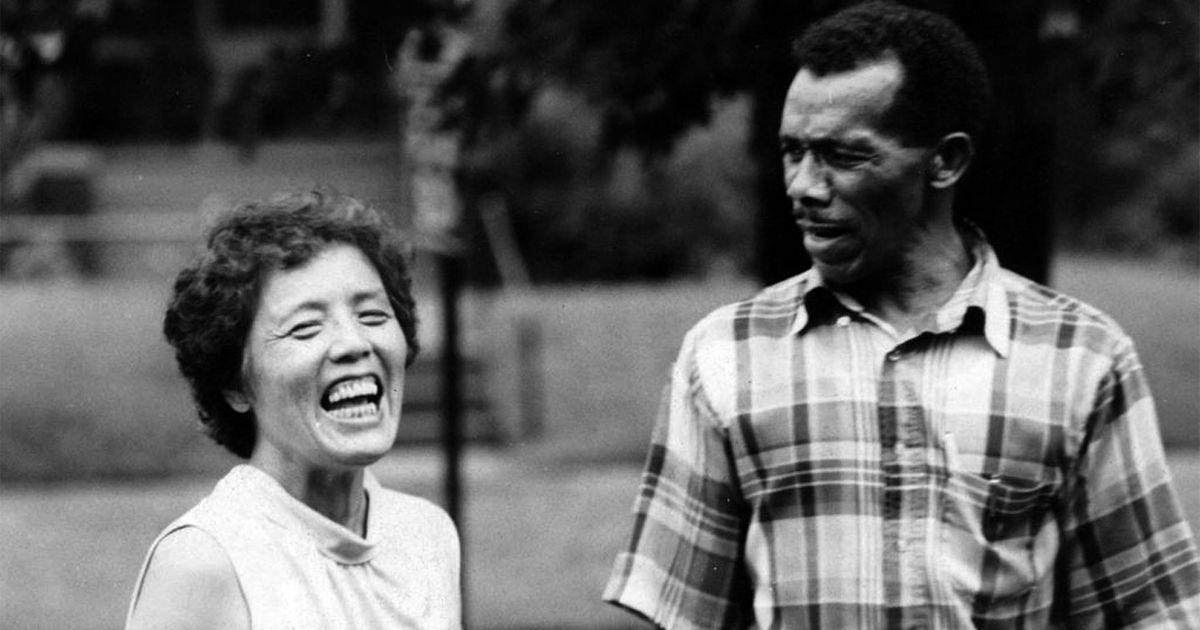
the work of james and grace lee boggs is the necessary corrective to the cyclical failure of insurrectionist surges. in “revolution and evolution“ they redefine revolution not as a single, catastrophic event, but as an evolutionary process of becoming a new people capable of self-governance. where ram gave us the unflinching analysis of the enemy, the boggs provide the dialectical1 map—one that sees change as a clash of opposites—for building the new world within the shell of the old.
the boggs frame the crisis as political, economic and profoundly human. they argue that each historical era produces a specific person, a socialized human being suited to its system. the crisis of our time is that the system—a globally integrated, financially extractive capitalism governed by the logic of the transnational capitalist class—has become objectively obsolete2, but the person it produced remains subjectively trapped within its logic. this is the person of individualism, of consumerist desire, of alienation from community, from production, and from any sense of responsibility for the whole. this is the person who shows up to a protest as a spectator to their own rage, whose political horizon is shaped by the very media that pacifies them. the 2020 uprising was a rebellion of this old human being, using the tools and expressing the fragmented consciousness of the dying epoch. it couldn’t birth the new because it wasn’t yet the product of a new human development.
from this analysis, the boggs make a pivotal distinction: the difference between rebellion and revolution. rebellion, they argue, is a necessary and righteous reaction to oppression, a force of rupture. it is the act of saying “no,” the indispensable work of tearing down the intolerable. yet rebellion, on its own, is a moment of negation. it clears the ground but doesn’t in itself possess the creative capacity to build the new social relations, the new values, or the new human beings required to fill the space it opens. the surge of 2020 was a magnificent rebellion. revolution, in contrast, is the constructive process that must follow and flow from that rupture. it is the patient, creative work of building the new society and the new people simultaneously. it’s evolutionary in its day-to-day practice, revolutionary in its ultimate outcome. this framework exposes the core insufficiency of our moment: we’ve mistaken a magnificent rebellion for a revolution, and in doing so, we’ve neglected the evolutionary work that must precede and prepare for the revolutionary leap.
this boggsian lens reframes the “triple fetish” (see part 1) not just as tactical errors, but as symptoms of the old consciousness. the fetish of the leaderless and the horizontal is the logic of the alienated individual, terrified of lasting commitment and concrete responsibility, mistaking structure for oppression. the fetish of anti-intellectualism is the refusal to undertake the difficult mental labor of synthesizing theory and practice to create a new worldview. these fetishes are the cultural reflexes of the obsolete person, and they guarantee that any movement built upon them will be reabsorbed, because it doesn’t challenge the fundamental production of human life and consciousness.
therefore, the boggs insist that the primary task of revolutionaries in an advanced capitalist society isn’t first to seize the old state apparatus, but to engage in the “great work” of creating the alternative, the new social relations, from the ground up. this isn’t a retreat from confrontation, but a deeper confrontation with the very basis of the system’s power: our fragmented humanity and our dependency on its institutions. this is the essence of what they call “building the beloved community.” it’s a process of dialectical becoming, where the act of building institutions of explicit power—a tenant union organized to seize and collectivize housing; a freedom school teaching the history of colonialism, the mechanics of the state, the tactics of historical revolution, and the skills to foment current revolution; a clandestine network of community gardens designed to break the dependency on capitalist agribusiness and reclaim land from the ruling class—becomes a school for revolutionary citizenship. this is a space where people shed the competitive, passive, consumption-driven self and develop the muscles of collective social practice, collective decision-making, and responsibility for one another. the material struggle for a roof or for food isn’t separate from the political struggle; it’s the very arena where the new human being is forged in direct opposition to the old world.
this transforms our understanding of dual power3 as not merely a set of parallel services to gain popular support for a future confrontation but the embryo of the new society and the training ground for the new people. every act of collectivizing a need, of solving a problem through solidarity rather than through the market or the state, is a revolutionary act. it’s a direct attack on the legitimacy and the functional necessity of the old system. it’s, as grace lee boggs often emphasized, “a fight for the souls of our communities.” the patient work of building these institutions is what turns a transient crowd into a lasting community capable of self-defense and self-governance. it’s what turns the slogan “abolish the police” into a living reality where safety is collectively guaranteed by neighbors who see each other as responsible for one another, not as threats.
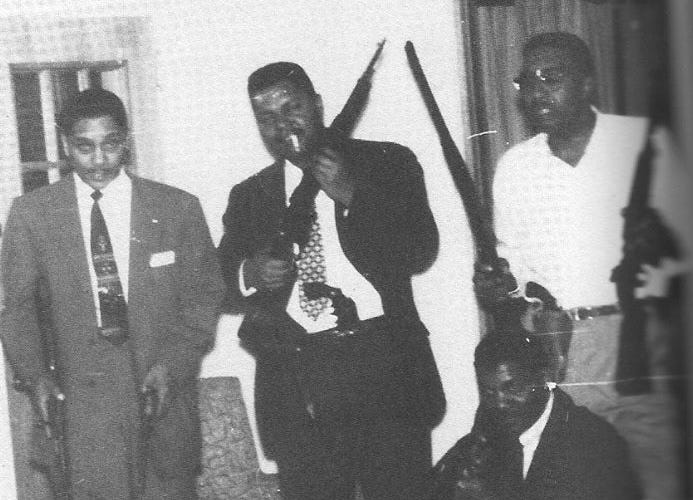
but the boggsian bridge leads to a shore we must be ready to fight for. revolution isn’t an alternative to confrontation; it is the development of the capacity to confront, to attack, and to win. we build the beloved community not as a retreat from the state, but as the necessary foundation to attack it. these institutions are our bases of solidarity and supply. they develop the collective discipline, the shared trust, and the material independence required to launch decisive maneuvers and withstand repression. we’re not just building a new way of being after the collapse; we’re building the social muscle to cause that collapse and the functional system to immediately replace it.
ultimately, the boggs teach that revolution is a holistic process of moral, spiritual, political, and economic transformation. the new world can’t be administered by the old humans. the protracted struggle we must wage is therefore threefold: against the external structures of the state and capital, against the internalized structures within ourselves, and toward the conscious construction of the power that will make the final confrontation not a desperate riot, but a winnable war.
but a theory of becoming is not a manual for action. it demands a translation into concrete practice on the actual hardened terrain we occupy.
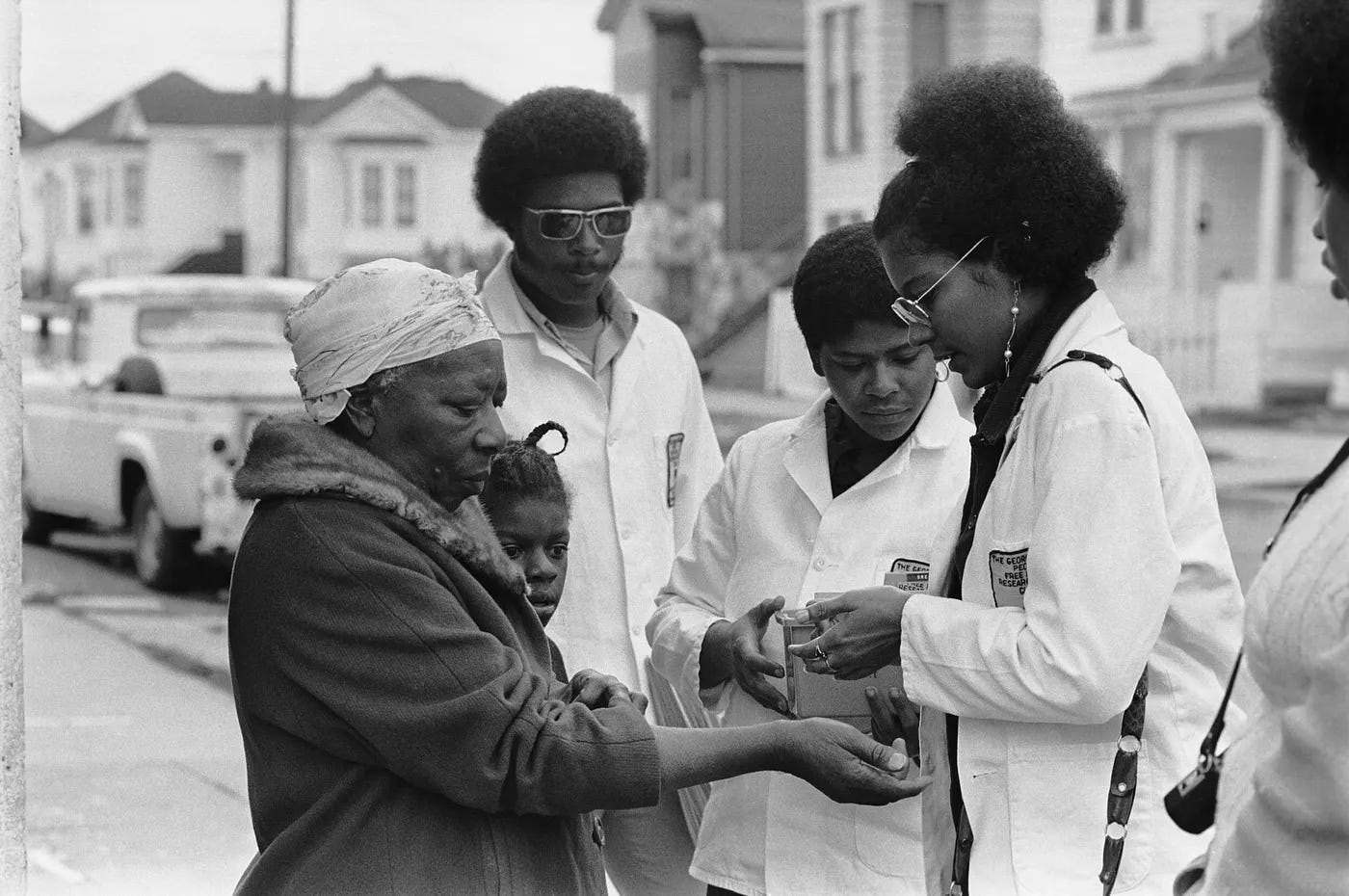
this leads to the most critical, and most often evaded, question: if the state is the unified enemy – a managerial instrument4 of a transnational capitalist class, and no savior will emerge from within it, where is the revolutionary base5, and how is it organized within the contradiction of imperialism6 vs the global south7? the failure of performative protest is, at its root, a failure to answer this question with material practice and failure to locate our local misery within this global war of position. but we can’t answer these questions with the romanticized tactics of 1968, 1999, or even 2020 because the terrain itself has been reshaped by the crisis of neoliberal financialization8 and the rise of a multipolar anti-imperialist bloc9.
therefore, our updated praxis must be a set of disciplines, forged in the fire of analysis. it’s the boggsian “great work” made tactical for a world in siege. it begins with a cold assessment of the current conditions, the very terrain on which we must fight. it’s not a neutral ground but the internalized geography of imperial crisis. this architecture of control is defined by three layers:
the layer of material predation: financialized landlords—landlords who see homes as chips in a casino, gambling away the right to shelter—companies like blackstone and vanguard whose evictions here are dictated by the same imf10 structural adjustments crushing jamaica; big agriculture’s monopoly on food, creating dependency; mass homelessness weaponizing the need for shelter.
the layer of ideological and security control: billionaire monopoly of media shaping consensus reality; a 24/7 apparatus legitimizing policing, borders, and imperial war; the social isolation of our political prisoners, severing the transmission of strategic knowledge; the internalized surveillance and algorithmic repression tested on overseas populations.
the layer of social fragmentation: mass unemployment and precarious labor that destroys the working class; manufactured apathy and despair, the psychic wage of late capitalism; the brittle, fracturing unity of the ruling class itself, paralyzed between its liberal and fascist wings—a critical vulnerability, but not a monolithic wall.
organizing on this terrain demands a praxis that is timeless in its objective, entirely new in its methods, and that sees the local base as the internal front of a global struggle. the revolutionary base is not the black capitalist chamber of commerce or the diversity-equity-inclusion consultants servicing the transnational capitalist class. the base is the poor and working-class, disproportionately black and brown, who are excluded from the bribe of black capitalism and who bear the full, unmasked violence of the state and the austerity economy11. organizing this base requires explicitly unmasking this bribery as a counter-revolutionary tactic. it now demands strategies that consciously exploit the cracks in the imperial façade to build material links to the worldwide line of resistance.
this means:
building dual power as strategic delinking. this isn’t about charity. it’s breaking away from imperial supply chains. it’s counter-institutions. it’s a practice of care over capital that transforms relationships from transactional to communal. these projects, alongside underground freedom schools to combat ideological socialization, form the material basis for independence from the systems that control us. this could concretely look like a community garden on a seized lot, growing culturally-specific crops, using seeds saved and swapped with farmers in haiti via a secure network instead of a food bank giving out canned goods from walmart. it could also look like a tenant union physically changing the locks, installing its own security, and collectively withholding rent into a fund for building repairs—a direct subtraction from the financialized housing market instead of a tenant association asking the landlord for repairs.
adopting a global security culture that assumes surveillance and moves beyond defensive postures while cultivating the revolutionary virtues of discipline, patience, and profound trust. it’s the practice of sacrifice and vigilance protecting community not for glory but for necessity. our security must account for a state whose repression is coordinated with allied intelligence services globally. we learn from ram’s clandestine discipline, but also from the digital and material tradecraft of anti-sanctions networks in cuba, venezuela, and iran. it prioritizes in-person relational work over digital pronouncements. this culture replaces “know your rights” with “know your enemy and deny them a target.” it means operational security, counter-surveillance basics, and designing actions that are untraceable, ambiguous, or leave the state with no one to prosecute.
waging a battle of narrative at the hyper-local level as an anti-imperialist practice. this is the practice of meaning making and truth telling. it’s the struggle to reclaim reality from the empire of lies. we can’t compete with billionaire media on their terrain. instead, we must covertly become the trusted source of information in our buildings, on our blocks, and in our workplaces that re-links issues: explaining how the police budget is connected to the military budget, how the price of food is connected to ghanian shea butter futures and speculator greed. our zines must make the primary contradiction legible on our block.
reclaiming and humanizing our political prisoners as international political combatants. this is the practice of ancestral veneration and sacred memory. we must systematically break the state’s isolation of these revolutionaries, teaching their analyses and their cases as part of political education. they aren’t pariahs; they’re our advanced scouts who saw the true nature of imperialism and the state and acted accordingly. learning from them is a direct repudiation of state fear-mongering. they’re casualties in the same war that has imprisoned revolutionaries from the philippines to palestine. their analyses must be taught alongside those of thomas sankara and samora machel, situating our domestic struggle within the long history of anti-colonial resistance.
organizing the “unorganized” of the modern economy into a strategic class. this is where the abstract “class” becomes a concrete neighbor. the gig worker, the unemployed, the tenant—this is the uprooted workforce of late imperialism. organizing here means building solidarity networks that target the weak points of the transnational capitalist class—its local landlords, its subcontractors, its utility monopolies—to win concrete victories that prove the viability of collective power.
practicing material internationalism. this is a conscious cultivation of global kinship and planetary consciousness. this means organizing port blockades against arms shipments to israel. it means building direct material solidarity with striking workers in the global south who supply our consumer goods. it means studying the practices of the haitians and cubans post revolution and implementing the direct solidarity between oppressed nations, from cuban agroecology to vietnamese mass organizing. our survival pods must be nodes in a new, solidarity-based circuit of knowledge and resources, explicitly opposed to the imperial circuit.
these six points aren’t a mere tactical checklist. they’re the integrated disciplines through which moral, spiritual, political, and economic transformation are practically achieved. we build dual power not only to secure housing, but to practice a morality of care. we adopt security culture not only for safety, but to cultivate the spiritual discipline of a people under siege. we wage the narrative war to reclaim truth itself. we honor our prisoners to sanctify our lineage. we organize the unorganized to transmute despair into collective agency. we practice internationalism to forge a planetary consciousness. in this praxis, the new human is not an abstract ideal, but the daily product of a struggle that demands we become, in thought and action, revolutionary citizens of the world we are fighting to build.
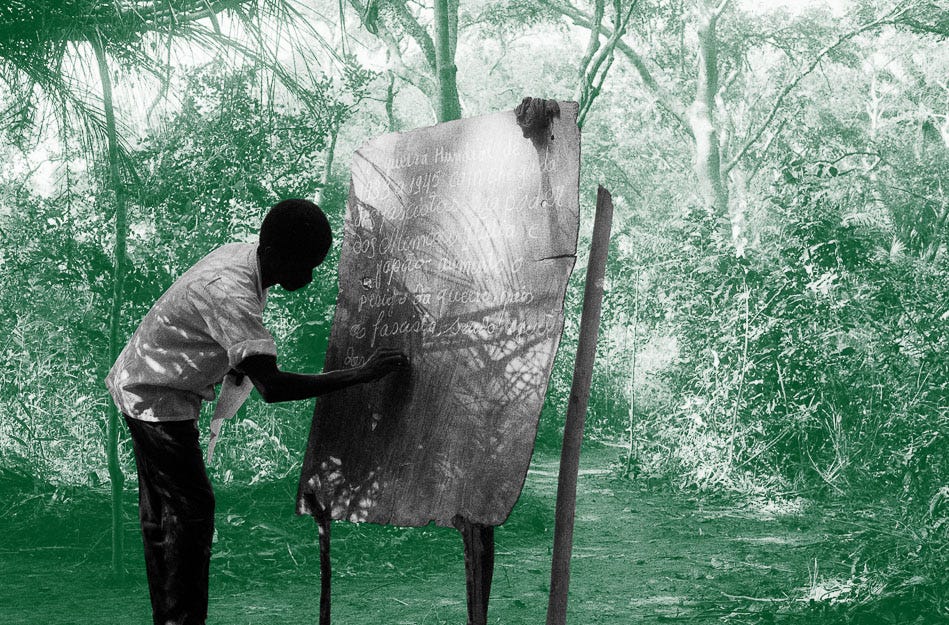
this praxis, this integrated framework for “correct social action” and the new human it forges finds its ultimate justification not in theory alone, but in the fundamental engine of all revolutionary mobilization, as defined by amílcar cabral: “no one is fighting for ideas. for the things in anyone’s head. they are fighting to win material benefits, to live better and in peace, to see their lives go forward, to guarantee the future for their children.”
cabral’s statement is the master key that turns the lock. it explains why the poetic spectacle of 2020 failed: it was a fight of ideas—“abolish”—disconnected from a tangible, collective program to deliver material benefit. conversely, it explains why the state’s power endures: it maintains a monopoly on the means of material life (and death), however miserly and violent its distribution. therefore, the updated tactics aren’t merely adaptations to high-tech repression; they are the necessary forms of a struggle re-centered on cabral’s truth. the “survival pod,” the seized land, the community farm are the embodiments of the fight for material benefit. they are where the abstract “class struggle” becomes the concrete, collective struggle for a bed, a meal, safety, and a future.
this re-centering provides the final measure for our action. the vanguard isn’t those with the purest theory, but those with the correct praxis – revolutionary theory in action. this is to say that the vanguard is the most effective at organizing and delivering material victories. their authority is earned in the successful defense of a home, the distribution of a harvest, the maintenance of a clandestine network. this is how we combat mass apathy and despair: not by winning a debate, but by demonstrating, through collective action, that our method materially improves lives. dual power ceases to be a symbolic alternative and becomes a competing material system for delivering the benefits of society that the capitalist state systematically denies.
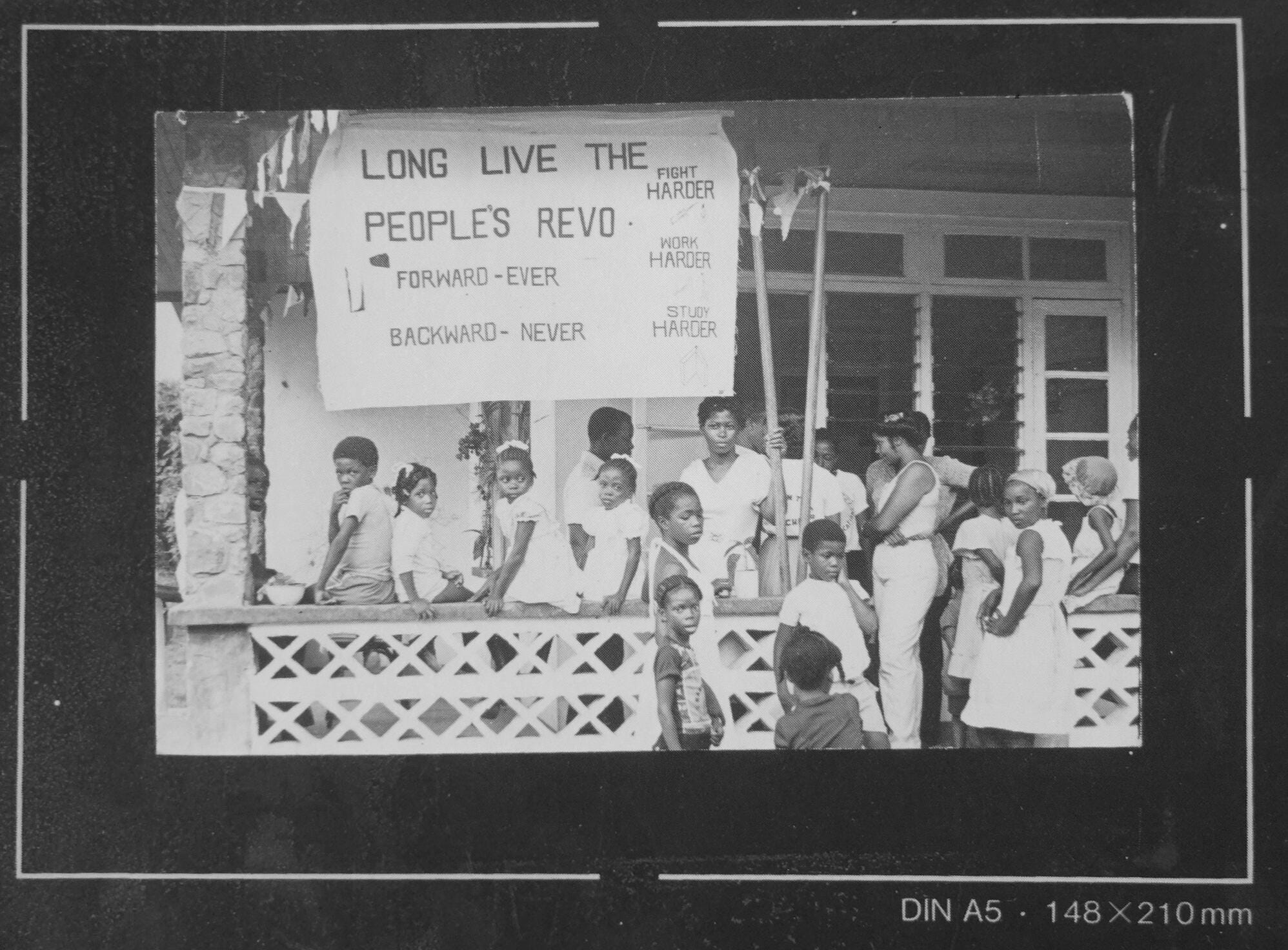
breaking this dialectical loop requires a synthesis that acknowledges we’re organizing in the hardened landscape already outlined—the terrain of material predation, ideological control, and social fragmentation. this requires embracing structure and accountability, not as a betrayal of freedom, but as its precondition. championing political education as the foundation of unity, not an academic luxury. building organizations that are of and for the exploited, that aren’t afraid to develop leadership from those who come from the base, and that are disciplined enough to expel the co-optable, the frivolous, and the hostile. it requires rejecting the tyranny of structurelessness for the discipline of democratic centralism— a method of full debate before a decision, then unwavering unity in action after—not to create bureaucrats, but to create revolutionaries capable of waging a long war. the structure is the vessel. without it, the tide of rage, however righteous, will always recede, and the house of power will remain, watching from higher ground, already drafting electoral strategies to absorb the next surge.
the synthesis looks like embedding revolutionary organizers not with leaflets, but with the tools of material seizure and internationalist analysis. the skills to secure a building must be paired with the understanding of blackstone’s global portfolio. the knowledge of permaculture must be shared via networks linked to la via campesina. we create solidarity cells focused on expropriation and defense, whose purpose is to build liberated zones that function as bastions of delinking. these are not hidden communes but openly contested territories where mass organizations assert de facto sovereignty, providing housing, food, and security through collective power.
their existence performs a dual function: it meets cabral’s demand for “material benefit” for the base, and it actively erodes the legitimacy and functional reach of the imperial state. every eviction blocked, every neighborhood fed from its own gardens, is a subtraction from the market’s domain. these zones become the resilient base from which to launch offensive actions—not as a desperate crowd, but as a disciplined force whose demands are backed by existing counter-power.
we must become more dangerous than a crowd on a live stream by becoming the builders of a new foundation, untraceable, indispensable, sovereign and consciously aligned with the global anti-imperialist struggle. the revolution won’t be a viral moment. it will be the accumulated, disciplined work of a people who have been patiently won over, block by block, through struggles for bread, roof, and dignity understood as fragments of the worldwide fight to dismantle financialized imperialism.
there are no other options.
we began by imagining a flood. the tide has now receded from the city streets, leaving not renewal but a barren, hardened basin. the base is stranded in it. the task is to dig wells, then connect them to the underground rivers of global solidarity.
this is the work: to reject the imperial framework entirely—its law, its property, its sanctions, its bombs, and its politics of appeal. and organize for the only goal that matters: the seizure of all necessary means of life.
the protest is not the territory.
the street is not the territory.
the territory is the liberated building, the defended garden, the clandestine school. first, we build the territory. then we seize the street.
the tide was the sound of the old world groaning. the territory is the silent, growing crack in its foundation.
we are the crack.
Dialectical: a way of thinking about change through contradiction and struggle. Instead of seeing things as fixed, dialectical thinking looks at how opposing forces clash, shape each other, and create new conditions.
Obsolete: outdated or no longer useful for the present moment. In this piece, the word is used to describe systems, ideas, or ways of being that may still exist, but can no longer solve the problems they created.
Dual Power: the practice of building alternative institutions and systems that meet people’s needs outside of, and sometimes against, the existing state or capitalist system. Examples might include tenant unions, community farms, mutual aid networks, freedom schools, worker cooperatives, or community safety structures.
Managerial Instrument: a tool used to manage, organize, or control something. In this piece, the state is described as a “managerial instrument” because it helps manage society in the interests of the ruling class.
Revolutionary Base: the people, communities, organizations, and relationships that can support and carry forward a revolutionary struggle. It is the foundation that gives a movement strength, direction, and staying power. In short: THE PEOPLE.
Imperialism: a global system where powerful states, corporations, banks, and ruling classes control land, labor, resources, markets, and political life beyond their own borders. It can operate through war and occupation, but also through debt, sanctions, trade rules, corporate extraction, and political pressure.
Global South: a term that generally refers to countries and peoples in Africa, Latin America, the Caribbean, Asia, and Oceania that have been shaped by colonialism, imperialism, and unequal global economic systems. It is not only a geographic term, but also a political and historical one.
Neoliberal Financialization: a stage of capitalism where profit is increasingly made through debt, speculation, investment, privatization, and financial markets rather than through producing goods people need. Housing, food, education, and health care become opportunities for investors to extract profit.
Multipolar Anti-Imperialist Bloc: a group of countries, movements, or alliances that challenge the dominance of one global power, especially U.S. and Western imperial power. “Multipolar” means there are multiple centers of global power instead of one dominant empire.
IMF: the International Monetary Fund, a global financial institution that lends money to countries. Its loans often come with conditions requiring governments to cut public spending, privatize services, reduce protections, or restructure their economies in ways that benefit global capital.
Austerity Economy: an economy shaped by cuts to public services, social programs, wages, food support, housing support, education, and health care. Austerity is often justified as “saving money,” but it usually shifts the burden of crisis onto poor and working-class people.
No posts
Comments
Nothing yet. Say the first thing.
Sign in to join the conversation.