

Today marks the 164th birthday of Ida B. Wells, born into slavery in Holly Springs, Mississippi, in 1862. Wells became a teacher, newspaper editor, organizer, and one of the most important investigative journalists of her era.
Her anti-lynching work began in Memphis after the 1892 murders of her friend Thomas Moss and two other Black businessmen. Through reporting, public speaking, and publications including Southern Horrors and A Red Record, Wells exposed lynching as a system of racial terror used to suppress Black political, economic, and social power.
Her work made her a target. A white mob destroyed the offices of her newspaper, The Free Speech, and forced her into exile from Memphis, but she continued organizing and writing for the rest of her life.
On her birthday, we share this reflection by diasporaradical on her legacy and what her example asks of us now.
july 16, 2026
dear ida,
we write to you across the corridor of time - knowing you’d recognize the smell of this moment. smoke and policy. rope and legislation. the particular silence that descends when the state finishes the work of law and order.
you were born into a world still warm from the wound of chattel slavery. the emancipation proclamation took effect five months after you arrived in holly springs, mississippi, in 1862 - a legal document drafted inside a war the union was losing, signed to preserve a republic that had always considered your people property. reconstruction came and opened a door. then the counter-revolution of 1877 slammed it shut, and the redeemers rode in on horseback with torches and ballots, both weapons drawn. that was the classroom that formed you.
you lost your parents to yellow fever at sixteen. sixteen, ida. you became the breadwinner for your siblings, pinning yourself to a teacher’s salary, riding the rails into memphis with ambition stitched into every seam of your dress. and when a railroad conductor grabbed your arm while attempting to drag you from the first-class car you’d paid for, you bit him. you bit him, and you sued, and a lower court sided with you because the evidence demanded it. the tennessee supreme court reversed it, because the evidence never mattered as much as the arrangement. but the moment sharpened you. you learned then what every african in this colony eventually learns: the law is an instrument of class power, and the hands that hold it decide whose wound it closes.
the historical moment that shaped you ran on specific engines. southern capital needed a terrorized workforce after slavery’s formal end. the planter class couldn’t legally own black bodies anymore, so it leased them from prisons it filled with black people through vagrancy laws and convict leasing codes. northern industrial capital looked away, calculating its own expansion. the federal government - which had briefly, imperfectly, deployed troops to protect reconstruction governments - withdrew its soldiers and its promises in the same motion. empire was turning its appetite outward toward cuba, the philippines, hawai’i. the internal colony needed quieting so the external colonies could be opened. lynching was the instrument of quieting. it was labor discipline and exploitation and land seizure and the plantation’s enforcement arm all at once wearing a hood and a smile.
between 1877 and 1950, white mobs lynched nearly 4,000 black people in the american south alone. the equal justice initiative puts the count at 4,084 racial terror lynchings in twelve southern states. you documented more than you could stomach, ida. you went to the evidence. you read the southern white press’s own accounts. accounts that bragged and printed the names of participants like guest lists at a dinner party. and you turned their pride into their indictment.
you proved something the powerful needed concealed. the pretexts for lynching were mere construction. political instruments. stories the ruling class manufactured to sanctify murder and to discipline white women into racial solidarity with white men and white working class into solidarity with white robber barons. you wrote it plainly in southern horrors and in a red record. you named the economic motive. you named the land theft. you named the torture. you named the sexual coercion running in the opposite direction - white men’s systematic assault on black women, the crime that no southern court moved to prosecute, the crime that never summoned a mob.
this is why what you did was a revolutionary act.
documentation, in the hands of the oppressed, is a seizure of the means of narrative production. the ruling class controls interpretation when it controls the record. when you walked into the wreckage of a lynching with a notebook, when you cross-referenced sheriffs’ reports with newspaper accounts and survivor testimony, you were building a counter-archive, refusing the colonizer’s version of events. you were practicing what we now call people’s journalism - the journalism claudia jones would later practice from a trinidad-born, new york-sharpened, london-exiled position, understanding that the worker’s press existed to tell the truth the owner’s press was paid to bury.
you knew the danger of what you carried. your press in memphis, the free speech, was destroyed by a white mob in 1892 while you were out of town. they burned it because the words inside it were working. a tool that works gets taken from the worker first. you rebuilt from exile. you kept writing. every column was a brick in a structure the empire hadn’t yet figured out how to demolish.
now, ida. look at this moment with us.
in 2026, jill collen jefferson and the mississippi-based civil rights organization julian released a report called “the crimson record.” it documented 70 modern-day lynchings across seven southern states between 2000 and 2025. the total climbs past 100 when investigators include every suspicious death. jefferson built her title to rhyme with yours deliberately, ida. she knew what she was doing. she knew whose tradition she was working inside.
“the crimson record” names what the state won’t: that when a black body is found hanging from a tree, the first move of the ruling class is to close the case. “the moment a case is ruled a suicide,” jefferson told reporters, “it’s no longer investigated as a potential homicide.” the classification is the cover. the paperwork is the lynching’s second act.
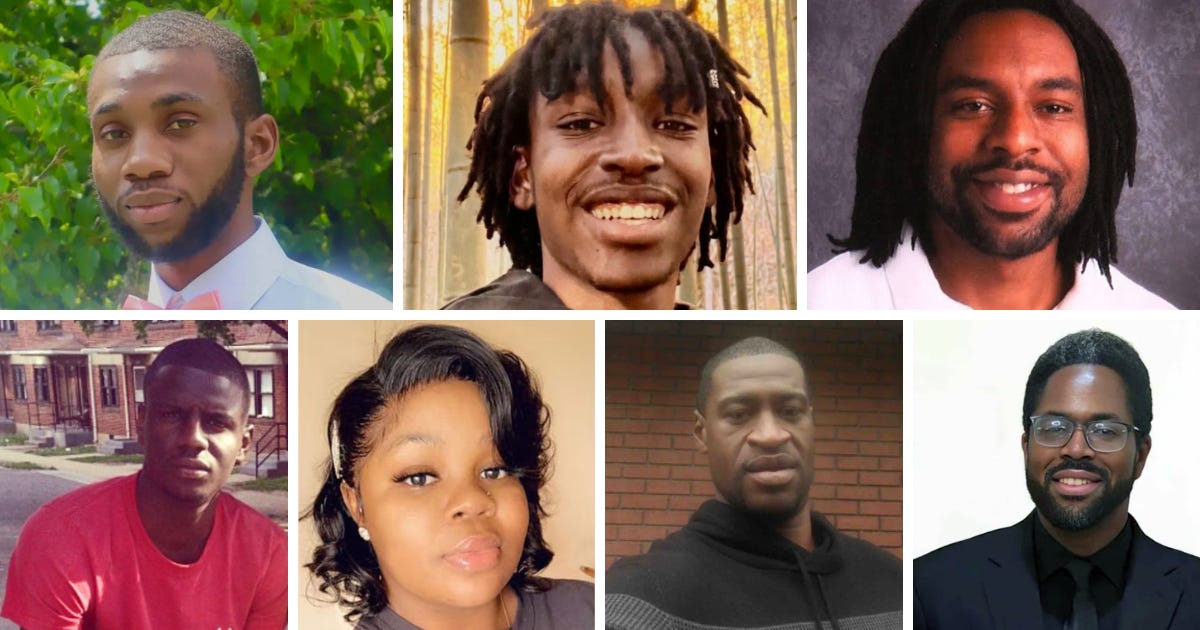
kyle bassinga was twenty-one years old. authorities found him hanging from a tree in cobb county, georgia, in february 2026 and ruled it a suicide the same week. trey reed was a student at delta state university, found hanging on the mississippi college campus in the fall of 2025. tory medley was thirty-nine years old, found hanging near a wisconsin golf course in november 2025. in each case, the coroner’s office moved quickly. in each case, the family said “wait, look closer. this is not what you’re calling it!”
their families used the word lynching while the state used the word suicide. and the distance between those two words is where our colony lives.
you’d recognize this, ida. you documented the same mechanism in the 1890s - the way official narrative arrived before the investigation did, the way the cause of death was decided by the people who needed a particular answer. the tool is the same. only the paperwork has changed.
the murders of george floyd, breonna taylor, freddie gray, philando castile sit inside this same lineage. the method shifted because the mob needed a badge and a qualified immunity ruling to do its work without consequence. the function stayed identical though: public execution as a signal to the colony that its people’s lives exist at the pleasure of the settler state. the body camera footage circulates the way the southern press once circulated postcards. sometimes it sparks rebellion. sometimes it exhausts the witness into paralysis. the state has learned to absorb the image, commission the report, announce the task force, and return the arrangement to operational status.
in 2022, president biden signed the emmett till antilynching act, making lynching a federal hate crime after more than a century of failed attempts. julian called the law toothless. no widely reported prosecutions have followed. the law exists. yet the lynchings continue. this is how the colonial arrangement describes itself in plain language.
the economic machinery that required the lynchings of your times requires these ones. financialized capital extracts from black communities through predatory lending, through medical debt, through arbitrary fees, through insurance redlining updated into algorithm. the prison population - disproportionately african, disproportionately from the internal colony’s poorest counties - feeds a system that hires guards, supplies vendors, funds political campaigns. mass incarceration is the plantation’s paperwork. it’s lynching administered through sentencing guidelines.
globally, this moment rhymes with yours in one devastating way: empire is overextended and afraid. in your time, u.s. capital was expanding into the caribbean and the pacific precisely as it was tightening its grip on the internal colony. today, u.s. empire strains against a rising global south - the brics formation, the african union’s growing refusal of imf structural adjustment, haiti’s unfinished revolution demanding recognition, the peoples of palestine, congo, sudan, and western sahara naming the colonial relation for what it is. when empire feels the ground shifting beneath its foundations, it presses harder on the colony it holds domestically. we feel that pressure in our bodies. we feel it in the budget cuts to public housing, the gutting of voting protections, the increase in state violence, the coordinated legislative assault on the teaching of our history.
they’re still burning the free speech. the platforms are the press. the terms of service are the injunctions.
and we’re still writing.
because you showed us what writing does when it’s honest and disciplined and refuses to flinch. you showed us that the colonized person who documents their own condition performs an act of liberation. you showed us that facts, assembled with rigor and love and fury, become weapons the empire has to spend real political capital to contain. you showed us that a black woman from holly springs, mississippi, orphaned at sixteen, could walk into the rotting core of american racial capitalism and name every single gear.
ida, we carry you the way our grandmothers carried scripture - close, worn, dog-eared at the passages that saved them. your red record lives in our investigative journalists, our movement researchers, our community coroners who count the dead when the state won’t. your exile lives in every organizer who keeps working after the platform ban, after the arrest, after the arson, after the rico charges, after the exile. your bite - the one you took out of that conductor’s arm - lives in every act of refusal that says: i paid for this seat. i belong in this car. and i will fight you for it.
happy birthday, comrade. the ground you broke still feeds us.
in struggle and in love,
the children of the internal colony, july 2026
No posts
Comments
Nothing yet. Say the first thing.
Sign in to join the conversation.