
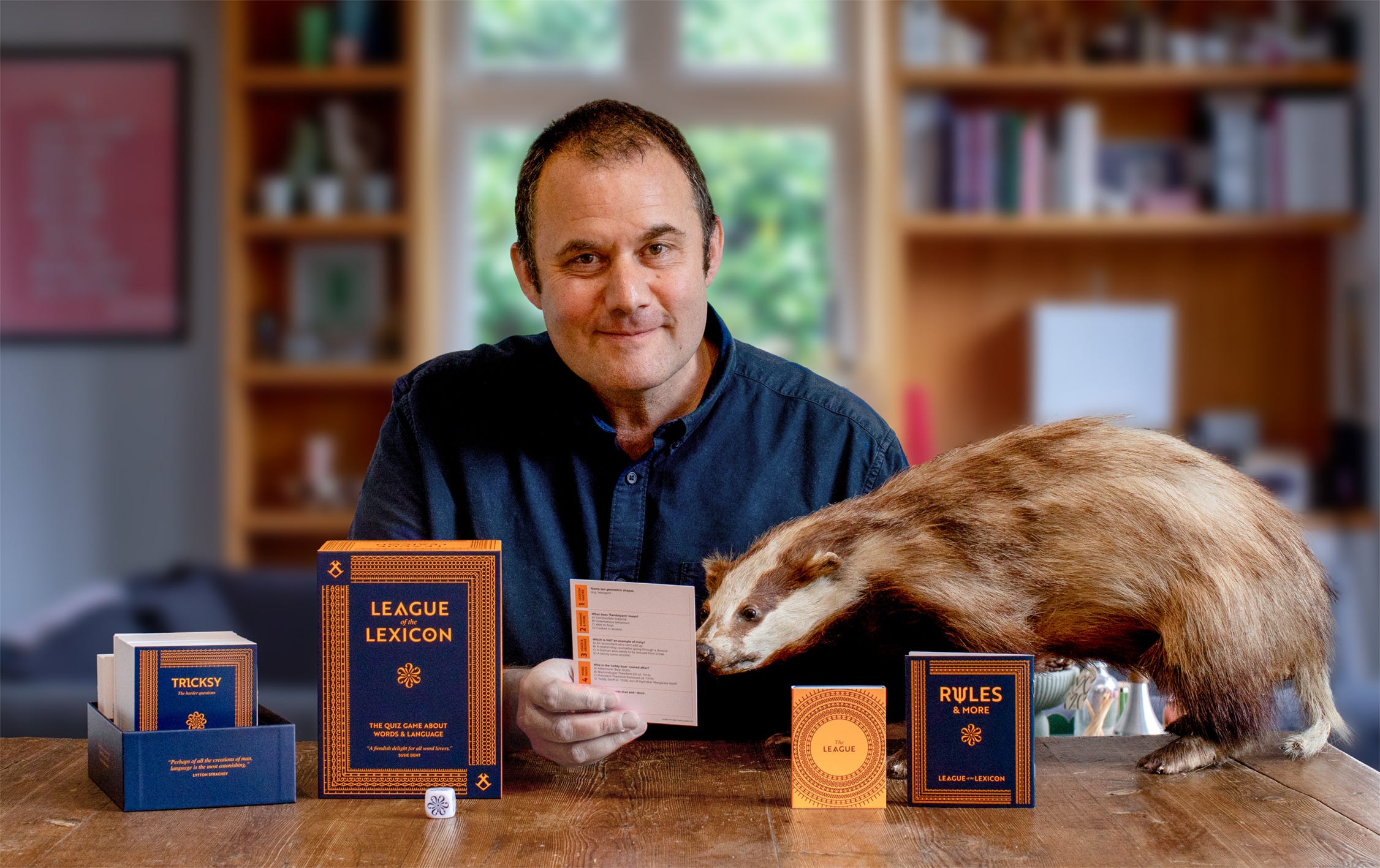
Later this month, my book, The Language-Lover’s Lexipedia, will appear in bookstores.
Had someone predicted this back in 2020, I would have laughed into my Cup-a-Soup. But COVID affected people in different ways, and I contracted a nasty dose of lexicography that I haven’t been able to shift.
It started with an outbreak of word games that I invented to keep my two boys entertained. It was during COVID lockdown, and we were battling excessive screentime and dull English homework. I came to realise that I was a dismal teacher, but good at inventing language games. There was Word Splat, Dojo and the enticing Tyrannosaurus Lex (more fun to say than to play). But it was League of the Lexicon – a quiz game about words and language – that got the most play. It had something, and being an obsessive-compulsive sort, I couldn’t stop working on it.
As the father of two boys – now 12 and 14 – I worry constantly about technology. Like countless parents, I’m trapped in the relentless whack-a-mole of managing screentime. I install parental controls, block sites and set gaming limits; they uninstall these controls, set up VPNs and skip between different devices. I consider myself tech savvy, but it can feel like an unwinnable battle. I began to wonder if the antidote to digital distraction wasn’t restricting technology, but making the analogue world more interesting. And that’s why I got into boardgames.
To be clear, I’m not a boardgame fanatic. I’ve never played Settlers of Catan and find Monopoly unbearable. But I love analogue things. I love the smell of ink, the texture of materials, and the heft of something real. Spotify might offer 100 million digital tracks, but none tells a story like my Stone Roses CD, worn with overuse and with a case that has had a hundred joints rolled on it. More importantly, I love how physical objects connect people - actually, not virtually. And boardgames do this particularly well.
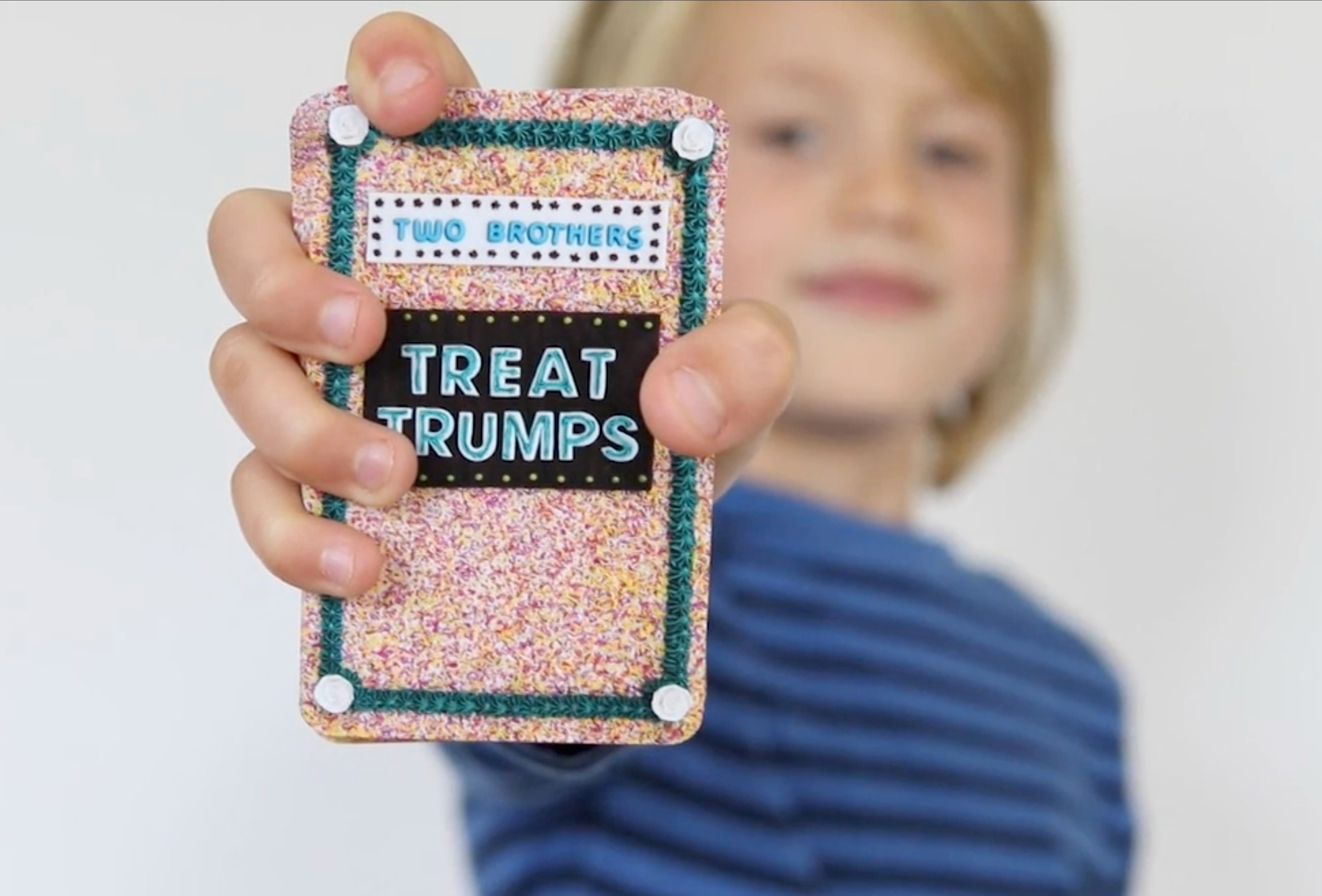
So ‘making boardgames’ was my answer to the question, How do we reduce screentime? I tested the theory during the first Covid lockdown, helping my boys – after whom my company, Two Brothers Games, is named - make a Top Trumps-style game about desserts. They sold it to make money for foodbanks, and their Kickstarter brought in nearly $6,000 (you can watch their very cute video here).
But League of the Lexicon was different. As well as being an antidote to digital distraction, I wanted to encourage my boys to be more curious about language. And doing this immersed me into another passion: words.
The pandemic ended, but my work on Lexicon didn’t. As I played it with friends, it became more grown up and challenging. Word games are a tiny part of the boardgame world, and games about words rarer still. I wanted to change this and make the ultimate game for language lovers.
Lexicon is a quiz game, so I invited linguists, lexicographers and authors to contribute questions to the game. A Who’s Who of the word world responded: Lynne Truss, Michael Rosen, Ben Schott, Claire Cock-Starkey, Dennis Duncan, Simon Horobin, Lynne Murphy, Pip Williams and over 80 more. I had their books on my shelves - now their questions were in the game.
Launching a boardgame is a perilous business, with the road to success littered with unsold boxes. But a few extraordinary things happened that would make League of the Lexicon one of the most successful word games of the last decade (h/t Wordle - you’re #1).
The first arose from an opportune moment at the Waterstones flagship store in Piccadilly. I happened to have a prototype with me, so buttonholed the store’s games buyer for feedback. Six weeks later, Waterstones placed an order for 5,000 games. They made it their Game of the Month when it launched, and when it quickly sold out, ordered 6,000 more.
Next came our campaign on the crowdfunding site Kickstarter. Launching in July 2022, my chief concern was to avoid embarassment. Three frantic weeks later, League of the Lexicon had become the most-backed word game in the platform’s history, raising around $500,000.
And on it went. Mensa America named League of the Lexicon one of their Recommended Games, luminaries like Susie Dent, Stephen Fry and John McWhorter said lovely things about it, and it appeared in The New York Times, Wired magazine and the BBC.
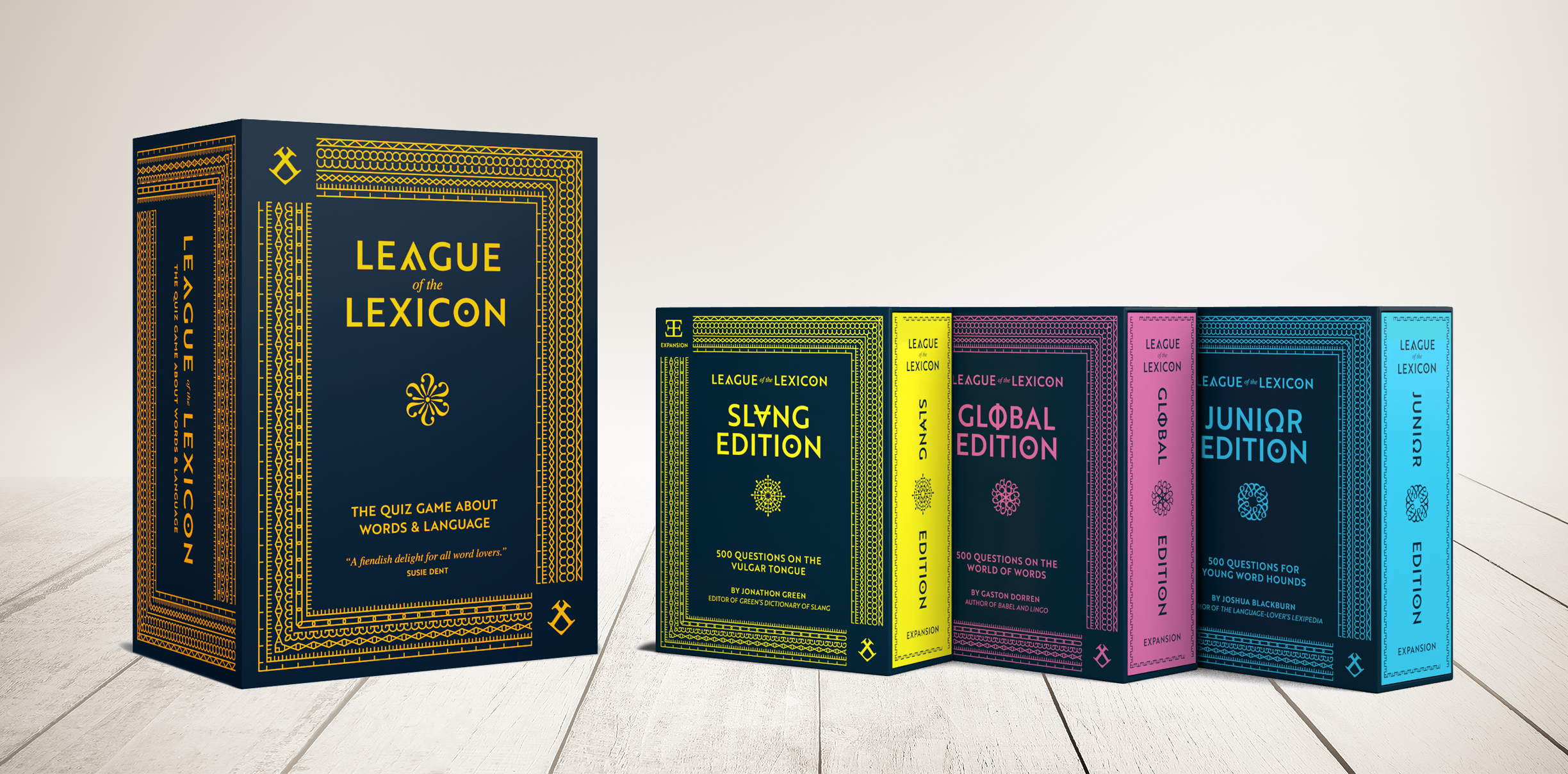
The game was also growing. The world’s leading slang lexicographer, Jonathon Green wrote a Slang Edition; author and polyglot linguist Gaston Dorren wrote a Global Edition; and, returning to the game’s origins, I wrote a Junior Edition. There was even an Aussie-Kiwi ‘minipack’ by the Australian author and master of word games, David Astle.
At first, the game’s success left me with imposter syndrome. I’m not even an English graduate and nothing on my CV suggested any interest in making boardgames. But I reminded myself that this wasn’t a game for English professors, it was for language lovers - and that’s something I share with everyone who enjoys the game.
League of the Lexicon has just been redesigned, and in October, the US Edition launches, published by Adams Media of Simon & Schuster. And then there’s the book, The Language-Lover’s Lexipedia, which is an A-Z of linguistic curiosities. It’s exciting. Unexpected too. But I never forget where this strange and unexpected journey started - with a lockdown hobby to reduce screentime and avoid homework. I wanted to kindle the curiosity of two brothers, and in so doing, fed my own.
As a kid, I hated the question, ‘What do you want to do when you grow up?’ I didn’t know then, and still don’t. But for the moment, I make board games about language. And I want to make more.
____________________________________
You can read more about League of the Lexicon here
And you can try your hand at some questions from the game here
No posts
Comments
Nothing yet. Say the first thing.
Sign in to join the conversation.