
Today sees the launch of my book, The Language-Lover’s Lexipedia in the UK. It has been an all-consuming, mind-expanding, stress-inducing experience to write. But since these are three qualities I apparently rely upon to get anything done, that’s not a complaint.
The book is about curiosity and it is in this spirit that the latest Lexipedian post has been assembled. Here are twenty five things I learned about the glorious world of words while writing the book.
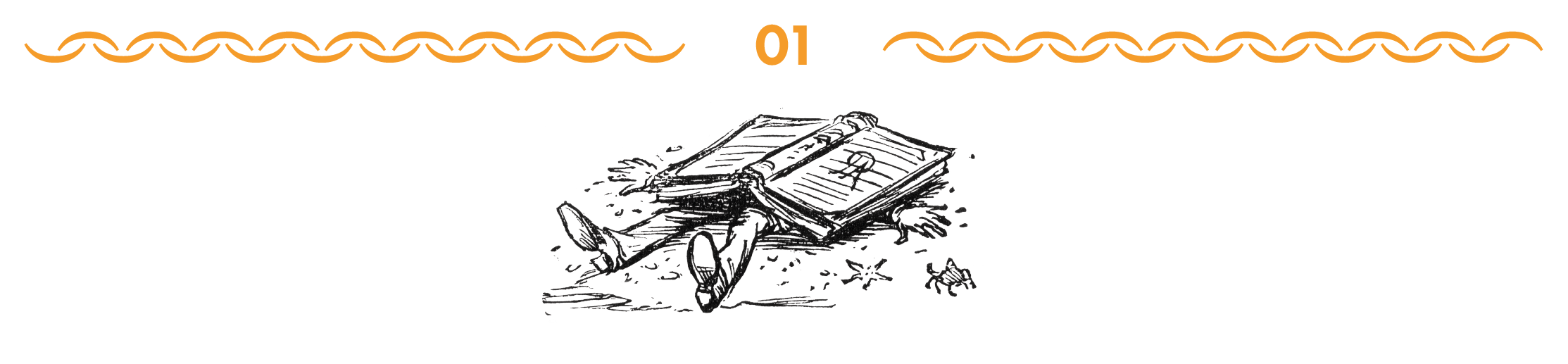
The Hawking Index is a scale (given as a percentage) for measuring how many people will finish a given book. Named after physicist Stephen Hawking, whose Brief History of Time scored 6.6%.

There is no one-word anagram for anagram, but if you google ‘anagram’ you’ll be asked, Did you mean nag a ram?

Before bee’s knees described something wonderful, they meant something inconsequentially small, although were used in the singular form (’tis just a bee’s knee). As such, the bee’s knee was a nothingism, like a flywing, a peppercorn or the pestle of a lark.

According to Thomas Aquinas, the five ways in which the sin of gluttony might be committed are: praepropere (eating too soon), laute (eating too expensively), nimis (eating too much), ardenter (eating too eagerly) and studiose (eating too daintily).

Amok, in the expression run amok, is a 17th-century import from Old Javanese amuk, meaning to attack furiously. Hobson-Jobson, the famous 19th-century Anglo-Indian dictionary, adds that amuck means ‘to run furiously and desperately at any one; to make a furious onset or charge in combat.’

Charles Dickens didn’t just conjur amusing names for his characters, he also gave his children some most unusual nicknames, including Chickenstalker (Francis), Lucifer Box (Katy), Plornish (Edward) and Master Floby (Charley).

A refractory rhyme is a word that doesn’t rhyme with anything else. Contrary to popular myth, orange, month and purple all have rhymes (blorange, oneth and curple respectively) - but kiln, spoilt and eighth don’t.

Before the ampersand (&) became the accepted abbreviation for ‘and’ there was the Tironean ‘et’, that looked like this: ⁊. It was invented around 50BC by Cicero’s secretary (and slave) Tiro - famous also for his Tironian shorthand. Today, the Tironian ‘et’ survives in but a few places, including Irish Gaelic.

Jonathan Swift wrote a pamphlet about farting titled The Benefit of Farting Explain’d (1722), in which he argues, among other things, that farting is good for one’s health and that women should do it more. Swift presented this satirical work as a translation from Spanish by one Don Fart-inhando Puff-indorst.

S.O.S. doesn’t stand for Save Our Ship – in fact, it doesn’t stand for anything. The signal was first used by the German government in 1905 as an alternative to the C.Q.D. signal. The usefulness of S.O.S. lay solely in the simplicity of the code:
. . . - - - . . .

The killing of a teacher is known as magistricide.
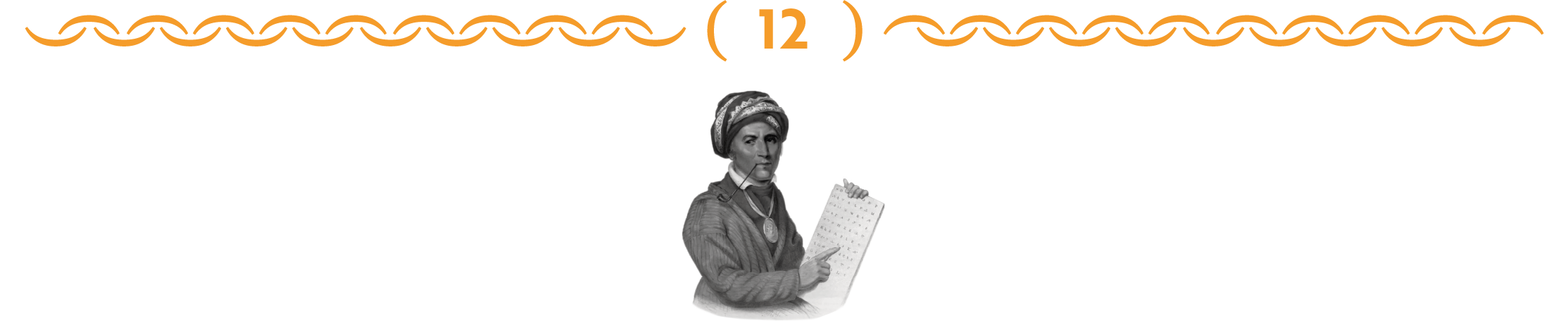
The Cherokee Syllabary, the writing system of the Native American Cherokee Nation, was invented by a man who is thought to have been illiterate. It is one of two writing systems said to have had illiterate inventors (Pahawh Hmong, invented by Shong Lue Yang in 1959, is the other.)

The percontation point is a reverse question mark introduced by 16th-century printmaker Henry Denham to indicate a rhetorical question. It never caught on. Likewise, John Wilkins’ irony mark, which was an upside down exclamation mark. (Personally, I’d say both marks would be most useful.)

Heroin, cheeseburger, kitty litter and zip code were all once registered trade marks, although no more.

The first 20th-century dictionary to include the word fuck was The Penguin Dictionary (1965); it then appeared in the Oxford English Dictionary in a 1972 supplement. Today, the OED includes 35 derivations and usages of the word.

The first celebrity mania was Lisztomania, a word coined to describe the wild excitement generated by Hungarian pianist Franz Liszt during his eight-year tour of Europe, starting in 1839.

The original Gotham wasn’t a city guarded by a caped crusader but a medieval village near Nottingham in England. ‘Gotham’ comes from Old English meaning ‘homestead where goats are kept’.

The word sneeze arose from a misspelling of the 14th-century word, fnese.

The first known use of they as a non-gendered singular pronoun is in the verse William and the Werewolf, a French work translated into English in the 15th century. Its use declined from the 18th century as grammarians ruled that he should be used if the gender wasn’t specified.

The Vatican’s Index of Forbidden Books was only retired in 1966. It was updated 300 times since it was ratified in 1546, forbidding works by Bacon, Copernicus, Descartes, Erasmus, Hobbes, Kant, Rousseau, Swift, Voltaire and Zola. Surprisingly, neither Hitler’s Mein Kampf nor Darwin’s On the Origin of Species ever appeared on the list.
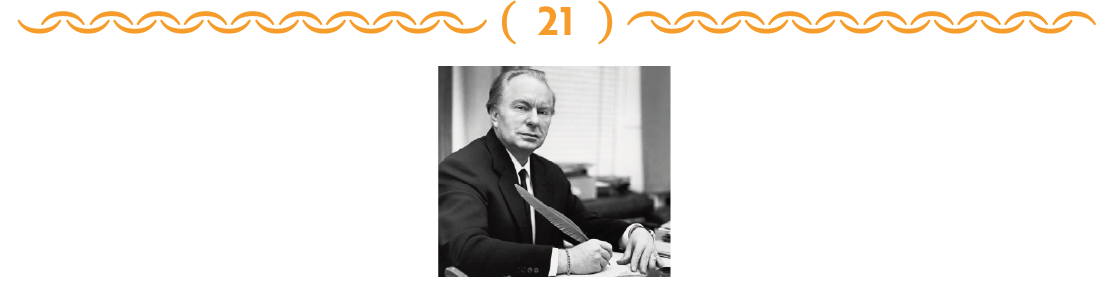
According to The Guinness Book of Records, the author credited with most published works is the founder of Scientology, L. Ron Hubbard, with 1,084 books. He also holds the record for most audiobooks by one author: 23.
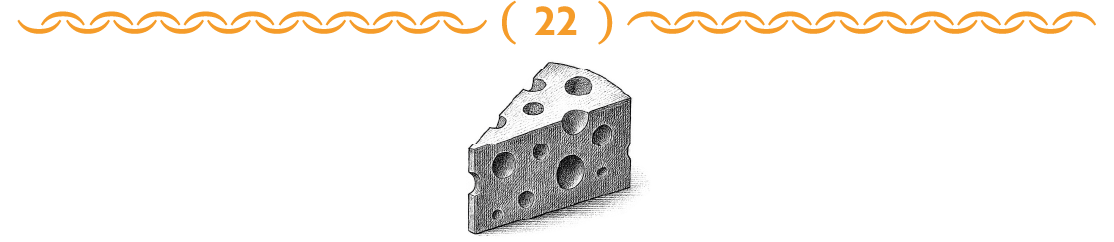
Tyromancy is a method of fortune telling that makes use of cheese. A tyromancer claims to read the future by paying attention to the odour, appearance and texture of coagulating cheese.

The Latin for Nike’s slogan ‘Just Do It’ is Age Modo.

The proscription against double negatives (also known as a negative concord) can be attributed to Lindley Murray and his influential manual English Grammar (1797). Murray’s Rule XVI begins: ‘Two Negatives, in English, destroy one another, or are equivalent to an Affirmative,’ and ends with the pronouncement ‘it is better to express an affirmation by a regular affirmative than by two negatives.
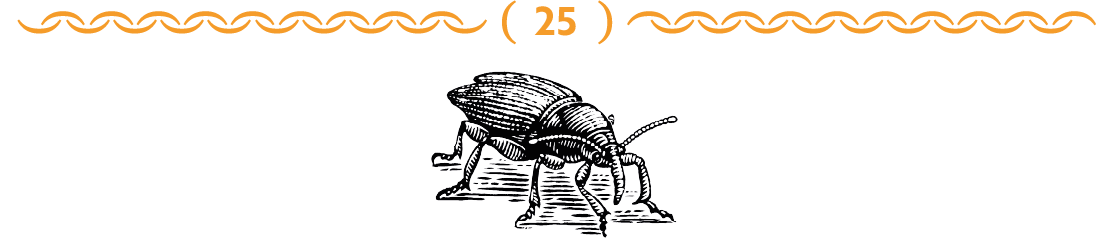
The last non-numeric entry in the Oxford English Dictionary is zyzzyva, a tropical weevil found in South America. The last last entry is 999, the telephone number for the British emergency services.

The Language-Lover’s Lexipedia, published by Bloomsbury (UK) and Avid Reader Press (US), launches today in the UK. It will be released in North America on October 14th, but can be pre-ordered here.
Written by Joshua Blackburn, creator of League of the Lexicon, The Language-Lover’s Lexipedia is an A-Z of linguistic knowledge, from the origin of Abracadabra to Zyzyvva and the last word in the dictionary.
‘Astonishingly, addictively entertaining.’
Benjamin Dreyer, New York Times bestselling author of Dreyer’s English
“What a magnificent achievement. A word-lover’s dream.”
Stephen Fry, author of Mythos
“Oh, Good God – it’s all here. The answers to all your language questions answered 1) accurately and 2) hilariously.”
John McWhorter, author of Nine Nasty Words
No posts
Comments
Nothing yet. Say the first thing.
Sign in to join the conversation.