
Hi Fintech Architects,
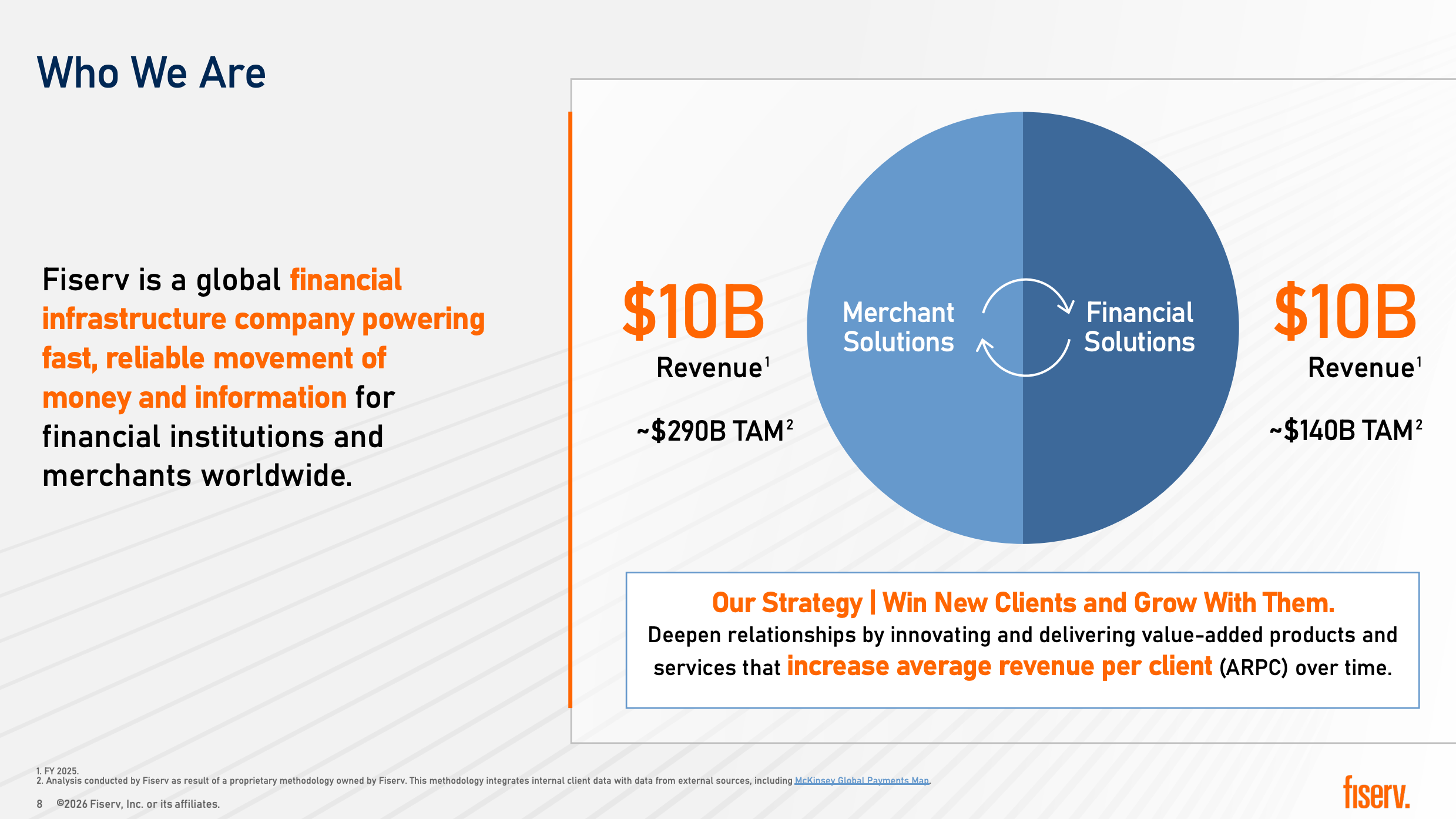
In this episode, Lex chats with Srini Krish — Co-Head of Financial Solutions at Fiserv, one of the original fintechs, in business for nearly five decades and sitting at the intersection of commerce and banking.
Lex and Srini discuss how Fiserv acts as the technology backbone for 5,000+ US banks and credit unions that lack the wherewithal to match JPMorgan or Wells Fargo on their own, and how the firm is packaging AI into that distribution layer through Agent OS and partnerships with OpenAI and Anthropic. Srini lays out his four-bucket framework for enterprise AI - better client service, internal productivity, AI embedded in products, and a platform banks can use to build their own agents - and explains why money demands deterministic outcomes rather than probabilistic guesses, keeping a human in the middle as commercial loan underwriting compresses from weeks to hours.
They explore the competitive race against challengers like Mercury and Ramp, the mainframe that has outlived thirty years of obituaries, and where power sits between the AI labs and their distribution channels once inference commoditizes.
For those that want to subscribe to the podcast in your app of choice, you can now find us at Apple, Spotify, or on RSS. Or to support this writing and access our full archive of IPO primers, financial analyses, and guides to building in the Fintech & DeFi industries, see subscription options here.
Thanks for your time and attention,
Matt & Lex 🙌
MIPS became tokens. Srini frames the whole AI shift through continuity: engineers once measured effectiveness by MIPS consumed and how often they compiled code; today the metric is token consumption. Same discipline of doing more with minimal resource, thirty years apart.
Money forces determinism. Probabilistic outputs are fine for many tasks but unacceptable for balances - a figure 1% or 5% off is a failure, it has to be right every time. So Fiserv’s Agent OS rollout starts with non-real-time, human-in-the-middle use cases and only graduates toward autonomy and eventually customer-built agents. It’s a crawl-walk-run path, and Fiserv says it’s clearly still crawling.
The moat is distribution, not model access. Fiserv’s 5,000+ banks and credit unions can’t engage OpenAI or Anthropic directly at scale, so Fiserv becomes the channel — and despite the OpenAI press release, it runs dual-lab (Claude Code, Cowork, and Codex daily). Krish sorts all of it into four buckets: AI for client service, AI for internal productivity, AI embedded in products clients resell, and AI as a platform clients operate themselves. Agent OS is bucket four — turning multi-week commercial loan decisions into hours, with auditability those institutions could never build alone.
Before joining Fiserv, Srini Krish was an engineer by training, born and raised in India before moving to the United States in the mid-1990s, where he began his career programming mainframes in COBOL and consulting on public pension systems. He served as Technology Director at Covansys and rose to President and Chief Information Officer of the Indiana Pension Systems, delivering solutions for police, fire, and state employee retirement programs.
He then spent close to a decade at JPMorgan Chase, where he was Chief Operating Officer for Consumer and Community Banking Technology - establishing and governing the group's multi-billion-dollar IT investment portfolio - and also served as CIO for global finance and corporate technology. Across these roles he built more than three decades of experience in global finance and technology delivery before joining First Data in 2014, which merged into Fiserv.
Fintech, Fiserv, EmbeddedFinance, AgenticAI, EnterpriseAI, Banking, Payments, DigitalBanking, CommunityBanks, FinancialInfrastructure, AIAgents, OpenAI, Anthropic, ClaudeCode, JPMorganChase, FirstData, Mercury, Ramp, Plaid
1’12: Fintech Before It Was Fashionable: Five Decades at the Intersection of Commerce and Banking
6’13: Access, Move, Trust: What Actually Defines a Fintech Across Three Decades
10’28: A Loan at the Mechanic's Shop: How Embedded Finance Widened the Market and the Money Behind It
13’22: Four Buckets for Enterprise AI: Where Agent OS and the OpenAI Partnership Actually Fit
20’47: Not Savviness but Wherewithal: Why 5,000 Institutions Can't Build JPMorgan's Stack Alone
25’39: Mercury, Ramp, and the Mainframe That Never Died: Why the Incumbents Aren't Going Anywhere
29’51: Both Labs, All Three Clouds: Why the Distribution Channel Sits in the Middle
33’16: The Engineer Who Stops Writing Code: Why Replacement and Expansion Can Both Be True
36’50: It Has to Be 100% Correct Every Time: Why Money Demands Deterministic AI
Lex Sokolin:
Hi, everybody, and welcome to today's conversation. We are privileged to have with us today, Srini Krish, who is the Chief Information and Operations Officer (recently promoted to Co-Head of Financial Solutions) at Fiserv. Fiserv is one of the largest and most fundamental companies in financial technology and has launched a variety of artificial intelligence partnerships and features recently and so. I'm really excited to talk to Srini about those and about his career. So, with that, welcome to the podcast. Srini. How are you doing?
Srini Krish:
Lex, thank you for having me. It's a pleasure to be on your podcast, doing well and good to be here.
Lex Sokolin:
Fantastic. So, there's a lot to go deep into, but we're just going to do some definitions. What is Fiserv? What does Fiserv do. And then what does a chief information officer do.
Srini Krish:
Well so first let's start with Fiserv. Fiserv is very unique in the sense that it's one of the original fintechs. Before fintech became somewhat fashionable. We've been in the business for close to five decades. We're probably one of the only ones in the world that sits at the intersection of commerce and banking. We provide technology solutions to both the merchants, if you will, but from a merchant standpoint. Small, medium, large, brick and mortar and e-commerce merchants. And similarly on the banking side, we provide technology and solutions to some of the small, medium and large global banks in the world and community banks and credit unions in the US. So, we again, you know, we have both sets of clients, and we are not only in the US, but we also have an international presence in India and in APAC. As to what a CIO does, my current responsibility includes both technology and operations. From that standpoint, I work very closely with the product organization to execute to our product roadmaps, working closely with our clients as it pertains to delivery and the services that we provide in terms of keeping our systems and our solutions up and running.
Lex Sokolin:
Amazing. So, over the last 20 years, you've had a pretty broad mandate across large financial institutions, from JPMorgan to First Data to Fiserv across operations, technology, it. Can you give us an outline of that journey? More than anything, I'm actually interested in how the environment has changed. Like the outlines and the remit of a technology facing role has changed quite profoundly. So, tell us about that evolution.
Srini Krish:
You know, sort of taking myself back in time here. You know, I was born and raised in India. Grew up in India. You know, I went to school for engineering. So, I'm an engineer by trade. You know, came to the United States in mid 90s and started off, like most people, programming in mainframe technologies and COBOL and six, so some of my consulting journey in late 90s, working with state pension funds, delivering solutions for pension systems like police and fire and state data employees and so forth. Somewhere along the line, I started working with JPMorgan Chase as head of technology for some of their consumer facing departments, where I spent close to ten years.
When I left JPMorgan, I was a CEO for the consumer and community banking technologies and then joined First Data, which eventually got acquired by Fiserv in 2014. So, I've been with Fiserv for 12 years now. Clearly, looking back in the last 30 years from where in a lot of sense it's changed in a lot of sense. We're kind of going back to how things were. And I was, you know, sort of make this reference for those of us that grew up, you know, in mid 90s, working with mainframes were used to the fact that, you know, we, you know, we sort of evaluate the effectiveness of engineers based on how often you compile code and how much MIPS you consume, you know. Fast forward years later, we're starting to talk about token consumption and how effective you are with regards to what you need to get done with the minimum usage of tokens right in and in between. A lot of things have changed, right? So, I think the one constant obviously is the change and the fact that we continue to evolve technology to be able to help our customers be able to do their jobs easier and somewhat, you know, without any friction, is at the end of the day, is is the goal.
Lex Sokolin:
I think there are two threads I want to pull again in that 20, 30-year evolution. One thread is just what it means to be doing technology and finance. And you touch this a little bit. You said fintech before it was cool. And first, I'd love to know what you mean by that. There definitely was a moment in the 20 tens when fintech sort of before blockchain and AI, was the theme du jour, and that's had a bunch of implications for how the roles are perceived. You know, who has power in organizations and where the capital goes. But yeah, maybe if you could talk about what it meant to be running technology at JPM in the 2000 versus what it means to be doing fintech in the 20 tens versus what it is now, when you're sort of this like financial lab.
Srini Krish:
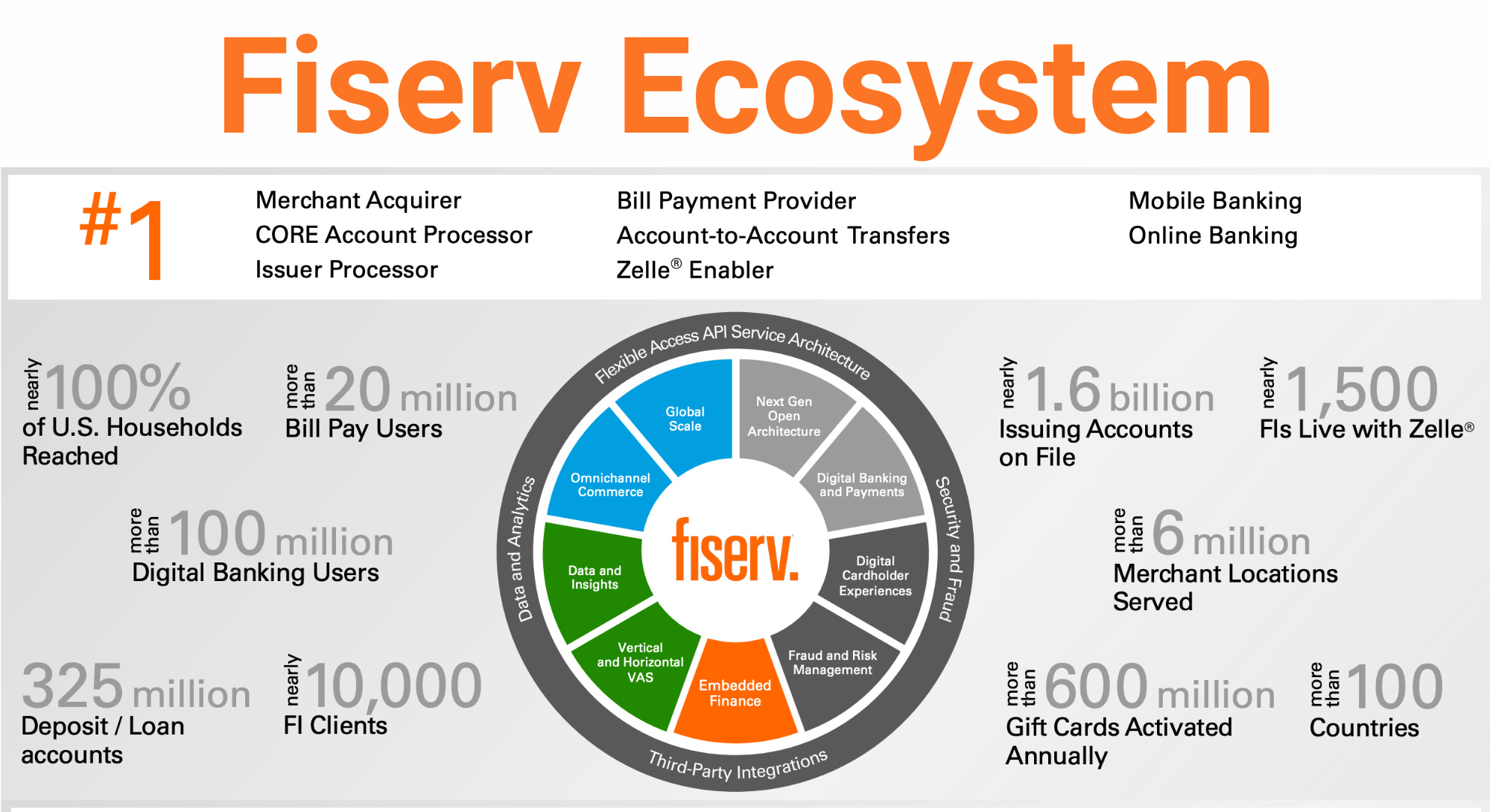
Yeah. No, it's a great question. I mean, if you go back to, you know, late 90s into 2000, it was the .com, right. I mean, Chase.com was, you know, conceived and implemented very, very early on in the early 2000. And then came the Chase mobile. Again, if you really think about what a true sort of financial technology is, is that is the intersection of people being able to access their money and be able to move their money in a very sort of safe, secure and a frictionless way. And that's essentially what a fintech does. Right. And, you know, we are the sort of the technology arm of a lot of financial institutions in the US that doesn't necessarily have the wherewithal, like the likes of JPMorgan Chase and or Wells Fargo or Bank of America, where we end up being we as an officer end up being, you know, the technology extension to the community banks and to the credit unions in the United States. So, we pretty much, you know, provide soup to nuts from a financial services perspective, everything that a bank and their customers would need. Right. It starts from, you know, the core, which is the general ledger behind that takes deposits, you know, processes, checks and send statements and so on and so forth to credit cards and debit card platforms that authorizes in, you know, processes, transactions to digital and mobile banking for these banks where their customers are able to log in online and or use their mobile applications to access their funds.
Payments in terms of ACH to wires. And last but not the least, you know. Pretty much everything else around it. Whether it is risk systems, fraud systems, you know, anti-money laundering systems and so forth. So that's essentially what we do. And, you know, we end up providing everything from, you know, opening in a new account to be able to provide any sort of value-added services that these banks and credit unions provide to their customers. In a lot of ways, a lot of things are changed in a lot of ways things remain the same because at the end of the day, what matters to a to a banking customer is, you know, the security of their deposits in being in a place where they can trust and the ease at which they can, you know, be able to access it and the ease at which they can move it in a in a seamless way, if you will. That's just on a financial services perspective on the merchant side.
Again, things have evolved quite a bit in the last 30 years, right? So, if you think about back in the 90s, walking into a merchant location, more often than not you're going to have to ask if they would take credit cards. Now, fast forward 30 years later. You don't pull anything out of your wallet, right? I mean, more and more often than not, it's a tap on a on a phone, on a device to sometimes, you know, you just pay using your phone without even having to tap anything. So the common thread in all of this is how do you make these things to be somewhat intuitive and easier for the customer to interact and get services so that they can go on about doing what they're, you know, an integer do, which is, you know, you know, either ice cream or eat a meal or go to an establishment and enjoy the services of the establishment, as opposed to having to think about how to pay or what it takes to pay and so forth.
Lex Sokolin:
Got it. And just in terms of the amount of capital that you've seen come into the space, you know, I imagine it's been like a rush of change in terms of venture and then growth equity and then SPAC and digital asset treasury investment into financial technology. I remember back in 2012, I was looking at the percent of venture investment that was going to fintech. I mean, the numbers were pretty embarrassing. I think less than 2% or something like that, where financial services is 20, 25% of the economy. And now we have kind of enormous chunks of money going into the sector. How has that changed again, like over your career? Has it been easier to get capital for innovation or like what's the dynamic around what you need to do to unlock growth and experimentation?
Srini Krish:
Yeah. I mean, like, you know, it really comes back down to the fact that the addressable market continues to expand, right? Even if you think about, you know, the unbanked or the underbanked segment too. You know, today we refer to it as embedded finance. Right. So, for example, some of these, you know, companies that are involved in gig economy, are trying to be able to provide services that are intuitive from a quote unquote financial services standpoint, even within their own ecosystems. Right. So, you know, if you think about folks that are working part time, either driving cars and or delivering goods they don't generally tend to think about, you know, banking in their day-to-day sort of, you know, going about doing their jobs. Whereas those companies have started to think about how to provide those services. Think of an Uber driver, for example, that is driving around their cars and, you know, pulls into a quote unquote automobile, you know, mechanic shopping. You know, in this case, providing them with some on the spot, you know, maybe loan for them to be able to get their tyres replaced or get the car serviced and things of that nature wasn't necessarily a use case that we would have thought about.
You know, maybe even 15 years or ten years ago. Right. So, I think what's happened is, you know, finance and financial services are starting to get embedded in your day-to-day sort of how you live your life and how you go about doing things, which obviously expands more players. It obviously has more people sort of getting these services, not having to think about getting these services from a traditional banking standpoint. So, from that standpoint, the addressable market continues to expand in the use cases continue to expand, and hence there is more innovation, and hence there's more sort of funding that comes along for better innovation and better experiences.
Lex Sokolin:
So, we've gone from a world where you provide technology to a bank, like you create a banking corps and there's a bunch of banks that sit on it, right. And then you might have a payment processor and the networks connects to the processor, and merchant connects to the processor. We've gone from that world to finance is embedded into everything, and it's kind of bleeds out into the long tail of human experience. And commerce is now everywhere. And so, commerce is tied to payments. It's tied to banking. And you're kind of extending these systems much further, and I would argue much further than they were really designed to, to extend into, which takes us to a couple of really interesting announcements from Fiserv around partnership with OpenAI and the launch of agent OS. Can you tell us about what those are? And then I'd love to spend some time digging it apart.
Srini Krish:
Yeah, I would love to. Before we get off the previous subject, just to not lose sight of the fact that, you know, as you are very well-articulated in banking and banking institutions and credit unions having cores and the processors having connections into the issuers and to the merchants. That's still very much, you know, bread and butter for us, right? So, I don't want to sort of not forget that for that matter. The world continues to evolve. You know, the market continues to expand into use cases that we talked about. So, it's interesting to sort of, you know, continue to pay attention to the bread, bread and butter at the same time.
You know, we continue to expand and push these boundaries into new use cases and new places. So, it's always good to sort of not forget that, but just to quickly switch topics on to your question, if I were to sort of like step back for a second. Right. I mean, again, this whole AI in the last 18 months has been interesting in terms of how fast it advances on a day-to-day basis, even on an hourly basis. But if I were to step back even before that, for that matter, we have been sort of in this path of Robotic process automation. Intelligent process automation. Machine learning. You know, these things sort of coming together for us to gather and leverage intelligence from data for us to be able to either automate processes and or make decisions in some form or shape. The AI becomes a natural extension of that journey, if you will. Right. At least that's kind of how we kind of got into AI. So, from that standpoint, you know, we always have thought about application of AI largely in I would say this is my personal characterization, but, you know, largely in four buckets.
Right. So, bucket one would be where you apply these technologies and or automation to provide better service to our clients and our customers. Things that would fall in this category or things like call centers and like, you know, have you provided, you know, responses to questions that come in about your products and or things that they need clarity on and so forth. Again, IVR was the, you know, was the first sort of, you know, early automation in that call center journey to where now we have voice AI that we deploy to be able to take some of these calls based on knowledge-based articles and so forth. So that so that's bucket one. And then the bucket two, if you will, is where we use AI to be able to do our own jobs better. Right. So, this would be things that we leverage AI and our automation for us to have better productivity as it pertains to engineering the entire product lifecycle and the software development lifecycle. And or, you know, how we automate, you know, our implementation of our products that we deploy to our clients.
And then sort of bucket three, which ended up being bucket four. But, you know, bucket three was how we leverage AI and or embed AI in our products that we can, you know, give to our customers and our and our clients who can then turn around and give it to their customers and clients. So, think of this as AI in personal finance and or recommendations for, you know, better sort of products and so on and so forth that we give it to our banks and our merchants and the merchants turn around and give it to their customers. Right. And then what sort of came about from the left field, which ties back to what I started this conversation with, is for most of our banking and credit union customers, Fiserv ends up being the sole technology provider and or the, you know, extension of their technology organization. So, from that standpoint, you know, we started to think everybody now is taking advantage of AI to either provide better quality or service to their clients and or, you know, and or extract productivity.
And for those banking institutions and credit unions. What can we do to be able to give them a platform and or a service that they can actually leverage to be more productive themselves? So, if you really think about those four buckets, bucket one is how do we use it to provide better service? Bucket two is how do we use AI to be able to do our jobs better? Bucket three is how do we, you know, deploy AI so they can actually turn around and give it to their customers to, you know, for them to take advantage of. And then the last but not the least is how do we provide a service to our customers that they can take advantage to do their jobs better? Right. So that's so those are the four buckets. You know, so we've sort of age and OS to start with age and OS. And then I'll hit on OpenAI in a minute is essentially kind of false. Is the underlying sort of construct for bucket four, which is our banks and credit unions in a secure sort of way.
Take advantage of AI and agents in this case to be able to do their back-office operations and their front office operations, you know, to provide better service to their customers and to be more productive in what they do. Right. And then just quickly jumping on to OpenAI. It's not just with OpenAI, we have sort of, you know, we happen to have a partnership with OpenAI that goes deeper than just the few use cases that we touched on as part of the press release, in terms of us leveraging open AI to better our software development lifecycle, make it more AI native. From a standpoint of, you know, the whole lifecycle itself and also sort of, you know, help with some of the things that were starting to think about as and as in our own sort of knowledge base that's enterprise wide, that contains all of the intelligence that we can continue to build better products, and provide better service to our customers. So that's sort of the gamut. And we have several products and several sort of partnerships that go into each of those buckets. But largely what you saw recently was around agent OS and OpenAI.
Lex Sokolin:
That is a comprehensive answer. So let me pull on a couple of things. The first is just for our listeners to understand the shape of your customer base, I think is really important. So, you've got in the US lots of banks and credit unions that might not be the largest bank in the world. And often, you know, these institutions are focused on trust and safety and their local community, but they're not super savvy. So, you know, in my experience, it's very difficult getting them to adopt any sort of technology and software. And if they do adopt new tools, it's going to come from their core provider. What is the conversation with them like? You know, is Fiserv the saying, okay, we gotta move into this new AI world because everybody's doing it. Meaning like all, all the companies are moving there, so we have to compete and therefore we have to move our customers there. Or is there demand organic demand from these folks? And then if there is, who's it coming from? Like, is it coming from the CEO? Is it coming from the technology person? Is it coming from, you know, the 18-year-old intern who's really good with Claude code, like what's the relationship there?
Srini Krish:
It's a great question. So just to level set, you know, sort of the relationship we have with banks and credit unions in the United States, we work with roughly give or take about, you know, 5000 plus institutions. These are regional banks, large, medium size, you know, community banks as you can, as you rightly refer to. And credit unions, they are very savvy, you know, so they are digitally savvy. And again, it goes back to the customer base. Right. So, in this day and age, everybody would like to be able to check their balances on their mobile phone. Be able to make their build pays on their, you know, on their mobile phone, have digital wallets and so forth.
So, I it's not so much about the savviness. As much as, you know, the investment that's required for each of them to have technology features and functions to the tune of what a JPMorgan Chase could afford to do or a Wells Fargo could afford to do, is just not feasible. Right. And that's kind of where, you know, Fiserv plays a massive role that we bring to bear the investment to have the technological advancements that we can turn around and be able to provide to these community banks and, and credit unions. So, from a from a savviness perspective, I think, you know, they continue to push the boundaries. It really comes down to the wherewithal to be able to spend that kind of money. And, you know, and that's where the Fiserv fits in that equation. That's number one. And number two. And you're exactly right about second point, which is it's not just about, you know, leveraging AI just because everybody is. It again comes back to how can you provide better.
The motivation always comes from what can I do better for my customers. Right. So if you think about a community bank and a credit union, you know, if they can turn around a loan, you know, that's a loan application that gets submitted that, you know, typically takes anywhere between, you know, call it a few weeks to be able to process a commercial loan application to turn around and be able to provide an answer as a yes or no for a commercial loan, if it could be done using LLMs and agents in a sort of very sort of secure way where you have the appropriate controls in place, appropriate auditability in place and appropriate observability in place, and you can do that in a matter of a few hours to maybe a couple of days. That dramatically again changes, you know, the customer experience if you will. Right. So, you know, to be able to build an agent orchestration platform with that level of auditability and observability requires a significant amount of investment and upkeep. And that's kind of where a file server game plays a role, that we could do that and be able to provide that back to our customer base at scale and with the right level of controls, at the right level of comfort. And yet these banks can take advantage of it and be able to provide better customer service and or better productivity for themselves.
Lex Sokolin:
This question is a bit amorphous, and I think it's more of an industry observation. You must think of it on behalf of your clients. If I'm one of these small banks, right or not small, but like regional banks, and I rely on a Fiserv for my technology roadmap effectively, and I act as a distribution layer for Fiserv, you know, when I'm in the market trying to get a bunch of small business customers, I'm in the market competing with someone like Mercury and, you know, a few. I think it was yesterday that Mercury released a whole bunch of AI features. I think it's called command, and it has a lot of this, like Silicon Valley wrapper on top so people are able to go in. They're able to use the agent as effectively a chatbot, but with deeper LLM reasoning around financial information and then also able to use it to kind of push on buttons, right, to push functions, because the entire interface is kind of API wired into what the agent does.
And then if you zoom out, you've got folks like Ramp and Deel going even further, thinking about not just sort of AI features on top of a bank account, but rebuilding the entire financial function, you know, like rebuilding, accounting, rebuilding an AI, CFA that works with accountants in order to get things done and do reconciliation and keep the books or building out an entire agenda harness for, you know, running your company and deploying these features. And so, I guess my question to you is, how do you relate to what seems to be this extreme race in the financial AI world, and what should be the position of your clients and Fiserv relative to those other brands?
Srini Krish:
Yeah. Look, I mean, this is, you know, when fintechs first got announced, I remember I was still at JP Morgan, you know, and this is early 2000. You know, the whole idea was the fintechs are going to fundamentally disrupt, you know, the traditional banks, if you will. Right. And it's no different. I always joke about this, that since I've begun my career, there's always this talk about mainframes that are going to disappear, right. So here we are, 30 plus years later, we still run some of our most important and critical functions out of, you know, out of mainframes, right? Yes. We have, you know, sort of moved all of the other workloads outside of mainframe. But, you know, when it comes to massive scale in terms of processing speed and or sensitivity around the type of, you know, things that we need to get done. Mainframes are still around. So, the parallel that I would draw is while I think we'll continue to see places where like embedded finance, where banking services become a natural part of, you know, your day to day sort of living and, and working and going about the traditional banks are here to stay. You know, again, there's been this conversation that's been ongoing for the last 25 years about, you know, are the branches even required anymore? Right.
And do people even go into the branches? And I'm sure you notice it as much as I do that, you know, there's a bank and there's a branch in every street and every corner that you can turn around, and there's still ATMs. So those things will take time from a quote unquote adoption standpoint. So, the traditional banks will continue to have a very important role to play as it pertains to, you know, making sure that there is a human interaction and a touch and, and to be part of the communities that they operate in and to be supportive of the, you know, associations and our credit unions that that needs to, you know, to sort of, you know, service their members. The key is how do you sort of continue to evolve your traditional bank into spaces where your customers would like you to be part of, whether that is being able to get, you know, loans processed through your online or digital bank rather than having to, you know, go into a branch.
But yet at the same time, start an application online and be able to walk into the branch to get a few questions answered and still finish the process. How do you get, you know, a commercial loan application that used to take weeks in terms of credit underwriting and checking and so on and so forth. That can be done in a couple of days to maybe, you know, even a few hours using, you know, a generic workflow in a very sort of secure and auditable way. Right. So, I think that's kind of where this is headed, as opposed to either or where, you know, where I think, customers would like to kind of have the best of both worlds where they feel secure about banking with the traditional banking infrastructure, yet at the same time not lose sight of the fact that they want the flexibility to be able to get some of these things done in a more expeditious way.
Lex Sokolin:
And I think one of the things we've seen is also all these features do end up bubbling throughout the industry. You know, there are some folks who are spearheading them, but the time lag. I mean, it used to be five years and now it's in six months. I feel like a lot of the stuff gets pushed everywhere. One question I have for you is around Open AI, and it's from the perspective of the AI labs. So, I'm very interested, of course, in how you kind of evaluated them and why you chose them. But I'm also interested in how the AI labs, whether it's open AI or anthropic or others, how do they think about finance and financial services and what is it that they want? Like why are they going in? We've seen OpenAI partner also with plaid and building out personal financial management experiences. It's like Mint.com in 2026 and stuff happening with Perplexity, Anthropic launching all these skills across financial services and kind of deeper integrations. How do they see finance and what is it that they want?
Srini Krish:
You know, we work with both. In fact, we work with all three hyperscalers, you know, that being AWS and Azure and Google Cloud. Similarly, we work with pretty much both Anthropic and OpenAI on a day-to-day basis. We use Claude Code. We work with Clause Co-work and we work with Codex. So, I think, you know, from that standpoint, it happened to be a press release, but we actually do work with both of them, you know, from both standpoint. It is about the distribution that you reference. Right. So, you know, we tend to be in the middle as it pertains to, you know, are these by the way you work with millions of merchants in the United States and millions of merchants outside of the United States, from a from a merchant services perspective and in the acquiring side of the of our business. And just coming back to the financial services, as you rightly pointed out, for some of these smaller banks and for the credit unions, doesn't necessarily, you know, have the same wherewithal that some of the larger banks would have that can engage directly with, you know, whether it's OpenAI or Anthropic, to take advantage of some of the latest models to provide better customer service and or to be able to rationalise their process flow and be able to provide faster service to their customers.
And we end up sort of becoming the platform and the distribution channel by which they can take advantage of it. So that's, you know, to me, I think to summarize is the probably the, you know, the right sort of motivation for our own sake. Like I said, if you go back to the four bucket, you know, sort of analogy that I gave you on how we leverage it, there is enough for our own sake for us to be able to have the right partnership to do, you know, things that we do on a day in and day out basis a lot more effective in a lot more effective way that we can provide better services to our customers. So, there's plenty of angles that you know that the partnership works.
Lex Sokolin:
What about relative strength we talked about in the beginning about technology becoming cool in finance. Right. And I think part of what I have in my mind, I think about the investment banks in particular. You know, you've got the brokers and the salespeople and the capital markets people sort of in the front office. And you've got kind of it in a new Jersey data center, right? Like trying to make sure their system work. And then you fast forward 20 years and it's completely flipped, where you've got PhD technologists making billions of dollars running these hyper intelligence inference machines that are eating everything. And then they have sort of a boiler room of salespeople, you know, that they hire to go and push product. So, like that power dynamic has flipped.
And I think about the model companies, they've obviously spent an enormous amount of money to develop a very rare technological asset, which is challenged a bit with open source. And so, they're heavily going to market and trying to get into financial services and into other difficult to penetrate industries, to sort of hold some amount of ground. But in a conversation with a company like that, who do you think has the balance of power? You know, maybe today, you know, when inference is scarce and hard to replicate and these skills are scarce, and then how does that balance of power shift when you look 5 to 10 years out, when we all get used to it and it becomes commoditized?
Srini Krish:
Yeah, it's a great point. Look, I mean, I think, you know, there are these product companies that in the early stages when they're still sort of, you know, smaller to some extent in terms of, you know, color, headcount and their ability to be able to implement that product and or provide services around that product ends up creating sort of the industry around it. Right. So, and that's kind of how the services industries always are born that, you know, provides services on top of the product itself that you know, can be leveraged, right. Think, SAP, think, you know, some of the IBM products and so forth, or Microsoft for that matter. Right? So, it's no different in this space. So, you know, both OpenAI and Anthropic work with what they call as the global service integrators or GSIs, that there's quite a few of them that you could work with that understands the intricacies of how the model sort of works and functions and how you can take the best advantage of it. And, and, you know, optimize your usage in terms of token consumption and so on and so forth.
So, from that standpoint, you know, I think you may have heard this and people talk about this quite often, as opposed to the popular belief that AI would end up replacing pretty much all of the, you know, software engineers. I think the converse is potentially contemplated as well as in the universe of things that we didn't think about. Where software can be applied is going to continue to expand. You may not write a line of code, which is what historically what a software engineer is used to do. But, you know, the role might start to, you know, sort of morph into something more than just writing code in terms of designing and integrating and sort of providing the right experience and outcomes. But, you know, I think both are both are likely to happen. Right. And both could be true at the same time. So so again, you know, there's plenty of opportunities to take advantage of the underlying model. And they're both competitive in their own ways. And there are some applications that work better with one model versus the other. And like I said we use them both. We have seen great output from both of them. And, you know, there's going to be plenty of more use cases that we can take advantage of it.
Lex Sokolin:
We look deeper at agentOS and the feature set that is getting built out. I think there's a whole bunch of well-known AI or machine learning use cases around financial services, and you've talked through them, whether it's the chat interface or whether now we are wiring up those things into MCC or APIs. You know, whether it's dealing with financial functions and just putting them on loop and automating them. Like, why should I have to calculate my taxes at the end of the year if I have an agent sitting on top of the core banking system that sees every single transaction across all these businesses right to underwriting, whether in lending or other contexts. And I think it's going to take a bit of time before people are able to trust these things to do what they want the outcomes to be with, kind of the amount of discretion that they would give to an AI.
But it feels like those are fairly well-defined outcomes. What is the unknown? Unknown? Like, what are we going to see the banks becoming like? Are the banks going to continue to be just a number on a screen with a couple of buttons, or is that whole thing going to change? Where is it going? Like, how do you see this financial singularity that we seem to be drifting into.
Srini Krish:
So, look, I mean, I think with all things you want to sort of start with what you know the most and what you can. You know, what you can be most comfortable with. The probabilistic outcomes are great in sort of certain scenarios. It's never great when it comes to your money, right? It has to be deterministic when it comes to your money. Nobody likes to be guessing. You know, if my balance is, you know, 1% off or if it's, you know, 5% off, right? It has to be 100% correct every single time.
So, from that standpoint, you know, we believe this is going to be an evolution that will continue to evolve in over a period of time. But essentially, we're starting off with what we call as the Fi served imagined agents first. Right. And even within that, we want to start off with some modest sort of use cases that potentially don't have to leverage real time data. The one thing that you know, again, agent wise, as you would imagine, the concept works for the for our clients because we end up end up being the keepers of the data that, you know, our clients, you know, end up leveraging. Right. So, it is the right sort of interface, if you will, for them or the platform for them to be able to take advantage of, to, you know, be able to do their jobs better. So from that standpoint, we'll start off with, you know, the most common sort of agents that most of our clients would like to take advantage of, largely with non-real time in the early sort of days and then kind of mature on to, you know, somewhat real time, all of this with a human in the middle, to continue to assure the fact that it is deterministic outcomes and then eventually mature onto, you know, maybe even third party agents that, you know, that are out there that do some of these jobs really well, right, as compared to either our clients and or Fiserv having to go figure that out.
And then lastly, when everything works really well in stages one, two, three, four and five is the opportunity for our customers to be able to create their own custom agents on the platform, right, using conversational AI, and be able to deploy them, and to be able to run them in a secure fashion with the right sort of boundaries and the right sort of auditability and observability. It is going to be a journey, as you would imagine. Right. I mean, early days sort of crawl, walk and run and work really clearly in the crawl phase at this point.
Lex Sokolin:
Absolutely. I think that's been a fascinating overview of both the banking side of the industry as well as what AI is doing to all of us. I think it's amazing that Fiserv, one of the original fintechs, has been so forward thinking in terms of integrating AI and moving quickly with these partnerships. I do think the moment is now, and all credit goes to you for pushing fast and defending the turf of your clients from what is, I think, a a pretty strong set of challengers. But it raises the bar for all customer experience when we see that in the market with that trainee. Thank you so much for joining us today.
Srini Krish:
Thank you. Lex, thank you for this opportunity. I enjoyed this conversation and you have a great podcast, so I'd like to be on it and wish you all the best. Thank you again for featuring Fiserv.
Sponsor the Fintech Blueprint and reach over 200,000 professionals. 👉 Reach out here.
Read our Disclaimer here — this newsletter does not provide investment advice
For access to all our premium content and archives, consider supporting us with a subscription.
Comments
Nothing yet. Say the first thing.
Sign in to join the conversation.