
Thanks for reading Let the Dead! This post is public so feel free to share it.
When it comes to thinking about how to go about assembling a collection of poems, I find myself pretty much in agreement with these words from Campbell McGrath, published in Bomb magazine:
As a reader, I’ve always responded to books of poetry that made sense as books, rather than as collections of random poems. As a writer, this is an issue of critical importance to me. I’ve got many poems, of various vintages, some of them published in places like the Paris Review, that I haven’t put into my books because they didn’t make sense in the larger structure. I think my poems work as books because I tend to write about recurring themes‚—America, popular culture, my life. So that for me, the creation of a manuscript, is a fairly natural process. I start writing poems and I gradually arrive at a sense of a book approaching, like an iceberg, a shape looming out there in the mist. Between this first glimpse and the actual book a lot can change, one’s initial conception can alter quite a bit, the book will shift and slide and melt and swell. But at some point critical mass is reached, you collide with the iceberg, the Titanic sinks, and the book is born.
However, I recently had reason to pause and consider these ideas again, while listening to an episode of the excellent Southword Poetry Podcast, when I heard Patrick Cotter, while discussing the work of Traci Brimhall, say that her book, Love Prodigal ‘transgresses a pet peeve of mine, which is collections of poems built around a unifying paradigm. One of the reasons why that’s usually a peeve for me is that, collection after collection, I see books which have filler poems, filler pieces, in between very good poems. As someone involved in the creative process myself I’m inclined to read that these filler pieces came about because the poet simply doesn’t have enough material on the chosen paradigm to complete the book or to create the bridges between poems that they feel are necessary. And for that reason (…) it can weaken a book. I’ve said it before, I am very much a fan of the sovereign, independent lyric. For me, most of the best collections are books of fairly unrelated, independent poems’.
He gives the example of Heaney’s North, in which, for Cotter, each of the poems tie in, ‘directly or obliquely’ to issues concerning the political situation in the north of Ireland, while, at the same time, ‘each of the poems do really stand as independent poems’. Cotter then offers his hypothesis on why there contemporary collections of poems tend towards collections that revolve around a ‘unifying paradigm’:
I can understand why a poet would choose to write a collection like that. You know, there’s no money in poetry, most of the readers poets have are other poets.. so one of the ways of validation is for the work to attract the attention of reviewers and academics. And reviewers and academics find it much easier, it seems to me, to approach a book that has a unified theme, that has a uniformity, a coherence to it which allows them to write about it more expansively. Time after time it seems that MFA graduates are encouraged to write theses that are based on paradigms.
I have never been involved, as teacher or student, in MFA classes so can add nothing to this discussion. Indeed, I’m not here to argue with anyone’s opinion but it is true that Cotter gave me a lot to think about as I began to contemplate which books I might recommend to you at the end of the year. I realised that most of the poetry books I have recently enjoyed have seemed to revolve around a theme or a cluster of interrelating themes. Some of them could be described as book-length poems written in different sections while others are collections consisting of sovereign poems but in which overarching themes seem clearly apparent. As a poet I suppose I would also, like Cotter, greatly admire poems that can stand on their own in addition to functioning within a collection. I am, however, less peeved at what he calls filler poems, when done well. To use a music analogy, I think I prefer what used to be referred to as the concept album to an LP that is simply a collection of singles, which is what, I believe, McGrath was getting at. I think of these ‘filler poems’ as album tracks that can, in fact, if done well, strengthen, rather than weaken, a collection. In short, even if these short pieces (they are usually short), may lose resonance when placed in isolation, as long as they pull their weight within the ecosystem of something larger, they can stay in. With all this in mind, and with the caveat that I read less this year than usual, here are a few books I encountered in 2025 that I now recommend to you.
What good does it do for a person to wake up one morning this side of the new millennium by Kim Simonsen, translated from Faroese by Randi Ward (Deep Vellum, 2025)
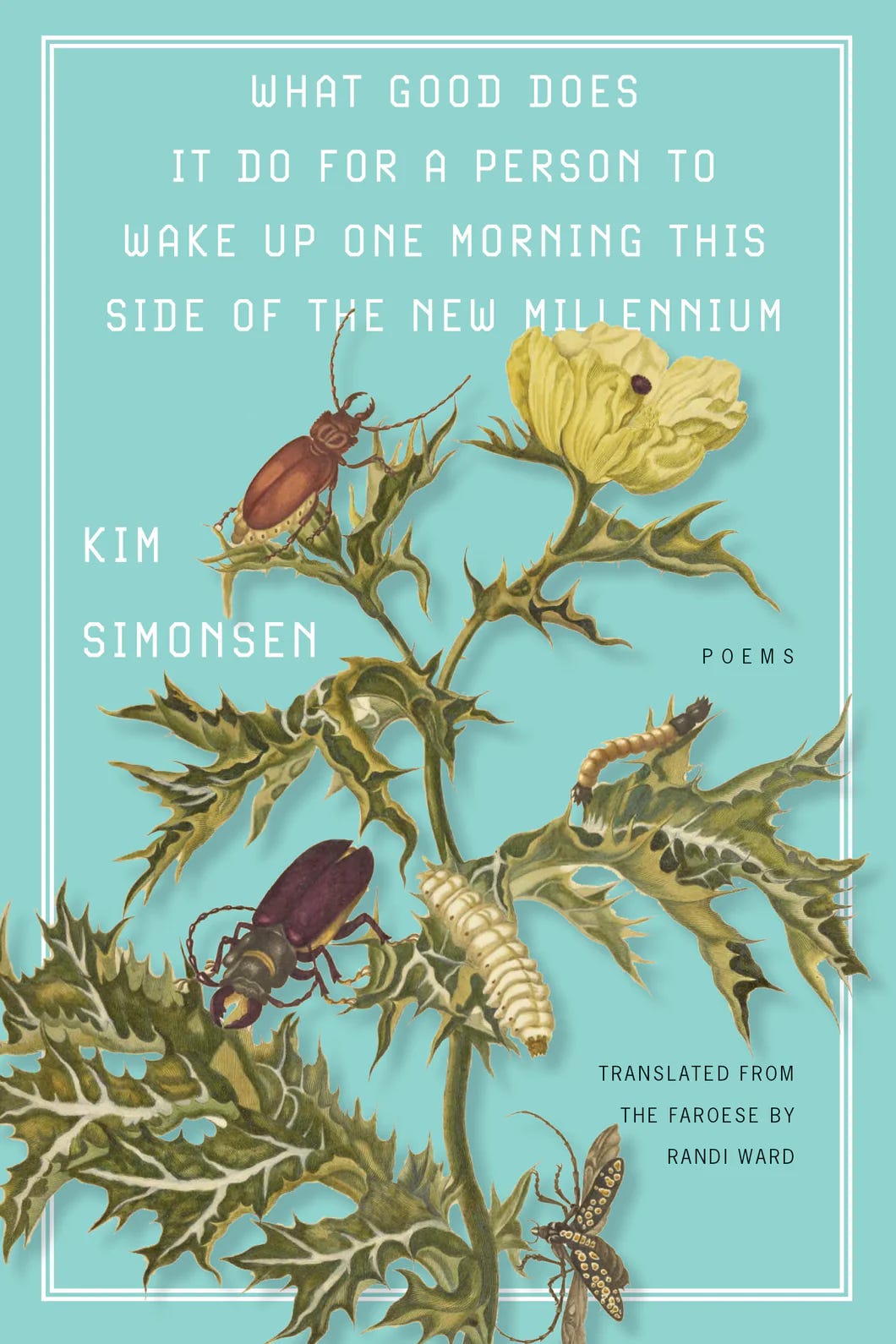
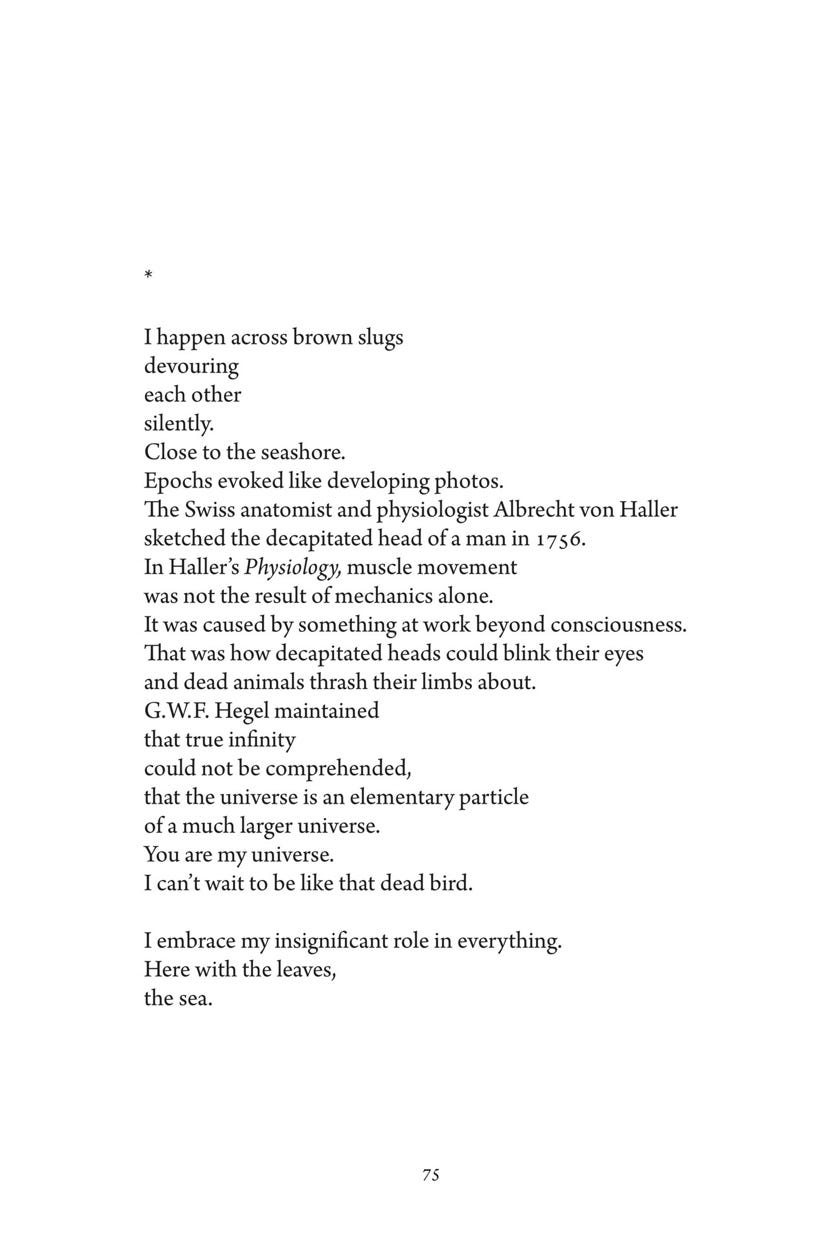
Sayani Sarkar, in a review published on Asymptote, refers to the book as a Deep Time Elegy. With poems predominantly set in the harsh, windy environment of the Faroe Islands, this is a book that examines our relationship with our natural surroundings, past, present and future. References to bacteria, viruses, decapitated heads, dead birds, elementary particles etc. are juxtaposed against yearnings for an absent loved one and, perhaps, the collection could be summed up with a question asked by the speaker: ‘Who can help me / find a place / in this world / now that you are / no longer here?’ One poem finishes with a bleak observation lifted from Werner Herzog’s vision of chaotic nature in Burden of Dreams ‘The birds here don’t sing, / they screech in pain’. Though it might sound like a tough read, I found these minimalist verses to be generously encompassing, provocative, vicious, tender and, at times, funny. My favourite poetry book of the year. This fragment will let you know if this one is for you:
New Arcana, Jessica Traynor (Bloodaxe, 2025)
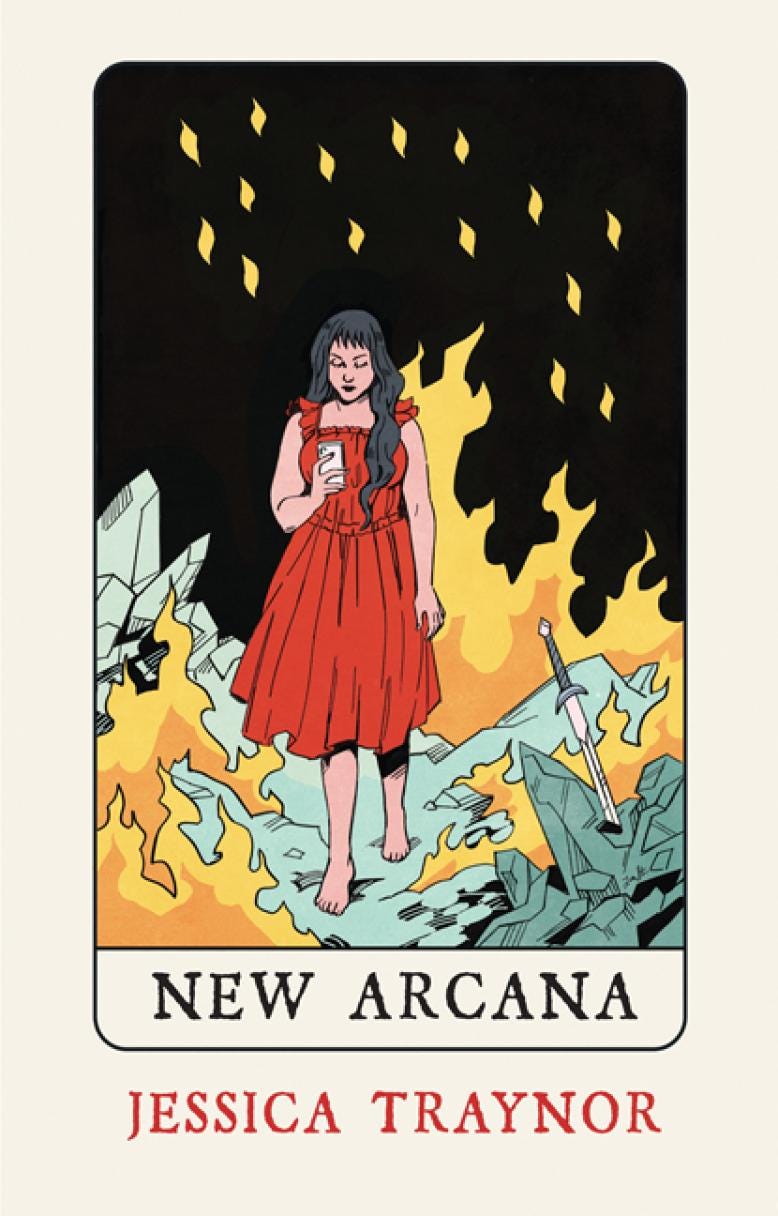
Tarot card readings and revisiting the films of Tim Burton allow the speaker/poet to explore friendship and grief from a multitude of angles: ‘The living girl asks the dead girl to come back / the dead girl ghosts her’
I won’t be able to put it any better than Elaine Feeney who wrote: ‘Jess Traynor's fourth collection New Arcana is a brilliant, luminous work that blends the mystical and the contemporary, interrogating power, gender, and transformation with precision and lyric grace.’ My favourite of Traynor’s books, high praise indeed.
Mojave Ghost, Forrest Gander (New Directions, 2024)
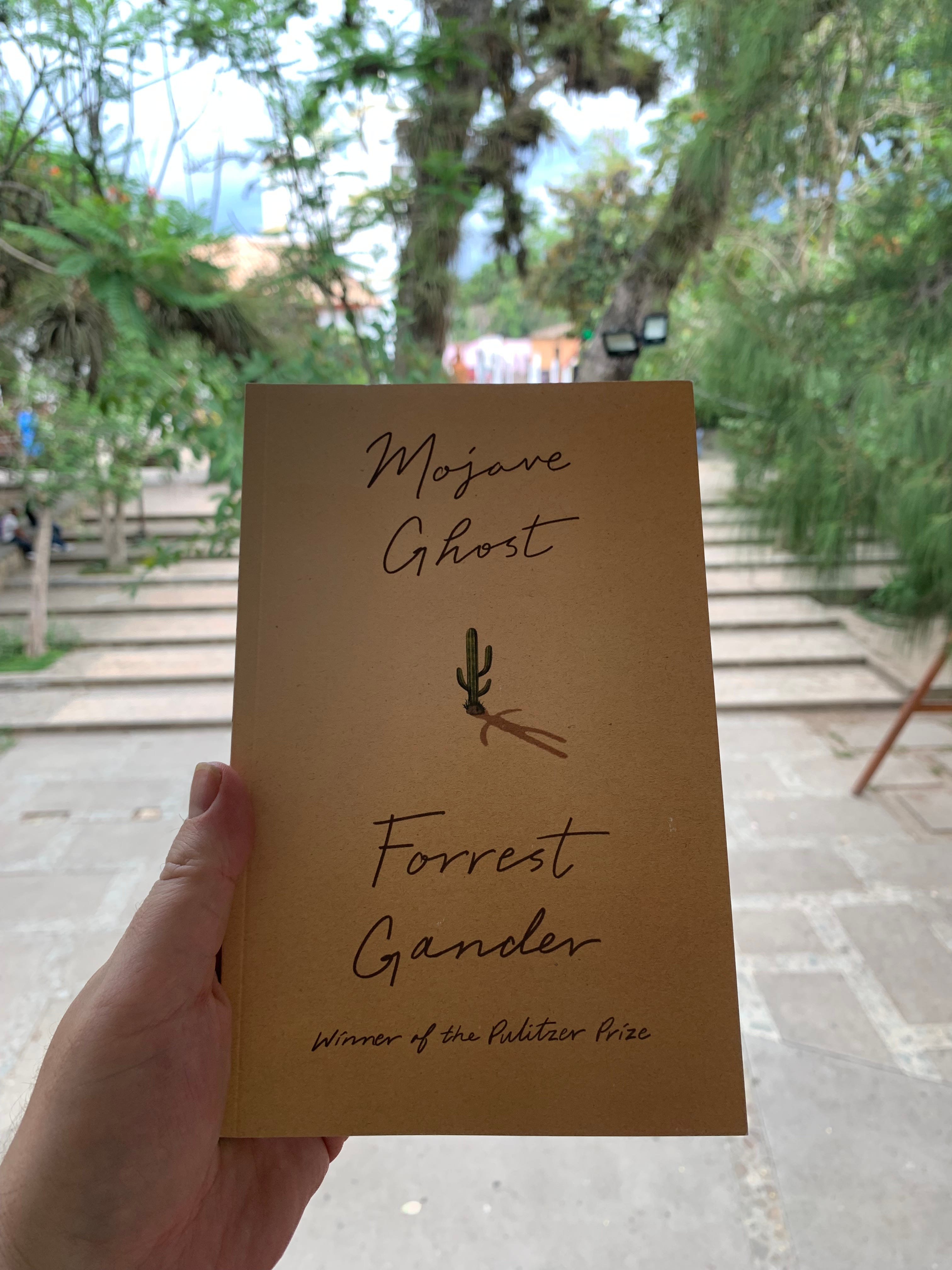
Described as a ‘novel-poem’ by Gander, I read this as a long poem, a psychogeological walking odyssey along the San Andreas Fault that is also an elegy for wife and mother. A beautiful exploration of interior and exterior spaces. I was delighted to meet Forrest at a festival in Honduras in May and tell him in person how much I loved this book. A fragment:
Technically it is stunned, not
dead. And though the retractable bolt
has obliterated the cow’s brain,
the nicotine Saturn of its still-
open eye seems to regard me.
What bird wove those sprigs of lavender, mint, yarrow,
and citronella into a nest below our rusted porch light?
Just before the rain begins to blow more rain against the rain.
Savage Acres, Keith Payne (Dedalus Press, 2025)
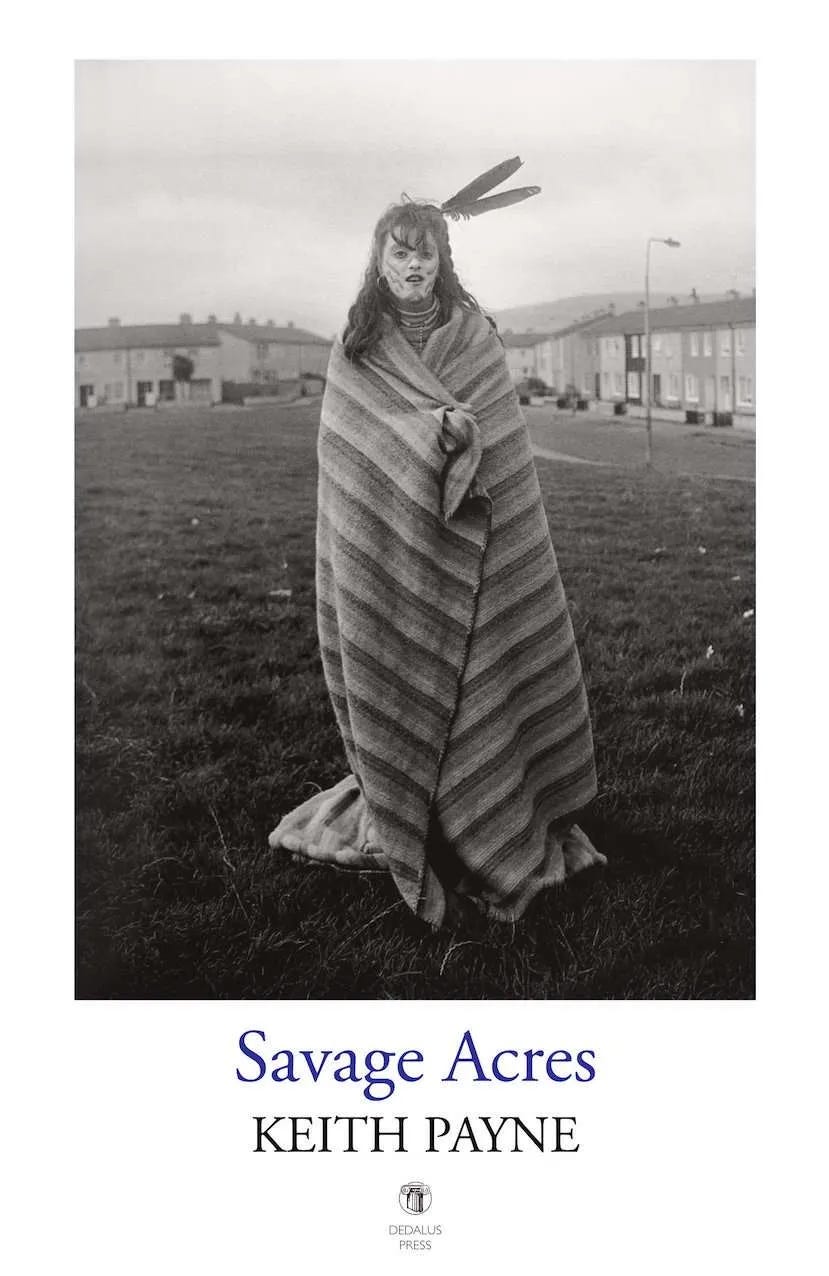
Do most poets write about the countryside or the city? It often feels that way. But what about the housing estates where most of us live and in which, at least in Ireland, most of us grew up? This is where Keith Payne explores in Savage Acres, everyday life, community in each page: ‘Tiny crystals expanding in the night / Fall and accumulate, smothering the estate’.
Wake of the Whale, Alice Kinsella & Daniel Wade, (Mayo Books Press, 2024)
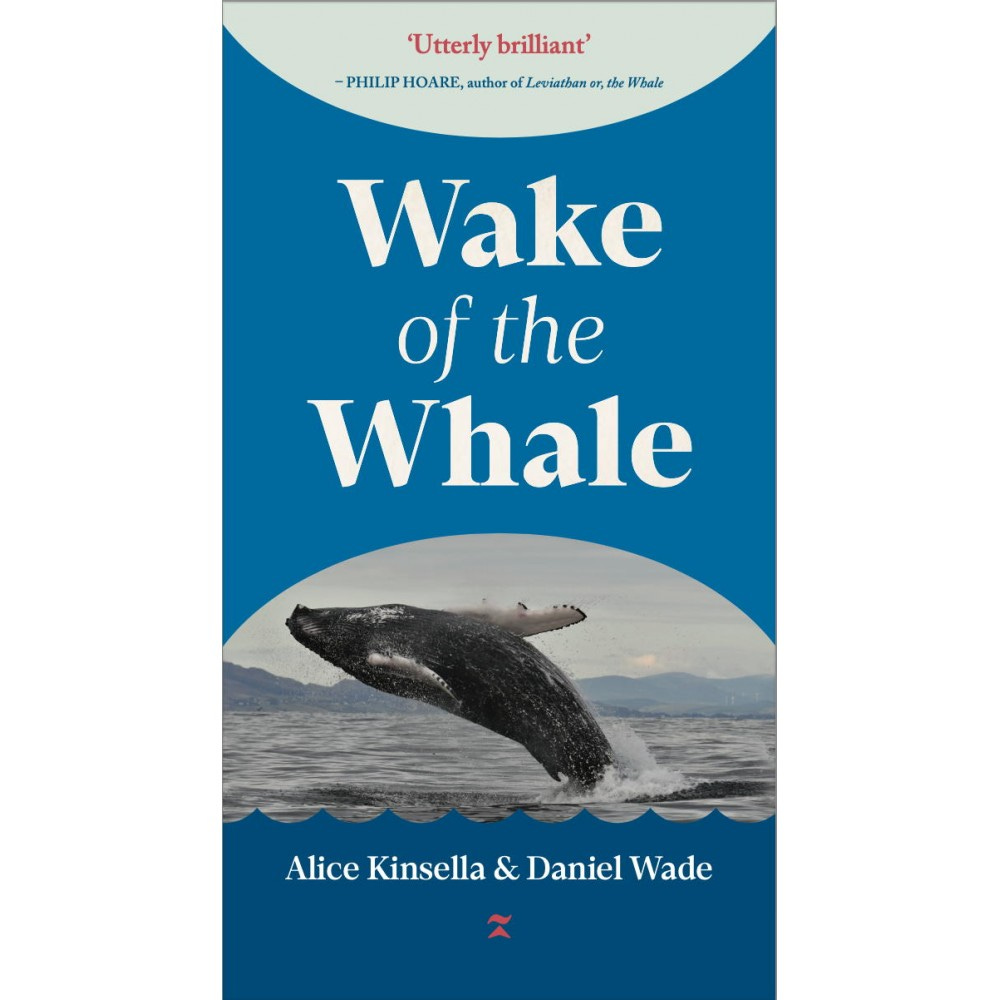
An exploration of whaling off the west coast of Ireland in prose, poetry, archival clippings. Wonderful, unique.
I just finished Southernmost Sonnets by Leo Boix and am currently reading After Party by Dean Browne and The Book of Jonah by Luke Kennard. If I’d started reading these earlier, they’d also be on this small list of recommendations.
I hope 2025 has been good to you and that 2026 will treat you kindly. Happy new year. As always, support me by buying my book, available here
No posts
Comments
Nothing yet. Say the first thing.
Sign in to join the conversation.