
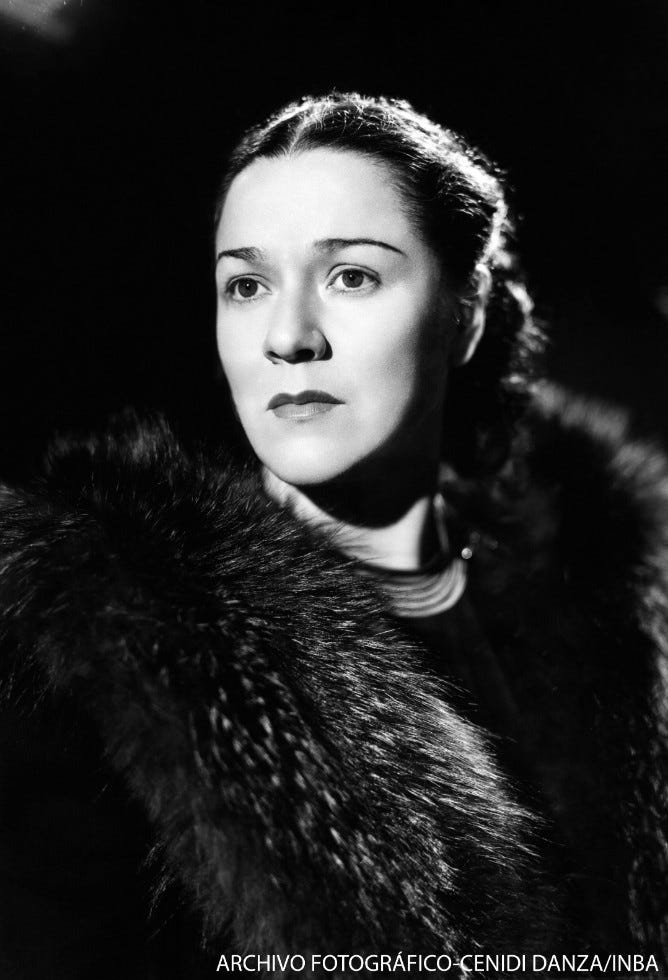
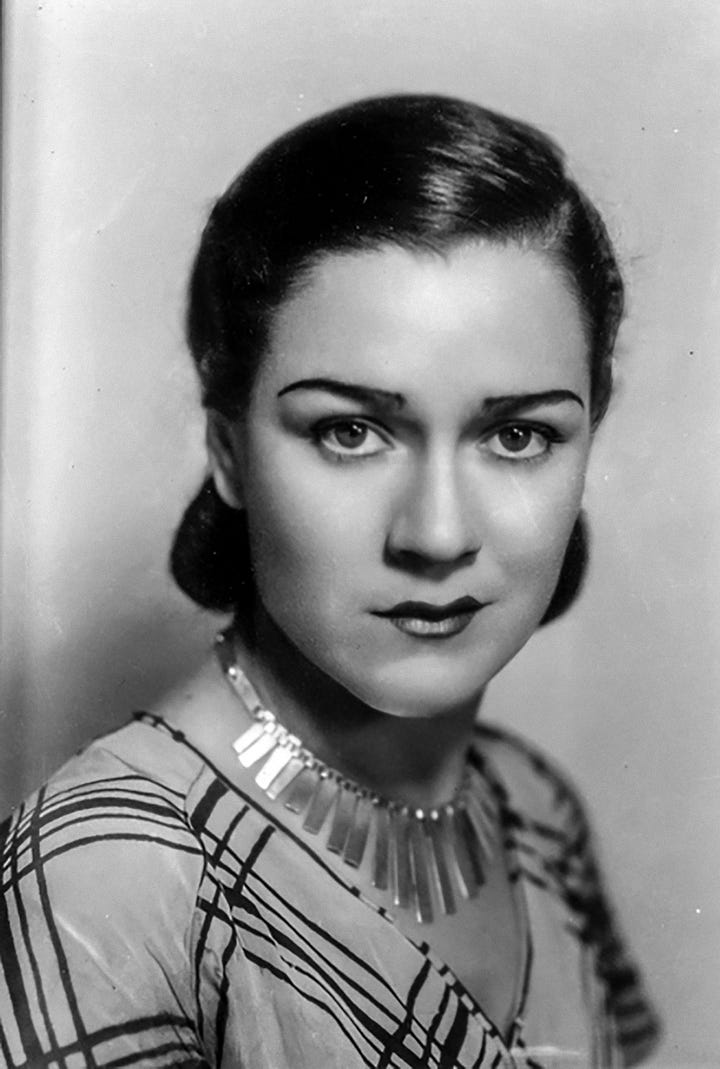
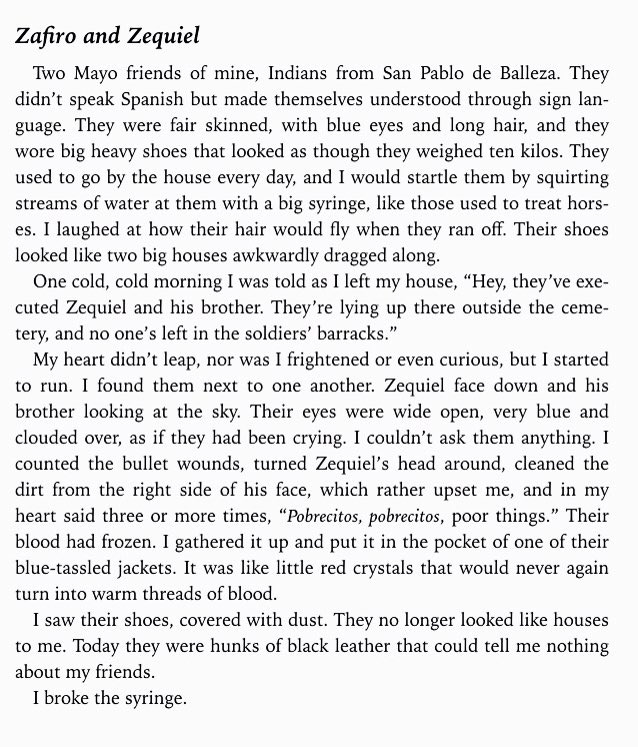
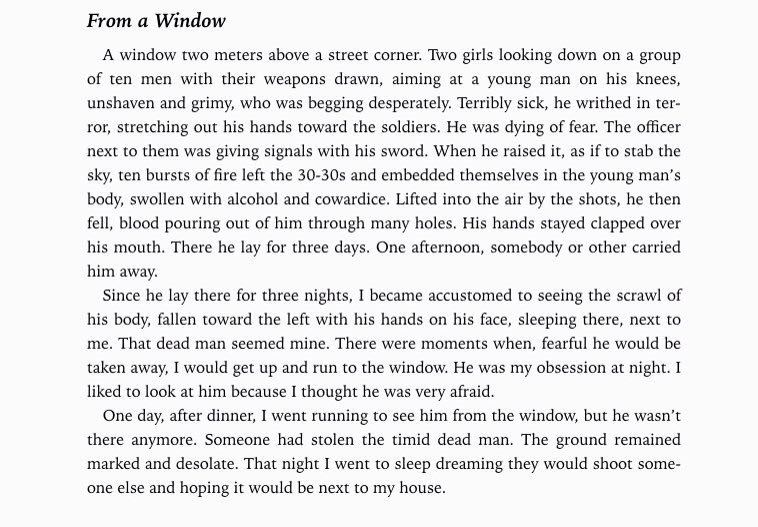
July 9th, 2026 marks 40 years since the death of one of my favourite writers, a writer you may not have heard of, Nelllie Campobello. Born in 1900 as María Francisca Moya Luna in Durango, Nellie Campobello is generally regarded as having provided us with the only literary first-hand female account of the Mexican Revolution: Cartucho (1931) and a rare and invaluable poetic memoir of the early years of the Revolution as experienced through the eyes of a child: Las manos de Mamá (1937). Without a doubt, Cartucho is her most well-known book. Instead of singing this legendary work’s praises, why don’t I just provide you with two of its short chapters, rarely read in English, below. Translation by Doris Meyer.
Not only was she a poet, memoirist and novelist but also (like her sister) a celebrated dancer. In fact, Nellie Campobello worked as director of the National School of Dance for almost fifty years.
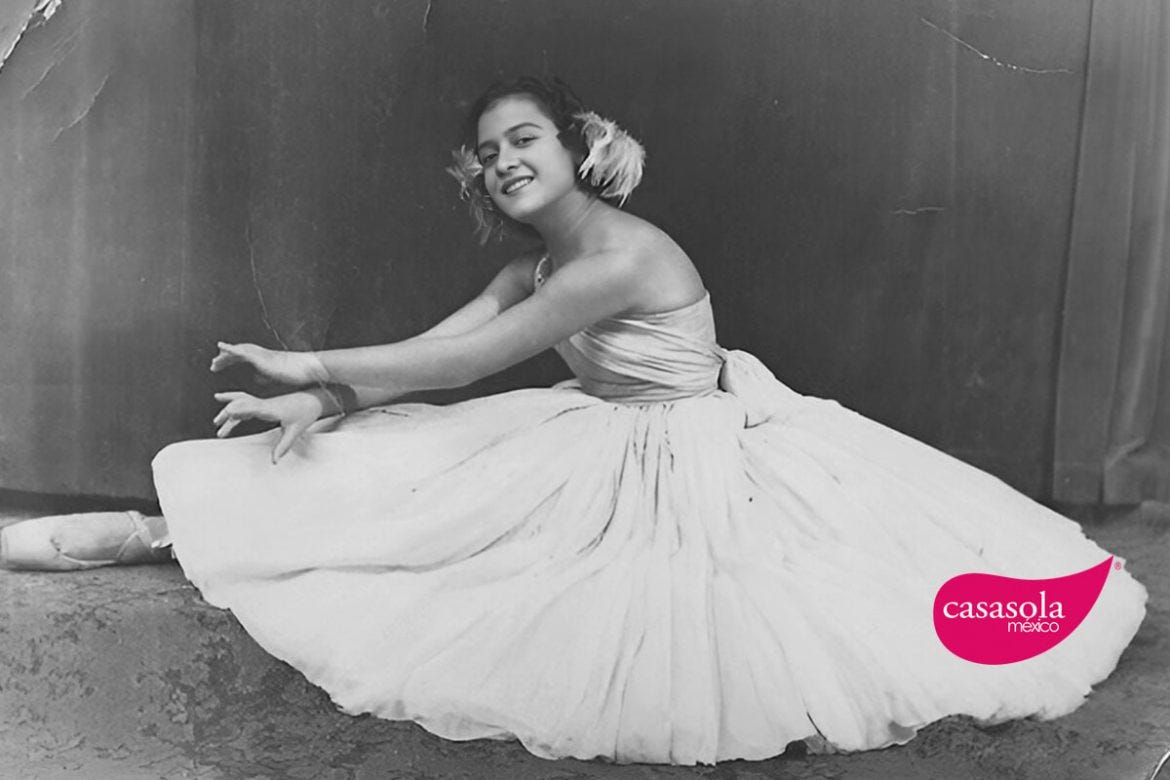
Though she had various romantic partners she never married and her only child died as an infant. For this reason, there was no heir to whom she could pass on her estate (which included artworks gifted to her by friends like José Clemente Orozco and Diego Rivera). These circumstances led to her tragic death. In 1985 she was kidnapped by her caregiver and his wife and, allegedly, forced to change her will for their benefit. Her paintings also disappeared from her Mexico City residence. During her 12-year disappearance, her caregiver claimed to have been in touch with her throughout the period as he had power of attorney over her. However, in 1998, the Mexico City-based Human Rights Commission ruled that she had died of heart failure on July, 9th, 1986. Her caregiver was aware of this as he signed the certificate as a witness. Eventually her remains were transported to her hometown, Villa Ocampo in Durango. One of the greatest writers of 20th century Mexican literature, she deserved so much more. Though she was robbed of a dignified death by a callous and opportunistic predator, we can keep her good name alive by reading and recommending her work to others. If you do not speak or read in Spanish, you can get a combined Cartucho and My Mother’s Hands from University of Texas Press.
Here is a short article I published on her lesser known work of prose, Las manos de Mamá (My Mother’s Hands) which I regard as a beautiful blend of memoir and poeticism.
As for me, I hope to have some news for you in the next few months…
Thank you for reading.
Nellie Campobello & the Lyric Memoir
In his Antología de la narrativa Mexicana del siglo XX Christopher Domínguez Michael writes the following about the Durango-born writer Nellie Campobello: ‘Cartucho (1931) and Las manos de Mamá (My Mother’s Hands) were her only novels, along with few short stories and her Apuntes sobre la vida militar de Francisco Villa (1940)’ [Notes on the Military Life of Francisco Villa]. In the same anthology he groups Campobello together with Heriberto Frías and Ramón Rubín as ‘minor writers of novels and short stories’. However, in addition to her work as a dancer, Campobello published two collections of poetry: Francisca Yo! Versos and Tres Poemas and her second ‘novel’, Las manos de Mamá, does not easily lend itself to genre distinction. While some may regard her as minor, I beg to disagree. Though Cartucho, with its astonishing litany of bullets and dead-men walking is, undoubtedly, the most well known of Campobello’s books, Las manos de Mamá is the text in which the fusion of poetry and memoir is most notable. We need only read one of the chapters to appreciate her singular style. All translations here are from Irene Matthews.
In ‘A Villa Man Like So Many Others’, the narrator (who flitters between a young girl and a nostalgic adult woman) remembers an encounter between her mother and a young soldier named Rafael Galán. The encounter happens one moonlight summer’s night:
*
One night a man came to see her; dressed in white, with a pale face and a small black mustache. It was summertime, the moon communed with fantasy, soliciting memories and submitting to her kisses. Such was her custom: bewitched and fascinated, she would sit for hours and hours looking at the moon.
*
The white moon, the solider’s clothes and his pale face: these images seem to combine to create a sense of freshness and innocence in the northern desert night. The young Galán briefly heads off in search of flowers for the narrator’s mother:
*
Rafael Galán, tuberoses, slivers of moonlight, seated in the gray doorway with a woman, tells her his whole life and commits to her all the beauties and delicate contours of his “self”, the self that was made for women and which he did not use to fire bullets.
*
However, in times of war moments like these are fleeting, the time has come to attack Santa Bárbara:
*
The moon, like the young lives of strong men, did not wane. It only shattered as other horsemen burst into that glorious street. Riding up to him they said, “Captain, it’s time to leave.”
*
Like almost all the men in Campobello’s pages, Galán must die:
*
Three hours later the first shot of an advance party hit Rafael in the forehead. He died instantly.
*
The detached, prosaic description of the soldier’s death jars with the poetic evocation of the natural world, a juxtaposition that defines the work of Campobello. The encounter/chapter ends in the following way:
*
Those were his last moments. He had taken his leave of what he loved best. But the white shape of the romantic officer remained there, in the gray doorway, where he took leave of his life.
Captain, you were a gentleman to my mother. Tuberoses and moonlit nights belong to you.
*
Emma Paola Aguirre Quezada defines Las manos de Mamá as a ‘Novela lírica’ while Juan Bautista Aguilar, in his prologue to Campobello’s collected works notes how ‘In her pages poetry, chronicle and short story all converge…’ Irene Matthews, one of Campobello’s translators to English, simply declares: ‘Las manos de Mamá is a poem…’ In my opinion, some examples of what is sometimes referred to as the lyric essay have the feel of an intellectual exercise that lacks an emotional punch, something one could not say about Campobello’s work. Her unique style of writing came not from the prevailing literary trends but from the simple need to set down to paper that which she needed to write, in her own way. I’ll call it a lyric memoir but what Campobello has shown us that once a text is vital and necessary, genre labels matter not.
Thanks for reading Let the Dead! This post is public so feel free to share it.
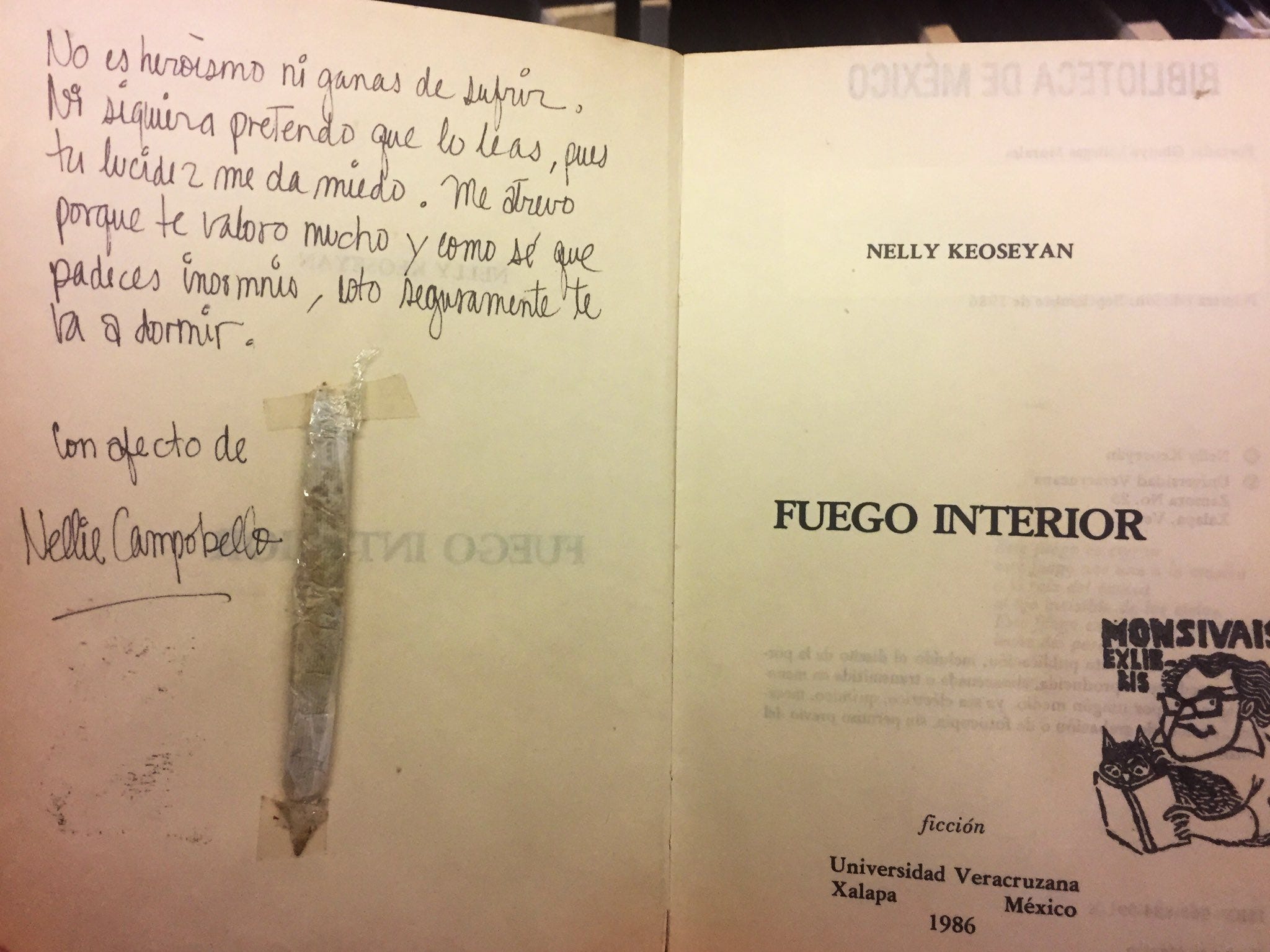
In 2019, I was given a tour of the library of celebrated Mexican writer Carlos Monsiváis. Taped to the inside of the book was a joint, provided to him by Nellie Campobello to help with his insomnia. Perhaps he should have used it. Photo below.
Thanks for reading Let the Dead! This post is public so feel free to share it.
No posts
Comments
Nothing yet. Say the first thing.
Sign in to join the conversation.