
As some of you will already know, the only Irishman at the World Cup plays for Cape Verde. I’ve been lucky enough to see him play many times and hope to very soon watch him overturn a 2-0 deficit in the Champion’s League qualifier against Maltese side Floriana at Tallaght Stadium. The story has now been reported widely: Roberto (Pico) Lopes is from Crumlin and plays for Shamrock Rovers. His father is from Cape Verde and the manager tried to recruit him via LinkedIn. Not understanding Portuguese and also believing it to be a hoax, it took a while for Lopes to finally commit to the Blue Sharks but he has now represented the island nation at two AFCONs and one World Cup. After their heroic performance at the World Cup articles about the tiny Atlantic country have been popping up on my social media. League of Ireland nerds like myself knew all about him but it feels like the rest of the world is only realising that Cape Verde exists. Among these posts I saw one or two that focused on Capeverdian literature and was reminded that I once reviewed the selected poems of Corsino Fortes for the now dormant website The Bogman’s Cannon. I thought I’d lost the short article but finally found it buried in a twelve-year old email. Here it is, unedited. The Selected Poems of Corsino Fortes is available here from Archipelago Books.
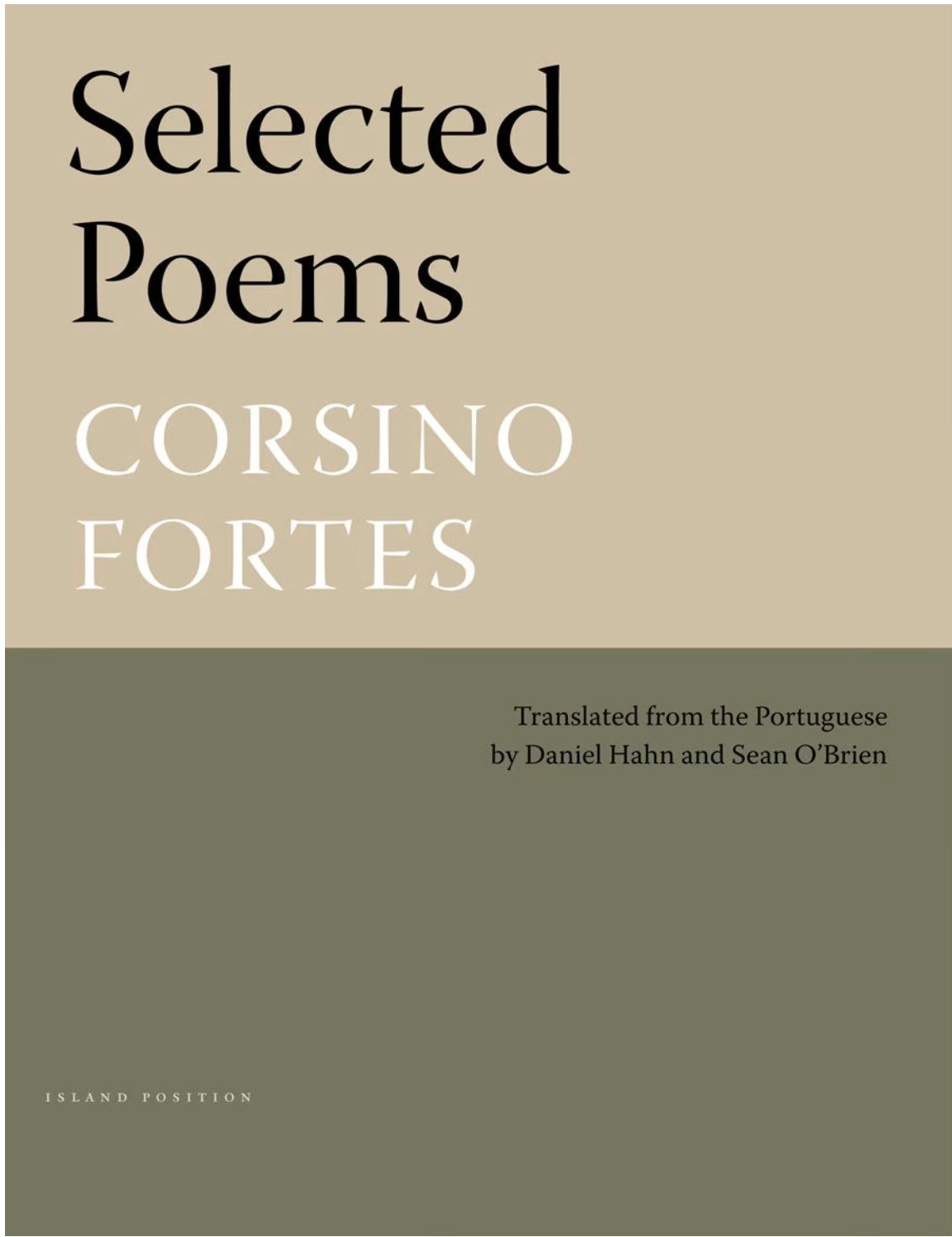
SAUDADE & THE SELECTED POEMS OF CORSINO FORTES
That word, saudade—there it is again and it stops me dead. The italics in the English translation highlight its untranslatability in Fortes’s “Message to Umbertona”:
Text within this block will maintain its original spacing when published
Go! Tell Sao VicenteText within this block will maintain its original spacing when published
That my body’s shadow is a crossText within this block will maintain its original spacing when published
Far from the sun of my homeText within this block will maintain its original spacing when published
running to AfricaText within this block will maintain its original spacing when published
running to EuropeText within this block will maintain its original spacing when published
running to AmericaText within this block will maintain its original spacing when published
running across the mapText within this block will maintain its original spacing when published
running across the globeText within this block will maintain its original spacing when published
Go! Tell Porto-GrandeText within this block will maintain its original spacing when published
Not to call me saudade
Text within this block will maintain its original spacing when published
Because my name is bloodText within this block will maintain its original spacing when published
And the blood of this saudade is
Text within this block will maintain its original spacing when published
Like the sun of the far landText within this block will maintain its original spacing when published
Monte VerdeText within this block will maintain its original spacing when published
the hope of the morningSaudade. Ulysses Syndrome—a longing, a nostalgia, the pain of the immigrant far from home. Valeria Luiselli, in her fascinating book of essays Papeles Falsos, tackles saudade and, (borrowing, perhaps, from the narrator of the second chapter of Milan Kundera’s Ignorance) revels in the untranslatable pain of the word asserting that ‘Saudade is the presence of an absence: the pang of a phantom limb; a fissure in Iztapalapa: the lakes and rivers of Mexico City; a hole in the garden’. The PR material included with The Selected Poems of Corsino Fortes inform us of how:
Fortes was born on the island of Sao Vicente, studied in Portugal, and spent much of his life working abroad as a teacher, lawyer, judge, and diplomat in Angola and Lisbon. The story of his home country is at the heart of his poetry; many of his poems are written from the perspective of an exile, and themes of redemptive return, permeate his work.
Writing mainly in exile and mainly about his homeland, the archipelago nation of Cape Verde, writing in Portuguese and Creole, it is unsurprising that the poems in this collection remain steeped in the waters of saudade. Given my own obsession with island-focused poetry, it seems natural that I first turned my attention to the small poem ‘Island’. In Samoan Albert Wendt’s poem of the same name, he very briefly charts the volcanic birth of a homeland—messy and sublime, painful and exuberant—a Genesis of salt and lava. Fortes’s poem, less violent, more subtle, points to the curvature of an island tabula rasa:
Text within this block will maintain its original spacing when published
Sun & seed: root and lightning-strokeText within this block will maintain its original spacing when published
Drum of soundText within this block will maintain its original spacing when published
That flourishesText within this block will maintain its original spacing when published
On the bald head of God.A bald head in the ocean, a large sea-egg upon which Fortes constructs a vibrant ecosystem of words and diphthongs. In ‘Barefoot on the Bread of Morning’ the speaker notes how the naked feet chart the island in the mornings, literally delineating the volcanic isle, placing it to the centre of Fortes’s poetic map:
Text within this block will maintain its original spacing when published
Since the morning the feetText within this block will maintain its original spacing when published
Have gone naked round the edges of this island.In ‘When Morning Breaks’ the speaker prophesises how the sea will inevitably come looking for him one day, ready to consume him:
Text within this block will maintain its original spacing when published
And the sea will comeText within this block will maintain its original spacing when published
[...]Text within this block will maintain its original spacing when published
Will come to drink in my colonised tongueText within this block will maintain its original spacing when published
All the history of my ultramarine blood‘My ultramine blood’—the striking image of arterial saltwater resonates. The speaker’s island flows through his veins, both accompanying him where he goes and willing him to drift back to Sao Vicente upon its melancholy humours. In ‘Nightmare in a Foreign Land’ the speaker’s toes, though soaked and freezing in the Lisboan winter become the archipelago of ten volcanic rocks of Cape Verde:
Text within this block will maintain its original spacing when published
In the mudText within this block will maintain its original spacing when published
On the ground of LisbonText within this block will maintain its original spacing when published
My feet this winterText within this block will maintain its original spacing when published
Have five drowned toesText within this block will maintain its original spacing when published
[...]Text within this block will maintain its original spacing when published
On the groundText within this block will maintain its original spacing when published
In the Lisbon nightText within this block will maintain its original spacing when published
The Archipelago of my feetText within this block will maintain its original spacing when published
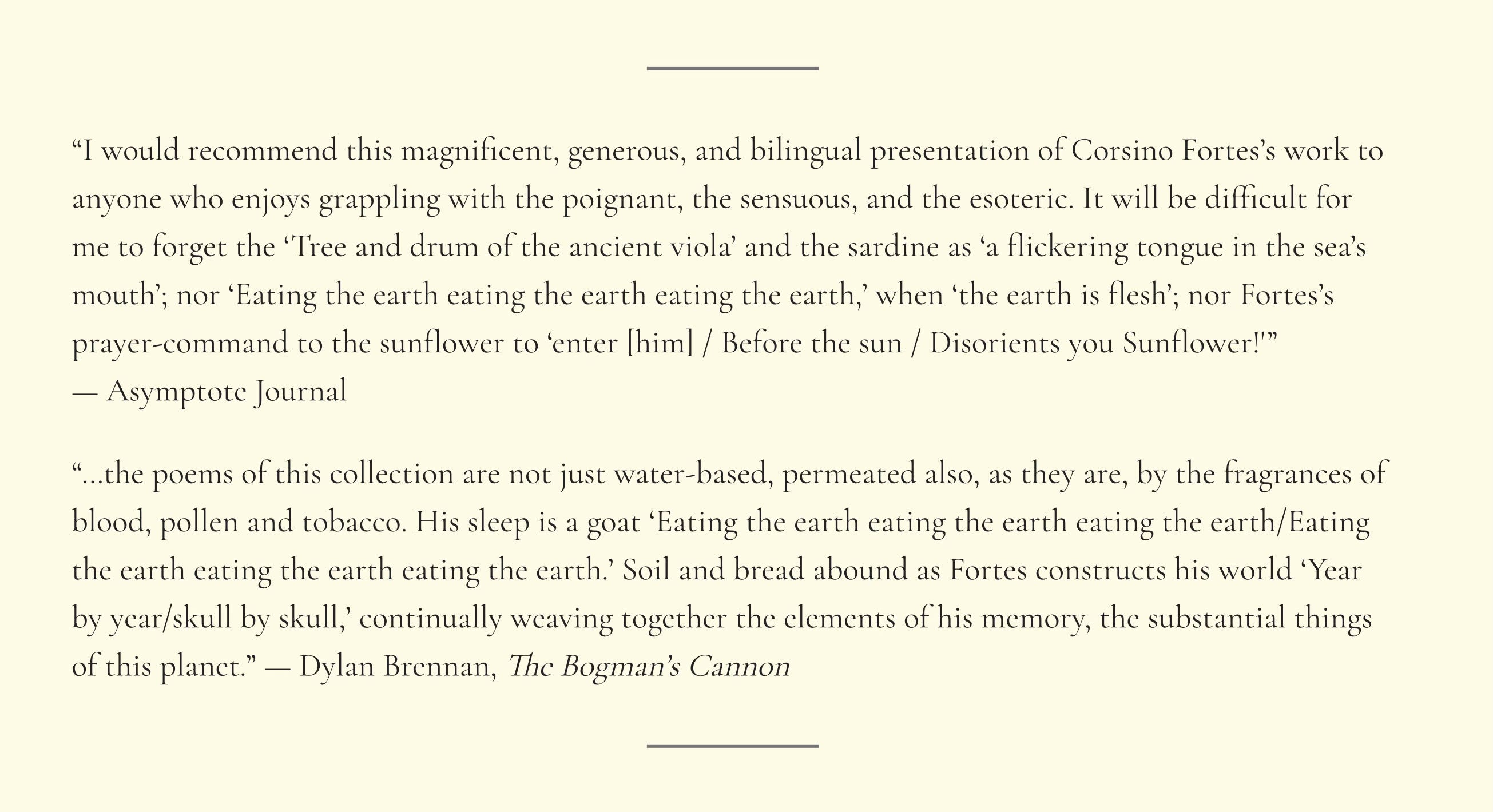
Has ten surprised toesBut the poems of this collection are not just water-based, permeated also, as they are, by the fragrances of blood, pollen and tobacco. His sleep is a goat ‘Eating the earth eating the earth eating the earth/Eating the earth eating the earth eating the earth’. Soil and bread abound as Fortes constructs his world ‘Year by year/skull by skull’, continually weaving together the elements of his memory, the substantial things of this planet.
I knew little about Corsino Fortes before reading this book and I knew not much about Cape Verde. Yet reading the poems I felt connected to his islands. I’ve travelled to similar worlds through the poetry of other exiled islanders, Walcott and the aforementioned Wendt the prime examples. Yet Fortes’s waterworld is different, it’s his and I’m thankful to have been permitted entry. Reminded of Basho’s cuckoo (Even in Kyoto/hearing the cuckoo’s cry/I long for Kyoto), while reading I began to feel something of his own nostalgia for a world in which I was immersed. I recently read that anyone wanting to know what poetry is should read a poem. Anyone wanting to know the meaning of saudade should read Corsino Fortes.
Thanks for reading Let the Dead! This post is public so feel free to share it.
No posts
Comments
Nothing yet. Say the first thing.
Sign in to join the conversation.