
Once a month, we do our best to catch you up on all the latest research about tweens and teens. The title “News Dump” isn’t exactly elegant, but it has stuck. Hopefully it reads like a light lift, giving you the information you need without weighing you down. In today’s edition, we cover ADHD medications, AI in schools, vaccines, and cancer prevention. It’s more fun than it sounds! And it’s only a 3-minute read.
Want more Less Awkward content? All of our newsletters, videos, podcasts, and courses live on our hub.
There’s a new ADHD drug in town. It’s called Centanafadine (brand name is Simtriyo), and it’s approved for kids 6 and older. Right now, it comes in an extended release capsule that can be opened and sprinkled onto food. That means no chewing required (hot tip: it goes down especially easily when mixed into applesauce, yogurt, or ice cream). Centanafadine works by blocking reuptake of norepinephrine and dopamine, allowing these neurochemicals to hang around longer than usual, boosting executive function and attention. It also blocks serotonin reuptake. More serotonin generally means better emotional regulation. Here’s the catch: the medicine isn’t available yet –– that’s likely to happen later this fall –– and it will carry the same black box warning that’s on other ADHD drugs plus warnings about potential abuse, misuse, and addiction. Anticipate lots of headlines when this drug hits store shelves because ADHD affects 7M kids and 15.5M adults in the US.
Good news on the mental health front! Last year, all 17 members of the team behind the National Survey on Drug Use and Health were laid off (decidedly not the good news). But in late July, a report was released analyzing data collected between 2021-2025 and here’s what it showed:
fewer teens reported using tobacco/nicotine, alcohol, marijuana, or illicit drugs
declines in substance use disorders, major depressive episodes, and suicidal thoughts, plans, or attempts
Huzzah! Now for the Buts. In terms of substance use, more than half of all people over 12 used one or more substance in the month before being surveyed (note: this wasn’t just kids –– the survey questioned teens and lots of adults). And on the mental health front, remember that when this survey launched in 2021, it was still peak COVID, so some of the improvements in mental health might simply reflect emergence from the pandemic.
Kids are solving AI issues at schools. This summer, nearly 100 high school juniors and seniors convened in Boston to replicate the US senate and create faux legislation setting a national policy about AI use in schools. We wish it was for real. The participants were hand-picked by their school leaders and funded by ed- and tech-groups. They created, debated, and iterated a “bill” they named the Students First Act. It required:
States provide AI literacy as soon as students get access to classroom devices
AI banned on all graded tests
Teachers can require oral defense of any project from a student suspected of using AI inappropriately… but teachers also need to have a clear AI policy that gets updated every semester
And when a chatbot ID’s a student in need of emotional support, school officials get alerted
They nailed it! Now can we please get this solution implemented?!
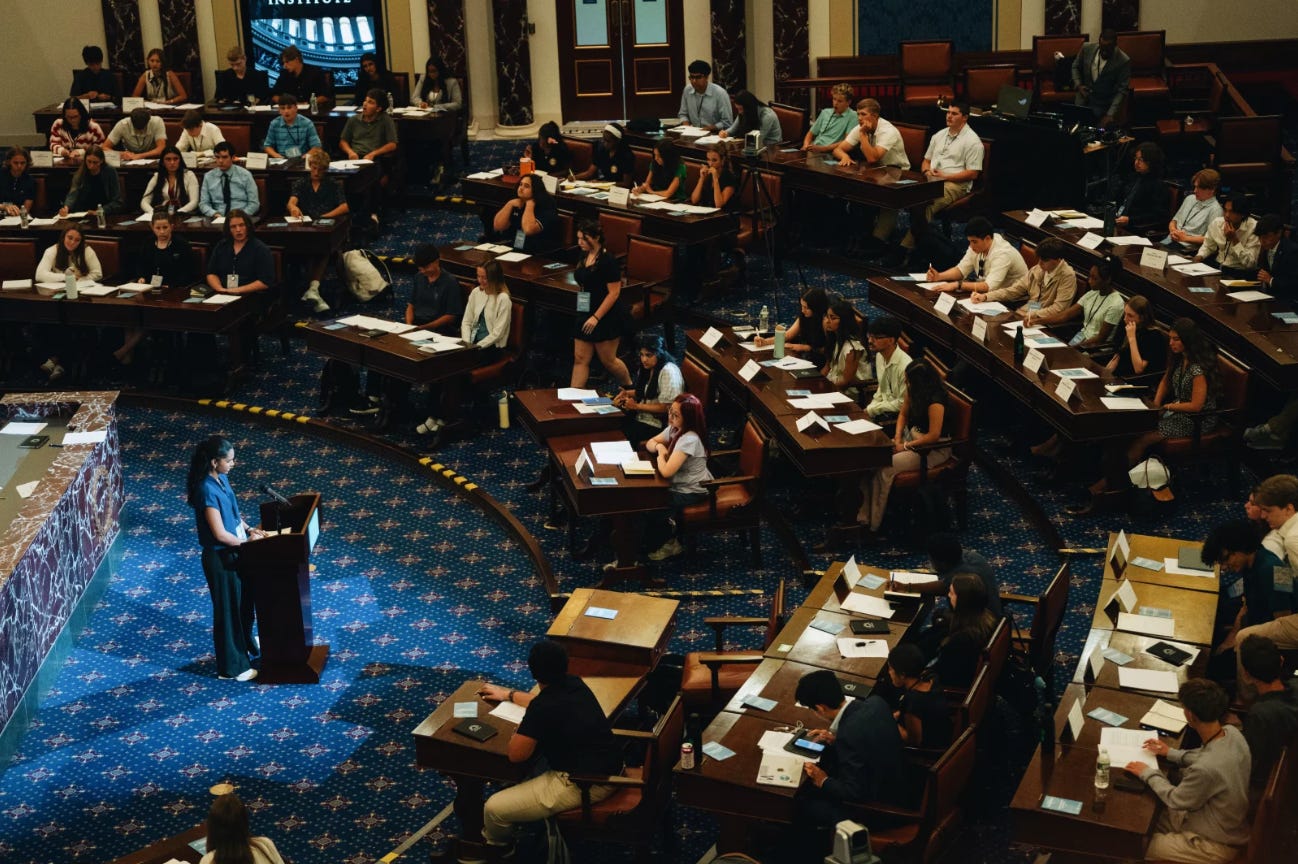
Photo courtesy of NPR
Is ovarian cancer preventable? Probably yes, because it doesn’t start in the ovaries. The first time we heard about this was 3-ish years ago, when we were on book tour. We were in Michigan, speaking at a school, and grabbed dinner with a friend who had lost her mom to ovarian cancer and whose doctor had just recommended a salpingectomy. For those who don’t know, salpingectomy = removal of fallopian tubes. The connection dates back to the year 2000 when a Dutch PhD student studying women who had their ovaries and fallopian tubes removed prophylactically because they carried the BRCA mutation. He noticed that several had precancerous cells in their tubes, but not in their ovaries. A quarter of a century later, there are several published studies supporting the removal of tubes to prevent this particular cancer, but it’s still not standard practice. Now, this is tricky ground because you can’t, for instance, remove the tubes preventively without also removing the opportunity to get pregnant without assisted reproductive techniques. But we think women deserve to have these conversations with their doctors –– even young women if they have familial risk –– because ovarian cancer is one of the deadliest cancers out there, and this approach may change that dramatically.
MMR still doesn’t cause autism. Sixteen years ago, I (Cara) wrote a book called Dangerous or Safe?. It included a loooong chapter on vaccines, much of it dedicated to the myth that MMR vaccine caused autism. The data I found back then is no different than the data today: MMR still doesn’t cause autism. If you’re looking for more proof, check out this study of 2.5 million US kids. In a moment when measles is very much back, it matters that we have good information about how to avoid getting infected. It’s also very fair –– and very true–– that parents worry about everything they put into and onto their kids. This is just a reminder that they don’t need to worry about this vaccine causing autism, because it doesn’t.

No posts
Comments
Nothing yet. Say the first thing.
Sign in to join the conversation.