
Forty days ago, China demonstrated a reusable-rocket architecture unlike SpaceX’s. Today, a private Chinese company has recovered an orbital-class booster using a second architecture much closer to Falcon 9. China now has two recovery systems, developed by two very different institutions. The harder race begins here: not bringing rockets back, but turning recovery into routine, rapid and economical reuse.
This essay is part of Frontier Hard Tech Series.

Zhang Ruiheng (张瑞恒), Roaming Outer Space in an Airship (坐飞船游太空), 1962.
In 1962, China was imagining ordinary people travelling through space aboard spacecraft; by 2026, it was already debating how quickly the same launch vehicle could fly again.
On July 10, I wrote The Second Reusable Rocket Revolution after China’s Long March 10B successfully recovered its first stage through offshore net capture. My argument was that the significance went beyond China finally recovering an orbital-class booster. Long March 10B demonstrated a genuinely different engineering architecture from Falcon 9: instead of carrying landing legs throughout the mission, the rocket transferred the final capture mechanism to reusable offshore infrastructure.
Forty days later, more progress. On August 19, LandSpace’s Zhuque-3 Y2 successfully placed Honghu-03 into orbit and then returned its first stage to a landing site in Minqin, Gansu. The booster completed re-entry, aerodynamic control and propulsive deceleration before deploying its landing legs and touching down vertically. LandSpace thereby became the first Chinese private rocket company to recover the first stage of an orbital-class launch vehicle.
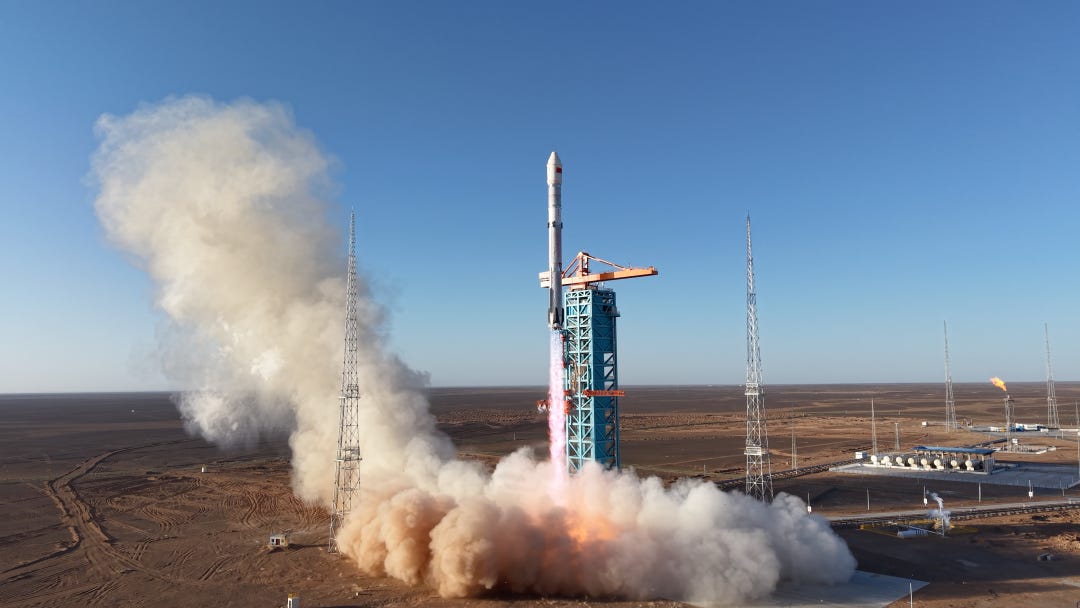
LandSpace is already one of the most important companies in China’s commercial-space industry. It remains the country’s only private launch company to have reached orbit using a liquid-fuelled engine developed in-house. It is also on track to become China’s first publicly listed private rocket company. Its Shanghai STAR Market IPO seeks to raise RMB7.5bn, with new shares representing just over 10% of the post-IPO share count. A simple calculation—RMB7.5bn divided by roughly 10%—implies a post-issue valuation of about RMB75bn ($10bn). The scale of the offering is itself a sign of how far Chinese commercial launch has moved from experimental engineering towards a capital-intensive industry.
What matters is that the two systems are not variants of the same design. Long March 10B is state-developed, offshore and net-captured; Zhuque-3 is privately developed, land-based and lands propulsively on its own legs. In forty days, China has moved from a single successful recovery architecture to two, developed by institutions with very different incentives, capital constraints and engineering cultures.
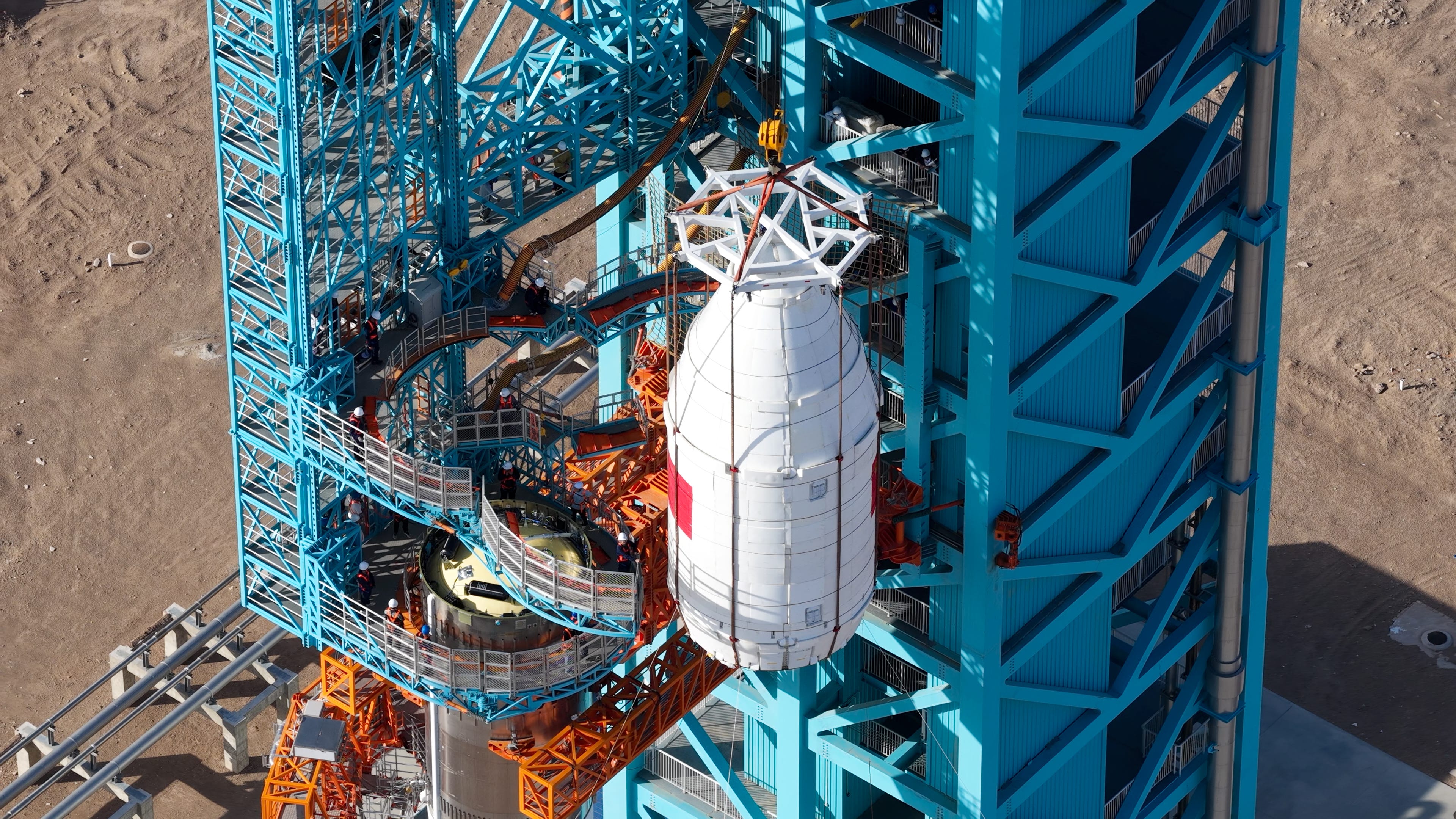
After August 19, however, architecture is no longer the hardest question. The harder test is reuse. A rocket that can land is not necessarily an economically reusable rocket. Its engines, tanks, avionics, structures and thermal protection must survive well enough that inspection and refurbishment cost less—and take less time—than manufacturing a new vehicle. Zhuque-3 deputy chief designer Dong Kai puts the criterion unusually clearly:
LandSpace wants the refurbishment cycle to become shorter than the time needed to manufacture a new Zhuque-3. If preparing a recovered booster takes four or five months, building another rocket would simply be faster.
This still leaves a large gap with SpaceX. Falcon 9’s advantage today is not the ability to land a booster, but the operational system built around repeated recovery and reuse: inspection, refurbishment, launch cadence and fleet management.
Dong himself ranks Zhuque-3 only at “Level 7”: actual-flight validation. Level 8 begins when the recovered rocket flies again; Level 9 is reliable, large-scale operation.
The significance of Zhuque-3 therefore extends beyond the landing itself. Behind it is a distinctly commercial engineering philosophy: stainless-steel structures, methane propulsion, extensive in-house development, a willingness to draw heavily on China’s civilian industrial supply chain, and a focus on keeping both manufacturing and organisational complexity down. Combined with Long March 10B, it suggests that China’s reusable-launch industry is beginning to develop through multiple institutional and engineering routes rather than a single national programme.
China’s reusable-rocket race has entered Phase Two. Bringing an orbital booster home has now been demonstrated. What matters next is turnaround: how quickly it can be inspected, repaired and returned to the pad, and whether repeated reuse can eventually undercut the economics of building a new rocket.
The next flight of this recovered Zhuque-3 booster may matter more than today’s landing.
For paid subscribers: below is my full English translation of LatePost’s in-depth interview with Zhuque-3 deputy chief designer Dong Kai. It offers a rare inside look at how LandSpace thinks about reusable-rocketry economics, engineering iteration, stainless-steel manufacturing, supply chains and the relationship between China’s state aerospace system and private commercial space.
Comments
Nothing yet. Say the first thing.
Sign in to join the conversation.