
Dr. Leo Gilling
One of the most captivating experiences for me is simply watching someone sit at a piano and play. It gets even better when the playing is accompanied by a smile—the musician swaying with the music, hands moving across the keyboard, feet working the pedals, seemingly lost in the sound being created.
I’m in heaven.
I could sit there all night watching and listening, secretly wishing that at some point the pianist would look over and say, “Come, sing this one with me.”
That is actually something I want to learn to do when I get old: sit at a piano, play and sing along. No stage necessary. No audience required. Just me, the piano and whatever song I feel like singing.
Maybe that fascination is also why I have increasingly found myself looking beyond the person holding the microphone.
When a singer walks onto a stage, our eyes naturally follow the vocalist. The voice carries the words. The face appears on the poster. The name appears on the record. When the performance is over, that is usually the person we remember.
But watch the musicians.
Before the singer delivers a word, someone establishes the tempo. A drummer lays down the pulse. A bassist finds the foundation. A guitarist places a chord precisely where it belongs. A keyboardist adds harmony and texture. Horn players wait for the exact moment to enter. Percussion fills spaces most of us feel without consciously recognizing.
Each person is doing something different, yet the audience hears one sound.
That is the magic.
The musicians must listen to one another—knowing when to enter, when to pull back, when to accent, when to change and, perhaps most importantly, when not to play at all. Then the singer enters that architecture.
When everything comes together properly, we do not hear several musicians and a singer competing with one another.
We hear a song.
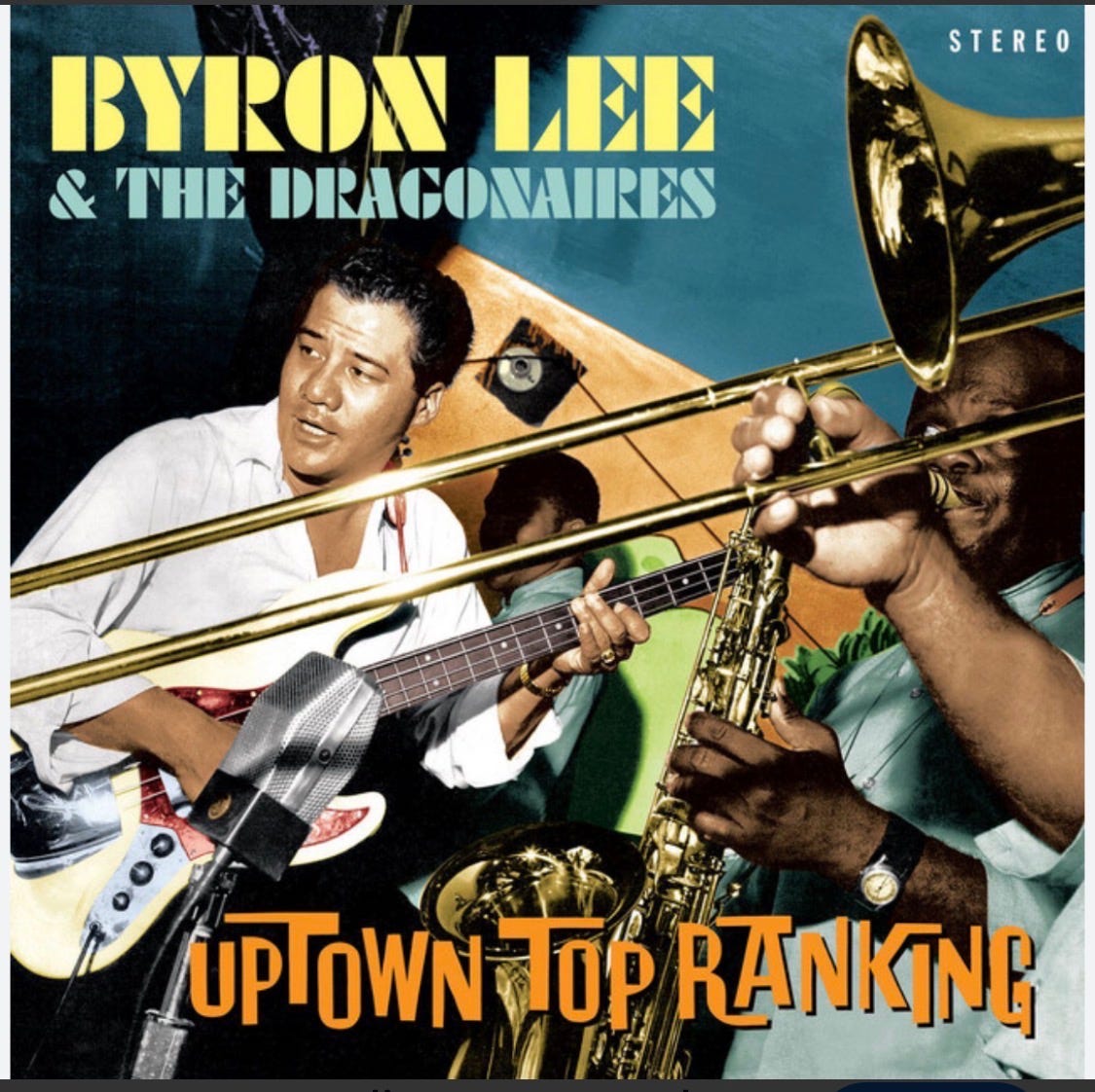
For decades, however, we have attached those songs primarily to the voices that sang them. We know the singers. We celebrate the entertainers. We remember the people standing at the front of the stage.
But Jamaica did not create ska, rocksteady, reggae, roots and culture, lovers rock, dub and dancehall with voices alone.
Behind those voices were drummers, bassists, guitarists, pianists, organists, horn players, percussionists, composers, lyricists, arrangers, producers and recording engineers. Some became famous. Many did not. Some helped create recordings that have travelled around the world for more than half a century while their own names remained largely unknown outside musical circles.
So I want to take the music apart—not to diminish the singer, but to understand the full act of creation.
We know who sang the song.
But who made it sound like that?
The People Who Constructed the Sound
Jamaican music was built through relationships among instruments, people and technology.
Don Drummond had a trombone. Lloyd Knibb had drums. Ernest Ranglin had a guitar. Jackie Mittoo had keyboards. Aston “Family Man” Barrett had a bass. Carlton Barrett had drums. Sly Dunbar and Robbie Shakespeare had rhythm. King Tubby had a mixing console.
Each helped answer the same question:
What should Jamaica sound like?
The musicians who formed the Skatalites helped create ska’s distinctive rhythmic and melodic identity. Guitar and piano emphasized the offbeat. Drums supplied propulsion. Bass moved beneath the music. Horns carried melodies, answered one another and improvised with a sophistication influenced by jazz but transformed in Jamaica.
The instrumental recordings of that era offer especially clear evidence. On records such as “Eastern Standard Time,” “Man in the Street,” “Occupation” and “Guns of Navarone,” there is no famous vocalist at the centre. The instruments are the voices. Melody moves between the horns while bass and drums create the ground beneath them.
These musicians listened widely. They heard American rhythm and blues, jazz, country music, mento and other Caribbean traditions, then converted those influences into something unmistakably Jamaican.
Jamaica listened to the world.
Then Jamaica answered in its own language.
When ska slowed into rocksteady, the change created more room for the bass. In reggae, bass lines became melodic statements rather than mere background support. Drums, guitar, keyboards and percussion occupied carefully defined spaces. Silence became part of the rhythm. The power of the music came not only from what the musicians played but also from what they withheld.
Listen beneath Bob Marley and the Wailers. Family Man Barrett’s bass and Carlton Barrett’s drums formed part of the architecture carrying some of reggae’s most celebrated recordings. Remove those parts and ask a simple question:
Would the song still sound like the song we know?
That question applies to hundreds of Jamaican recordings. Who created the bass line? Who established the drum pattern? Who arranged the horns? Who placed the guitar or organ phrase that everyone recognizes?
Those were not decorative contributions around the “real” work of the singer. They were acts of musical creation.
When the Studio Became an Instrument
In the 1970s, Jamaica made another major contribution: the recording studio stopped being merely a place where music was captured.
It became an instrument.
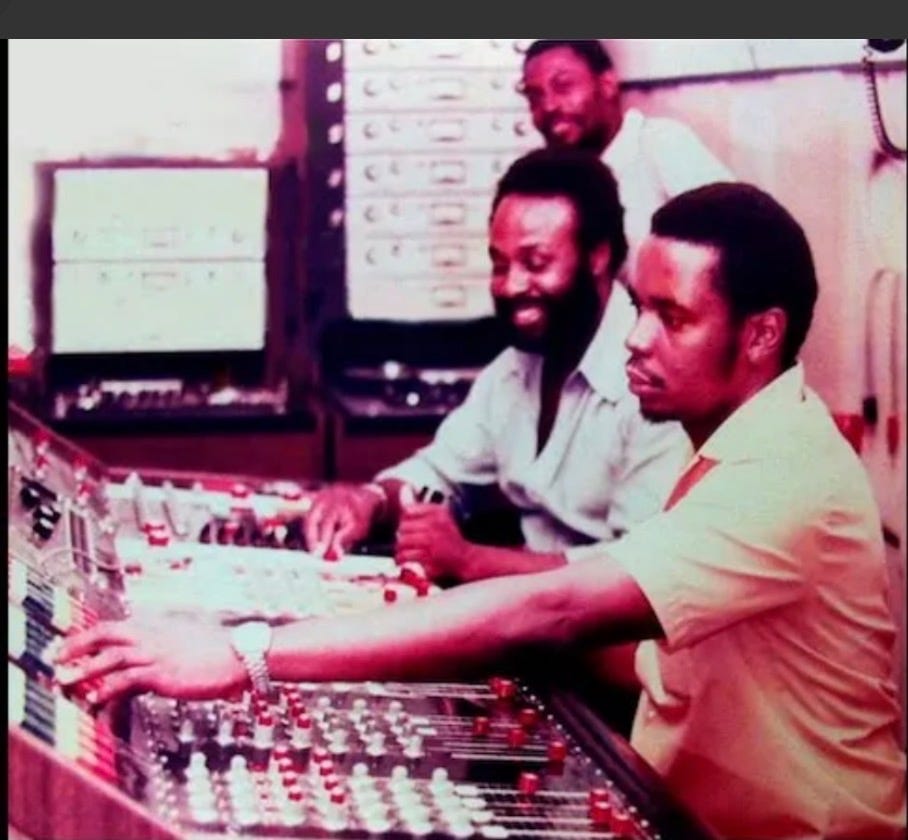
Engineers and producers such as King Tubby manipulated recordings in ways that altered what a finished record could be. Vocals disappeared. Instruments appeared and vanished. Bass and drums moved forward. Echo and reverb changed the sense of space. The mixing console became something that could be performed.
Dub emerged from that reconstruction.
The musicians had already performed the song. The engineer could now take that performance apart and create another musical experience from it. That idea—treating recorded sound as material that could be remixed, rearranged and transformed—would become fundamental to music far beyond Jamaica.
Jamaica also changed the meaning of a song through the riddim. One instrumental foundation could support several singers and deejays. Years later, the rhythm could be re-recorded, digitized or reinterpreted and generate another collection of songs.
Real Rock. Stalag. Answer. Taxi. Sleng Teng.
These became more than backing tracks. They became musical infrastructure.
By the 1980s, electronic technology changed the process again. “Under Mi Sleng Teng” grew from a pattern discovered and developed on a Casio MT-40 by musician Noel Davey and singer Wayne Smith, then shaped into a recording by producer Lloyd “King Jammy” James. The collaboration helped accelerate Jamaican music into the digital dancehall era.
In barely two decades, Jamaica moved from the sound of a room filled with musicians, to the studio reconstruction of recorded performances, to rhythms built increasingly through electronic technology.
That was not merely a change in sound.
It changed the economics of making music—and it changed the place of the traditional studio musician.
What Happened to the People Who Built the Music?
Some of the musicians, writers, arrangers, producers and engineers who helped create one of the world’s most influential musical cultures did not receive wealth or public recognition proportionate to the value of their work.
Many worked as session musicians. Credits were sometimes incomplete. Publishing rights, songwriting credits, royalties and ownership did not necessarily follow every creative contribution.
It would be unfair to suggest that every creator had the same experience. But it would be equally wrong to ignore the structure within which many worked.
A Jamaican session musician in the 1960s had no direct pathway to a worldwide audience. The route to the listener ran through producers, studios, record manufacturers, distributors, sound systems, publishers, promoters and overseas companies.
Creative power and economic power were not always held by the same people.
We should therefore ask: Who was properly credited? Who received royalties? Who owned the publishing and master recordings? Who continued earning when the music was reissued, sampled or reused? And who did not?
Their economic circumstances should not define their legacies.
But celebration should not erase those circumstances either.
Who Wrote the Words and Music?
The same problem extends to songwriters and composers.
The public ordinarily associates a song with the person who recorded it. Yet important Jamaican words and melodies became famous through voices other than those of their creators.
Bob Andy presents perhaps the strongest unrecognized Reggae Icon case among Jamaica’s songwriters. His catalogue includes “I’ve Got to Go Back Home,” “Too Experienced,” “Unchained,” “Feel Like Jumping,” “Melody Life” and “I Don’t Want to See You Cry.” His compositions moved across performers, arrangements and generations.
Hopeton Lindo—appropriately called “The Pen”—wrote or co-wrote material performed by JC Lodge, Shabba Ranks, Gregory Isaacs, Dennis Brown, Maxi Priest, Aswad and Buju Banton. His credits include “Telephone Love,” “Mr Loverman,” “Red Rose for Gregory,” “Temptress,” “Confidential” and “Wanna Be Loved.”
Carlton “Tetrack” Hines wrote “Rumours,” “Let Off Sup’m” and much of Gregory Isaacs’ Private Beach Party. His work illustrates how a major period in a singer’s career can depend upon a writer whose name remains far less familiar than the voice delivering the songs.
Anthony “Sangie” Davis co-wrote Bob Marley’s “Wake Up and Live.” Ernie Smith’s work demonstrates the narrative and melodic strength of the Jamaican singer-songwriter. Boris Gardiner’s case combines composition, singing and instrumental musicianship. Tanya Stephens represents a later tradition of lyrical craftsmanship distinguished by narrative construction, humour, social commentary and gender analysis.
Mikey Bennett also belongs in this discussion as a songwriter, composer, arranger, producer and mentor. His work contributed to major recordings by Shabba Ranks, Maxi Priest, Dennis Brown, Cocoa Tea, Home T, Brian and Tony Gold and others. His selection for Jamaica’s 2026 Order of Distinction appropriately recognizes that wider contribution. It does not, however, remove the separate question of whether his music-specific body of work also satisfies the standard of a Reggae Icon.
Not everyone who wrote one successful song qualifies as an icon. The test must consider the breadth and originality of the catalogue, influence on other performers, longevity, cultural significance and whether the work survived beyond its original recording.
Once those standards are applied, songwriters and composers cannot remain an afterthought in Jamaica’s account of its musical icons.
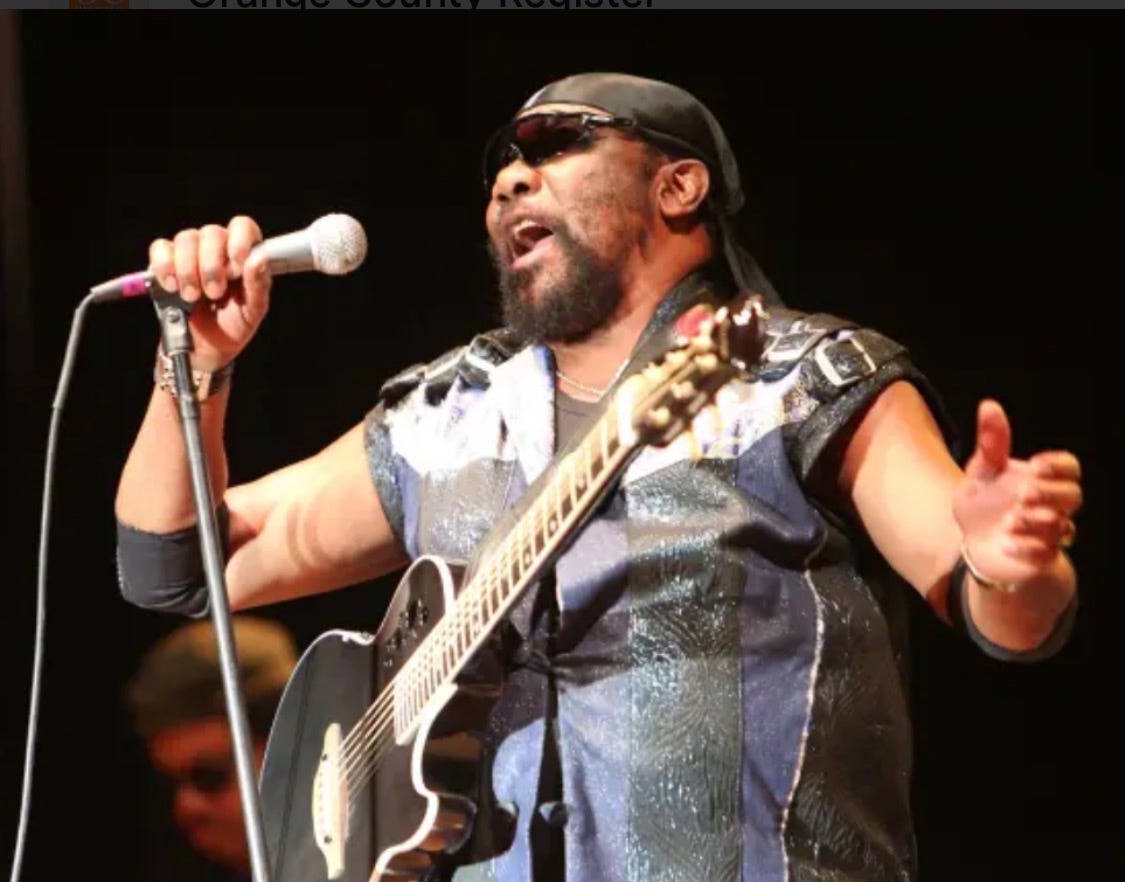
But Who Is Writing the Next Jamaican Standards?
The difficulty in identifying a comparable field of songwriters from more recent generations may itself be a warning.
Jamaica continues to produce entertainers and recordings. But are we developing enough composers and songwriters? Are we creating songs that performers will still want to interpret 30 or 40 years from now?
Too much of the contemporary musical environment appears crowded with do-overs: remakes of familiar songs, reused melodies, interpolated lyrics and recordings built partly upon the audience’s recognition of earlier material.
That does not make all reuse uncreative. Jamaica should never apologize for the riddim tradition. Versioning, adaptation and reinterpretation are among the country’s great innovations. The issue is not simply whether material is reused.
The issue is what the new creator adds.
Does the new work transform its source? Does it contribute a new lyrical idea, arrangement, rhythmic interpretation or cultural meaning? Or does it rely principally upon the recognition created by someone else?
There is a difference between transformation and repetition.
Original songwriting requires more than words that rhyme. It requires ideas, structure, melody, imagery, emotional development and disciplined revision. Composition requires attention to melody, harmony, rhythm, arrangement and musical identity.
Those abilities must be studied, practised, mentored and rewarded.
Yet the present system gives entertainers limited impetus to undertake that work themselves—or to seek out, credit and properly compensate people who specialize in it. The demand for frequent releases encourages speed. Familiar material reduces commercial risk. Public recognition attaches itself to the performer while the writer or composer may remain invisible.
Then our awards repeat the pattern.
What we recognize, we encourage.
What we repeatedly overlook, we eventually weaken.
A great song is not merely a successful recording. One test of significant songwriting is whether the composition can survive a different singer, a different arrangement, another generation and the passing of the fashion surrounding its first release.
Interpretation is itself an art. A gifted vocalist can give a composition emotional meaning even its writer did not anticipate. But interpretation and authorship are different contributions. A mature musical culture should recognize both.
Jamaica cannot preserve its musical legacy merely by producing more recordings. We must develop writers and composers, teach the architecture of songs, document authorship, protect publishing rights and recognize the people whose ideas become the material performers carry to the world.
Otherwise, we may continue producing entertainers capable of performing Jamaica’s musical inheritance without developing enough creators equipped to extend it.
Who is writing the Jamaican songs the world will remember next?
Why Are They Missing From the Reggae Icon Award?
This brings me directly to Jamaica’s Reggae Icon Award.
The award remains positioned primarily at the front of the stage. It sees the singer, deejay and entertainer whose name appeared on the record and whose face the audience remembers.
It looks less consistently behind that person.
That emphasis risks confusing visibility with creative importance. The performer whom the public sees was not always the only person—or even the principal person—responsible for the sound it remembers.
When we honour an entertainer for a distinguished catalogue, are we also asking who created the bass lines, established the drum patterns, wrote the words, composed the melodies, arranged the horns, engineered the sessions and transformed the recordings at the mixing console?
If we do not ask those questions, we reward the public ownership of the music while overlooking much of its creative construction.
Jamaica’s greatest musical contribution was not simply the production of memorable singers. Jamaica developed new rhythmic languages, new approaches to instrumentation, new relationships between bass and drums, new uses of the recording studio and new ways of giving recorded music additional lives.
Those innovations were often driven by people who were not standing at the microphone.
They did not decorate the work of the singer.
They built the music the singer entered.
An award ceremony naturally favours recognizable faces and familiar performances. Singers and deejays are easy to present within a few televised minutes. A bassist, arranger, writer or engineer may be less easily staged.
But an award should not confuse what is easiest to stage with what is most important to history.
Incomplete recording credits also became incomplete public memory. The singer’s name travelled with the song while the people who constructed the rhythm, arrangement or composition were sometimes buried in small print—or omitted altogether.
Over time, incomplete public memory became incomplete national recognition.
If “Reggae Icon” is treated informally as another name for a famous entertainer, these creators will remain peripheral. But if it is intended to recognize the people who pioneered, developed, sustained and globalized Jamaican music, instrumentalists, writers, arrangers, producers and engineers must stand near its centre.
They should not be quietly diverted into lesser technical categories.
They helped build the main stage.
The Order of Distinction Is Not the Reggae Icon Award
Many important Jamaican musicians and entertainers have already received the Order of Distinction, and appropriately so.
The Order of Distinction is a formal national honour conferred for outstanding and important service to Jamaica. Its recipients come from music, education, medicine, public service, business, sport, culture and many other fields.
The Reggae Icon Award serves—or should serve—a more specialized purpose. It asks whether someone occupies an iconic place in the creation, development, preservation or international advancement of Jamaican music.
That distinction matters.
If Jamaica established an award devoted specifically to reggae and Jamaican popular music because a need existed for that recognition, the award should be used accordingly. It should not merely reproduce the general national honours process. It should deliberately identify the people whose work explains how Jamaican music was created, how it changed and why it influenced the world.
Someone who already holds an OD should therefore remain fully eligible for the Reggae Icon Award. There is no contradiction in receiving both.
The OD recognizes outstanding and important service to Jamaica.
The Reggae Icon Award recognizes iconic contribution within Jamaican music.
One is not a substitute for the other.
Neither should an OD be treated as evidence that a musician has already received enough recognition. If someone satisfies the Reggae Icon criteria—pioneering influence, artistry, originality, musical innovation, cultural importance, longevity and global impact—the specialized award remains appropriate.
An OD should neither guarantee the Reggae Icon Award nor prevent someone from receiving it. Each award should apply its own purpose and standard.
Jamaica has every right to confer both when both are deserved.
Who Should Be Considered?
Once the award looks behind the microphone, an important field of candidates comes into view.
Among the instrumentalists and musical architects are Don Drummond, Lloyd Knibb, Ernest Ranglin, Jackie Mittoo, Aston “Family Man” Barrett, Carlton Barrett, Sly Dunbar and Robbie Shakespeare.
Among the studio innovators and producers are King Tubby, Lee “Scratch” Perry and Lloyd “King Jammy” James.
Among the writers and composers are Bob Andy, Mikey Bennett, Hopeton Lindo, Carlton “Tetrack” Hines, Anthony “Sangie” Davis, Ernie Smith, Boris Gardiner and Tanya Stephens.
Some candidates belong in more than one group. That is not a problem with the list. It is evidence of the range of creative work the award must learn to see.
Some have received an OD or another national honour. That should be acknowledged, not used to remove them from consideration. Some are no longer alive. If the purpose is to document Jamaica’s musical history truthfully, death should not erase foundational contribution.
Not every candidate must be selected at once. Order still matters. Evidence still matters. A clear standard still matters.
But the field itself must be widened.
What Should the Reggae Icon Award Measure?
The award needs more than a list of famous names. It needs a transparent framework capable of recognizing the full architecture of Jamaican music.
The assessment should consider pioneering influence; artistry and originality; composition and songwriting; instrumental or technological innovation; cultural importance; longevity; global impact; and influence on later generations.
The framework should examine vocalists, deejays, instrumentalists, songwriters, composers, bands, arrangers, producers, engineers and creative partnerships whose contributions cannot honestly be separated.
The deeper issue is not merely which entertainer should be next. It is whether Jamaica’s system of recognition reflects the full architecture of Jamaican music.
If pioneering influence matters, the pioneers of rhythm must count.
If originality matters, writers and composers must count.
If innovation matters, the people who changed how instruments were played and recordings were mixed must count.
If global impact matters, the musicians whose rhythms travelled beneath internationally successful voices must count.
And if legacy matters, helping to create the sound of an entire nation must surely count.
We Need to Hear the Music Again
Go back into the recordings.
Identify the drummer. Find the bassist. Listen for the guitarist. Separate the keyboards. Identify the horns and percussion. Find the composer and lyricist. Examine the studio. Identify the engineer. Trace the riddim.
Then ask what happened to the people who created it.
We know who sang the songs.
We know who appeared on the album covers.
We know who stood beneath the lights.
But if the Reggae Icon Award is intended to tell Jamaica’s musical story, it must also ask: Who made it sound like that? And if the award was created to recognize the architects of Jamaican music, why is it not being used to do precisely that?
No posts
Comments
Nothing yet. Say the first thing.
Sign in to join the conversation.