
I Grew Up With the Beach as Part of Community Life
I grew up on the beaches of Oracabessa, St. Mary. As a boy, we were not short of places to reach the sea. Around Oracabessa, we had Mass Butt Beach, Murdock Beach, Fisherman Beach, and Golden Head Beach. Later, Aggie Beach developed naturally from dredging work associated with work being done to make a cruise ship pier in Oracabessa. Much later, after I had left my hometown, James Bond Beach became part of that coastal landscape. There were other beaches as well whose names I no longer remember clearly, one was associated with what is now the developed GoldenEye property, and another was connected to a nearby guest house.
The important point is that, growing up, access to the sea did not feel exceptional. It felt normal. Paid beach access was virtually nonexistent in my childhood experience except for Puerto Seco in Discovery Bay. A beach was somewhere you went. It was part of community life. We didn't have to think about ownership. It was just there.
And Oracabessa was not unique. Traveling west toward Ocho Rios or east toward Port Maria, one thing was clear to me: many of the large beaches ordinary people knew were freely accessible to the public. That is why the almost daily reports of communities now fighting to preserve access to beaches trouble me so deeply. I am not looking at this issue only through legislation, court cases, or public policy. I lived a very different relationship with Jamaica's coastline.
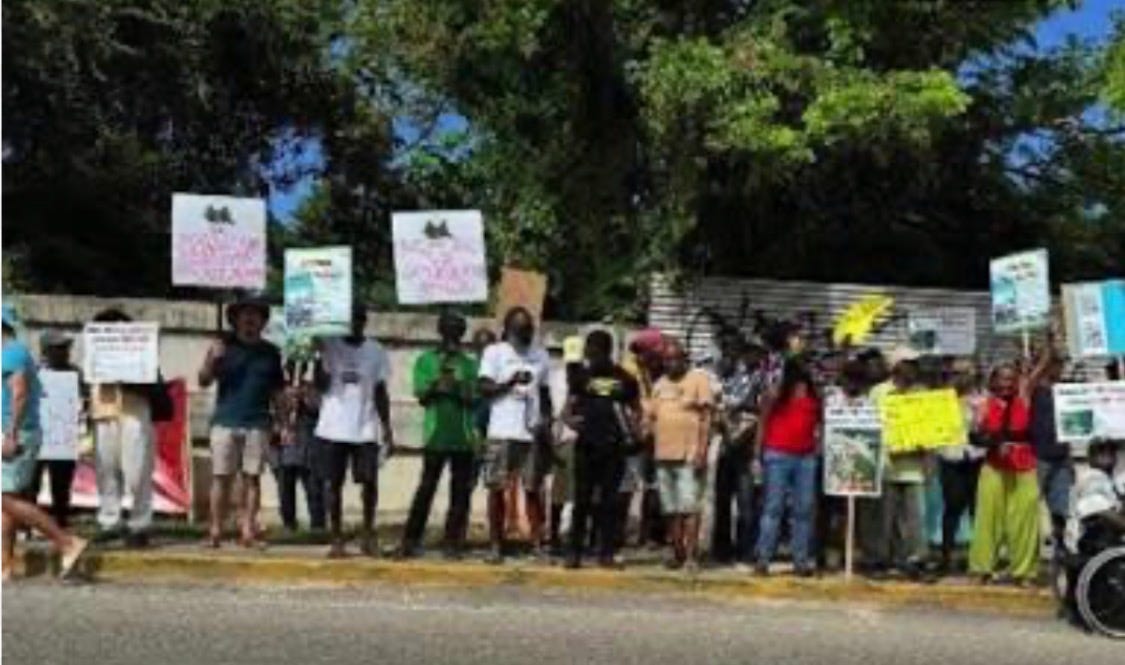
That does not mean there were no private properties or hotels. There were. But even as a boy, the boundaries seemed clear. If I walked along the foreshore in front of the Playboy Hotel in Boscobel, no one bothered me. But if I moved up onto the loose, dry sand associated with the hotel property, a security guard might ask me to leave. I did not know the language of the Beach Control Act then. I did not know the legal distinction between the foreshore and privately owned or controlled land above it. But in practice, we understood that there was a difference. The hotel had its property. We still had access to the sea.
Of course, memory alone does not establish the precise legal status of every beach or property we used. But it does provide a window into how Jamaicans experienced their coastline at the time. Aside from that, I remember a Jamaica in which reaching the sea was simply part of growing up. And that raises an important historical question: how did something that once seemed so ordinary become something communities increasingly have to fight to preserve? That is the question that led me to examine Jamaica's beach laws more carefully.
The Confusion at the Heart of the Debate
Few issues in Jamaica produce as much confusion, frustration, and emotion as access to our beaches. One person says, "All beaches in Jamaica are public." Another says, "The hotel owns that beach." Someone else responds, "Nobody can own the beach because the foreshore belongs to the Crown." Then comes the most practical question of all: "If it belongs to the Crown, why can't I walk onto it?"
These statements often collide because we use the word beach to describe several legally different things. The real story is more complicated. Jamaica's principal beach legislation is almost seventy years old. It predates Independence. It recognizes Crown rights over the foreshore and seabed, private ownership of adjoining land, licenses over coastal areas, designated public recreational beaches, and public rights that can arise through long historical use. But what it does not presently provide is a simple universal rule stating that every Jamaican has a general right to reach and recreationally use every beach around the island. That distinction is at the center of Jamaica's continuing beach-access debate.
Are All Beaches in Jamaica Public?
No, at least, not in the way that statement is ordinarily understood. Jamaica's Beach Control Act came into operation on June 1, 1956, six years before Independence. It remains Jamaica's principal statute governing the foreshore, beaches, the seabed and the waters over it. The Ministry of Justice records its last amendment as 2004.
Section 3 of the Beach Control Act begins with an important principle: rights in and over Jamaica's foreshore and the floor of the sea are generally vested in the Crown, subject to rights that the Act expressly preserves. Those preserved rights include certain rights existing under registered titles, express Crown grants or licenses that existed when the legislation came into operation. That sounds simple. It is not — because the foreshore is not necessarily the entire beach.
What Is the Foreshore? The foreshore is essentially the area along the shoreline that lies between the ordinary high-water and low-water marks, the area periodically covered and uncovered by the sea. The dry sandy area farther inland may be part of privately owned property. So, legally, one location could look something like this, moving from the land toward the sea: private hotel or privately owned land, then privately owned dry beach, then Crown-controlled foreshore, then the sea and seabed itself.
That distinction immediately explains part of the confusion. A person or company may legitimately own beachfront land without necessarily owning the foreshore itself. And the Crown may control the foreshore without every member of the public automatically possessing a right to cross the privately owned land behind it.
Can Someone Own a Beach in Jamaica?
Yes, depending upon what part of the beach we are talking about. An individual, hotel, company, or other private owner can own the land adjoining the coast and may own the dry sandy beach above the foreshore. There may also be historic title rights, Crown grants and licenses that affect particular coastal areas. Therefore, the statement "nobody can own a beach in Jamaica" is too broad. But the statement "the hotel owns everything right down through the sea" may also be incorrect. The only reliable way to answer the ownership question at a particular location is to examine the registered title, survey plan, Crown grant or lease, Beach Control license and any other legal rights affecting that property.
If the Crown Owns the Foreshore, Can Every Jamaican Use It?
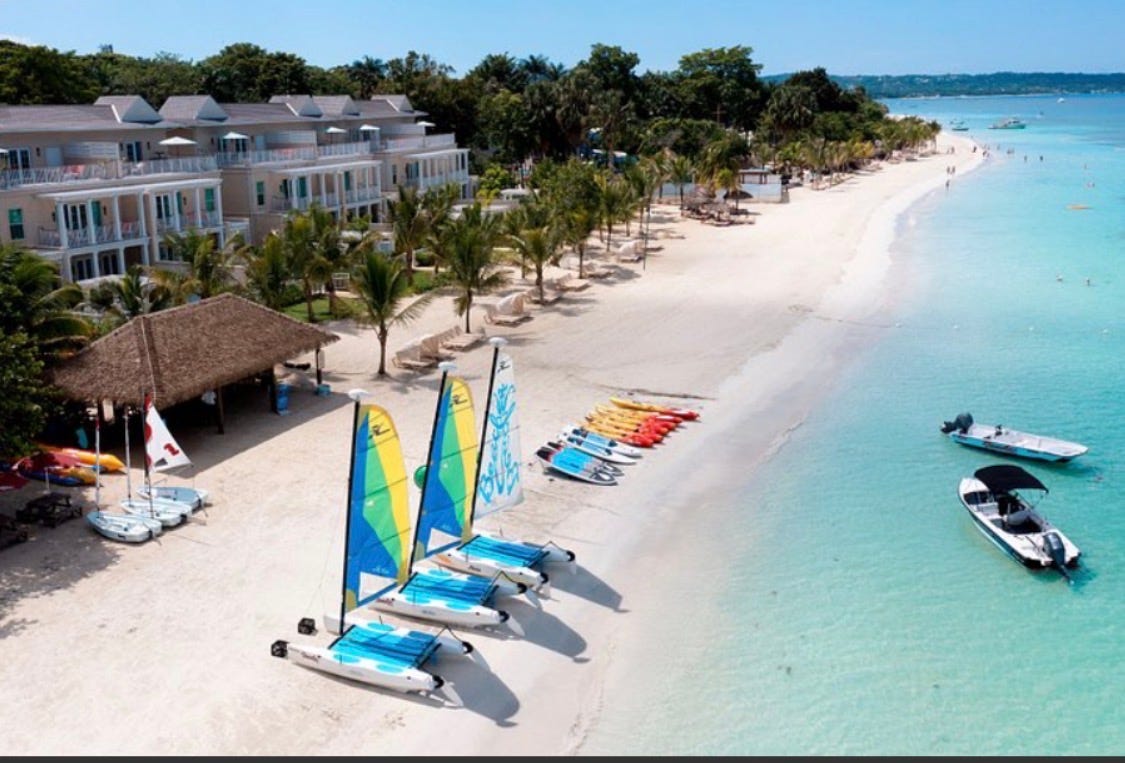
Here is the part many Jamaicans find surprising: Crown ownership does not automatically mean unrestricted public recreational access. The Beach Control Act regulates rights over the foreshore and seabed. It does not simply declare that every member of the public may enter every coastal property and use every foreshore for recreation. And therein lies perhaps the biggest problem.
Imagine a Crown-controlled foreshore located immediately in front of a privately owned hotel. The foreshore may not belong outright to the hotel. But if the public has no public road, pathway, access easement or other lawful way through the private property to reach it, the Crown-controlled foreshore can become public in theory but inaccessible in practice. That is the distinction Jamaica has struggled with for decades: ownership is one question, access is another.
Beachfront Owners Have Specific Rights
The structure of the 1956 legislation also matters. The Act recognizes particular rights associated with adjoining owners and other persons holding legally recognized interests. That tells us something about the philosophy behind the legislation. The Act was not constructed around a modern declaration that every Jamaican possesses a general right to the coastline. Instead, it constructed a system of Crown control, licenses, preserved rights, designated public beaches and particular rights associated with adjoining property. That is an entirely different starting point.
What About Public Beaches?
Some beaches in Jamaica are specifically designated or recognized for public recreational use. That is different from assuming that every beach, or every stretch of coastline, is automatically available for public recreation. NEPA’s Jamaica Beach Guide was created to help Jamaicans and visitors locate public bathing beaches across the island, which NEPA describes as national assets providing public recreational spaces.
The numbers themselves are revealing, although they must be placed in historical context. Government information relating to Jamaica’s beaches around 2000 identified approximately 544 beaches. Of these, 87 were categorized as public recreational beaches, including 18 where an entry fee was charged. Another 336 were associated with the tourism sector—275 with guest houses and villas and 61 with hotels—while 121 were identified as fishing beaches. When NEPA launched its Jamaica Beach Guide in 2018, it again reported that 87 public beaches had been documented across the island. These are historical classifications, not necessarily a definitive count of Jamaica’s public beaches today.
But those figures raise a more important question. Instead of asking only, “How many beaches does Jamaica have?”, perhaps we should also be asking, “How much of Jamaica’s coastline can an ordinary Jamaican actually reach and use?” Those are not the same measurement. Counting beaches tells us how many locations have been identified. It does not tell us how much coastline remains meaningfully accessible to the Jamaican public.
Where Are Jamaica's Publicly Accessible Beaches?
Public bathing beaches are distributed across Jamaica, and NEPA’s Jamaica Beach Guide identifies many for which it currently records no entrance fee. These include beaches in St. Thomas, Portland, St. Mary, St. Ann, Trelawny, St. James, Hanover, Westmoreland, St. Elizabeth, Manchester, Clarendon and St. Catherine. Examples include Prospect and Retreat in St. Thomas; Winnifred in Portland; Annotto Bay and Robins Bay in St. Mary; Priory and other locations in St. Ann; Braco and Rio Bueno in Trelawny; Dead End, Success and Sunset in St. James; Bloody Bay, Tryall and Watson Taylor Park in Hanover; Whitehouse in Westmoreland; Billy’s Bay and other south-coast beaches in St. Elizabeth; Alligator Pond in Manchester; and Port Henderson in St. Catherine. NEPA’s guide also identifies other public bathing and fishing beaches around the island for which no entrance fee is recorded.
But even the expression “free public beach” needs to be examined carefully. No entrance fee does not necessarily mean that using the beach involves no cost, nor does it tell us how practical access is. At some beaches, separate charges may apply for parking, bathrooms or other facilities. Some have direct road access and parking; others have limited parking, narrow roads, tracks or pedestrian access. Some have bathrooms, changing facilities and recreational infrastructure; others remain essentially undeveloped. And some public beaches also function as fishing beaches, meaning that the coastline supports livelihoods as well as recreation.
So the more useful national inventory would not simply ask, “Where are Jamaica’s public beaches?” It would ask: Where is the legal public access? How does someone reach the beach from a public road? Is there an entrance fee? Are there other charges? Is parking available? Has a traditional accessway been blocked or restricted? Who owns the adjoining land? What portion is licensed? And what community has historically used that coastline?
Those questions matter because even the geography of Jamaica’s beaches can sometimes become blurred. James Bond Beach provides a useful example.
Can a Hotel Stop Jamaicans From Entering?
Sometimes, yes. But the correct question is: what exactly is the hotel stopping you from entering? If you are attempting to cross privately owned hotel property, the owner generally has rights over that land. If the hotel operates a licensed beach facility, the conditions of that license may also regulate how the area is used. But that does not necessarily mean the hotel owns the sea, the seabed and every portion of the foreshore.
Before concluding that exclusion from a particular beach is lawful, several documents may need to be examined: the registered title; the survey plan; any Crown lease; any Beach Control Act license; the boundaries of the licensed area; historic public roads and pathways; whether the beach has public recreational status; and whether long public use has created separate legal rights. The words "private beach" therefore do not answer the legal question. They begin it.
What If Jamaicans Have Used a Beach for Generations?
This is where another Jamaican law becomes extremely important. The Prescription Act provides a potentially powerful protection for traditional public beach use. Section 4 states that where a beach has been used by the public, or a class of the public, for fishing, bathing or recreation, and a road, track or pathway over adjoining land has also been used as the means of access, without interruption for twenty years, an absolute and indefeasible public right can arise, subject to the qualifications in the Act.
Read that carefully. The law does not deal only with the beach. It can protect the beach and the route used to get there — an old road, a footpath, a fishing route, a community track, or another historically used way to the sea. This is why evidence of historical use is so important. Old photographs matter. Survey maps matter. Aerial photographs matter. Community testimony matters. Fishermen's evidence matters. Historical roads matter. Government records matter. And the memories of elderly residents who can establish decades of uninterrupted public use may matter enormously. A developer acquiring registered title today does not necessarily erase every legal right that may already burden that land. Private ownership and public rights of way can legally coexist.
Independence Did Not Start Jamaica's Beach Law Again
This is another fact worth understanding. Jamaica became independent on August 6, 1962. The Beach Control Act had already been operating since 1956. Independence did not automatically erase every statute enacted before 1962. The Beach Control Act therefore continued into independent Jamaica and remains on the statute books today. It is accurate to describe the Act as colonial-era legislation. But there is another side to that history: independent Jamaican governments have had more than six decades to amend, replace or fundamentally restructure it. The present beach-access architecture therefore cannot simply be blamed upon Britain. Independent Jamaica inherited it. Independent Jamaica retained it. And independent Jamaica now has the authority to change it.
Government Has Known About the Problem for Decades
Perhaps one of the most revealing documents is Jamaica's 2000 Beach Policy. The policy recounts that as far back as 1954, a Commission of Inquiry was established because fishermen were being squeezed out of coastal areas and members of the public were finding fewer places where they could enjoy the beach. Think about that: the public-access problem predates the Beach Control Act itself. And decades later, the 2000 policy was still describing public access to the foreshore as a recurring and sensitive issue.
It proposed something especially important: amending the Beach Control Act to give the public a right of passage along the foreshore and the right to bathe in the sea, while recognizing the legitimate rights of license holders and private-property owners. That proposal tells us a great deal. Why recommend creating an express public right of passage if the public already clearly possessed one? The policy also proposed protecting longstanding accessways used for more than twenty years, maintaining public rights of way, reopening blocked old access roads and trails, and addressing fences or structures that discouraged public access to the foreshore. More than two decades later, these issues remain with us.
The Government's More Recent Policy Still Identifies the Same Problem
The more recent Beach Access and Management Policy Green Paper identifies several continuing concerns: the loss of physical and visual access to the coastline; fees associated with accessing beaches; coastal development; the need for more good-quality public beaches; the need to provide and maintain accessways to the foreshore; and the need for legislation expressly addressing public access to the foreshore and seabed. That is important. The Government itself is effectively acknowledging that existing law has not completely resolved public access. So the question is not whether the problem exists. The question is why Jamaica has taken so long to settle it.
Does Jamaica's Constitution Guarantee Beach Access?
Not expressly. Jamaica's constitutional framework protects fundamental rights, including property interests, and the Charter introduced significant protection relating to Jamaica's environment. But there is no straightforward constitutional clause stating that every Jamaican has the right of reasonable access to the beaches and coastline of Jamaica. That matters because, without an express public-access right, disputes are left to be resolved through property law, the Beach Control Act, licenses, planning decisions, prescriptive rights, and litigation. There is another model Jamaica could choose. We know this because other Caribbean countries have chosen it.
What Do Other Caribbean Countries Do?
Jamaica does not have to choose between private property and public beach access. That is a false choice. Other Caribbean jurisdictions demonstrate that both can exist.
Barbados has made public access physically meaningful by maintaining a network of dedicated beach access points. Its National Conservation Commission says it currently maintains approximately 85 pedestrian and vehicular beach accesses, specifically noting that intensive coastal hotel and business development made maintaining unimpeded access for locals necessary. That is an important policy difference. It is not enough to say the coastline is public; people must be able to reach it. Barbados has therefore treated access itself as infrastructure.
Antigua and Barbuda provides perhaps the clearest legislative contrast. Section 50 of its Physical Planning Act states that there shall be at least one public landward access to every beach in Antigua and Barbuda. The Act goes even farther: where no alternative public access exists, traditional public use of a private access through an existing development can provide grounds for establishing a public right of way. That is an extraordinary contrast with Jamaica. Antigua protects private ownership, but the law also says, in effect, that you cannot create a public beach that the public has no way to reach.
Saint Lucia gives its National Conservation Authority explicit responsibility to control, maintain, or develop beaches and public access to beaches. The Authority may also enter agreements with landowners concerning access to protected areas. Again, access is treated as part of coastal management rather than as an afterthought.
The Dominican Republic goes considerably further constitutionally. Its Constitution states that rivers, lakes, lagoons, beaches and national coasts belong to the public domain and are freely accessible, while simultaneously requiring respect for private-property rights. The law is then empowered to regulate the conditions and easements through which people obtain access. That may be the most important comparison of all, because the Dominican approach demonstrates that public access and private-property protection are not mutually exclusive — both can exist in the same constitutional framework.
The Lesson for Jamaica
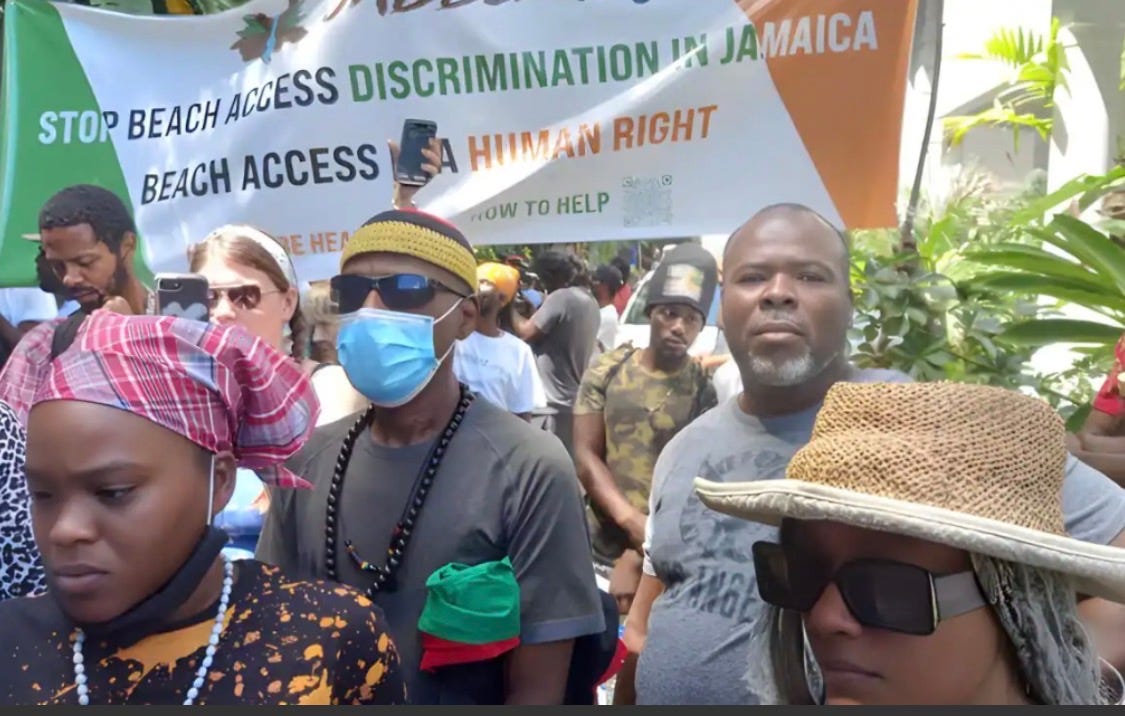
The regional comparison reveals something important. The debate does not need to be Jamaicans versus hotels. Nor does it need to be public access versus private property. A modern Jamaican framework could protect private title, hotel investment, tourism development, environmental protection, fishermen's traditional rights, public recreation, and guaranteed reasonable public access to the coastline, all at once. The real issue is how the law balances those interests.
What Could Jamaica Do?
Jamaica could modernize the law without confiscating anyone's beachfront property. A workable model could contain several basic principles.
First, the foreshore and sea should remain protected as national public resources. Second, Jamaicans should have a statutory right of reasonable passage along the foreshore and reasonable access to the sea. Third, every significant recreational beach should have at least one legally protected landward public access route. Fourth, no new major coastal development should receive approval unless adequate public access is preserved or created. Fifth, existing public roads, paths and traditional coastal accessways should not be blocked or extinguished without an equivalent or better replacement. Sixth, access corridors should be recorded on title so that a later sale of the property does not erase them. Seventh, public access should not mean entitlement to private hotel facilities; a Jamaican should be able to reach the sea without thereby acquiring the right to use a hotel's swimming pool, beach chairs, restaurants, washrooms, entertainment facilities or other privately financed amenities. That distinction protects both sides. Eighth, security should permit reasonable regulation, not become a blanket justification for exclusion. Ninth, community and fishing rights established through generations of use should be systematically documented rather than forcing communities to rediscover and litigate their history each time land changes hands. And tenth, Jamaica needs a national beach-access inventory — not merely a list of named beaches, but a real inventory.
For every significant stretch of coastline, Jamaica should know: who owns the adjoining land; who controls the foreshore; whether there is a Beach Control licence; whether the beach is designated for public recreation; whether there is a public road; whether there is a traditional pathway; whether the community has used it for more than twenty years; whether access is free or paid; whether it is currently blocked; whether public land has been leased; and whether an access route has disappeared. Those facts should be publicly searchable.
But What About the Safety and Security of Hotel Guests?
There is, however, a legitimate concern that must be addressed. Would greater public access to Jamaica's beaches expose hotel guests to additional security risks? That is precisely the kind of question any responsible government, hotel operator, community or court should ask. The answer depends largely upon what we mean by public access and how that access is designed. A poorly designed system could create security problems. A well-designed system does not have to.
One of the mistakes in this debate is to assume that giving Jamaicans access to the coastline means giving the general public unrestricted access through hotel properties. It does not. A public right to reach the sea does not have to mean a right to walk through a hotel lobby, wander among guest rooms, use a resort's swimming pools, enter its restaurants or bars, occupy its cabanas, use its washrooms or access other privately funded facilities. Those remain private.
A modern beach-access law could instead require designated public access corridors that allow people to reach the beach without entering a resort's private areas. Such corridors could be clearly marked and physically separated from guest areas and, where appropriate, fenced, monitored by security cameras, and incorporated into the resort's overall security system. Reasonable operating rules could apply. Security personnel would retain the authority to intervene where individuals leave the designated access route, enter restricted areas, harass hotel guests, damage property, threaten public safety or engage in unlawful conduct. New coastal developments could be required, as part of their planning approval, to design public-access corridors from the beginning rather than attempting to create them after a hotel has already been constructed. That is a critical distinction: public beach access does not require unrestricted access to private hotel property. The objective should be to create a safe route to the coastline, not a right to roam throughout a resort.
This is not merely theoretical. Other Caribbean tourism economies demonstrate that substantial hotel development and public beach access can coexist. Antigua and Barbuda's planning legislation requires at least one public landward access to every beach. Barbados maintains an extensive network of public beach-access points while simultaneously operating one of the Caribbean's most established tourism industries. Those examples suggest that the choice does not have to be secure hotels or public beaches. Good planning can provide both.
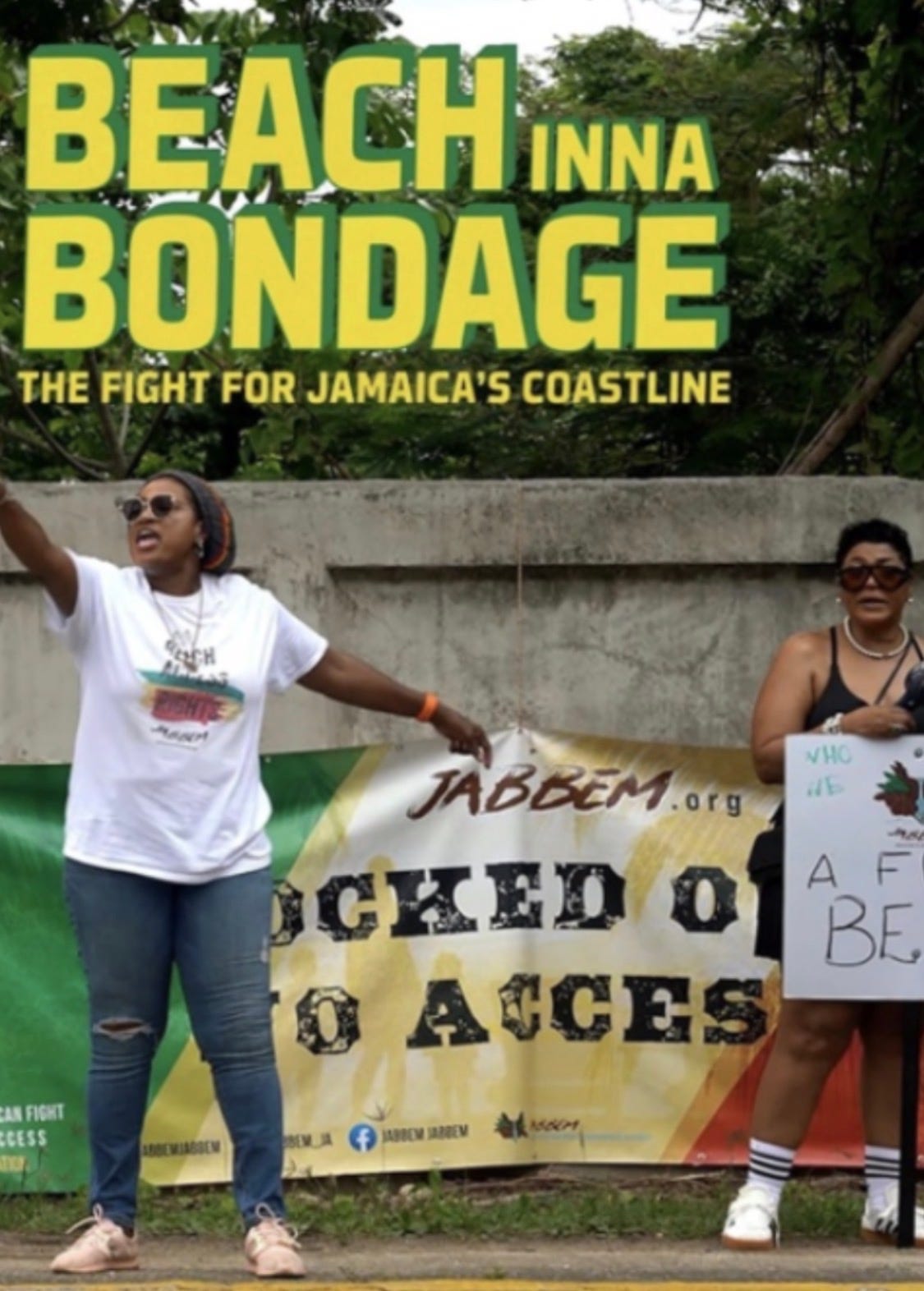
Security Must Be Considered From Both Directions
There is another aspect of the debate that deserves equal attention. The security question should not be considered solely from the perspective of the hotel. The public interest matters too. If a Jamaican family living in a coastal community must travel several kilometers to reach the sea because the traditional access points surrounding that community have gradually disappeared behind private development, that creates a different public-policy problem. If fishermen lose traditional routes to the coast, that affects livelihoods. If children grow up within sight of the Caribbean Sea but cannot reasonably reach it because every convenient access route is privately controlled, that raises questions about what coastal development is ultimately supposed to accomplish.
The law therefore has to balance two legitimate interests: the safety, privacy and property rights of hotel guests, operators and private landowners, and the public's reasonable ability to reach and enjoy the coastline of their own country. Neither interest should simply extinguish the other. Hotel operators are entitled to expect that their guests will be safe, that their property will be protected, and that people who have not paid for private resort facilities will not simply appropriate those facilities. Those are entirely legitimate expectations. But the corresponding question is equally legitimate: does protecting hotel security require eliminating meaningful public access to the coastline? Or can both objectives be achieved through thoughtful legislation, designated access corridors, appropriate security measures and responsible coastal planning? Experience elsewhere in the Caribbean suggests that they can.
The answer therefore should not be to open hotels to unrestricted public movement. Nor should it be to close Jamaica's coastline behind hotels. The more sensible principle is: protect the resort, protect the public, preserve access to the sea. That is not an impossible balance. It is a planning responsibility.
How Many Public Beaches Are Really Left?
The often-cited historical number is 87 public bathing beaches. But that number does not answer the question Jamaicans are really asking. If a public beach is poorly maintained, difficult to reach, has no facilities, is environmentally degraded, or represents only a tiny portion of the high-quality coastline in a community, simply counting it as "one public beach" tells us very little. The more revealing national statistic would be: what percentage of Jamaica's usable coastline remains legally and practically accessible to the public? That number would tell us much more.
Jamaica could develop a National Beach Access Index measuring public coastline; freely accessible coastline; paid public beaches; public beaches with proper facilities; hotel-controlled coastal frontage; other privately controlled frontage; traditional community access; fishing-beach access; blocked or disputed accessways; and communities without adequate coastal access. Only then would Jamaicans truly know how much access has been preserved, and how much has been lost.
What Does "Ownership" Really Mean?
Perhaps this is the most important public lesson. Ownership does not always mean absolute control free from everyone else’s rights. A person can own land that is subject to a public right of way. A hotel can own beachfront property without owning the sea. The Crown can control the foreshore while a private owner controls the only landward route to it. A private owner can acquire property that is already burdened by prescriptive rights created through decades of public use. A beach can be publicly accessible while nearby facilities remain privately owned. And a coastline can theoretically belong to the state while remaining practically inaccessible to its citizens. Those distinctions are precisely why the present debate cannot be resolved with slogans.
There is an irony familiar to Jamaica: an island surrounded by the sea, yet its people can struggle to reach the beach; a country crossed by vibrant rivers, yet communities can still struggle to get reliable running water. The presence of a resource and the ability of ordinary people to access it are not the same thing.
The Question Is Bigger Than Beaches
Ultimately, Jamaica has to answer a deeper question: what does it mean to be a citizen of an island? Should a Jamaican child be able to grow up in a coastal parish yet have no reasonable way to reach the sea because every convenient access point has been absorbed into private development? Should generations of fishermen be able to lose a traditional route because the property through which they walked changes ownership? Should a government be able to say that the foreshore belongs to the Crown while citizens cannot physically reach it? Should premium sections of Jamaica's coastline become increasingly available to those who can afford hotel rooms, villas or admission fees while ordinary Jamaicans are concentrated into fewer public spaces?
Those are no longer merely property-law questions. They are questions about citizenship, development, tourism, history, national heritage and social equity. And they require balance. Private property matters. Investment matters. Tourism matters. Jobs matter. So do Jamaicans.
Seventy Years Later, We Are Still Asking the Same Question
Perhaps the most troubling part of this history is its age. Public agitation over disappearing beach access contributed to the appointment of a Commission of Inquiry in 1954. The Beach Control Act followed in 1956. Jamaica became independent in 1962. A new Beach Policy in 2000 again identified public access as a serious unresolved issue and proposed an explicit right of passage along the foreshore. The current Beach Access and Management Policy process is still discussing public access, accessways and legislative reform.
So nearly seventy years after the original legislation, and more than sixty years after Independence, Jamaicans are still asking: who owns the beach? Can I use it? Can a hotel stop me? Where is the public entrance? What happened to the pathway my grandparents used? How many good public beaches do we actually have left? We should not still need lawyers to answer those basic questions.
A modern island nation should be able to protect private property while establishing a simple national principle: Jamaica's coastline is part of Jamaica's national heritage, and every Jamaican should have reasonable, lawful, and meaningful access to it. Barbados demonstrates that accessways can coexist with hotels. Antigua and Barbuda demonstrate that the law can require public landward access to every beach. The Dominican Republic demonstrates that free public access to beaches and respect for private property can coexist within the same constitutional principle. Jamaica therefore does not have to invent the concept. We have to decide whether we believe in it.
Because the ultimate question is no longer simply who owns Jamaica's beaches. It is how much of Jamaica should Jamaicans themselves be entitled to experience.
No posts
Comments
Nothing yet. Say the first thing.
Sign in to join the conversation.