
I woke up yesterday morning to images from Cooper’s Pen in Trelawny that disturbed me deeply.
Homes were being bulldozed.
Not little makeshift structures that had appeared overnight. Not four blocks laid on an empty piece of land the evening before. These were predominantly concrete homes. Some were substantially completed. People had lived there. Beds were inside. Stoves were inside. Clothes, furniture, photographs and the ordinary possessions that make a structure a home were inside. According to media reports, approximately 20 houses were demolished.
I watched and wondered: Where did these families sleep that night, and where will their children sleep tonight?
The child still has to go to school tomorrow. The mother still has to report to work. The elderly person still needs medication. Somewhere among the rubble may be furniture bought piece by piece, appliances saved for, school uniforms, birth certificates, photographs and other belongings accumulated over years.
And perhaps most importantly: Before irreversible destruction occurred, did anyone with legal authority ask what destroying these homes would do to the people whose lives depended upon them? What kind of lives are the decision-makers themselves living—more secure or more precarious than the residents whose homes were demolished? Would they understand what it means to watch years of sacrifice, savings and hope disappear beneath a bulldozer? Compassion should have required serious consideration of where the displaced families would sleep that night, how their children would return to school and how they would begin again. The law may confer the authority to demolish a structure, but authority alone does not relieve the State of its responsibility to act humanely, proportionately and with due regard for the lives affected.
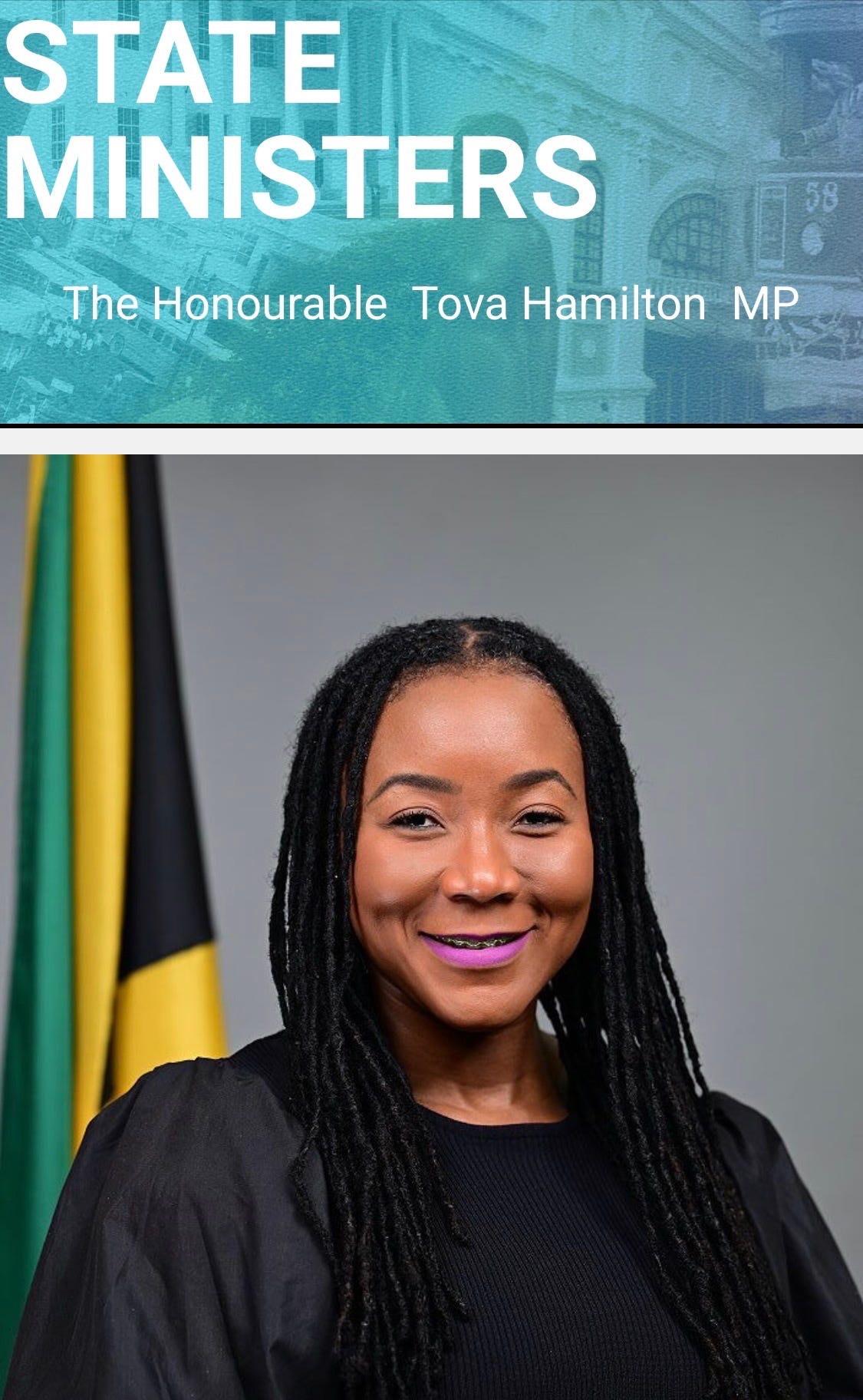
I want to be careful about Cooper’s Pen. The available reporting indicates that this was not a demolition ordered by the Government of Jamaica. It arose from a longstanding private land dispute and court process. Police accompanied the operation, and government agencies subsequently became involved in assisting displaced residents.
Private property rights matter. Court orders matter. The rule of law matters.
But so do people.
And what I saw at Cooper’s Pen caused me to think about something much larger than Cooper’s Pen.
We Discuss Poverty as Separate Problems. Poor People Live Them All at Once.
Almost every week in Jamaica, we discuss some problem affecting poor and vulnerable people.
One day it is inequality in education.
Another day it is inadequate access to healthcare.
Another day it is the lack of reliable running water.
Then inadequate or insecure housing.
Then inadequate and increasingly expensive transportation.
Then the contradiction of historically low official unemployment alongside low wages, insecure work and persistent underemployment.
Then high crime and unequal treatment in policing.
Then the adequacy of PATH and the wider social-protection system.
We discuss them separately because government administers them separately. There is a Ministry responsible for education, another for health, agencies responsible for housing and land, another part of government responsible for water, another for social protection and another for justice and security.
But poor people do not live in ministries.
They live in households.
And inside that household, all these problems meet.
That is what Cooper’s Pen caused me to think about: what happens to a household when you destroy the place where all those parts of life come together?
What Does Demolishing a Home Actually Do?
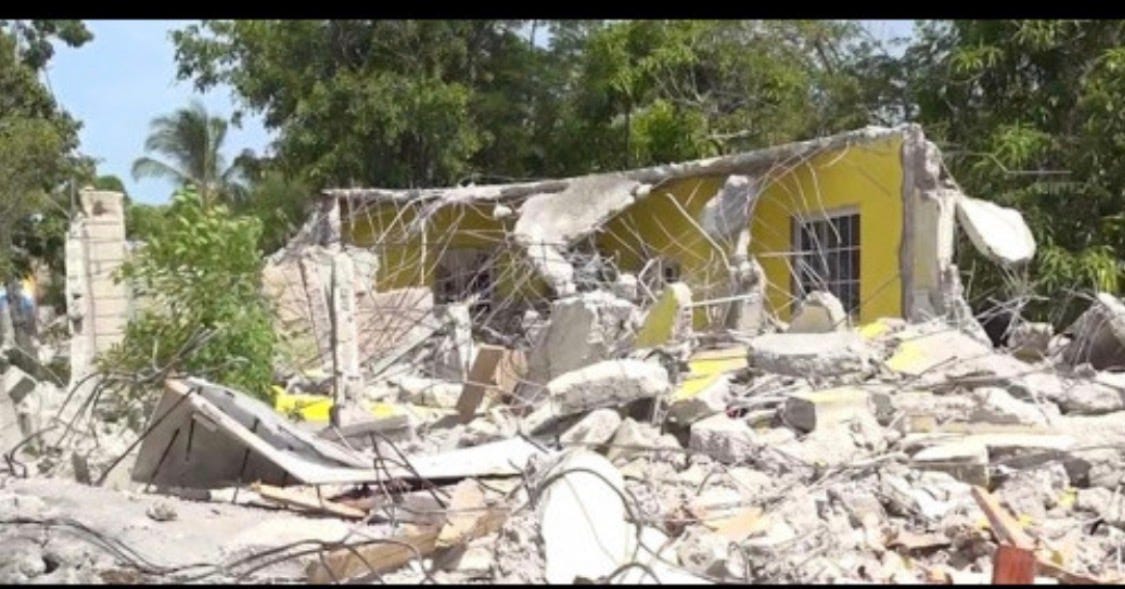
Suppose a low-income family has spent years constructing a concrete house.
They may not have built it all at once. Many ordinary Jamaicans cannot. They build one room, then another. They buy some blocks, stop and save. When they can afford steel, they buy it and continue.
A relative overseas sends something, and they put on the roof. Later come the windows, followed by the plumbing, the tiles and, finally, the furniture.
Five, ten or fifteen years later, that house may represent almost everything the family has accumulated.
Then one morning a bulldozer destroys it.
We record:
One illegal structure demolished.
But that administrative description tells us almost nothing about what actually happened. It does not record what percentage of the family’s accumulated wealth disappeared, where the family went, whether children had to change schools or whether parents were moved farther from their jobs. It does not tell us whether transportation costs increased, relatives had to divide the family among several households, medicines were lost or someone lost employment because of the displacement. It does not tell us whether the family now requires emergency assistance from the Government—or where that family will be living six months later.
Those questions matter because Jamaica itself no longer measures poverty simply by asking how much money someone earns.
The Planning Institute of Jamaica’s National Multidimensional Poverty Index measures deprivation across education, health, living standards and employment.
That is important.
Because it recognizes something that should fundamentally change how we think about demolition and displacement:
A government or legal action occurring in the housing column can push a household deeper into several other dimensions of poverty simultaneously.
Are We Sometimes Creating the Problem We Say We Are Solving?
This leads to an uncomfortable question.
What happens after we remove people from an informal settlement without providing a viable housing alternative?
Where do they go?
Some will find relatives.
Some may rent.
Some may receive assistance.
But what happens to the family that cannot afford formal housing?
If the shortage of affordable housing contributed to informal settlement in the first place, destroying the informal home without addressing the family’s underlying housing need does not necessarily eliminate that need.
It relocates it.
And potentially, that family eventually finds another inexpensive piece of land and begins again.
If that happens, we have accomplished something extraordinary:
We have used the machinery of the state or legal system to eliminate an informal settlement while recreating the conditions that produce informal settlement.
That is not merely a housing question.
It is a poverty-policy question.
Why Is Demolition the Answer?
I am not suggesting that anyone should be permitted to occupy another person’s land simply because they are poor.
Nor am I suggesting that planning laws should be ignored.
Government has a responsibility to prevent illegal occupation of public land. Private owners have constitutional and legal rights to their property. Jamaica needs orderly development.
But enforcement does not automatically require the most destructive remedy available.
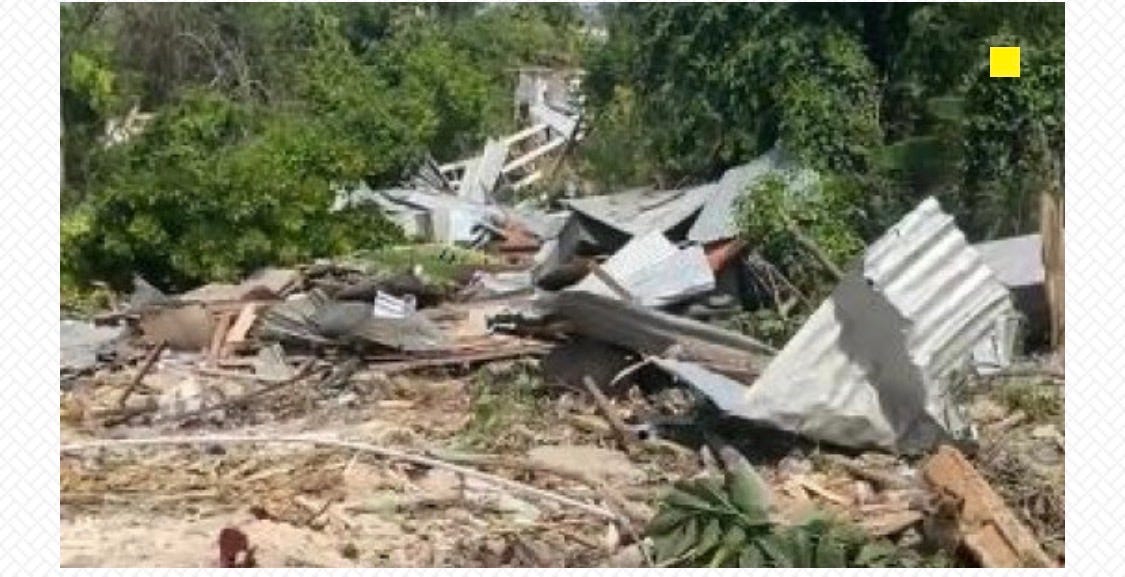
There is an enormous policy space between doing nothing and bringing in the bulldozer. There can be notice, consultation, surveying, mediation, regularization, purchase arrangements, long-term leases, payment plans, infrastructure upgrading, relocation, compensation where legally appropriate, alternative housing and phased enforcement.
Where none of those alternatives is possible, demolition may ultimately become unavoidable.
But surely destruction of someone’s home should be the end of that process, not the beginning of it.
Jamaica Already Knows How to Regularize Communities
This is not some theoretical idea imported from somewhere else.
Jamaica does it.
At Spicy Grove in Oracabessa, St Mary, the Government chose regularization.
The Prime Minister explained in May 2026 that people had informally occupied the property and constructed substantial homes. Instead of simply removing them, the Government purchased the land, resurveyed the community, created space for infrastructure and roads, and moved toward regularizing the occupants.
The Prime Minister articulated an extraordinarily important principle in discussing the Government’s approach to informal settlements:
No one should be made worse off.
That principle deserves to become much more than a statement.
It should become a test of public policy.
The “Made Worse Off” Test
Before an irreversible enforcement action destroys someone’s home, somebody should be required to ask:
What will this family’s circumstances be tomorrow morning?
If we solve the land problem but create homelessness, have we solved the problem?
We have just lived through Melissa. We know what it means when homes disappear overnight. We know that the destruction does not remain a housing problem. Children are displaced. Parents struggle to get to work. Healthcare becomes harder to access. Families require shelter, food, transportation and government assistance. We call that a disaster when nature does it.
So what should we call it when public authority, through an enforcement decision that might have had less destructive alternatives, produces some of those same conditions for an already vulnerable family? I have begun to think of it as a state-made Melissa—not because a bulldozer can ever be compared in scale to a Category 5 hurricane, but because, for the household standing in the rubble, the pathways into deeper poverty can look frighteningly familiar.
And unlike Melissa, a bulldozer has an off switch. The hurricane couldn’t consider regularization. Melissa couldn’t consider an installment purchase arrangement. Melissa couldn’t ask whether the family could be relocated first. Melissa couldn’t examine whether the house was 85% complete. Melissa couldn’t assess hardship. Melissa couldn’t choose a less destructive remedy.
Government can.
Then There Is the Question of Equal Treatment
There is another reason I have difficulty accepting demolition as an automatic response.
Jamaica’s regulatory history shows that when major developers and commercial interests breach building, planning or environmental requirements, the response is not always immediate destruction.
Sometimes there are stop notices.
Sometimes there are amended plans.
Sometimes there are engineering reports.
Sometimes there are negotiations.
Sometimes there are appeals.
Sometimes there are “as-built” applications allowing an already constructed development to be brought into compliance.
Sometimes there is regularization.
At 18½ Lyndhurst Road, for example, authorities discovered a three-storey commercial structure even though the application had been for two storeys and approval had not been granted. A cease-work notice was issued. Updated drawings and engineering documentation followed. The structure was ultimately regularized.
At 2 Weycliffe Close, authorities identified significant departures from what had been approved. The developer was given options that included submitting an “as-built” application. The development was ultimately regularized.
These examples do not mean wealthy developers are never punished. They are. Jamaica has ordered developers to stop construction and, in some cases, offending portions of major hotel developments have actually been demolished.
But they demonstrate something important:
Our regulatory system recognizes that non-compliance does not invariably require destruction.
Sometimes the answer is to bring the development into compliance.
So why shouldn’t we seriously examine that possibility for the homes of poor people?
And Then There Is Bahia Principe
One case particularly troubles me.
The environmental approval for the Bahia Principe development at Pear Tree Bottom was successfully challenged in court. Serious deficiencies were found in the approval process, and the permit was initially quashed.
But there was a problem.
By then, the hotel was approximately 85 per cent complete, with an enormous amount of money already invested.
That substantial completion and the hardship associated with undoing what had already been constructed became relevant to the court’s consideration of the appropriate remedy.
I understand that the legal circumstances are different. I am not suggesting that a hotel-development environmental-permit case and every informal-settlement case are legally identical.
But the principle raises a question that Jamaica should be prepared to answer:
If substantial completion and economic hardship deserve consideration before an irreversible remedy is imposed upon a multimillion-dollar commercial development, shouldn’t substantial completion and human hardship also deserve serious consideration before a poor family’s home is reduced to rubble?
Some of the houses we see being demolished are not 10 per cent complete.
They are not foundations. They are homes—some 85, 90 or 100 per cent complete, with people living inside them. So perhaps we need to ask: Whose hardship counts before the bulldozer moves?
Cooper’s Pen Is Not an Isolated Case
Cooper’s Pen must also be considered alongside other Jamaican communities in which homes have recently been demolished or threatened with demolition.
At Clifton, near Bernard Lodge in St Catherine, structures were demolished on government-owned land in 2022 after authorities alleged that criminal interests had captured and illegally sold portions of the property. The Government maintained that cease-and-desist notices had previously been issued. Yet after the demolition generated public outrage, further action was paused, dialogue began, and distinctions were made between incomplete structures and houses that had reached the roofing or decking stage. Residents were also told that legitimate housing and mortgage options would be explored. Nationwide reported that the Government said written notices had been issued months before the exercise, while subsequent reporting described the suspension of further demolition and discussions about regularization and housing alternatives. The Jamaica Observer
At West Albion in St Thomas, the National Land Agency demolished unauthorized residential structures on government land in June 2026. Displaced residents appealed for government assistance, while the agency defended its enforcement practices. Once again, the central questions concerned notice, the treatment of occupied homes, the availability of alternatives and what would happen to families after the land had been cleared.
Cooper’s Pen presents a different legal configuration. The land is privately owned, and the dispute stretches back nearly two decades. New Falmouth Resorts Limited obtained a recovery-of-possession order in 2010. A subsequent government sought to acquire the property and facilitate possible regularization by declaring it an improvement area, but attempts to prevent eviction were unsuccessful, including before the Court of Appeal in 2016. Nevertheless, residents told the media that the August 2026 demolition arrived without fresh warning and that some families had occupied the land for decades. Nationwide News outlined the legal history, while The Gleaner documented residents’ accounts of the pre-dawn operation and lack of notice.
These cases are not legally identical. Some concern public land; Cooper’s Pen concerns private land. Some involved structures still under construction; others involved completed and occupied homes. Authorities say notice was provided in some cases, while residents dispute receiving adequate notice in others. Criminal land capture was alleged at Clifton, while Cooper’s Pen arose from a longstanding possession dispute.
But that is precisely why the comparison matters.
What determines whether a community receives early intervention, consultation, regularization, a pause in demolition, relocation assistance or the immediate destruction of occupied homes? Is there a consistently applied national standard? Or does the treatment received depend upon the owner of the land, the agency involved, the stage of construction, the visibility of the controversy, the political response generated and the discretion exercised after the bulldozers arrive?
The pattern does not, by itself, prove partisan targeting or deliberate discrimination. But it does reveal inconsistent safeguards—and it places an obligation upon the State to explain why compassion, notice, dialogue and less destructive alternatives appear available in some cases but not others.
That final distinction is critical. We should use the constituency and political-representation information we collected as a research question, not as a declaration that political targeting has been proved. The strongest argument is:
The comparisons do not conclusively establish partisan enforcement, but they reveal sufficiently different treatment across comparable communities to require transparent explanation and a uniform national policy.
Where Was the State While the House Was Being Built?
There is another side to this that we rarely discuss.
If someone begins constructing illegally today and government intervenes tomorrow, the loss is limited.
But what happens when authorities allow an informal community to develop for years? Foundations are laid, walls rise, roofs and windows are installed, electricity and plumbing are connected, and furniture is moved inside. Children are born there and grow up there. Roads develop, businesses appear and a community emerges. Then, years or decades later, we suddenly rediscover the law.
Certainly the occupant bears responsibility for building or occupying land without proper authority.
But surely public administration must answer another question:
Where was the state while all of this was happening?
Government cannot reasonably have a squatter-management policy based primarily upon waiting until families have converted their life’s savings into concrete and steel and then destroying it.
Prevention must occur before the house becomes someone’s accumulated wealth. That means identifying illegal occupation and stopping new construction early, providing affordable housing, creating pathways to land ownership, regularizing viable longstanding communities, and relocating people humanely where regularization genuinely cannot occur.
And reserving demolition of substantially completed family homes for situations where reasonable alternatives have actually been exhausted.
Poverty Is Cumulative
This brings me back to where I started.
We cannot continue examining poor people’s lives one government department at a time—education, healthcare, housing and land, justice and policing, public infrastructure, employment and social protection. These are administrative categories. They are not how poverty is lived.
The child who loses his home does not leave the housing problem outside the school gate the following morning.
He carries it into the classroom.
The mother who has been displaced doesn’t leave her housing problem at home when she goes to work.
She carries it to work—assuming she can still get there.
The elderly person doesn’t experience displacement independently of healthcare.
The family doesn’t experience inadequate water independently of health.
And when a family loses its largest accumulated asset, that loss does not remain neatly inside a government category called “Housing.”
It travels through the entire household.
That is why I believe we need to begin evaluating poverty policy differently.
Not:
What did the Ministry of Education do?
What did the Ministry of Health do?
What did the housing agency do?
But:
What is the cumulative experience of the Jamaican state for a household living in poverty?
And when government, a state agency or the legal system intervenes in that household, we should ask whether the intervention reduces multidimensional poverty or intensifies it.
After the Bulldozers Leave
Eventually, the bulldozers leave Cooper’s Pen. The police, the bailiffs, the cameras and the politicians leave. The story disappears from the news cycle.
But the people do not disappear. They still have to wake up the following morning.
Someone is trying to figure out how twenty years of savings became a pile of broken concrete in twenty minutes.
So perhaps the measure of successful enforcement cannot simply be that the land was cleared. We should ask what happened to the people. Where are they one month later, six months later or one year later? Did their children remain in school? Did the adults remain employed? Did their health deteriorate? Did they obtain secure housing? Did government assistance move them towards stability? Did they become homeowners? Or did they simply move somewhere else and begin another informal settlement because they still could not afford anywhere else to live?
That is the research Jamaica needs.
And it leads me to a principle I believe deserves serious consideration:
Stop new illegal occupation early. Regularize viable longstanding communities. Relocate humanely where regularization is impossible. And destroy substantially completed family homes only as a genuine last resort.
Protect property rights.
Enforce the law.
Maintain orderly development.
But do so while remembering something that can become strangely invisible when we talk about “illegal structures,” “squatters,” “encroachments” and “enforcement exercises”:
There are people’s lives inside those structures.
And before we bulldoze a house, somebody ought to be required to ask whether we are about to bulldoze the family further into poverty with it.
No posts
Comments
Nothing yet. Say the first thing.
Sign in to join the conversation.