
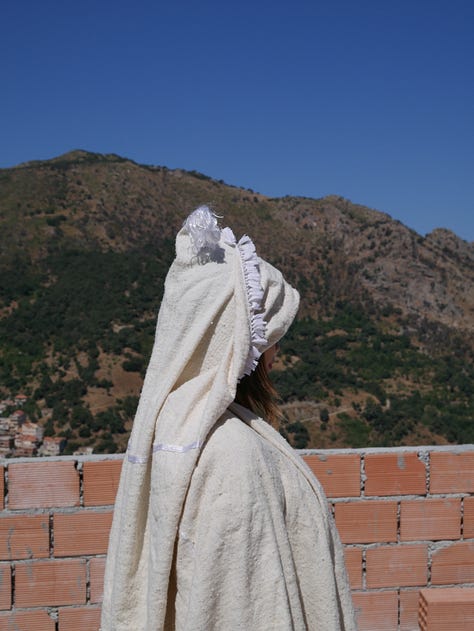
I’ve been continuing to archive and gather stories about the textiles in my family, and in my recent post I wrote about family blankets and embroidery. Another important textile passed down through generations is our Algerian Amazigh burnoos: a cream woollen cloak.
As well as its role in daily and ceremonial life, it also served as a practical disguise for freedom fighters, allowing them to move unseen across mountains and deserts during the Algerian Revolution. More than that, it became an enduring symbol of resistance throughout the French colonial occupation, allowing us to embody our culture and assert our presence despite the ongoing campaign to erase both.

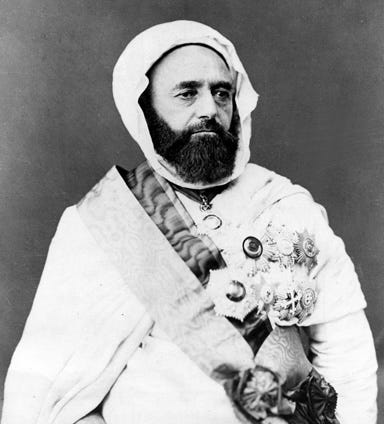
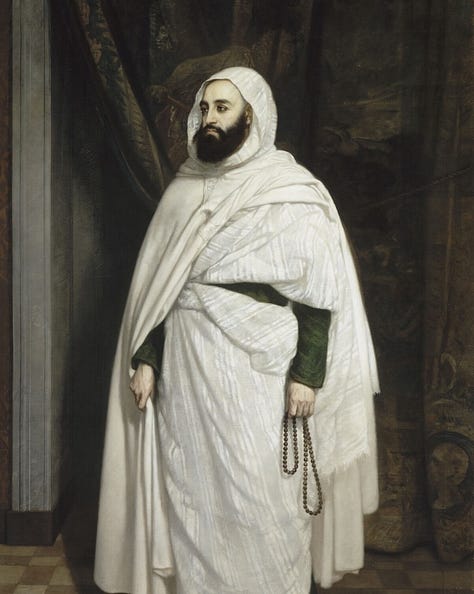
I think of Emir Abdelkader, a scholar and statesman who united Algerians to resist French colonisation in the 1830s/40s, and the iconic images of him wearing a burnoos. A devout Muslim and Sufi, he emphasised moral and spiritual integrity alongside political leadership which he saw as inextricably linked, exemplified in portraits of him clutching his tasbih/dhikr beads.

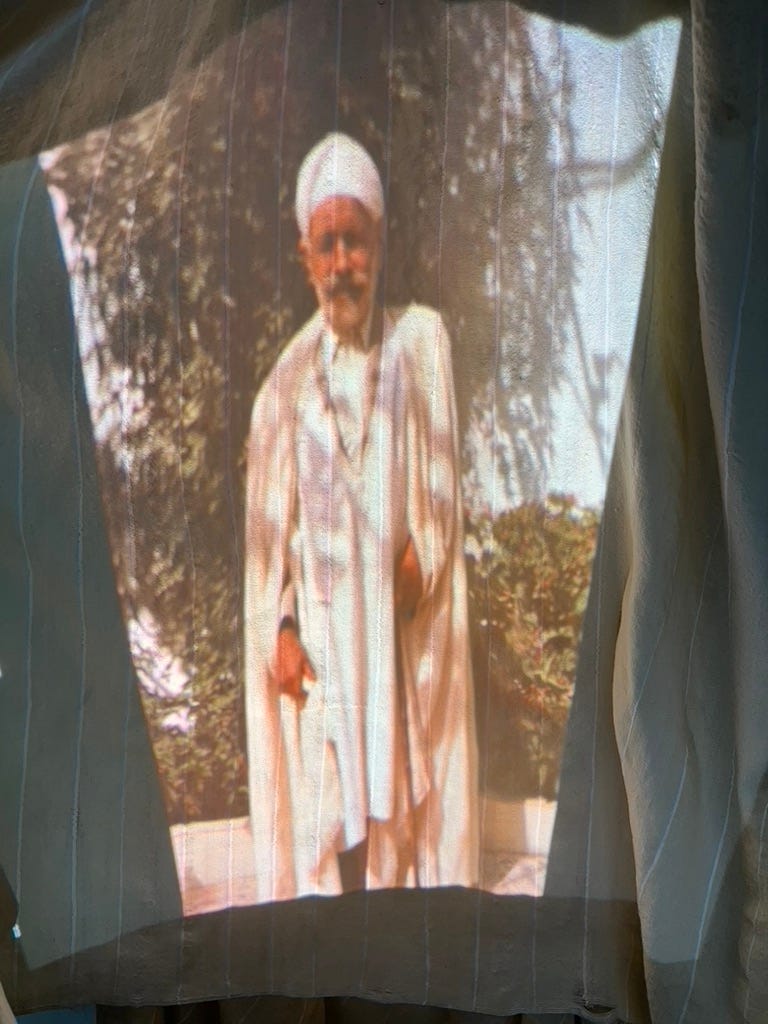
My great-grandfather also wore his burnoos throughout the Algerian struggle for independence, a continuation of that same lineage. For many years, we only had these photographs as it disappeared for two decades. After many conversations and digging around, my dad found it had been lent to a family without their own, and it was eventually returned. Like the blanket I wrote about in my previous post, it carries our family in every thread.
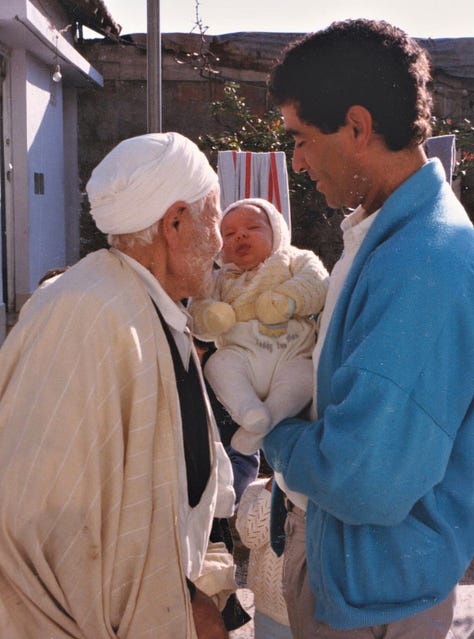
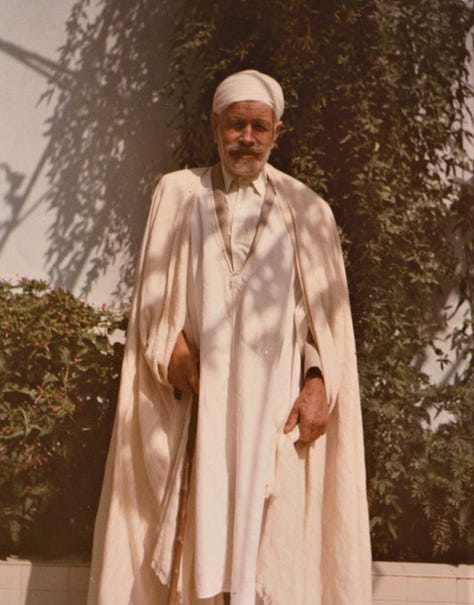
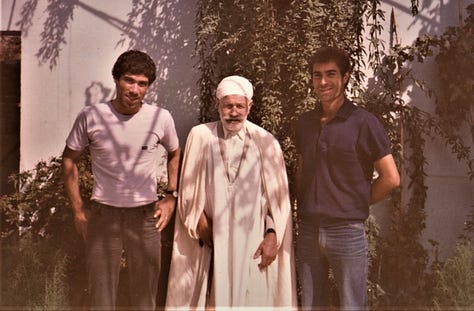
When making the burnoos, my great-grandmother spent many months preparing the wool from our sheep and weaving it on her handloom. It was worn throughout our family’s time in one of the many internment camps established by the French army to contain rural populations during the war, and it’s worn today.
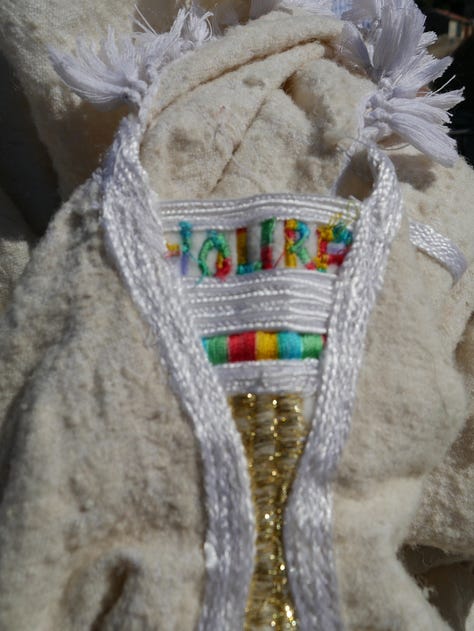
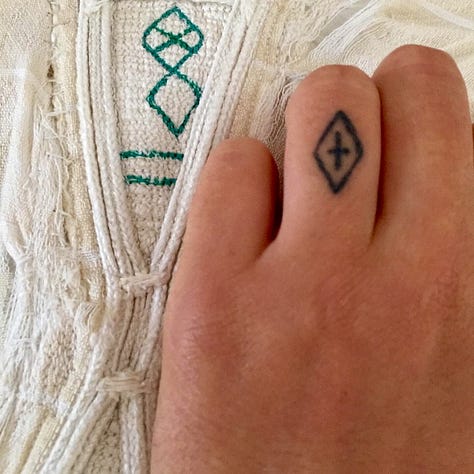
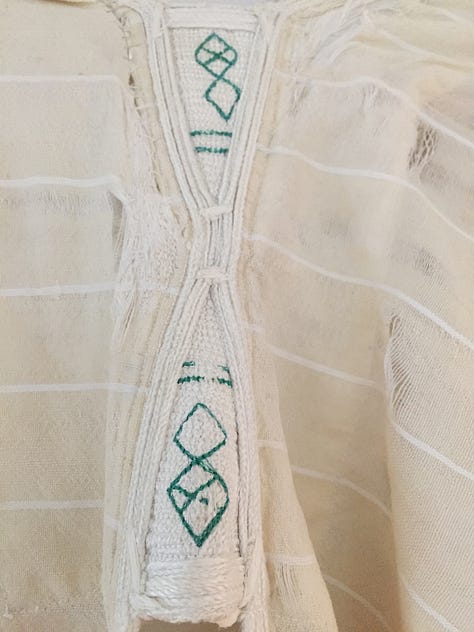
When I travelled to Algeria in 2018, the first thing my dad did when I arrived at his flat was to lay out the newly retrieved burnoos in front of me. I traced my fingers along the frayed woollen edges and came to a detail hidden in the photos behind my great-grandfather’s head, beside the hood. I recognised it immediately; the same Amazigh symbol I had tattooed on my hand years before - a partridge eye stitched in green, long considered a mark of protection.
I held the fabric in my hands, looking between the two symbols, the cross in the centre at slightly different angles. Given that the burnoos has always held as a symbol of resistance, it makes sense to me that my great-grandmother wove in protection, knowing what we were fighting against.
When I was thinking about these tattoos, friends and family told me that women often tattooed symbols that felt important and meaningful to them. I chose this one to honour our roots that survived despite purposeful erasure, and to hold this protection in my own hands. And now when I see it I think of my great-grandmother and the mark that we share.
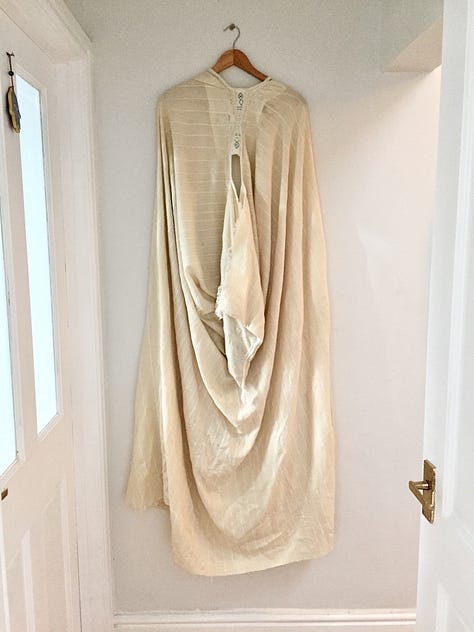
In recent months I’ve started wearing the burnoos whilst making dhikr. I feel the weight of what it carries, and the weight of the work I must carry forward. I understand the portrait of Abdelkader wearing his burnoos and clutching his dhikr breads, as I do - how moral courage and spiritual resilience are inseparable.
I think of the Sahih al-Bukhari hadith; that we must fight to uphold the rights of those who are oppressed, and help oppressors by preventing them from continuing to oppress. In light of the oppression we continue to see and experience, cloaking myself in the history and resilience woven into every fibre of the burnoos compels me to continue this work, honour my ancestors, and carry this legacy forward.
All praise to the Most High, and with thanks to everyone and everything that has come before me and made this expression possible.
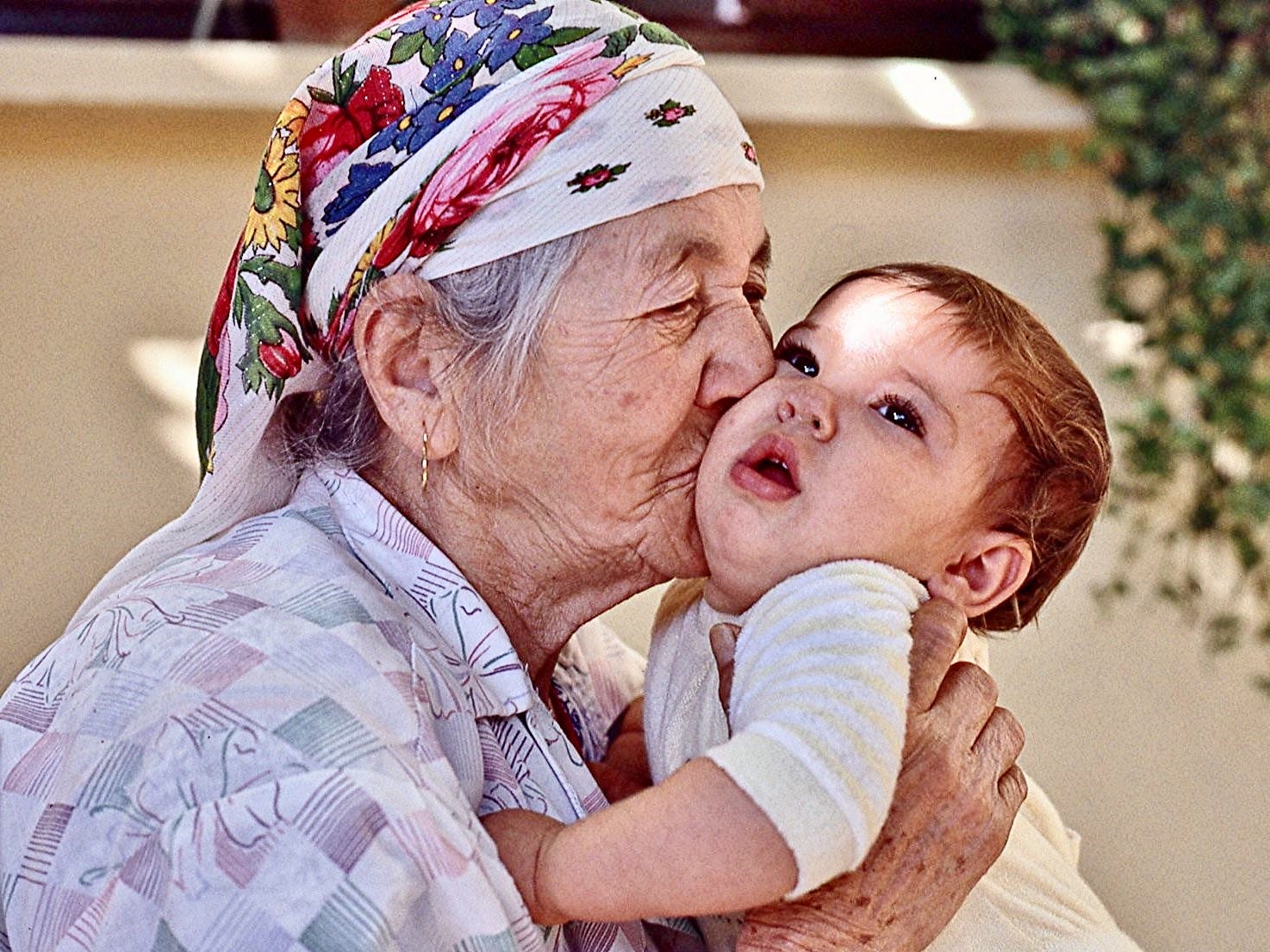
All images from the Gamaz/Roberts archive unless specified
Comments
Nothing yet. Say the first thing.
Sign in to join the conversation.