
Hello friends and fam,
I hope this finds you well! I’ve been on a bit of a hiatus from everything following Malaria that left me in and out of hospital for four weeks. It’s the first time in my life I’ve experienced a sickness that’s forced me to stop for more than a day or two. It’s taught me a lot, and allowed me to experience new states of reality that have brought revelation. Inevitably I’m finding myself going through a re-birth, shedding all that needs to be shed in the process of recovering.
In the middle of all of this, me and my friend received a commission to create a physical and digital quilt - a patchwork of memories, oral stories, films, texts, and encounters with existing archives (more on this soon). This is really what most of my life is about, following the threads that remain to create my own archive and stories I carry into the future.
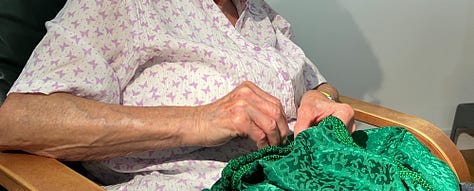
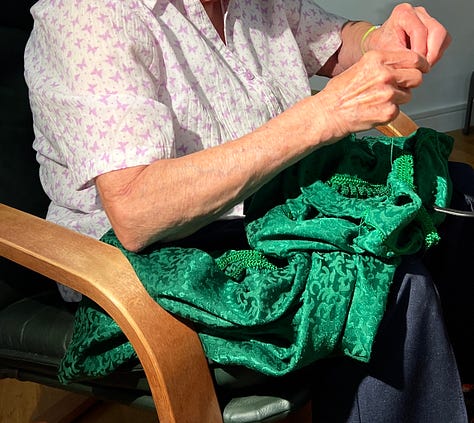
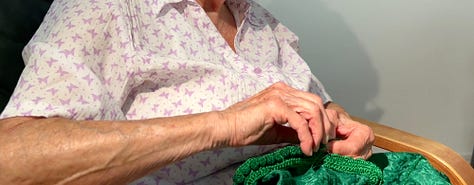
Confined to bed and mostly asleep, during periods of wakefulness I found myself dreaming about quilts, my attention pulled to my family’s textiles on my bed and the walls around me. They are containers of our histories - their survival is an act of resistance when war, displacement and colonial occupation has destroyed so much. I think about what each fibre holds; the hands that made them, the hands that made me, the hands that held them, and the hands they cloaked and kept warm.
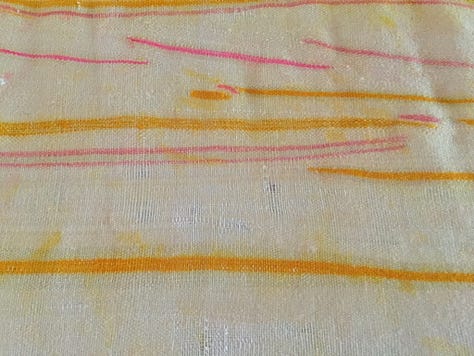
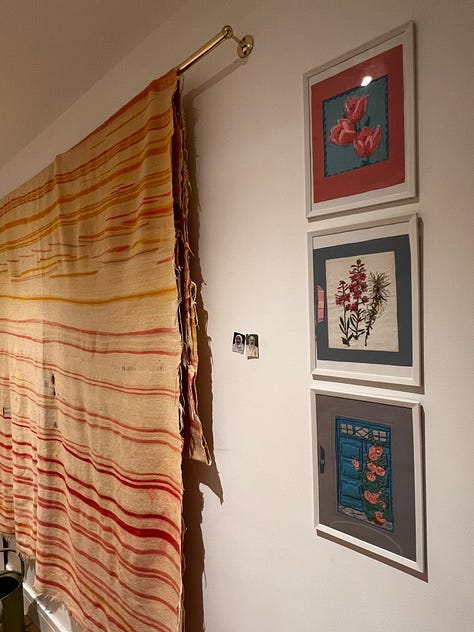
I look at the cream blanket with strips of vibrant pink and orange made by my great-aunt, hanging on a brass pole outside my bedroom door. Always in awe of its mere existence, my family entrusted it to me. Over the years, it’s traveled from Algeria to my homes in England. During The Algerian War Of Independence, the French moved rural families - including ours - into camps in towns to prevent them assisting the Algerian freedom fighters. My family remembers the weight of this blanket’s warmth during that time.
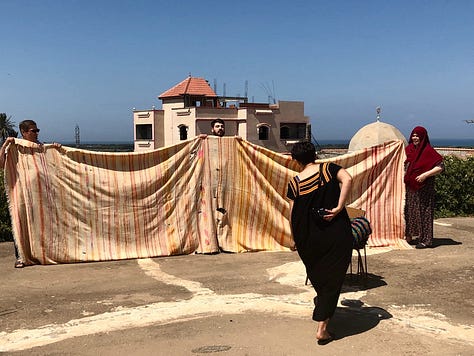
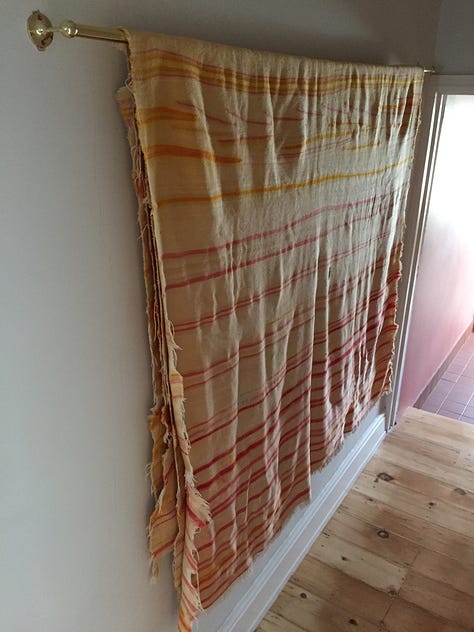
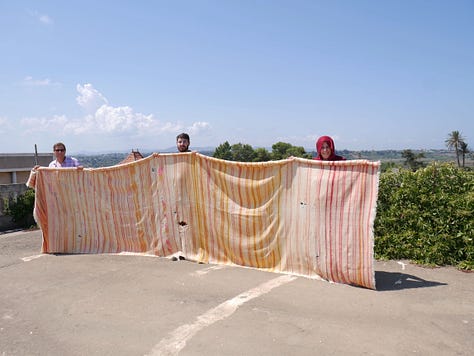
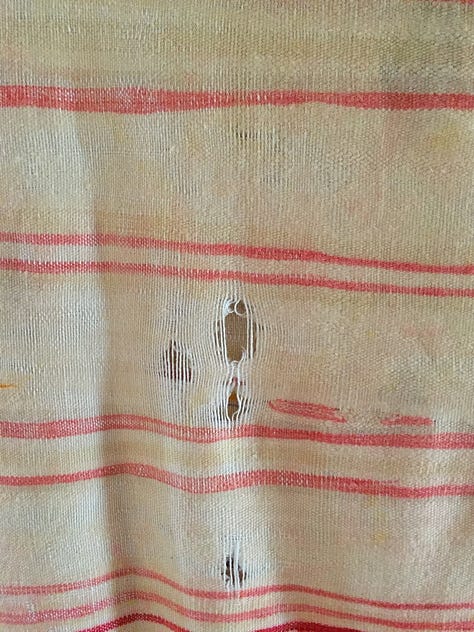
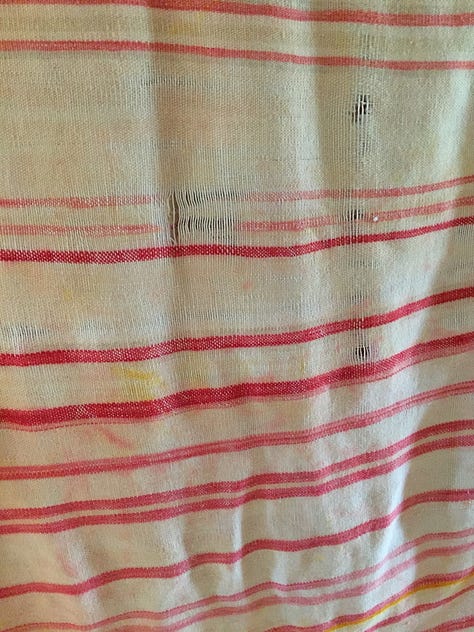
My great-aunt would have made the blanket by hand over many months. A newly-shorn fleece is washed in the river before separating the fibres, carded and spun. Some were left in their natural hues, others plunged into pots of dye on an open fire. This blanket was made out of necessity, yet she also chose to include hand-dyed flecks of colours; pinks, reds, and yellows drawn from natural plants such as henna, pomegranate and onion skins.
A simple wooden square frame is mounted, bound with rope at each corner, and held in place with boulders. My great-aunt would perch on a low wooden stool, pray, and manually thread the weft between the warp in a snake-like motion. The wool is patted down regularly with a steel tool like a fish slice, ensuring a tight weave to keep out the cold. An error is intentionally left in the weave as a marker of human imperfection.
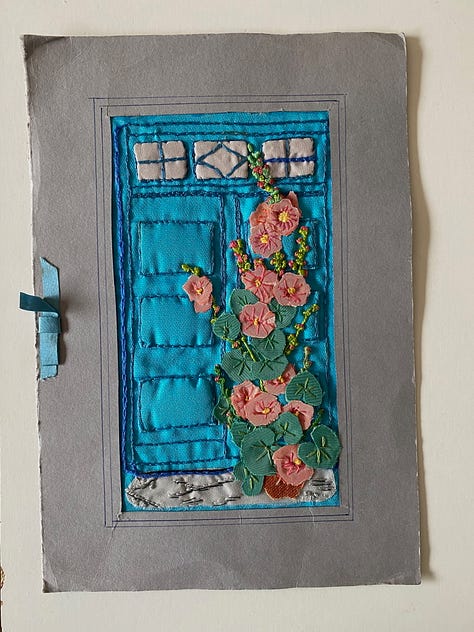
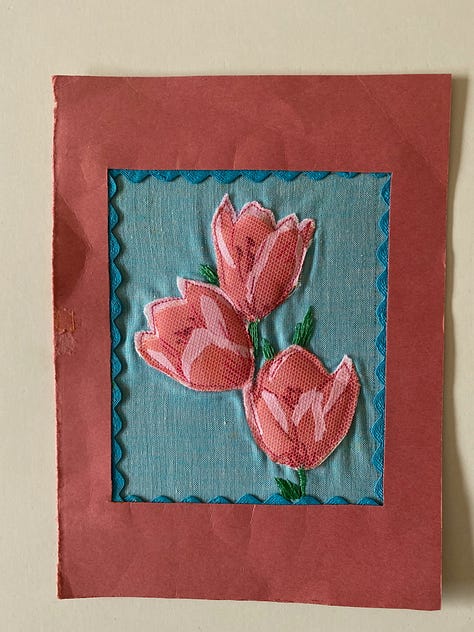
In my post-sickness emergence, I knew it was time to dig out my English great-grandmother’s embroidery of hollyhocks, red campions and tulips. We laid some old wounds to rest on this side of the family, bringing their contested histories into the light and giving them a place on the wall beside the Algerian blanket.
We figured they had once been cards she made - their bows and frayed edges revealing they had been torn from message pages they once accompanied. Ostracised from family and friends, one of the few moments she came together with community was through an embroidery circle.
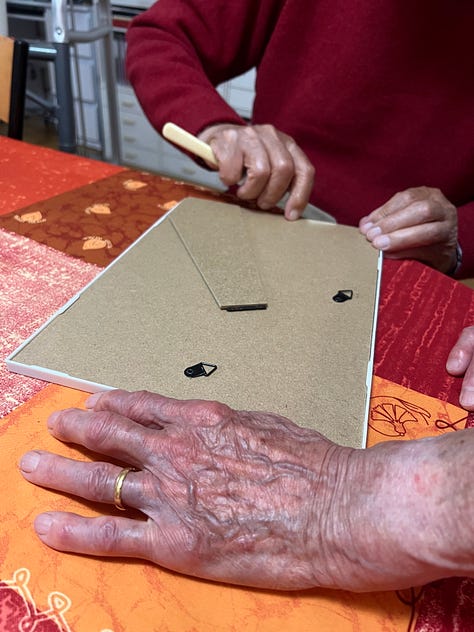
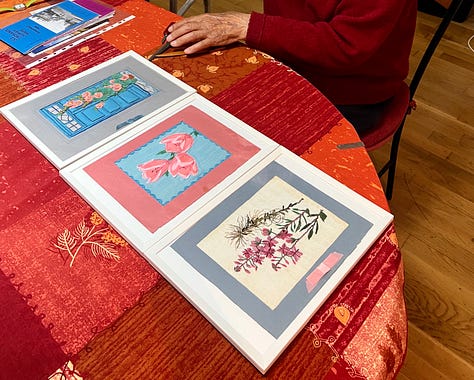
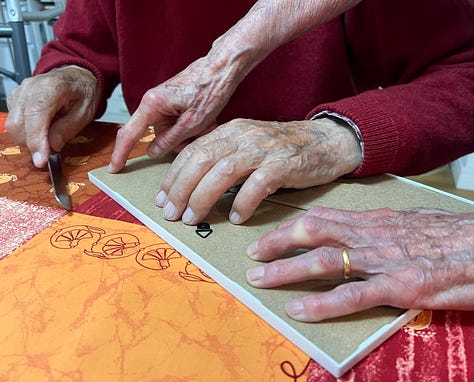
I never knew her myself, and inviting her into the room reminds me of what James Baldwin wrote: ‘Know from whence you came. If you know whence you came, there are absolutely no limitations to where you can go.’ And it’s in this tapestry of who we are that we find the path forward.
We placed the embroidered flowers on the wall where they belong, becoming part of a much larger patchwork that mirrors back who we are and where we’re going.
All images my own. Some parts about the blanket were drawn from an article I published with Azeema Magazine in 2019.
Comments
Nothing yet. Say the first thing.
Sign in to join the conversation.