

In what may be a shock to my colleagues, back in the day, I prided myself on discovering obscure brands before anyone else. I was all about undiscovered gems, to the point where I began unpicking clothing tags to dissuade friends from randomly grabbing my shirt collar to see what I was wearing. Yes, that happened all the time.[1]
It didn’t last, and not because I became less determined as my wardrobe devolved into a sea of grey, white, and navy. It ended because brands that were once my smug secret inevitably became anything but, trumpeted through some collaboration with J. Crew or a spread in GQ or whatever channel maximized exposure and minimized mystery. Sigh.
The same process has, of course, affected pretty much everything in our world today. Amazing locals-only bars identifiable by word of mouth? All over Reddit. Off-the-beaten-track vacation spots? Totally Instagrammable. For the better part of two decades, the digital world has exposed originality and then flattened it, leaving everything feeling serviceable but mediocre.

And, so, we come to thought leadership and artificial intelligence.
When I entered the thought leadership world more than 15 years ago, it felt like a cottage industry. I’d emerged from a career as a journalist and foreign correspondent, pitstopping as a McKinsey consultant for a couple of years before joining its publishing group. The concept of “thought leadership” was a head scratcher, kind of described to me as explanatory journalism selling what people know rather than what they make.[2]
At the time, it was also something few organizations did. But as the digital revolution began decimating traditional media and commoditizing marketing to the point where everyone, everywhere seemed to be selling you something, thought leadership came into its own. It was the right format at the right time for marketers who had identified the need to shift from transactional client interactions to deeper engagement.[3]
You can guess what happened next.
While the development, release, and amplification of thought leadership benefitted in innumerable ways from the greater influence of marketing—which helpfully knocked down a few sacred cows among content types[4]—everyone seemed to jump on the bandwagon. The cottage industry became a teeming metropolis, and the sheer volume of thought leadership long threatened to drown even the strongest swimmer.
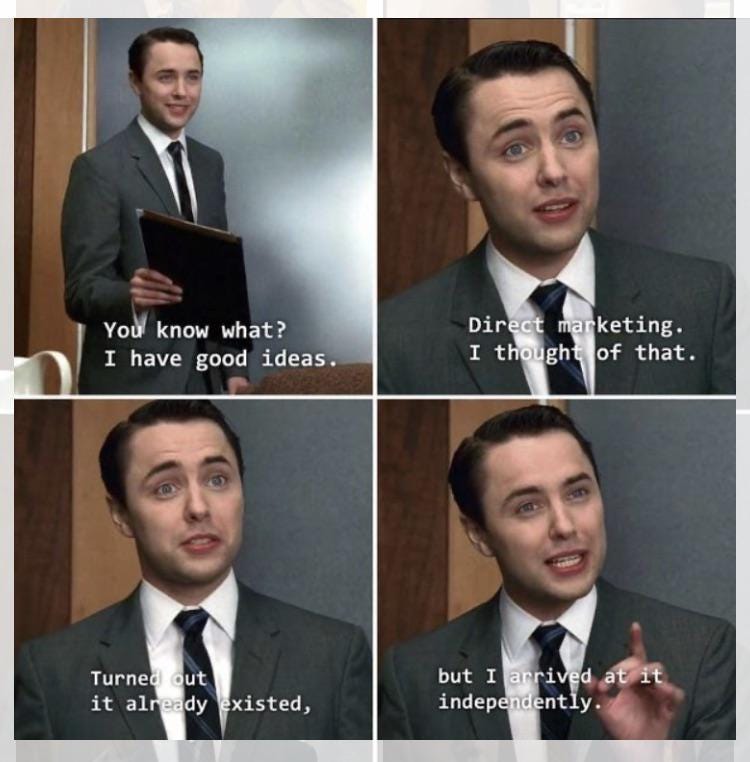
AI has only accelerated this enshittification.[5] Mediocre content is created in minutes, published within hours, and forgotten in seconds. Everyone seems to want to say anything about everything and hire ex-journalists to create company newsrooms, blasting content 24/7 to audiences who just, please, for-the-love-of-all-that-is-holy want it to stop. On the surface, it’s a disaster.
Yet the silver lining is clear. Two years ago, I wrote about how hard it is to create great thought leadership. A year ago, I noted the ongoing lesson from AI was it’s all about quality. Not only has that not changed, it’s intensified. Truly distinctive content has always been the critical differentiator—and in a sea of slop, the value of true insight increases exponentially.
Of course, you’ll hear a lot of definitions of “quality,” usually some combination of the rigor behind content, how useful it is, how well it’s presented, and its timeliness. There’s nothing wrong with that, but in true thought leadership fashion, it’s over-engineered. The simple definition is: Did it advance your thinking? The quality of thought leadership lies solely in what content says. A one-sentence social media blast can be thought leadership, just as a 20,000-word report can.
AI is usefully reminding us of that. The practical application of TL;DR[6] is people dropping long reports into AI and asking for sharp summaries. They want quick insights that push their thinking and pique their interest, allowing them to decide if they want more. And while I’ll never forgive AI’s impact on the elegant em dash—real writers love it!—the technology is pushing greater conciseness and rigor. It’s accelerating myriad tasks, from copy editing to fact checking. It’s being deployed against huge data sets to find signals amid the noise. And it’s being used to critically evaluate drafts, highlighting gaps in logic and suggesting improvements.
These are all positives. But the ongoing and evolving challenge remains how we harness AI’s strengths to make our best work even better, often by creating space to think more and churn less. The last thing anyone needs is more of everything. So the task is to accept that even though creating great thought leadership has never been easy and AI is raising the bar, it is what it is. It’s worth unpicking that tag, right?
[1] I wrote about this on my personal Substack, Homegrown. Because of course I did.
[2] A senior leader at one firm I worked for had a sharper definition: “It gives me an excuse to sell you stuff.”
[3] I even worked on a piece specifically about this shift from the traditional marketing funnel to a “consumer decision journey” founded on an ongoing relationship between sellers and buyers.
[4] Don’t even get me started on the term “thought leadership,” which exists only because no one can come up with a suitable alternative. Some even tried “eminence publishing,” presumably on a day where their pretentiousness alert was malfunctioning.
[5] Props to Cory Doctorow for this amazing term. While he was referring to the gradual deterioration of technology platforms—which attract users with high-quality services and then ruin the user experience over time—I like to apply it to the gradual deterioration of pretty much anything as popularity swamps quality.
[6] Here’s a meta moment if you think this piece is too long so you didn’t read it (TL;DR!). Claude summarizes this post as: AI has flooded the world with mediocre content—but that’s precisely what makes genuinely distinctive thinking more valuable than ever. The bar for great thought leadership hasn’t just held; it’s risen.
No posts
Comments
Nothing yet. Say the first thing.
Sign in to join the conversation.