
As writers, editors, and designers, we are by default in the business of “slow art.” But that doesn’t mean we’re sticks in the mud. We use AI every day to research, automate repetitive tasks, streamline processes, and more. At the same time, we also believe that the human touch is essential to make high-quality content. This newsletter pays homage to both sides and is only a little snobby about what human brains can bring to art that technology can’t.
Things we’re thinking about this month:
1. Recently, the cavalier use of CGI in movies can feel a bit like eating imitation crab. It’s good—or can be—but it doesn’t have the same buttery succulence as the real deal. CGI is more cost-effective than practical effects, but so often, the artistry is lost when it’s used, making everything look a bit cheap and uncanny. How can tools like this be used to enhance filmmakers’ craft or achieve lofty goals? What’s at stake when we try to replace the craft altogether?
2. In a recent interview, meditation expert Dr. Richard Davidson described the concept of “stickiness,” referring to when people project past experiences onto current circumstances and dwell on emotions, thoughts, or assumptions that may not be useful for the present experience. This is something AI can’t do, which is helpful when you need a truly neutral third party but unhelpful when you need to make a snap decision based on instinct. Think of a time when you were thrust into a new experience and, left to your own devices, you realized you had everything you needed to handle it—or a time when you had to let go of your presumptions and be open to an entirely new way of thinking.
3. Humans are naturally existential, spending a lifetime coming to grips with their distinct sense of self and questioning their purpose in the world. Technology can’t help but add another layer of complexity to this exploration, as evidenced in the New Museum’s latest exhibit New Humans: Memories of the Future. Though the exhibit endeavors to capture the peculiarities of humanity, many of the featured works are more robot than human. Is “modern humanity” still inherently and predominantly natural, or at this point, is it impossible to divorce ourselves from technology?
John Carpenter’s The Thing (1982), which is about a shape-shifting alien that mimics its victims, is famous for its incredible practical effects. It took makeup artist Rob Bottin more than a year to pull them off, at one point requiring a 35-person crew. The results are widely considered some of the best special effects of all time.
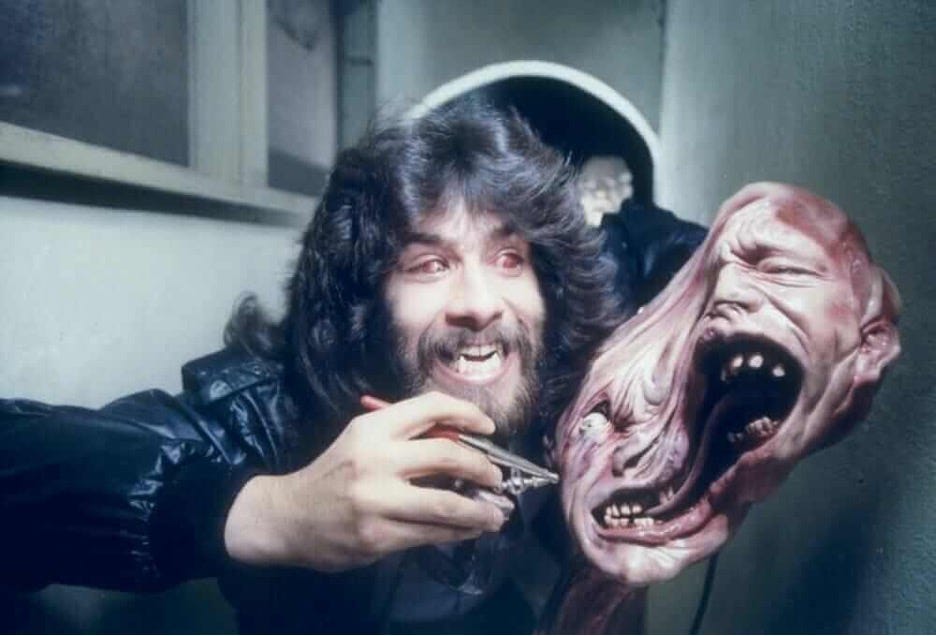
In 2011, a prequel was released, also titled The Thing, which originally combined practical effects with computer graphics. However, negative test screenings resulted in the film’s effects being entirely replaced with CGI, ironically because the studio felt the effects looked too dated.
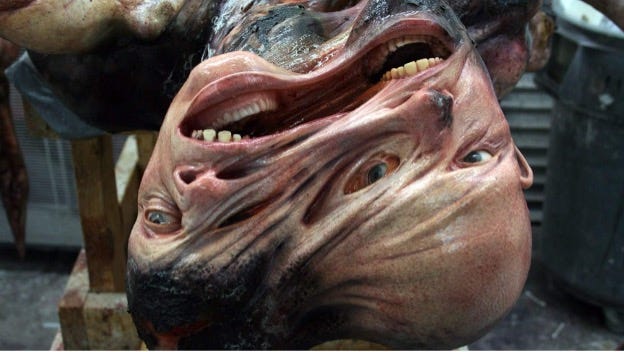
Modern isn’t always better. Because Bottin’s effects relied solely on real-world materials, the effects are recognizably disgusting and remain a testament to creativity and ingenuity. The prequel’s use of CGI, however, is unconvincing—a mere reflection of the technology at the time.
This is why the human touch matters. Art should reflect what people are capable of. Taking the easy route, whether relying on AI or using computers, makes writing or art-making inherently less human, less relatable, and less inspirational.
Carpenter’s film ends with two characters, MacReady and Childs, in a standoff. One person is real, the other is an imitation. Similarly, the two Things may look similar on the surface, but one is a mere copy mimicking its victim.
-David Peak, senior editor
“We’d let you in if you were just driving to Toronto, but we can’t let you drive all the way to Montreal in a car with six people and only five seats.” These words from a Canadian border agent at the Detroit–Windsor crossing complicated our precollege excursion to the closest province with a legal drinking age of 18. The agent—basically the meanest white guy Canada could find—denied us entry for our lack of sufficient seatbelts.

We couldn’t go back home defeated, and we had an Airbnb to get to, so we had to brainstorm: Instead of entering Canada through Windsor and risking the ire of Canadian authorities, we’d drive all the way to Albany, New York, and elect two of our members to take a Greyhound bus to Montreal. I was elected.
As a goody-two-shoes kid, I couldn’t shake the feeling that we’d all be arrested for having the wrong seatbelt-to-people ratio, so as the smallest, I sat on the floor of the car for the entire nearly nine-hour drive to Albany to avoid being spotted by any patrol vehicles. By the time we got to Albany, I couldn’t be in that car anymore. While the initial Greyhound ride left much to be desired (it was, like, midnight), the ride back to Albany made it all worth it. The drive was beautiful, with trees, mountains, and adorable towns galore.
Montreal was also amazing once we got there. This was our first opportunity to feel like real, legal adults. We were independent but cautious. We explored the city, went to one bar, ate poutine (of course), and brought drinks back to our Airbnb to just hang out and play games. The thing I remember the most about this trip, however, is the drive. I saw upstate New York for the first time without being stuffed in a car, and that was the icing on the cake.
Until then, I had considered myself a go-with-the-flow person, but that was when nothing was in my control and my parents took care of everything, so this trip really tested that. Thanks to that mean Canadian, I learned that I could trust myself to consider logistics and make and accept new plans on the fly, because things would probably still work out in the end.
-Marie Westbrook, editorial associate
For the New Museum’s current exhibition, artists were invited to explore “how technological developments have inspired evolving definitions of the ‘human.’” The show is packed with “prosthetic metawomen and rattling automatons.” Apparently, the new human is a hybrid, both human and humanoid. But wires and robots are not where my artist’s inquiry would land.
What distinguishes us from machines? I’d include our physical and sensory existence, our rich emotional lives, and our ability to create through imagination and fantasy. Unlike the memory banks of intelligent machines, our memories are free flowing and changeable. A scent or a few bars of music can spark memories accompanied by nostalgic emotions. Dreams, fantasies, and deep reveries can inspire us to find new solutions or new ways of engaging with life. Walking in nature, with its abundance of sights, scents, and sounds, can boost our cognition, creativity, and mood.
In my view, the new human enjoys freedom to indulge in those very human activities that set us apart. Human beings would not compete to become more machine-like. Instead, they’d relish the time they’ve gained by judicious use of technology. Imagine an art installation that is a walk-in environment of sensory input. Let’s place it just outside the museum in an adjoining garden. Trees, flowers, sky, clouds, and birdsong fill the senses. Visitors are encouraged to walk barefoot on soft grass, on warm sand, or through shallow pools of cool water. Technology is not absent but is deployed to enhance the environment. Translucent touch screens hang among the trees where people scrawl haikus or create finger paintings as temporary as traditional sand paintings. Soft recliners or hammocks remind visitors that periods of unproductivity are essential and enrich their experience of being alive.
-Mary Reddy, senior adviser
No posts
Comments
Nothing yet. Say the first thing.
Sign in to join the conversation.