
One stereotypical image often associated with traditional Chinese medicine (TCM) is how Chinese elders constantly remind us to drink warm water and keep our bodies warm. “Don’t expose your belly button,” they say. “And make sure your knees are covered in winter!”
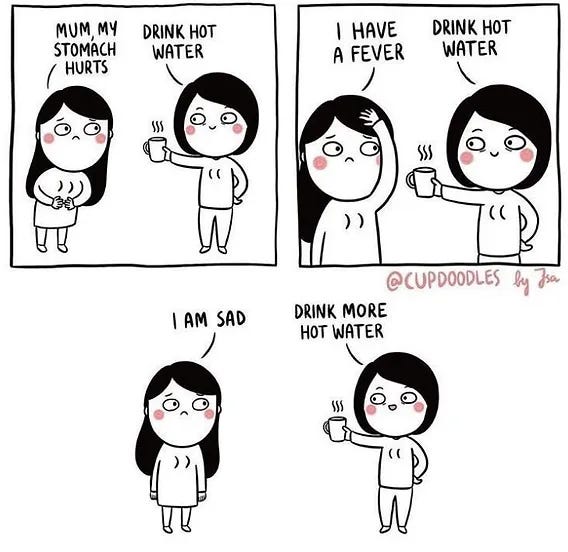
Some might wonder: But Westerners always drink cold water, even in the winter. How come they’re fine and we’re not?
The answer lies more in cultural differences than in physical symptoms.
Not to go too deep into the rabbit hole here, Eastern and Western cultures have very different perceptions of pain. Just because someone doesn’t say anything doesn’t mean they’re unaffected. If we look at the usage of painkillers between these communities, it’s clear that Western cultures tend to rely on them far more than non-Chinese cultures. This might partly stem from the fact that Asian parents often discourage the use of painkillers or Western medicine in general. But perhaps there’s a more logical way to understand their perspective.
Think of it this way: our bodies are like pieces of meat. (Bear with me here!) A good piece of meat is juicy and tender, right? If you leave meat exposed to wind and cold, it turns into jerky—dry and tough. The same principle applies to our bodies. When we’re exposed to cold, our muscles contract, losing moisture and becoming stiffer. The skin dries out, circulation slows down, and everything feels tighter.
Here’s where it gets interesting: as our muscles tighten and lose flexibility, the blood vessels, veins, and nerves within them also contract. These components are already delicate and thin, so even a slight tightening—say, 0.2 cm—can have an impact. Over time, this reduced circulation and flexibility can cause discomfort or even pain. For example, your knees might feel tighter or ache more, especially in cold or rainy weather.
This “cold damage” affects different parts of the body in various ways:
Knees: Tightness and pain, particularly in cold or damp conditions, due to slower circulation.
Head: Headaches, potentially from reduced blood flow or temperature changes.
Belly: Cramps, poor digestion, or even diarrhoea, as a colder gut temperature may inhibit the growth of beneficial gut bacteria.
How Can You Reverse Cold Damage?
Now, let’s go back to our jerky analogy. How do you make jerky soft and tender again? It takes both heat and moisture. But you can’t just toss your body into an oven (please don’t try that) or soak it in water to fix the problem. To "rejuvenate" a human body, you need to apply warmth and fluids in a targeted, consistent way while also avoiding additional cold exposure.
Of course, prevention is always easier than trying to undo the damage. So, instead of letting yourself get to the “jerky” stage, take a little advice from your grandma: drink warm water, cover your knees and belly, and keep yourself warm.
It may seem old-fashioned, but sometimes the wisdom of our elders is worth listening to.
No posts
Comments
Nothing yet. Say the first thing.
Sign in to join the conversation.