

This is the reborn Ride 2 Boulevardia, morphed into a gravel fondo. New location, new routes. Same wonderful cause, same great time on a bike! Mark your calendar for next year’s ride on Saturday, April 17th, 2027! More photos HERE.
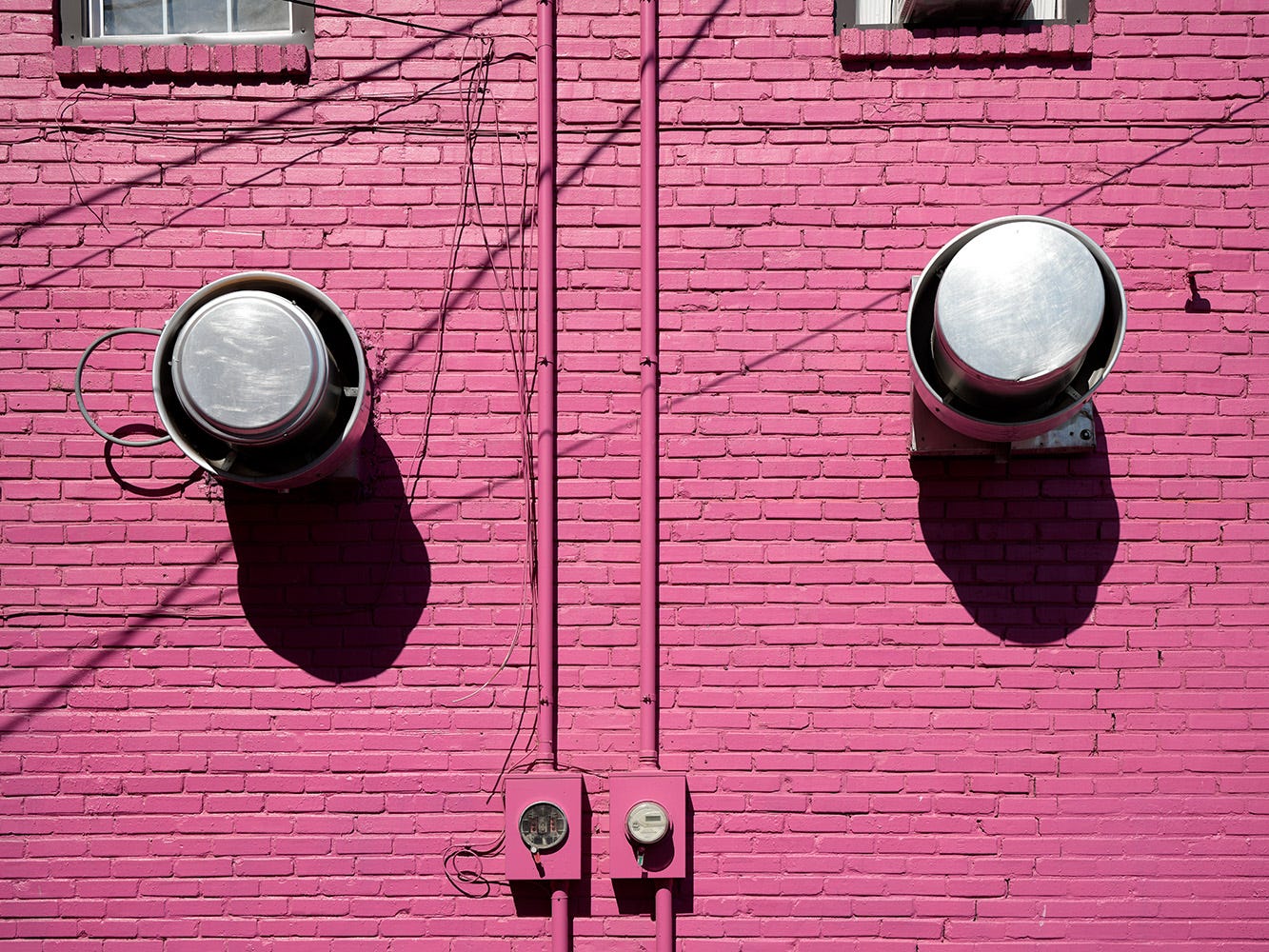
I’ve got a couple other slight variations, but I’m leaning toward #255 here. It’ll be added to Incidental.

I discovered this photographer and his work by way of a recent AllAboutPhoto.com newsletter. Wonderful, powerful stuff. Get some more coffee and have a look, HERE.
A rant:
Let me begin by admitting a bias: I enjoy and appreciate well crafted and composed photographs and I enjoy reading well crafted and composed paragraphs. But I don’t want to read about photographs. Right or wrong, fairly or not, I find the middleman who would insert him/herself between an image and my thoughts about that image to be intrusive and presumptuous. I recognize this knee-jerk reaction as a red flag, so I’m searching for justification. I’ll let you know if I find any. In the meanwhile:
Critics of photography make words of photographs. Their stock and trade is verbal, their work product is paragraphs. Photographic images are non-verbal. Left hemisphere as opposed to right. So when a critic writes about photographs or about photography, he/she is writing as they might about any topic: they’re making observations, conveying thoughts. Could be about a boat, might be about a photograph of a boat. Communicating meaning as humans do, using language. Nothing wrong with that.
The difference between an essay about a boat and a critique of a photograph of a boat is that the boat isn’t a ‘communication’ like words are: but the photograph is. The photographer means to convey some idea, meaning, or feeling just like the writer does, but using images instead of words. Sure, the photo might be of a ‘boat for sale’, but I’m talking photo as ‘art’. Why not receive that communication directly? Images don’t have to be deconstructed or unpacked. Many (or most) indescribable images can only be comprehended visually and will only suffer by translation into words. Seems to me.
Of course there are photos-as-art meant to illustrate a thing or an idea in the same way words do, where subject is primary—and there’s nothing wrong with that either. But at the opposite end of that spectrum are images that exist as the entire message with no subject, issue, or even meaning. Again, my contention is that an image can exist in the world as a complete communication visually without the support of a single word. Left hemisphere-vs-right.
Sometimes an inkblot looks exactly like an inkblot.
Which begs the question: why do we need critics mediating the ground between photographer and viewer? What does this middleman bring to the table? At best, their words serve to help the viewer of a photo to understand it—not everybody speaks image and can appreciate the assist, a very real value to those who don’t ‘get it’ but would like to.
Maybe there is a need for someone to place an image within the context of photography as a genre. Not sure. Or save us time by identifying strong images amongst the deluge of ‘snapshots’ we’re exposed to—though that’s ‘curation’ more than ‘criticism’ and a different subject entirely.
At worst, we don’t need critics, particularly those writers who would entirely supplant images with their words, writing entire books on photography without including a single photograph. Yeah, I’m thinking Susan Sontag.
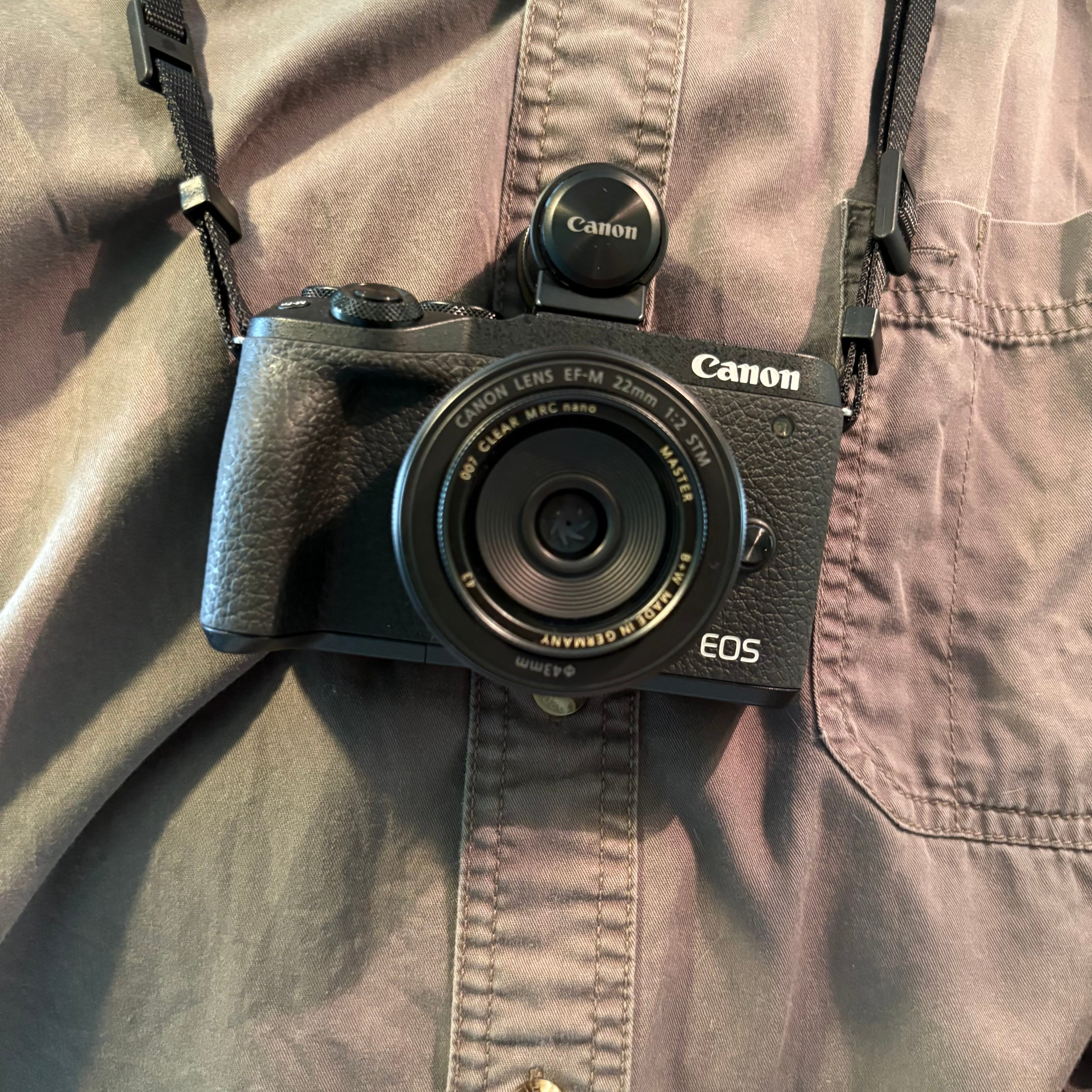
I’d hate for you to miss any of this riveting adventure, so: New Camera, Part I (scroll to the bottom).
In that post, I led you to believe I was replacing the Fuji X-E5 with a Sony A7C II. So close! I’d placed the order already, but phoned to cancel it just as some guy was about to load it into the back of a truck—caught him mid-toss, ash dropping from the stub of his smoke. So I imagine. That morning I was out having taxes done and the drive home took me straight past one of the few camera stores left in the city. Thought I’d stop by to verify that the new Sony (mine, ordered from an on-line store) would be a tolerable fit in my overlarge arthritic hands. It was not. With a likely future 24 - 105mm zoom lens attached, two knuckles on my right hand pressed into the side of the lens. Not even their biggest lens, and not even the camera I had ordered—I was looking ahead to a possible future A7V that would one day replace my aging R5 and carry me entirely out of the Canon eco-system and into Sony. Bears repeating: So close!
As to the current equipment status: I’m replacing an R6 II with a new R5 II. The 6 was a wonderful camera, but it was darn near half the resolution of the 5, so not an ideal back-up for my professional work. But a perfectly functional old R5 will be an excellent back-up to a new R5 II which I subsequently purchased. Good decision. One that I won’t regret probably.
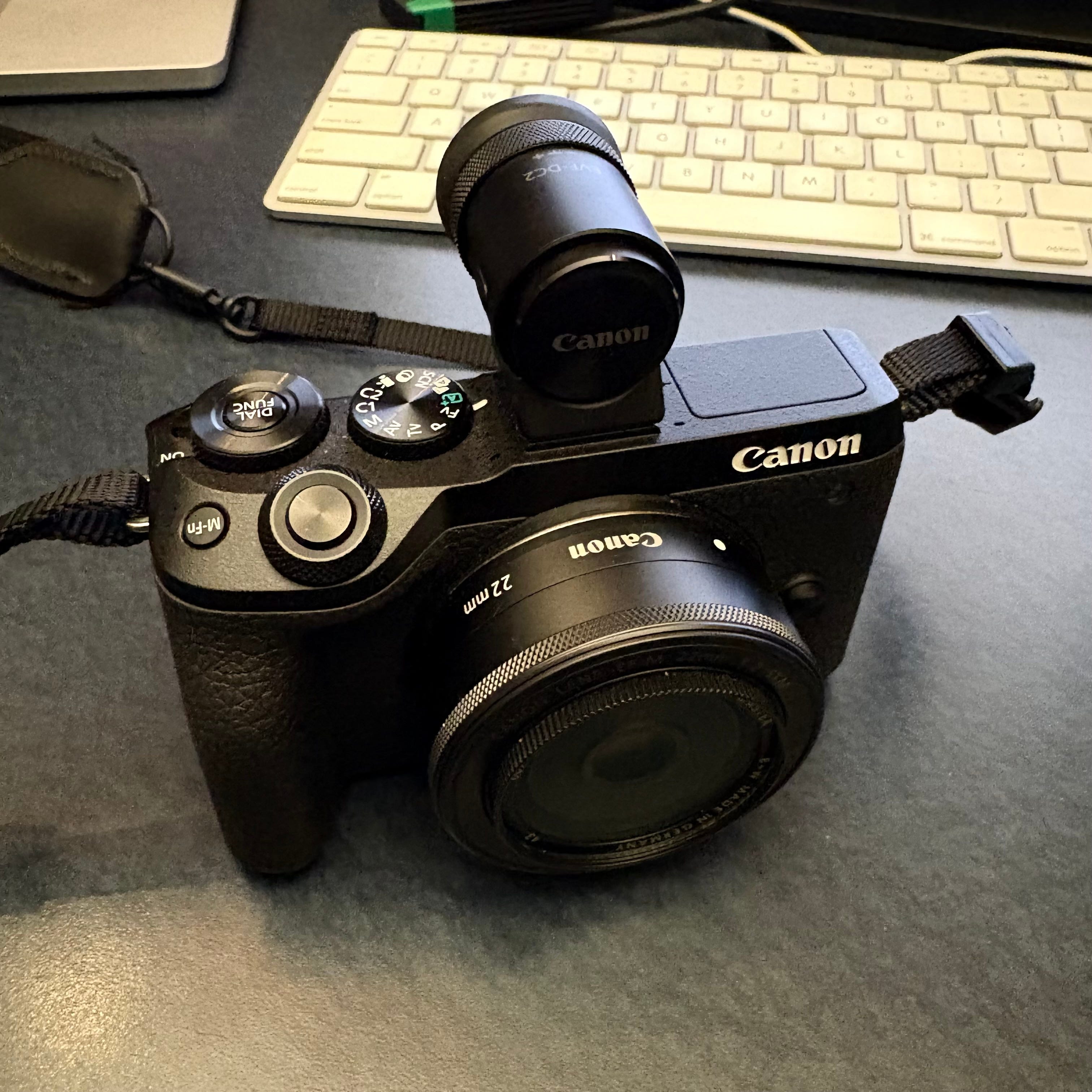
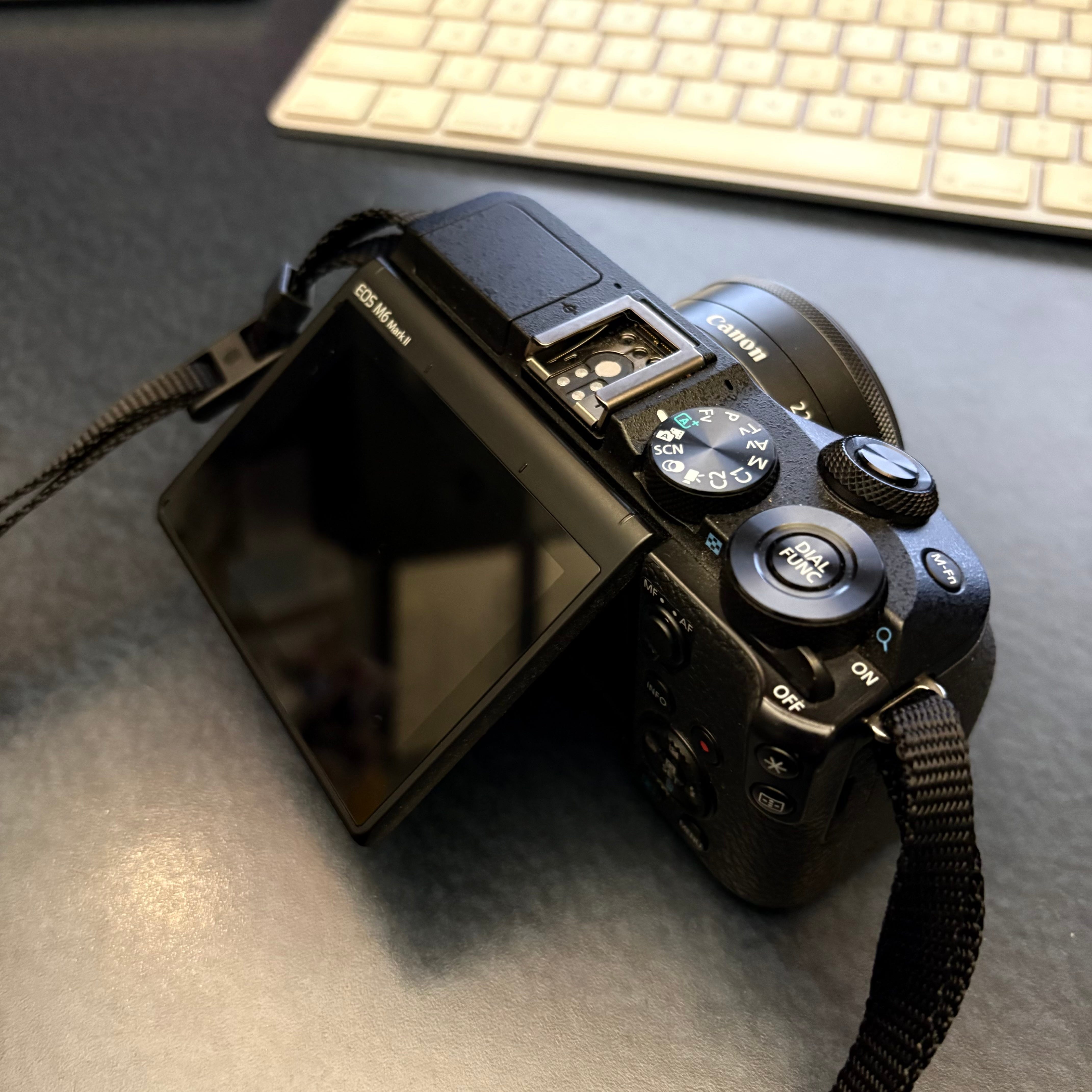
So for the small camera? A used, out-of-production Canon M6 II! But before heading down that fork in the road I’ve gotta tie up the Sony loose ends.
Some preconceptions:
Sony has, to my mind (unfairly of not) seemed like a company that was throwing sh… stuff out into the world to see what might stick. “These idiots will buy features! Give them features!” What does Sony know about making professional grade cameras? I thought to myself, they make radios for chrissakes! Supporting that notion:
The whoring of their camera bodies to every imaginable 3rd party lens manufacturer. In their early days it seemed like that’s all I heard about: “You can use any lens you want! You don’t have to buy expensive Canon lenses for your unimaginative Canon cameras. Freedom!” Which brings me immediately to:
Sony fandom. Sony fans all seemed to be angry. “Canon fan-boys! Nikon fan-boys!” There was a defensive Sony religiosity that equaled the anything-but-Apple intolerance. Why does anyone care?
In spite of these smoldering reservations, I’ve always liked the no-nonsense angular Sony aesthetic, the seriously chunky dials and knobs, the efficient industrial compactness. Having picked one up though, I immediately feel the difference between it and my Canons—their A7 series vs Canon’s R5 anyway. Sony seems to be hiding the bulk required for the internal workings by pushing them back behind the svelte front-facing silhouette, making the body thick and blocky. It feels like a prototype: all the functionality is there but it’s wanting for a sculptor to pick it up and shape it into something that feels correct in your hand. From what I gather, they’ve improved on ergonomics since early days, but to my hand it ain’t there.
So anyway. No Sony for me.
Instead, I found a used Canon M series camera. Same APS-C format as the Fuji, same tiny size of the Fuji and the Sony and in darn near every aspect but one it’s the perfect small camera. It’s got a high resolution Canon sensor, a flip-down screen so I can compose images old-time Rolleiflex style. And it has a removable electronic viewfinder! Yes! Keep it attached when you want to bring it to your eye, take it off when you want maximum compactness. Nobody outside of Leica offers such a thing (that I’m aware of), and Leica only does it for thousands of dollars. The M6 has all the wonderful Canon functionality and intuitive operability; with softened edges and spacious control layout, and their beautiful and familiar-to-me menu logic! Another really big plus is I’ll be processing its RAW files in exactly the same workflow as all my other photos, using Canon’s solid Digital Photo Professional app.
The one missing aspect? Canon stopped producing the M cameras and lenses in October 2023—so I’m buying into a dead end. Sure you can still find stuff used, but there will be no new M series anything, anymore. This is a big one. But I’ve decided I can accept it, put it out of my mind and be happy for as long as I can. The thing may break or become intolerably out-dated in a few years, but I’ll worry about that when I have to.
I have taken the thing out and spent some quality time taking family travel photos, and I can report that it’s a pleasure to use—great fun even. Yeah it’s not an R5 and yeah I wish it captured 45MP, but it’s a bona-fide hoot. Glad I got one. Stay tuned for example photos…
Thank you for having a look!
A
Comments
Nothing yet. Say the first thing.
Sign in to join the conversation.