
Hello Shaker,
Me opening the subscriber count: 👁️👄👁️

5k+ subscribers… y’all really did that 🥹
To Anamaria, L&D Shakers, and every single one of you, this means more than I can put into words 💛
What started as a simple roundup has turned into something much more. A learning diary, a community space, and hopefully, something that gives you at least one idea you can take back to work each time.
This isn’t mine, it’s ours. I’m just putting together the incredible work so many of you are already doing.
So, truly, thank you. For reading, sharing, and being here. We don’t take this for granted 💫
I could write an entire post about Anamaria, but I’ll behave. 🤭 You’ve built something truly special here, and we’re lucky to be part of it! 💛
Got ideas to make the next 5k even better? I’m all ears 👀
Next stop, 10k? 😛🔥
— with gratitude,
Sejaal

Here’s what you’ll find in today’s Learning Brief:
On choosing managers, how do you actually identify a good one?
Upcoming community events and meetups happening across the world
A juicy mix of practical resources you’ll want to bookmark 😍
The latest updates from our community 💫


We’ve built entire systems to develop managers. But how confident are we in how we identify them?
If I look at most organisations (and honestly, even my own past assumptions), we tend to rely on signals like:
confidence
visibility
willingness to step up
high performing
And they feel… reasonable.
But then you come across research that makes you pause and go, wait, why haven’t we looked up from this lens?
The research, conducted by Achyuta Adhvaryu, Ben Weidmann, Sonia Bhalotra and their colleagues, set out to solve exactly this classic problem:
What makes someone a “good” manager? And, how do you separate a manager’s influence from the inherent talent of their team?
To do this, they used a Managerial Value-Added (MVA) approach in a controlled lab setting with over 1,000 participants.
Here’s what they did:
(This is what the experiment looked like in practice - multiple rounds, rotating managers across teams.)
And here’s where it gets really interesting:
(This part is key - the study compares self-selected managers with randomly assigned ones to isolate the real “manager effect.”)
By rotating managers across different groups, they could statistically isolate the “manager effect” - identifying individuals who consistently improved team performance, regardless of who they were managing.
And importantly, they didn’t stop there.
They validated these findings using a field study of retail store managers, showing that the same patterns held in real, high-stakes business environments.
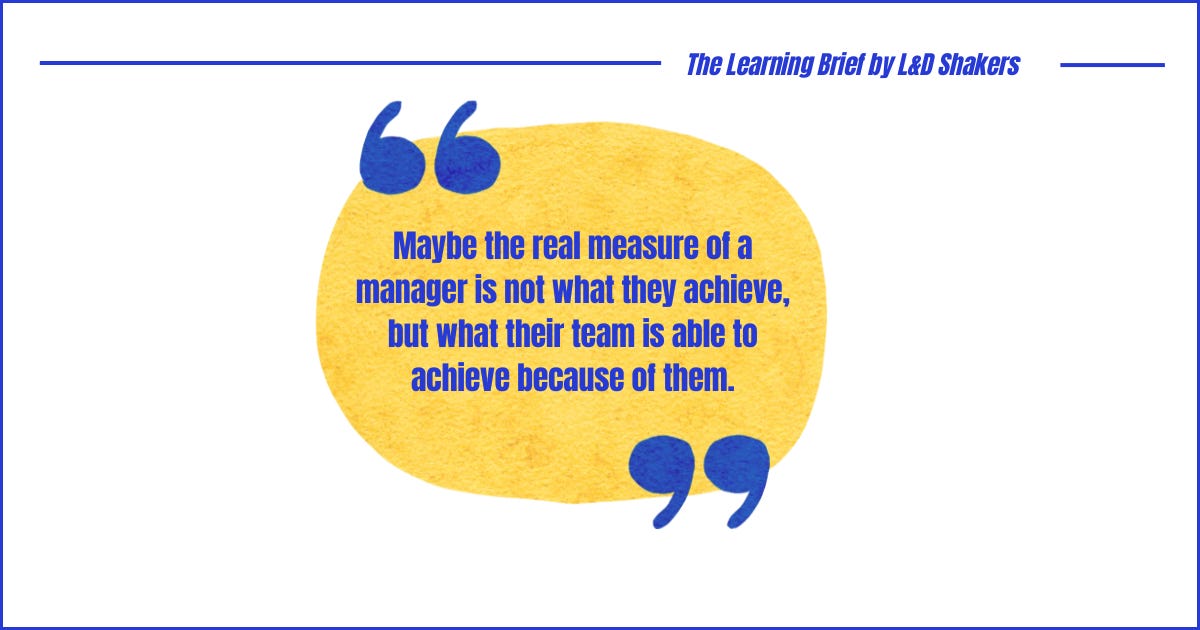
A high-quality manager is roughly 2x more valuable than a high-quality individual contributor.
Not because they do more work, but because they increase everyone else’s productivity by about 25%.
Participants who self-nominated for leadership roles actually performed worse.
The pattern? Overconfidence, especially in their perceived social and leadership ability.
The strongest predictors were:
fluid intelligence (problem-solving ability)
economic decision-making (making good trade-offs)
What didn’t matter much:
personality traits
demographics
even the desire to lead
The highest-impact managers weren’t necessarily the most “inspiring.”
They were the ones who:
matched people to the right tasks
monitored progress closely
kept the system running smoothly
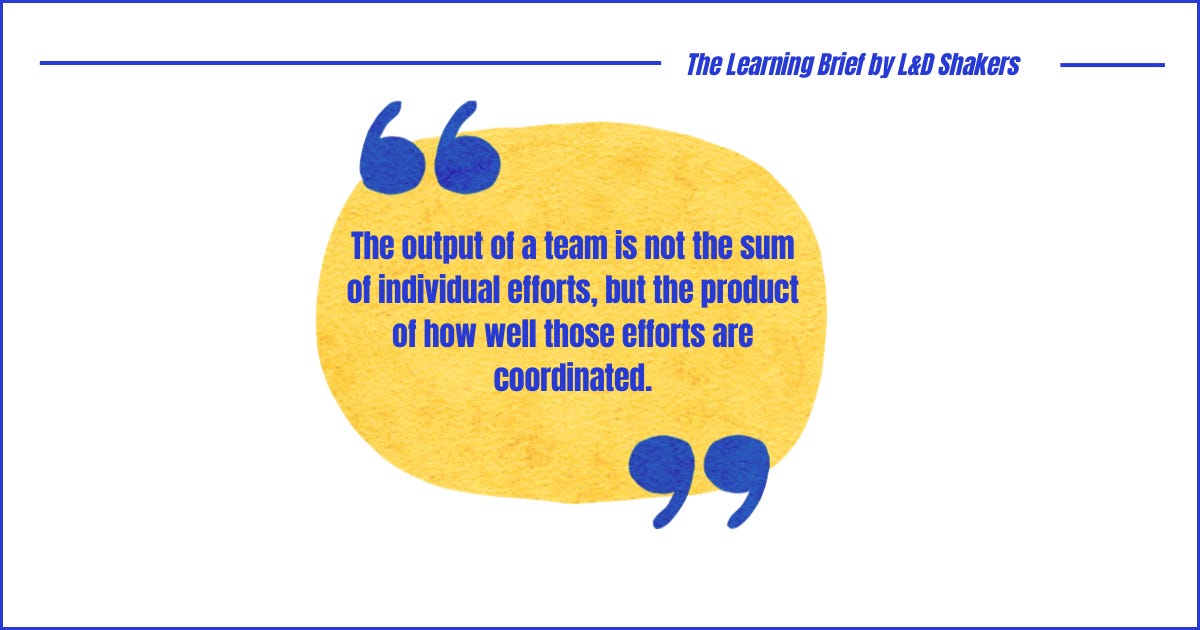
It’s less about how you show up, and more about how well the system works because of you.
This is where it gets interesting for us.
Because this isn’t just about managers, it’s about the systems we build to identify and develop them.
We often equate potential with:
aspiration
past performance
visibility
This study suggests we need to look at:
— decision quality
— problem-solving under constraints
— ability to improve others’ output
You can’t assess management capability through intent alone.
What to build more of:
— simulations
— scenario-based assessments
— short-term leadership rotations
And now with AI, this gets even more scalable. Use AI to:
simulate team scenarios
create realistic decision environments
give people repeated practice loops
One of the hardest things to detect in leadership selection?
The gap between confidence and actual decision quality
AI-enabled assessments can:
track decision patterns across scenarios
compare confidence vs accuracy
identify who consistently improves outcomes
This helps move us away from:
“They seem like a leader” to “They consistently make systems work better”
We’ve spent years strengthening the interpersonal side of management:
feedback
communication
empathy
And those matter.
But this research points to something equally critical, and often underdeveloped: the ability to delegate work, match people to tasks, make trade-offs, and allocate resources effectively
If the most eager candidates are not always the best ones…
Then our systems need to:
reduce over-reliance on self-nomination
create objective entry points into leadership pipelines
When one person can influence team productivity by ~25%…
This is no longer just a development conversation.
It’s a business strategy lever.
Maybe the question isn’t:
“Who looks ready to lead?”
But:
“Who consistently makes others more effective?”
And those two answers…
might not overlap as much as we think.
Now, I would like to know from you, if you think about the best manager you’ve worked with, what actually made them effective? Tell me in the comments!

The lineup is stacked. 🔥 There are a few selected sessions we think you’ll really like:
🔥 ThoughtLab: The Campfire Method — How to Help Groups Open Up and Connect Deeply
In this highly interactive ThoughtLab, Jan Keck introduces a different approach to help groups warm up naturally, like building a campfire, not breaking the ice.
🔥 ID Power Hour: The SME Who Controls Everything
In this interactive session, we dive into a real-world case where instructional design takes a back seat as SME control increases. Together, we’ll unpack the tension and think through what good looks like.
🔥 L&D Shakers Book Club: Storyworthy
This time, we’re diving into Storyworthy by Matthew Dicks, a practical guide to finding and telling stories that actually connect.
We’ll kick off with a short overview, then swap stories, reflect, and experiment with simple techniques together. Whether you’ve read the book or not, you’re very welcome to join.
…and many more 👀
We’ve also got local hub offline events happening in London, Munich, Amsterdam, and Dublin, so if you’ve been meaning to meet fellow Shakers in person, this is your sign. 🙌


[ 👀 Read ] The Autonomous Learning Ecosystem by Lori Niles-Hofmann
This is a must-read if you’re rethinking what L&D looks like beyond courses. Lori Niles-Hofmann challenges the idea that AI transformation is just faster content creation, and instead lays out a shift toward a more autonomous, system-driven learning ecosystem. It’s especially useful for understanding how L&D work is evolving upstream—and why clarity on the real business problem matters more than ever.
[ 🧰 Use ] Leadership Readiness Assessment for Managers
This quick 10-minute assessment puts managers into realistic, everyday leadership scenarios to help them understand their strengths and gaps. It’s a simple, practical tool you can use for self-reflection, coaching conversations, or as a starting point for leadership development journeys.
[ 👀 Read ] Do We Want Behaviour Change or Information Transfer?
This is a simple but powerful reminder of a question many L&D teams overlook: are we trying to inform or actually change behaviour? Using a relatable story, it highlights why information alone rarely drives action—and why getting clarity on this distinction can completely change how you design learning experiences.
[ ⬇️ Download ] Strategic Design Assessment: A Five-Point Checklist
This practical checklist helps you assess and strengthen the design of your learning experiences beyond just “looking good.” It covers key principles across strategic, visual, and instructional design, making it a useful tool to revisit with your team as you build better learning solutions.
[ 👀 Read ] “AI Evals” for L&D: How to Check Whether Your AI-Generated Content Is Good Enough to Ship
This piece introduces a critical shift in L&D work: from creating content to evaluating AI-generated outputs. It walks through a simple but powerful cycle—check, diagnose, fix, re-check—that helps you improve quality and avoid shipping weak content. A very practical read if you’re already using AI in your workflow.
[ 🧰 Use ] Conflict Management Canvas by Fearless Culture
This canvas is a structured tool to help teams address conflict by learning from past issues instead of avoiding them. It guides reflection, surfaces what worked (and didn’t), and helps teams define a shared approach to handling tension—making it especially useful for facilitators and team leaders.
[ 👀 Read ] Zoom Out for an Integrated View: Stakeholder HR through Human Capability with AI
This piece offers a useful “zoomed-out” perspective on how HR, AI, and human capability come together. It explores key shifts shaping the future of work and helps you connect the dots between individual development, organisational transformation, and broader HR strategy.
[ 🎧 Listen ] What Gets in the Way of Trust on Teams (and What to Do About It)
This podcast episode explores why building trust at work is harder than it sounds, especially when people are used to protecting themselves. Through real questions from leaders, it unpacks practical ways to navigate vulnerability, conflict, and psychological safety in everyday team settings.

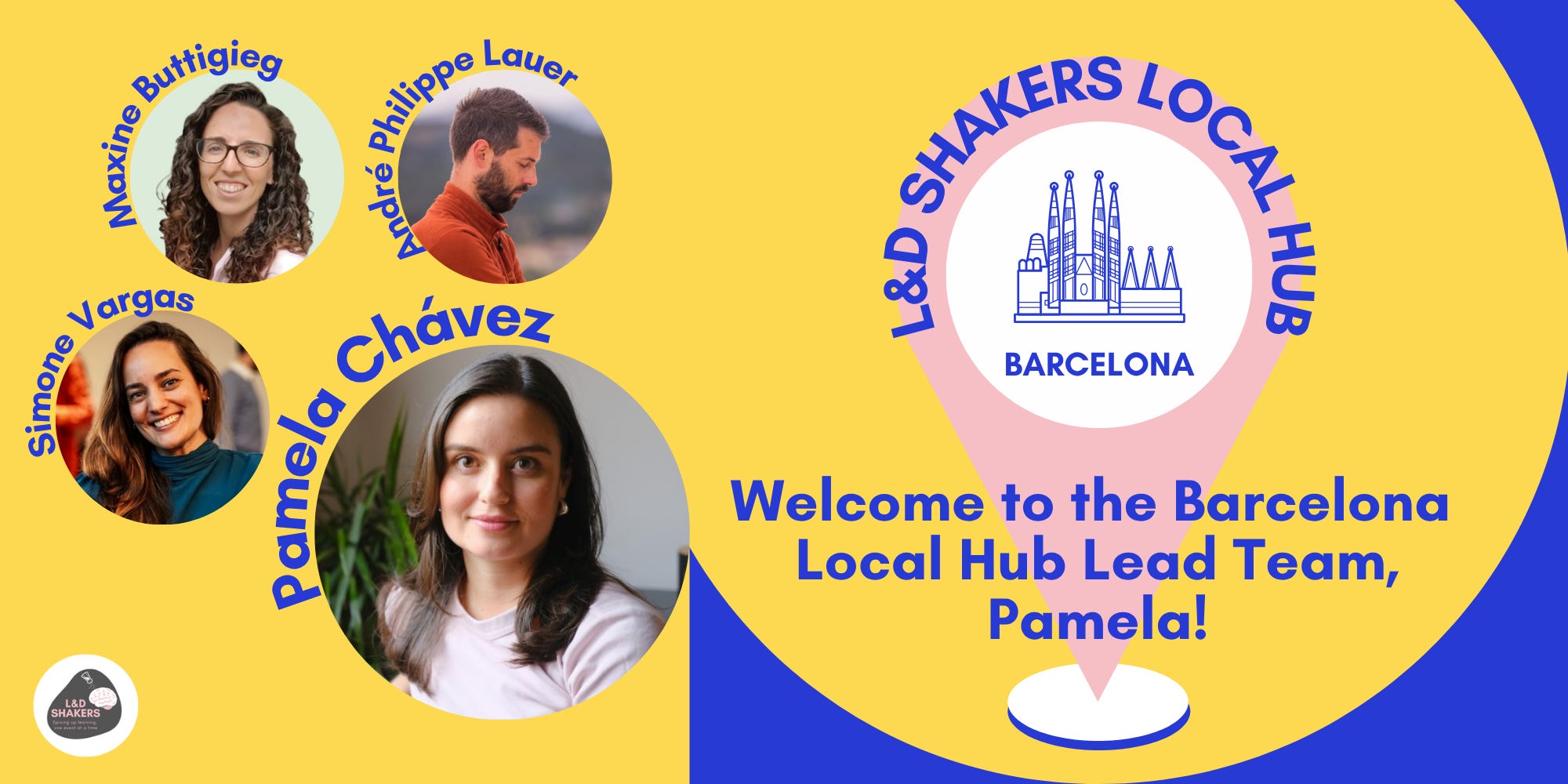
Barcelona Shakers, we’ve got an exciting update!
Pamela Chávez is joining the Barcelona Local Hub leadership team, alongside Maxine Buttigieg, André Philippe Lauer, and Simone Vargas, bringing her coaching expertise to one of our longest-running hubs.
Big congratulations, Pamela, so excited to see you step into this journey. Have the best time building and experimenting with the crew! 💛
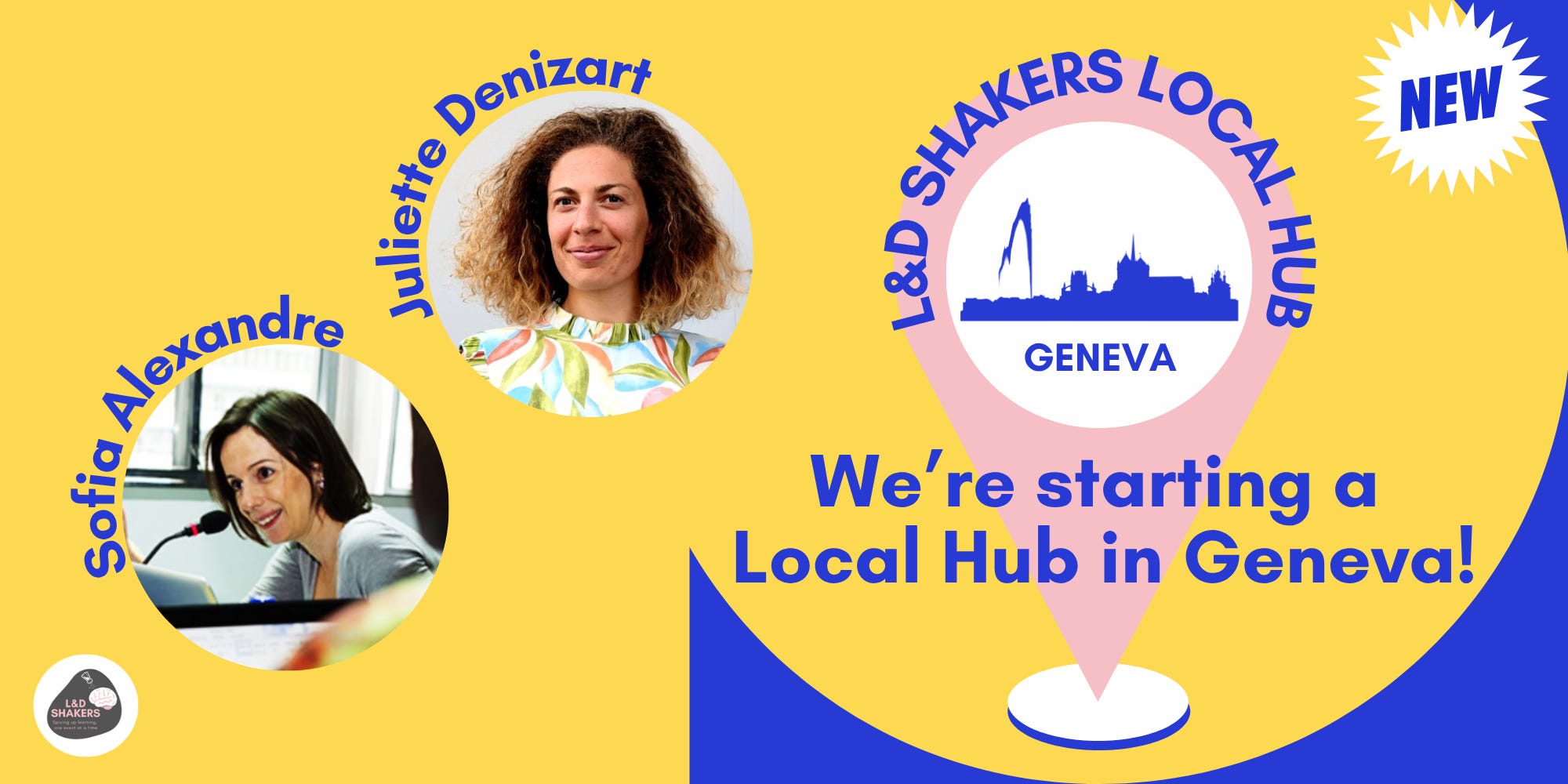
Geneva Shakers, this one’s for you!✨
Juliette Denizart and Sofia Alexandre are launching a new Local Hub in Geneva, bringing the offline L&D magic to the city. Join #2-local-hub-geneva and stay tuned for the first meetup soon!
Huge congratulations, Juliette and Sofia, so excited to see you start this journey. Have lots of fun building something special together! 💫
〜See you soon
Till then, keep spicing up your learning! 🧠🧂
Sejaal
If this edition made you think, smile, or steal an idea, pass it on to someone else too.
No posts
Comments
Nothing yet. Say the first thing.
Sign in to join the conversation.