
Hello Shakers,
I hope the first quarter unfolded in ways that felt meaningful, energising, or at the very least, survivable 😄
And I hope the coming months bring plenty of goodness, growth, and good surprises your way.
A big thank you to Klara Hermesz, Houra Amin, and Andy Sontag for their wonderful contributions in the previous editions. And an especially BIG thank you to Anamaria for everything she does to support me and make this all happen! 💛
Here’s what you’ll find in today’s Learning Brief:
A practical playbook for psychological safety
Upcoming community events and meetups happening across the world
A juicy mix of practical resources you’ll want to bookmark 😍
The latest updates from our community


If I look at the last year, and even more so this year, psychological safety has easily been one of the most requested themes from clients in my part of the world.
Not always by that exact name, of course.
And in the kind of world we’re working in now - faster change, more ambiguity, more collaboration across differences, more pressure to perform; psychological safety is no longer a “nice culture topic.” It’s the work infrastructure.
If learning is the goal, safety is the condition.
No psychological safety, no honest reflection.
No honest reflection, no experimentation.
No experimentation, no real learning.
That’s why I found The Psychological Safety Playbook by Dr Karolin Helbig and Minette Norman so useful. It gives you plays and moves you can actually use in conversations, workshops and team rituals.
Think of this Learning Bite as less of a book summary and more of a locker-room handout before the match.
LET’S GO!
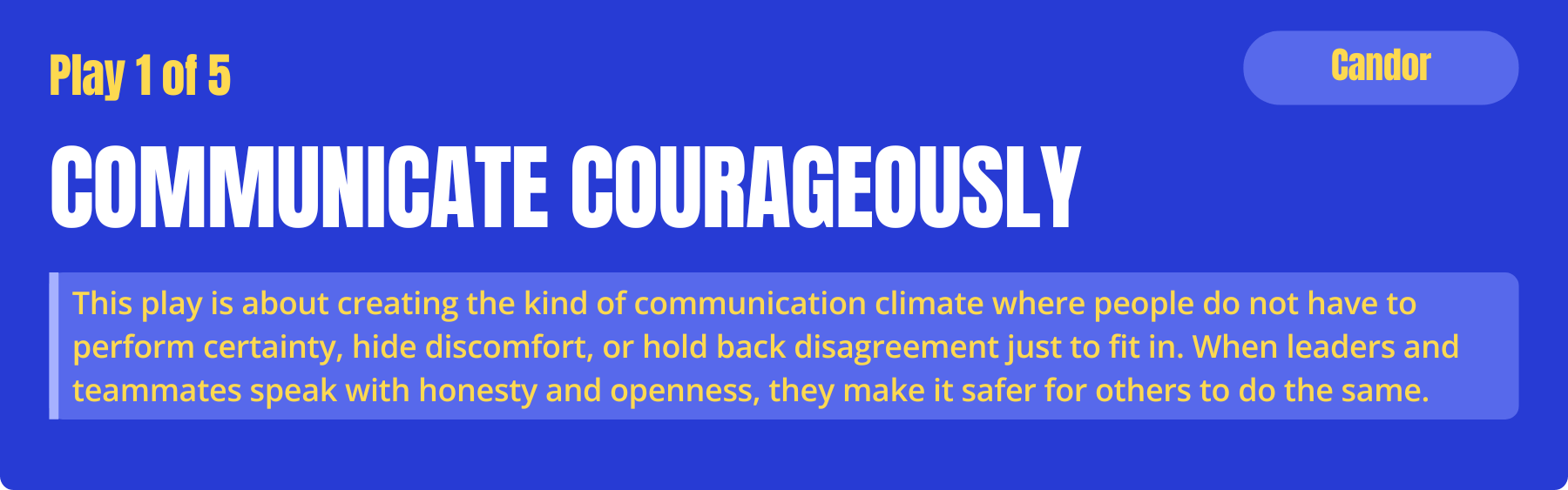
Here are the moves in this play:
Show that you are open to other viewpoints by making space for people to add, challenge, or expand your thinking.
TRY SAYING
“I’ve shared my view. What else should be on the table before we decide?”
“If you’ve had a different experience with this, I’d really like to hear it.”
“What’s a perspective we haven’t heard yet?”
Actively invite different opinions so the team hears more than the loudest or first viewpoint.
TRY SAYING
“We’ve heard one strong case. Who wants to make the case for another direction?”
“Let’s pressure-test this before we commit. What might we be underestimating?”
“If someone has reservations, competing priorities, or a different read, now’s the time.”
Share your emotions appropriately so others see that being honest about how you feel is acceptable at work.
TRY SAYING
“I’m disappointed with how that landed, and I want to talk about it constructively.”
“I’m feeling a bit uneasy about this plan, even though I see the upside.”
“That conversation stayed with me more than I expected, so I’d like us to revisit it.”
Be open about what you do not know, so asking questions, learning, and seeking help feel normal.
TRY SAYING
“I’m not clear on that yet. Can someone walk me through how you’re seeing it?”
“I need another set of eyes on this before I’m confident in the recommendation.”
“I don’t want to guess here. Let’s pause and get the right input.”
Use light, respectful humour to reduce tension, make the environment more human, and help people relax enough to contribute.
TRY SAYING
“That was a very confident answer from me for someone who clearly skipped step two.”
“I think the deck, and I are no longer in a healthy relationship today.”
“Okay, let’s all agree that was not our finest five minutes, and then move on.”


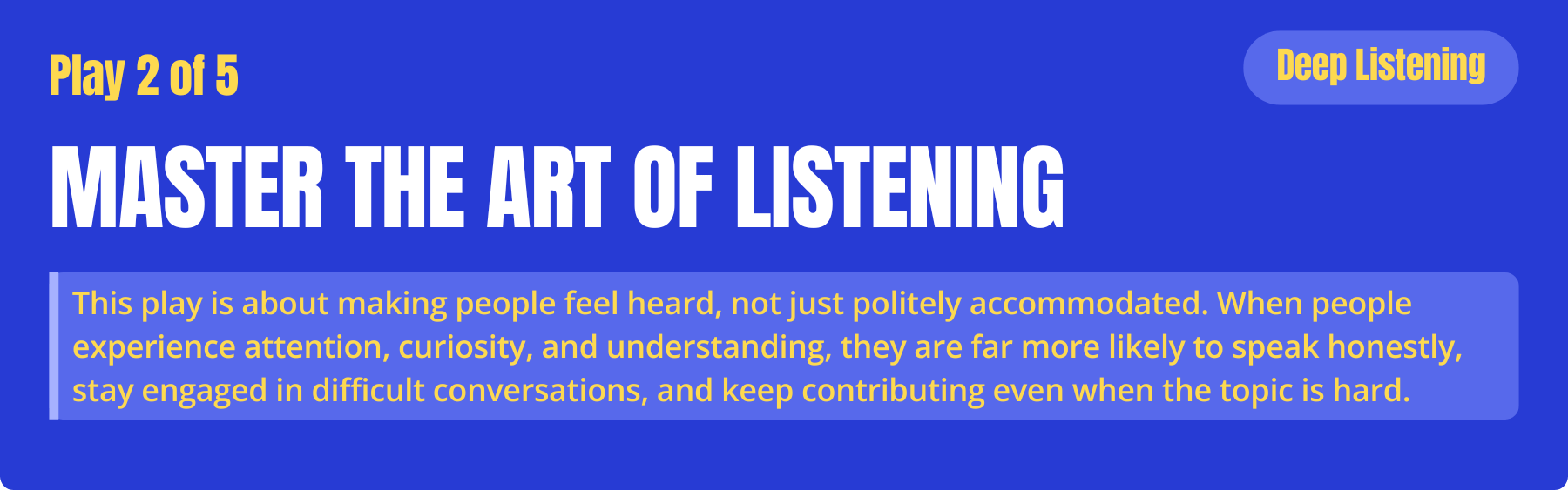
Here are the moves in this play:
Focus on understanding the other person’s perspective instead of planning what you want to say next.
TRY SAYING
“I’m going to hold my response for a moment. I want to make sure I understand how you’re seeing this first.”
“I was already forming an opinion, but let me pause. Can you walk me through your thinking a bit more?”
“Before we react, let’s make sure we fully understand the point being made.”
Keep bringing your attention back to the person speaking so you can stay fully engaged in the conversation.
TRY SAYING
“I want to give this my full attention. Let me close a few things and stay with you on this.”
“Sorry, I drifted for a second. Can you say that last part again? I want to catch it properly.”
“Let’s pause the multitasking for a minute and stay with this; it sounds important.”
Check that you understood correctly by reflecting on what you heard and asking follow-up questions.
TRY SAYING
“Let me play back what I heard: the issue isn’t the deadline itself, it’s that the dependencies aren’t clear. Is that right?”
“So if I’m understanding you right, you’re not saying no, you’re saying the current approach won’t hold up. Is that what you mean?”
“Before we move on, can someone summarise the concern in one line so we know we’re aligned on what was raised?”
Pay attention to the emotions underneath the words so you can address what is making the conversation difficult.
TRY SAYING
“It sounds like there’s more frustration here than the words alone are showing. Do you want to say a bit more about what’s behind that?”
“I can hear that this really bothered you, even if you’re trying to stay measured.”
“I think there’s some tension in the room around this topic. Let’s name that before we keep pushing ahead.”
Use genuine curiosity to draw out fuller thoughts and help people say what they really mean.
TRY SAYING
“That’s interesting. Can you say more about what led you to that conclusion?”
“You mentioned that this felt off from the start. What were you noticing?”
“Let’s stay with that point for a minute; there may be something useful there we haven’t unpacked yet.”

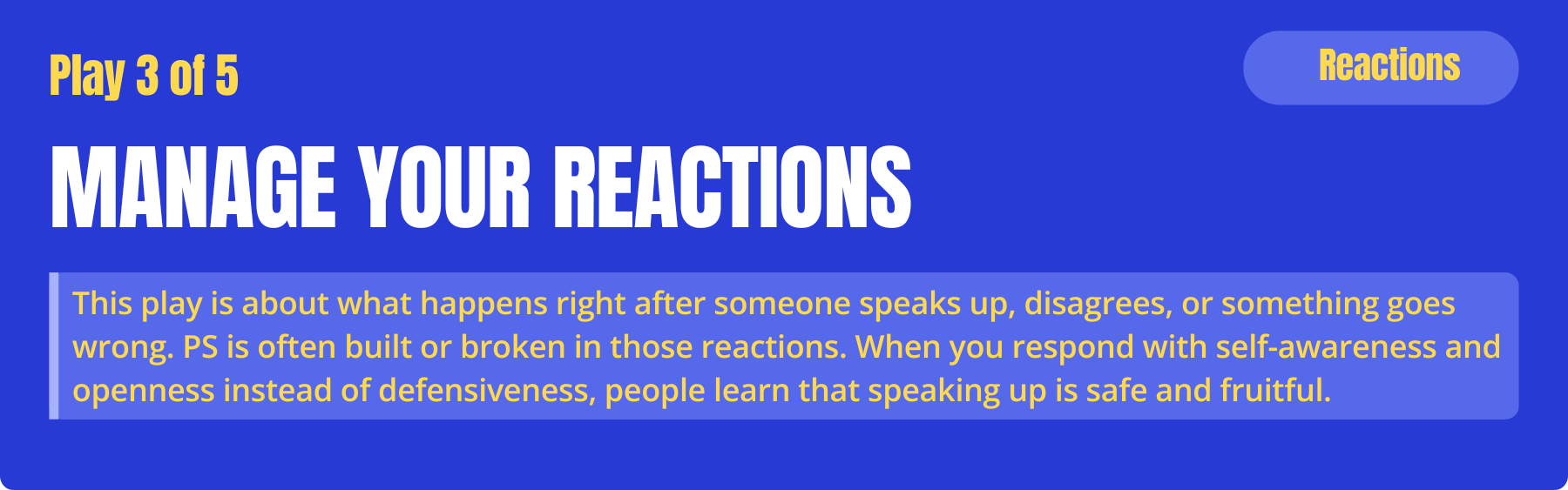
Here are the moves in this play:
Pause before reacting so you do not let defensiveness shape the conversation.
TRY SAYING
“I need a second to take that in before I respond.”
“My first reaction is a bit defensive, so let me slow down and listen properly.”
“Let’s pause for a moment before we respond. I want us to stay constructive.”
Name what you are feeling so you can respond with more awareness and control.
TRY SAYING
“I’m noticing that I’m frustrated right now, and I don’t want that to drive my response.”
“I’m feeling a bit tense hearing this, so let me gather my thoughts before I jump in.”
“There’s clearly some emotion in the room around this. Let’s acknowledge that and keep talking.”
Question the assumptions or stories in your head so you stay open to what may actually be true.
TRY SAYING
“I may be filling in gaps here; let me check what I’m assuming before I react.”
“The story I’m telling myself is that this was ignored, but I want to hear what actually happened.”
“Before we decide intent, let’s separate what we know from what we’re assuming.”
Respond with appreciation when someone challenges you, so people learn that honesty is welcome.
TRY SAYING
“Thanks for raising that directly. I know it’s not always easy to say.”
“I appreciate you pushing back instead of staying quiet.”
“Let’s recognise that this took courage to bring up, and it’s helping the conversation.”
Treat ideas as something to build on so people feel encouraged to contribute and explore possibilities.
TRY SAYING
“There’s something useful in that. How could we build on it?”
“I like where you’re going with that. What if we added one more layer to it?”
“Instead of shutting this down too quickly, let’s see what becomes possible if we develop the idea.”

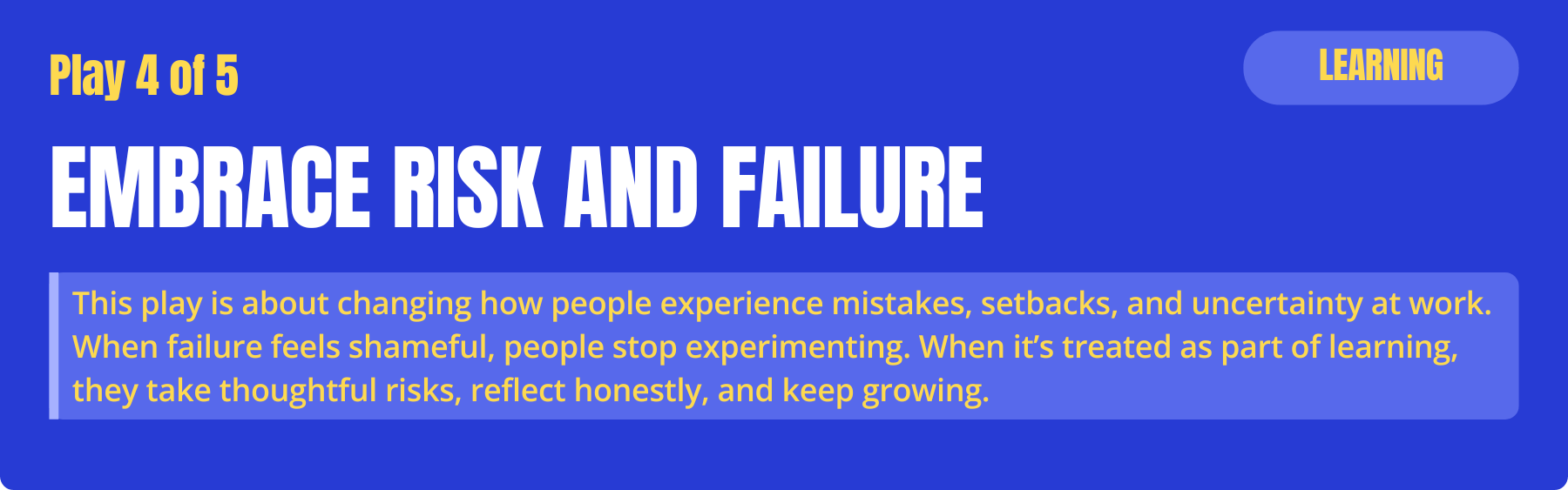
Here are the moves in this play:
Make it clear that setbacks and mistakes are expected when people are learning, trying, and stretching.
TRY SAYING
“If we’re trying something new, some parts of it will not work the first time, that’s expected.”
“I’d be more concerned if we never missed than if we learned from a miss.”
“Let’s not treat every setback like a surprise; some failure is part of doing meaningful work.”
Help people see mistakes as useful information that can improve future decisions and actions.
TRY SAYING
“What did this show us that we didn’t know before?”
“This didn’t go the way we hoped, but there’s probably something important here we can use.”
“Before we move on, let’s capture the lesson so the failure actually pays us back.”
Learn to stay with difficult emotions so you can keep showing up with steadiness when things feel hard.
TRY SAYING
“This is uncomfortable, but that doesn’t mean we’re in the wrong conversation.”
“I don’t think we need to rush past the tension; there’s probably something worth understanding here.”
“Let’s stay with this a little longer instead of solving it too quickly.”
Show what learning looks like by sharing your own mistakes, reflections, and what you would do differently.
TRY SAYING
“I got that wrong, and here’s what I’d change next time.”
“I missed something in my approach, and I want to share the lesson before we repeat it.”
“Let’s go around and each name one thing we’d do differently based on what we’ve learned.”
Build regular habits that help the team reflect, learn, and improve without blame.
TRY SAYING
“Let’s make this a learning review, not a blame session.”
“What should we keep, stop, and change next time?”
“Before we close this out, let’s capture the learning while it’s still fresh.”
Here are the moves in this play:
Design meetings more intentionally so they create space for broader participation instead of relying on the loudest voices.
TRY SAYING
“Let’s have someone today keep an eye on who’s getting airtime and who isn’t.”
“Before we close this topic, I want to check if we’ve heard from the people closest to the work.”
“Let’s treat inclusion as part of how we run meetings, not as something we hope happens.”
Set clear norms around interruptions so people can finish their thoughts and feel respected when they speak.
TRY SAYING
“Hang on. I want to make sure they can finish their point first.”
“I think we cut that off too quickly. Can you continue?”
“Let’s keep our no-interruption rule here so everyone gets the same respect.”
Use simple turn-taking practices so everyone has an equal chance to speak and be heard.
TRY SAYING
“Let’s go around once so everyone has space before we open it up.”
“I haven’t spoken yet, but I’d like to add something when it comes around.”
“For this round, let’s hear one view from each person before we debate.”
Regularly ask how safe people felt to contribute so you can spot patterns and improve the environment.
TRY SAYING
“Before we wrap, did this feel like a conversation where everyone could speak openly?”
“Was there anything you wanted to say today but held back?”
“Let’s do a quick check on a scale of 1 to 5, how safe did this discussion feel?”
Show appreciation for contributions, challenges, risks, and learning so people feel valued for how they participate.
TRY SAYING
“I want to call out the people who raised hard questions today that improved the quality of the discussion.”
“Thanks for taking the risk to test that idea, even though it didn’t work out.”
“Let’s end by naming one contribution from this conversation that helped the team move forward.”
That is a lot of play! Before we conclude, I’d encourage all the L&D Shakers reading this: don’t just read these plays - run them.
Take the moves.
Adapt the sample responses.
Turn them into exercises.
Put them on slides.
Turn them into manager nudges.
Print them. Share them. Quote them. Scribble on them.

The event lineup is honestly so crazy that the other events are already full 🤯 But trust us, you do not want to miss this BANGER.
L&D Shakers Special: The Pulse of L&D — What’s Actually Keeping Us Up At Night?
A one-off live podcast panel in collaboration with Harald’s Curious Corner, and this one is going to be special.
No scripts. No polished conference-stage answers. Just a real, unscripted conversation with L&D practitioners about what’s actually on our minds right now in 2026.
This live session brings together four brilliant voices from across the field to unpack the trends, tensions, and big questions shaping L&D today- from AI and transformation to proving impact and figuring out where our function is really headed.
✨ What to expect:
Honest perspectives on what’s really keeping L&D professionals up at night
Real talk on where the field is heading (beyond the buzzwords)
A live audience Q&A where you can bring your questions
A chance to connect with fellow Shakers navigating the same challenges
Featuring: Harald Overaa, Lori Niles-Hofmann, Milica Sapic, Andy Sontag, and Debora Gallo.
Missed the other sessions? You can still register yourself for them, and if slots open up, our CORE TEAM will let you in.
And yes, we’ve also got local hub offline events happening in Berlin, Dublin, and Washington 🙌


[ 🧰 Use ] Change Problems Diagnosed as Biases Lead to Wrong Initiatives
This card deck is a practical tool for anyone leading change who wants to avoid one of the most common mistakes: treating behaviour as a “bias” problem when it’s often a systems problem. It helps you question your first explanation and look at the incentives, constraints, and norms shaping what people do before you design the wrong intervention.
[ 📺 Watch ] How Might We Learn? by Andy Matuschak
This is a thought-provoking watch for anyone rethinking what learning could look like beyond traditional courses. Andy Matuschak explores how learning can become more immersive, dynamic, contextual, and socially connected, offering a fresh vision for designing better learning experiences in an AI-shaped world.
[ 🧰 Use ] The Hidden Toolkit of Great Facilitators: Language by Udayan Belsare
This is a simple but powerful resource for facilitators who want to get better at shaping the room through language. It highlights the small, intentional phrases that create safety, invite participation, manage complexity, and move conversations forward—making it a practical phrasebook you can use in your next workshop.
[ 👀 Read ] 2026 Global Human Capital Trends by Deloitte
Deloitte’s 2026 Global Human Capital Trends report explores how AI and workforce shifts are pushing organisations from familiar tensions to real tipping points. It’s a useful read for L&D, HR, and transformation leaders thinking about how to build adaptability, move faster, and lead with a more human edge.
[ 🧭 Explore ] The 4 Best Zero-Cost AI Courses for L&D Pros by Ross
Ross did the hard work for you: he spent six weeks testing the most popular free AI courses and narrowed them down to the four that are actually worth your time as an L&D professional. If you’ve been overwhelmed by the flood of “learn AI” resources, this is a super practical shortcut.
[ 👀 Read ] Milica Sapic’s Honest Review of AI Learning Experiences for Non-Technical L&D Pros
Milica shares a refreshingly honest walkthrough of the AI courses, bootcamps, and communities she’s personally tried as a non-technical L&D professional. It’s especially useful because she goes beyond recommendations and surfaces what actually helps people adopt AI: live demos, build projects, human support, community, and accessible design.
[ 🧰 Use ] Leadership Training Forgetting Curve Simulator by Frank Basinski
This free interactive tool helps you see how retention changes based on spacing and repetition, making the case for reinforcement design much more tangible. It’s a brilliant resource for stakeholder conversations, follow-up strategy planning, or simply helping teams understand why one-and-done training rarely sticks.


Neha and Niamh Mcd are launching our first-ever Local Hub in Dublin bringing monthly offline meetups, connection, and learning to your city. If you’re in Dublin or nearby, join #2-local-hub-dublin and stay tuned for the first meetup soon.
Huge congratulations, Neha and Niamh, so excited to see you start this journey. Have the best time building something special together! 💛
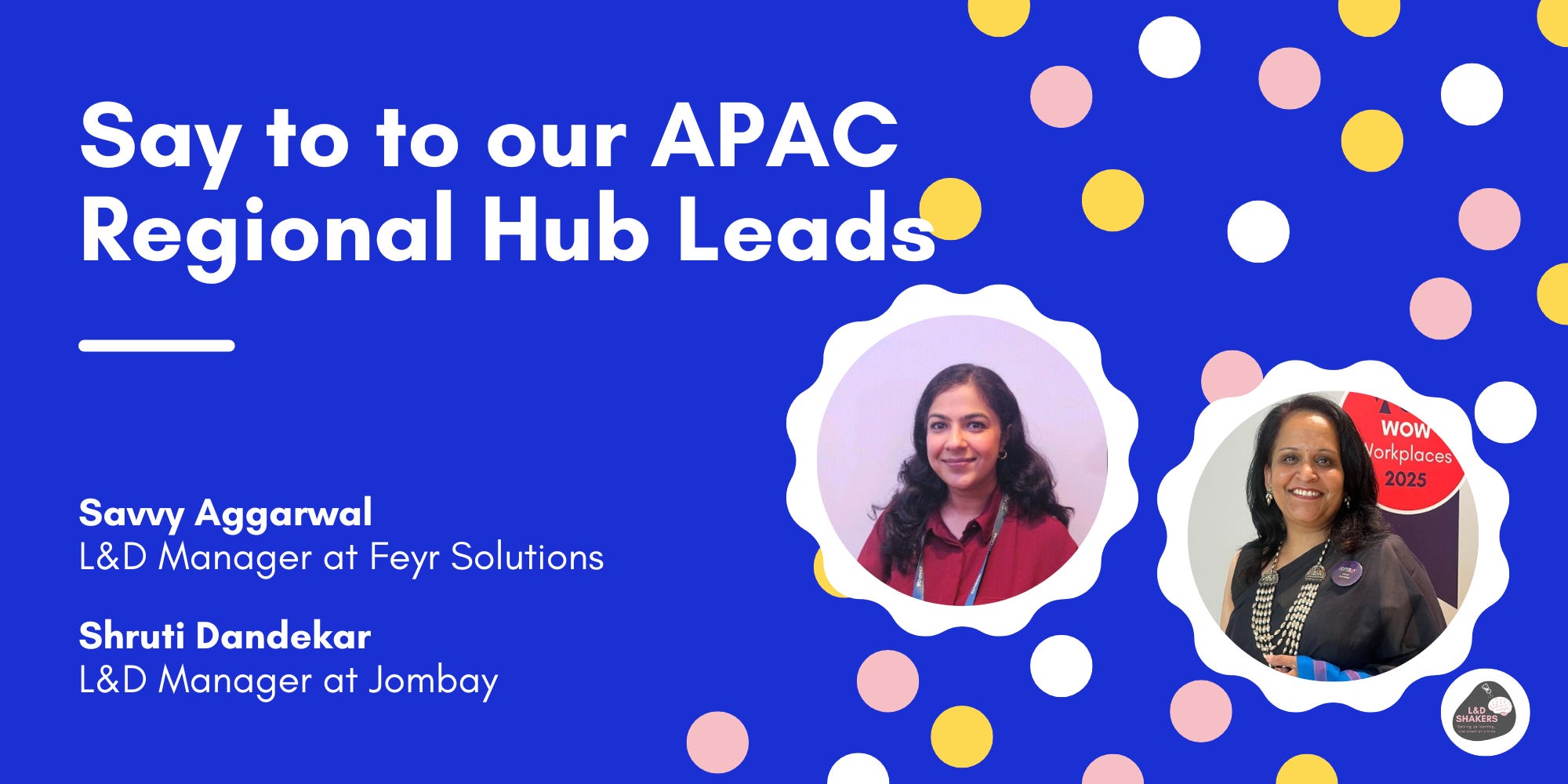
Our APAC Regional Hub is live again, thanks to Savvy Aggarwal and Shruti Dandekar, who are bringing online sessions to time zones we don’t usually get to cover. Join #2-apac_regional_hub to stay in the loop.
Big congratulations, Savvy and Shruti, so excited to see you lead this journey and bring more APAC magic to the community. Have lots of fun with it! 🔥

And umm… we may also be cooking up some very fun new experiments 👀
Think: the first-ever L&D Game Show? An L&D Shakers AI Cluster? Maybe something even wilder. Interestingggg. Join L&D Shakers before the rest of the internet finds out. 😉

〜See you soon
Till then, keep spicing up your learning! 🧠🧂
Sejaal
If this edition made you think, smile, or steal an idea, pass it on to someone else too.
No posts
Comments
Nothing yet. Say the first thing.
Sign in to join the conversation.