
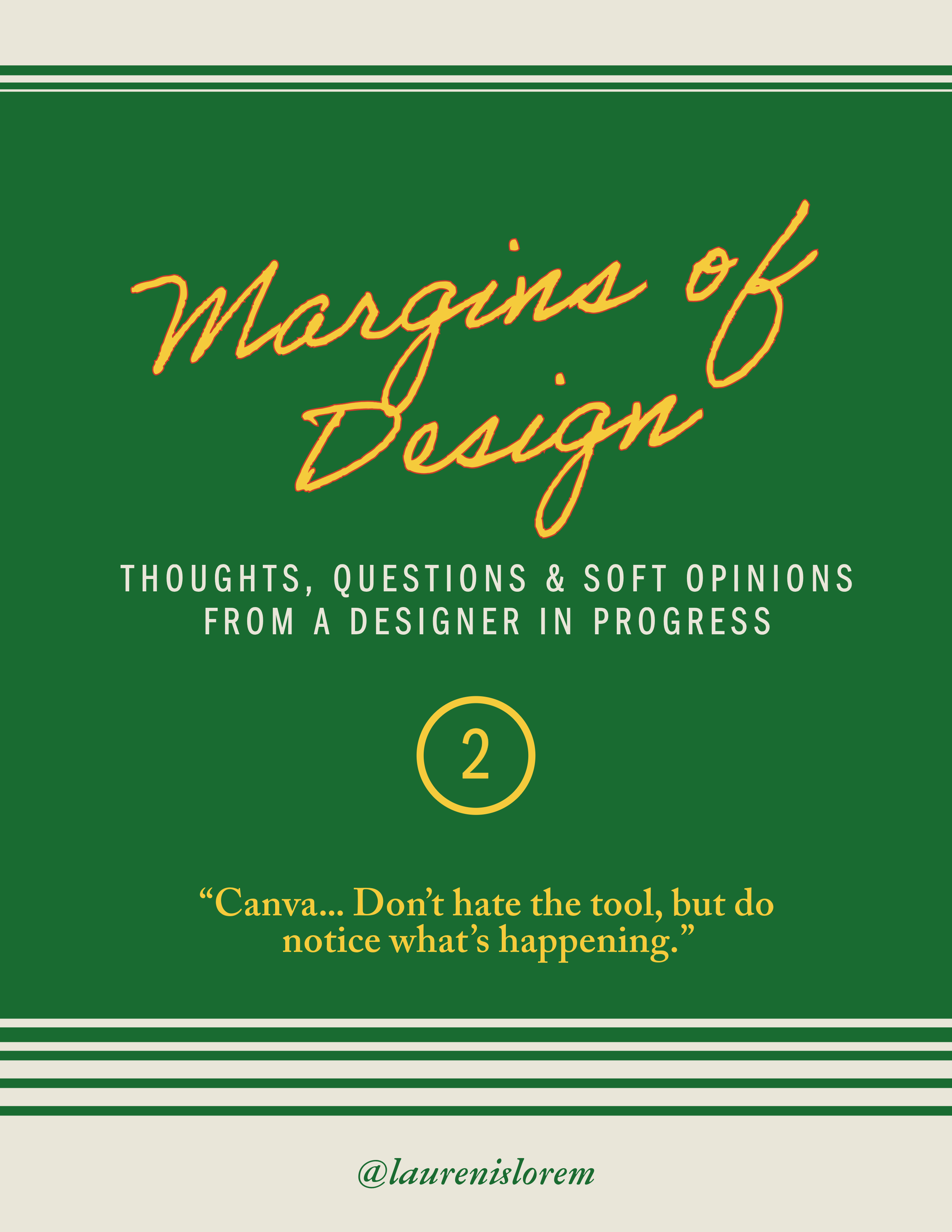
I often hear frustration from designers about Canva. But I feel like the issue isn't really just Canva.
It's what started happening because of it.
When design tools became easier to access, when anyone could make a flyer, pitch deck, or social post, something quietly shifted. People began to question the value of design.
Why pay a designer when you can just do it yourself?
That's the tension.
Canva has made design more accessible, and in many ways, that's a win. It's a gift for small businesses, school clubs, nonprofits... people with big ideas and small budgets. It gives them a way in. That matters.
I use Canva too. For client templates, social posts, quick slides. It's fast, easy, and genuinely helpful for certain kinds of work.
But let's be honest: it has limits.
Canva isn't built for nuance. It struggles with typography, colour modes, and press-ready specs. You can't prep packaging files with dielines or folds. Even with premium features, the depth just isn't there. And if you're using Canva assets for logos or client branding, it's worth knowing this: most of it is stock-based. You don't actually own those designs. They're not meant for trademarks or long-term identity work.
So maybe it's not really about whether Canva is good or bad.
Honestly, I don't think it can be "bad" (it's just a tool after all) What's more important is how its rise has changed the way people perceive design. Canva has played a part in the devaluing of design in the public eye.
Maybe not directly. But accidentally, and undeniably.
Design didn't suddenly become meaningless, but it did become misunderstood.
Just like owning a camera doesn't make you a photographer, or holding a paintbrush doesn't make you an artist, knowing how to use Canva doesn't make you a designer.
Because design isn't just picking fonts and colours. It's hierarchy. It's rhythm. It's communication. It's knowing the rules, and knowing when to break them. It's care.
So no, don't hate the tool.
But do notice how it changes things.
And ask yourself (whether you're a creative or someone who just enjoys using Canva)
How do we keep honouring the craft?
If anything, Canva's rise reminds us how important it is to talk about what designers actually do. Not to gatekeep, but to advocate. To share process. To educate gently. To show the thinking behind the thing.
Because tools are here to stay.
And as designers, we don't need to be afraid of them. But we do need to stay intentional about how we talk about our work.
Sounds familiar?
This debate keeps repeating itself as technology evolves. It's the same question, resurfacing in new forms. It's what people are asking now about Al, too. It's still a tool. But is it an ethical one? How do we keep evolving without stepping over others, or extracting from their work without consent?
Anyway, that's a whole topic for another day.
I use Canva. A lot of us do.
But ever since design became easier to make, something else has shifted. Not just in how things are made, but in how design is understood and valued. Templates are helpful. But design is more than that. It’s rhythm. It’s hierarchy. It’s care.
This post is about honouring the craft. Not because it’s exclusive, but because it’s thoughtful work.
✲ I’d love to hear what you think, whether you design or not :)
No posts
Comments
Nothing yet. Say the first thing.
Sign in to join the conversation.