
This is Last Week in Collapse, a weekly newsletter compiling some of the most important, timely, soul-crushing, ironic, amazing, or otherwise must-see/can’t-look-away moments in Collapse. You made it more than halfway through 2026.
This is the 236th weekly newsletter; you can find it in full on Reddit here. The June 21-27, 2026 edition is available here if you missed it last week. Thank you for subscribing to the Substack.
——————————
As Côte D’Ivoire’s torrential rainy season continues, authorities say 59+ people have been killed by flooding since May, alongside 13+ others in Ghana. According to Ghana’s President, Tuesday’s rain set a new record for daily precipitation in Accra, at 140mm (5.5 inches)—surpassing the previous one-day record of 56mm.
Damage Report from Venezuela, where a pair of earthquakes struck on 24 June: tens of thousands were injured, and 60,000+ buildings damaged or destroyed. Official death counts record 2,950+ fatalities, a number likely to rise in the coming weeks. 45,000 people are still unaccounted for. This photo essay and the accompanying stories liken the structural damage to a war zone.
Kashmir’s lakes are shrinking, or vanishing altogether, as they face pressures from expanding human settlements, less frequent precipitation, and pollution runoff entering the bodies of water. 315 natural lakes in Kashmir have disappeared in the past 50 years, leaving just 382 remaining. Fish populations in the surviving lakes have also dropped considerably.
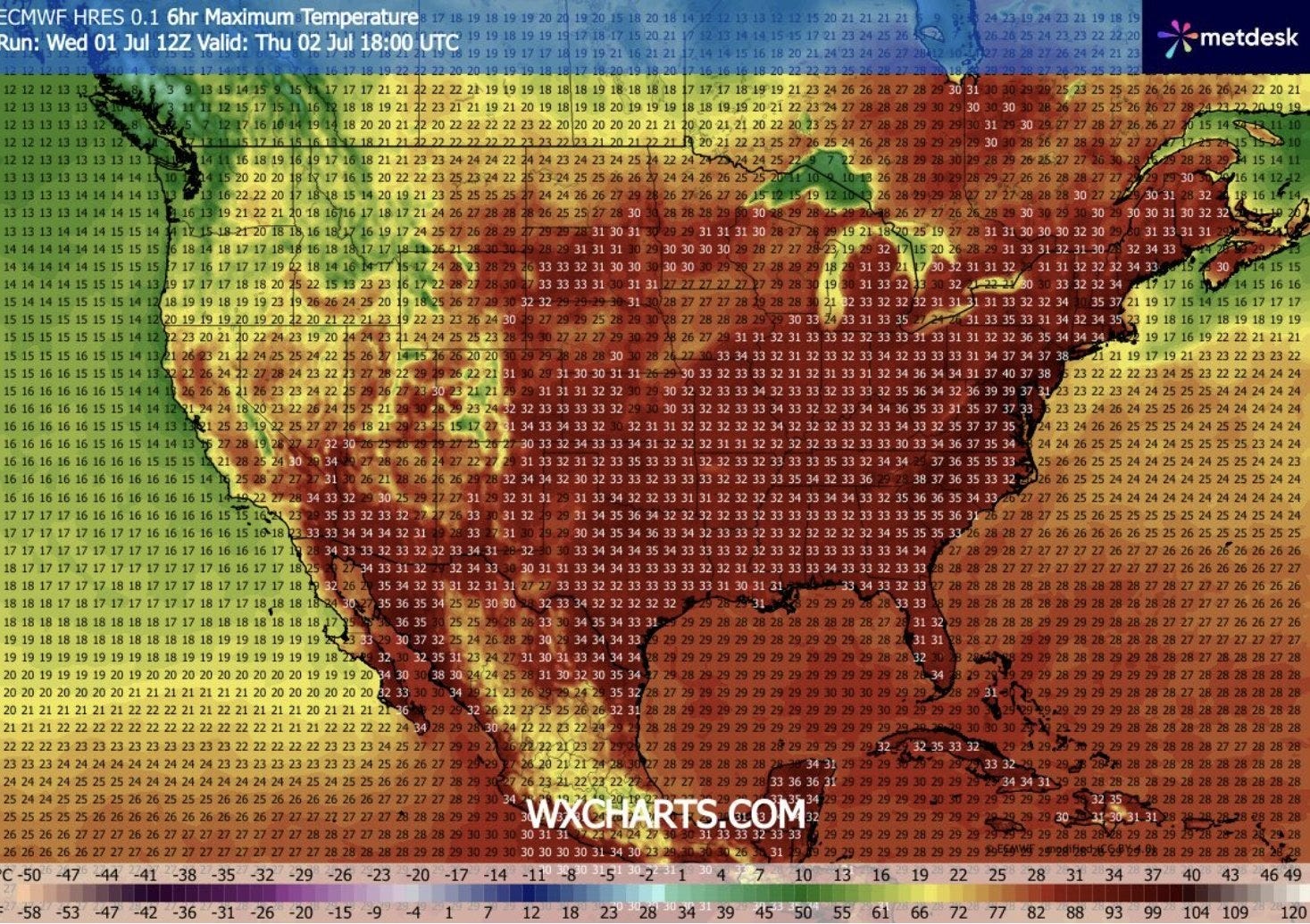
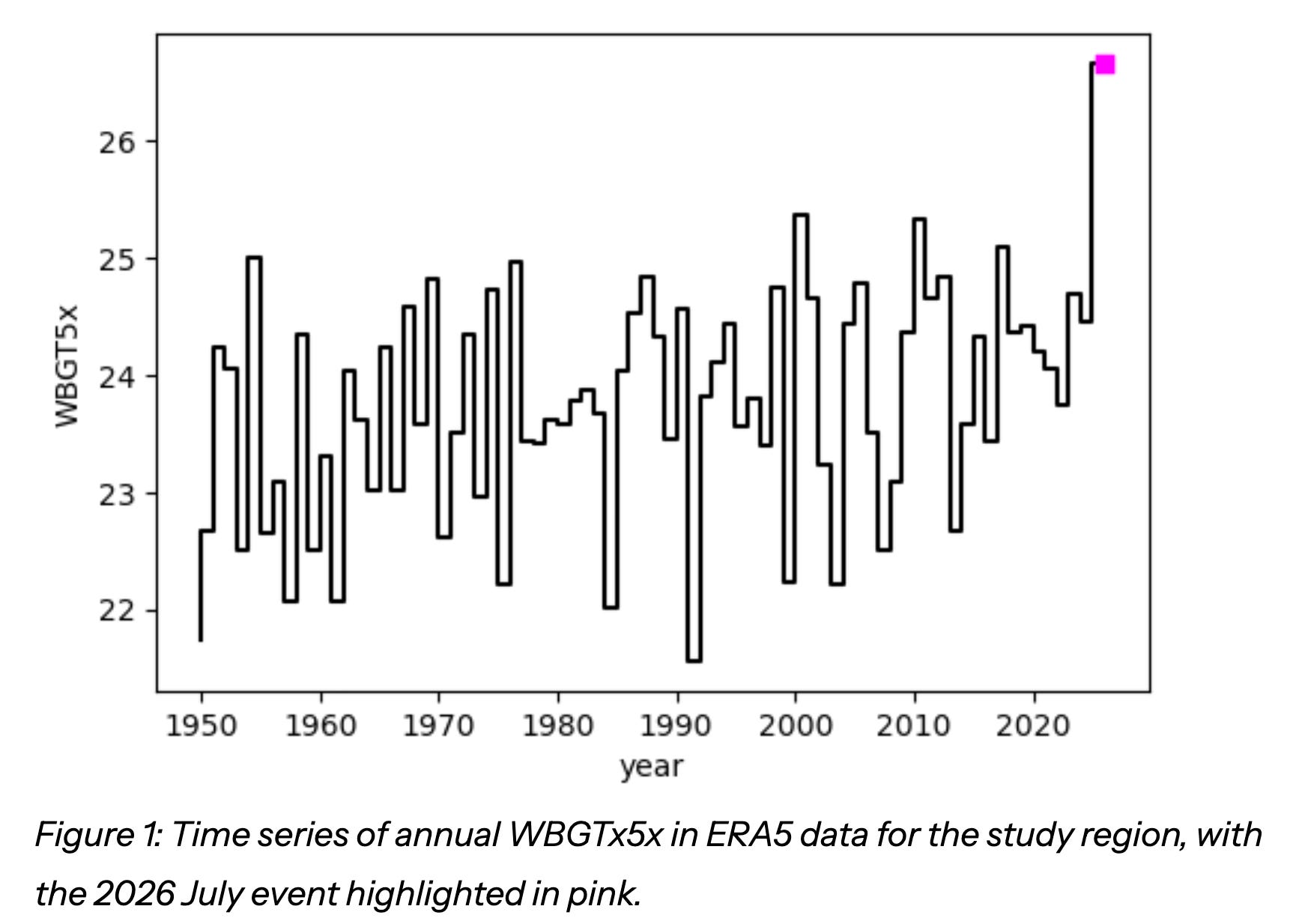
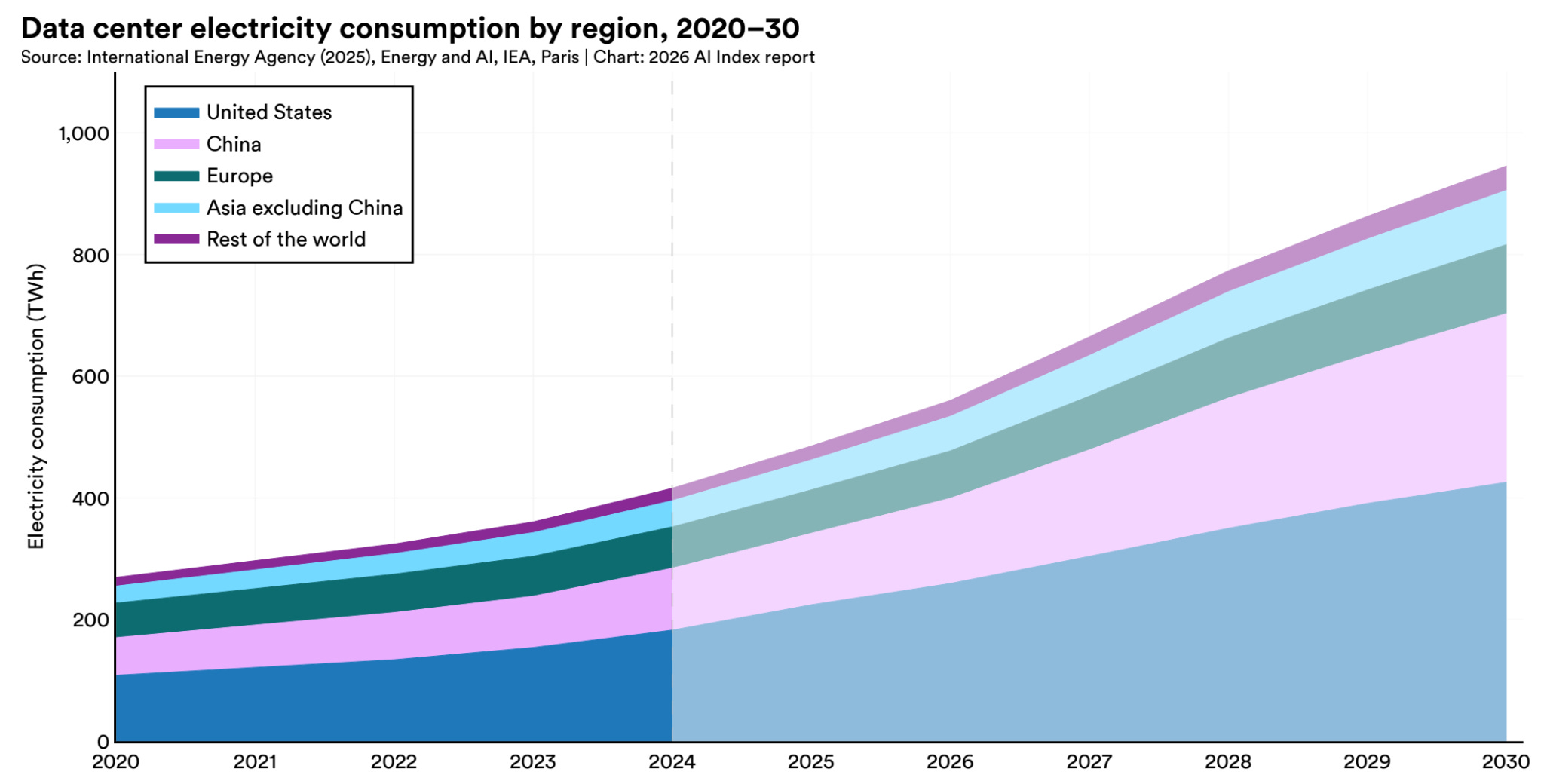
Much of the eastern and southern United States baked under a strong heat wave through the week, with temperatures from Maine to Texas well over 90 °F (32 °C). Some places saw temps over 100 °F, and with high humidity, a heat index of over 115 °F (46 °C). The Wet Bulb Globe Temperature “WBGT observed during this event exceeded the previous record by an exceptionally large margin.” Over 60M people were under high heat advisories, and 130M at risk of “heat risk.” In areas with large & new data centers, the strain on electrical grids tested old infrastructure, and caused some data centers to temporarily switch to diesel generators.
The WHO confirmed that over 3,700 people across Europe died from June 21-28, as a result of the blistering heat wave across the continent, with over 1,000 in France alone. Other reports say that 1,000+ people also died across Spain during the heat wave. Sydney finished their hottest June since records began in 1859.
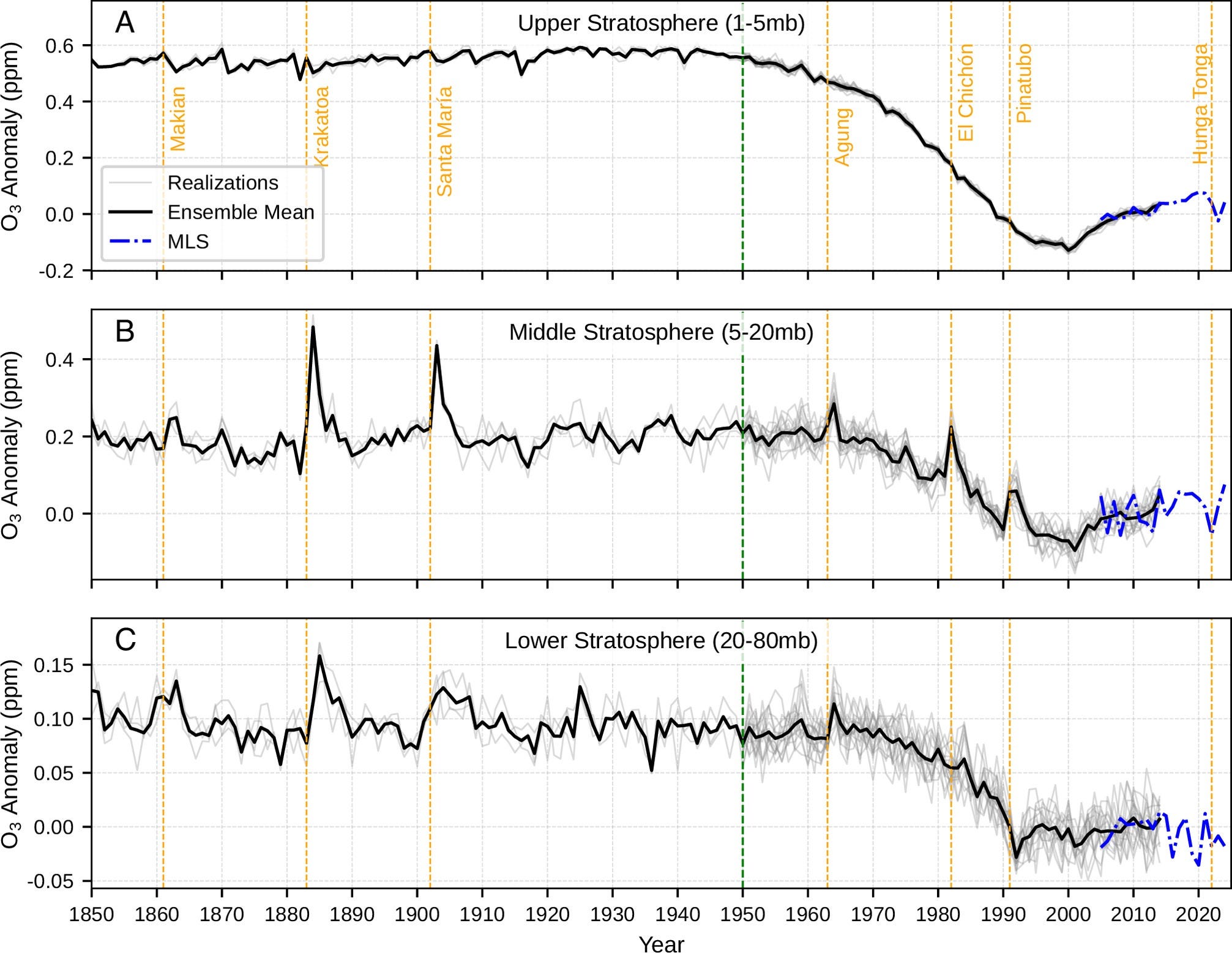
Although the disintegration of the ozone layer was not known to humans until the 1980s, a study in PNAS concluded that we could have detected damage to the ozone layer as early as 1957, had we applied our scientific tools to the task. They write that “a clear human influence on the stratospheric ozone layer began nearly 70 y ago….human-caused ozone depletion was likely identifiable as early as 1957 in the tropical upper stratosphere.” They identified carbon tetrachloride as the primary cause of ozone depletion in days, when the chemical was used for dry-cleaning, degreasing, and fire extinguishers since the ~1930s.
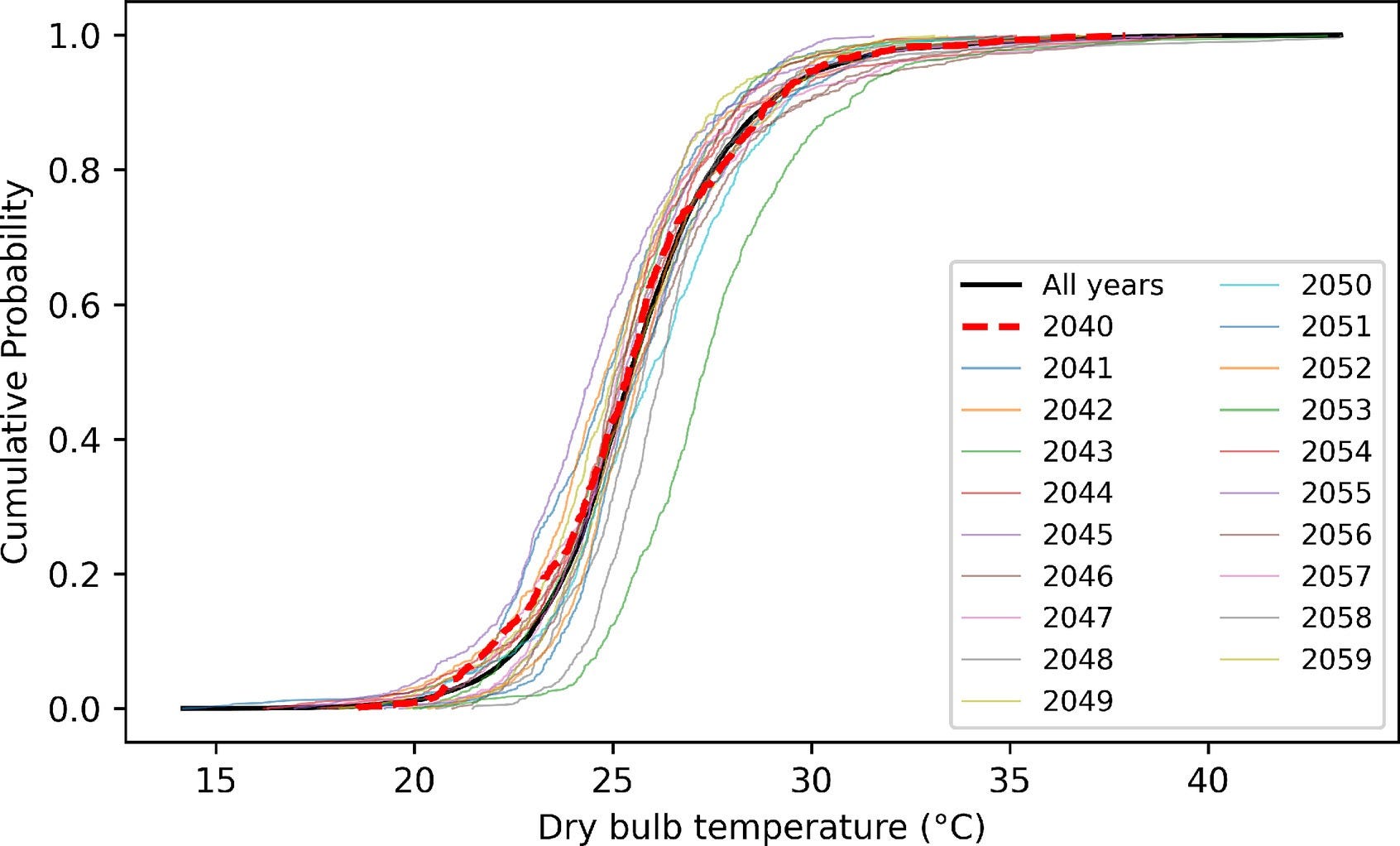
An upcoming study on buildings in Sydney, Australia examined building codes for a world heading towards 5 °C of warming in extreme climate scenarios. They concluded that such an increase would “exceed current typical and extreme heat conditions” for some upper-level apartments for 4-7 weeks of the year, inundating residents with heat stress unless air conditioning or other cooling practices were used. They say “52.7% of apartments in {New South Wales} fail overheating criteria, with average overheating hours projected to double by 2050 alongside increased nighttime exposure.”
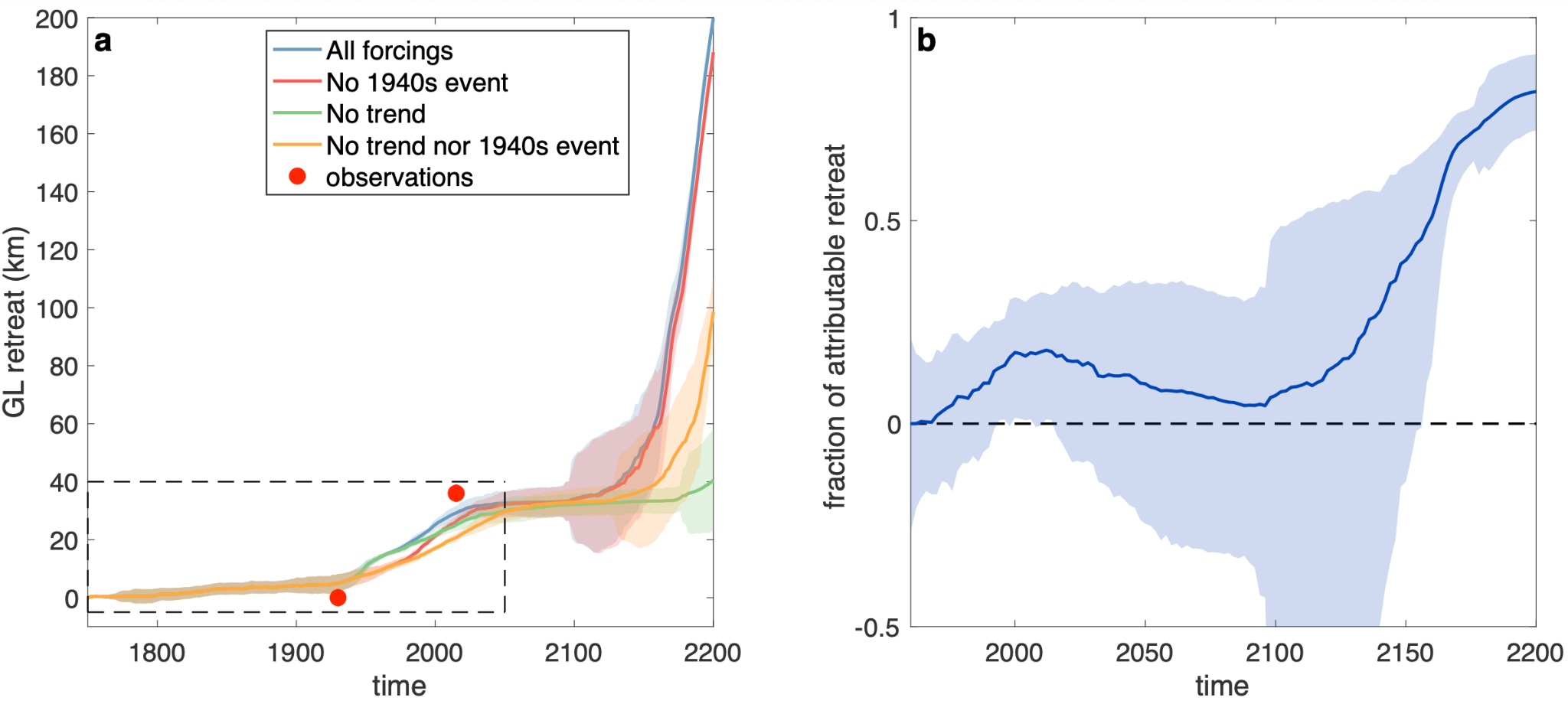
A study in The Cryosphere looked at Antarctica’s Pine Island Glacier (PIG), and concluded that “anthropogenic trends in forcing enhanced the retreat of PIG since the 1940s and are responsible for just under one fifth of the retreat over the industrial era…equivalent to an excess grounding-line retreat of 4.3 km.”
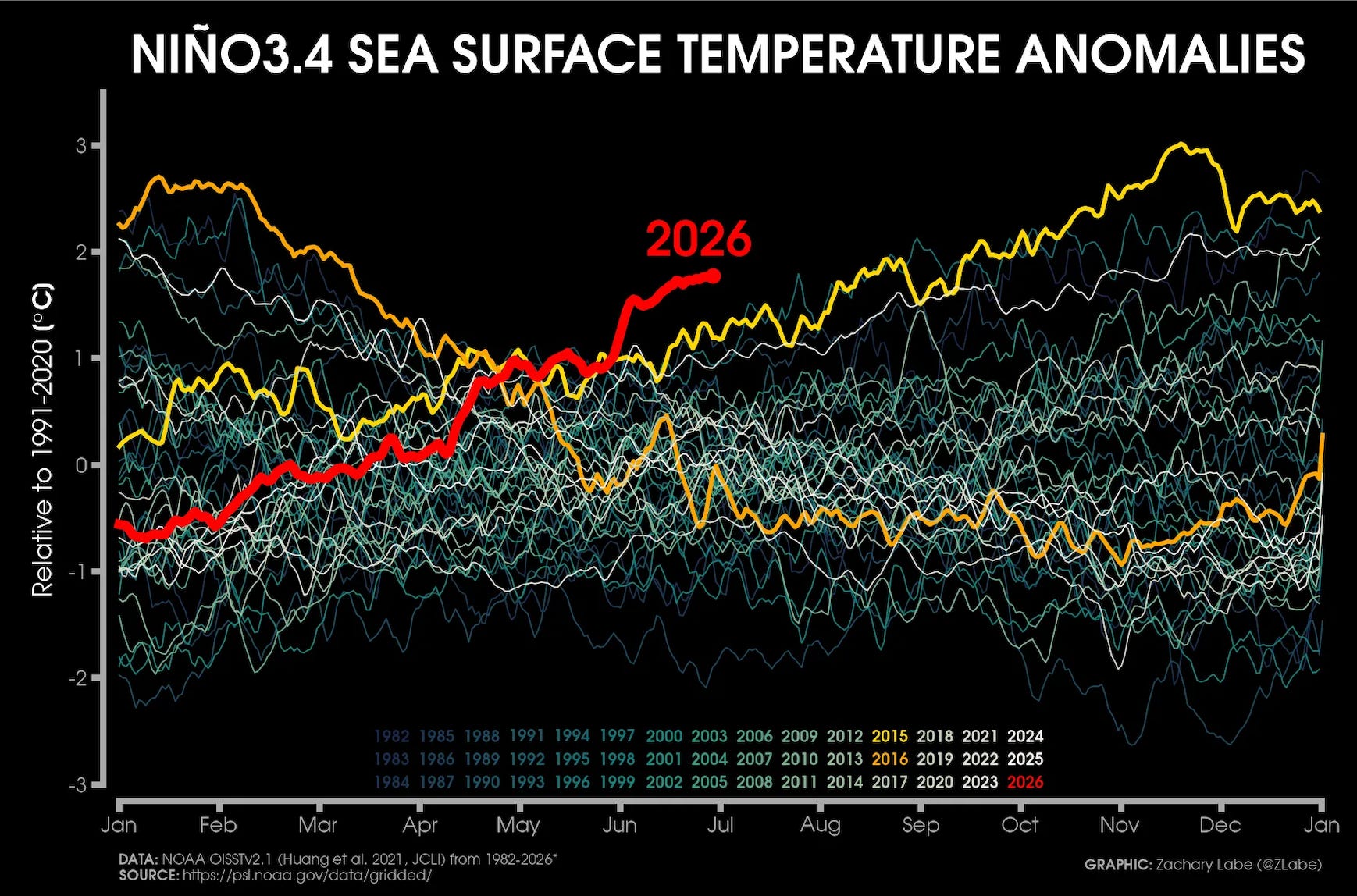
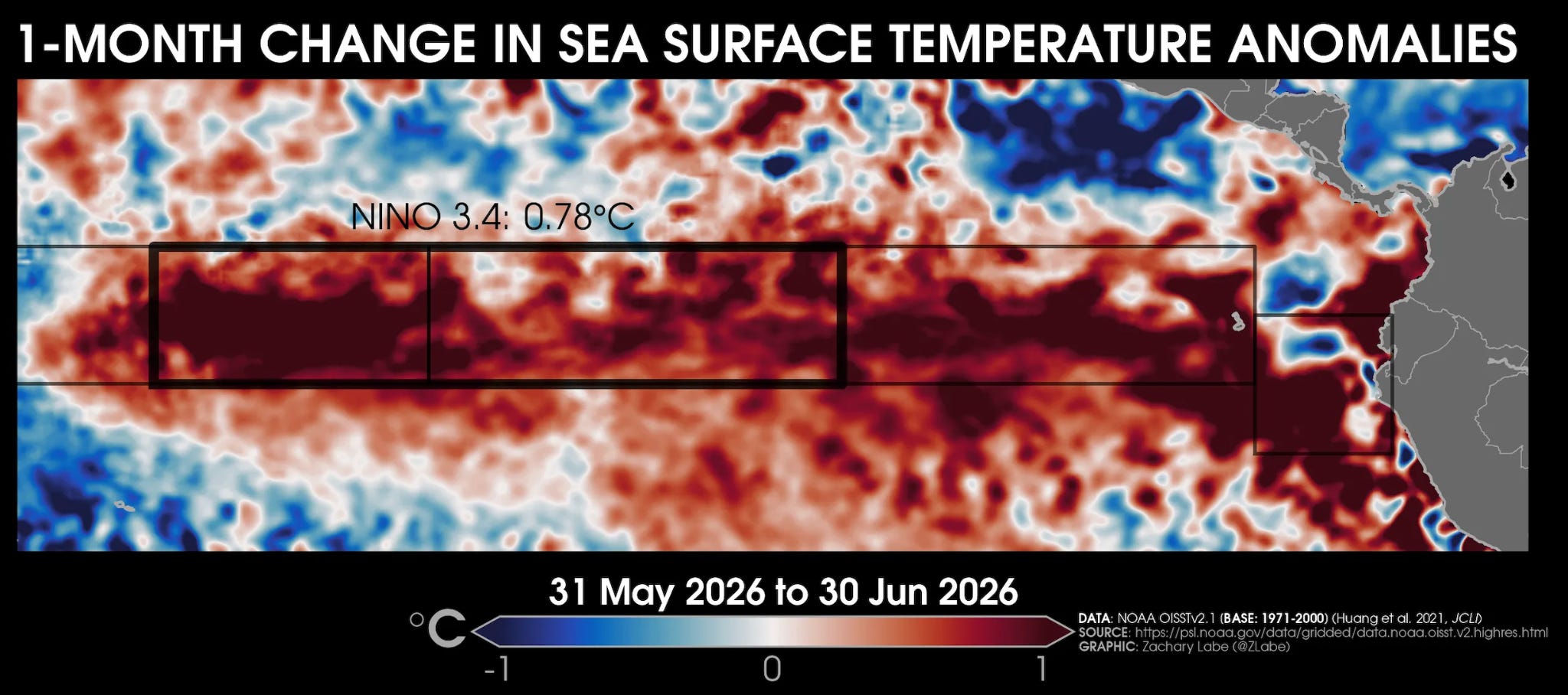
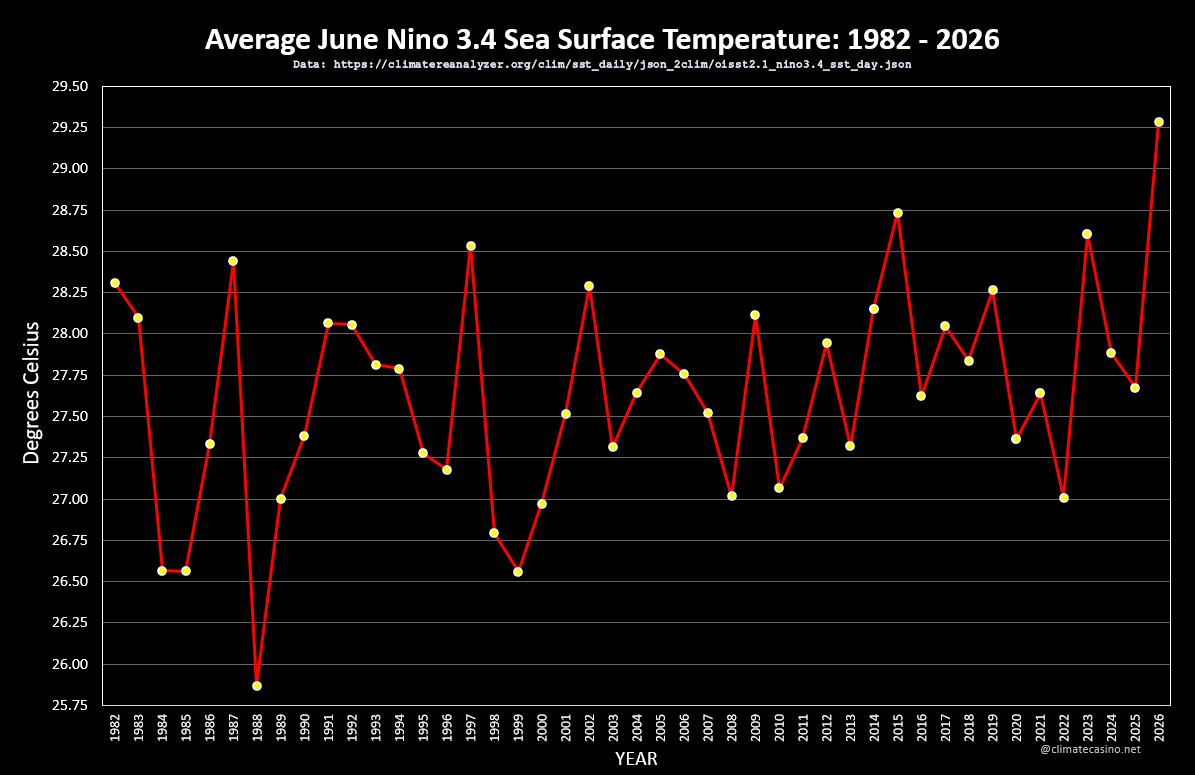
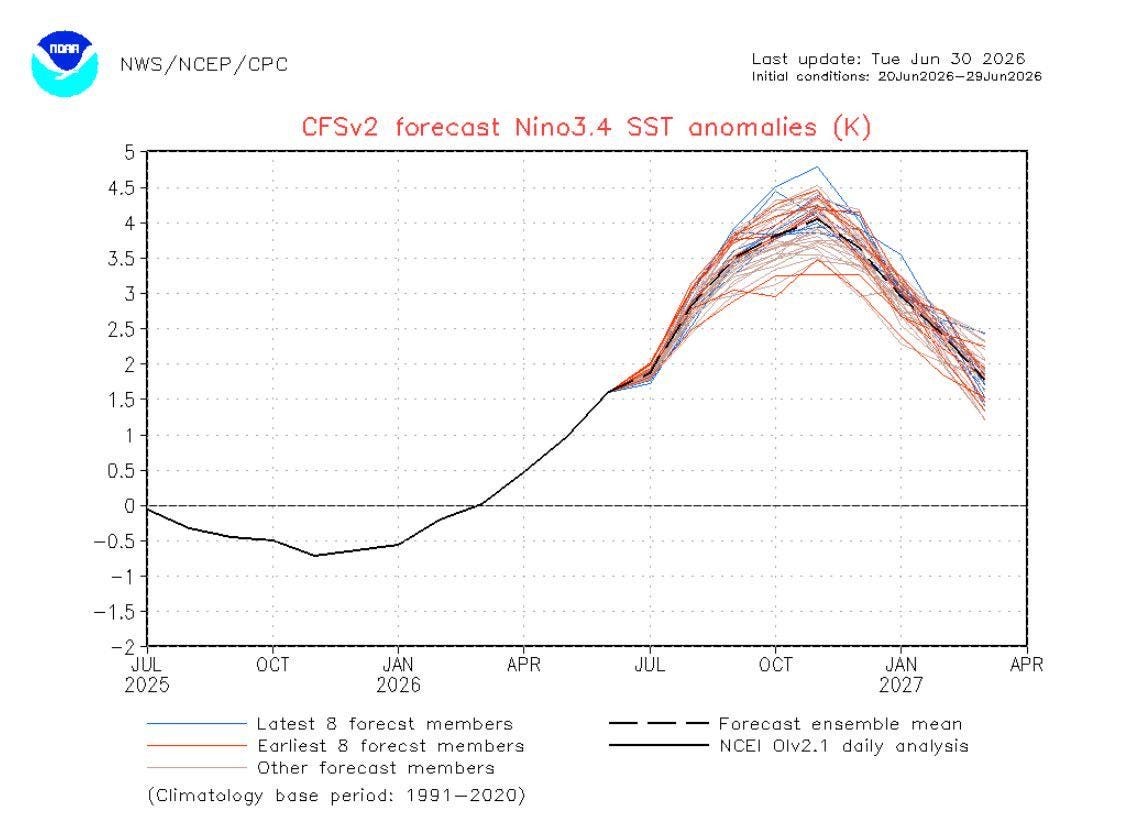
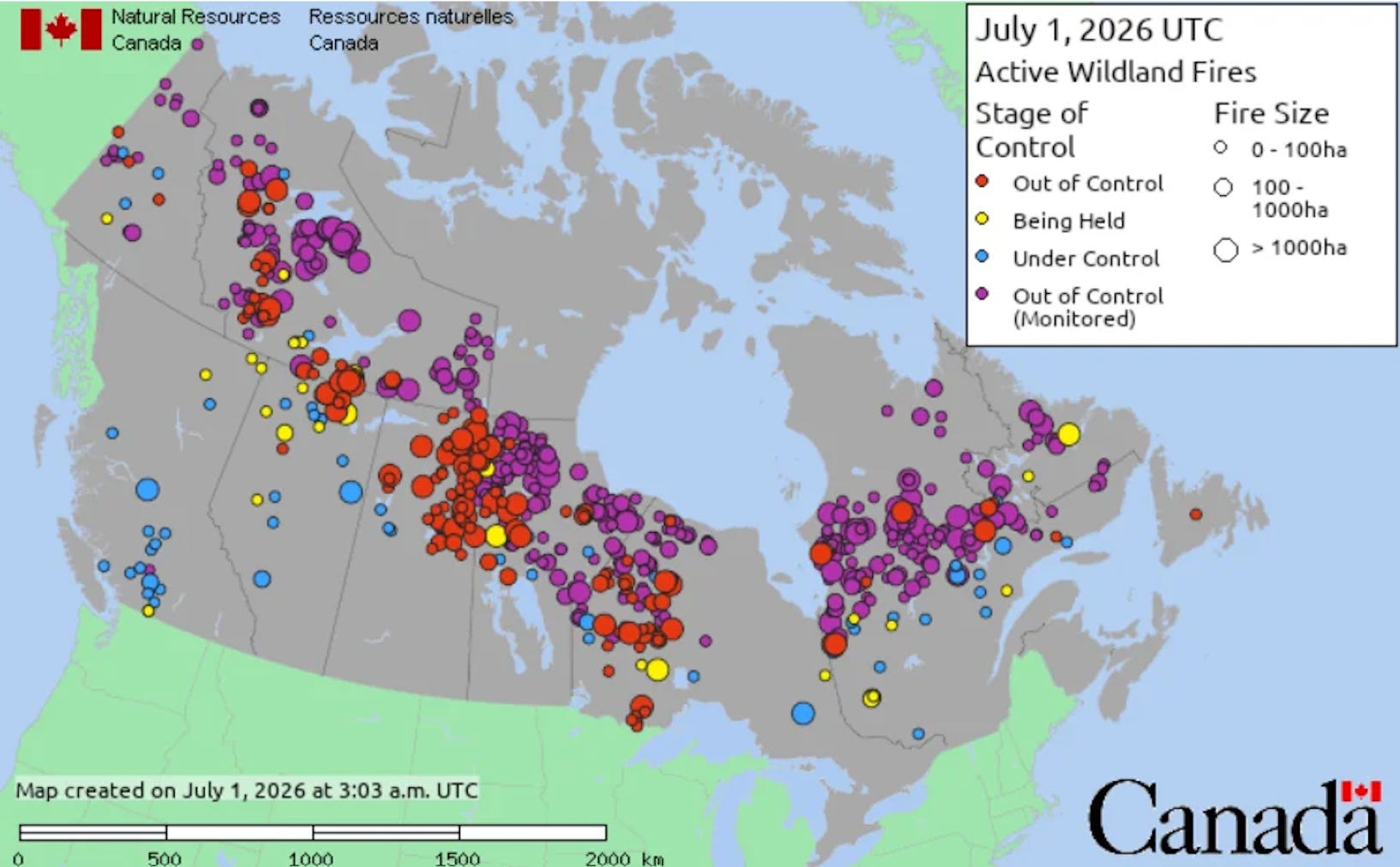
The World Bank is dropping its pledge to commit 45% of its lendings to “projects with climate co-benefits.” The reason? Basically, pressure from U.S. government officials dissatisfied with the ESG & DEI initiatives the institution was pursuing. Meanwhile, in northern Quebec, and elsewhere, 100+ wildfires are burning, mostly sparked by lightning. And sea surface temperature anomalies in the mid-Pacific El Niño region remain at record highs for this time of year; we have already seen new heat records for SSTs globally at the start of summer 2026. The UN is warning that El Niño will become strong between now and September.
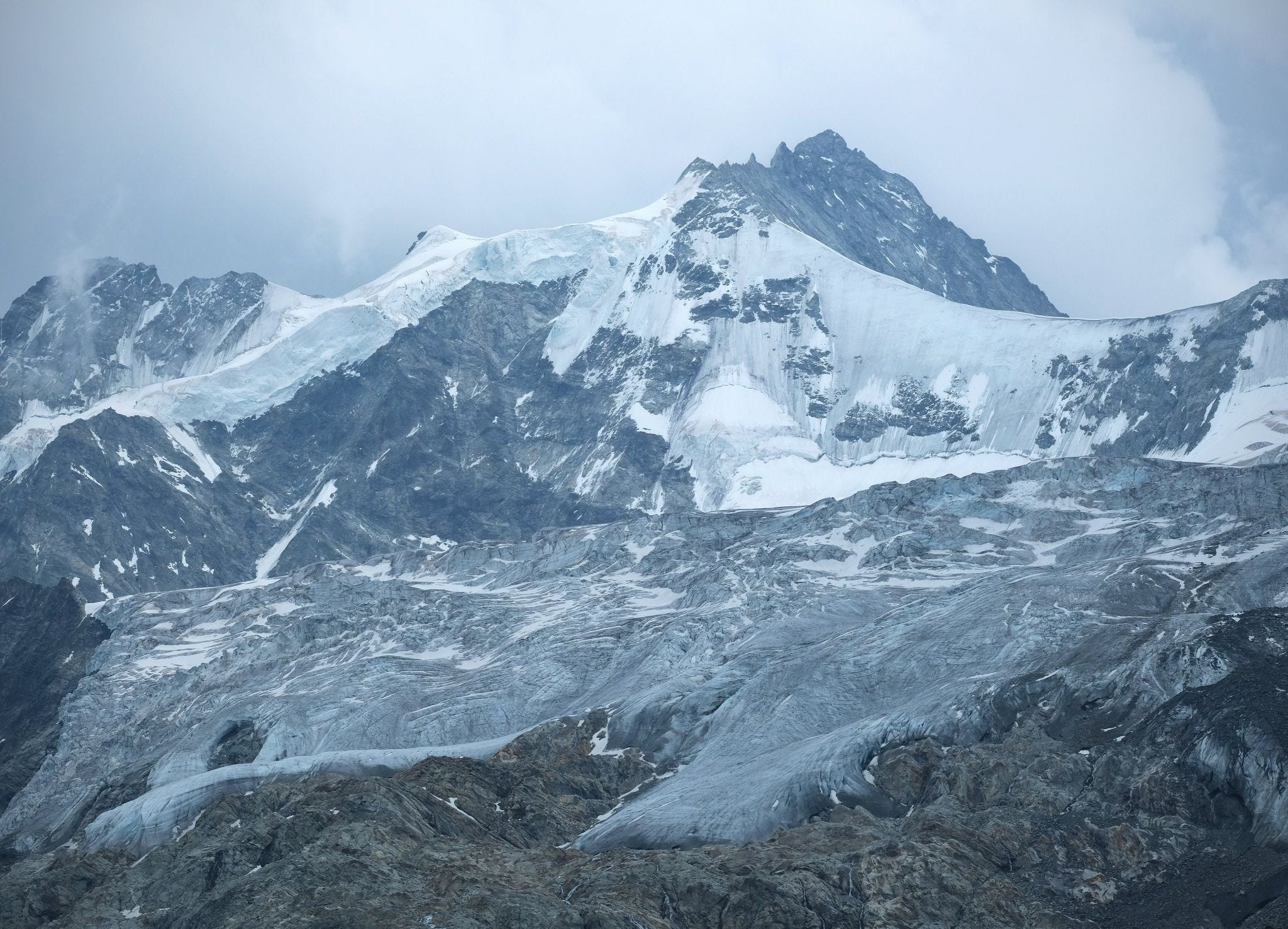
All-time record temperatures were recorded at Russia’s Arctic city Norilsk (pop: 175,000), which felt temps just over 32 °C (90 °F). Switzerland’s shrinking Moming Glacier is basically snowless, and unlikely to get any more snow for months. About a week ago, as Europe’s merciless heat wave began to recede, Germany felt a record warm night, at 29.4 °C (85 °F); it was supposedly also the hottest night ever recorded above 50 °N in latitude. They were not alone: Poland, Hungary, Czechia, and Slovakia also set new national daytime records, at various temps above 40 °C. World Weather Attribution says that “this heatwave is the most severe ever recorded” in Europe.
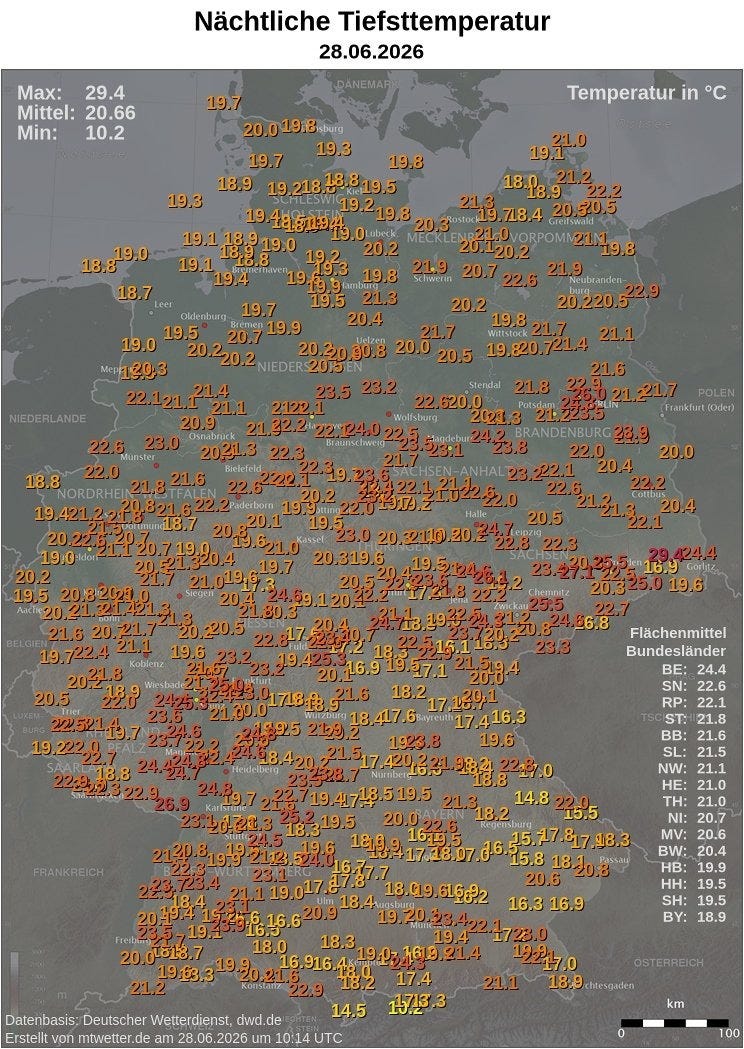
Morocco felt its hottest June night last Monday, at 32.4 °C. Parts of Mexico and Costa Rica felt record warm nights for June. Many Central American countries also felt new July minimums at over 30 °C. It will not surprise anyone to hear that England set a new record for its warmest June on record, while France ended its hottest week in recorded history.
Storms killed two across Romania and Austria. Part of Beijing reportedly saw 65mm of rain fall in a single hour…a bit further south, a city felt 92mm fall in one hour. Another heat wave is beginning to close in on Britain, predicted to bring temps of 34 °C later this week.
——————————
As of Thursday, some 1,400+ people have been infected, and 438 killed, by the Ebola outbreak centered in the DRC. Medical trials are underway for potential treatments; there is currently no vaccine or treatment for this strain of Ebola, called Bundibugyo. But large-scale aid cuts, fear, and eclectic spiritual beliefs have complicated responses; the U.S. has not released about $2B in funds earmarked by Congress. Experts say the worst of the outbreak is still ahead of us. And a local spread of Marburg in Uganda was also reported.
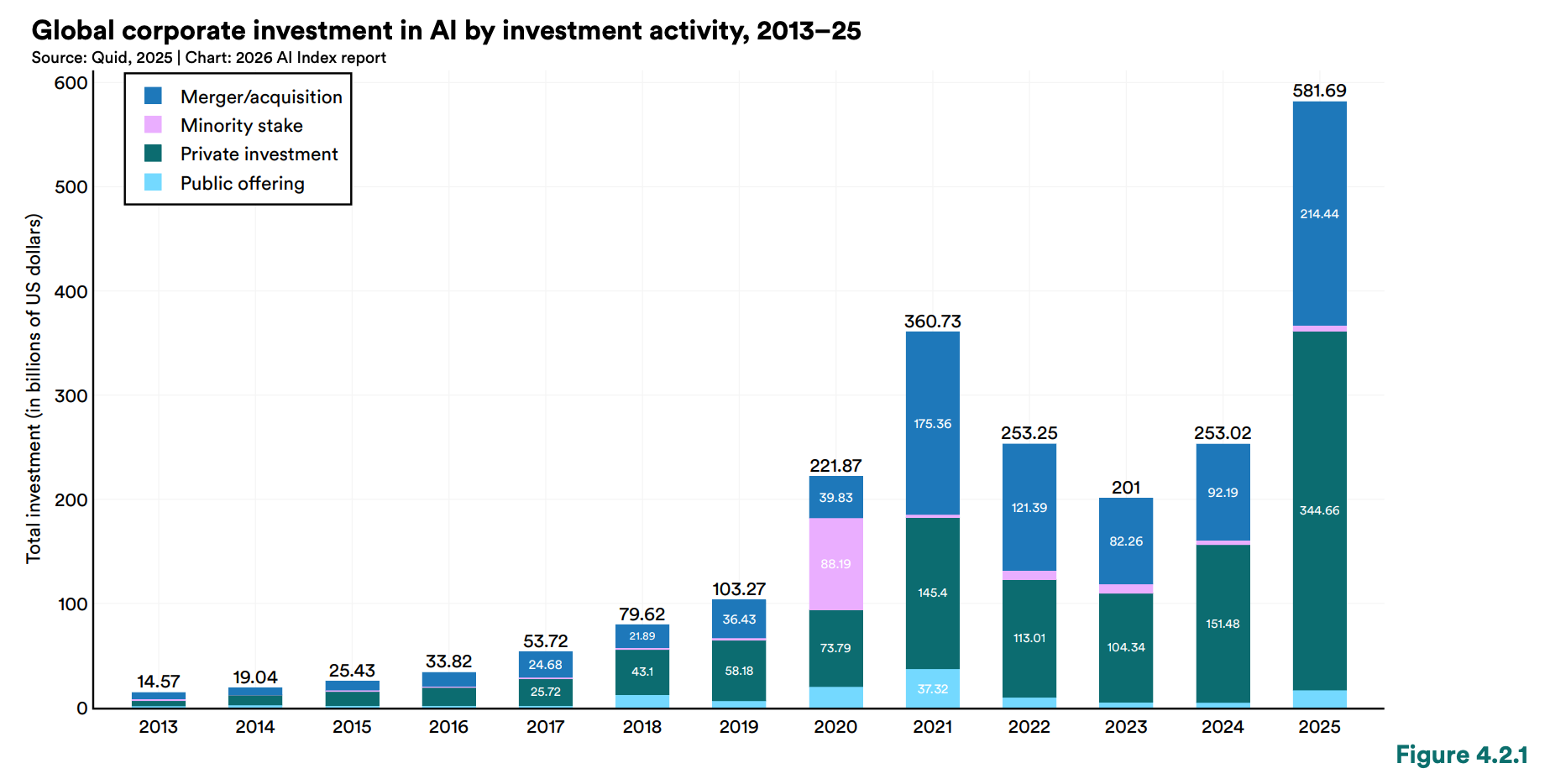
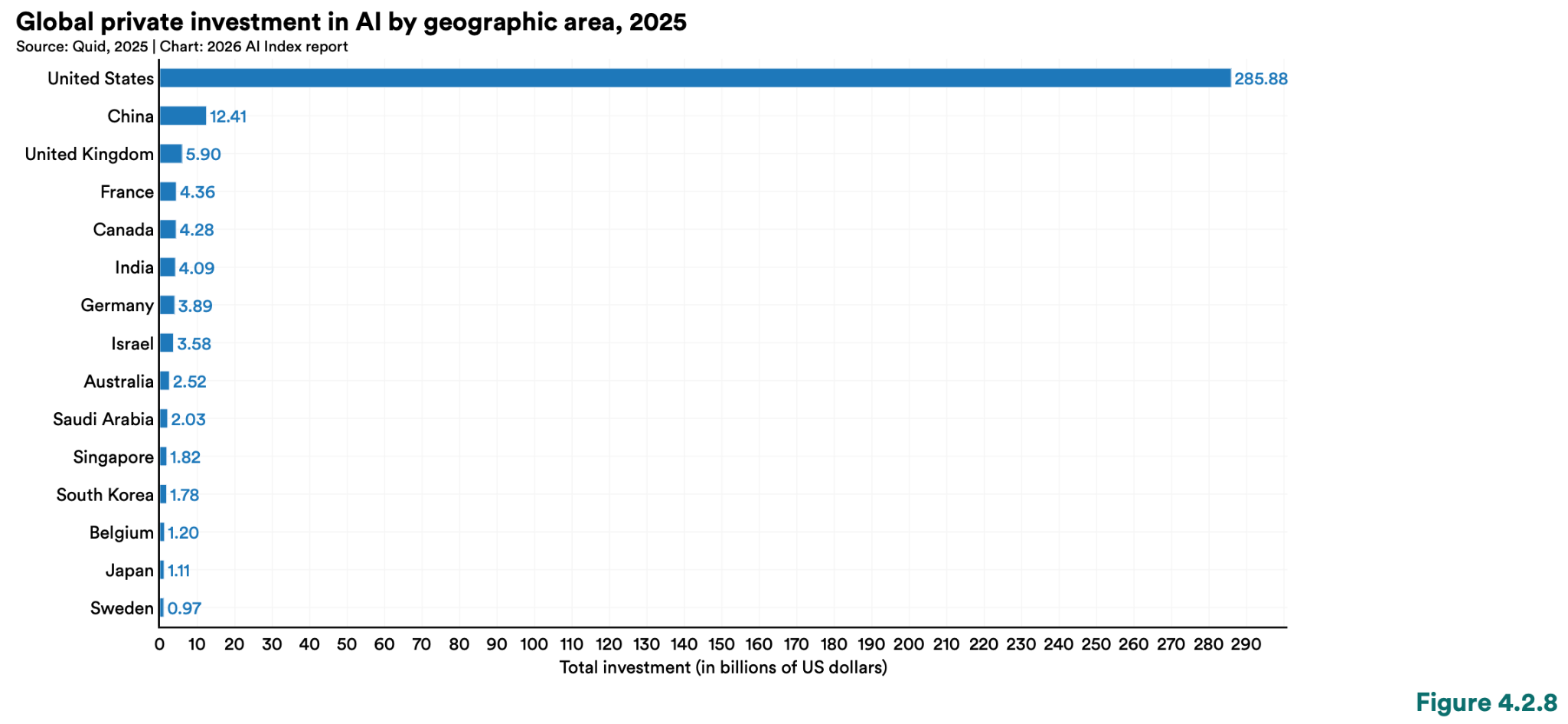
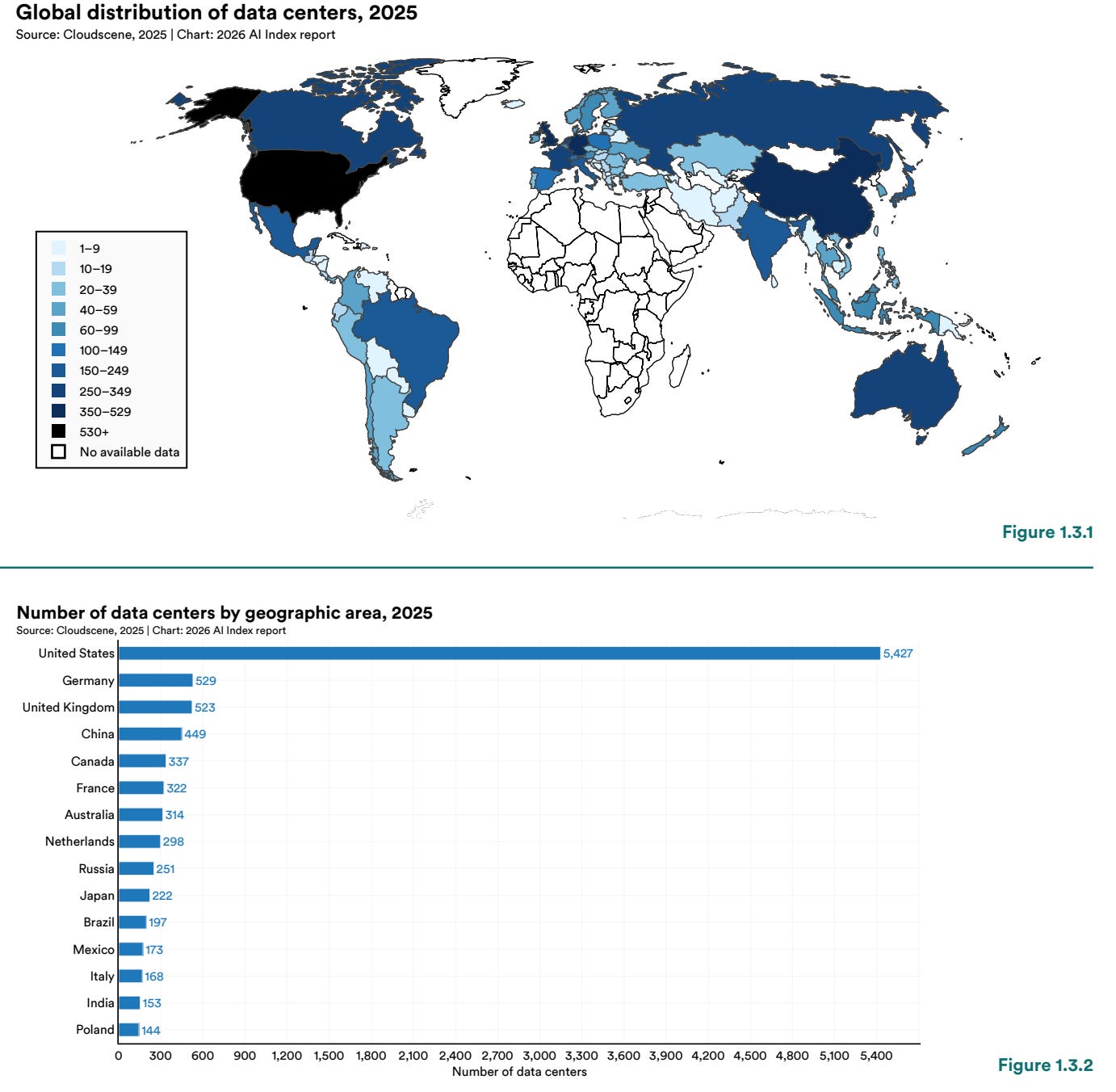
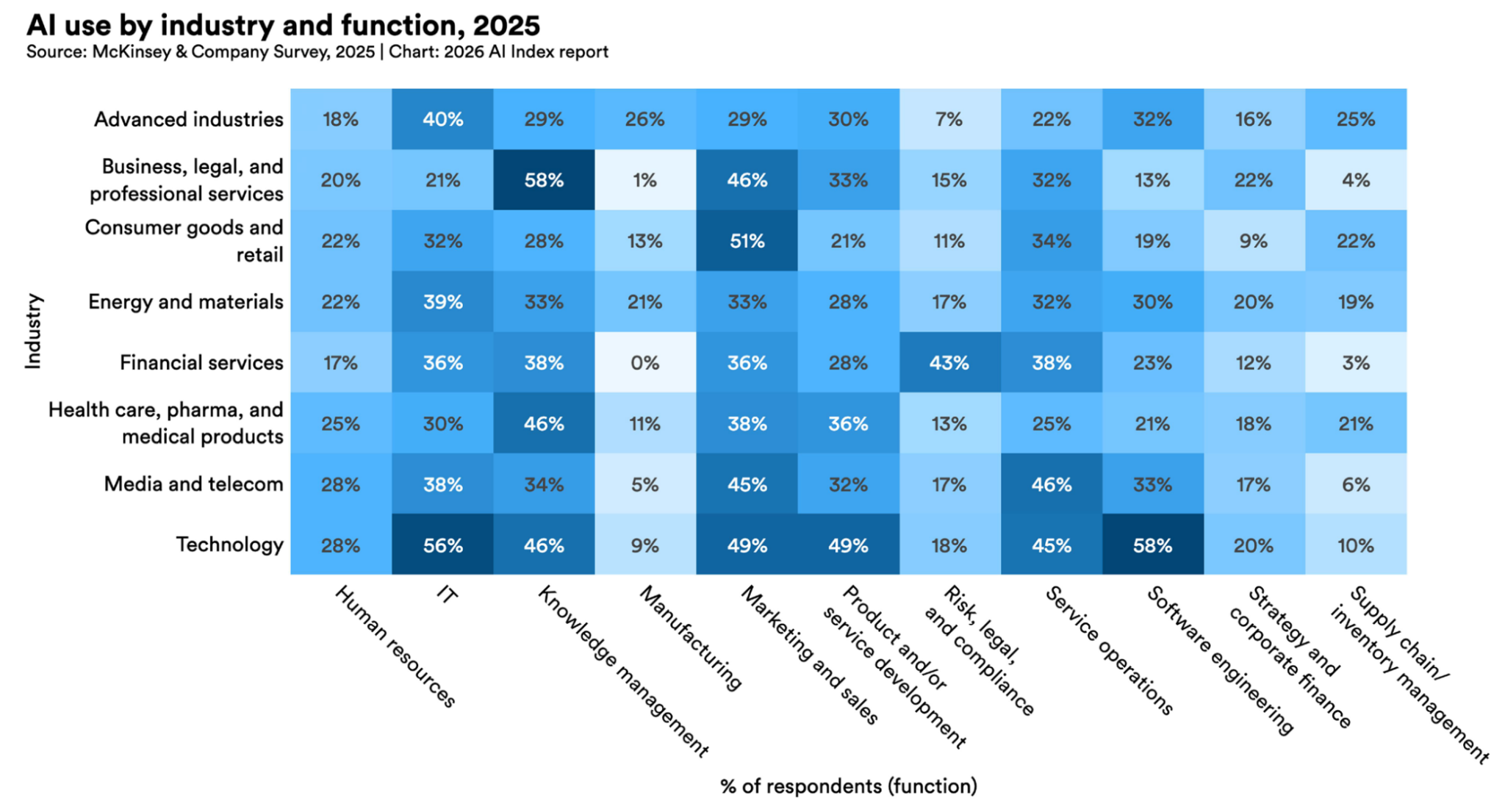
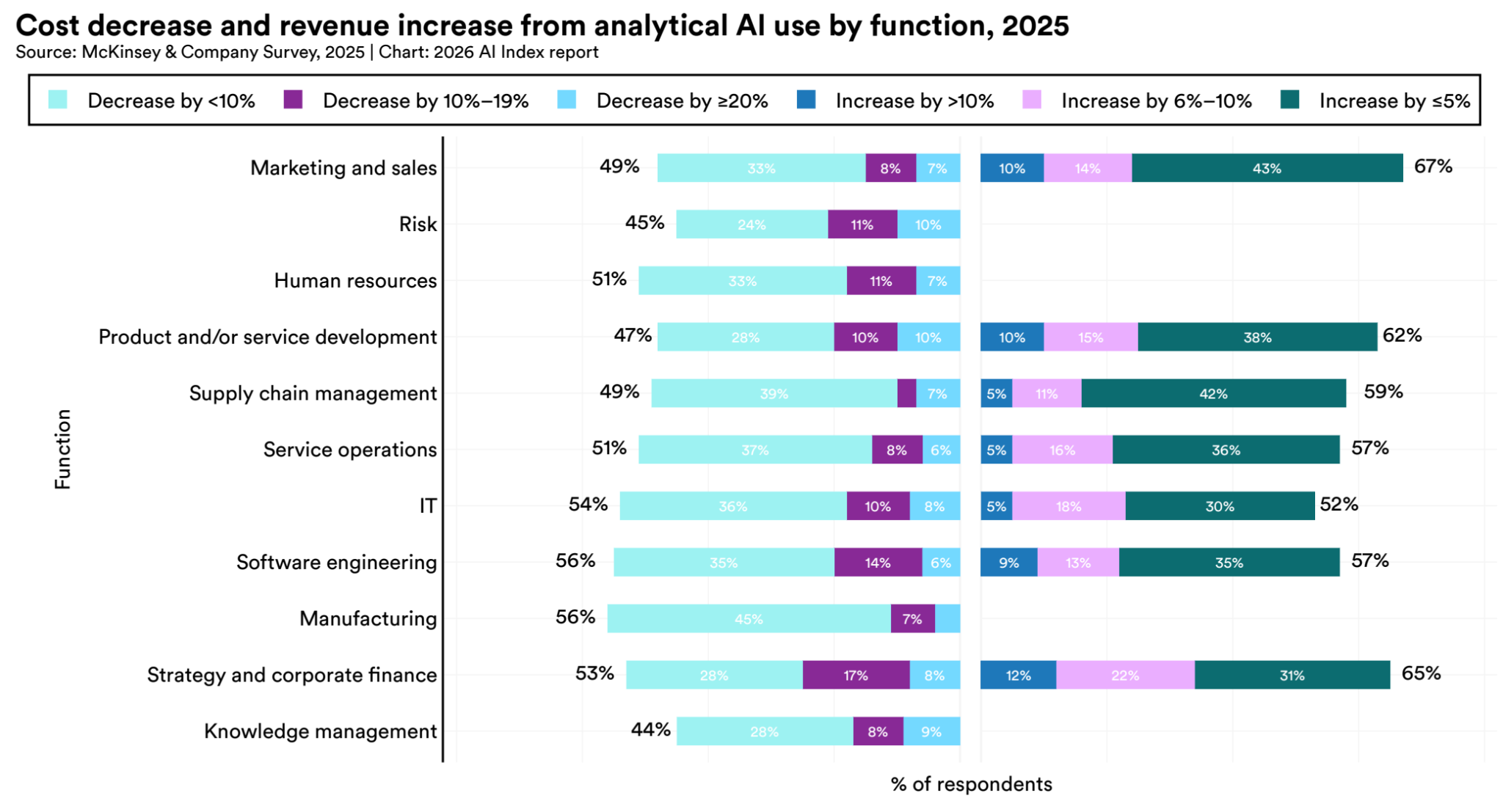
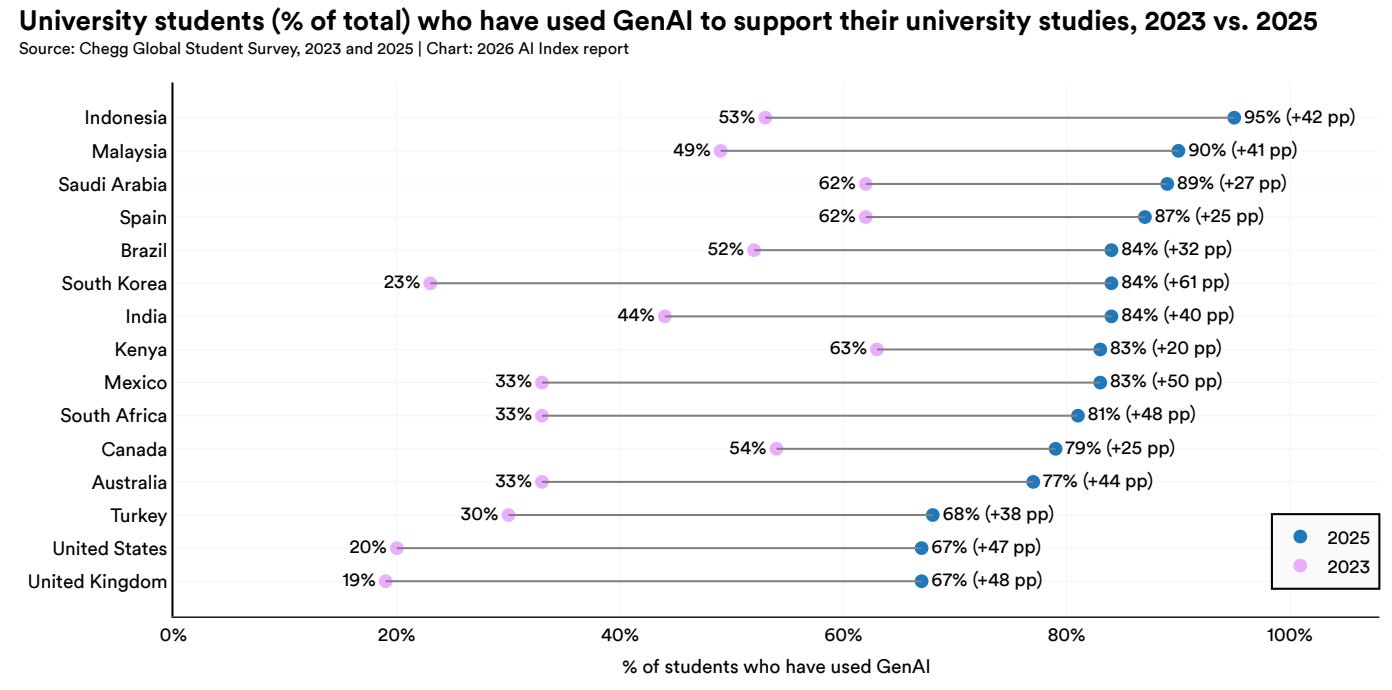
The next financial crisis may be sparked by AI bubbles, according to industry experts, because massive debts have been taken out to turbocharge cutting-edge data centers and algorithms that our economy has become increasingly dependent upon. American banks in particular have seen private capital firms invest almost $200B when compared to China’s $16B, or the EU’s $14B. With public & more transparent sources, the sums grow much higher. But billionaires saw their wealth surge by an average of 25% from April 2025-2026, and the global total of billionaires rose 13% in the same time. The 425-page AI Index Report from April details some of these trends, and is stuffed with graphics & data.
“Global corporate AI investment more than doubled in 2025. Private investment grew fastest at 127.5% and now accounts for 60% of the total….The United States continues to lead in global private AI investment, committing 23 times more than China….Generative AI is now used in at least one business function at 70% of organizations….AI has moved from an emerging technology to a key strategic priority….In 2025, total investment reached $581.69 billion, marking a 129.9% increase from the previous year. Private investments represented the largest share of activity with $344.66 billion, up 127.5% from 2024….AI’s role in education is expanding faster than the data needed to track it…” -selections
Margin debt is money that an investor borrows so he/she can buy securities, using their other investments as collateral. U.S. margin debt is at record highs ($1.4T), and growing still, as increasingly desperate investors seek ways to make money anyway they can. Some are using margin debt to bet on options on a leveraged ETF which itself has a value based on underlying assets like stocks or bond. Most of these bets are on Big Tech in some shape: chip manufacturers, SpaceX, etc. Some of the funds are large enough to push the price of some assets upwards—for a fraction of the day in which these trades are being made. What will happen when the reckoning comes, and a lot of big players have their debts called in?
Comments
Nothing yet. Say the first thing.
Sign in to join the conversation.