
This is Last Week in Collapse, a weekly newsletter compiling some of the most important, timely, soul-crushing, ironic, amazing, or otherwise must-see/can’t-look-away moments in Collapse.
This is the 237th weekly newsletter. The June 28-July 4, 2026 edition is available here if you missed it last week. Thank you for subscribing to the Substack; your support enables my partial withdrawal from the mainstream workforce.
——————————
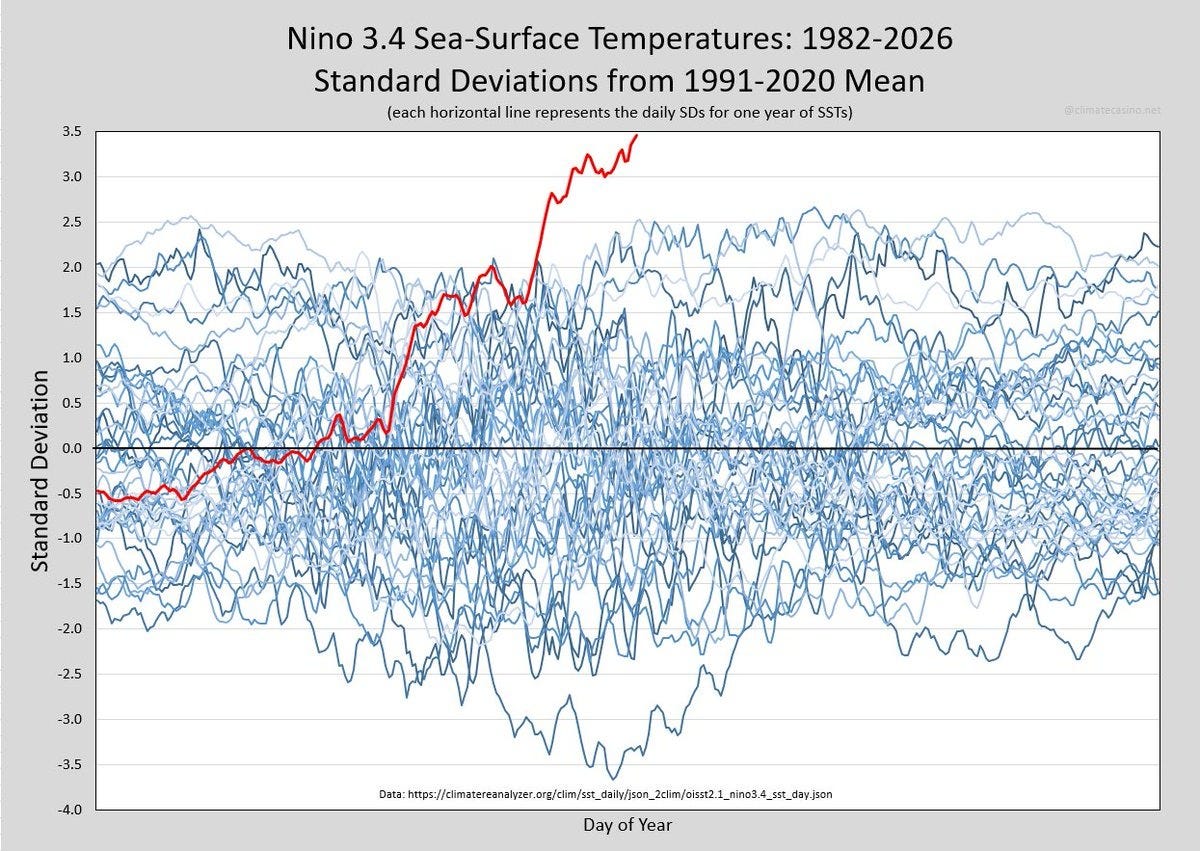
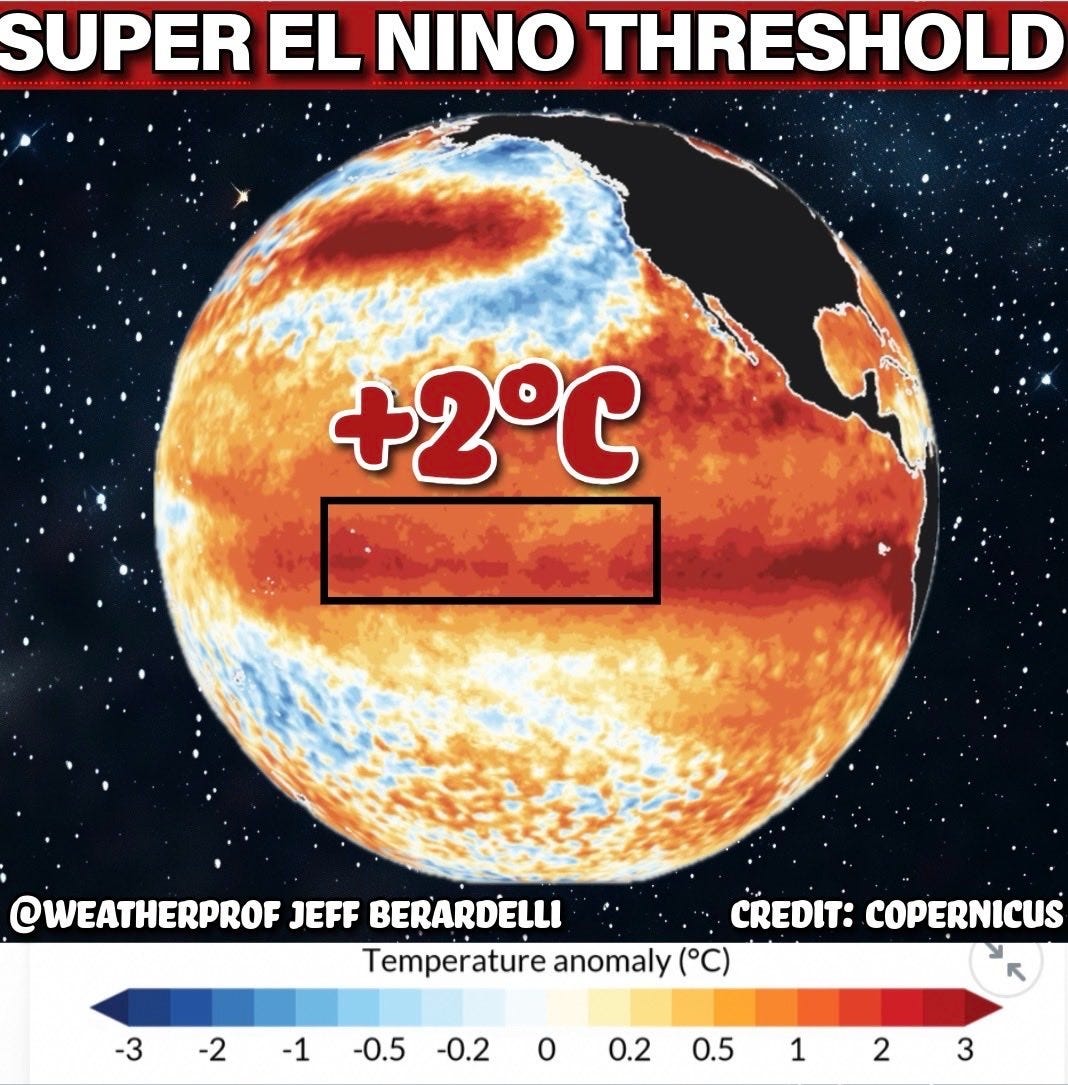
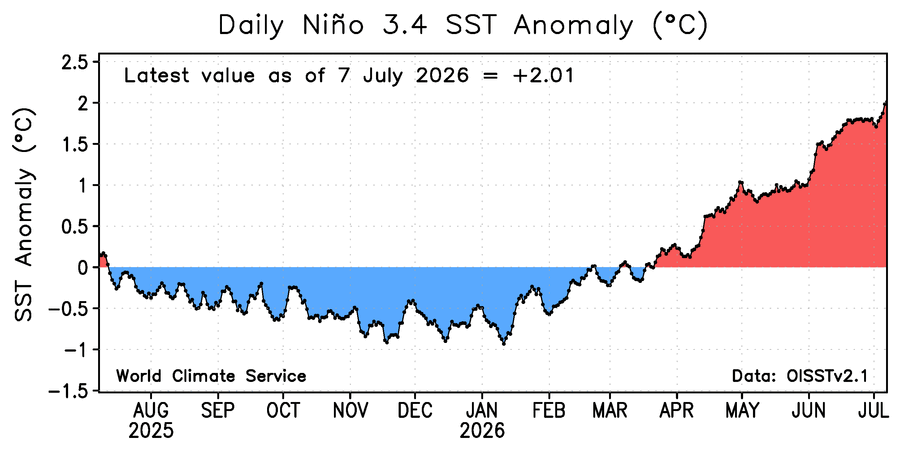
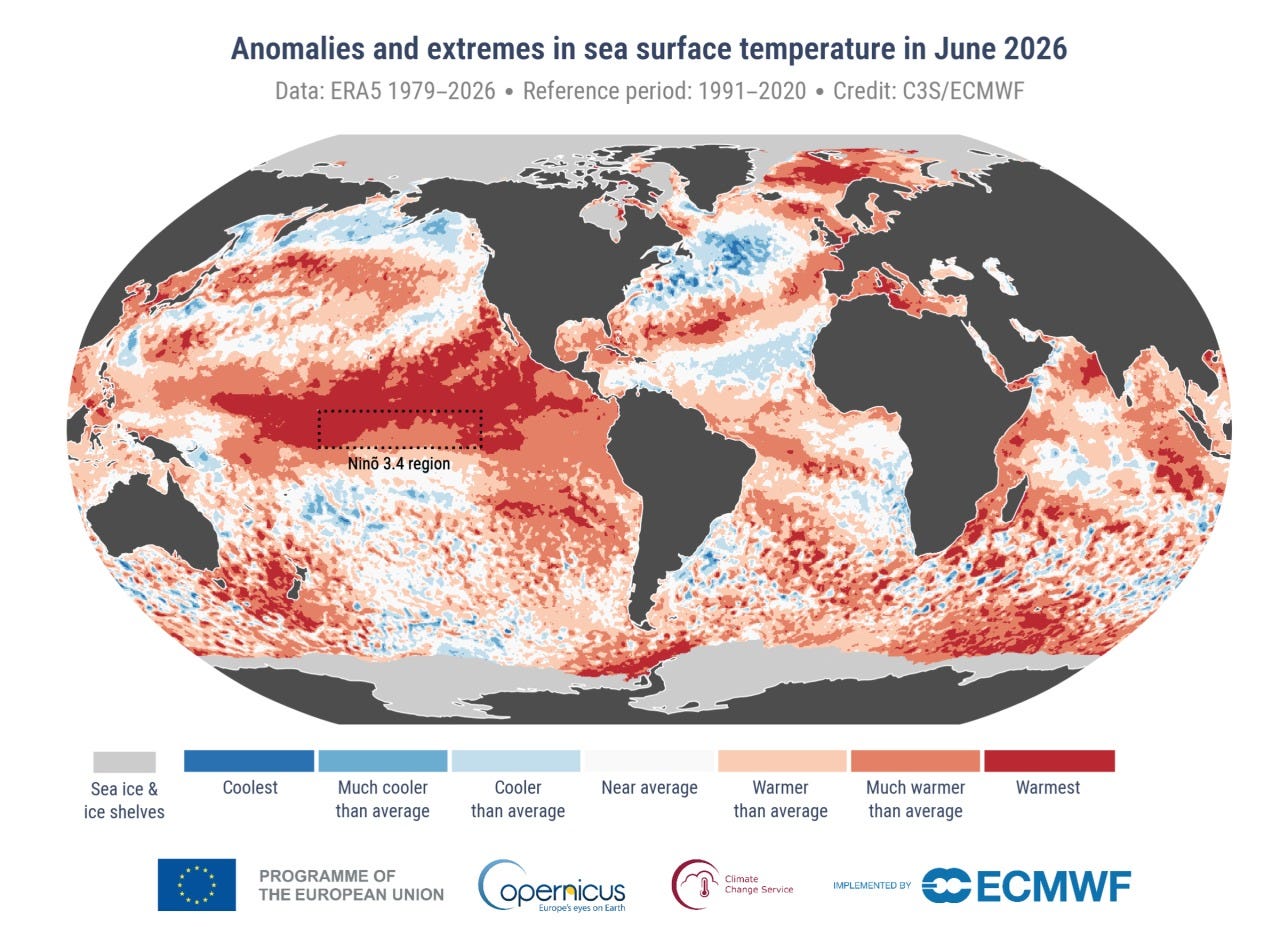
The region of the equatorial Pacific, “El Niño 3.4,” again hit record highs for this time of the year all-time. It appears to be inevitable that this will be termed a “Super El Niño” and one of the strongest ones since records began in 1950. In the face of this brutal phenomenon, science writers are sharing five lessons: “Preparedness is better than response….Indigenous and climate-resilient crops are part of the solution….Water, energy, food and health cannot be treated separately….The biggest limitation is finance, not knowledge….{and} Effective resilience depends on local ownership, trusted institutions and the ability of countries and communities to create or adapt solutions to their own contexts.” They write that Africa, having experienced cycles of crop failure, flooding, and Drought, has unique experience in facing these climate challenges.
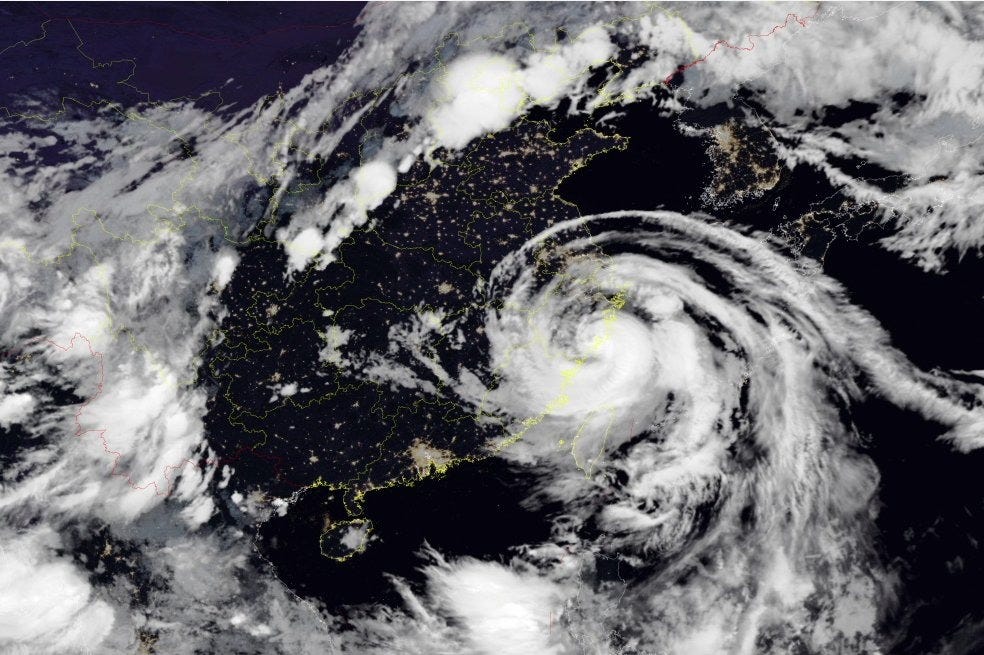
Severe storms in China broke a reservoir, killed 15+ and trapped more beneath earth and rubble. 22+ houses collapsed, and thousands more damaged across central-south China. On the remote Pacific U.S. island Rota (pop: 1,900), Super Typhoon Bavi rolled through, bringing winds of 180 miles (290 km) per hour and taking down electricity and water for the whole island. No deaths in Rota, but Bavi continued into China, where 39+ people were slain by the storm, which had a width of 1,000 km. The storm also caused landslides in the Philippines that killed 15+ people.
As wildfires rage across dry parts of Spain and France, as of July 1st, they’ve burned more than twice the average territory for the first 6 months of the year. Scientists say it’s nigh-impossible that these blazes and the astonishingly hot heat wave in late June could have happened without climate change. Meanwhile, Washington DC’s record-largest fireworks show, in commemoration of the country’s 250 years of declared independence, also made the capital city, for a time, the city with the worst air pollution on earth.
Drought in northern Italy has hit “extremely critical” levels on Friday, officials announced. Salt water is moving upstream from the Adriatic, and endangering crops. The region’s water reserves are reportedly less than 10 days’ worth; emergency meetings are being convened next week to discuss the release of reservoir water to prevent the salination of local crops. In Venezuela, an updated count of the number killed by a pair of June earthquakes passed 4,330.
Lake Powell hovers just above its all-time minimum water level—and it’s expected to continue declining over the next eight months. The traditional spring runoff boost did not meet hopes or expectations. If Lake Powell loses another 37 feet (11.2 meters) of water, it will not be able to generate hydroelectric power. Nevertheless, some people have proposed draining Lake Powell to fill Lake Mead and better provide for the drinking water needs of downstream communities. As it is, officials expect Lake Powell’s water levels to remain above 3,500 feet (10 feet above dead pool levels) until at least April 2027….yet complications with bubbles may obstruct hydropower production before the end of this year…
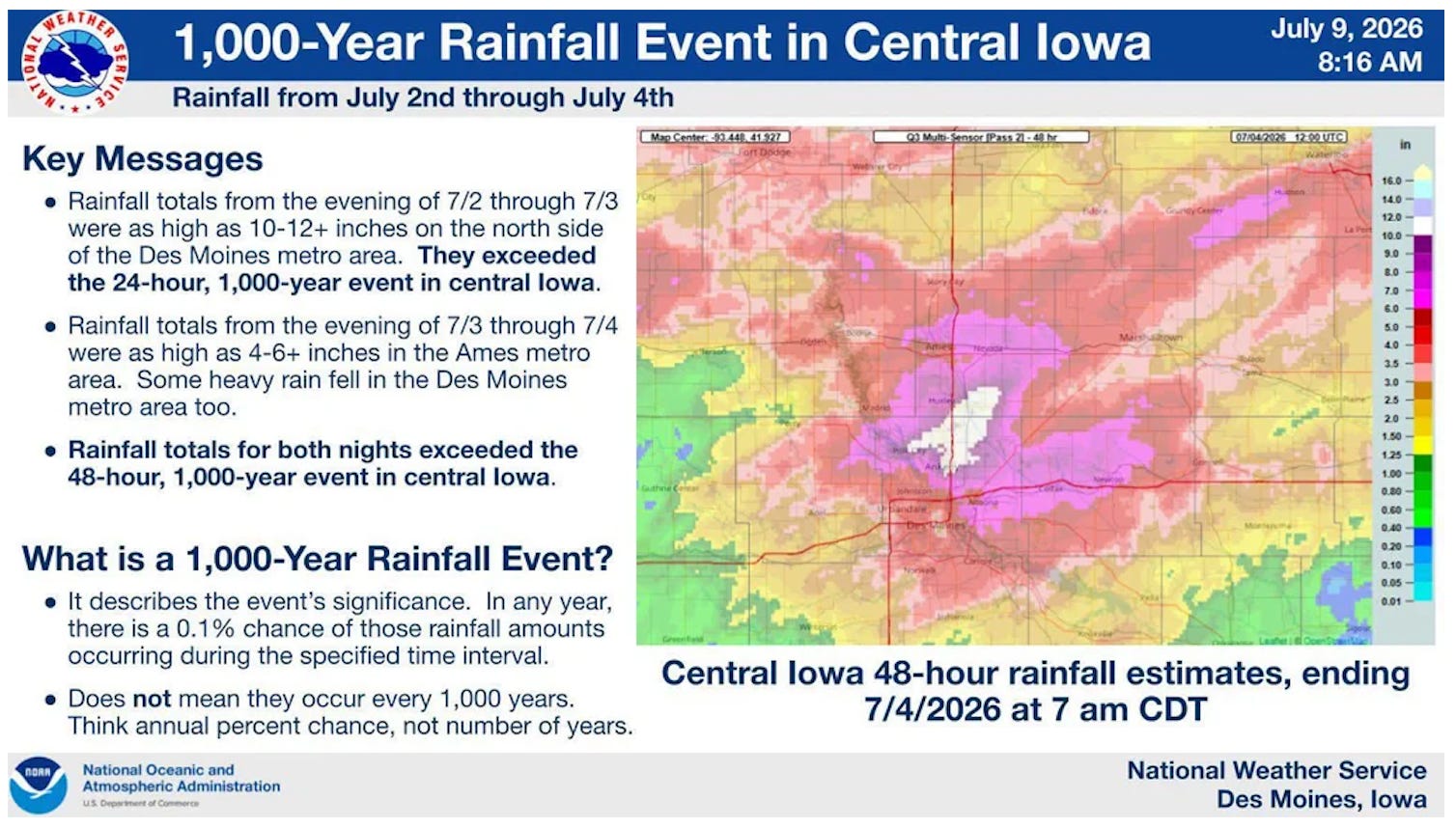
Sandusky, Ohio experienced a more-than-1-in-1000-year rainfall event when 17 inches of rain (43 cm) of rain fell in 24 hours—four months worth of rain in a single day. Iowa also suffered historic rainfal ending on July 4th, with 12 inches (30cm) of rain in 24 hours. Landslides in Bangladesh killed 18 refugees in Rohingya camps. Thailand set a new record for hottest July night for 8 consecutive days.
As people race to reforest large tracts of land, a study out of China confirms that naturally growing forests are more resilient than planted forests when it comes to heat waves and Drought. But while planted forests suffer more during extreme heat, they also seem to bounce back from severe weather in most of the regions studied. Meanwhile, the WMO announced that last year both China and the US suffered their worst sand & dust storms in decades.
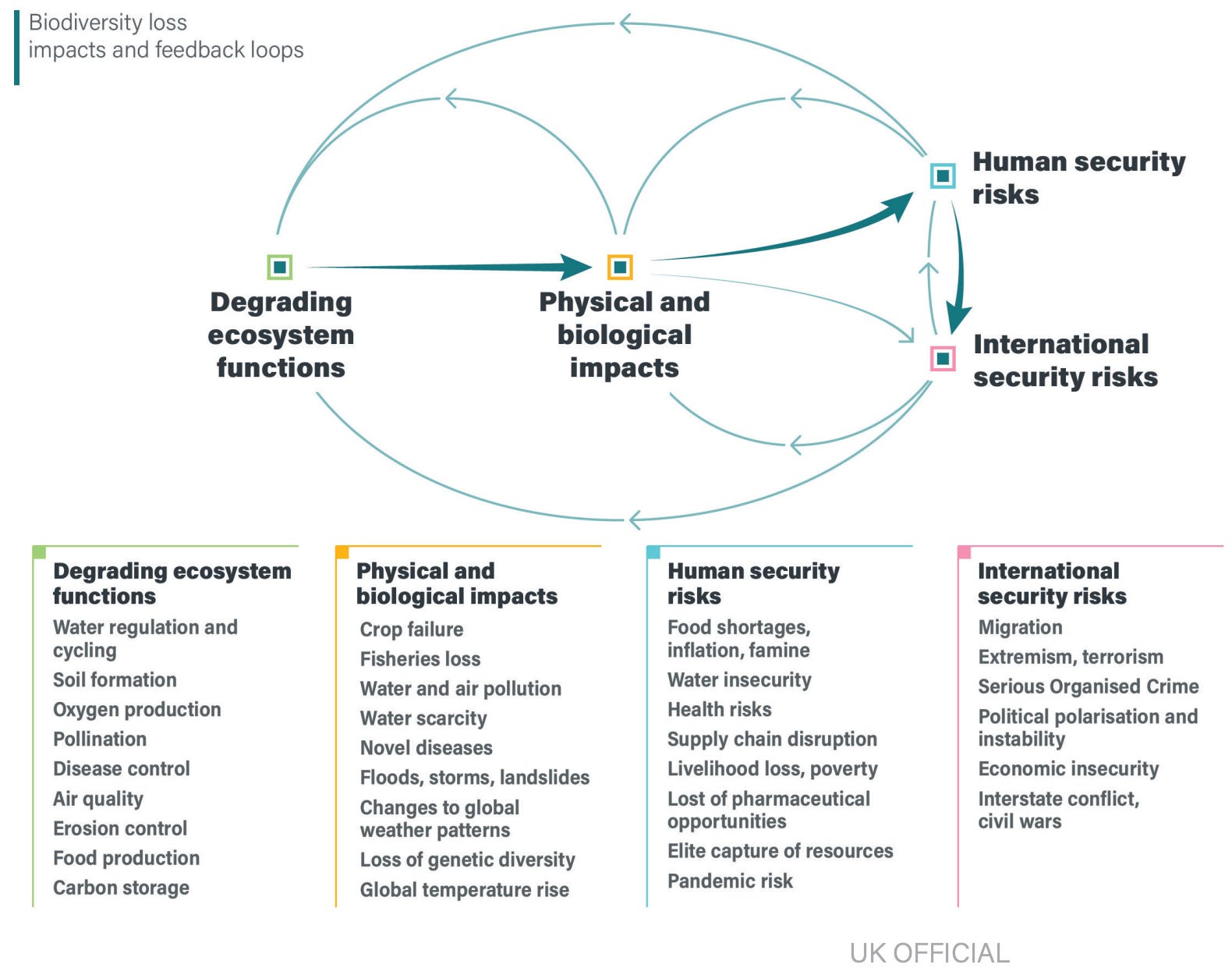
The UK’s Climate Change Committee has announced that Britain can expect a daily water shortage of about five billion liters by the year 2050, if current consumption rates hold. The triage of who gets water will not be pretty, prioritizing hospitals and prisons above nursing homes & “vulnerable citizens”, who are themselves prioritized above residential homes, which are reportedly (as of now, anyway) ranked as more important than agriculture. It’s not that rain is expected to stop—the wet winters & springs may still occur—but runoff and evaporation is expected to increase, while reservoirs are continually depleted. Meanwhile, British MPs are talking about a yet-to-be-published report on climate change that allegedly addresses the catastrophe coming at the convergence of political disruption, inflation, mass migration, biodiversity breakdown, and serious food shortages. To date, there has only been a 14-page summary posted in January 2026.
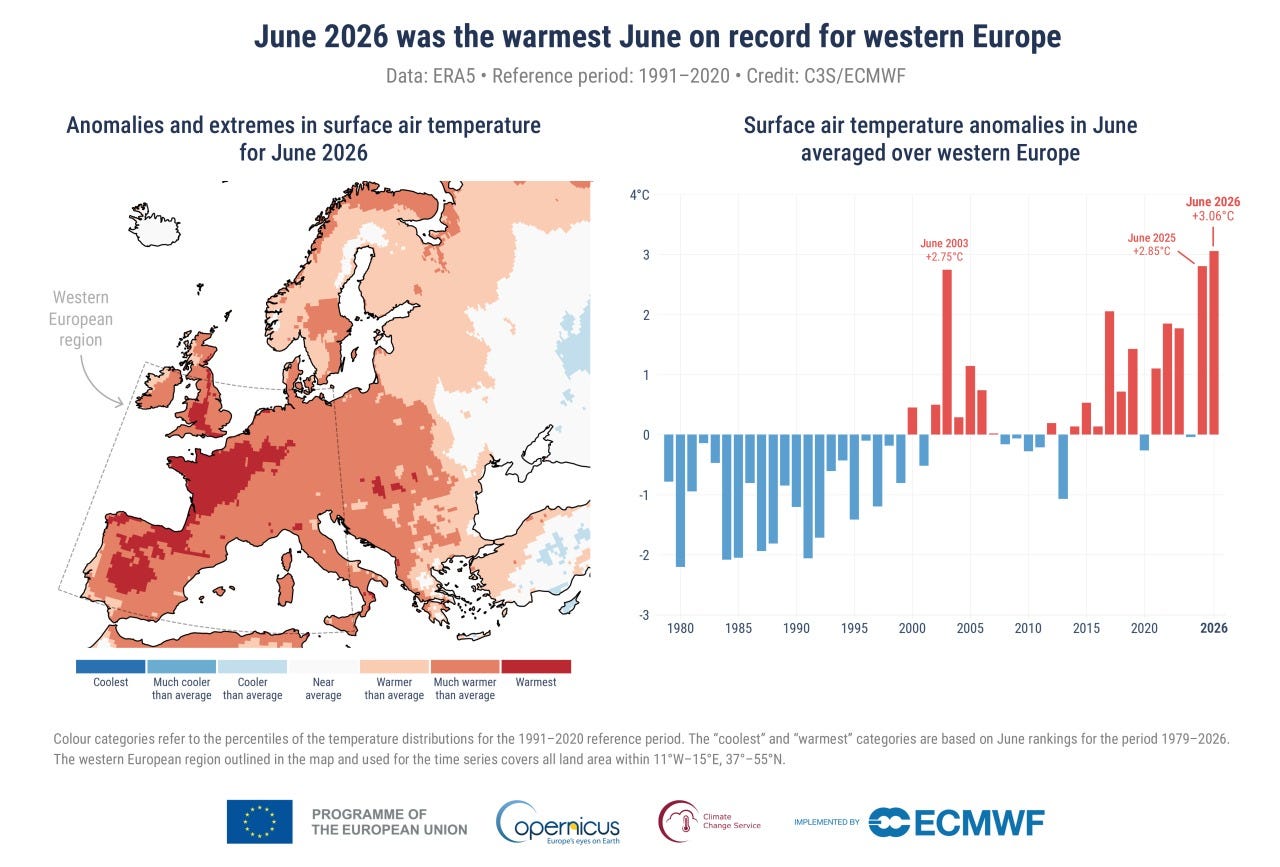
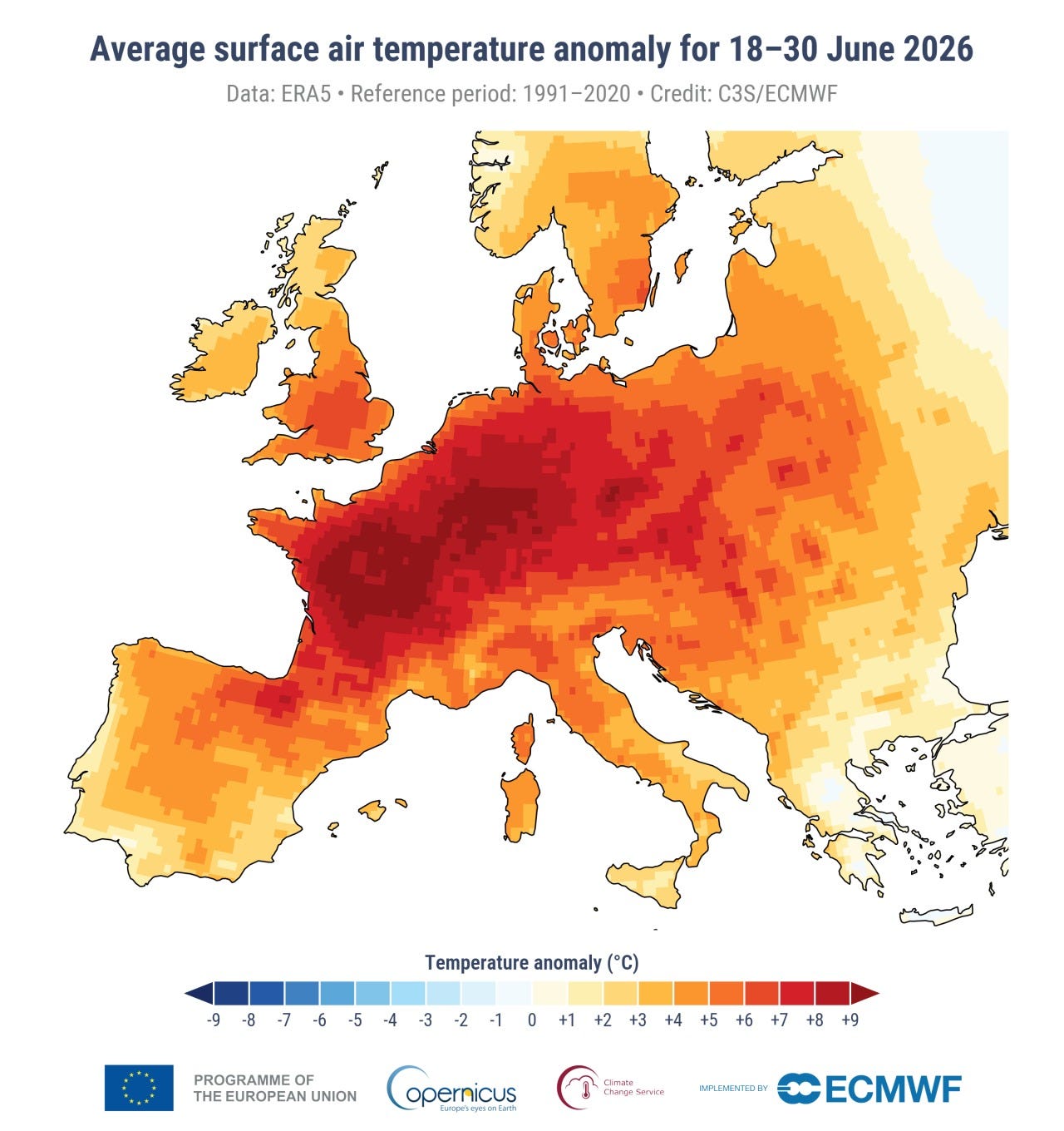
Barcelona (pop: 1.75M) hit a new all-time high at 40.5 °C (105 °F); the Mediterranean also saw a heat wave bring anomalies of up to 5 °C in parts of the Sea near Greece. The UK suffered another heat wave this week, with temperatures hitting 35 °C (95 °F) in some places. The country has now broken the number of days (8, as of Thursday) where temps have hit at least 34 °C, and it’s still July. The EU’s climate change service confirmed that last June was the second-warmest June on record worldwide, and Western Europe’s hottest on record.
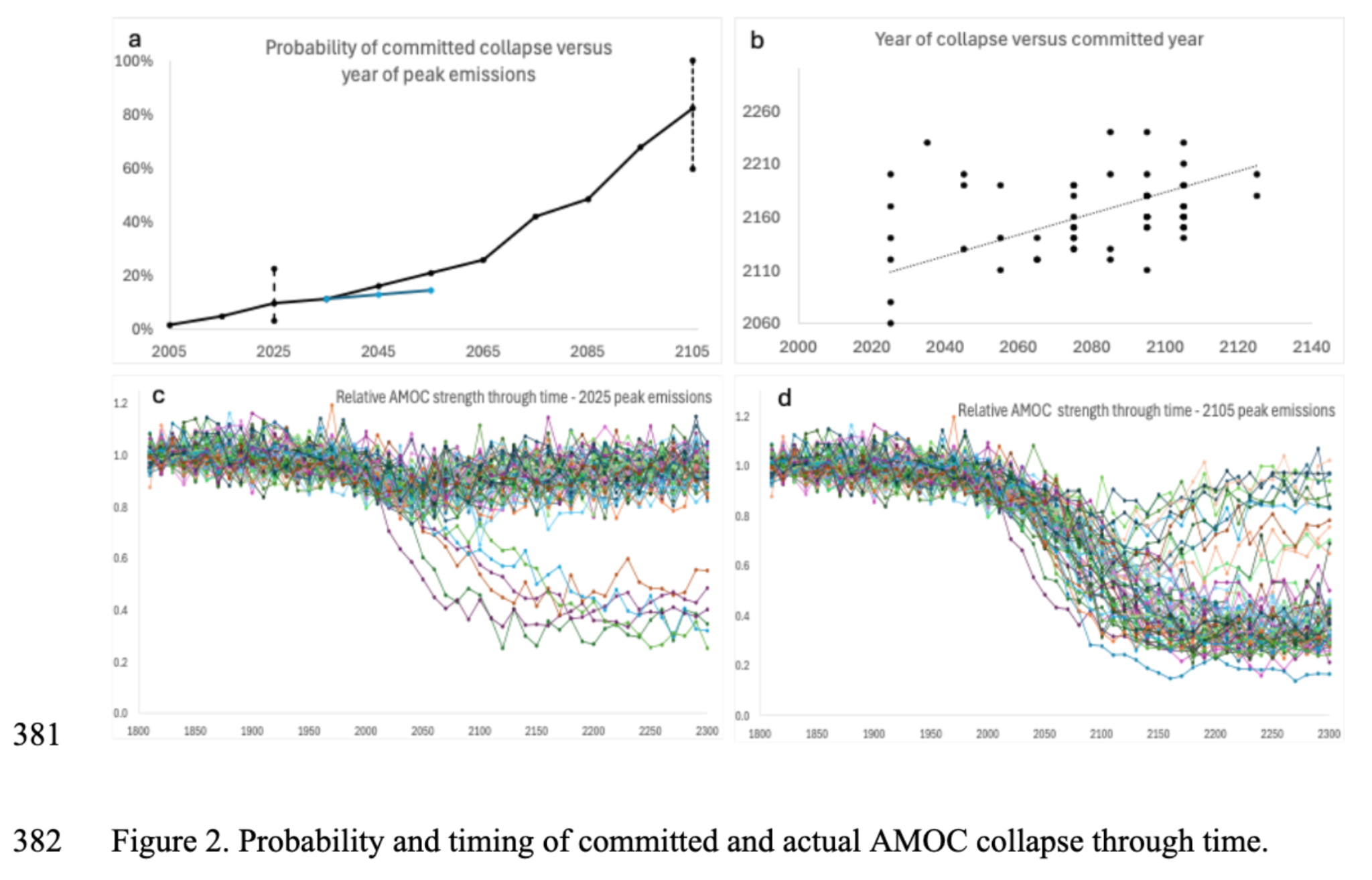
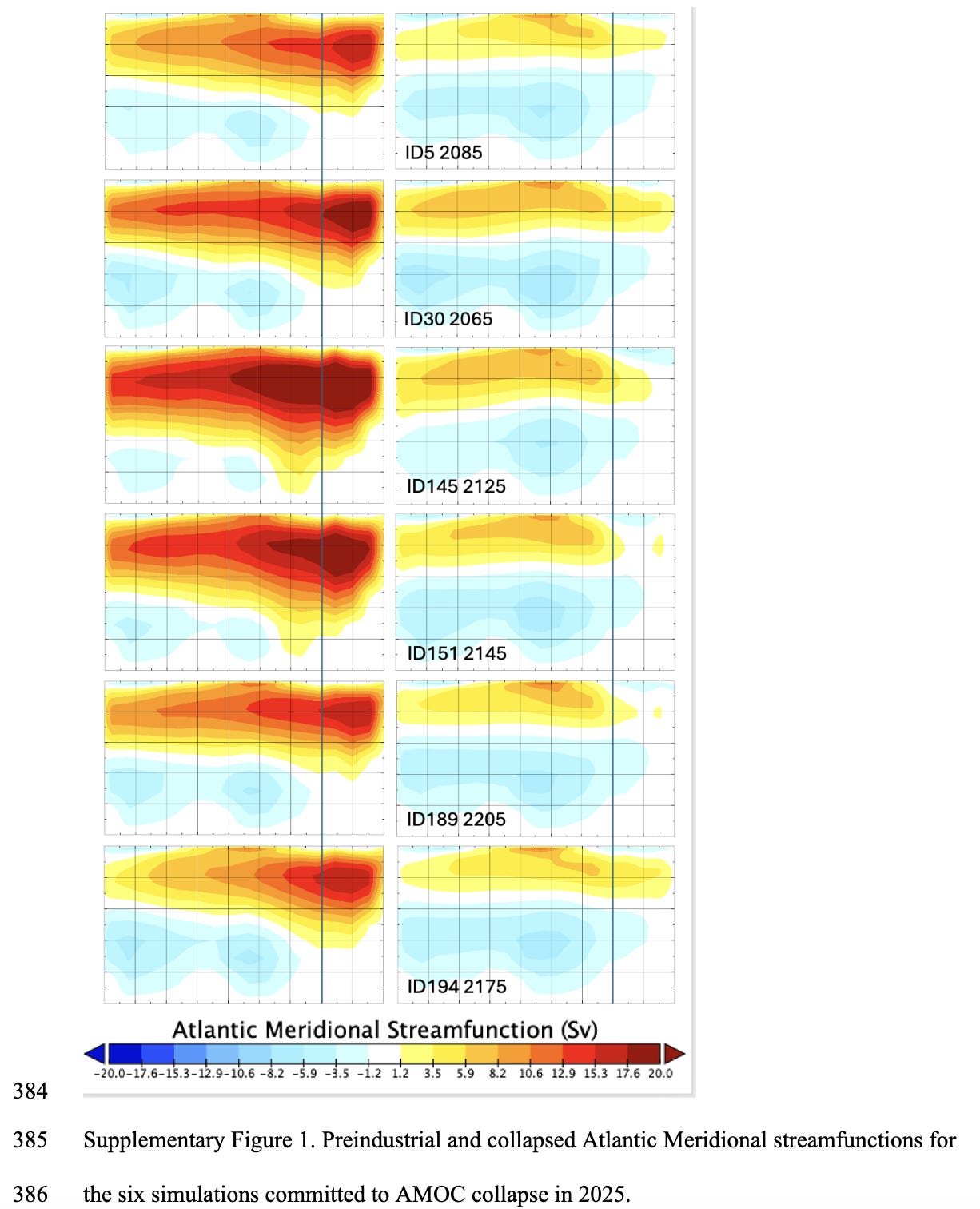
Is the breakdown of the AMOC inevitable? Researchers now saw that there’s a 10-23% chance it is, though opinions across the scientific community vary. The simulations also used conservative estimates for global warming and Greenland’s melt rate, both of which are filled with uncertainty and complexity. The research team estimated that a Collapse could occur as early as 2060, though the average estimate places it at around 2110. The pre-print study has more. It is estimated that “temperatures in northern Europe would drop by 9 to 27 degrees F (5 to 15 degrees C)” after the AMOC has Collapsed. But for now, the UK is grappling with an extreme heat wave that could cause mass death of at-risk marine species.
The blistering heat wave that wracked France recently also forced offline five nuclear power plants temporarily, since river temperatures were too high to cool their power reactors. This leads the people of France to a recursive problem: power people use air conditioning during extreme weather, which draws more power from the increasingly strained power grids, pushing the grid closer to the point of failure. Hotter weather also limits hydropower generation, and the ability of fossil fuel plants to cool themselves effectively.
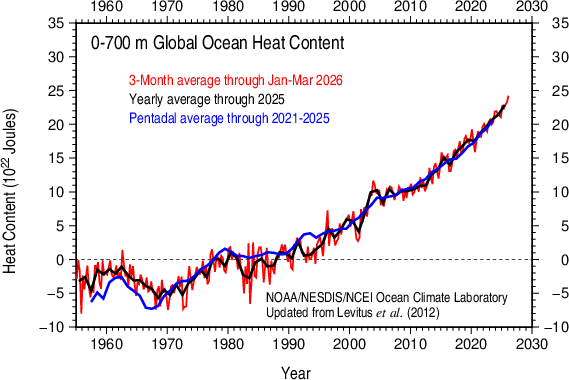
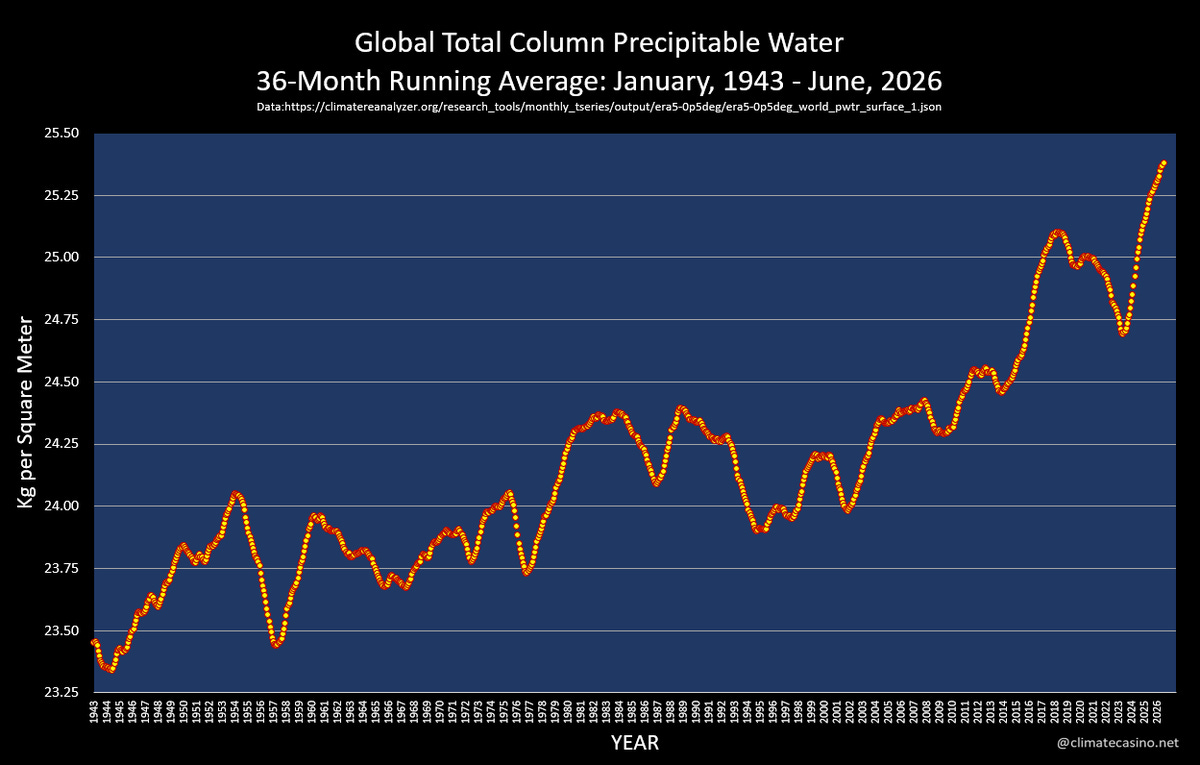
Global heat content for the 0-2000m depths of the ocean hit record highs last week, and climbs higher still. Also, the “total column precipitable water” (the amount of water if all the water vapor in a column from the Earth’s surface to the top of the atmosphere were to be condensed) hit a new monthly record, according to data from June. The International Energy Agency’s executive director is urging the EU to drop its 2021 moratorium on Arctic oil & gas drilling, since “the world needs every drop of oil from Norway.”
——————————
Energy analysts are warning about the possibility that a Super El Niño might bring severe Drought to Colombia, and impede its hydroelectric generation, forcing them to become more reliant on oil & LNG, which have risen again after the Iran War escalated again. Colombia’s natural gas extraction is down 36% over the past decade, even as Colombia’s population has risen by about 15%. Rising energy costs will also push inflation higher.
If there’s one group of people you absolutely need to pay, it’s frontline Ebola workers. Yet they haven’t been paid since mid-May, causing a group of Ebola workers to walk off the job in the northeastern DRC in protest of working conditions and wanting their backpay. Some observers are theorizing that this Ebola outbreak could become permanent and endemic if it’s not managed properly. The eastern DRC is very populous, and the recent proliferation of motorcycles and vehicles has enabled the virus to travel more easily. Recent aid cuts, and the psychological aftermath of COVID-19 have also hampered responses—plus the on-and-off insurgencies in the region. If Ebola becomes endemic, they warn, “containment will become a recurring expense and control will be impossible.” 2026 DRC Ebola deaths passed 600 in total now.
An article on the Collapse of reading across the United States (pop: 349M) takes aim at a worsening “literacy crisis” that isn’t limited to just the U.S. Although book-reading is down substantially over the past 20 years, reading of other material—Instagram Reels subtitles, emails, and Reddit posts—has taken their place. (Maybe this 3,800+ word newsletter is too long for you to read the whole thing; I confess I didn’t read the 8,000+ word article cited above in its entirety.) Literacy experts argue that deep thinking, textual comprehension, logical reasoning, and inference-making have been lost in the transition away from long-form books, and that we have entered a “post-literate” age. It’s a race to the rock-bottom, and we’re losing.

Cuba’s national power grid broke down for the third time this year last Monday—and then again on Friday. The Monday nationwide outage lasted for a day before service was restored piecemeal—over 30% back by Tuesday. Cuba’s President said the American “genocidal energy blockade” is to blame; in short, the U.S. is threatening tariffs to countries that sell oil to Cuba, and their sanctions on Cuba (pop: 11M) have obstructed other Cuba’s commerce with other nations as well.
Comments
Nothing yet. Say the first thing.
Sign in to join the conversation.