
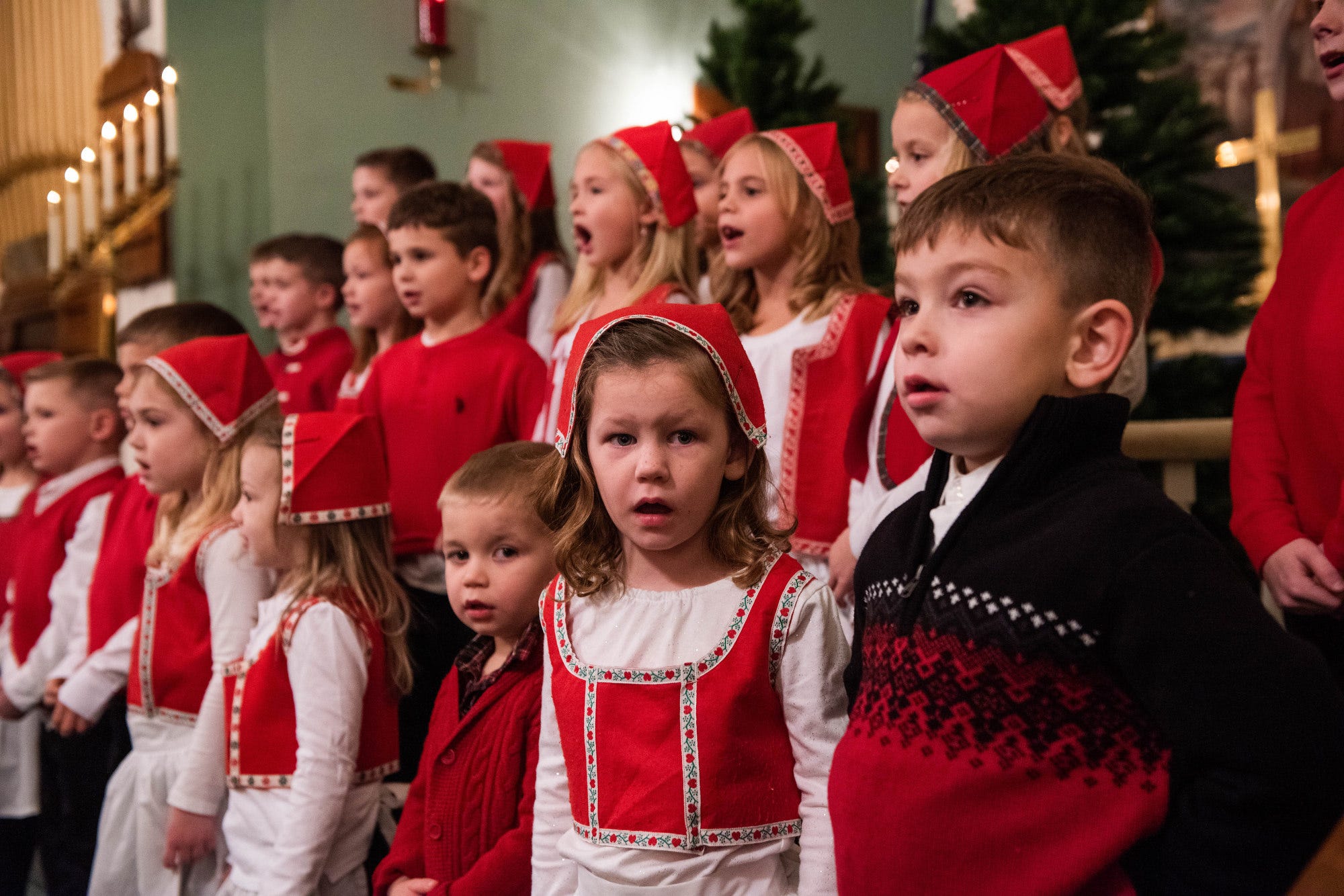
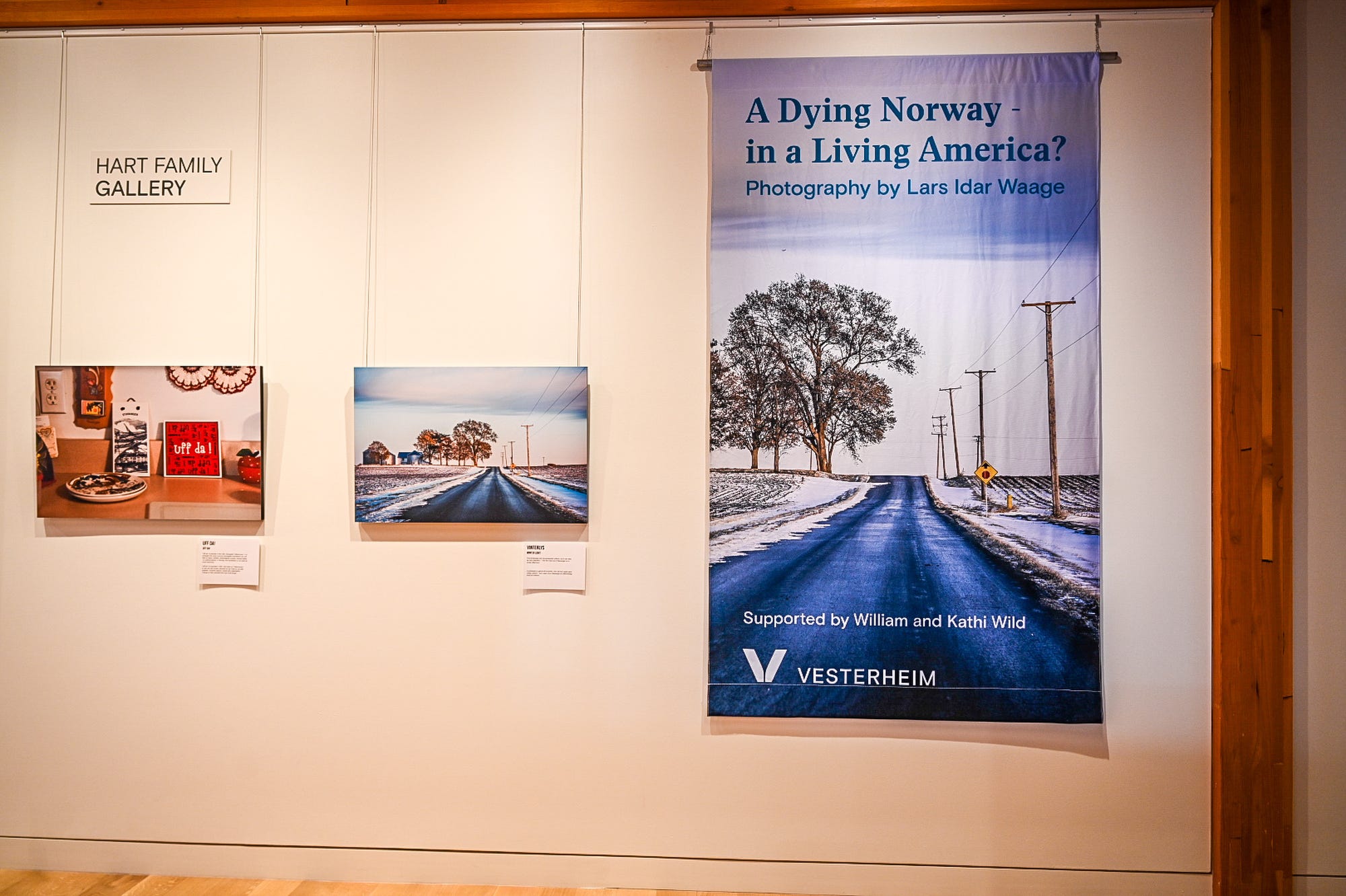
I have asked this question hundreds of times. My project is called “A dying Norway - in a living America?”
I have asked it from stages in the American Midwest, in conversations after lectures, while driving between small towns with Norwegian names, inside museums and churches, and while walking through cemeteries where the names on the gravestones could just as easily have belonged to families in Rogaland, Telemark, Valdres or Gudbrandsdalen.
This is the first in a series of articles in which I will explore what is happening to Norwegian America today. I want to look at what is being lost, what is still going strong, how traditions and institutions are changing, and who will carry this heritage forward. Along the way, I will visit the language, the churches, the museums, the organizations, the communities and, most importantly, the people who are keeping Norwegian-American history alive.
Part I: Is Norwegian America dying — or changing?
Part II: The language they lost
Part III: The keepers
Part IV: What happens when the churches close?
Part V: The Norwegian towns that remain
Part VI: Lutefisk, lefse and the Norway that never changed
Part VII: Finding Norway again
Part VIII: After Crossings 200
Finale: So, is Norwegian America dying?
The question is not new to me. In fact, it is built into the American version of my own project, and I know that the question itself has provoked some Norwegian Americans over the years.
That is understandable.
If you have spent decades volunteering at a museum, organizing a Syttende Mai celebration, maintaining a cemetery, teaching rosemaling, making lefse, preserving family photographs or keeping a Norwegian-American organization alive, being asked whether Norwegian America is dying can sound almost insulting.
But the provocation is partly intentional.
Because I think we need to ask the question.
Recently, the Norwegian science news site forskning.no asked exactly that in an article titled “Dør det norske Amerika?” — “Is Norwegian America Dying?” The article looked at the future of Norwegian-American culture and raised many of the same questions I have encountered during more than a decade of traveling, photographing, exhibiting and speaking in Norwegian-American communities.
After eleven years, I think I have at least part of my own answer.
No. Norwegian America is not dying.
It is not going to disappear tomorrow, next week, in two years or in five years.
Perhaps not even in fifty.
But Norwegian America has changed radically during the past fifty years. It has changed during the past twenty-five. It will continue to change, and the Norwegian America that exists fifty years from now will be very different from the one we know today.
That is not necessarily a tragedy.
But neither should we pretend that nothing is being lost.
One thing becomes obvious when you spend time in Norwegian-American organizations, museums, churches and community gatherings: many of the people carrying this heritage are getting older.
They are the volunteers, the organizers, the local historians, the museum people and the people who have spent decades collecting photographs, documents and stories. They remember who spoke Norwegian. They know which Norwegian valley a family came from. They know why a particular tradition was celebrated, who built the old church and who the people in the photographs were.
And people grow old.
Eventually, people die.
That is not a dramatic statement. It is simply life.
The important question is what happens to their knowledge before they are gone.
There are still many people doing extraordinary work to preserve Norwegian-American heritage, and there are institutions that remain strong. Museums, historical societies, churches and organizations are enormously important. Without them, much of what remains would disappear far more quickly.
But there is no doubt that many of the people who show up, volunteer and take responsibility are older than they used to be.
There are young people. There are new initiatives. There are always bright spots.
But overall, the trend is difficult to ignore.
And nowhere is the change clearer than in the Norwegian language.
Once, Norwegian was not something Norwegian Americans had to preserve.
It was simply the language they used.
It was spoken at home, in church, in stores, at community meetings and among neighbors. Norwegian immigrants established newspapers across the United States. They wrote letters home. They read books and religious texts in Norwegian. Thousands attended churches where Norwegian was the natural language of worship.
Before the First World War, Norwegian-language newspapers flourished across Norwegian America. There were far more of them than most people today can imagine.
Now, only one newspaper remains from that tradition.
The transformation of the churches is perhaps even more striking.
At one time, thousands of Norwegian-American congregations conducted their services in Norwegian. Over the generations, almost all of them changed to English.
Today, one place stands apart.
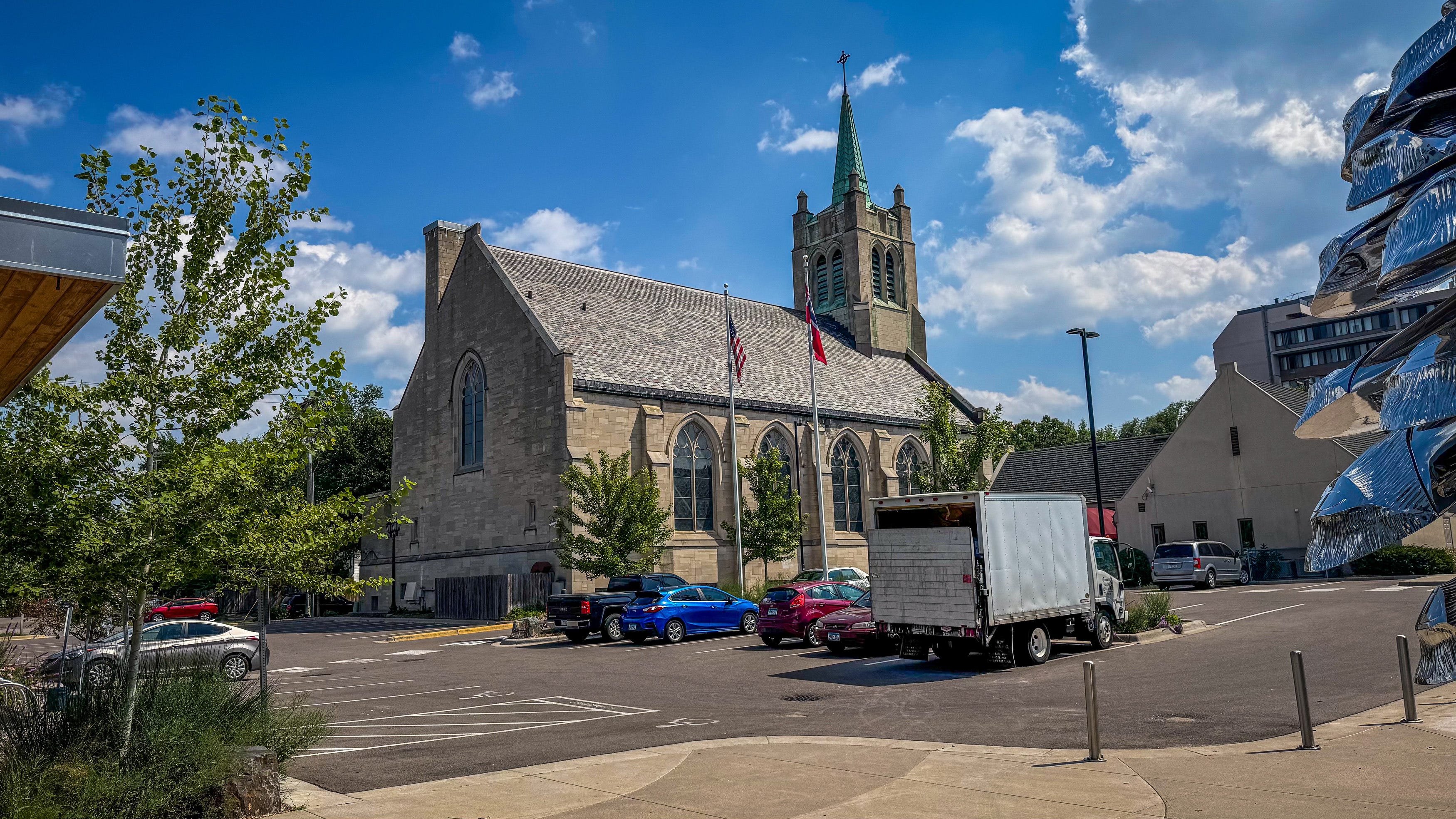
Mindekirken — Den Norske Lutherske Mindekirke in Minneapolis — still has a Norwegian pastor and services conducted in Norwegian.
That distinction is important.
There are other Norwegian-American churches where Norwegian can still be heard or where modern technology can provide Norwegian translation. In Chicago, for instance, automated translation can make services accessible in Norwegian.
But Minneapolis is different.
There, Norwegian is still spoken from the pulpit by a Norwegian pastor.
More than a century after Mindekirken was founded by immigrants who wanted to preserve worship in their own language, Norwegian remains a living language inside the church itself.
And even that continuity has not been automatic.
When Mindekirken last had to find a new pastor, there was discussion about whether the congregation should once again recruit a Norwegian pastor.
That small question contains something much larger.
How much effort are we willing to make to preserve something once it no longer preserves itself?
Because that is exactly what has happened to the language.
For the first generations, nobody needed to organize a program to keep Norwegian alive. They spoke it because it was their language.
Today, speaking Norwegian in Norwegian America usually requires a conscious decision.
It must be learned.
Practiced.
Protected.
And passed on deliberately.
Comments
Nothing yet. Say the first thing.
Sign in to join the conversation.