
Darling,
We recently discussed the ignorant denigration of my favorite genre. We pulled apart crusty misapprehensions and were left loving what we love.
Now let’s talk about why it’s hard to write romance that isn’t terrible.
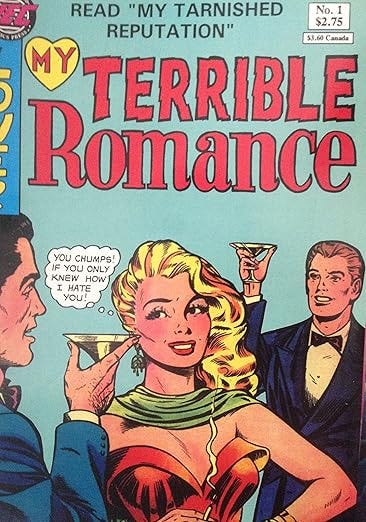
Virtually all storytelling follows standard rules. Once you know, you see Three Act Structure everywhere.
TAS is a screenwriting term, but let’s not give those espresso swigging, Cucinelli-clad courtiers too much credit for realizing a tale needs a beginning, middle and end. One spots the ramp-up, valley of despair, and fight to the finish in novels, plays, tales around the fire, and on and on.
Romance has its own guidelines. The most famous is the HEA—Happily Ever After. One sets up a couple (or throuple, or . . .), then puts them through delightful hell with the promise that at the end, they will finally be together.
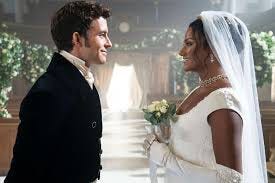
Because the thrust is relationship, obstacles boil down to what keeps a protagonist alone. Misunderstandings, blackmail, and hexes are lovely plot devices, bur the true obstacle is always the rubbish the protagonist believes about themselves.
The rubbish sounds like:
I’m fundamentally unlovable, just like my parent said.
I am cursed.
I can’t risk loving because it nearly ended me last time.
I can’t give this to myself because I am responsible for others.
I’m not a proper lady, and therefore can never marry.
I did a terrible thing and will never deserve love.
Insert love interest. Begin to challenge the rubbish. And the following events happen:
The protagonist leans in. Begins to believe a different scenario might be possible. If the novel is steamy, some thrilling pressing together of bodies underscores this point.
But then, they are slapped down. Their mind does it, or some outside force. Rubbish is strongly advocated for. And they realize—Gods, I’m an idiot to have been tempted by a fantasy of togetherness. Dangerous! Stupid! Never again!
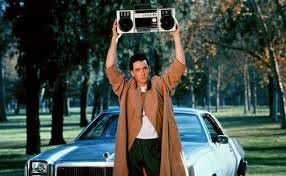
iconic “fighting for love” grand gesture scene But through turns internal and external, the protagonist finds strength to rise, to reach for the vision of a life that includes love.
At the end, they’ve grabbed hold of it.
Viola: HEA.
When a romance writer uses these cogs in service of aching specificity and emotional truth, when she never allows demands of form to coax her to skip a moment of struggle, doubt, or complexity . . . well, darling, then we have something.
But because romance is so well-trodden a forest that it more closely resembles a golf course, it is very difficult to avoid falling into cliché.
Romance writers have usually read so much romance that our situation is similar to that of pop musicians. I’ve read many an item about a star sued for “stealing a song.” Pop is ubiquitous, catchy and intensely mathematical. It’s likely that often, a star jots down a notion with no awareness that they aren’t inventing it but recalling it.
So too with descriptions of the hero’s difficult childhood, voice, anatomy. Never mind the arguments, sweet nothings, groveling after transgression, and declaration of love.
I’m not hard on first drafts. I allow momentum to have me, clichés and all.
This means my first reading of said draft tends to make me hurl myself into the sun.
I fix the worst aggressors, but I’ve learned I need not halt progress until every scene feels fresh. The process by which a story becomes stronger tends to demand a higher level of specificity.
In other words, some of this takes care of itself as one rewrites.
But not all.
So I present to you my most valuable weapon in the fight to write romance that doesn’t feel stock.
I share it with the caveat that you won’t like it. I certainly don’t.
Whilst reading my draft, any time I have a whisper of a feeling—the slightest unease, temptation to trim, shimmer of annoyance—I put an asterisk by the line.
This requires listening for the smallest voice, and acting quickly, before I question it.

Difficult going. When one has only a vague inkling of a problem, it is wildly tempting to ignore it. Or write around it so gorgeously no one can tell it doesn’t actually work.
Sometimes, the asterisk reveals itself quickly. Ah, of course, she should be harder on him. Ah, of course, the big fight is fifty pages away, I need this one to stay at a simmer. Ah, of course, sex doesn’t happen so smoothly between new partners, it’ll be better if they mess up a bit and laugh about it.
Sometimes it remains elusive, an itch, a nag, refusing to give up its secrets.
I simply continue to work until I’ve faced every single one. Solved . . .
. . . or realized it’s not a problem to begin with, but the terrifying opposite.
Here’s the wrinkliest wrinkle: sometimes I’ve indeed found a moment that’s too surface, something I must fix.
But sometimes, I’ve gone and written something vulnerable, and my mind is trying to trick me into changing it lest it mortify me.
It’s maddening, non? Trying to decouple one’s inner critic from one’s scared, odd child who longs to be liked.
We adults know that what makes us lovable is the very vulnerability we learned to hide. We know it because it’s what we fall in love with in other people.
But our inner child doesn’t believe us. And so, understanding this intellectually doesn’t make it easier to leave something raw on the page.
To investigate, ask the question: Is this wrong or am I scared?
Sometimes, a walk round the park is in order, to clear one’s head. A spot of journaling. Pausing to read something scathingly honest, for inspiration.
In Asterisking, one must devote time to the process, such that one can make a change, go to sleep in one’s canopy bed, and wake up refreshed, with the clarity that one must go farther. Or . . . leave the exposing sentences precisely as they are.
This is what separates romances that readers crow about from ones that slide down easily but leave one unable to recall a thing about them a week later.
It’s like this with any genre. But romance is so popular that the bar is, in this gorgeous author’s opinion, staggeringly high. So now you know something about every serious writer of romance: we like a challenge. We’re not afraid to play in a crowded field.
If you are a writer, let this be a wink in your direction—you’re not alone; do continue.
And if you are a reader, let this be an invitation to seek out the greats of the genre. If a romance made it onto such a list, you know it’s very, very good.
xxLM
P.S. Would you like to read my new romance novel? You can preorder it here.
Comments
Nothing yet. Say the first thing.
Sign in to join the conversation.