
Today I’m sharing this video from a recent concert in London - my take on Leonard Bernstein’s song Lucky To Be Me (in Bill Evan’s iconic arrangement). It’s pure magic, this tune, and if you love it as I do, maybe you’ll enjoy learning something about its origins.
Funny enough, the story of Lucky to Be Me starts with Bernstein’s own lucky break.
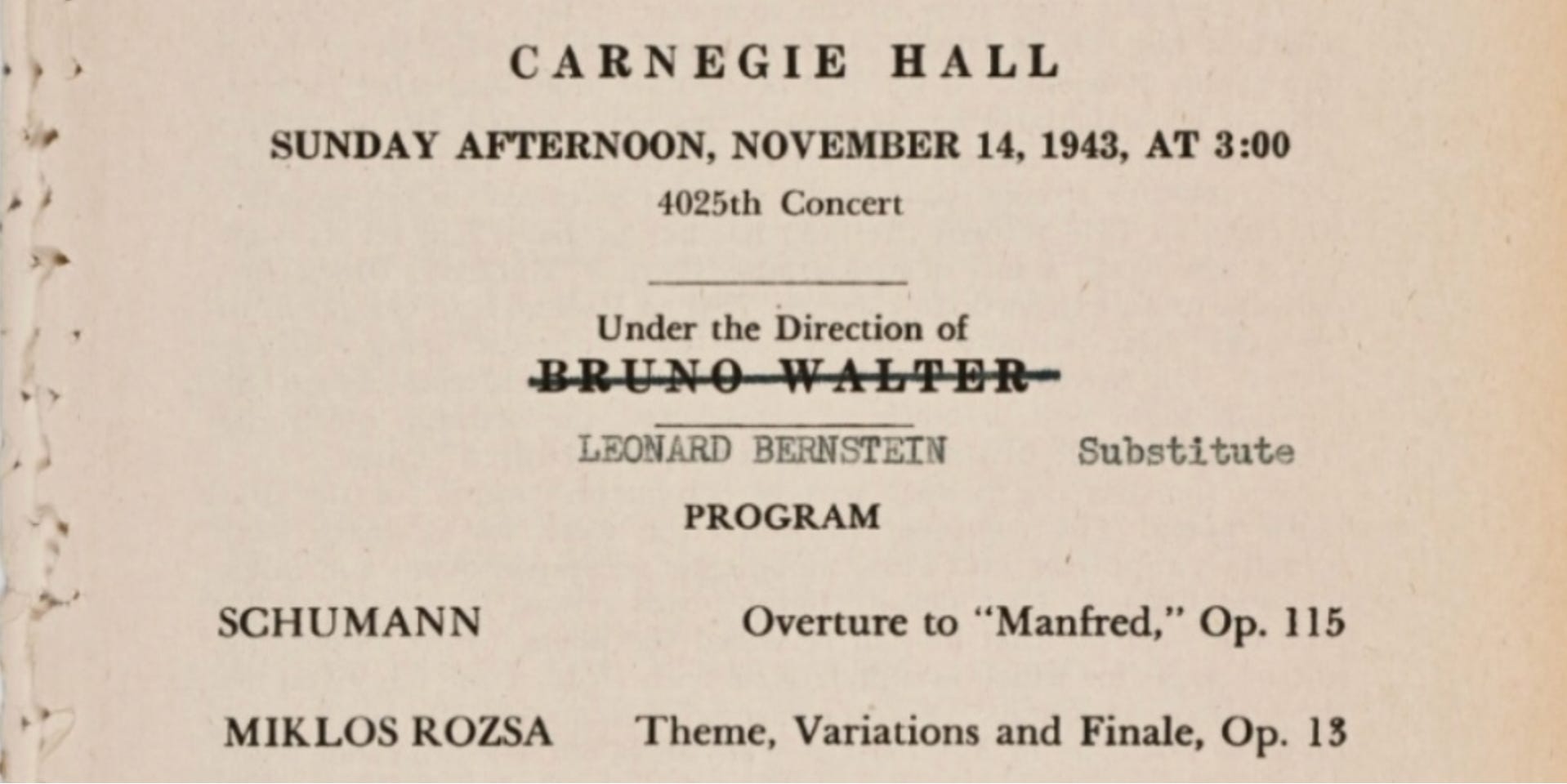
On the morning of November 14, 1943, the conductor Bruno Walter, who was scheduled to lead a New York Philharmonic concert that afternoon, came down with the flu. The phone rang in the apartment of the orchestra’s 25 year old assistant conductor, Leonard Bernstein, who was sleeping off a hangover, and he was called in as Walter’s replacement. A few hours later, with no rehearsal, Bernstein stepped onto the podium at Carnegie Hall. The concert was broadcast live on CBS, and that surprise debut introduced audiences across the country to the uniquely expressive, openhearted artistry of a musician who would define his American era.
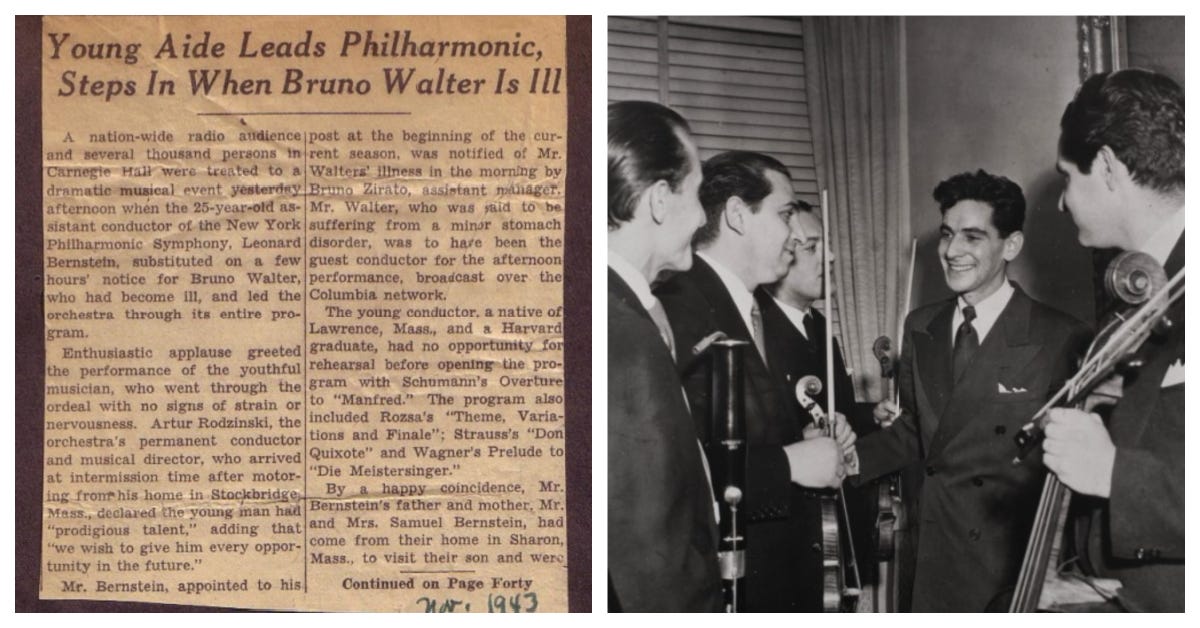
Overnight, Bernstein went from ambitious unknown to golden boy. Opportunities flooded in, one of them from an up-and-coming young choreographer named Jerome Robbins, who wanted Bernstein to write the music for a ballet about three young sailors on a 24-hour shore leave in New York City. That collaboration, Fancy Free, helped launch Bernstein’s composing career at a speed that equaled his rise as a conductor. A team of producers came up with the idea to develop Fancy Free into a Broadway show, and Variety Magazine announced: “...a group of youngsters have gotten together to stage a musical production. ‘On the Town,’ skedded for Broadway this fall, will be written, produced and staged by 23 to 25 year-olds headed by Leonard Bernstein, who recently has forged to the front of the ranks of young symphonic composers and conductors.”
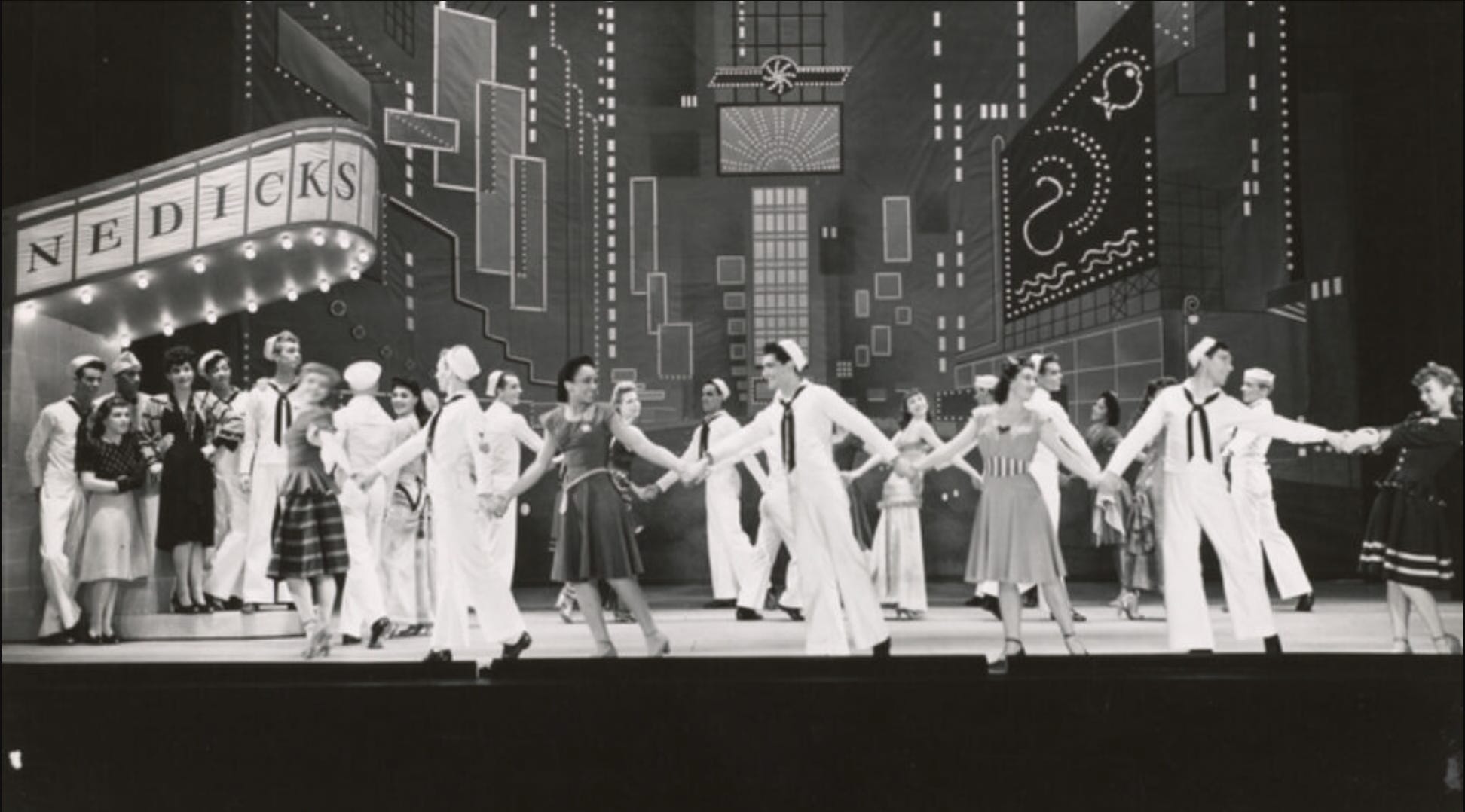
On the Town captivated audiences with its here-and-now story centering both optimistic energy and collective sacrifice and heartache. The show was one of Broadway’s defining wartime musicals - not the era’s biggest commercial hit (that was Oklahoma), but maybe the boldest and most modern. The brilliant young creative team - Bernstein, Robbins, and a book and lyrics that launched the legendary partnership of Betty Comden and Adolph Green - brought progressive ideas and innovations to the production, even casting the show to reflect the true diversity of its time and place with a racially integrated corps of Black and white dancers. Even more radical was the casting of the Japanese-American dancer Sono Osato in a lead role; in 1944, anti-Japanese propaganda was rampant, and the mass incarceration of Japanese Americans by the U.S. government was only just coming to an end.
Even before On the Town opened on Broadway, industry buzz prompted MGM to buy the film rights. And that’s where this part of this story ends, because Lucky to Be Me was cut from the Oscar-winning score for the 1949 movie version starring Gene Kelly and Frank Sinatra. (So were most of Bernstein’s original songs, including two other real gems: Lonely Town and Some Other Time.)
But back to 1944.
After the D-Day invasion and the liberation of Paris, an Allied victory in Europe was finally starting to seem possible. Americans felt a hard-won optimism and confidence, tempered by absence, fear and loss. Bernstein himself was deeply affected by the tragedies of the time. He’d been rejected for military service because of his chronic asthma, but he witnessed the casualties of so many young Americans his age who were fighting overseas. Though his immediate family was safe in America, their Jewish immigrant community was traumatized and devastated by the news of the Nazi genocide in Europe. Bernstein’s daughter Jamie writes: “From Nazism to World War II and the dropping of the atom bomb on Hiroshima, young Bernstein witnessed a world full of evil that was occasionally tempered by powerful forces of good.”
His music from On the Town captures the emotionally fraught and fragile mood of the war years, maybe especially in Lucky To Be Me. The song is sung by one of the three sailors, who has been chasing around the city all day in search of “Miss Turnstiles” after seeing her photo on a subway poster. Against all odds, he finds her, and is astonished by such luck. But I’m convinced that this bittersweet tune represents more than a simple meet-cute. I hear Bernstein himself, a young man marveling at the limitless possibilities life is offering him, even as he acknowledges the dark shadows surrounding his good fortune. I reflect, as he must have too, on the luck of staying safe in this dangerous world, the luck of finding love and friendship, of feeling hope and happiness even in the darkest times.
Listen to this playlist. In 1945, Mary Martin was the first to record Lucky To Be Me (there’s no original Broadway cast recording, though some original cast members were reassembled in 1060 for a studio session). Blossom Dearie’s take on the song is wistful; Abbey Lincoln’s is smoky. But it’s Bill Evans who takes this song on a 20th century journey, from his 1958 solo on “Everybody Digs Bill Evans” to a collaboration with the Swedish singer Monika Zetterlund in 1964, to the groove of his 1976 partnership with Tony Bennett. As you move through that trilogy, the wartime optimism of the 1940’s recedes in the rearview mirror, its promises still unfulfilled, our nostalgia for its innocence always more fragile.
These American songs. They evolve and take on the contours of time as it passes. What was most on my mind last year, as I recorded my own version of young Leonard Bernstein’s lovely melody, was the immense and miraculous luck - regardless of the circumstances, the time or the place - of simply being here at all.
Comments
Nothing yet. Say the first thing.
Sign in to join the conversation.