
Until recently, most visible action against the peptide market was directed at vendors, pharmacies, med spas and importers. That boundary is now expanding to include the people promoting the products and directing customers towards them.
Last week, Eli Lilly filed six US lawsuits concerning the alleged unlawful sale of retatrutide. The company also said it had referred more than 200 individuals and businesses to regulators and law enforcement while urging social-media platforms, payment processors and shipping companies to act.
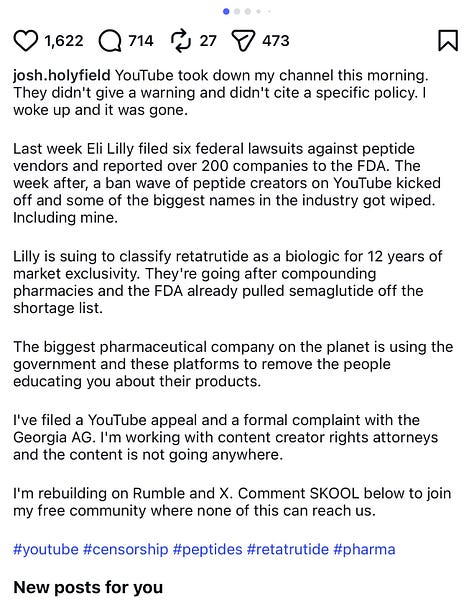
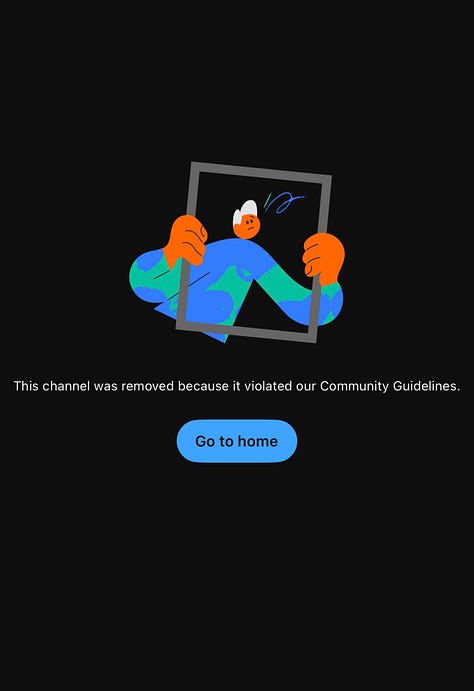
Days later, the YouTube channels belonging to two of the largest peptide-focused creators, Trevor Bachmeyer and Josh Holyfield, disappeared.
Josh says YouTube removed his channel without warning and didn’t identify a specific policy violation. He has appealed the decision, filed a complaint with the Georgia Attorney General and begun rebuilding on Rumble and X.
Josh has connected his removal to the wider action surrounding peptides, but there is currently no evidence that Lilly caused either YouTube channel to be removed. YouTube has also not publicly explained the decisions. The timing is notable, but timing alone doesn’t prove coordination.
Australia Moves From Warnings to Warrants
Australia has now provided a much clearer example of regulators directly pursuing activity allegedly connected to a social-media promoter.
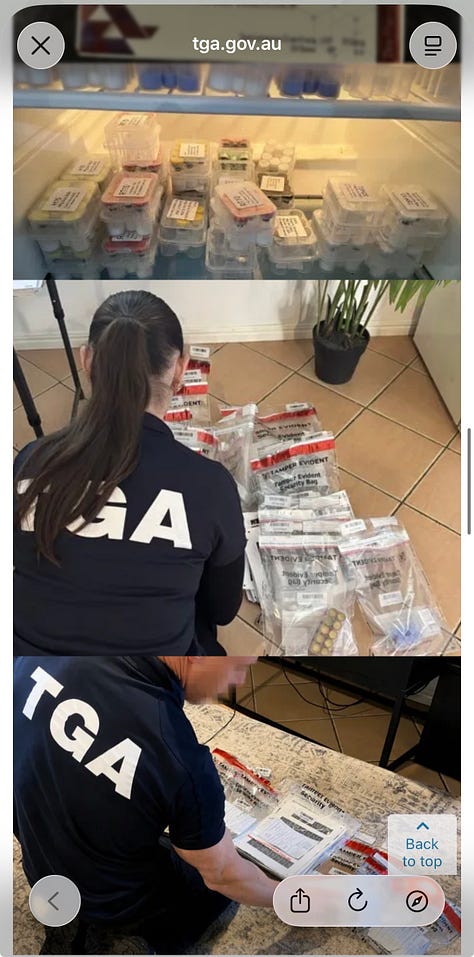
On 4 August, the Therapeutic Goods Administration and NSW Police executed search warrants at two residential properties. Authorities seized more than $120,000 of illicit peptide and anabolic-steroid products, including retatrutide, CJC-1295 and the Wolverine Stack of BPC-157 and TB-500.
The properties were allegedly linked to an unnamed social-media influencer who had previously been warned by the TGA. Authorities allege that the person imported and relabelled the products before advertising and selling them through social-media platforms and a dedicated website.
The person had not been charged when the story was published, and neither the influencer nor the business has been publicly identified.
The most important part of the TGA announcement extends far beyond this particular case:
If you are using social media to profit from the unlawful supply of unapproved therapeutic goods, you should expect the TGA to take action.
The regulator specifically warns that influencers, affiliates, online sellers and anyone else promoting unapproved peptide products may be held accountable for unlawful advertising.
That means this is no longer only about the person holding the stock or processing the payment. Affiliate links, discount codes, vendor recommendations and promotional content can connect a creator to the commercial chain even when someone else supplies the vials.
“Research Use Only” Does Not Solve It
Australia recognises genuine laboratory research products, but an RUO disclaimer doesn’t turn consumer-ready peptide vials into lawful research materials.
The TGA explicitly states that “research use only” wording doesn’t change a product’s regulatory status, permit its importation or remove advertising and supply obligations. Regulators consider the entire operation: its customers, website, claims, packaging, social-media content and the way the product is actually being sold.
The same basic principle applies in America. Despite how extensively US peptide vendors use RUO language, the FDA has repeatedly treated products as unapproved human drugs when the surrounding marketing demonstrates intended human use.
Separate Events, Same Direction
There is no evidence that the YouTube removals, Lilly’s lawsuits and the Australian seizure are part of one coordinated operation. They involve different organisations, countries and legal processes. They do, however, show how widely the pressure is spreading.
Vendors. Pharmacies. Med spas. Importers. Payment processors. Online platforms. Influencers. Affiliates…….
The peptide market spent years treating social media as the safest part of the supply chain. Regulators are increasingly treating it as part of the evidence.
https://www.facebook.com/share/p/19FnMrVkjr/?mibextid=wwXIfr
No posts
Comments
Nothing yet. Say the first thing.
Sign in to join the conversation.