
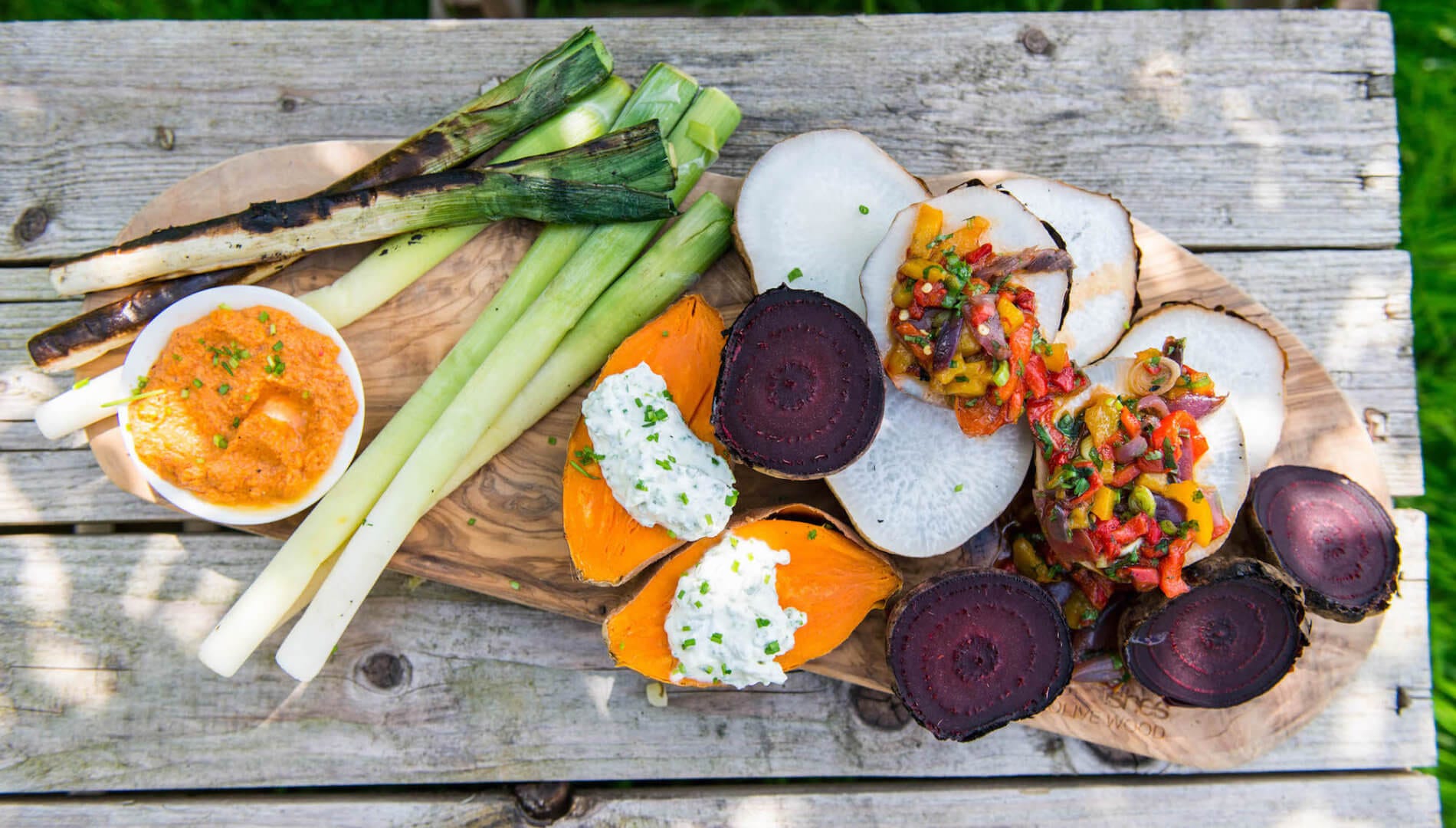
Most barbecues are meat festivals. That’s a shame, because grilled vegetables are actually much more interesting. The variety is greater, especially in summer. And grilled vegetables are incredibly versatile. You can fold them into a salad, turn them into a soup or starter, or serve them as a main course in their own right.
In this issue, we show you how to give vegetables the starring role on the grill. We start with a short masterclass in barbecue technique: how to control the fire, how to measure temperature, and why charcoal and briquettes behave differently. Then we walk through the best summer vegetables, with a technique guide for each. And of course we finish with recipes and flavor-boosting tips that will change how you think about the grill.
Barbecuing is cooking with fire, and that fundamentally changes the chemistry of vegetables. Above 300°F (150°C), Maillard reactions kick in: sugars and amino acids react with each other and produce hundreds of aromatic compounds (we wrote about this in an earlier issue). Caramelization plays a role too. Sugars concentrate at the surface of the vegetable, partially evaporate, and form a crispy, sweet crust.
On top of that, many vegetables naturally contain glutamate, inosinates, and other umami compounds. Think of leeks, mushrooms, or tomatoes. Grilling makes these compounds more pronounced, especially in combination with smoke.
The result: a deep, concentrated flavor that pairs beautifully with acids, fats, and bitters. A perfect foundation for modern, plant-forward barbecue cooking.
Fire in a barbecue comes from burning charcoal or briquettes, and your menu should determine your fuel. Charcoal heats up faster, making it ideal for short, intense cooking where you want beautiful grill marks without losing crunch. Think green asparagus, sugar snaps, halved little gem lettuce, or spring onions. Briquettes burn longer and more evenly. They’re ideal for larger vegetables or indirect grilling (more on that below). Think roasted beets or thick slices of eggplant: vegetables that need more time to cook through.
If you use a kamado, for low and slow cooking with the lid closed, always use natural lump charcoal. The kamado’s closed ceramic construction already makes it perfectly suited for controlled, long cooking sessions. For open, high-heat grilling, briquettes can work fine.
If you’re serious about grilling vegetables, a barbecue with a lid is your best friend: a classic kettle grill or a kamado. They’re better insulated and give you far more control over temperature than an open grill or hibachi. With a lid, you regulate airflow through the vents. More oxygen means higher temperature. Less oxygen means slower cooking. That’s essential when you want to roast thick leeks, corn, fennel, or whole root vegetables without burning the outside.
A kamado is a ceramic barbecue with thick walls and a tight-fitting lid. The insulation lets you work at very stable temperatures, perfect for slowly cooking potato wedges, roasted beets, or celeriac at low heat, optionally with a little smoke.
Also keep an eye on ash buildup. As the coals burn, a grey layer forms that restricts airflow and drops the temperature by about 50°F (30°C) every fifteen minutes. Shaking the coals or removing ash helps keep the fire alive.
Fuel and oxygen determine how hot your barbecue gets. But how do you know if that temperature is right for what you’re cooking? Many barbecues have a built-in thermometer, but it measures the air under the lid, not the heat directly at your vegetables. And that’s where it actually matters.
A digital BBQ thermometer placed on the grate measures temperature at the right spot. For quick cooking with thin vegetables like sugar snaps, green asparagus, or baby corn, you want to be above 450°F (230°C). For thicker vegetables like slices of eggplant, zucchini, or bell pepper, slower grilling at 355–390°F (180–200°C) is ideal. For leeks, fennel, or whole root vegetables, you can go as low as 320°F (160°C), as long as you give them enough time.
A probe thermometer is also useful: it tells you when thick vegetables are fully cooked on the inside. Think roasted beets or celeriac. Depending on the vegetable, you’re aiming for an internal temperature of around 195°F (90°C).
No thermometer? There’s an ancient barbecue trick. Hold your hand just above the grate and count in your head, “one-Mississippi, two-Mississippi...”, until you can’t stand it anymore.
2–3 seconds: hot (450–680°F / 230–360°C)
6–8 seconds: medium (320–355°F / 160–180°C)
11–14 seconds: low (210–250°F / 100–120°C)
Slightly masochistic, but surprisingly effective.
In the video below, Kitchen Lab chef Eke Mariën covers a few smart barbecue techniques for vegetables, including charring and roasting. The techniques and recipes are explained in detail further on in this newsletter.
Smart grilling: how to use heat zones and timing to cook vegetables perfectly
Spray or brush: controlling temperature and flavor with oil and infusions
Charring: cooking directly in the fire for pure smoke flavor
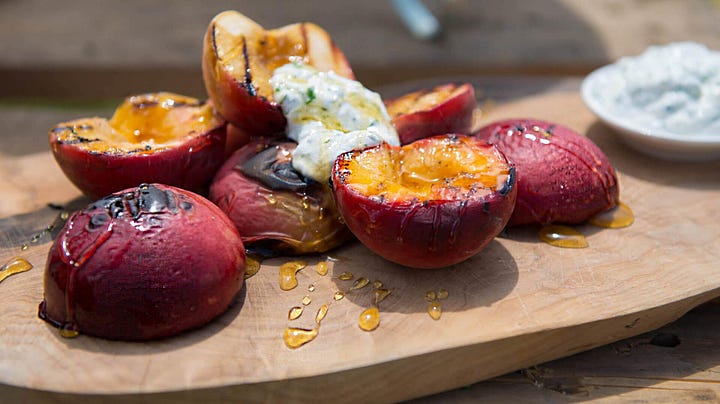
Fruit on the grill: tips for firm fruits with a caramelized crust
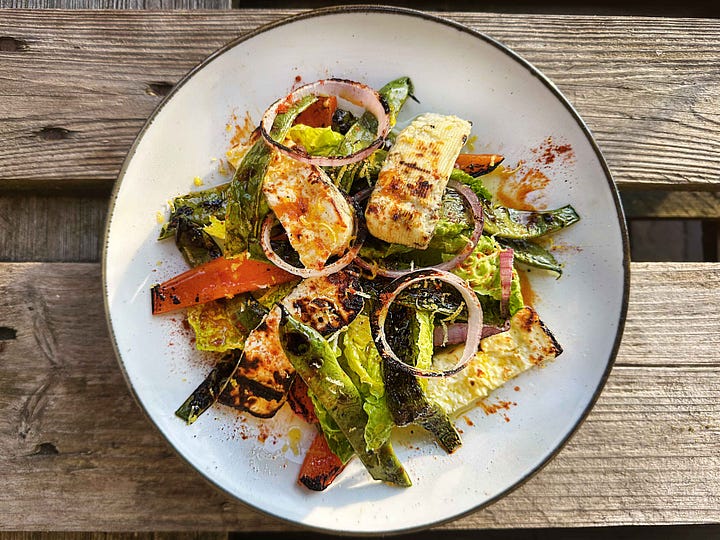
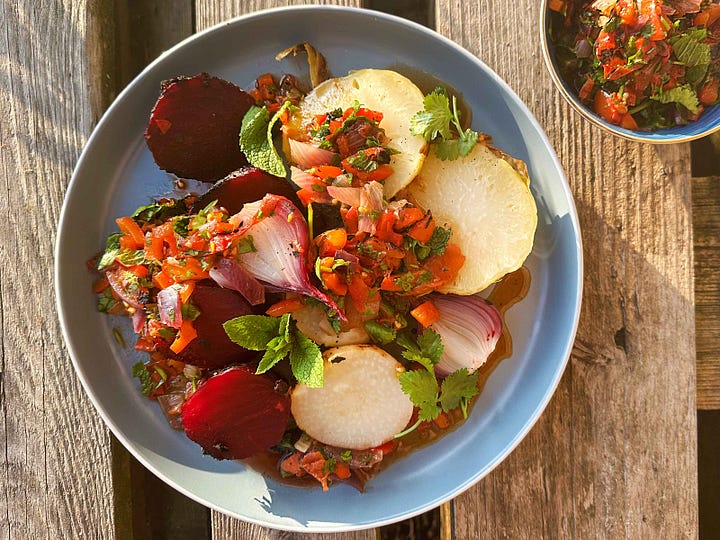
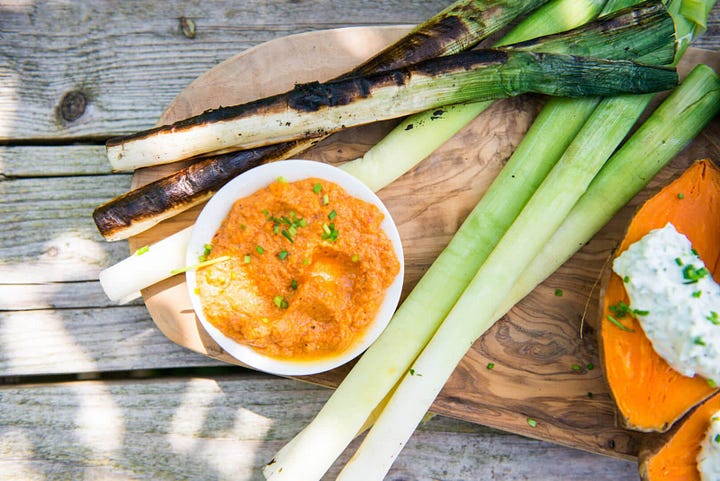
New recipes: charred leeks with romesco, roasted root vegetables with salsa, summer salad with green beans and halloumi
Technique guide: which vegetable, which method?
Already a paying subscriber? Then just keep reading below. Not yet subscribed but want to read on, learn techniques, and cook better with real knowledge? Subscribe via our website for the best price (€60/year or €6/month). In the app you’ll pay €85/year due to Apple and Google service fees. As a subscriber you receive the full Kitchen Lab newsletter every other Sunday, in your inbox or on Substack, plus access to all our back issues and the Kitchen Lab Chat.
Comments
Nothing yet. Say the first thing.
Sign in to join the conversation.