
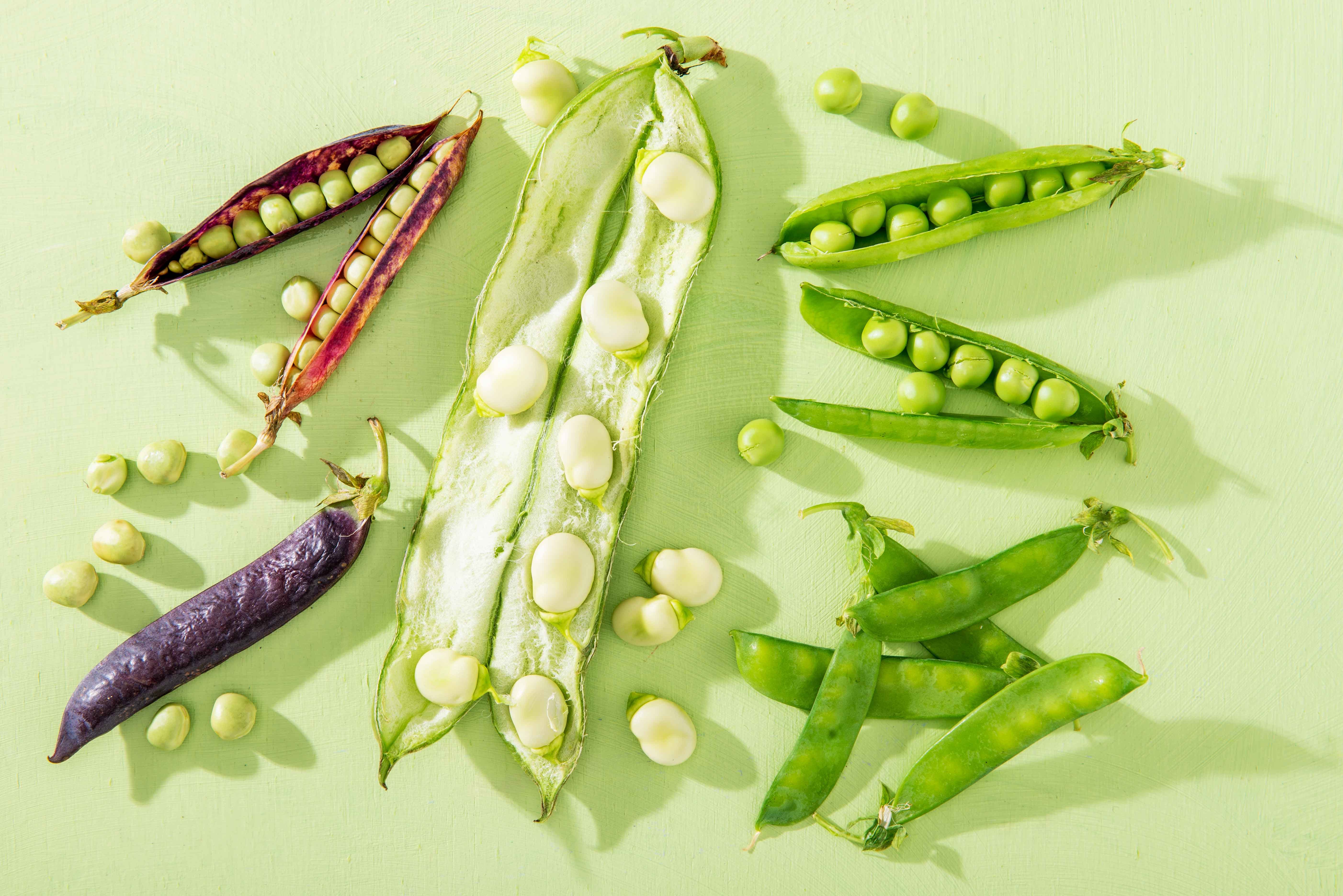
Spring legumes don’t stick around. Fresh fava beans, peas, marrowfat peas, and snow peas are juicy and full of flavor, completely different from their dried, frozen, or canned counterparts. What makes them so special? How do you prepare them properly? And is a fava bean actually a bean? In this issue, everything about the flavor, structure, and origins of spring legumes, with practical tips and recipes from bean specialist and cookbook author Joeri Veul.
Joeri Veul was the number one BMX rider in the Netherlands when a stroke ended his career overnight. During his recovery, he threw himself into his second passion: cooking. That turned out to be the right move. He's now a cookbook author, food photographer, and one of the most followed food creators in the Netherlands (@joeri.veul on TikTok and Instagram). His mission hasn't changed since day one: make beans sexy.
According to Joeri, beans are the answer to many food challenges. They’re nutritious, can be grown locally, and actively improve soil health. Yet we eat very few of them. “People think beans are a hassle. They’ve forgotten how to soak or prepare them. Convincing people is a matter of seduction,” he says. His mission: make beans sexy again.
Legume is the umbrella term for all plants that develop their seeds in a pod. That includes fava beans, peas, lentils, chickpeas, lupins, and even peanuts: they’re all legumes.
In the kitchen, though, we make distinctions. Beans (such as green beans, black beans, and borlotti beans) are mostly species from Central and South America, which only arrived in Europe after the discovery of the New World. They belong to the genus Phaseolus. Peas, on the other hand, such as garden peas, snow peas, and sugar snaps, are of European origin. They grow on a different plant (Pisum sativum) and have been part of our diet since antiquity.
But as always, there are exceptions. The fava bean is botanically not a true bean at all, because it belongs not to Phaseolus (beans) or Pisum (peas), but to Vicia (Vicia faba). We still call it a bean simply because it looks like one. In short: every bean and every pea is a legume, but not every legume is a bean or a pea.
Unlike most edible fruits, beans don’t need animals to spread their seeds. Once the pods are ripe, they dry out and build up tension. A small touch is enough to make them snap open, shooting seeds several feet away. This is why they’re ideal to harvest when slightly dried: the seeds are collected before they spring from the pod on their own, then left to dry in a barn or shed. Dried this way, they keep for years.
The seeds of spring legumes are tiny energy factories. They store sugars, amino acids, minerals, and enzymes: everything needed to germinate. Those nutrients give fresh legumes their sweet flavor and snappy texture. They haven’t yet fully converted to starch (less sweet, more floury) or neutral proteins, as happens with dried beans.
For varieties with edible pods, like sugar snaps and snow peas, the pod itself contributes to the flavor. The pod photosynthesize and sends sugars to the seeds, even after harvest. That’s why fresh legumes are sweetest right after picking. The longer you wait, the more sugars convert to starch. That means flatter flavor and a mealier texture.
Joeri: “Fava beans are my favorite. Precisely because they’re a little bitter. That creates tension in sweet dishes, for example with raisins or saffron. And that velvety softness inside the pod, you don’t see that anywhere else.” On the debate between frozen and fresh: “Fresh peas are larger, crunchier, and visually more appealing. They work beautifully with pearl couscous: same size, same bite.” Try it in Joeri’s recipe below.
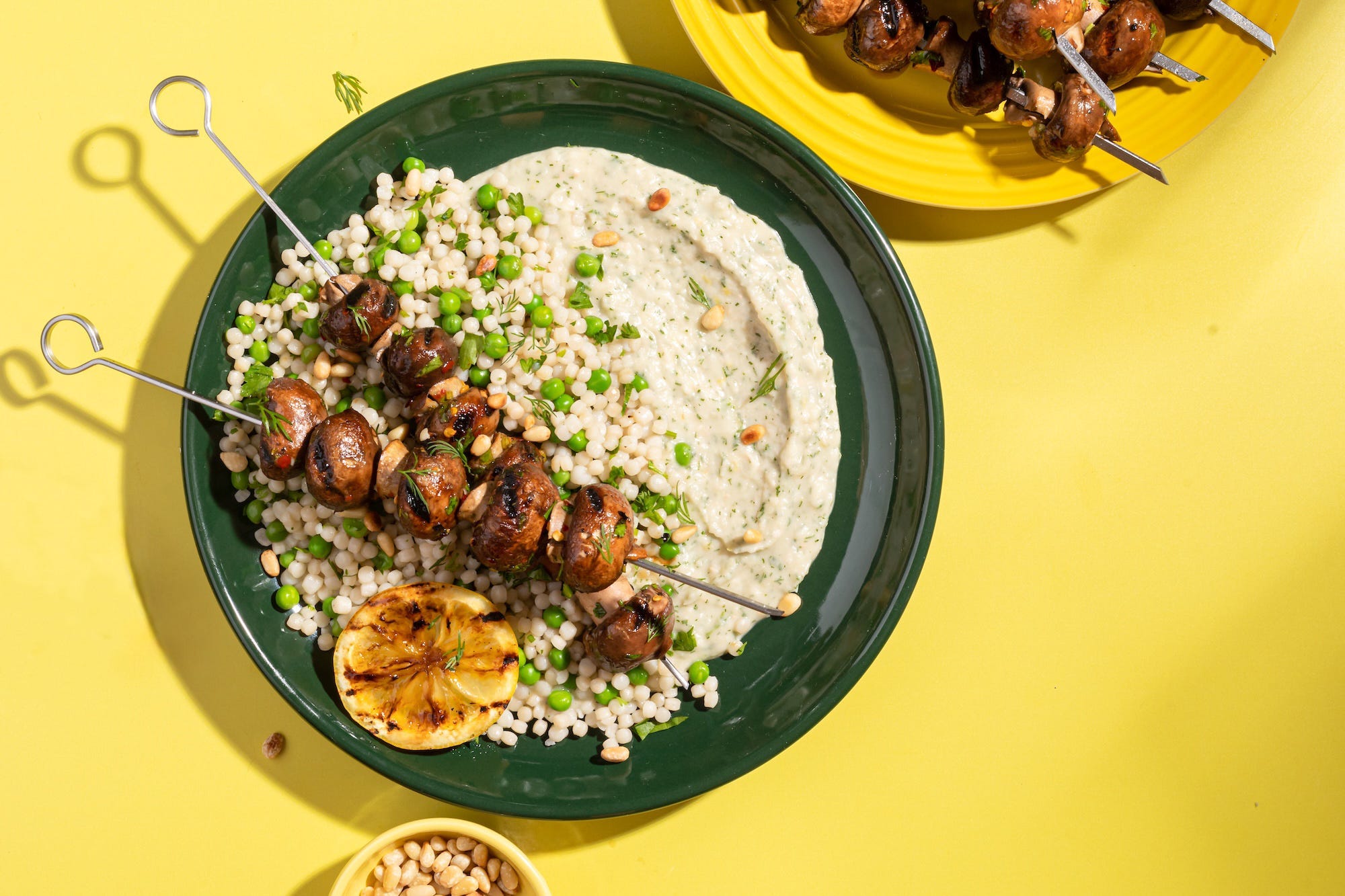
Serves: 3–4 Prep time: approx. 30 min. Resting time: minimum 15 min.
INGREDIENTS
2 organic lemons
15 g flat-leaf parsley
2½ tbsp olive oil
3 garlic cloves, pressed
½ tsp chili flakes
350 g (12 oz) small chestnut mushrooms
250 g (9 oz) pearl couscous
150 g (5 oz) fresh garden peas*
1 can (14 oz / 400 g) cannellini beans
10 g fresh dill, finely sliced
30 g (1 oz) toasted pine nuts
*Can’t find fresh? Use organic frozen peas instead.
METHOD
1. Finely grate 1½ tsp of zest from one of the lemons. Halve all the lemons and squeeze the juice from three halves. Cut the remaining half into 4 slices. Finely chop the parsley.
2. Mix 2 tbsp lemon juice, 1½ tbsp olive oil, 1/3 of the parsley, 2/3 of the garlic, the chili flakes, and ¼ tsp salt in a large bowl. Toss the mushrooms through the marinade and leave for at least 15 minutes (up to 3 hours).
3. Thread the mushrooms onto skewers, grouping similar sizes together.
4. Cook the pearl couscous in a large pan of generously salted water according to package instructions. Add the peas in the last 2 minutes, then drain.
5. Meanwhile, heat a grill pan or skillet over medium heat, or fire up the barbecue. Grill the mushrooms for 12–15 minutes, turning regularly. Grill the lemon slices for 4–5 minutes until they have grill marks or are golden brown.
6. Drain the cannellini beans, reserving the liquid. Blend the beans, 2 tbsp of the bean liquid, the lemon zest and 1½ tbsp lemon juice, 1 tbsp olive oil, the remaining garlic, ¾ of the dill, and ½ tsp salt in a food processor until smooth.
7. Spread the dill-lemon bean puree across the plates, smoothing with the back of a spoon. Stir the remaining parsley and plenty of pepper through the couscous and spoon over the puree. Place the mushroom skewers on top and garnish with pine nuts, lemon slices, and the remaining dill.
Fresh, frozen, or canned: what’s actually better?
Why canned marrowfat peas taste completely different from fresh
A preparation guide for each legume: cleaning, blanching, freezing
Grilling, stir-frying, or raw: when to choose what
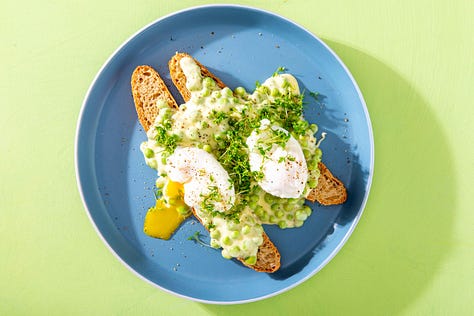
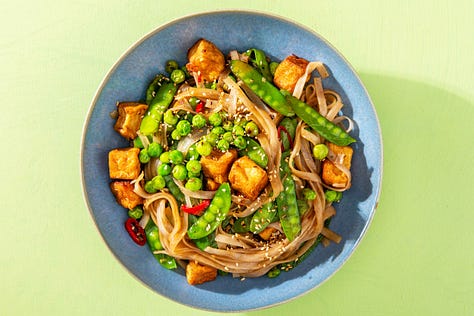
More recipes with legumes in the lead role
Extra tips from bean specialist Joeri Veul
Already a paying subscriber? Then just keep reading below. Not yet subscribed but want to read on, understand recipes better, and learn to cook with real knowledge? Take out a paid subscription. Tip: subscribe via our website for the best price (€60/year or €6/month). In the app you’ll pay €85/year due to Apple and Google service fees. As a subscriber you’ll receive the full Kitchen Lab newsletter every other Sunday, in your inbox or on Substack. You also get access to all our previous issues, including the archive. Members can also ask questions and share recipes or information in the Kitchen Lab Chat.
Comments
Nothing yet. Say the first thing.
Sign in to join the conversation.